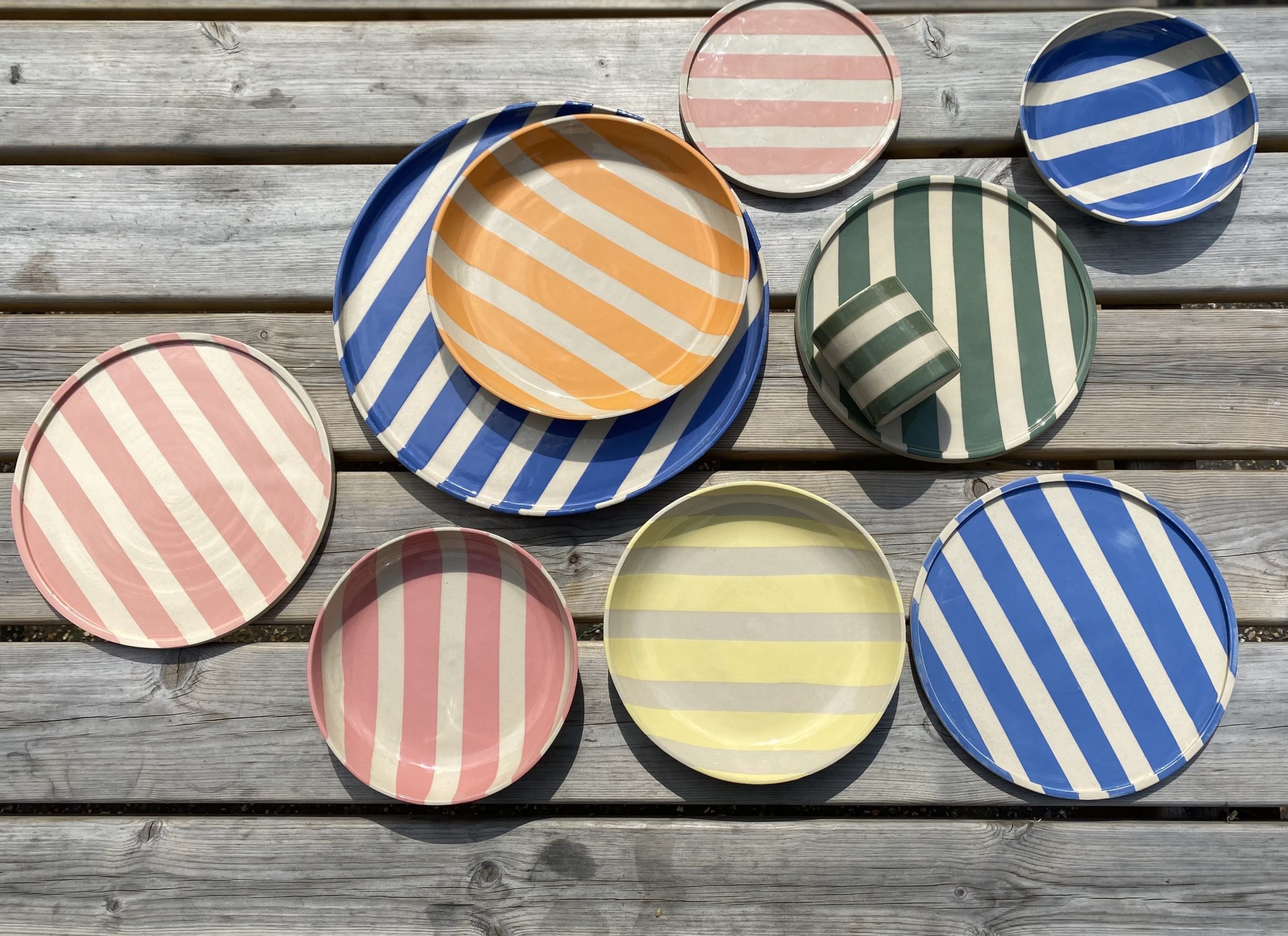
Meet the Maker: The Playful, Joyful Pottery of Kate Sellers
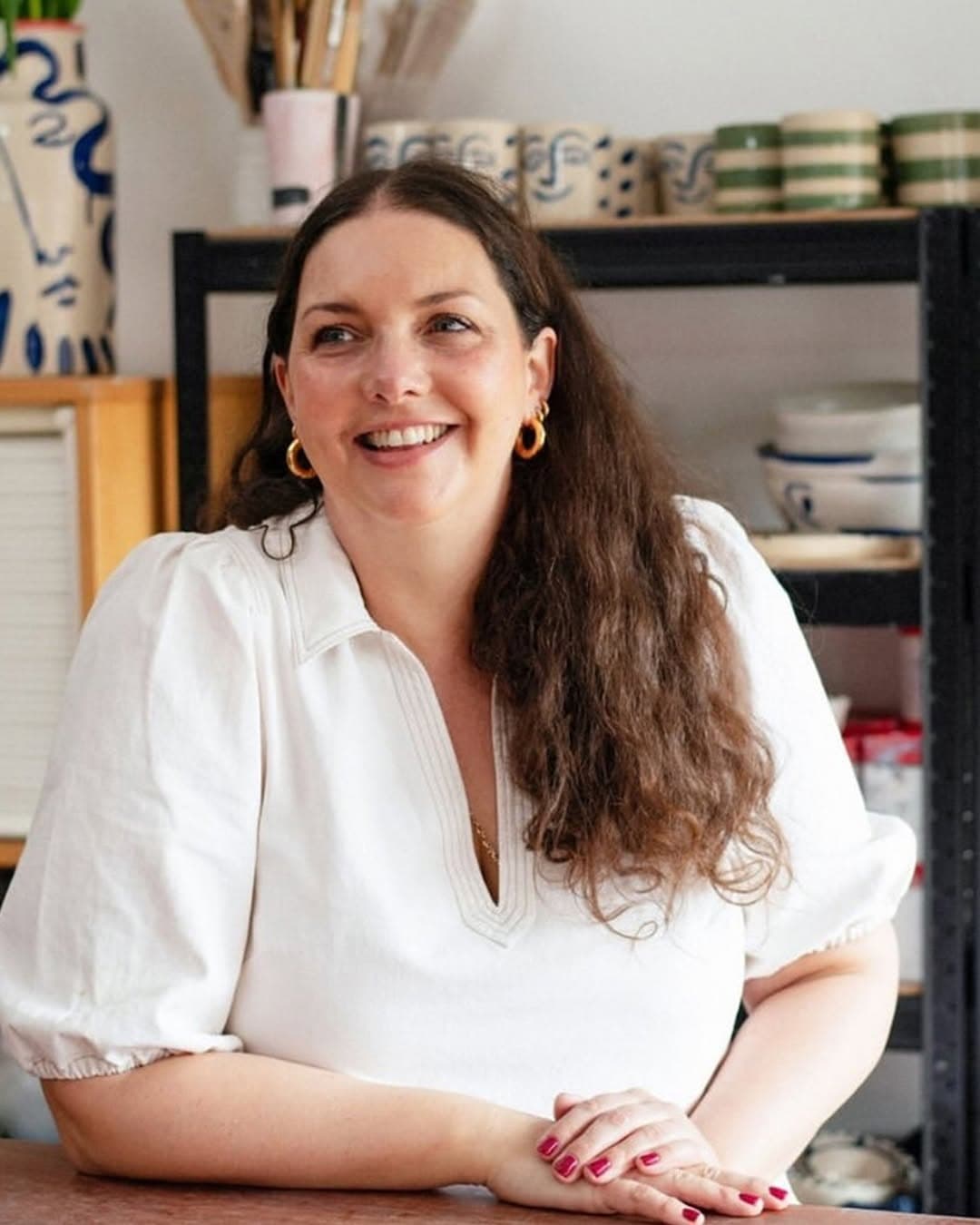
In this Q&A, we speak with Kate Sellers, the founder of K.S. Creative Pottery, about her journey from visual merchandising and prop styling to discovering pottery as a deeply therapeutic and joyful creative practice. Kate shares how personal challenges sparked her pottery passion, leading to success and collaboration with prestigious brands like Liberty. She offers insights into her creative rituals, the influences behind her playful designs, and the importance of finding balance and joy in her work.
1. Can you tell us a bit about yourself and your artistic journey?
My name is Kate and I am the founder of K S Creative pottery. I am a multi disciplinary creative working as a Prop and Set stylist, with a career in Visual merchandising for various fashion brands.
2. What inspired you to pursue your craft? Was there a defining moment or influence that sparked your passion?
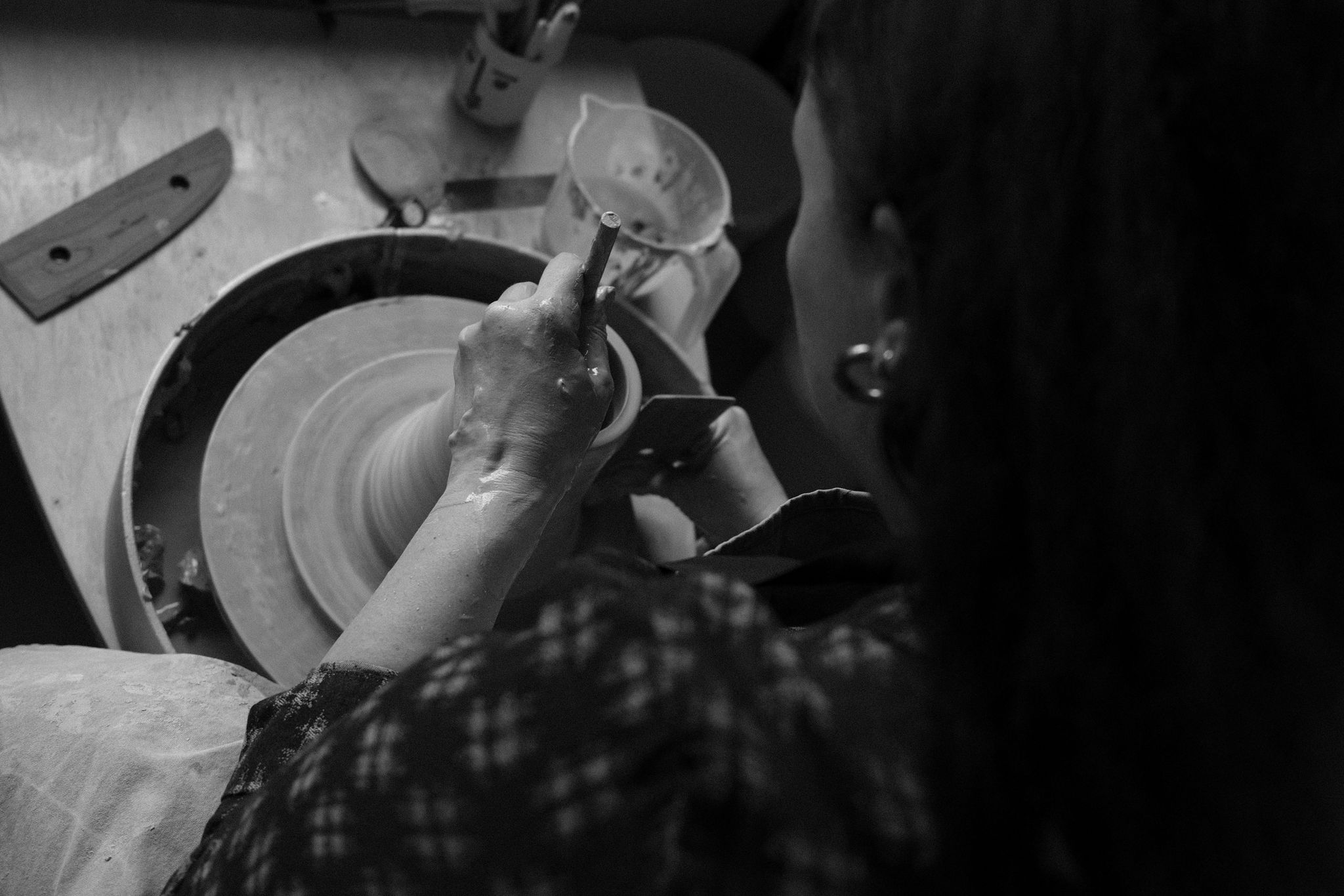
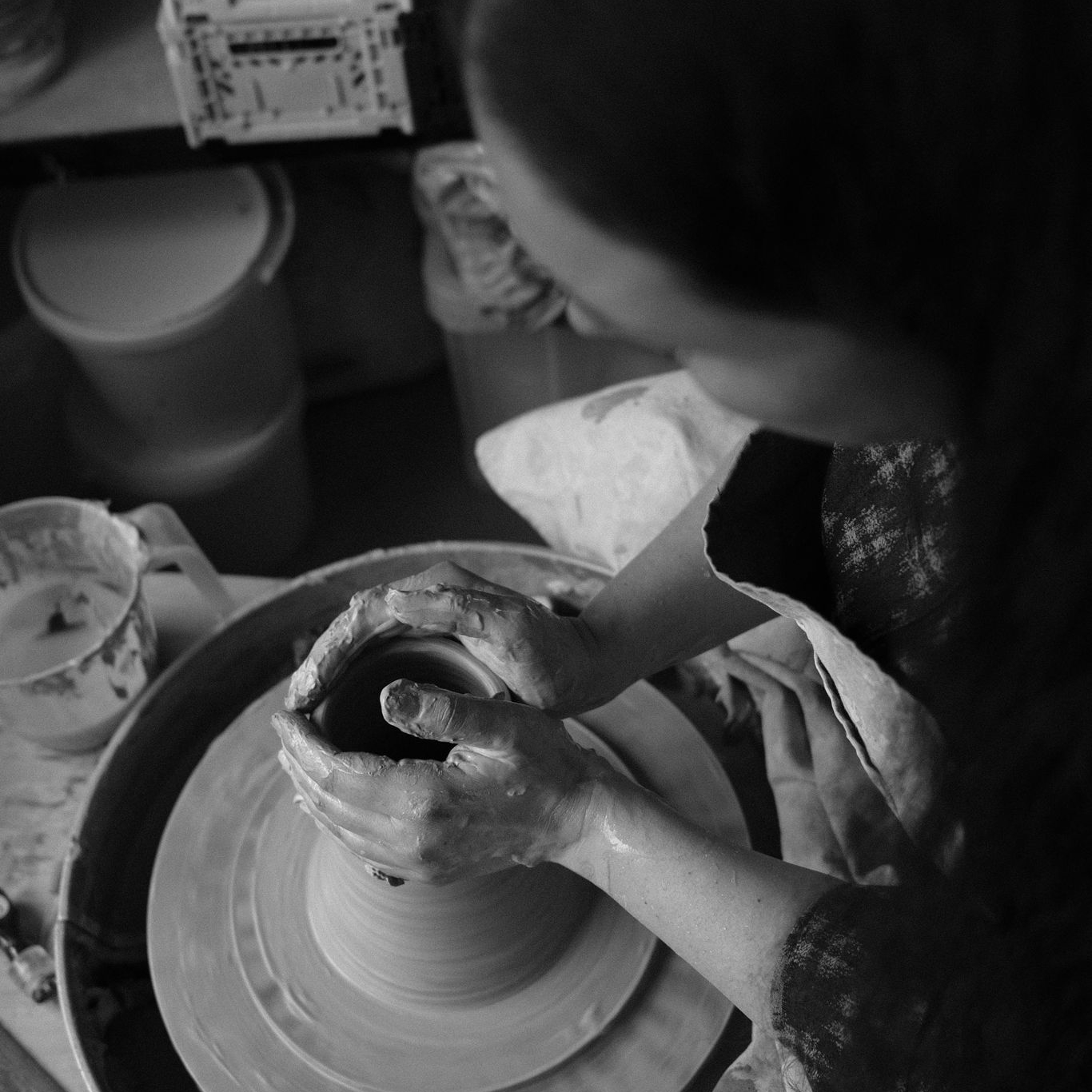
My friends gifted me a weekend workshop at the Kiln rooms. I was living in London and after losing my Dad and going through a break up life was a bit bleak. I did a degree in Decorative arts and I hadn’t realised how much I had missed making with my hands. I found the course extremely therapeutic and I was totally hooked. My teacher at the time realised that I had an immediate affinity with throwing and offered me a space at her studio where I could just sit and throw. It was wonderful and became the highlight of my week.
When I moved back home to Kent a few years later it was finding a studio where I could continue to make that was the priority. Then lockdown hit, Eunice who runs my new studio realised that I would need to continue to make so kindly offered me a wheel to borrow, I placed it in the tiny shed in the garden and began to make daily. Photo shoots and commercial work shut down so I channeled all my energy into photographing what I had been making and started to build a following on Instagram. This led to me catching the attention of the buyers at Liberty and my pottery brand was launched the following summer with an exclusive collection that sold out.
Your craft
3. How would you describe your work in three words?
Unique, playful, small-batch
4. What materials or techniques do you use, and why are they important to your process?
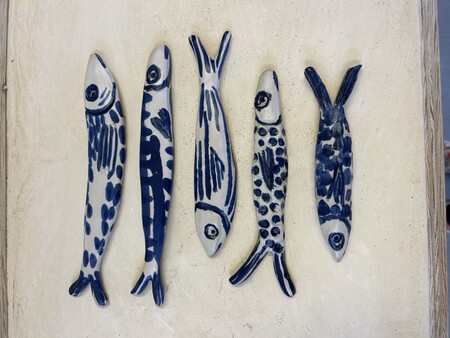
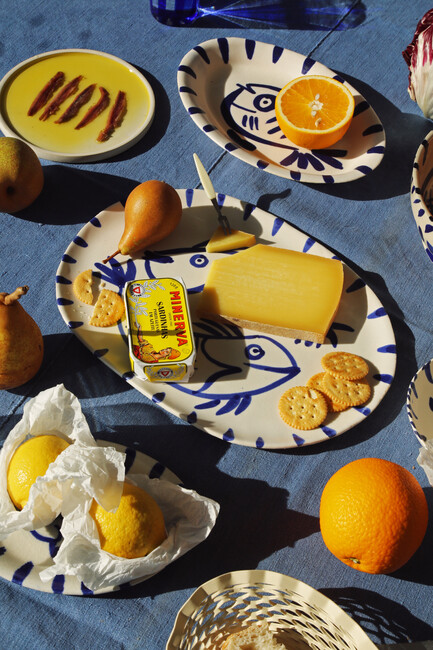
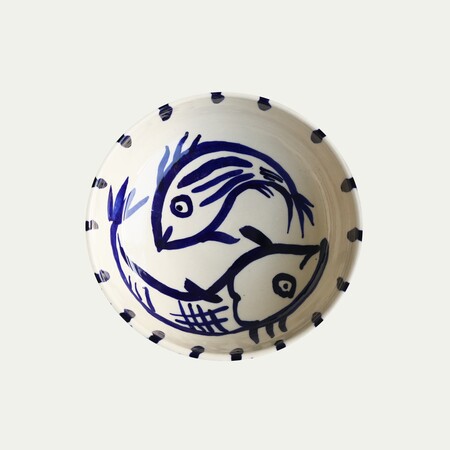
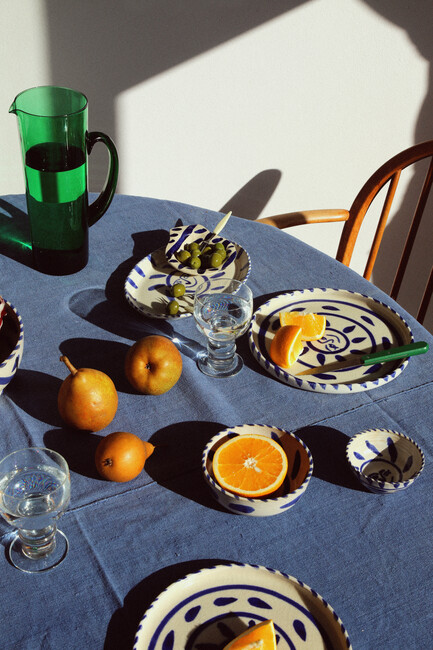
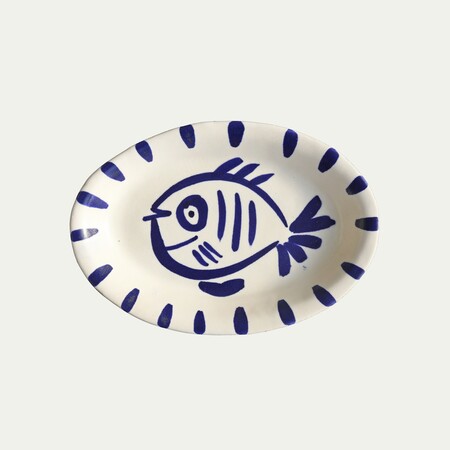
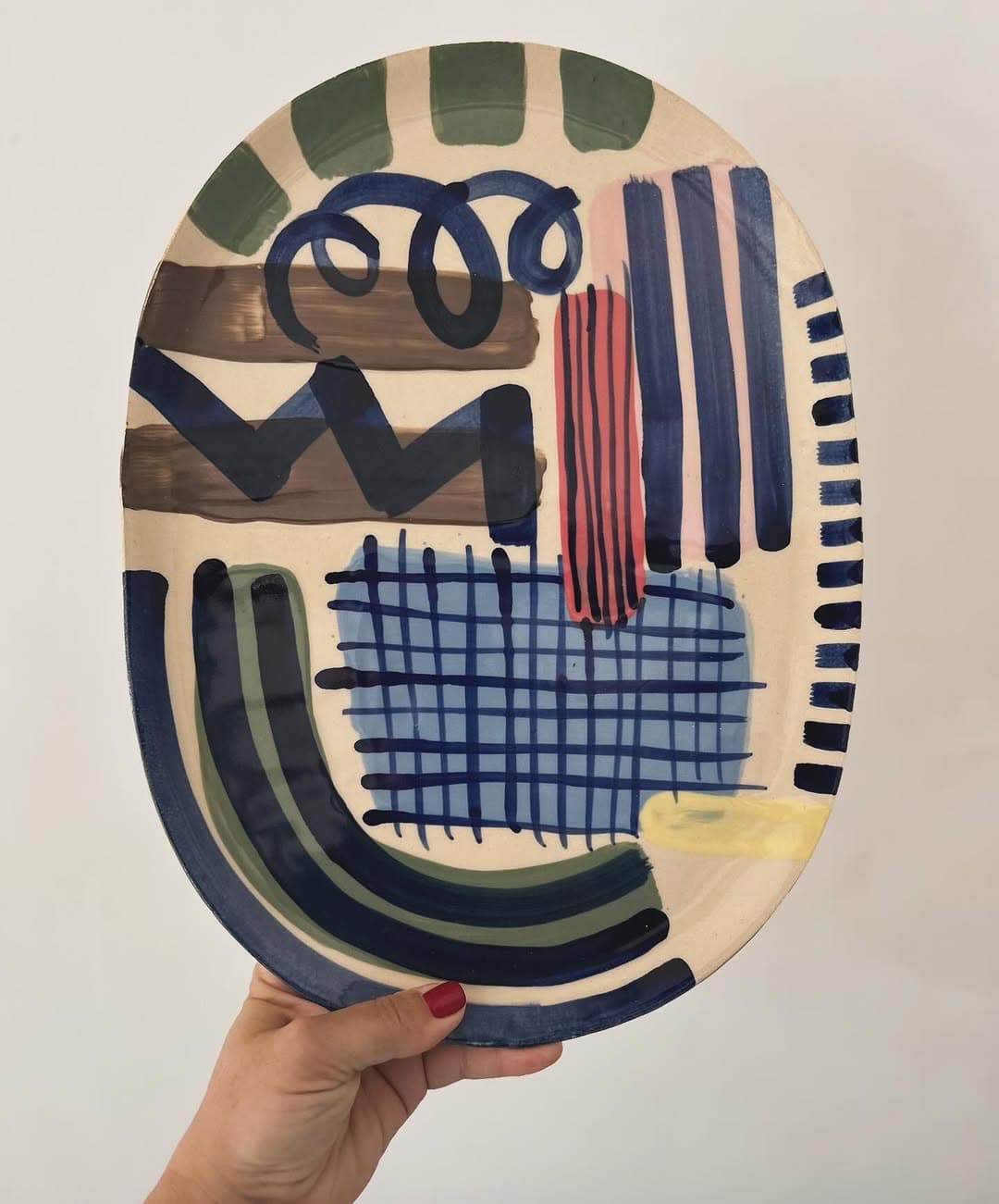
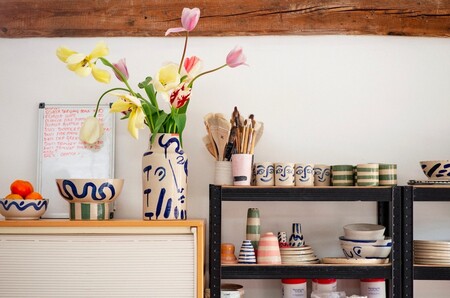
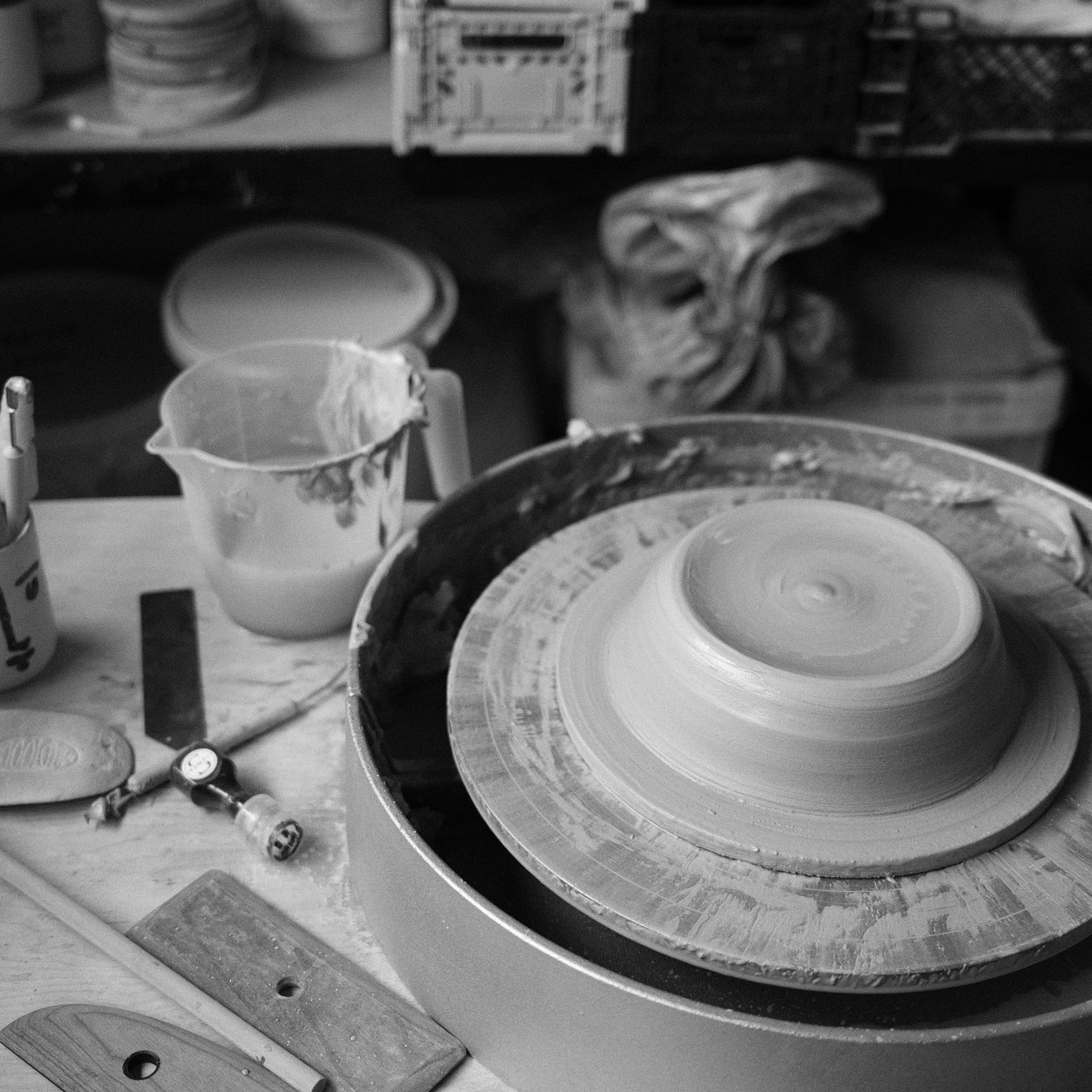
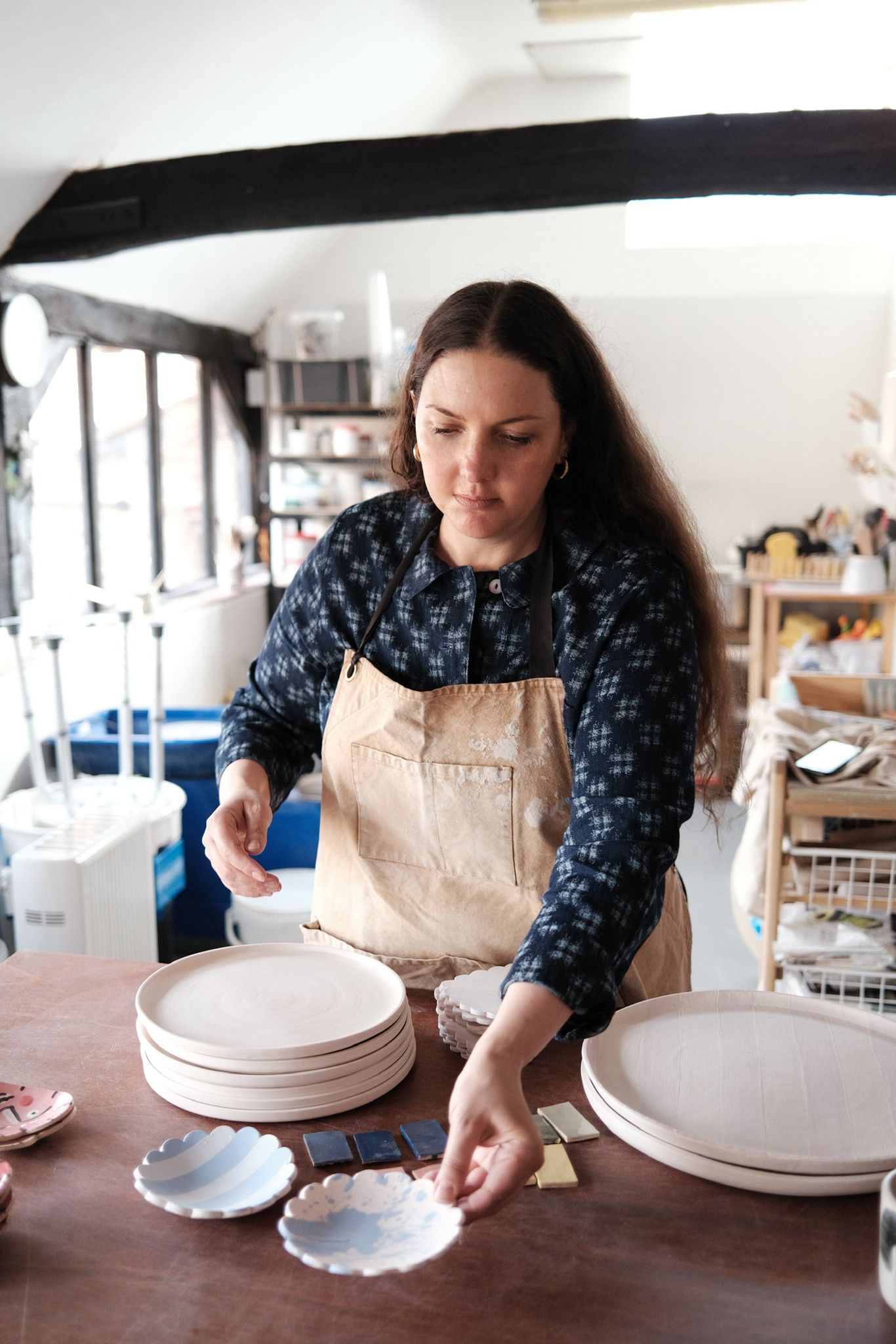
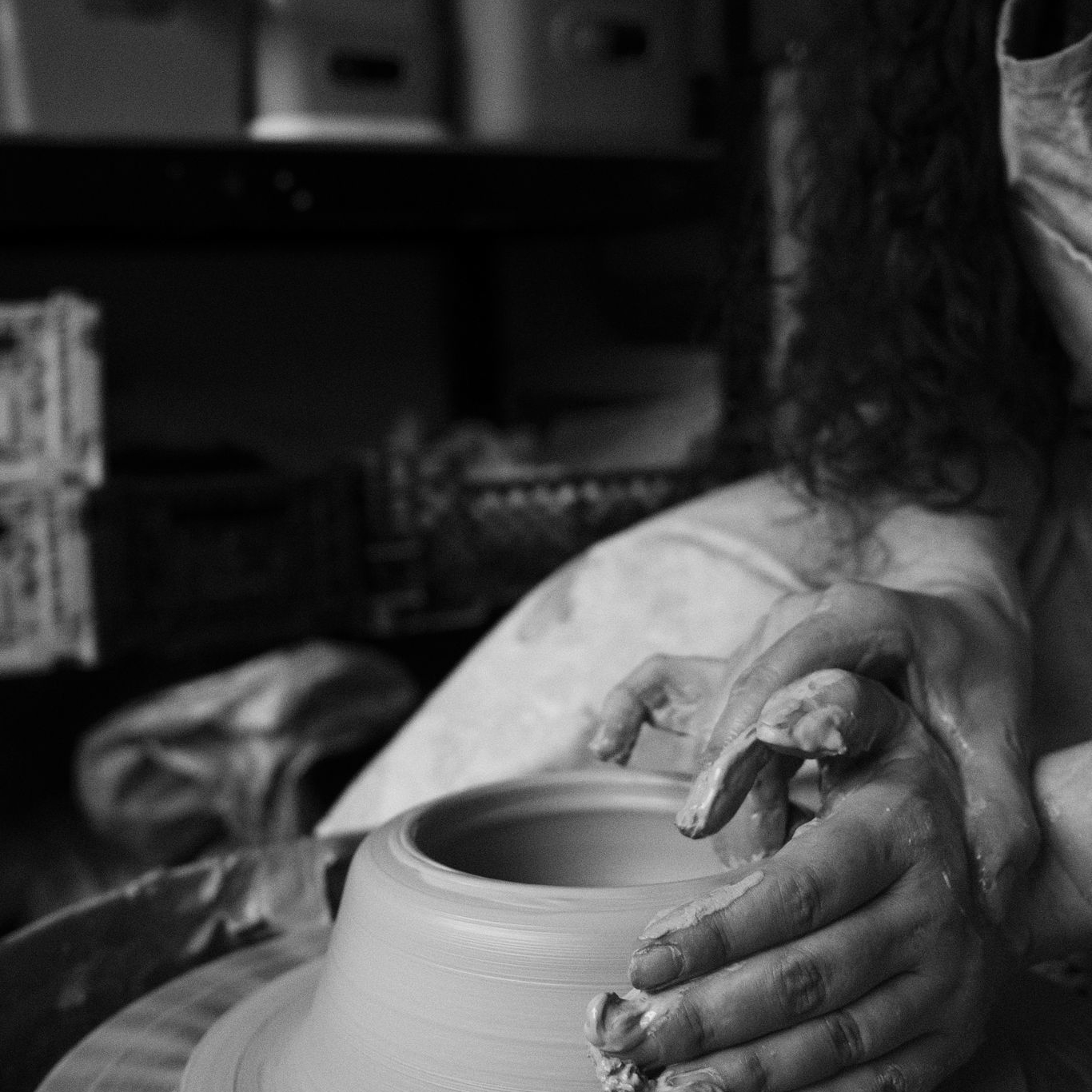
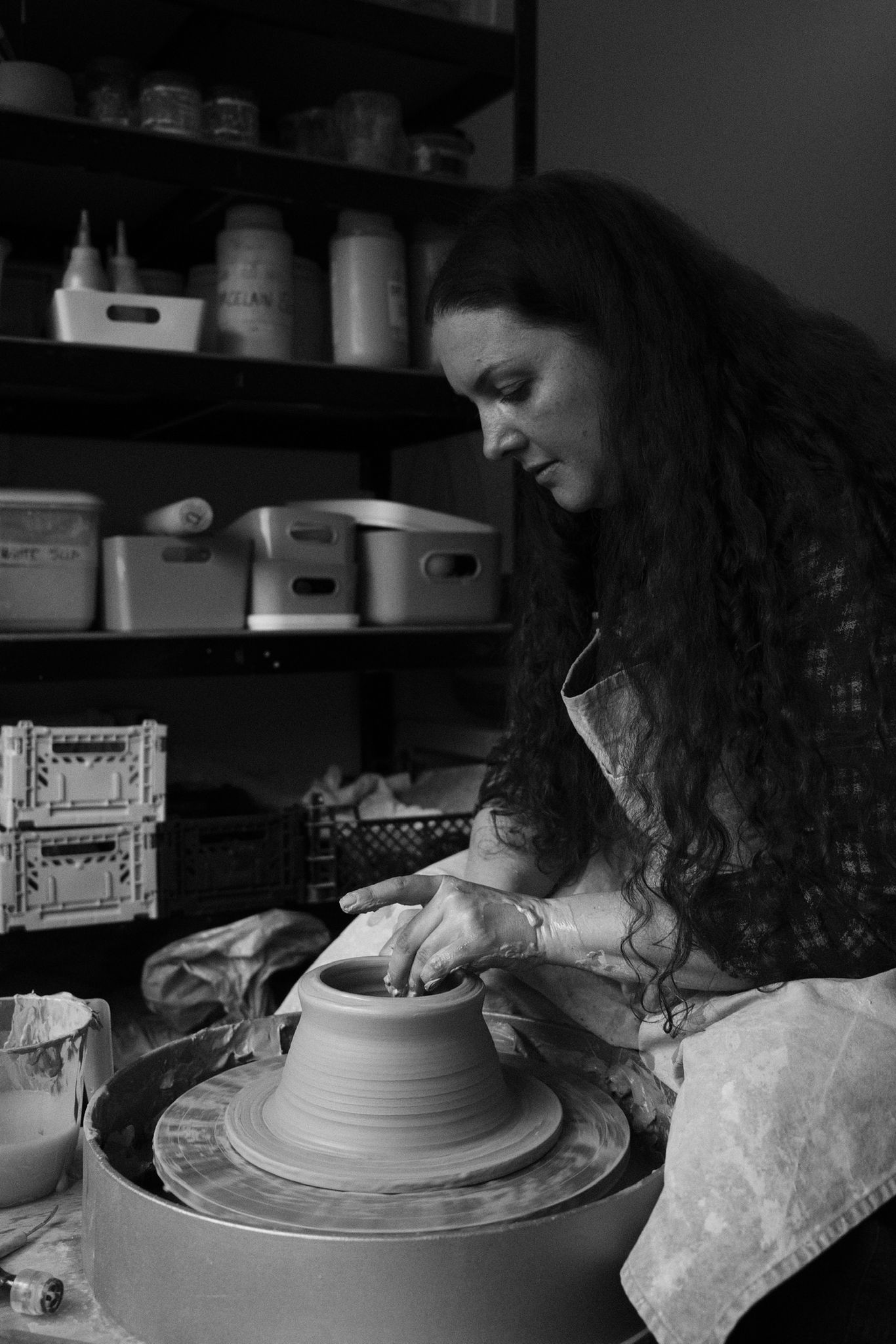
I throw on the wheel and Hand build using Staffordshire white stoneware. Decorating in coloured slips and simple glazes, sometimes finishing my pieces with a cobalt oxide hand painted design.
I enjoy hand finishing my pieces, often not planning out my design prior to painting. I love that each piece is completely unique.
5. Can you tell us about a favourite piece you’ve created and the story behind it?
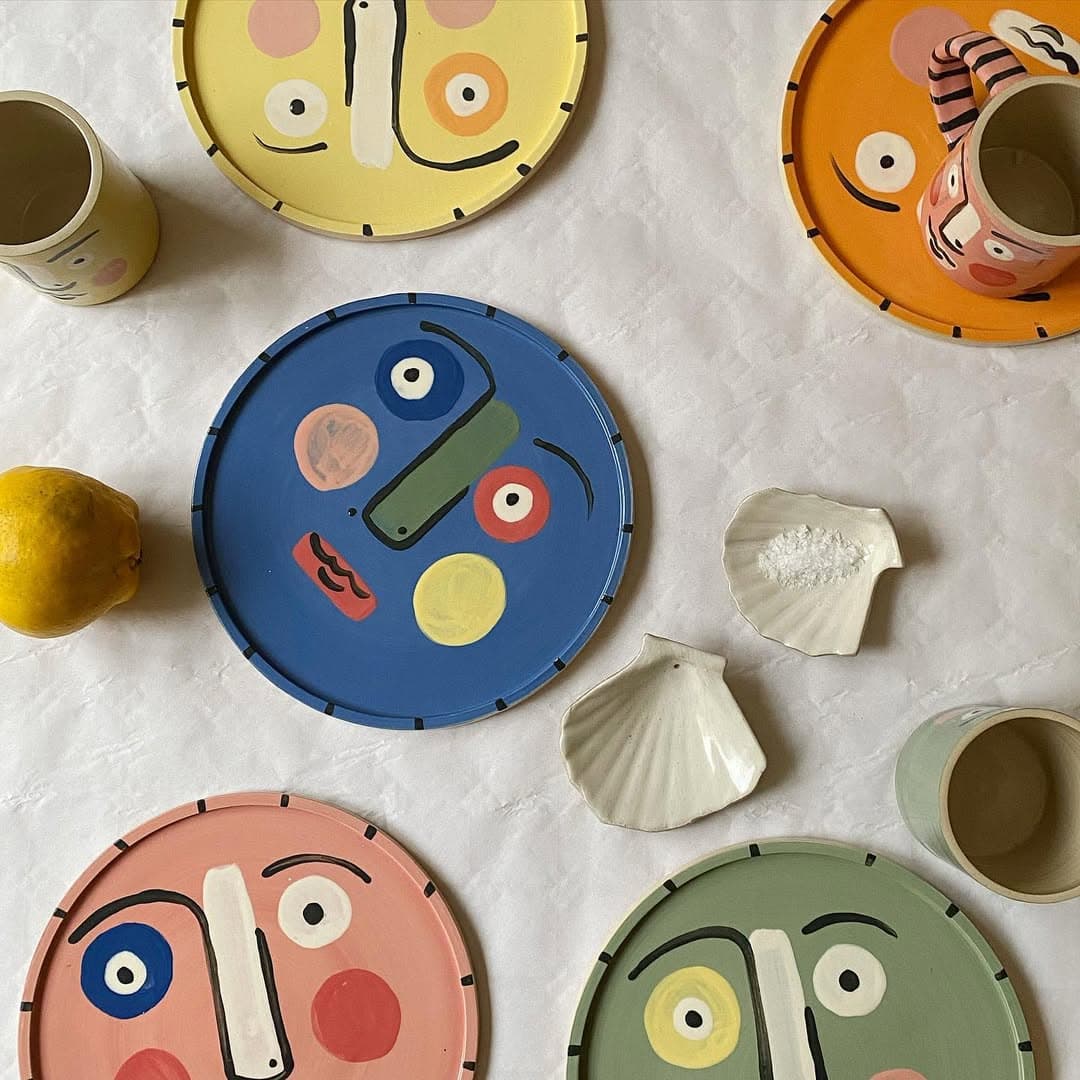
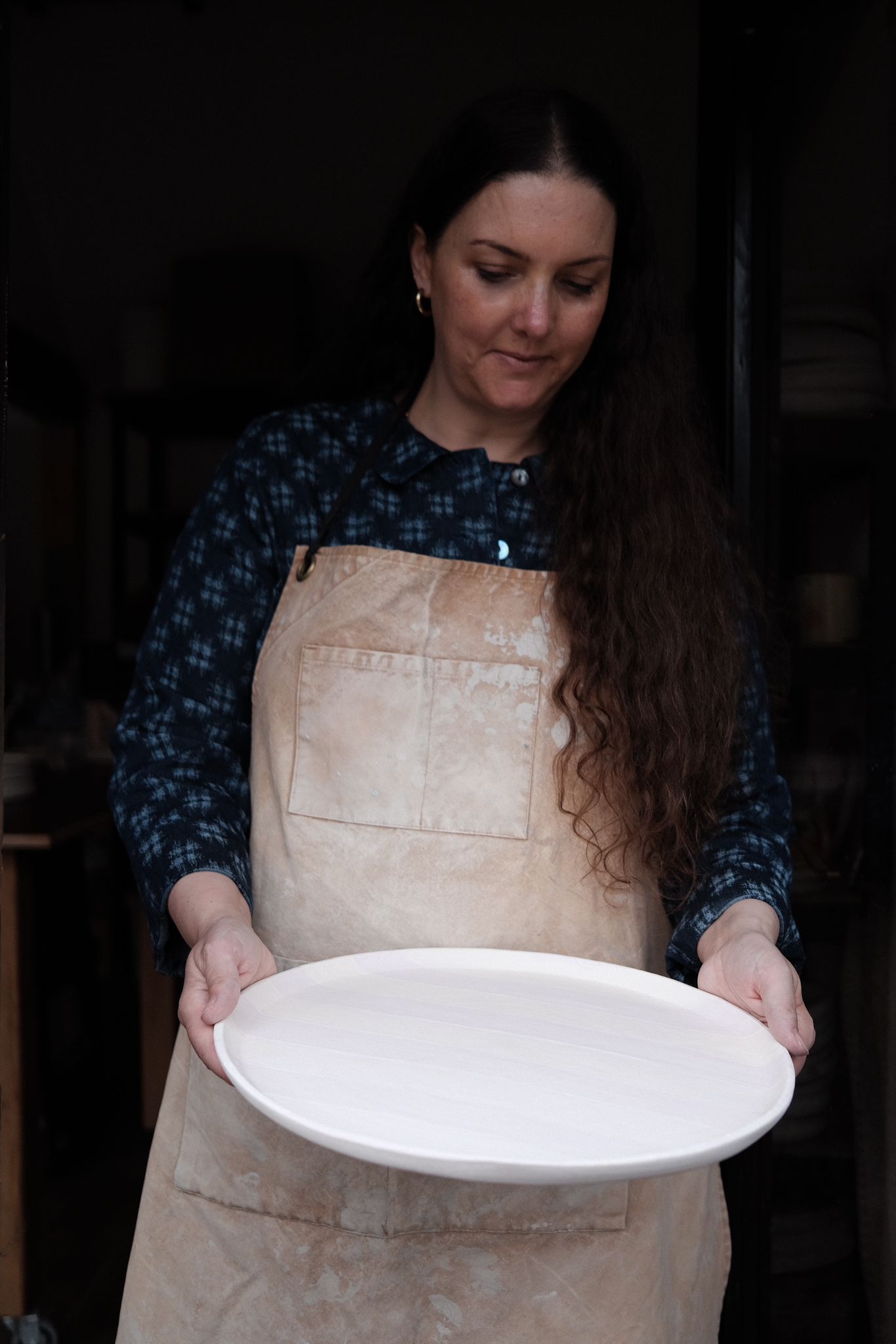
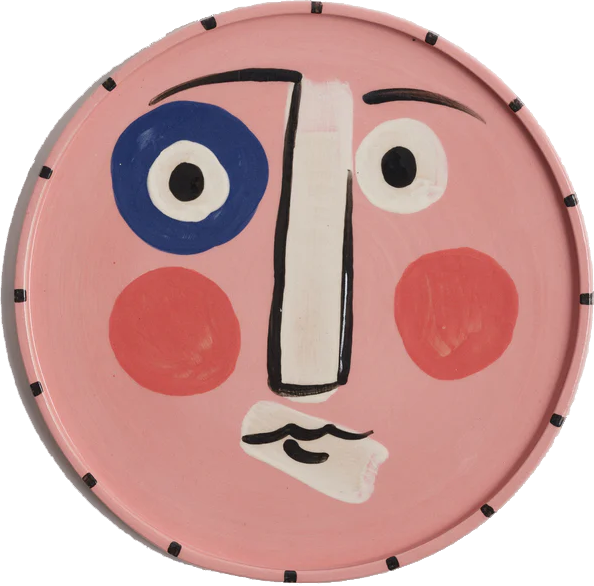
I really enjoy working on a larger scale and a huge round platter I made recently is a current favourite. I am also very fond of my Isolation face collection, fun and playful in bright colours that spark joy.
Creative process
6. What does a typical day in your studio or workshop look like?
I start my day in the studio with a nice coffee from the cafe next door. I write a to do list on the board and get my clay prepared for the day. Weighing out and wedging clay ready to be thrown or rolling out clay if I am planning to hand build.
I save all my admin work for home as I have to fully focus whilst making otherwise things go wrong. I listen to Guy Garvey or a good podcast and get into the zone, making away until it is dark or I’m hungry!
7. Do you have any unique rituals or habits that help you stay creative?
I love to look through old magazines and as much as I love going to exhibitions I don’t do it nearly as much as I should. Instagram and pinterest are great starting points for a creative boost but I often go down rabbit holes started off by pinterest ending somewhere really interesting.
8. How do you handle creative blocks? Do you have any strategies or tips for overcoming them?
I try to allow myself to step away if I am feeling blocked. Take time out to read, travel, talk to friends and go to the seaside. This always revives me.
Challenges and successes
9. What’s the biggest challenge you’ve faced as a maker, and how did you overcome it?
I think my biggest challenge came from my biggest success. I received my first wholesale order from Liberty for over 600 pieces and they needed to be delivered within 4 months. Everything was handmade and painted. Two kilns failed in the process meaning I lost around 60 plates and caused a big repair bill for the kiln.
10. What’s been your proudest moment or achievement so far?
Getting my first wholesale order from Liberty for a debut collection of limited Isolation face plates that sold out.
11. What’s your favourite quote you’ve ever heard about your work? Who said it, or what was the name of the publication?
"KS Creative Pottery's unique Isolation Face Plates are a cult tableware item”
- LIBERTY
Inspiration
12. Where do you draw inspiration from for your work? What sparks your imagination and creativity?
All around me I would say, I love the sea living near the Kent coast and I love to travel. I have been visiting Sicily for 23 years and I find the heritage for artisanal pottery very inspiring. I love to visit different villages to see how their style and use of colour varies. I collect pieces that I bring home and refer back to.
13. Do you have a favourite artist, maker, movement, or tradition that has influenced your craft?
As well as Sicilian artisan pottery I am very intrigued by artist movements and groups. I am drawn to the colours and geometry of The Bauhaus movement and the freedom and expression Charleston/ The Bloomsbury group.
14. How does colour influence your practice; is it an important part of your process? Do you have a particular palette or favourites? Any go-to sources for colour inspiration?
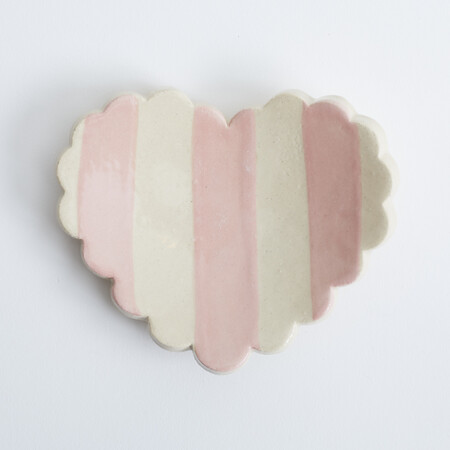
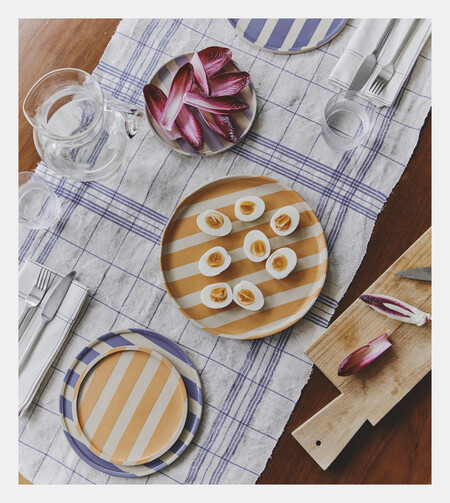
I am so inspired by colour and very drawn to unusual colour combinations. I dress predominantly in black or blue but love to explore colour within my work and find it makes my pieces joyful. I love a sludgy olive green with a lemon yellow and a soft pink. I find the book ‘ A Dictionary of Color Combinations’ a great source. I would say my palette is unique and inspired by holidays and the seaside. Stripes have always been in my life and I was called stripey Kate at university. I love to use bright but soft colours in my Duci stripes, trying to toe a line between playful and sophisticated.
Perspectives and goals
15. What role does your environment play in shaping your creativity?
I live in the Kent countryside and not far from the sea so the environment around me really plays a big part in my creativity. I am inspired by the colours of the land and space around my home and studio. I find a walk along the sea shore or even my drive through the high bush lined country lanes to the studio really give me the space to think and to create.
16. What do you want people to feel when they experience your work?
I hope that my pieces spark joy and that they add interest to peoples homes. Making you smile in your day to day moments.
17. What are you currently working on, and what excites you most about it?
I am very pleased to be working on a new collection for The Courtard Museum gallery and a collection of Fish for the National Gallery. I am also working on developing my workshops and possibly doing my first retreat this year.
Advice and reflection
18. What advice would you give to someone starting out as a maker?
Always make pieces that you love and that you enjoy making.
19. If you could go back to the start of your career, what advice would you give your younger self?
I have had a really varied career and I have thoroughly enjoyed my work, generally working with really nice people who are great at what they do. I think that the only advice I would give is do what you love and start making/ working with clay a lot sooner, as I have found it so cathartic and is probably the calm I needed when I was younger.
Closing thoughts
20. If you could collaborate with any artist, past or present, who would it be and why?
I would love to have worked in the pottery at Charleston with Vanessa Bell and Duncan Grant, or have been part of the Bauhaus. I would also have loved to have collaborated with Barbara Hepworth or Picasso. But in terms of today I would love to work with artist Rosie Harbottle, I am taking a painting course with Rosie in April and I can’t wait to explore paint and oil pastels with her. I love her style and hope to start to produce work on paper as well as in clay.
21. Where can people find your work, and how can they support you?
I have a website where you can shop directly with me – kscreativepottery.com
Or my work is available in a The Courtard museum shop and handful of small local boutiques:
The Courtard Museum – Somerset house London
Lamp London Home – Peckham Rye
Aime – Ledbury rd London
Rae Lifestyle – Rye
Kate Sellers’ ceramic designs are vibrant and uplifting, intended to bring joy to everyday moments. Influenced by the seaside landscapes of Kent and artisanal traditions of Sicily, her pottery adds warmth, character, and a touch of playful elegance to any home.
Explore Kate’s latest collections and follow her creative journey:
Support Kate by visiting her online shop, experiencing her creations at select boutiques, and following along as she continues to bring joyful pottery into the world.

Rituals for Creativity by K.S.Creative
Creativity is deeply personal, and over the years, I’ve realised that every artist has their own rituals—small, grounding habits that set them up to have a productive day creating.
As a ceramicist and founder of K.S. Creative Pottery, I have always been fascinated by the rhythms and routines that shape the creative process. Whether it’s a quiet morning moment, the hum of a favourite playlist, or the tactile act of working with clay, these rituals not only influence my own practice but also offer insight into how other makers find their flow.
In this article, I explore the role of these daily habits, drawing on my own experiences and those of fellow makers, to understand how creativity is nurtured through ritual and routine.
The Playful Palette: Bold & Unexpected Combinations
Some makers are drawn to the joy and surprise of working with unconventional colour combinations.
“It’s my moment to pause before the day gets going.”
Pottery is a process of transformation—both for the clay and for me as an artist. It requires patience, precision, and focus to navigate the many stages, from preparation and glazing to firing. While every maker finds their own way of working, we all share a commitment to balancing technical skill with creative expression.
For me, starting the day right is essential. Whether it’s a cup of coffee, a walk in the countryside, or simply taking a quiet moment before stepping into the studio, these rituals create a sense of calm before the physical process of making begins.
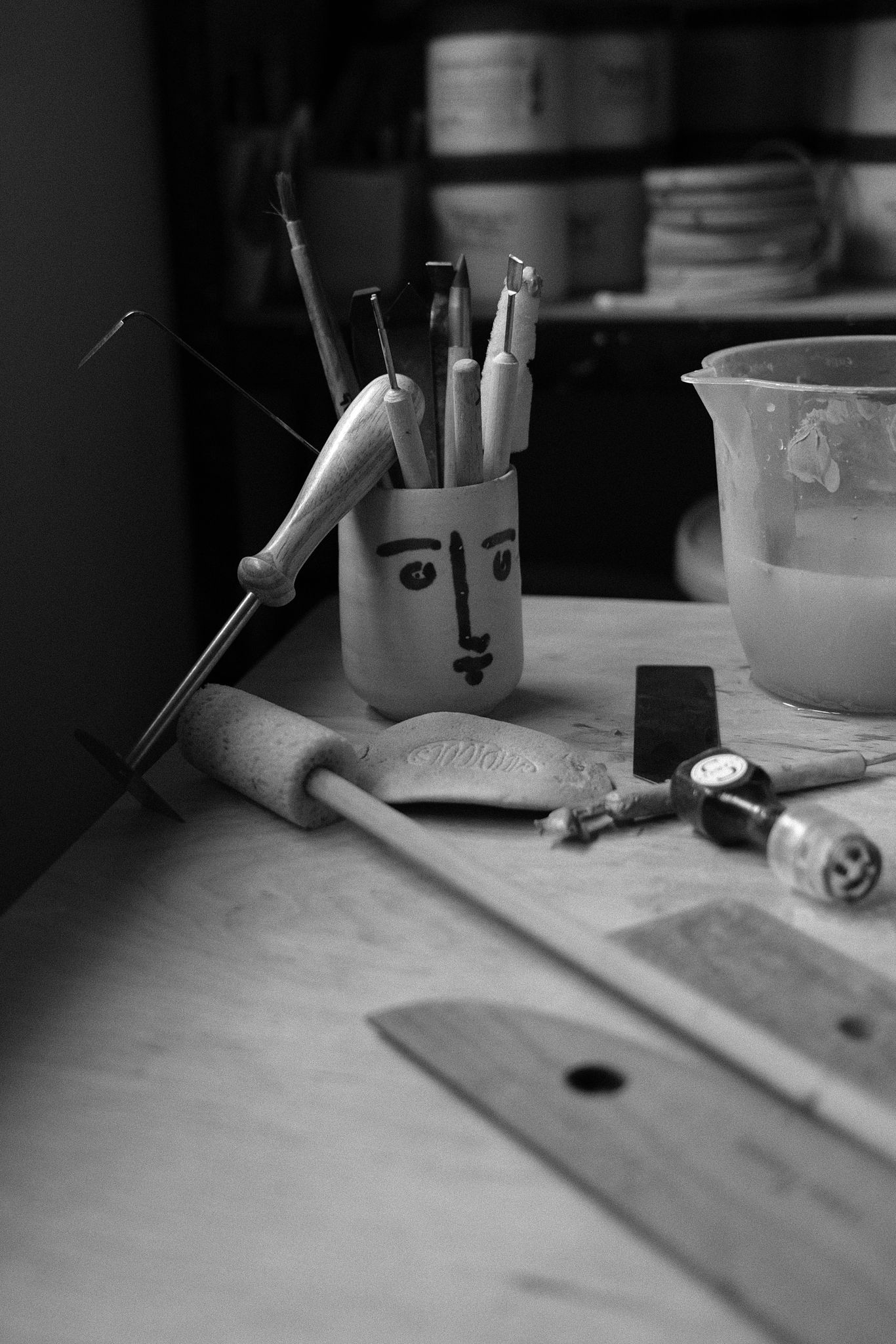
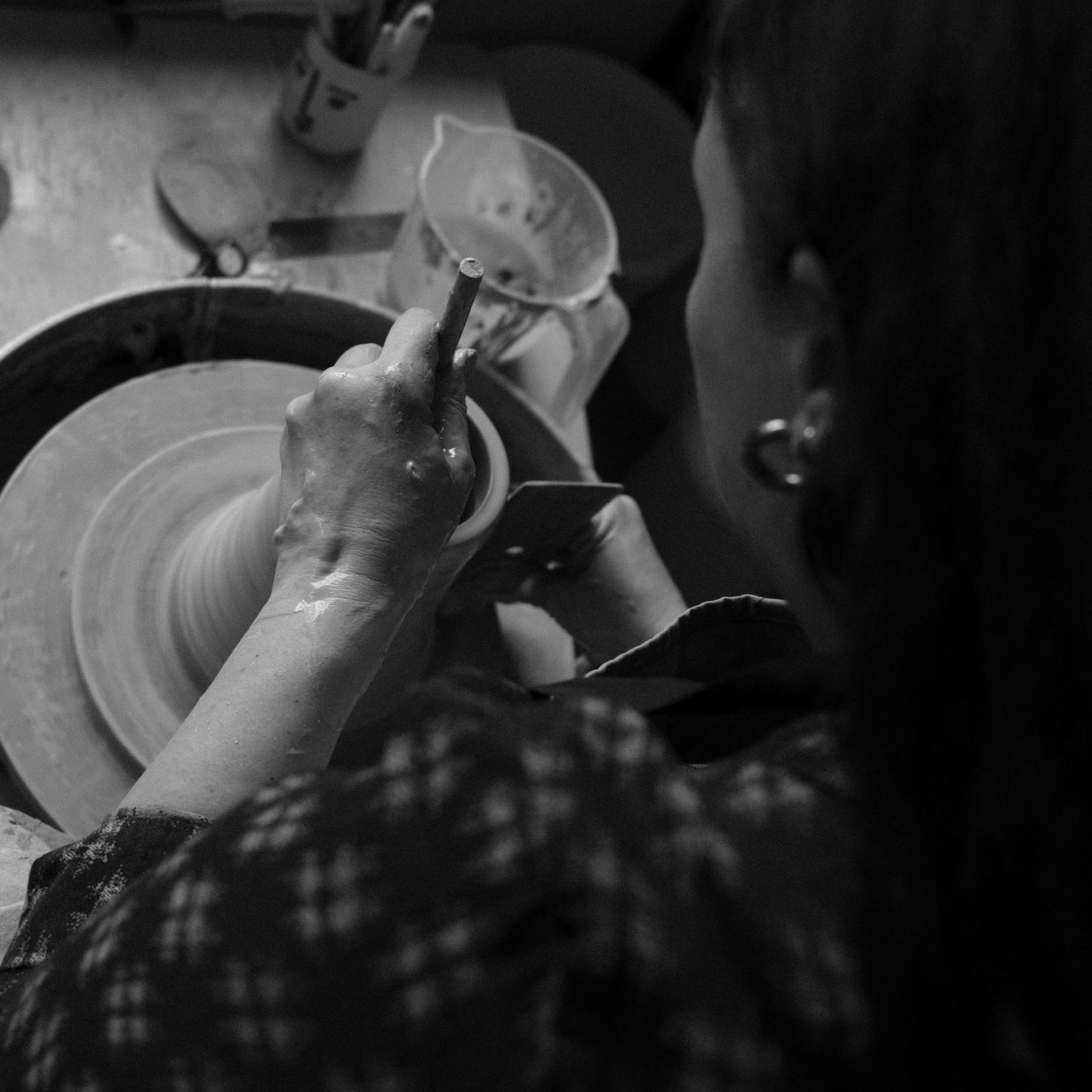
Once I’m in the studio, the environment plays a crucial role in shaping my creativity. Some makers thrive in silence, while others need sound to keep them focused on their work. I tend to have music, a podcast, or the radio playing in the background. I love Guy Garvey’s voice—it helps set the tone for the day and keeps me engaged while working.
My fellow maker Hal Haines embraces shifting rituals:
“I find rituals extremely important, but I often shift from one to another. I used to burn a particular scent of St Eval candle in my studio every day, or drink a specific Pukka tea infusion (one with fennel), or binge a full podcast series from beginning to end.”
Subtle & Natural: A Muted, Calming Approach
While some makers embrace bold contrasts, others prefer a more understated, calming palette.
Making in clay is both enjoyable and rewarding—often described as therapeutic—but it is also physical and demanding. It takes skill and practice to master the craft, from centering clay on the wheel to achieving the perfect glaze finish.
Leaving space for creativity is just as important as mastering the technical aspects of pottery. Artists and makers understand that inspiration cannot be forced, and allowing room for spontaneity can lead to some of the most meaningful work.
“I make sure to give myself the freedom to experiment — Some of my best pieces have come from moments where I simply let the clay guide me.”
Hodge Potts
Hains echoes this sentiment, emphasising the importance of curiosity:
“If you don’t leave room for exploration, you risk losing the joy in making.”
Having structure is important—especially when making to order or working to deadlines—but leaving room for spontaneity is crucial for true creativity. It allows new ideas to develop naturally.
Maker Hodge Potts shares a similar approach:
“I don’t start with a fixed plan for every piece. I allow myself to be inspired by the material, responding to it as I go.”
Hodge Potts
I see value in both approaches:
“Some artists thrive on routine, while others embrace the unknown. There’s no right or wrong—it’s about what allows the creativity to come through.”
Colour as a Personal Connection: From Sketches to Confidence
For some makers, the colour selection process is about more than just aesthetics—it’s about building confidence in their creative choices.
For me, the beauty of pottery is in its balance between function and meaning. Every object carries the marks of its maker. “Showing the maker’s hand” is a term commonly used, but it’s not just about the physical marks—it’s about the process and rituals that brought the piece to life.
A handmade mug, for example, has throwing rings at its centre—marks left where fingers pulled up the walls of clay. Its glaze will be unique, with speckles and variations from the kiln’s unpredictable reactions.
A cup of tea in a handmade mug will always feel more special.
Earthy & Grounded: A Love for Natural Hues
For some makers, colour is deeply rooted in the materials they work with, enhancing the natural beauty of their craft.
“At the heart of it all is the joy of making.”
Ali Hewson
Hal Haines adds:
“If you don’t leave room for exploration, you risk losing the joy in making.”
Every artist has their own way of working, but rituals remain a common thread. These small acts shape the creative process and give meaning to making.
There’s something beautiful about the way creatives build their own rhythm.
“It’s a reminder that making is just as much about the process as it is about the finished piece.”
We could all choose to produce our pieces in a factory—but we don’t.
We want to feel the clay.
We choose to create with our own hands.
We enjoy the process—and it is the process that makes each piece unique.
There is so much that goes into making pottery, but it is these small rituals that keep us focused and enable us to produce beautiful pieces that people want to own and treasure.
Photography by: Imogen Love
About the author
K.S. Creative Pottery
Kate Sellers is a multi-disciplinary creative and the founder of K.S. Creative Pottery, a boutique pottery studio set in the idyllic Kent countryside. With a background as a prop stylist and set designer, her artistic journey has been shaped by a love for creating and a keen eye for detail. She turned to pottery as a way to slow down, reconnect with hands-on making, and bring her vision for timeless, meaningful homeware to life.
Discover more about her work and explore her latest pieces by visiting her Maker Page.
