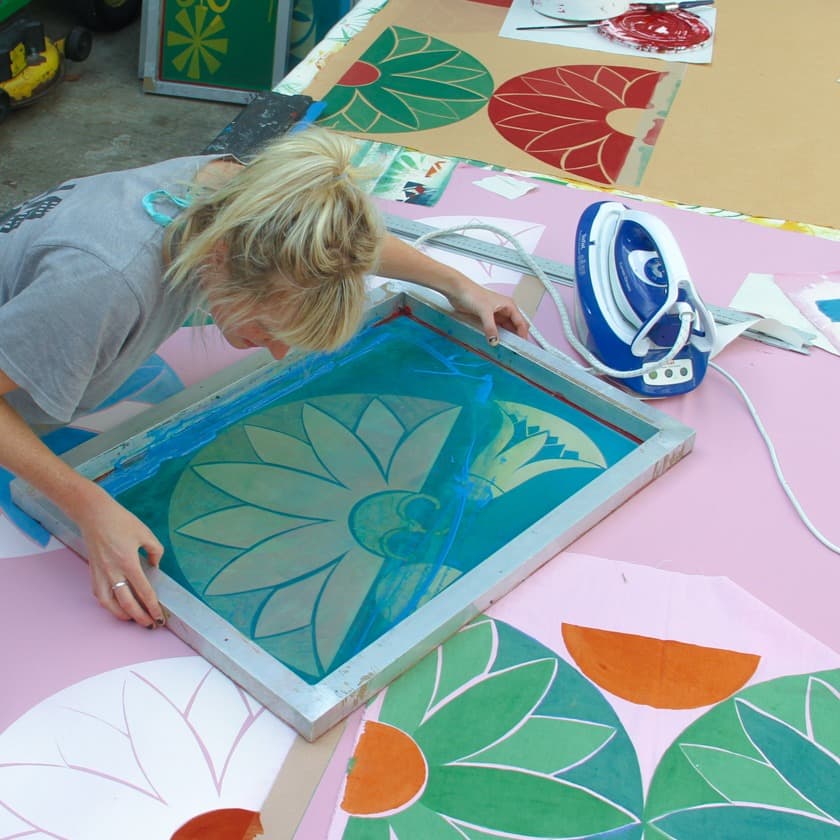
Meet the Maker: Folklore, Fabric, and the Natural Rhythms of Jessie de Salis
We catch up with Jessie de Salis in her Somerset barn studio to talk about the beauty of hand-printed textiles, the emotional depth to her bold designs, and how she captures the shifting moods of the natural world.
Jessie shares how folklore, memory, and landscape inform her process; and the quiet magic of printing by hand, embracing imperfection and individuality in every piece. We also discuss the joys and challenges of rural studio life, building a slow, intentional practice, and the stories woven into each batch of fabric Jessie creates.

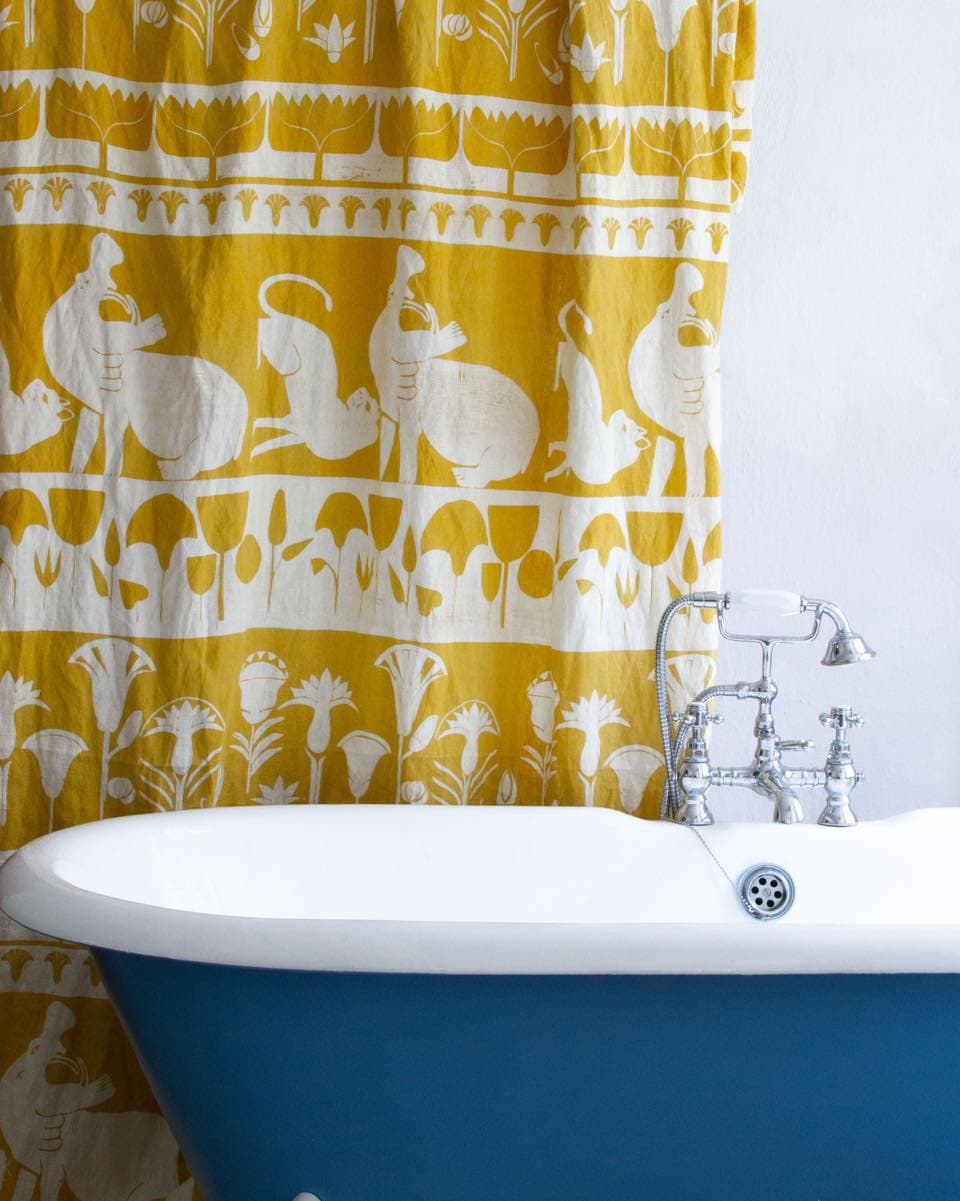
1. Can you tell us a bit about yourself and your artistic journey?
My name is Jessie de Salis, I am a textile designer and screenprinter. I have always been into textiles. At school I drew patterns over every piece of paper in my grasp. At uni, while studying textiles, I covered every scrap of the wall space with fabrics (at the time I thought this looked like a very sophisticated tent).
2. What inspired you to pursue your craft? Was there a defining moment or influence that sparked your passion?
During lockdown I began my screen printing journey and developed my textile craft. I started screen printing on the kitchen table and realised “this is me now. I am a screen printer”. I fell in love with the look of hand printed fabrics: the way the inks sit on the cloth, the freshness of the colours and the crispness of the print. It’s the most exciting and satisfying moment when you print a design, lift up the screen and see your image come to life.
I work with my cousin Alice. We now hand print all our products in a Somerset barn, surrounded by the flowers and the bees. Treading lightly on the earth is a guiding principle. We aspire to make natural handcrafted pieces that will carry on telling stories for years to come.
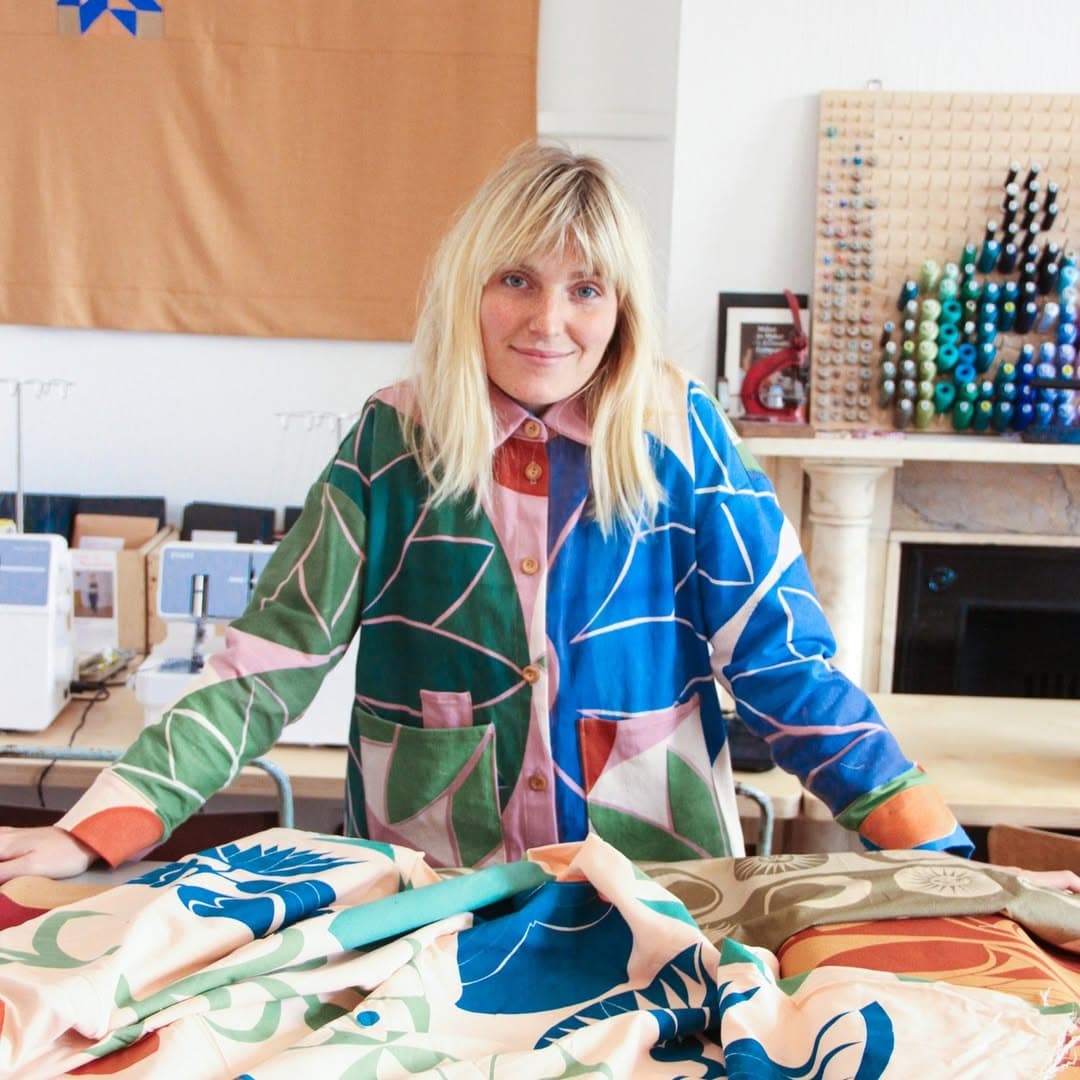
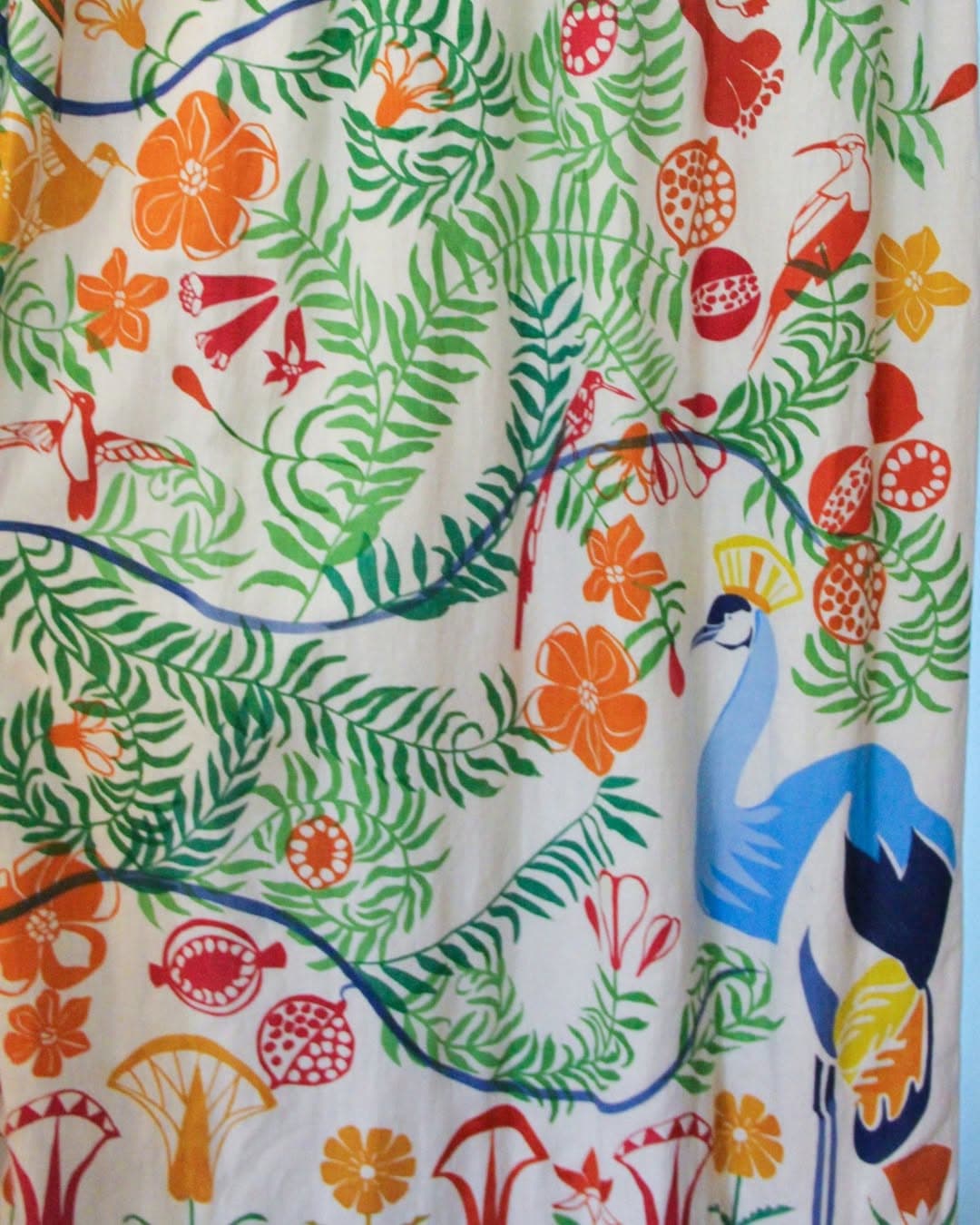
Your craft
3. How would you describe your work in three words?
Hand-printed, Joyful, Colourful
4. What materials or techniques do you use, and why are they important to your process?
Treading lightly on the earth is at the heart of my process. Our fabrics are sourced from a European mill powered by green energy. Our dyes are hand mixed and water based. Screen printing allows me to oversee the whole print process.
I love printing my fabrics by hand because I can make beautiful things locally. Screen printed fabrics are imperfect, unique and each separate piece tells its own story
5. Can you tell us about a favourite piece you’ve created and the story behind it?
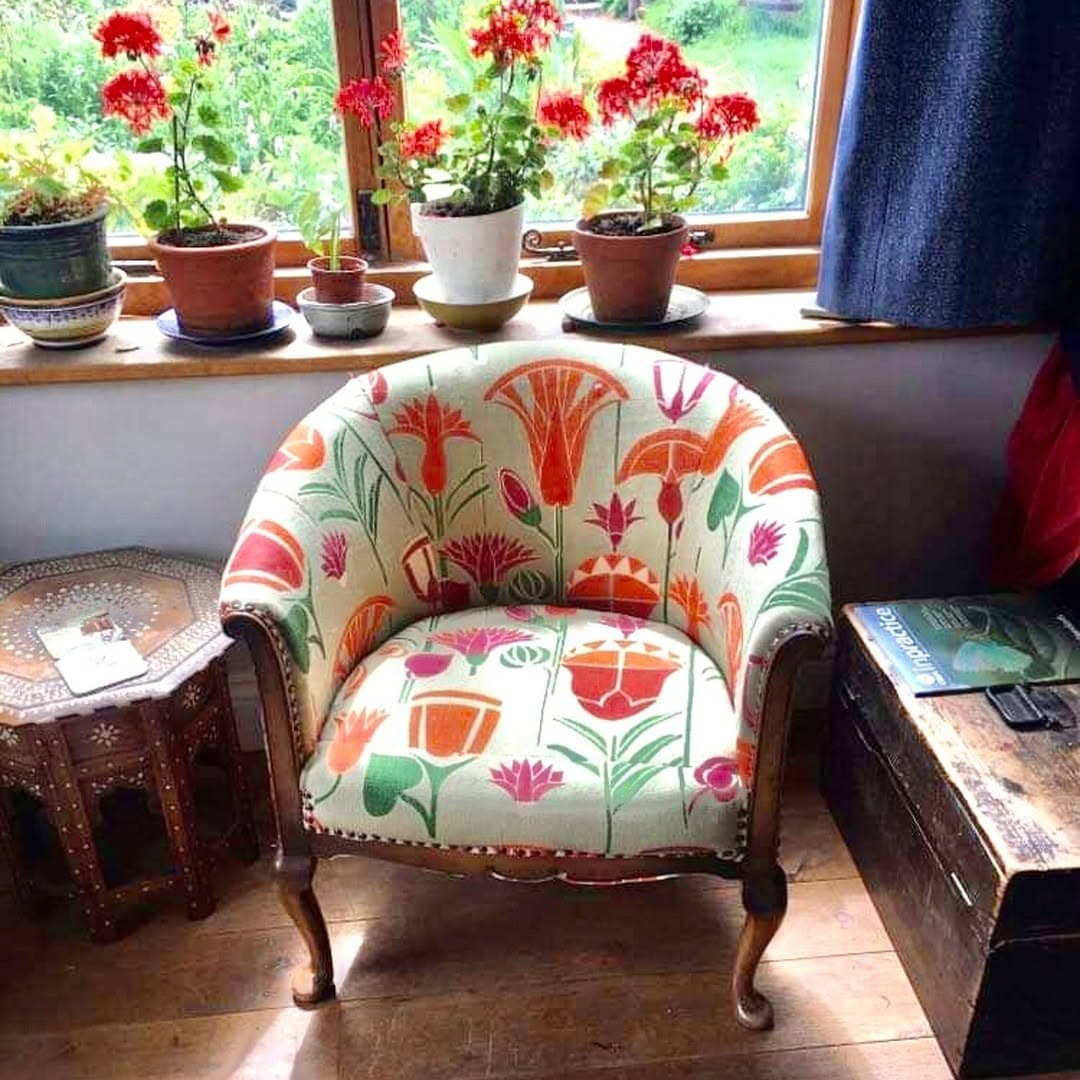
A lovely project we recently worked on was decorating a Somerset yurt. Alice and I had a simple mission, not to buy anything new. We screen printed on old table cloths and covered the yurt walls with patterns. It was such a joy to create something from reclaimed materials and transform old fabrics with print.
Creative process
6. What does a typical day in your studio or workshop look like?
Every day is quite different. My studio is great, I’m super lucky to have the space and totally wouldn’t be able to print big runs of fabric without it. Alice and work with the seasons which means long print days in summer when the light is good. Print days are a joy. It’s amazing to see a 10m fabric print coming alive in front of your eyes.
7. Do you have any unique rituals or habits that help you stay creative?
I am currently journaling and drawing every day. Even if it’s just a few words and a sketch on my bed it keeps the ideas going.
8. How do you handle creative blocks? Do you have any strategies or tips for overcoming them?
Being a designer is about collecting visual research wherever you go. This can be through places I visit, people I meet and stories of the past. If I’m feeling stuck I’ll try to go to galleries, buildings or botanical gardens and draw. Sometimes I’ll get a bunch of art books out and look at designs I find inspiring.
Challenges and successes
9. What’s the biggest challenge you’ve faced as a maker, and how did you overcome it?
Learning how to screen print perfect prints has been so hard, there is so much that can go wrong. I think the biggest challenge has been keeping motivated and starting again when something doesn’t go to plan, which happens from time to time when you’re doing everything by hand.
10. What’s been your proudest moment or achievement so far?
Setting up a print studio has been my proudest achievement I think. There has been so much research, building and planning involved and it’s taken years. I know it’s a small thing but it’s so nice getting photos from customers to see how they have used my fabrics.
11. What’s your favourite quote you’ve ever heard about your work? Who said it, or what was the name of the publication?
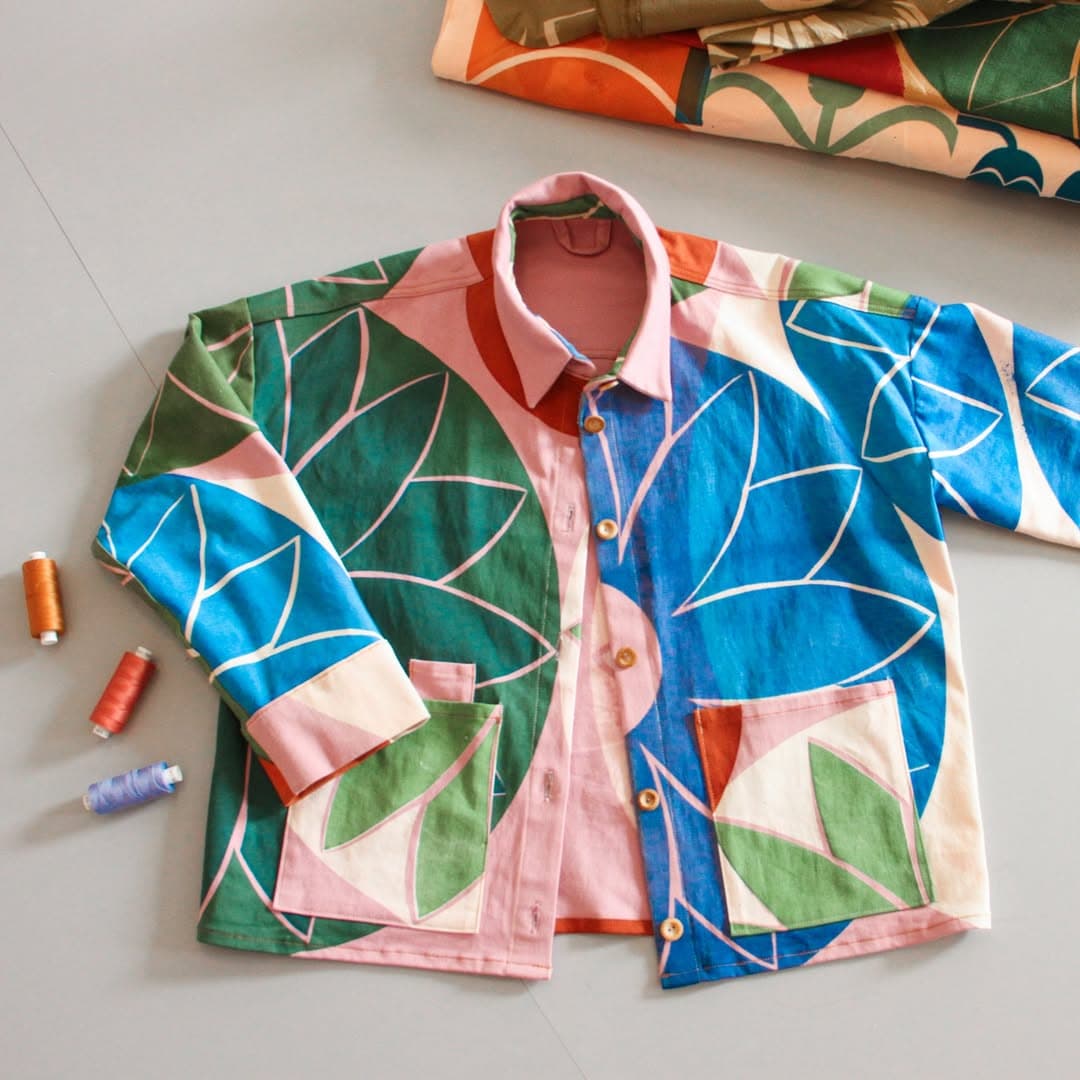
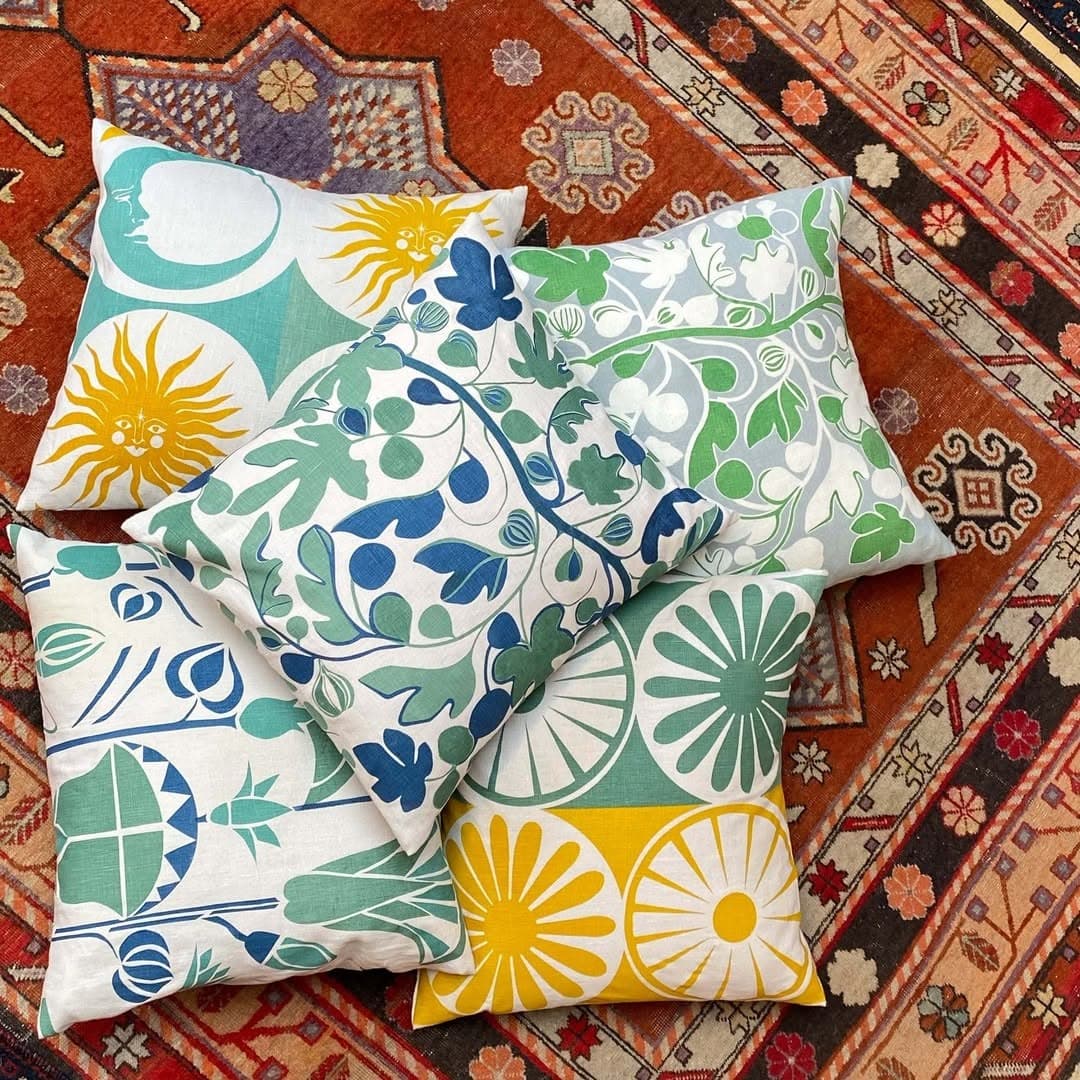
"Soft green pea plant tendrils curling around bed heads, Bauhaus inspired napkins adorned with vivid blue and soft green circles and gloriously sunny yellow petals spread gracefully across a table."
- Rosanna Spence, Bristol Life, March 2025
Inspiration
12. Where do you draw inspiration from for your work? What sparks your imagination and creativity?
I love bright and bold designs . Also, flowers, grasses, animals and trees. Nature is a constant source of inspiration, just look out your window and you have a pattern.
13. Do you have a favourite artist, maker, movement, or tradition that has influenced your craft?
I always find myself returning to the Bauhaus School of Art. I love Josef and Anni Albers. The clean crisp shapes from their work look so contemporary to me: beautiful satisfying circles and simple squares. The Bauhaus had such an inspirational attitude to design. For the Bauhaus, design is a considered and spiritual process.
Another huge inspiration is the amazing Hilna Af Klint. Her paintings are free, bright, expressive and on such a scale. I remember when I first saw her work I bought the book straight away, and became so obsessed with her paintings and her story. When I discover a designer I love to buy the book, listen to interviews and become immersed in their work.
A friend recently gifted me a beautiful hardback book of the work of Marimekko – the dream company in design and ethos! It was started by visionary Armi Ratia who converted an old oil cloth factory into an incredible textile printing studio where they printed huge scale fabulous designs. It’s a dream of mine one day to establish a textile collective in a disused building, creating sustainable and local textiles and building a local community of designers.
14. How does colour influence your practice; is it an important part of your process? Do you have a particular palette or favourites? Any go-to sources for colour inspiration?
I see the world through colour and remember it through colour. It really affects my mood. Even when I start a design using soft greys and a muted pallet, a bright colour will sneak its way in!
Colour leads my designs. It’s the first thing I work out. I like working with contrasting colours and seeing how colours relate to each other. A very pale pink next to a white looks muted, but next to a navy it pops. Screen printing limits my designs to 6 colours so the colours that are chosen need to be carefully considered. I create colour palettes through emulsion paint charts – a great way to quickly see what works together.
Perspectives and goals
15. What role does your environment play in shaping your creativity?
As I am writing this we are entering spring, which is my favourite season and brings me so much inspiration. The weather and the environment really affect how I create, when the world is warm and alive there’s nothing nicer to do than sit outside and paint designs.
16. What do you want people to feel when they experience your work?
I want my work to lift a space and brighten a room. My designs are quite bright and look best when picking up other colours.
17. What are you currently working on, and what excites you most about it?
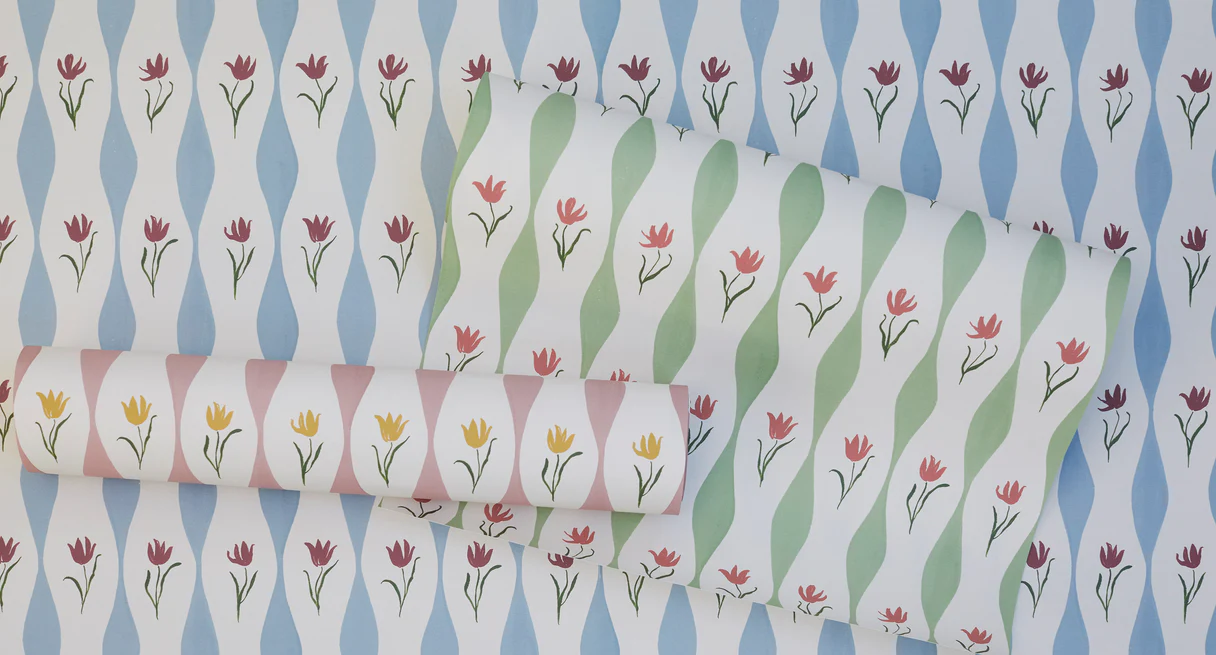
I am currently figuring out how to hand print wallpaper. Paper works so differently to fabric and is used in a very different way. I love to think about how materials will be used and seen in a place and how this affects the design.
Advice and reflection
18. What advice would you give to someone starting out as a maker?
Being a maker can be tough, but it’s incredible to do what you love. Be slow, be perfect, be super proud of who you are and what you put out into the world. Also, something that many people have told me over the years, things always work in three.
19. If you could go back to the start of your career, what advice would you give your younger self?
Don’t take everything so seriously. You’re living your dream, have fun and enjoy the journey.
Closing thoughts
20. If you could collaborate with any artist, past or present, who would it be and why?
This is a fun question. Either William Morris or Mattissee
21. Where can people find your work, and how can they support you?
Mainly through our website: www.jessiedesalis.com. We have recently started selling through a company called Haines as one of their eco designers. We sell through interior designers, on some independent homeware online stores, some shops and hotels.
Jessie de Salis’ hand-printed fabrics blend bold storytelling, pastoral charm, and an appreciation for the handmade. Rooted in nature, her work honours the rhythm of the seasons and the beauty of variation, where every print holds its own quiet narrative.
Explore Jessie’s latest collections and follow her creative journey:
Support Jessie by browsing her website, discovering her joyful handmade pieces, and joining her colourful, creative world on Instagram.

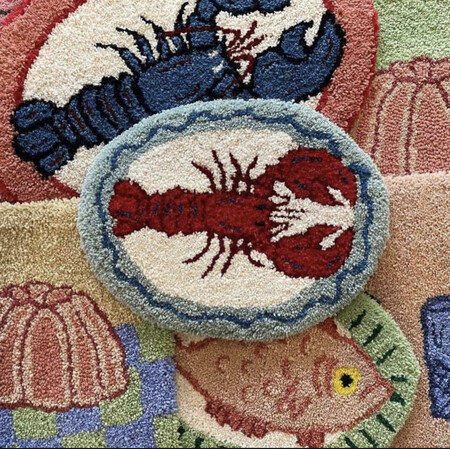
Meet the Maker: Harriet Says Hi, Serving Up Playful Homewares
In this Q&A, we chat with Harriet Says Hi about discovering her passion for tufting, the joy of creating tactile homewares, and how her playful, food-inspired designs came to life.
Harriet opens up about drawing inspiration from supermarket aisles, the unique rituals behind her creative process, and the challenges and triumphs of balancing creativity alongside a full-time job. She also shares her proudest moments, including curating a foodie-themed pop-up, overcoming creative insecurities, and her excitement about expanding her popular bath mat range.
1. Can you tell us a bit about yourself and your artistic journey?
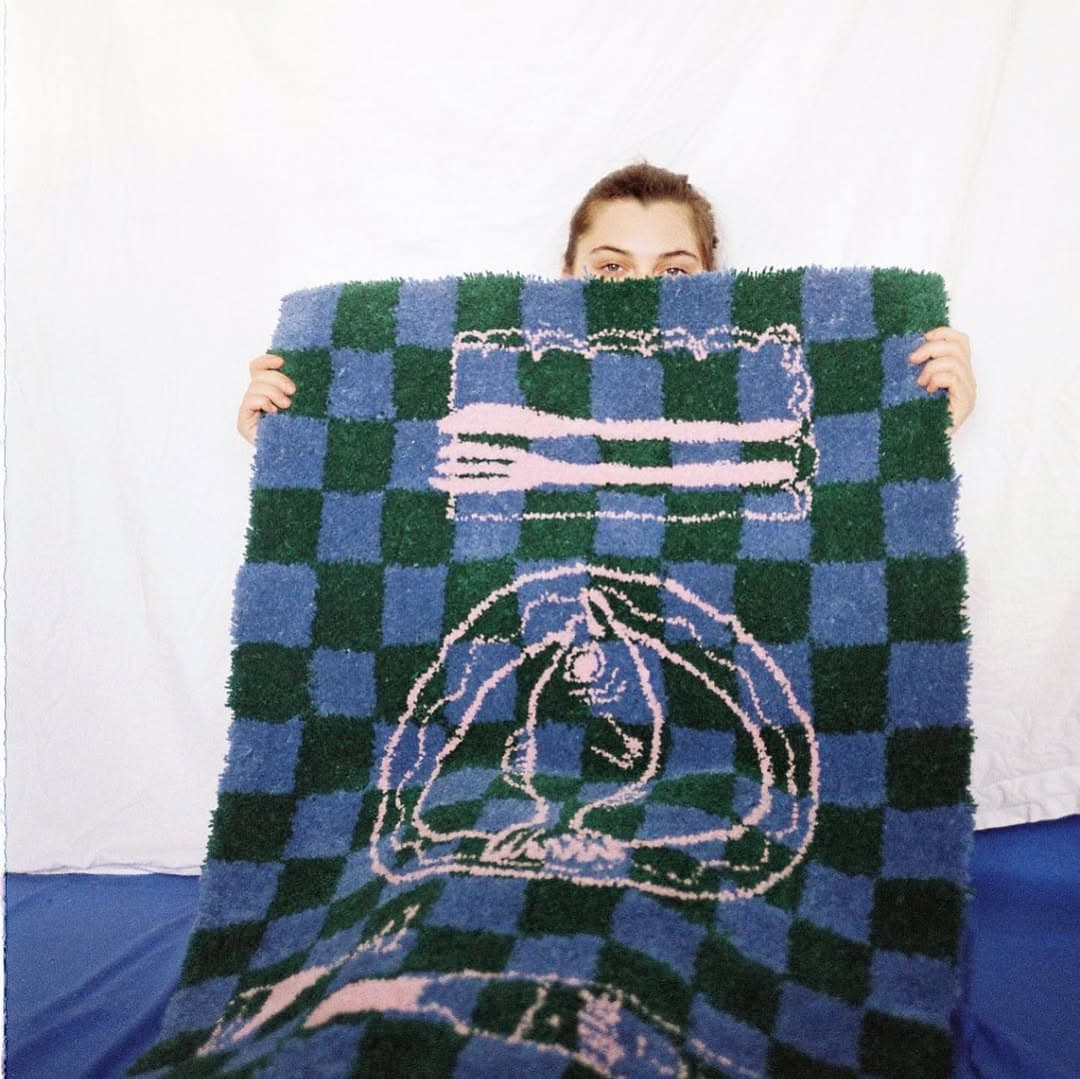
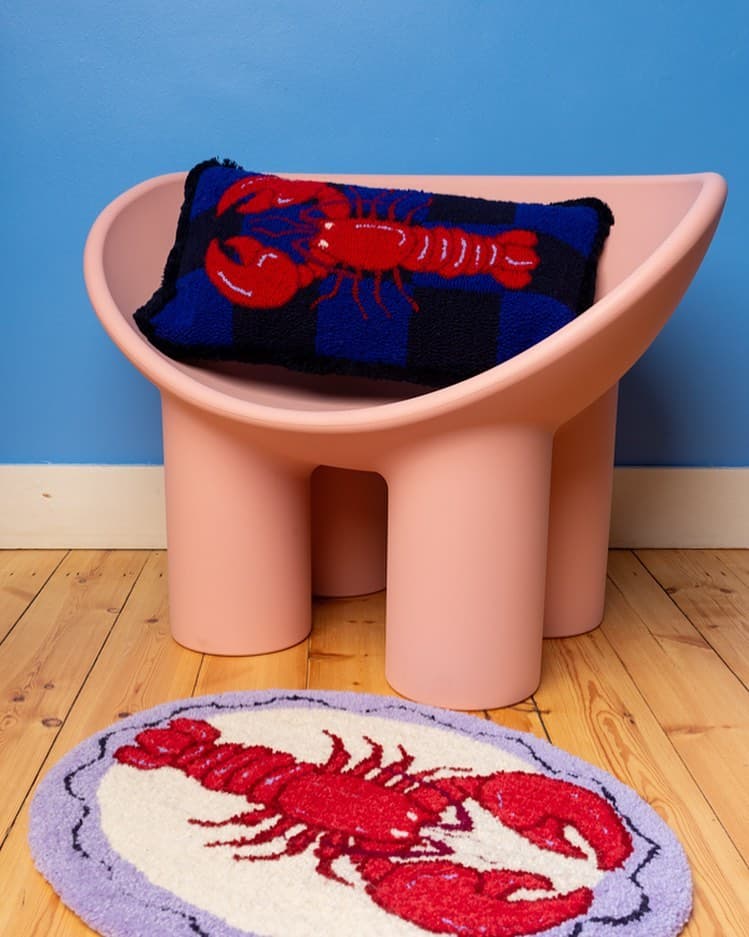
I have always been very creative, but never found a medium that I felt really fit me. After being inspired by all the brilliant tufting artists through social media, I decided to try it out and really loved the hands-on experience of creating my own textile art. This gave me an extremely fulfilling opportunity to create my own cushions and rugs, finally feeling as if I could express myself in a medium that felt right.
After developing my foodie-themed style, I branched out into designing blankets, bath mats, and accessories – enabling me to create more accessible products.
2. What inspired you to pursue your craft? Was there a defining moment or influence that sparked your passion?
I’m sure we’ve all been heavily influenced by social media to try new things, and a few years ago there was a huge tufting-phenomenon that felt like it took over the creative industry. I loved the way you could use a hand-held machine to create art with wool, and turning this art into tactile, useable cushions felt like a huge breakthrough for me.
Your craft
3. How would you describe your work in three words?
Quirky, vibrant, and tactile.
4. What materials or techniques do you use, and why are they important to your process?
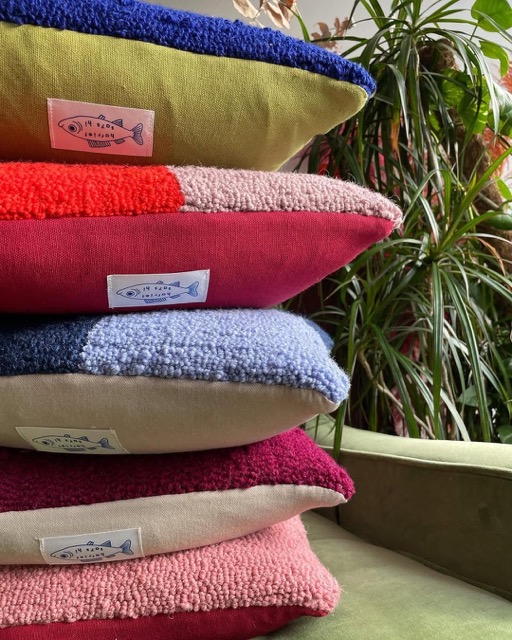
For tufting, I use a loop-pile tufting gun and deadstock Axminster wool to create my cushions. I also use a cut-pile tufting gun to create rugs, as this method forms a shaggy pile effect.
5. Can you tell us about a favourite piece you’ve created and the story behind it?
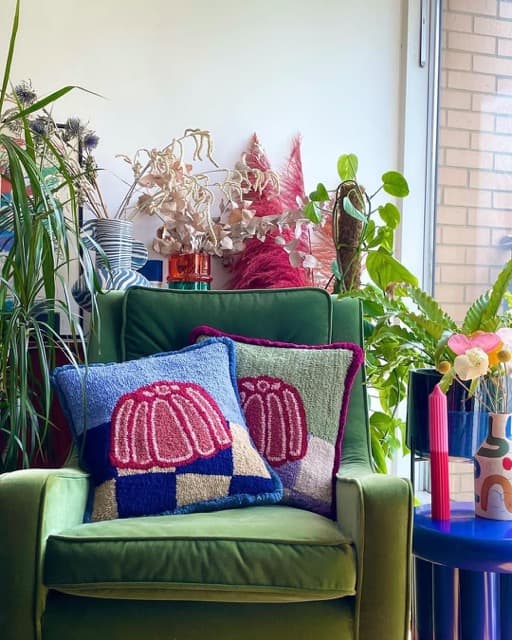
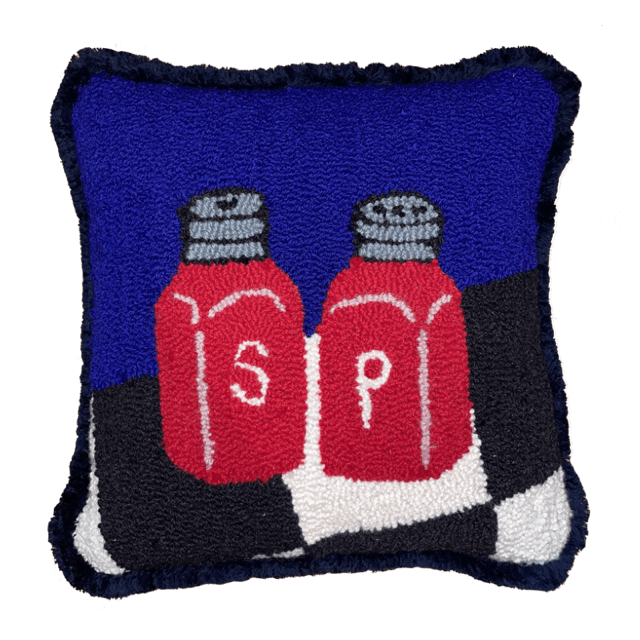
My favourite piece is probably my salt-and-pepper cushion. I love the weirdness of the vibrant red salt-and-pepper pots, boldly sat on a black and white checkered table, with an intense cobalt blue background and luxurious navy fringed trim around the outside. It was a piece that I always look back fondly on as it was the first moment I really felt a sense of pride in creating. These silly salt-and-pepper pots just spark a lot of joy for me.
Creative process
6. What does a typical day in your studio or workshop look like?
I currently run Harriet Says Hi alongside my full-time PR agency job, so a typical day of running my business is squeezed into late-night designing, tufting, and packing orders.
7. Do you have any unique rituals or habits that help you stay creative?
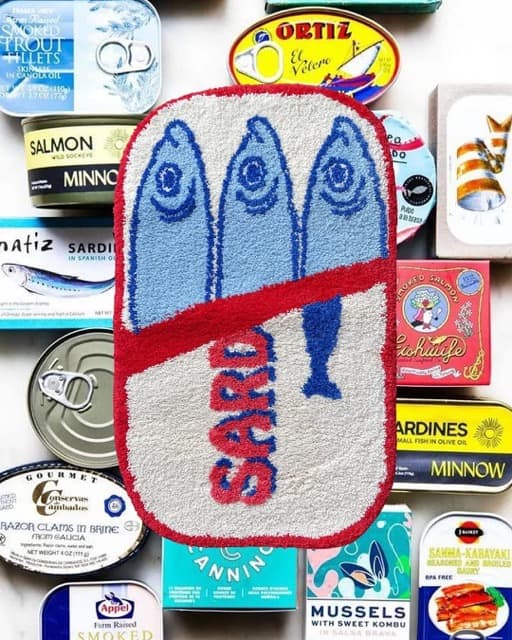
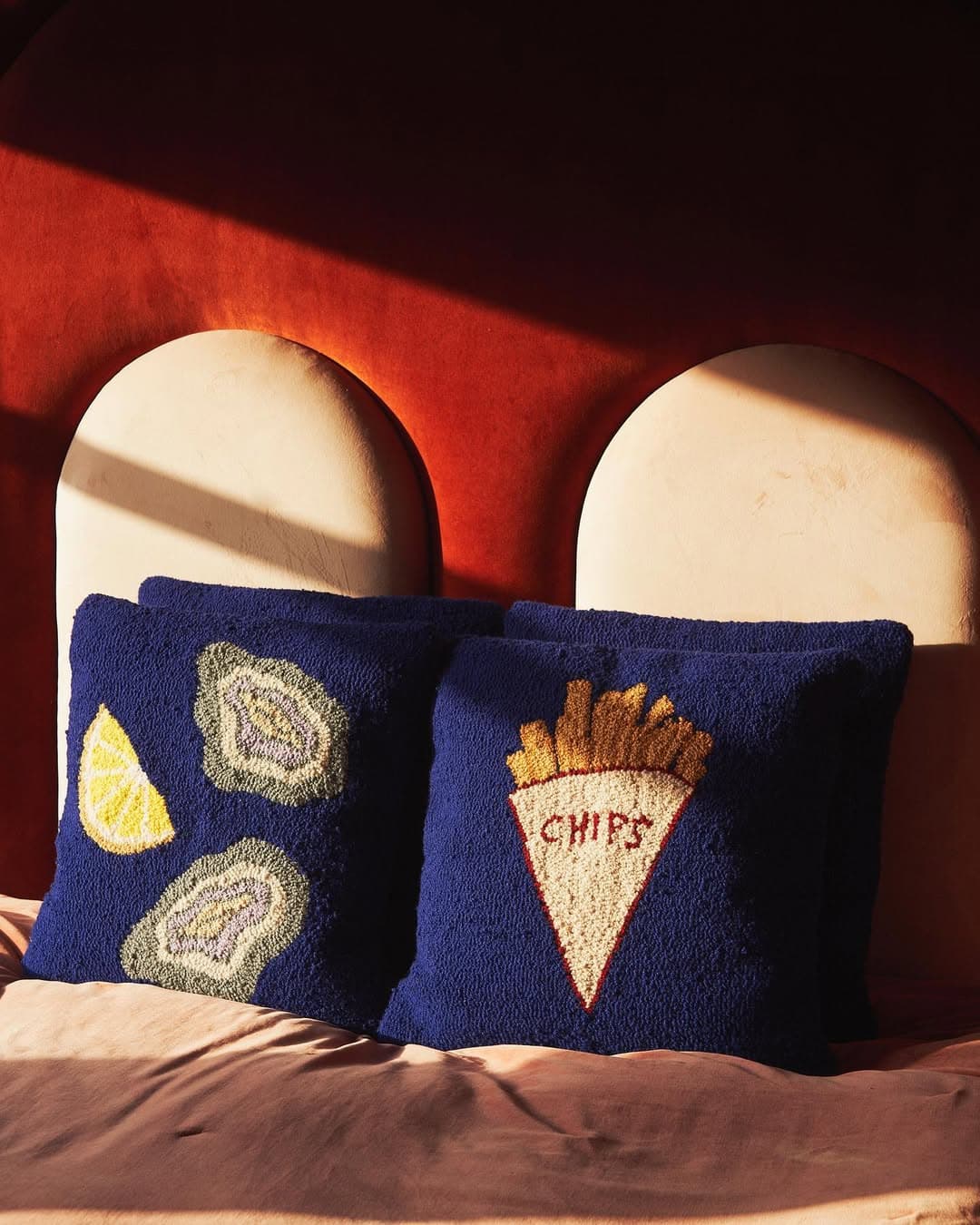
I wouldn’t say its particularly unique, but as my work revolves around food, I often take way to long in the supermarket looking around at all the funky packaging and products to draw inspiration from.
8. How do you handle creative blocks? Do you have any strategies or tips for overcoming them?
I like to put all my devices away and get my trusty notebook and pen out. I do some terrible shaky hand drawing of ideas I have stuck in my head and go back to basics before digitally designing pieces.
Challenges and successes
9. What’s the biggest challenge you’ve faced as a maker, and how did you overcome it?
I think my biggest challenge are my own insecurities. Social media is a great place to connect and market yourself as a maker, but I think it can also have a negative effect sometimes when you compare yourself to others.
10. What’s been your proudest moment or achievement so far?
I’ve always loved the idea of owning my own foodie-themed shop, and last year I curated a foodie-themed pop-up, bringing together 20 small businesses and deli-products under one roof. It took a lot of work, and I was so proud of what I had pulled off. Being surrounded by so many talented people’s work was amazing, and I had so much fun curating the space.
11. What’s your favourite quote you’ve ever heard about your work? Who said it, or what was the name of the publication?
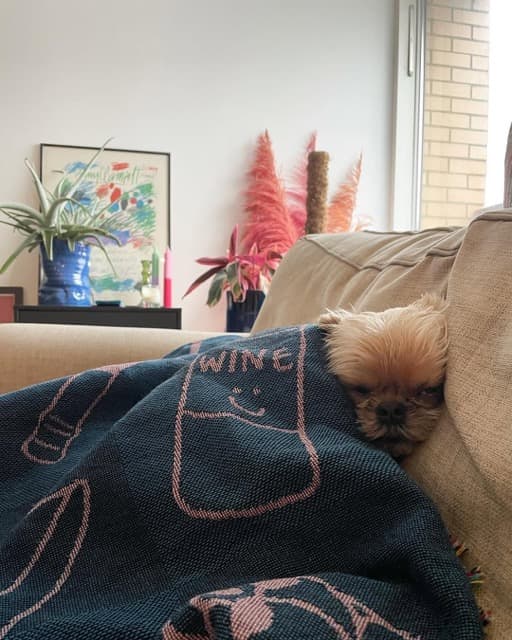
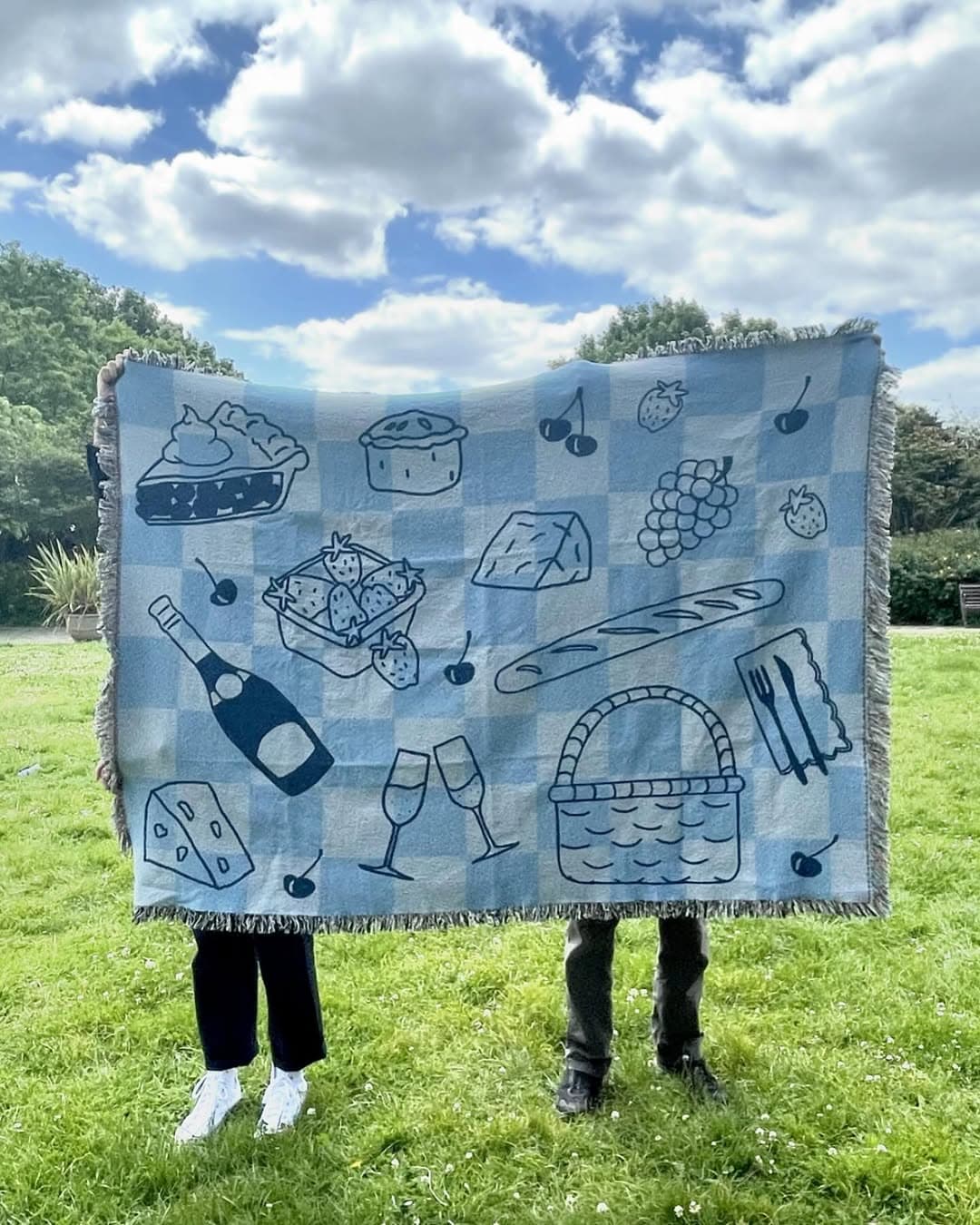
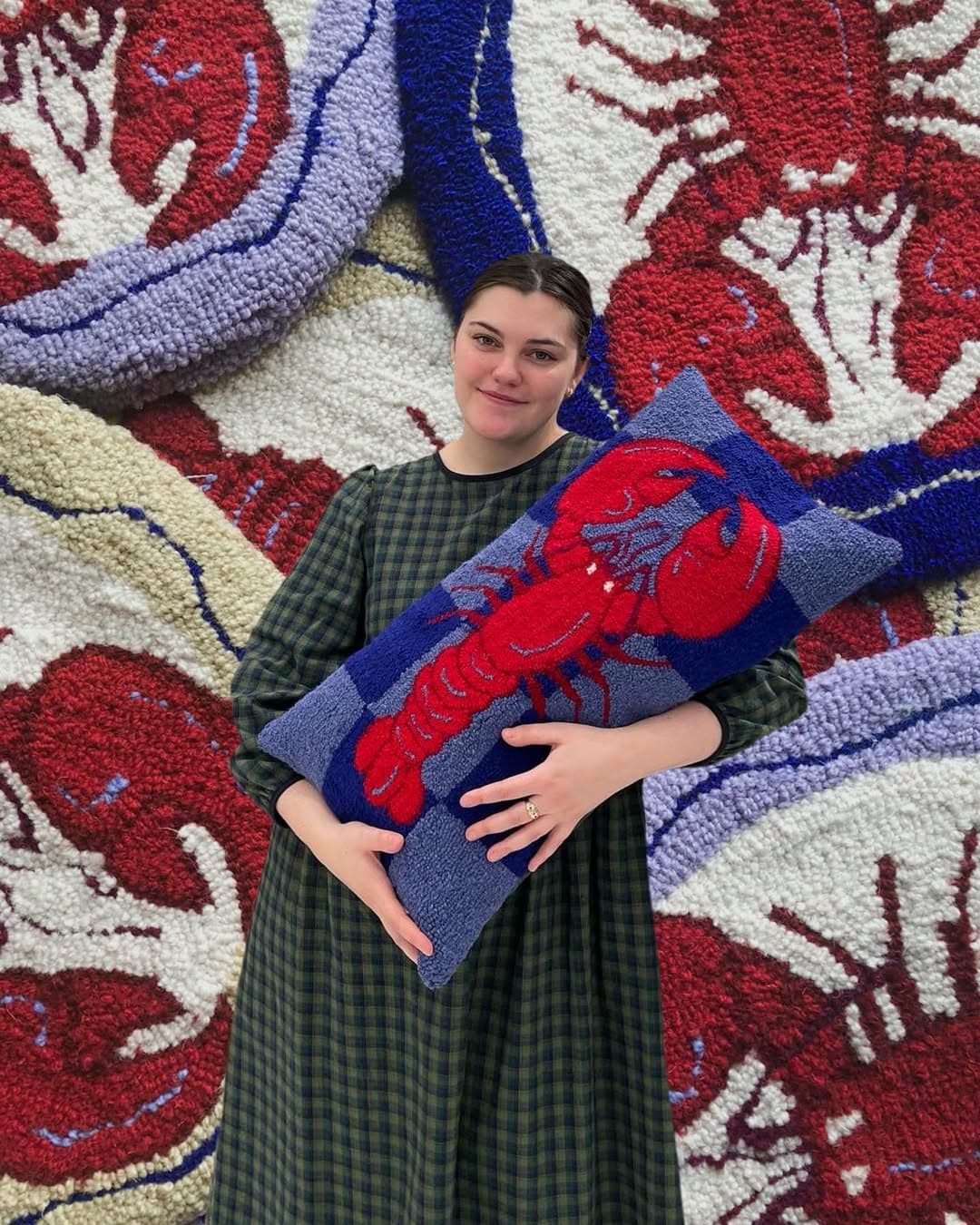
"Grab the bubbly and a baguette, for it would be rude not to adhere to the menu artfully illustrated on this charming blanket by Harriet Says Hi"
- THE TIMES
Inspiration
12. Where do you draw inspiration from for your work? What sparks your imagination and creativity?
Food glorious food! Wandering the aisles of the supermarket and quirky deli shops is where you’ll find me. I love creating pieces centred around people’s favourite memories based around food.
13. How does colour influence your practice; is it an important part of your process? Do you have a particular palette or favourites? Any go-to sources for colour inspiration?
I love contrasting colours, and predominantly use blues and reds together.
Perspectives and goals
14. What do you want people to feel when they experience your work?
Food plays such a huge role in all our lives, and I’d love to think people see my pieces and draw on memories from their own experiences with food and loved ones.
15. What are you currently working on, and what excites you most about it?
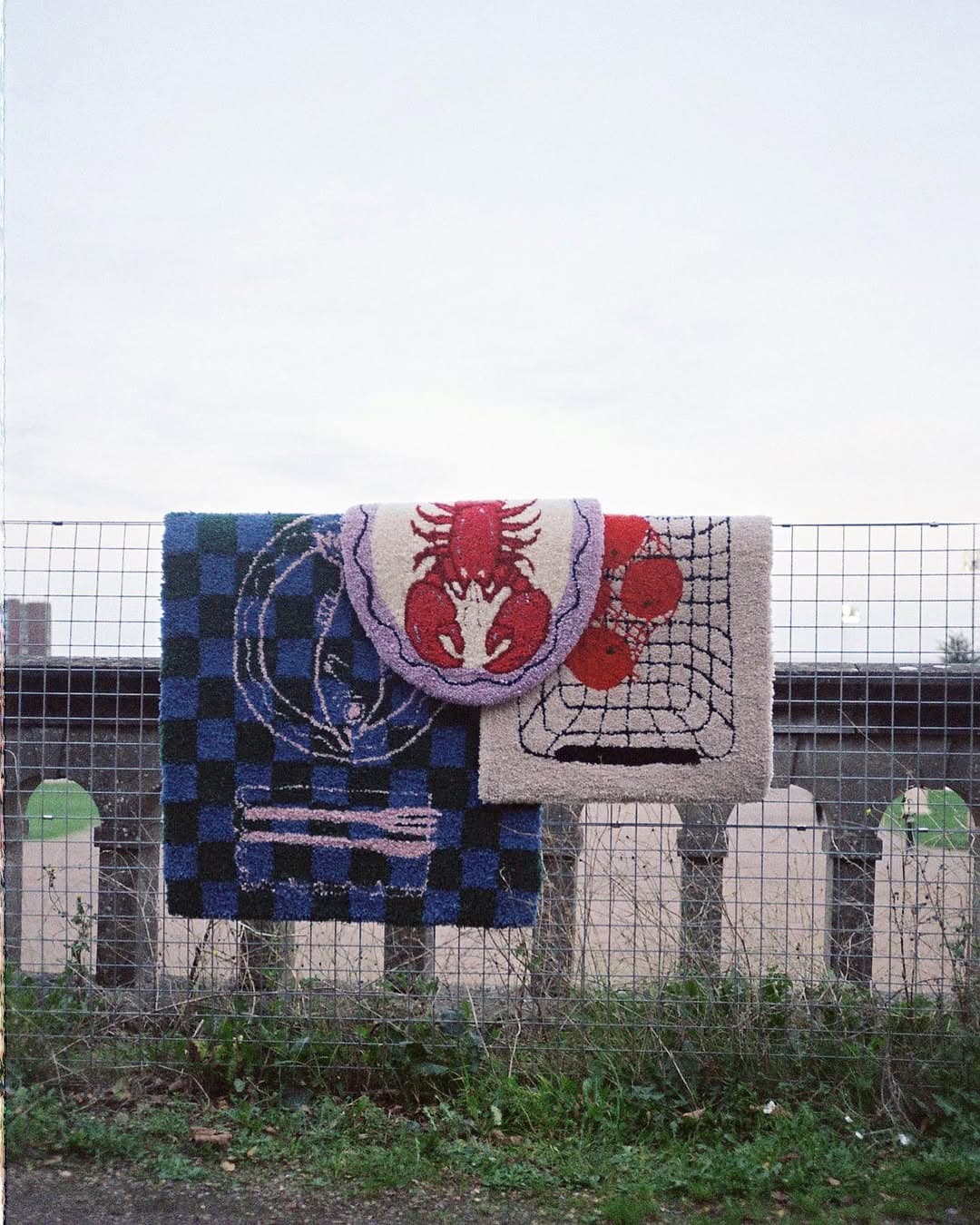
I’m currently developing a wider range of my foodie-themed bath mats – they have been doing so well and I have more weird and wonderful designs in the works. I love that people can elevate their bath rooms with a giant slab of butter as a bath mat.
Advice and reflection
16. What advice would you give to someone starting out as a maker?
Form your own circle of creatives. Being a maker can feel quite lonely sometimes, but having people around you that you can bounce ideas off, cheerlead each other, and confide in, is really important.
Closing thoughts
17. Where can people find your work, and how can they support you?
I’m lucky enough to be stocked in some fabulous shops and online market places. My website is the place to go for new pieces and popular products, and once in a while you’ll find me at a market too.
Harriet Says Hi’s playful, foodie-inspired pieces blend vibrant colours, quirky concepts, and comforting tactile design. From joyful bath mats to whimsical cushions, her creations encourage us to savour life’s small pleasures and celebrate the memories we create around the table.
Explore Harriet’s latest collections and follow her creative journey:
Support Harriet by visiting her website, exploring her delightful creations, and connecting with her vibrant community on Instagram and at markets and pop-ups near you.
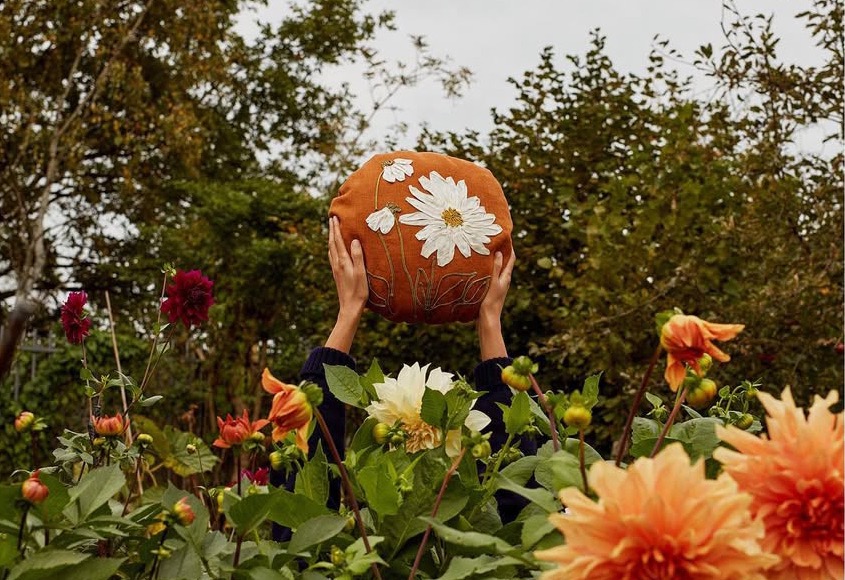
Meet the Maker: The Embroidered Narratives of Lora Avedian
Meet the Maker: The Embroidered Narratives of Lora Avedian In this Q&A, we chat with Lora about her artistic journey, her love for antique materials, and the influence of her multicultural heritage. She shares insights into her creative process, including overcoming challenges, celebrating key achievements like her residency at the Barbican, and what it means to create joyful, vibrant textile pieces inspired by nature and history.

1. Can you tell us a bit about yourself and your artistic journey?
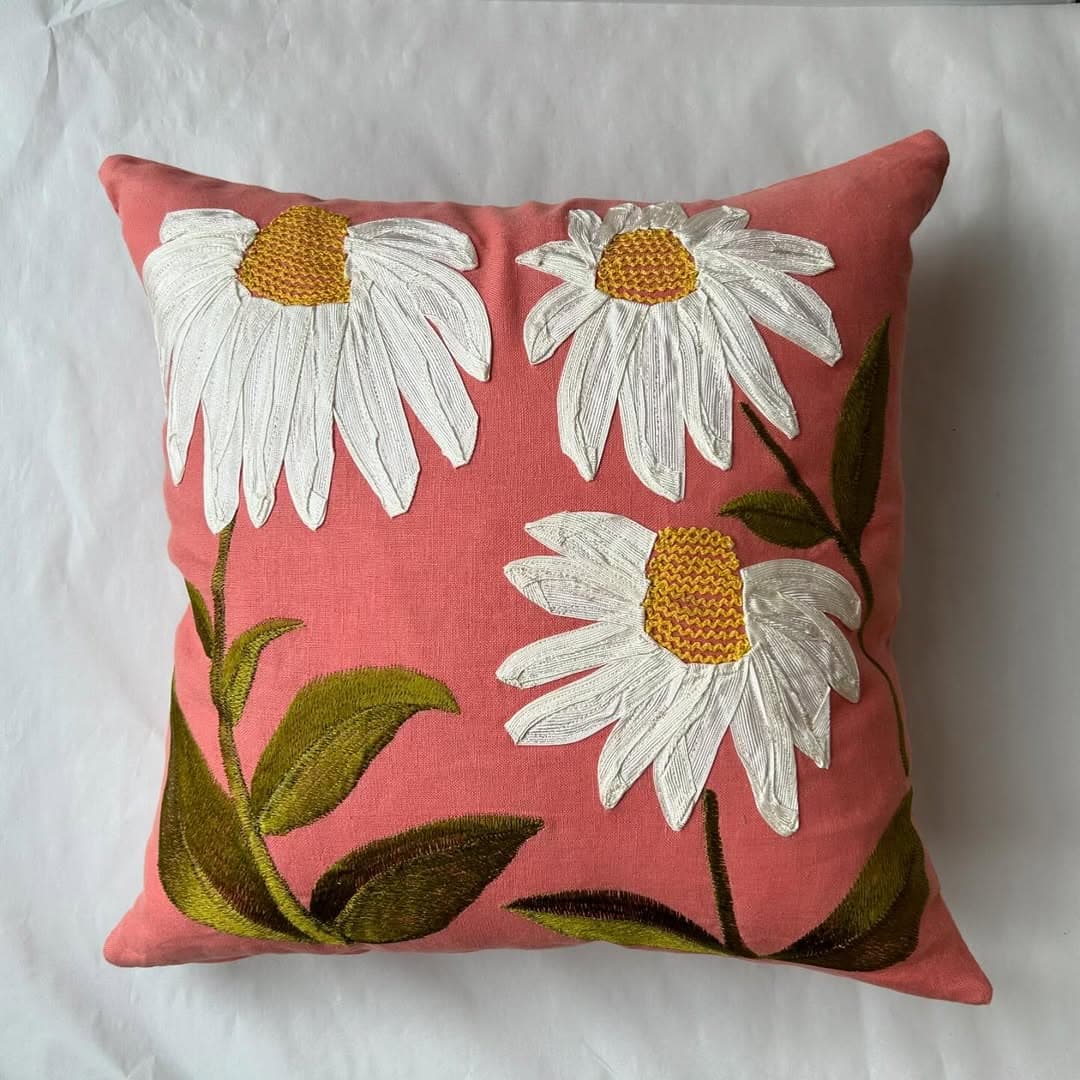
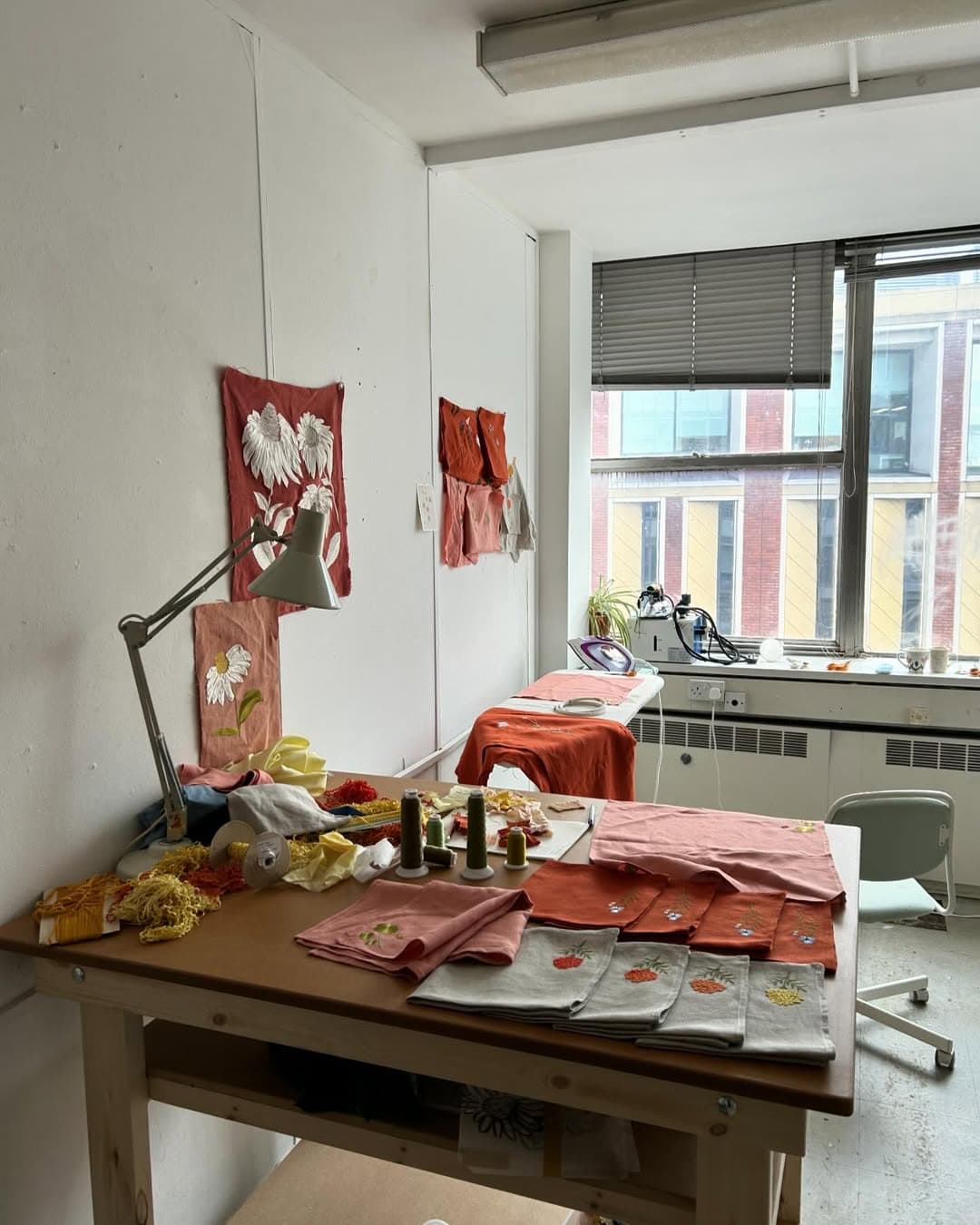
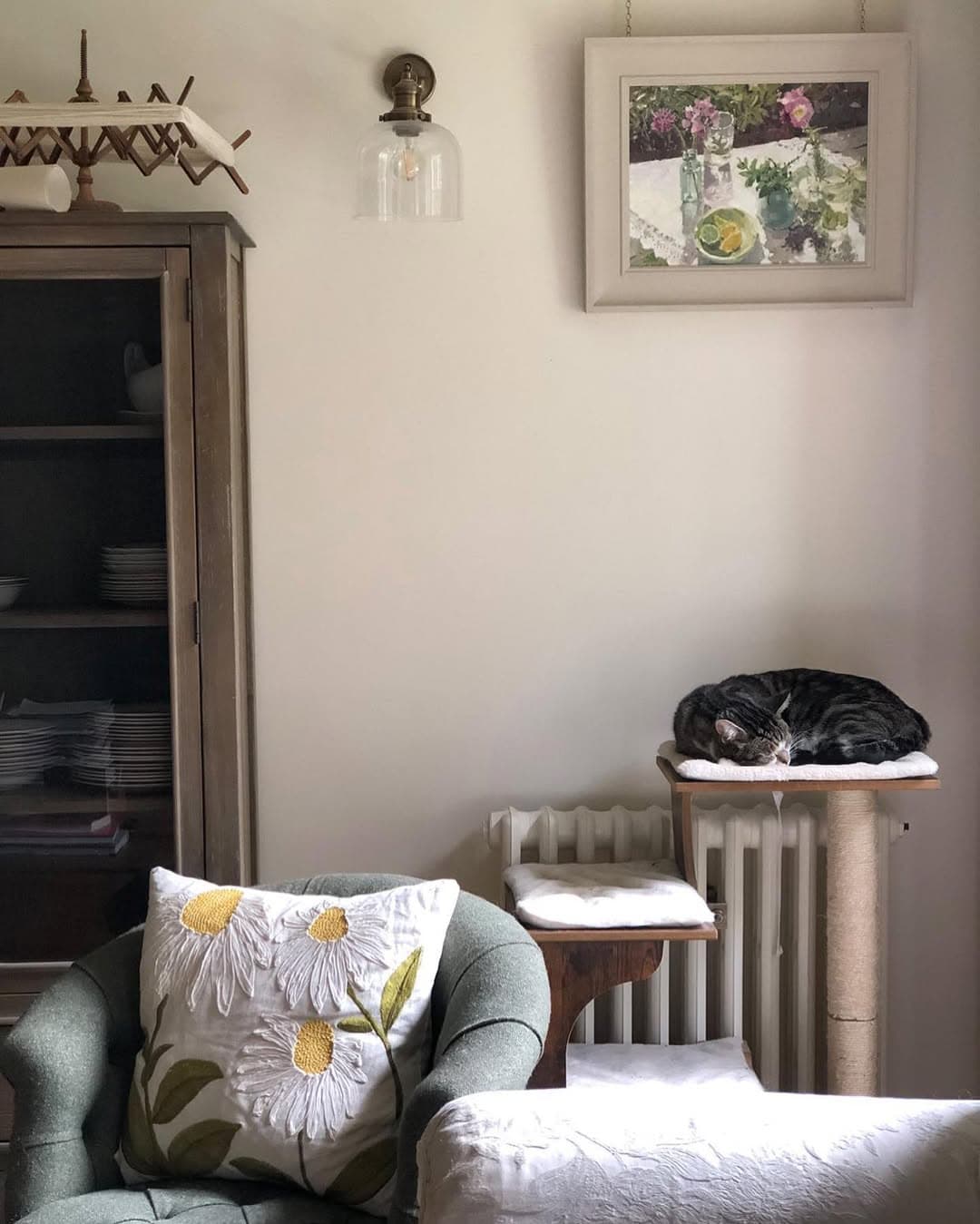
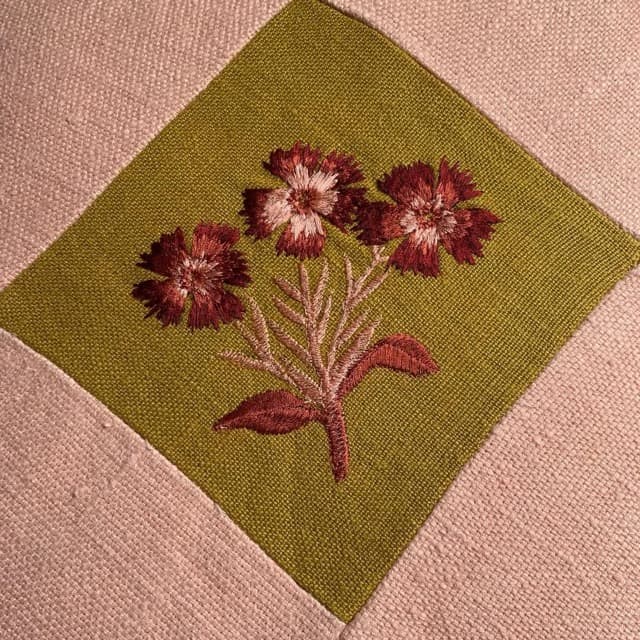
My work sits between textile design and art, encompassing everything from large-scale installations at venues like Barbican Centre and the Chelsea Flower Show to embroidered linen and soft furnishings. Which are all made by me in small batches or as exclusive collections for select retailers such as the V&A shop, and Fortnum & Mason. I studied Mixed Media textiles at the Royal College of Art and have been interested in embroidery in particular since I was a teenager. In between my BA in Embroidery at Manchester Metropolitan University and MA at the RCA I did a stint of about 7 years working for artists and designers and eventually worked as a set designer and prop stylist for still life photography. I love to create visual narratives with colour, texture and materials, which I took into my work at the RCA and has become a part of how I create my textile work.
2. What inspired you to pursue your craft? Was there a defining moment or influence that sparked your passion?
My mum got me into textiles as she had studied print design, and so I always had an appreciation and interest in textiles. When I met Karen Nicol when I was a teenager that really opened up my eyes to the possibilities of embroidery and she told me about the BA and the MA that I ended up doing, so I owe a lot of my career to meeting her.
Your craft
3. How would you describe your work in three words?
Tactile, floral, illustrative
4. What materials or techniques do you use, and why are they important to your process?
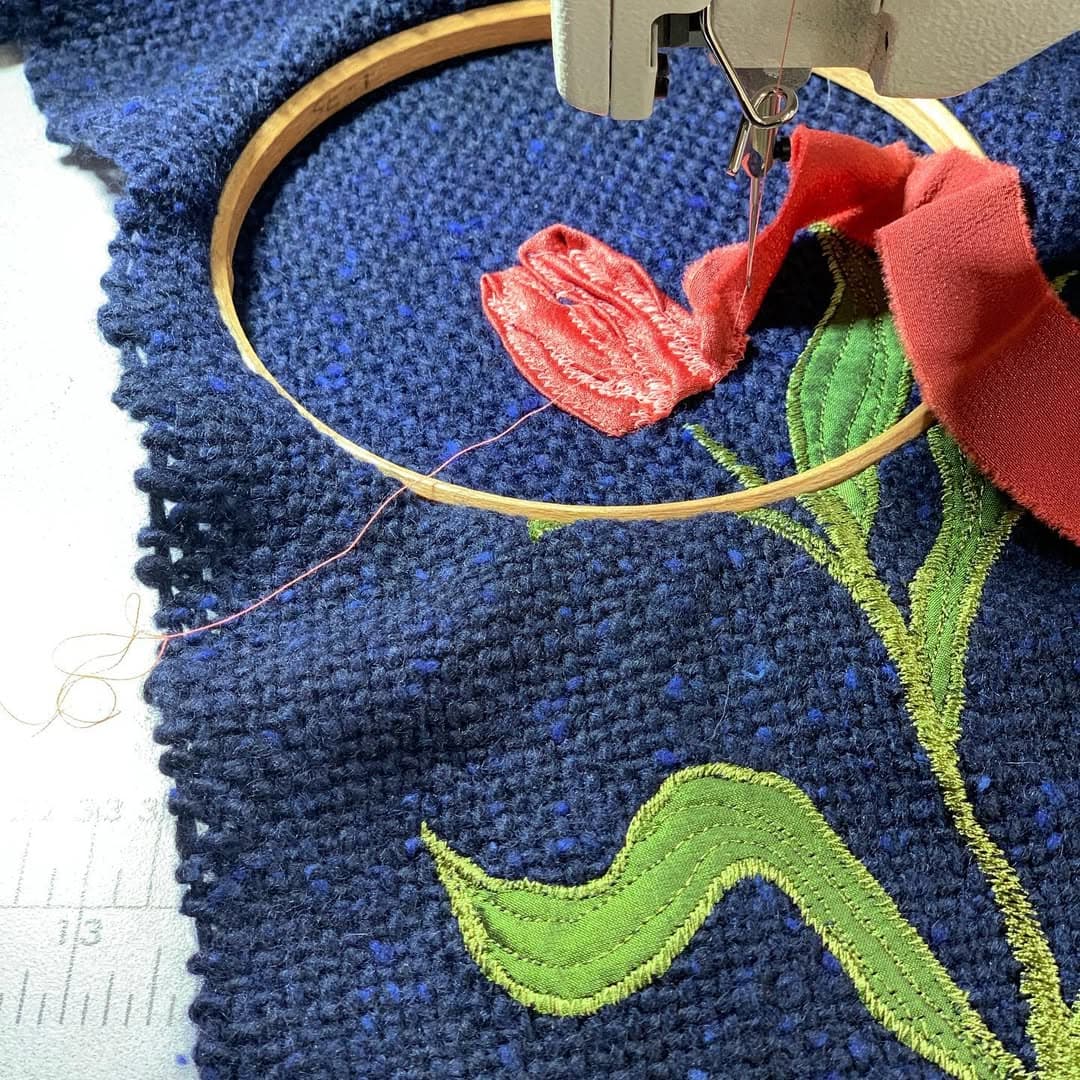
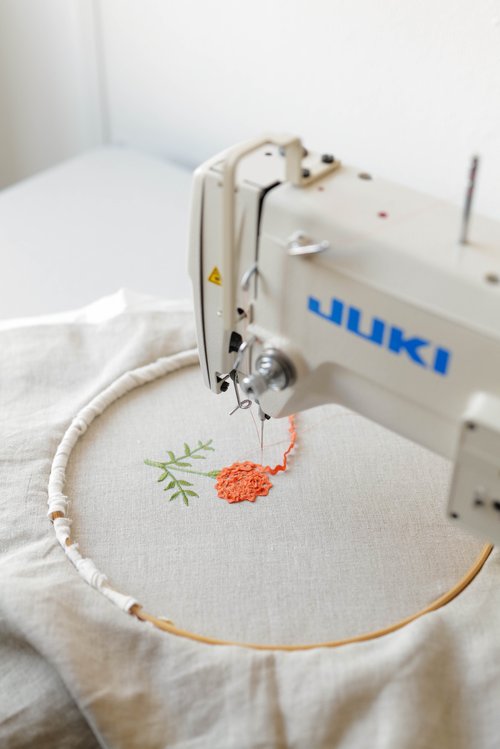
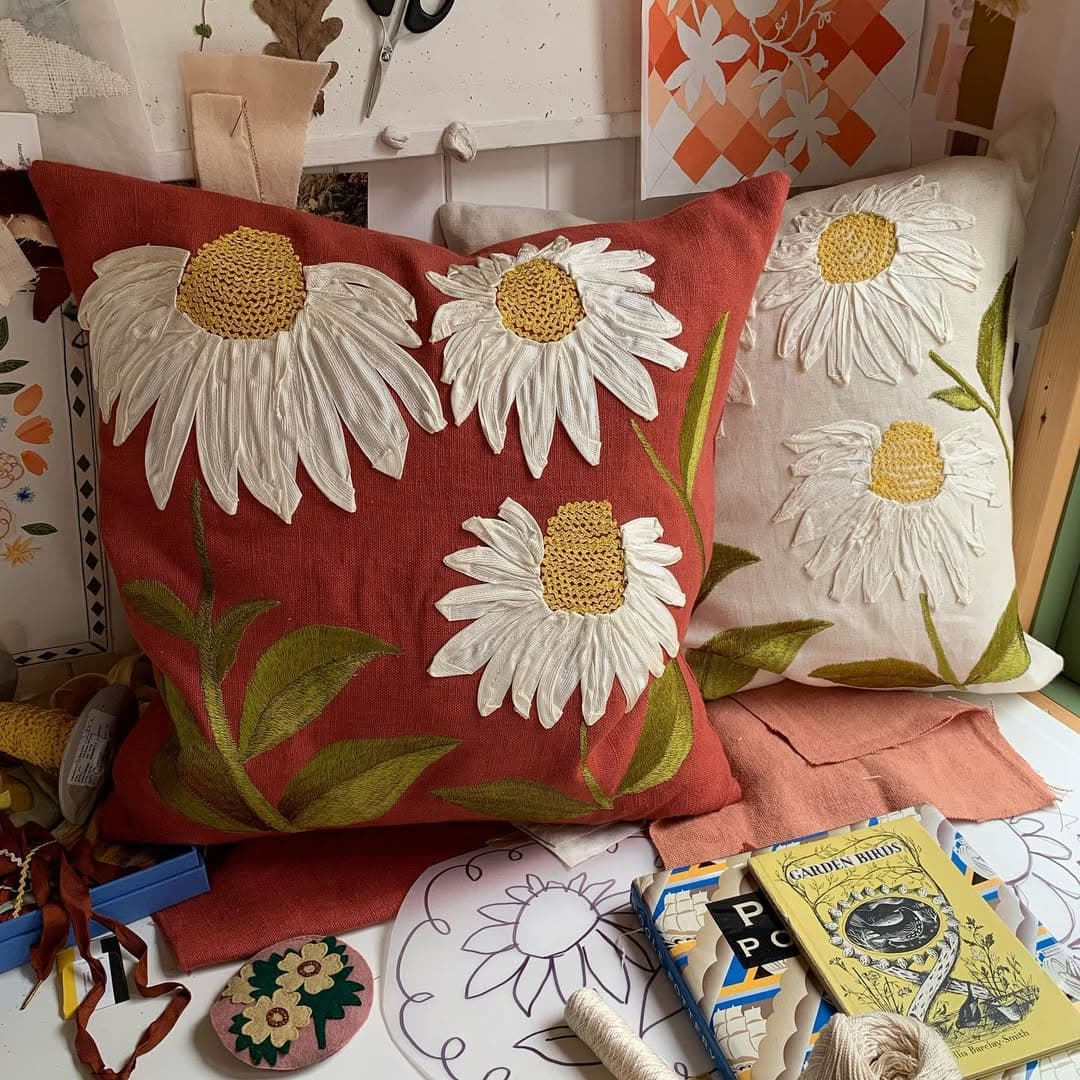
I like to use natural materials, like linens and wools to work on, and I am really keen on using second hand materials so I am always scouring the antique markets to find reels of beautiful ribbons or braids. The process of looking for these materials is something I love, the fact that they are often made in the early 20th century means they have a certain quality that it’s really hard to find now with new materials. I use these braids and ribbons to do an embroidery technique called ‘couching’ which I started using during my MA, and have developed a way of doing with my hand guided machine. It’s a key technique for me, and I even wrote a book about it!
5. Can you tell us about a favourite piece you’ve created and the story behind it?
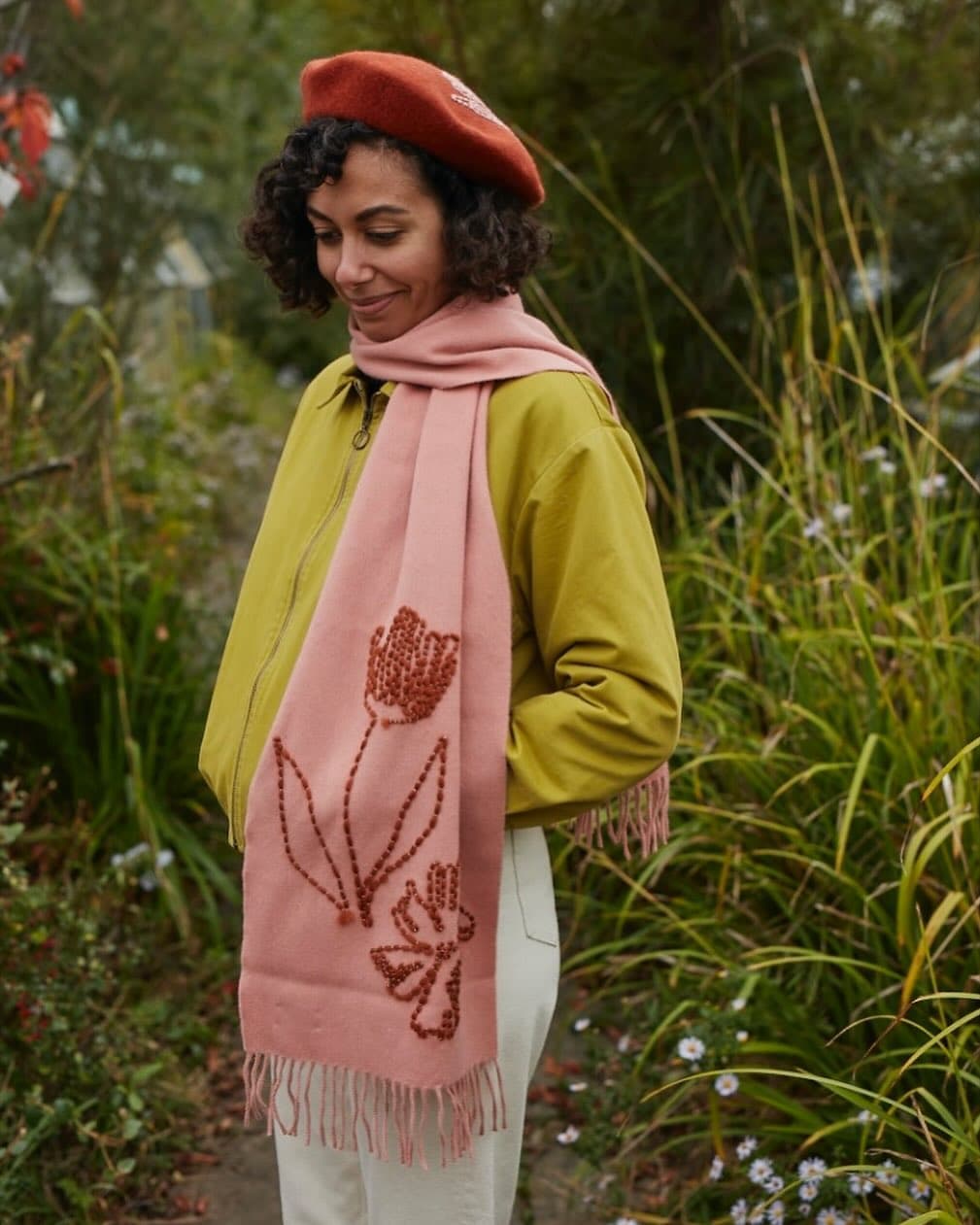
I think my favourite piece I have made is still one from my masters, which is a large ‘cape’ which works as a wall hanging. It’s the thing I probably spent the most time and effort creative and the photographs of it still get used in articles, and I often get asked to do commissions off the back of it. It has hand embroidered tulips using braid, and three dimensional pleated carnation flowers, with 3D leaves and machine embroidered stems. I hand dyed almost every part of it, it was a real labour of love. The flowers and colour palette are symbolic of flowers and fruit of Iran and Armenian, where my father is from. It is probably the one piece of work that is most referenced by clients for projects.
Creative process
6. What does a typical day in your studio or workshop look like?
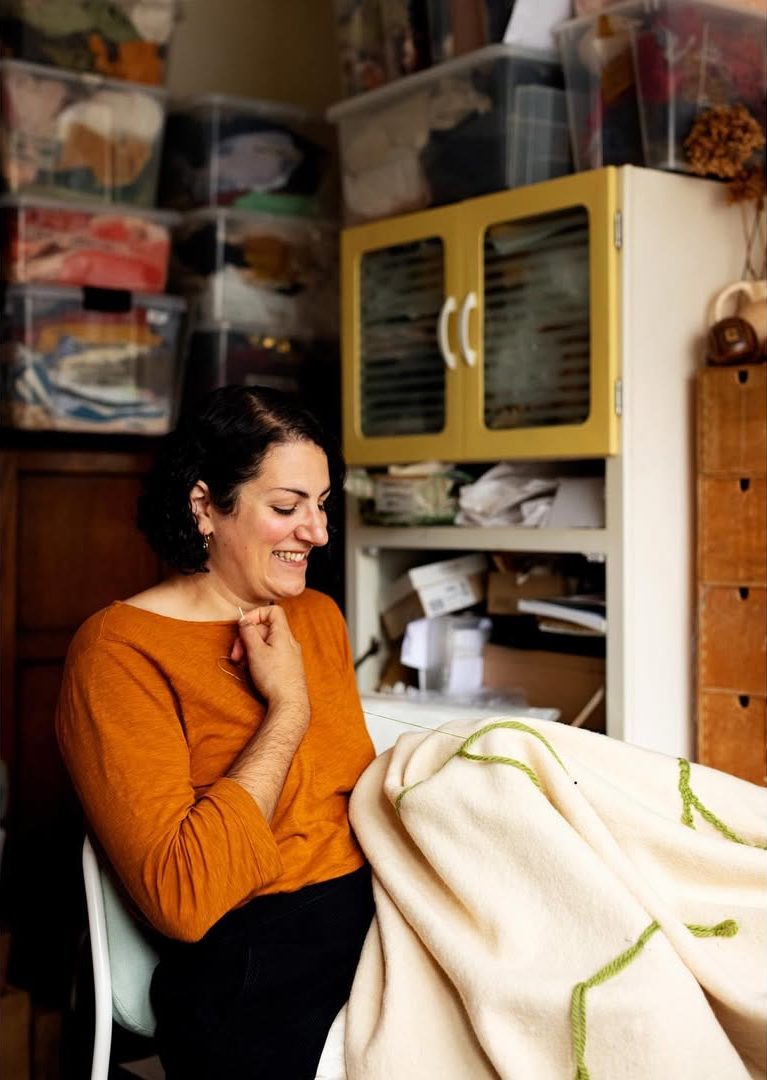
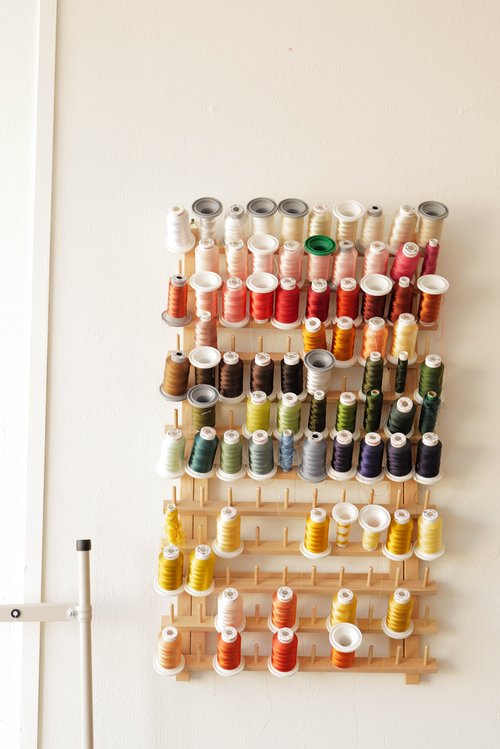
I will get into the studio, stick the kettle on, and make myself a cup of tea. Unless I have an ongoing project I often sit and look at my mood board for a moment, and try to plan my day, writing a list is really key for me to get anything done. I will usually work for a few hours and then have my lunch at my desk. I try to go for a walk to clear my head if I have a lot going on. I usually have to leave quite early to pick up my kids so I try and make the most of my time in the studio!
7. Do you have any unique rituals or habits that help you stay creative?
I like to go to the usual galleries and exhibitions, or a National Trust house or garden. I also love to go to markets, charity shops and car boot sales. The weird and wonderful bits and pieces I can find at that sort of place can really inspire me.
8. How do you handle creative blocks? Do you have any strategies or tips for overcoming them?
Going for a walk, having a dance, doing something completely different, and listening to music!
Challenges and successes
9. What’s the biggest challenge you’ve faced as a maker, and how did you overcome it?
Not having enough space to make work is a challenge, and not knowing when to say no to projects that are out my depth. I have learnt to reach out to people for help, and it’s so often that when I speak to people about a project most things can be resolved. I think you have to make these mistakes to learn from them and get better as a business person – it’s hard to be an artist who has to do it all!
10. What’s been your proudest moment or achievement so far?
Writing a book was a great achievement. Early in my career not long after I graduated from my MA I was asked to do be artist in residence at the Barbican Shop, and with that I was asked to design the Christmas decorations for the entrance way and that was a big pinch me moment.
Inspiration
11. Where do you draw inspiration from for your work? What sparks your imagination and creativity?
I love going out into nature, there is just so much to be inspired by. I really enjoy going to the British museum to look at the ancient objects. The V&A is a particular favourite of mine, I don’t think I could ever get bored of it, especially the glass and ceramics rooms. I have a lot of books, and also find a lot of inspiration from antique clothing; Portobello market on a Friday is a real treat for the eyes.
12. Do you have a favourite artist, maker, movement, or tradition that has influenced your craft?
I am a big fan of the Bloomsbury Group, and their Omega Workshops project. I would say their colours and aesthetic have been really influential but there are so many people who’s work I love, it’s really hard to say! It’s always a big mix of things for me.
13. How does colour influence your practice; is it an important part of your process? Do you have a particular palette or favourites? Any go-to sources for colour inspiration?
I think colour is so important to an artist, it really helps to define your work. When I was at the RCA they had a colour room, with draws full of colour swatches, and I spent a lot of time there working on my colour palette. I referenced my visual research, and in particular a film called Colour of Pomegranates which I used a still from t get my palette. I think that really helped bring my work together in the end and I have stuck to it ever since.
Perspectives and goals
14. What role does your environment play in shaping your creativity?
I collect a lot of seemingly random and probably quite objects from car boot sales, twigs from walking in the woods, shells from going to the seaside. All of these things will feed into my work, whether it’s a colour, a texture or a shape of something. I love to be surrounded by my things, and see them on my walls, both at home and in my studio.
15. What do you want people to feel when they experience your work?
Joy! I want people to feel happy when they see the colours and textures of my work.
16. What are you currently working on, and what excites you most about it?
I am working on a new collection of embroidered artworks and interior samples coming in October 2025. Both of these things are things I have thought about for a while, and I am really excited to finally get them out of my head and into the world.
Advice and reflection
17. What advice would you give to someone starting out as a maker?
Show people your work, tell them what you do. Don’t be shy!
18. If you could go back to the start of your career, what advice would you give your younger self?
Have more confidence in your work, keep doing your research, and keep making what you like, not what you think everyone else will like.
Closing thoughts
19. If you could collaborate with any artist, past or present, who would it be and why?
This is so hard! I would love to collaborate with Louise Bourgeois and make some embroidery for her, I love her use of textiles and colour.
Lora Avedian’s work seamlessly combines embroidery, storytelling, and a deep appreciation for colour and texture, creating pieces that feel contemporary yet nostalgic. From large-scale installations to delicate embroidered linens, her creations are meticulously crafted delights.
Explore Lora’s latest collections and follow her creative journey:
You can sign up to my mailing list for (infrequent but excellent) Studio News letters.
Meet the Maker: The Painterly, Joyful Patterns of Sophie Harpley
In this Q&A, we talk with Sophie Harpley about her inspiring journey back to art after a winding path, how working at the V&A Museum ignited her creative passion, and the courageous leap to pursue pattern design professionally.
Sophie shares insights into her distinctive painterly style, the joys of working by hand with gouache, and her belief in the importance of imperfections. We also discuss overcoming creative blocks, the influence of iconic female artists, and the empowering moments that have defined her career.
1. Can you tell us a bit about yourself and your artistic journey?
It has been a winding path! I’d been glued to a sketchbook since childhood but found it difficult to squeeze my creativity into the school-curriculum-shaped-mould and didn’t do very well there. Feeling like I’d ‘failed’ in something I loved at only 18 sent me off on an entirely different path for a while. I barely picked up a paintbrush for several years. But when it came to finding a job I was soon working in the most creative places I could find; an illustrated children’s book publisher, a fabric and homewares shop and a role at the V&A Museum.
Eventually the urge to be a hands-on creative again led me back to university. I think I had something to prove to myself and the education system. I gained an MA in a subject called ‘graphic arts’. I was on cloud nine amongst the facilities at UWE. I tried every kind of printmaking and I was specialising in pattern by the end of it. But I would even stay extra hours to try all the other subjects, like pottery and various textile classes, I couldn’t get enough.
The great thing about coming back to study a bit later is you really appreciate the opportunity and work very hard. I knew a lot more about who I was by that point and how much I believed that art mattered. It was almost therapeutic to be immersed in it all again. I think this experience put a little ‘fire in my belly’ too. It bothers me a lot just how many 18-year-olds are told that art is not a serious subject; or that there are no careers in it; or that you have to do it in a certain way to be ‘good enough’.
Henri Matisse famously said: ‘creativity takes courage’ and I feel it’s very true.
After finishing my MA, I went on to design for interiors brands. But I always kept up my illustration practice in my spare time. Early on I met a Buyer for John Lewis with some patterned kitchen linens I’d made. She said ‘you have about 5 SKUS and you need at least 30 to be stocked here.’ I didn’t have the capital to create all those products so she suggested I keep going with illustration commissions and creating stationery – so I did!
I also went freelance to allow more time for my art practice. When some floral cushions I made were picked up for a Chelsea Flower show styled stand and the cover of Country Living, I felt a little bit braver about growing a fabric range. But it wasn’t until the pandemic coincided with maternity leave, that I really stopped to reflect on what I was doing and decided to take my personal work more seriously.
Once my little one was at nursery I began making wallpapers and then fabrics by the metre. It’s going well and after dreaming for such a long time of painting patterns for a living, it feels pretty ‘pinch me’ to be doing it.
2. What inspired you to pursue your craft? Was there a defining moment or influence that sparked your passion?
Working at the V&A Museum. That was the period when I was really starting to think (to quote Mary Oliver) ‘what am I going to do with my one wild and precious life?’ I found it strangely frustrating to be working in such an awesomely inspiring place, but not a very creative role.
So I went to art school and the rest is history! But I do quite vividly remember a particular moment, looking around the V&A on my lunch break, and literally feeling giddy with the urge to make something. I really wanted to draw and paint and create things hands-on but I’d lost confidence. That’s when the idea to study again began to form.
Your craft
3. How would you describe your work in three words?
Relaxed, joyful, painterly.
4. What materials or techniques do you use, and why are they important to your process?
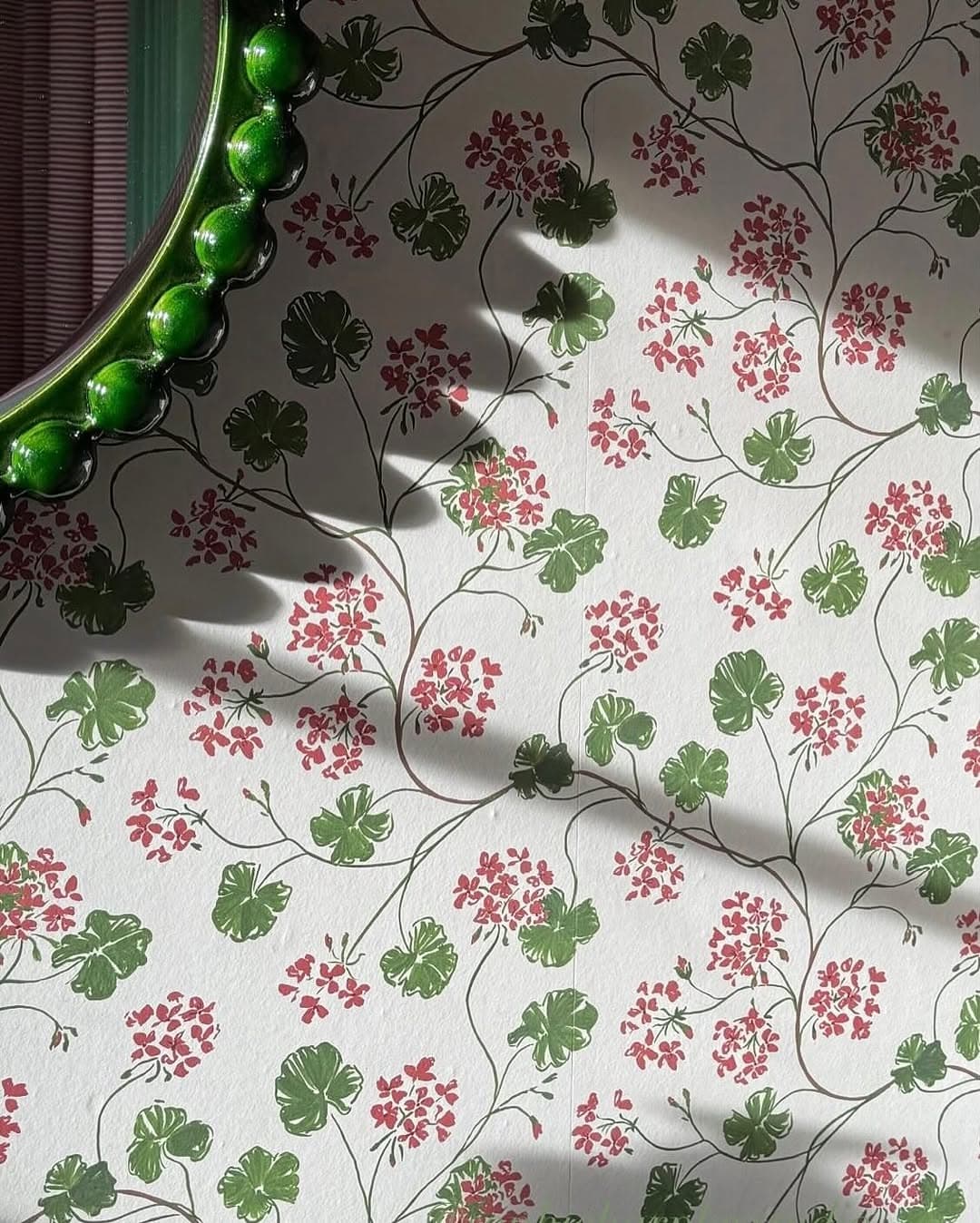
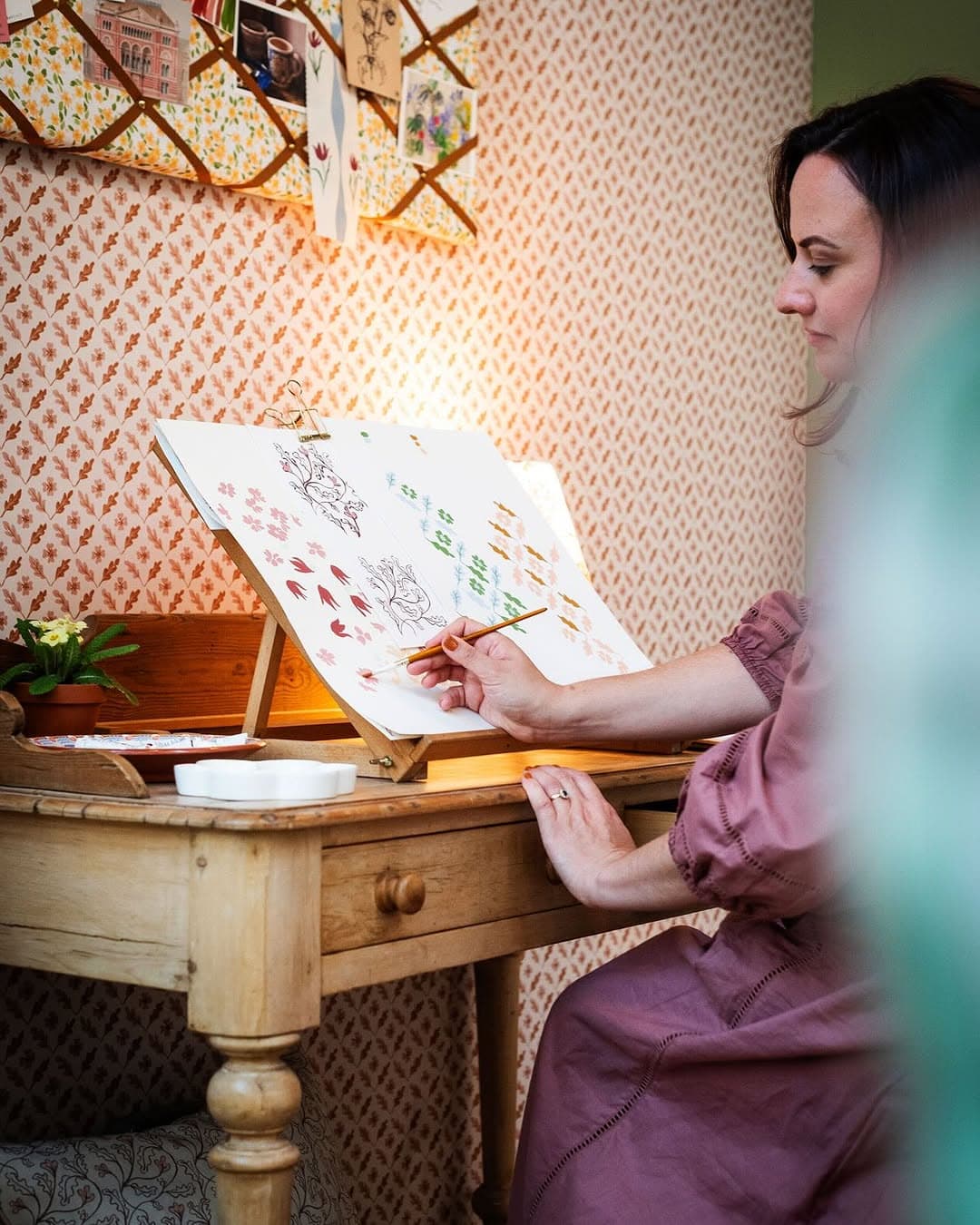
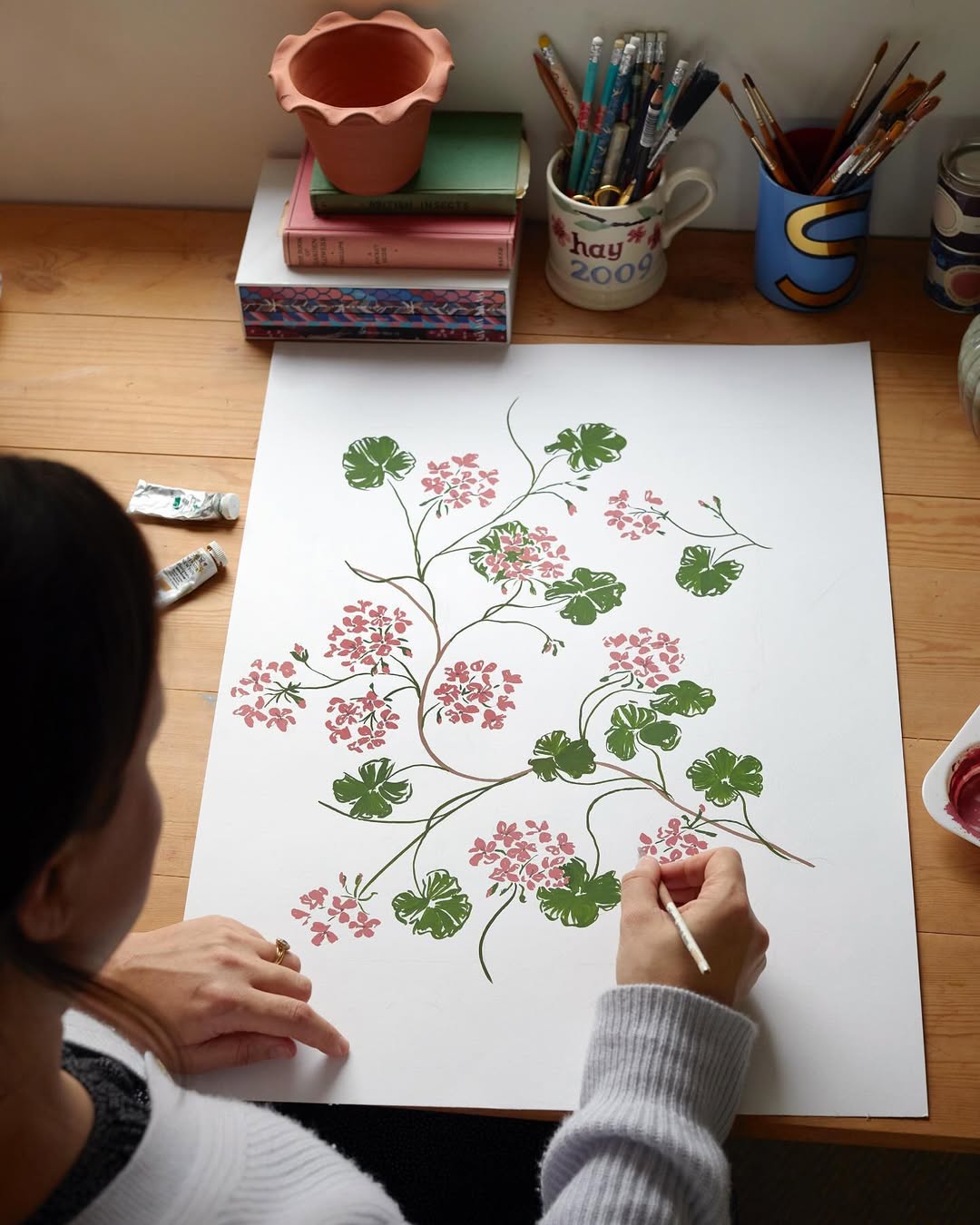
I paint every pattern using gouache and watercolour paper. I have quite an impulsive painting style and I try to let that lose quality come through, even when I have planned a design. I love imperfections and work that shows the human touch. It’s very intentional and important to me that you can tell my wallpapers and fabrics were designed by hand.
5. Can you tell us about a favourite piece you’ve created and the story behind it?
At university I made a huge printed tapestry, the whole thing was illustrated. Sometimes I long to do quite an ambitious one-off piece like that again. It was a bespoke piece inspired by a Georgian house which had so many decorative details.
Creative process
6. What does a typical day in your studio or workshop look like?
No typical day! When you wear all the hats, you just have to keep rotating between them; post-lady, accounts department, web designer, social media assistant – it’s not all glamourous. But of course my favourite days are the ones immersed in painting and design.
Once I’m in the zone, I’m there for months at a time and other things fall to the wayside, but it’s bliss. I lose track of time and just experiment with colours and motifs all day. It’s a very exciting process to be painting on paper and thinking ‘this could end up on someone’s wall’.
7. Do you have any unique rituals or habits that help you stay creative?
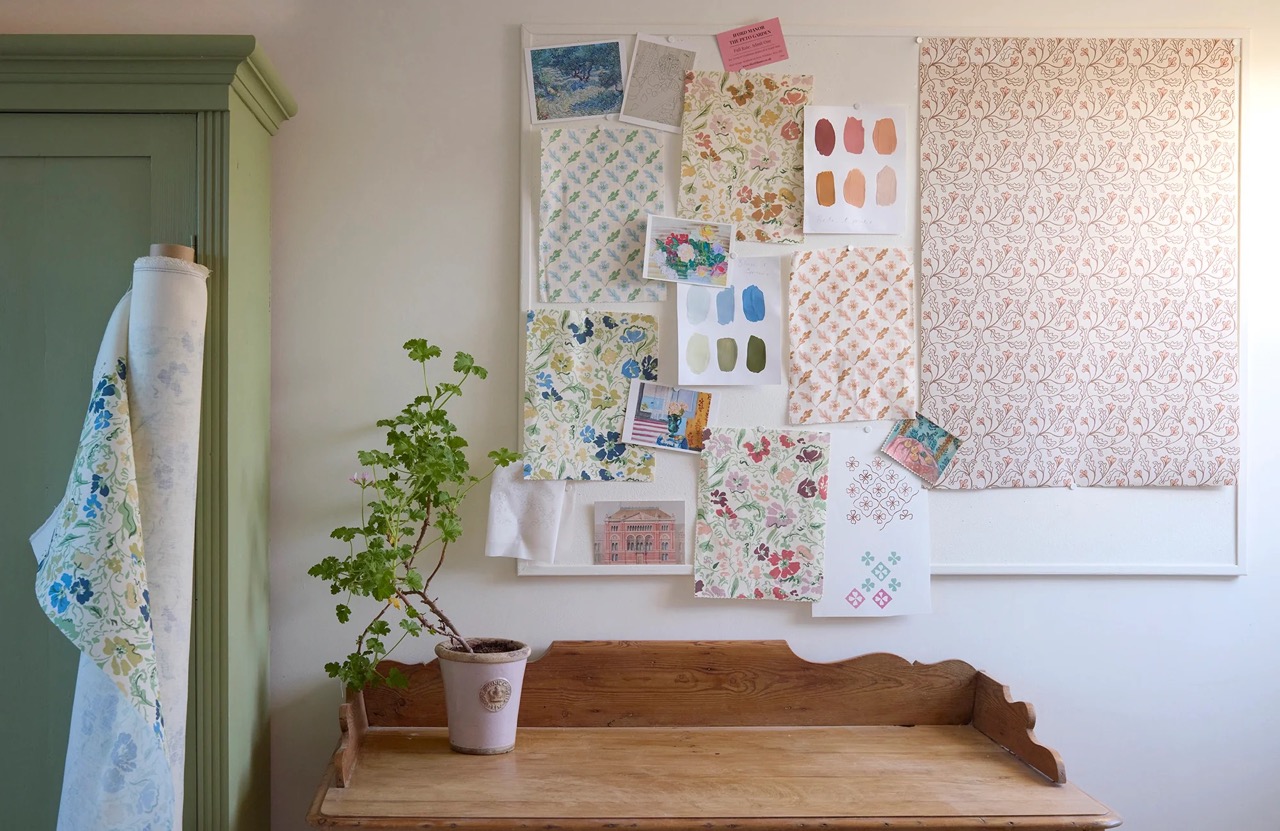
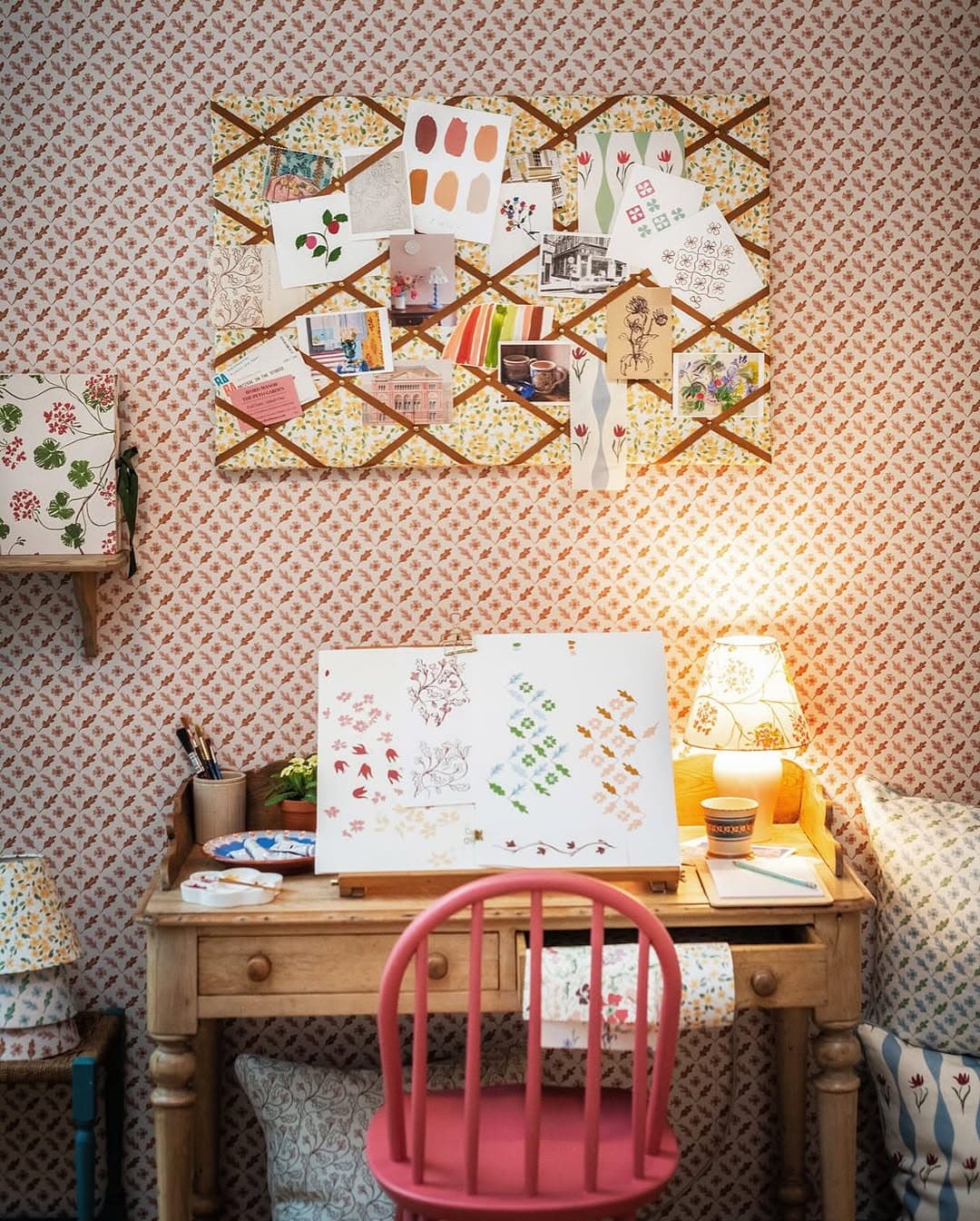
In love mood-boarding and it really helps me begin a project fresh. Just gathering all my recent inspirations and having a good look through; books, clippings, postcards etc.
8. How do you handle creative blocks? Do you have any strategies or tips for overcoming them?
Do something different. Staring at the page will never help. Exercise and a change of scene will. Also be kind to yourself, have a cuppa and a biscuit, call a friend. Then ask yourself some questions; who is this for, what is this about, why isn’t it working etc. Get some sleep and try again.
Challenges and successes
9. What’s the biggest challenge you’ve faced as a maker, and how did you overcome it?
It’s always challenging. The moments of imposter syndrome never go away but you get better at taming the beast. And the highs make it all worth it.
10. What’s been your proudest moment or achievement so far?
Winning a Homes & Gardens Award for my first wallpapers in 2023.
11. What’s your favourite quote you’ve ever heard about your work? Who said it, or what was the name of the publication?
"Sophie's painterly creations are always uplifting and bring a smile."
- BRITISH VOGUE
Inspiration
12. Where do you draw inspiration from for your work? What sparks your imagination and creativity?
I see pattern inspiration everywhere from nature to antique textiles and modernist art. My favourite days are spent either in a gallery, antique market or walking in nature. As a result my work is a melting pot of ideas, bringing a fresh twist to tradition.
13. Do you have a favourite artist, maker, movement, or tradition that has influenced your craft?
I love the post-impressionist painters like Rauol Duffy, Matisse and Vanessa Bell. I love their free and spontaneous approach. I’m always drawn to the histories of women artists especially and of course those who specialised in pattern like Sonia Delaunay or Paule Marrot. But also just the fighting spirit required of people like Barbara Hepworth or Frida Kahlo to make it as female artists in the era they lived.
14. How does colour influence your practice; is it an important part of your process? Do you have a particular palette or favourites? Any go-to sources for colour inspiration?
I do have quite a distinct colour palette and it’s been described by others variously as; muted, tertiary, jewel-tone… I guess it’s anything but primaries for me! I like to mix and make interesting colours and every colour is a bit unusual – off-white, reddish-pink, muddy-yellow. I’m a colour tinkerer.
Perspectives and goals
15. What role does your environment play in shaping your creativity?
I’m a visual sponge, so everything I see influences me. Yes I think surroundings are vital, I think it changes everything actually. I wish I had a bit more space! I always feel like the more space I have I will just fill it – so my work will get bigger and more ambitious.
By default of living in London, space is at a premium. I love my studio and it’s very homely and full of things that inspire me, but you can never give an artist too much of two things; light and space. Oh and peace and time! So that’s four… There was never a truer statement than Virginia Woolfe and ‘a room of one’s own’.
16. What do you want people to feel when they experience your work?
Joy, peace, pleasure, a little nostalgia and positivity.
17. What are you currently working on, and what excites you most about it?
Aside from the thrill of launching makers made with my wonderful co-founding artists?! I’ve also just launched a new little collection of printed papers and linen called Evolve. I’m taking it to show at London Design Week (March 2025) which is exciting if a little nerve wracking. But I hope to do myself proud!
Advice and reflection
18. What advice would you give to someone starting out as a maker?
If you are passionate about something, keep going, keep learning and don’t let anything stop you. There are no wrong moves only experiments.
19. If you could go back to the start of your career, what advice would you give your younger self?
Your mum is right, you should go to Falmouth School of Art.
Closing thoughts
20. If you could collaborate with any artist, past or present, who would it be and why?
It would be fun to step back in time into Charleston Farm House and help Vanessa and Duncan paint the lot from top to bottom.
21. Where can people find your work, and how can they support you?
I would love to work on more bespoke projects and perhaps collaborate with a paint company.
Sophie Harpley’s designs blend relaxed charm with vibrant colours, bringing joy and a sense of timeless nostalgia to everyday spaces. Her painterly approach and distinctive palettes offer fresh takes on tradition, creating textiles and wallpapers that uplift and inspire.
Explore Sophie’s latest collections and follow her creative journey:
Support Sophie by exploring her bespoke collections, and stay tuned as she takes her work to exciting new platforms like London Design Week.
Textiles
We are launching MM with fifteen textiles makers, all of whom stand out for a practice rooted in a love of craft. Every maker on the site makes an element of their work by hand, it is what makes this collective special, and our textiles makers are no exception.
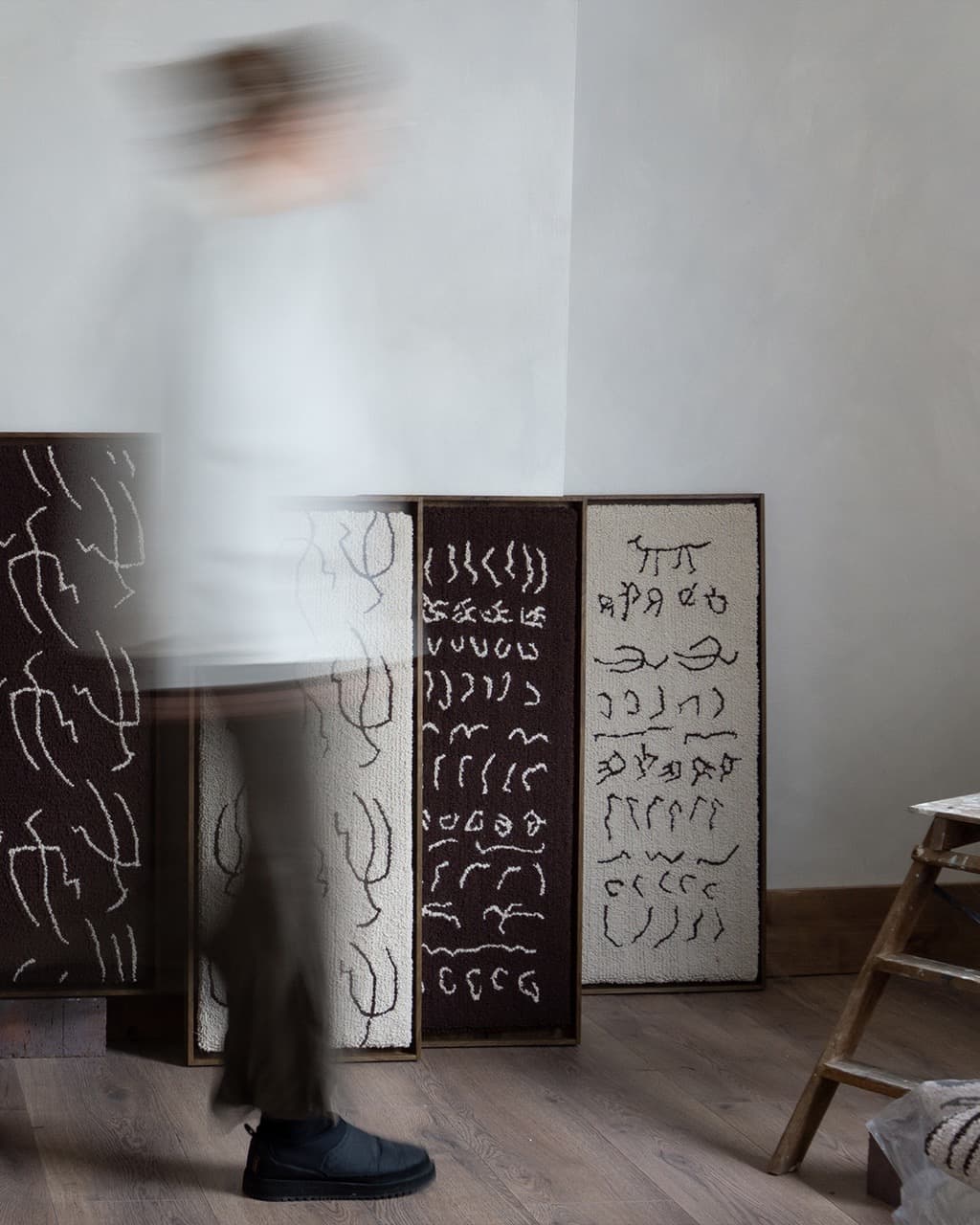
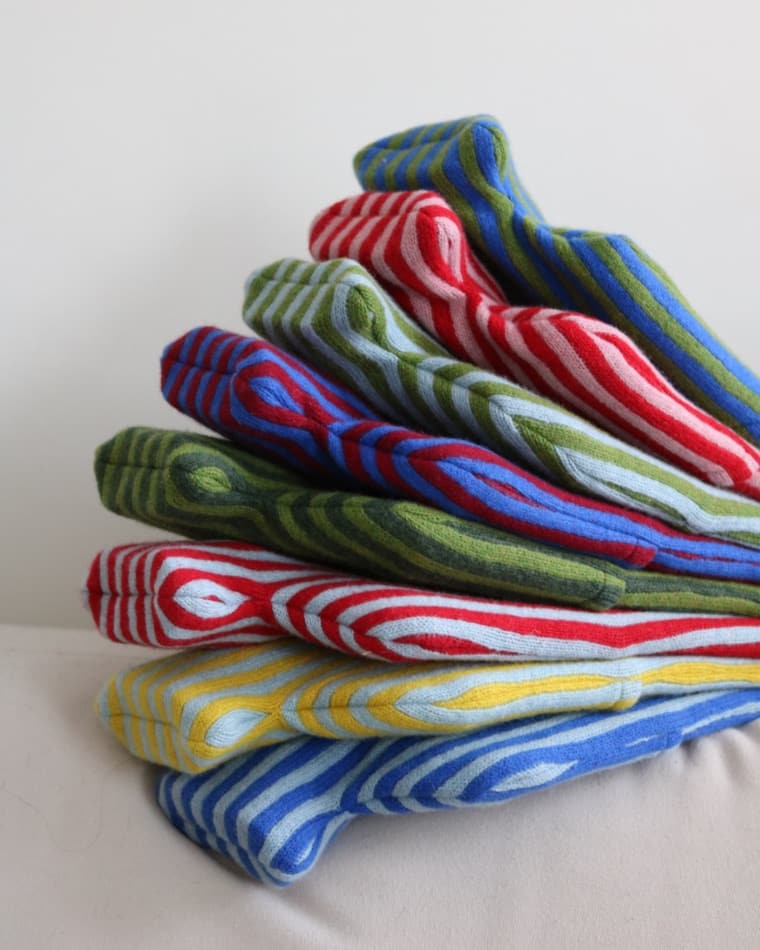
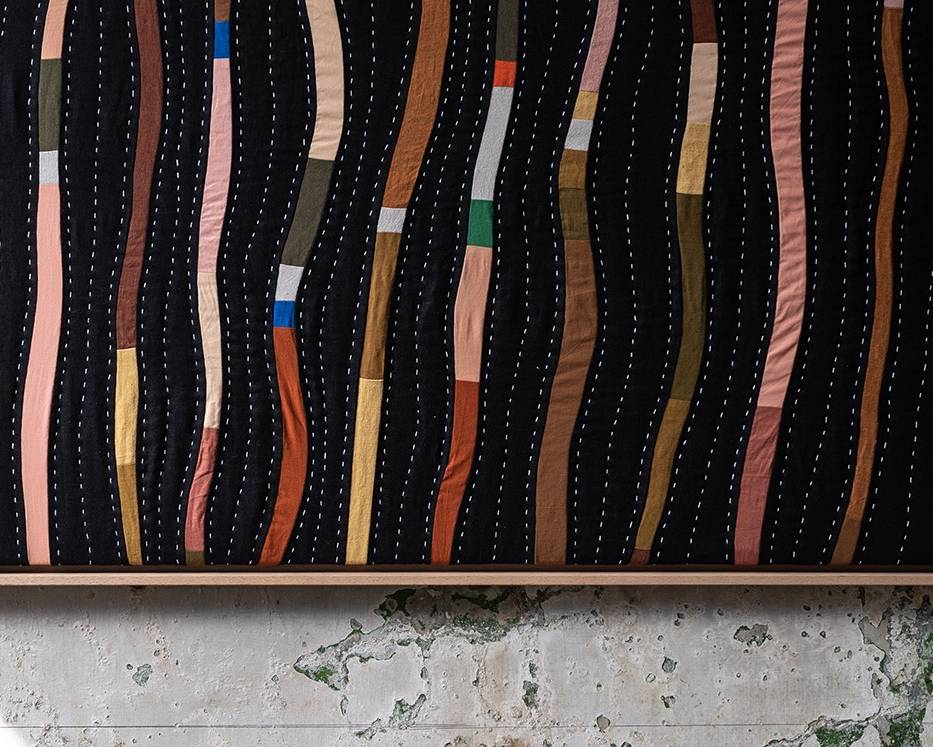
We’re proud to spotlight those who work directly with yarn and thread like knit designers AWL STUDIO and CHICKPEA, weaver EPOCH, textile artist SOOSUMSEE and embroider LORA AVEDIAN or KATY TAKLA who makes cushions with surplus designer cloth. Meanwhile, makers CAIT MCENIFF and JESSIE CUTTS are absolute experts in shape and form, piecing together beautiful appliques and quilts and ELDORADO THE STUDIO hand-dye all the cloth for their patchwork pieces too. The colours are breathtakingly subtle as a result.
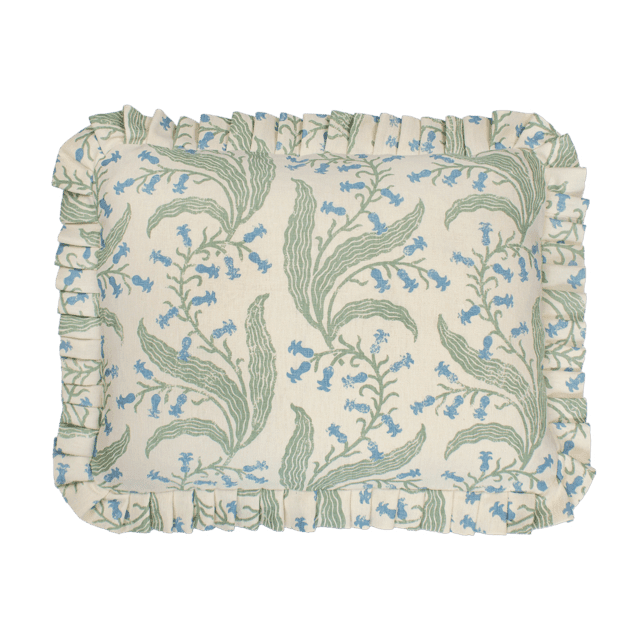
Several of our textile makers specialise in print design, producing fabric by the metre and wallpapers. Hand-printing their motifs are ELLEN MERCHANT and JESSIE DE SALIS who experiment in screen and lino print. One of our founders SOPHIE HARPLEY paints her patterns by hand and STUDIO HUMBUG and LOWRI STUDIO are known for their colourful illustrative prints too. The scope to upholster or make curtains from any of their unique fabrics is endless.
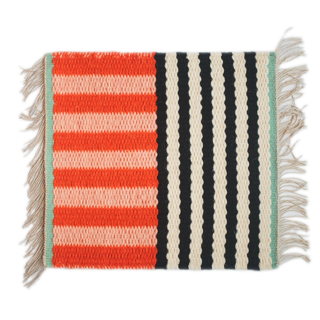
By spotlighting these unique textile studios, all of which are just one or two people creating very small batches, we hope to champion sustainable, slow design over mass production. We know these works will spark your imagination, helping you source unique heirloom-worthy pieces to your home, directly from the hands who made them.
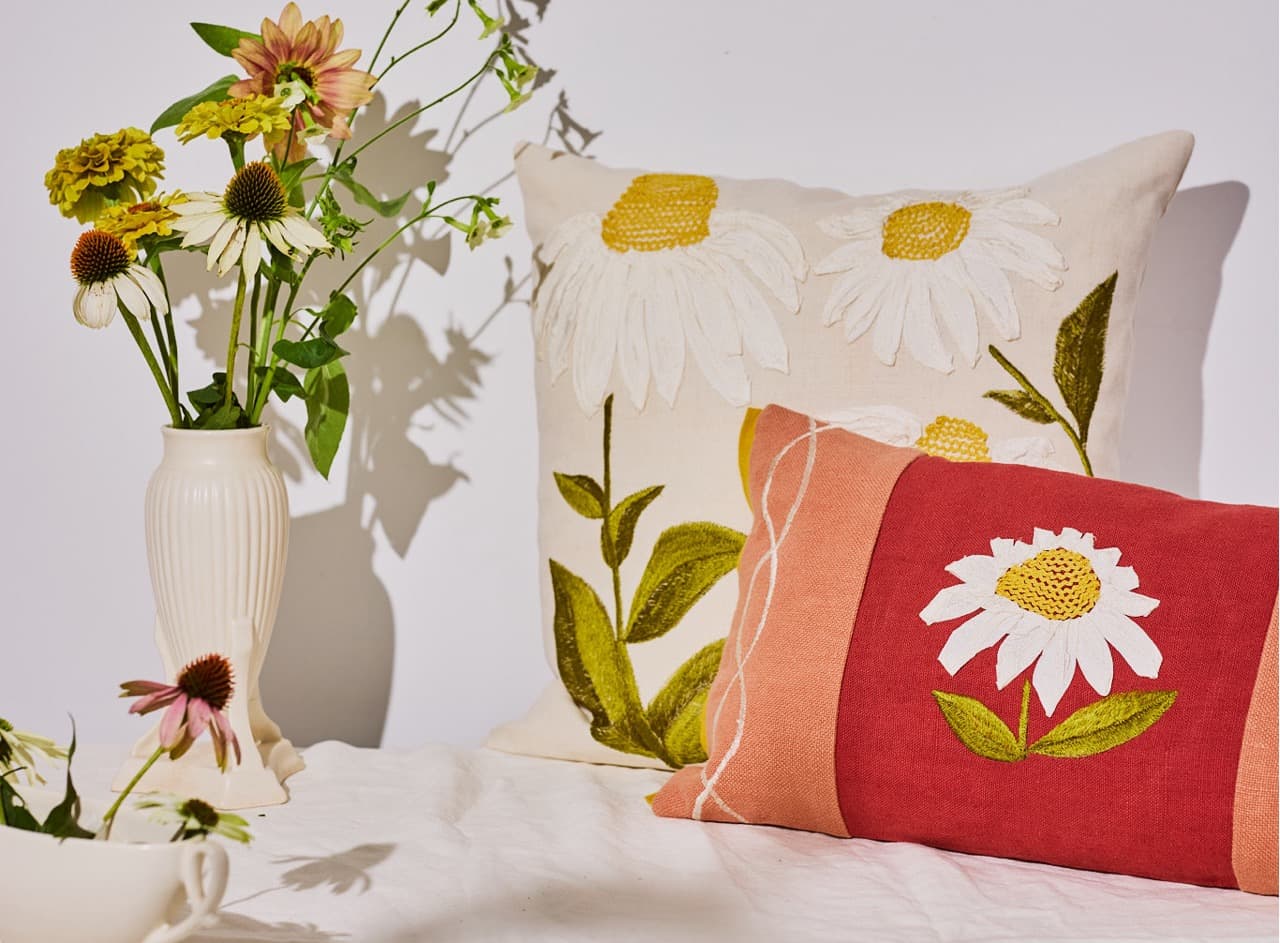
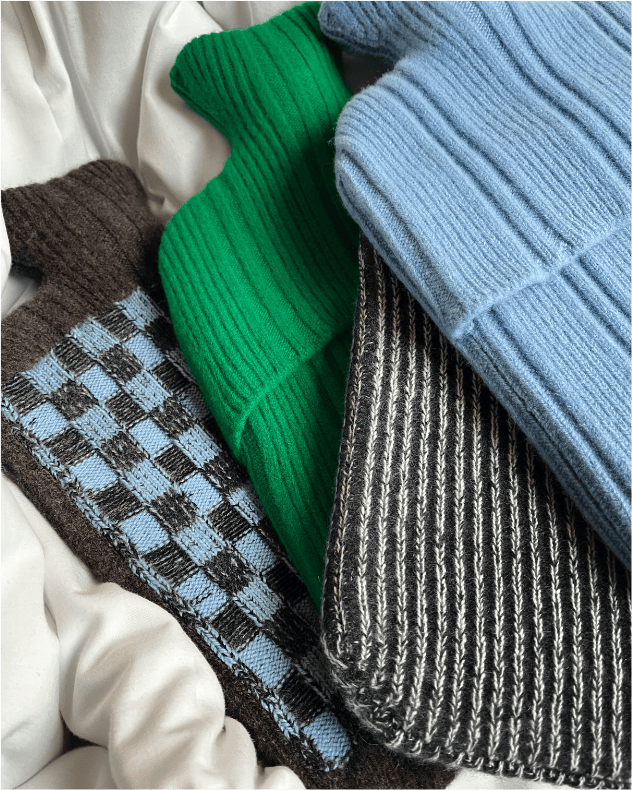
Alongside an artistic practice, many of our textile makers offer soft furnishings that are ready to order for instant impact to any space. Find accessories like cushions, table linen, throws and rugs – all within their stores. We hope you will love exploring each maker and their craft, delving into their collections and perhaps even commissioning unique work.
