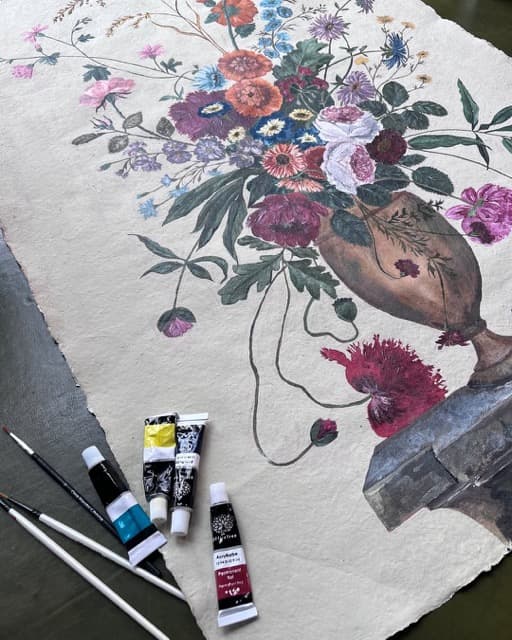
Meet the Maker: Wilderframe and the Art of Pressed Flowers
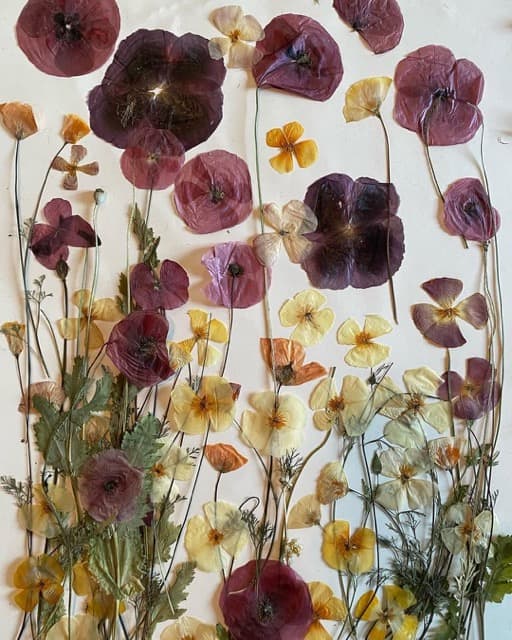
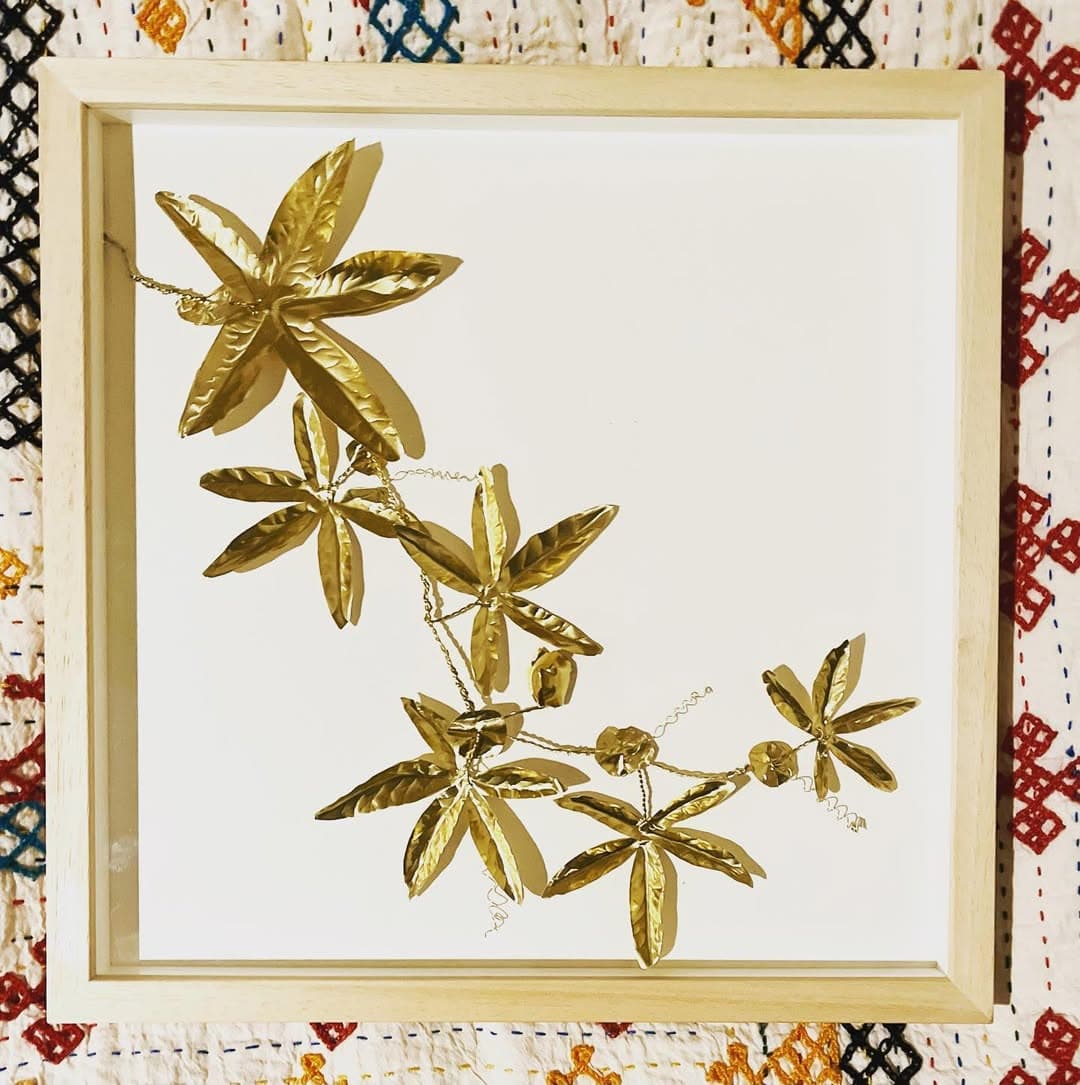
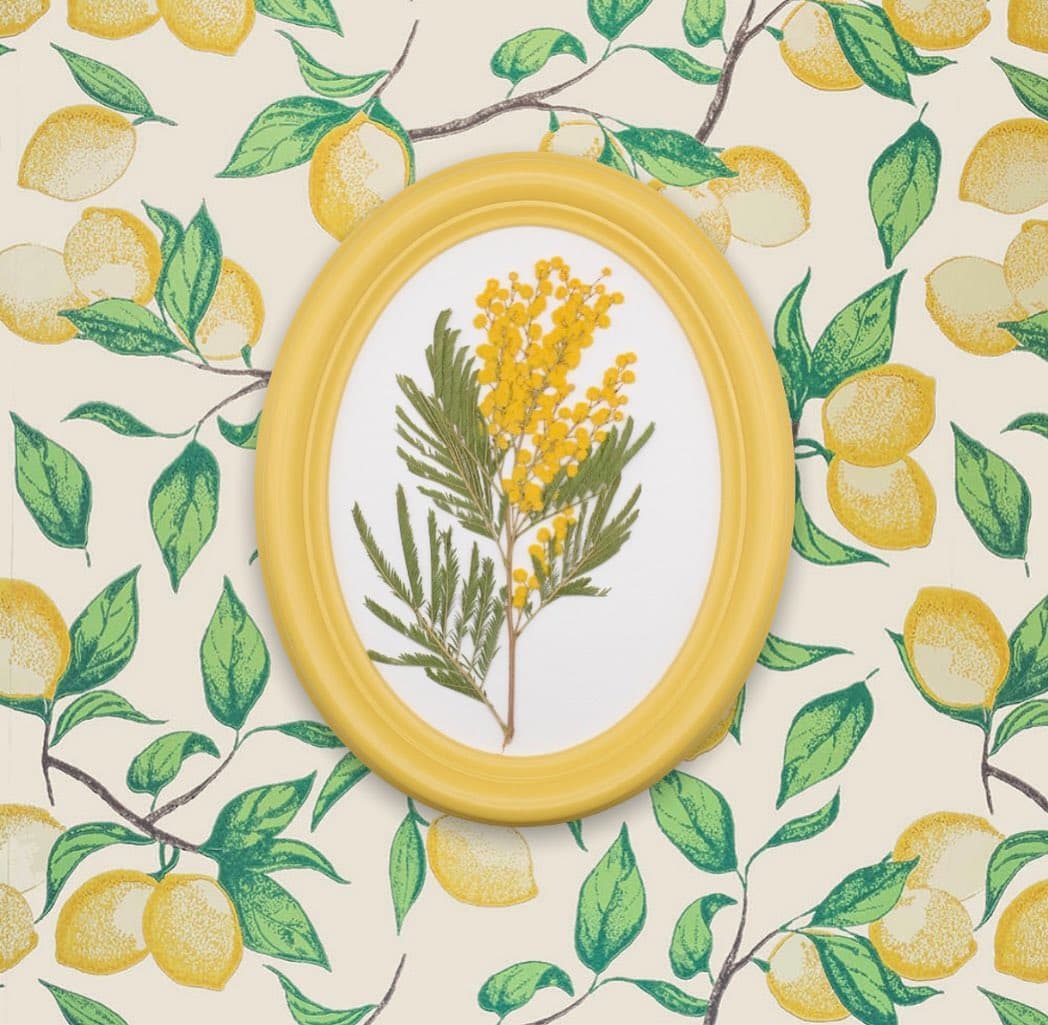
From her studio in the Scottish countryside, Fi McDougall creates art that celebrates the poetic beauty of the natural world. As the founder of Wilderframe, Fi crafts original floral sculptures and wall art that blend traditional botanical techniques with a contemporary eye.
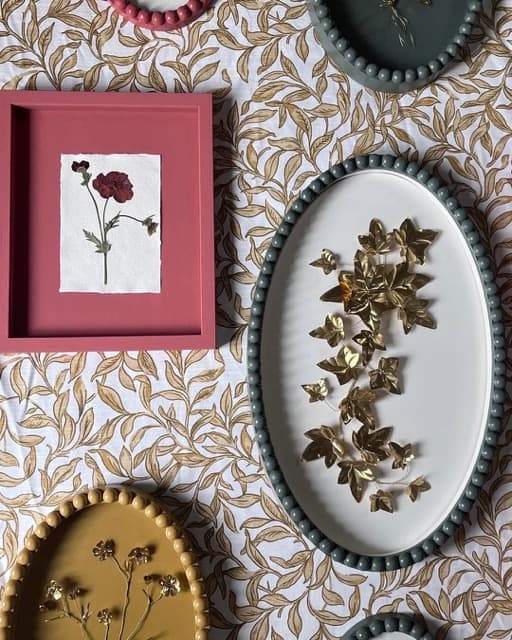
Drawing from her background in English literature, and a lifelong fascination with plants and flowers, her work is rooted in both symbolism and structure. Each piece is hand-cut, thoughtfully assembled, and carefully framed using sustainable materials and intricate, hand-finished details that reflect Fi’s mindful approach to making.
1. Can you tell us a bit about yourself and your artistic journey?
I began my career as an English teacher and had never, until recently, considered the possibility that I might be able to make a living from creating things. I have always, however, had a deep respect for craft and a love of plants and flowers.
It was towards the end of the Covid lockdowns, while on maternity leave, that I started exploring a range of crafts and mediums I’d not touched for years. I was struggling with Post-Natal Depression and felt so relieved to be doing something for me and something that felt productive during the stolen hours when the kids were sleeping.
2. What inspired you to pursue your craft? Was there a defining moment or influence that sparked your passion?
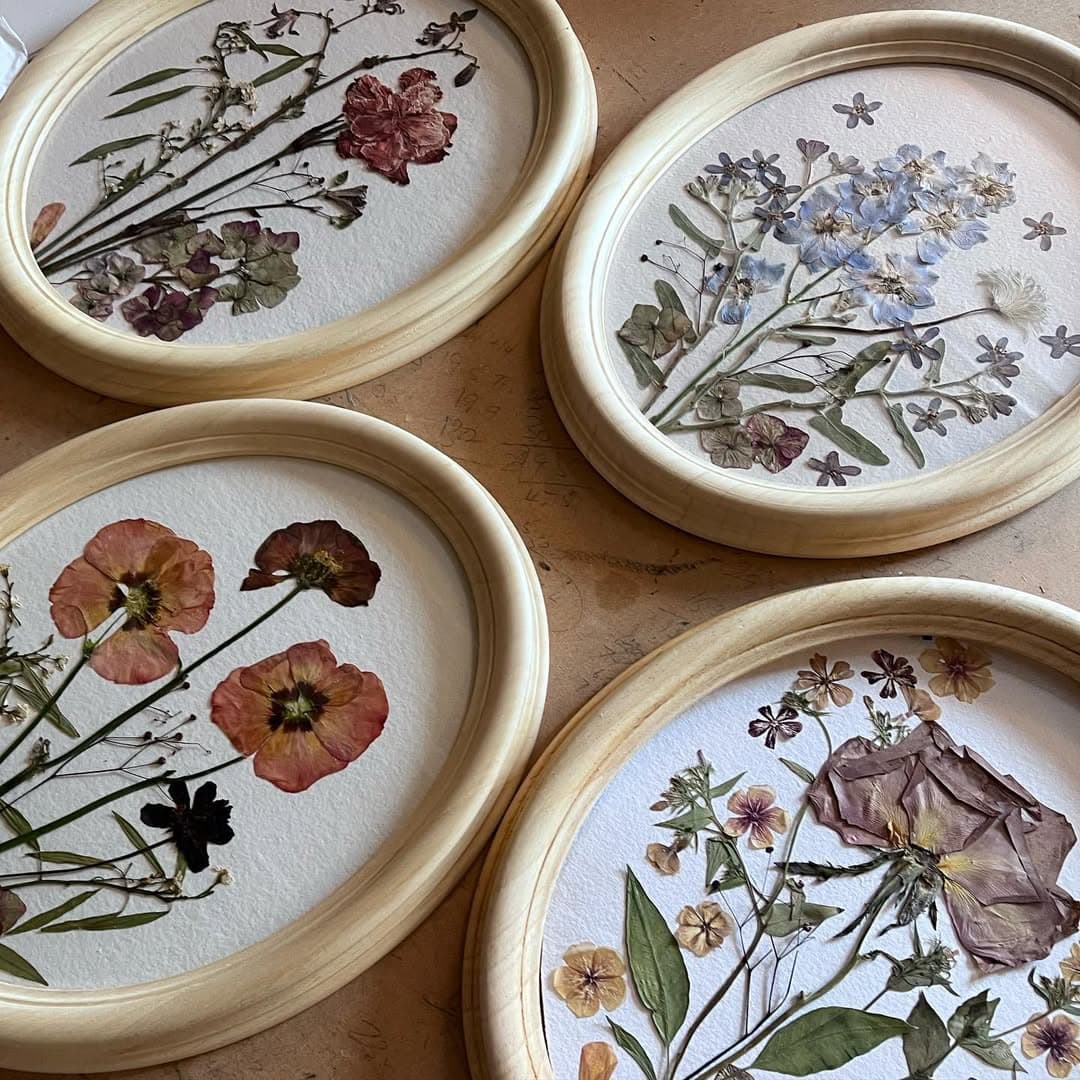
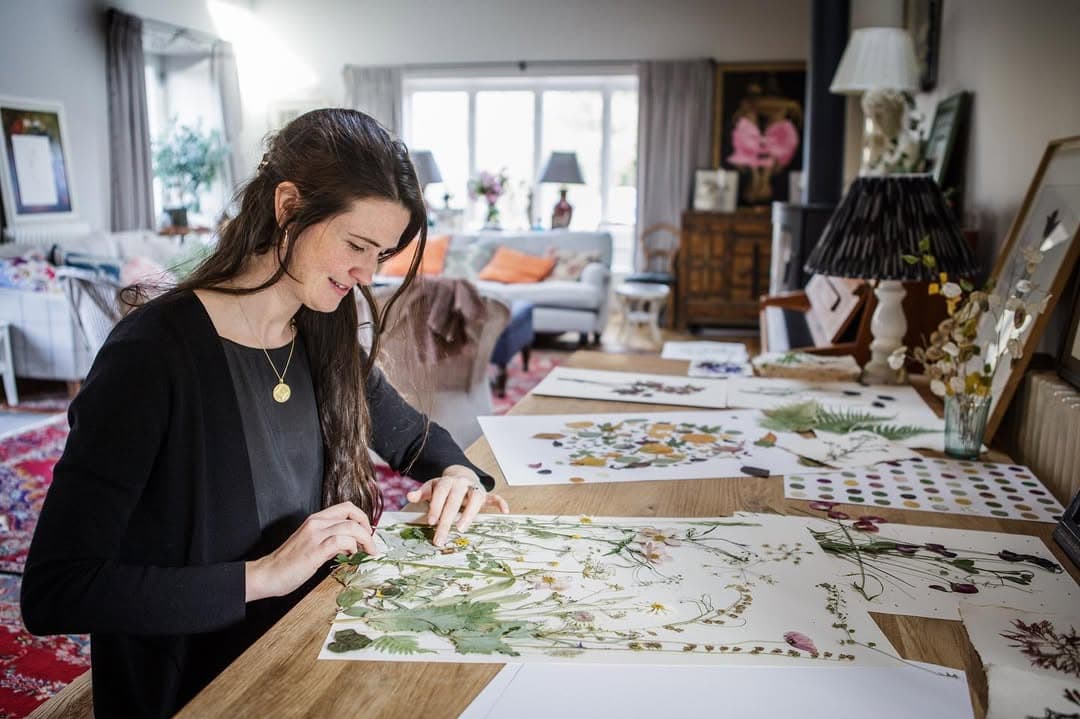
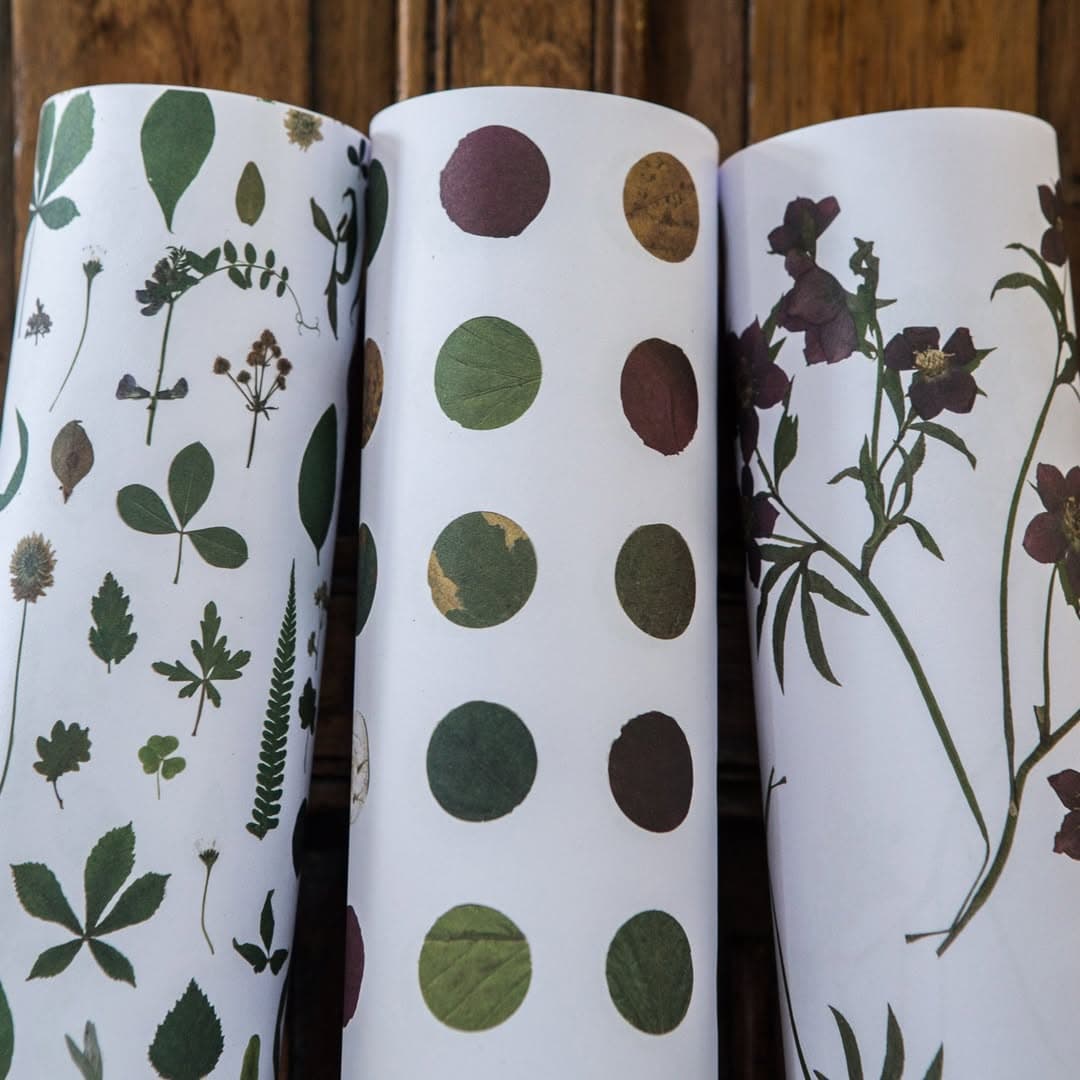
I have a tendency to get a bit obsessive and pressing flowers really captured my imagination. I came back to my childhood hobby through the lens of adult interests in Victorian literature and the practice of keeping herbaria; I sympathised with the desire to identify, collect and freeze an ephemeral moment during an uncertain time. All other techniques I have used subsequently are connected to this impulse.
I have been incredibly lucky to have found people who have supported me through sharing, buying, commissioning or exhibiting my work and enabled my practice to grow organically.
Your craft
3. How would you describe your work in three words?
Floral, decorative and nostalgic
4. What materials or techniques do you use, and why are they important to your process?
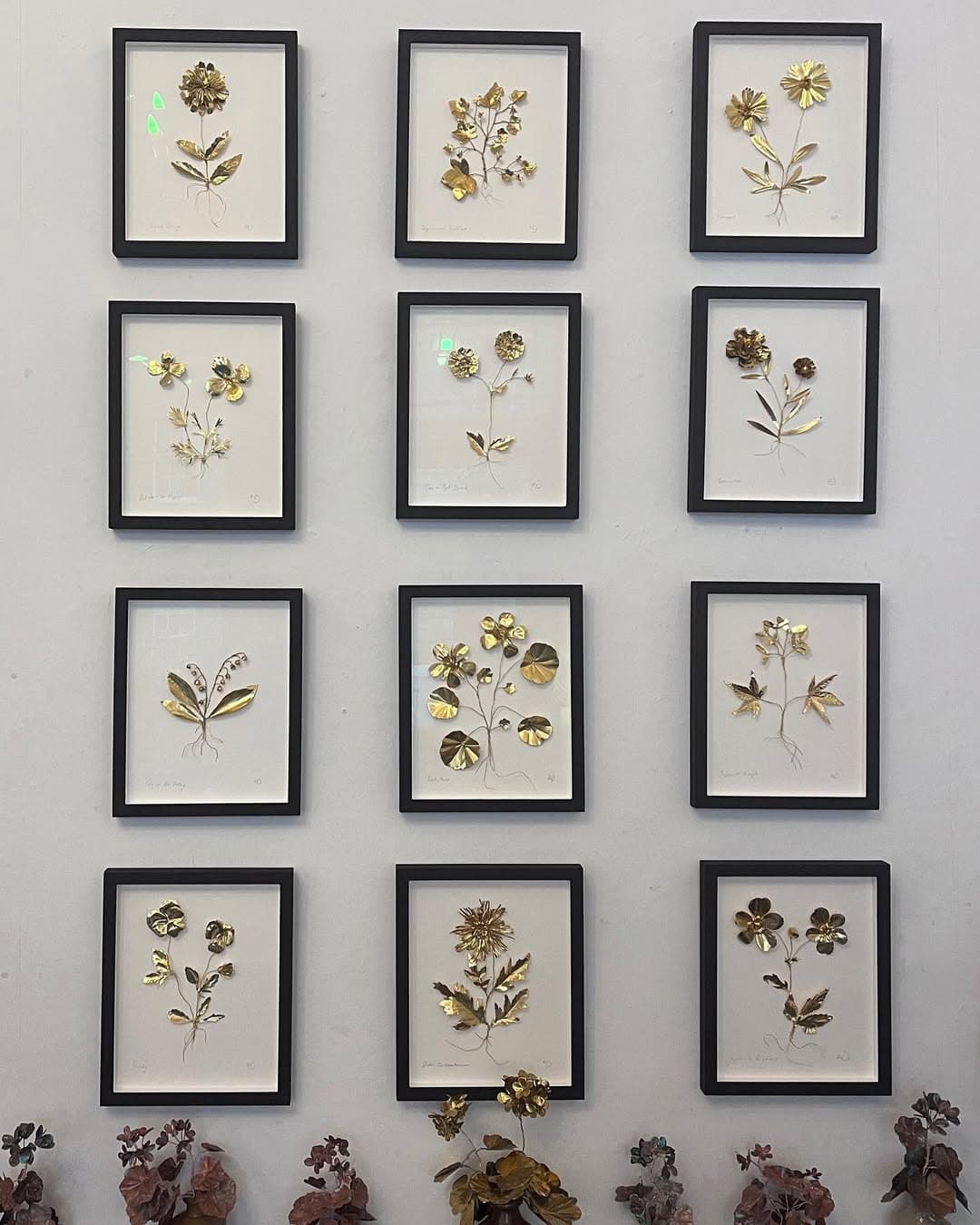
I am not very good a sticking to one medium or technique. I’m still experimenting and suspect I will continue doing so forever! The unifying theme is flowers, and I try to work from real life as much as possible. I enjoy using metal because it is so materially different to a flower, but can be used to render one beautifully. It’s a satisfying contrast.
5. Can you tell us about a favourite piece you’ve created and the story behind it?
A large circular pressed flower collage, over a meter in diameter, which charts the flowers in our local area from early Spring to late Summer. It was one of the first pieces I made for an exhibition and it received such generous feedback during the show. I loved watching people examine it, identifying the flowers and often sharing nostalgic recollections of childhood.
Creative process
6. What does a typical day in your studio or workshop look like?
No day is the same! I’m trying to get better at organisation and admin, and I find that ticking off a few tasks first thing can help me to get going. I then often get out about five different projects, make quite a lot of tea, and hit my peak level of productivity just before I have to hit pause!
7. Do you have any unique rituals or habits that help you stay creative?
I am not sure any of my habits are particularly unique, but the things I find most helpful are long walks and conversations with creative friends. And podcasts in the studio that are distracting enough to silence some of the internal chatter but that don’t steal all my attention!
8. How do you handle creative blocks? Do you have any strategies or tips for overcoming them?
I’m still in the very early stages of my creative career and welcome tips from anyone! In my short experience, I have found that if I’m struggling with a particular project, I need to relax and let it sulk in the periphery. Re-inspiration often finds me when I’m happily working on something else!
Challenges and successes
9. What’s the biggest challenge you’ve faced as a maker, and how did you overcome it?
Learning how to managing time. In teaching, my timetable was managed for me and I’m still adjusting. I’m chronically bad at prioritising, estimating how much time things will take and therefore planning my workload effectively. I need the pressure of a deadline but also get wildly anxious. I am a long way from overcoming it, but through seeking out the wisdom of friends, and getting people to hold me to interim deadlines, I’m getting at least a little better.
10. What’s been your proudest moment or achievement so far?
Exhibiting in a group show at Dalkeith Palace with other artists whom I greatly admire. I felt completely fraudulent but it was a real turning point in my fledgling career where I sold well and thought I might try to really give this a go.
11. What’s your favourite quote you’ve ever heard about your work? Who said it, or what was the name of the publication?
‘it must have taken ages’, or ‘it’s so detailed and looks like the real thing’
– Overheard by people coming over to the studio
Inspiration
12. Where do you draw inspiration from for your work? What sparks your imagination and creativity?
My inspiration comes from the garden, from literature and from my own research. I also attend regular courses and workshops to continue learning new skills. There is no doubt that looking at beautiful things is one of the most powerful ways of igniting my imagination. But I need to be careful not to get over-stimulated: the access to boundless material on social media can often have the reverse effect and ends up being a bit disheartening or distracting.
13. Do you have a favourite artist, maker, movement, or tradition that has influenced your craft?
I think I’m most interested the social and aesthetic discourse of the Arts and Crafts movement, which seems germane to our own era, although it is not a straightforward relationship.
I’ve also just discovered the work of metal sculptor Shota Suzuki; his work is achingly beautiful!
14. How does colour influence your practice; is it an important part of your process? Do you have a particular palette or favourites? Any go-to sources for colour inspiration?
Colour is very important to my work, often for framing choices but increasingly for the works themselves as I use a wider range of media. Most inspiration comes from the flowers in the garden!
Perspectives and goals
15. What role does your environment play in shaping your creativity?
It is central to everything; the garden provides all my models! I’m also fully submerged in family life which no doubt informs the why and how of everything I do.
16. What do you want people to feel when they experience your work?
I would love people to feel the same joy as when they see a beautiful flower in the wild; I try to use enough accuracy in the rendering of any specimen I create to capture some of the evanescence of nature.
17. What are you currently working on, and what excites you most about it?
I am working on a new collection of potted plants and collages that incorporate a more literary element. I adore the feeling of starting out in a new direction and feel very excited to be combing some of my passions more explicitly. The scale is growing which is both daunting and exciting!
Advice and reflection
18. What advice would you give to someone starting out as a maker?
Build a community to people who can boost you up when you’re struggling with imposter syndrome or a crisis of confidence! I would not have managed without the help of more experienced makers and artists who have been generous with their wisdom and encouragement.
19. If you could go back to the start of your career, what advice would you give your younger self?
Have confidence in your own style. If it doesn’t work straight away, it doesn’t mean it won’t work at all. I’m on a permanent quest for authenticity which is hard to find against the background noise of social media.
Closing thoughts
20. If you could collaborate with any artist, past or present, who would it be and why?
Mary Delany, the remarkable eighteenth-century artist who created botanical masterpieces in collage. Her work is exquisite and incredibly scientifically accurate and I imagine she would have an infectious and generous creative energy alongside an enviable botanical knowledge. Her artistic endeavours traverse many crafts, but her most prolific period arrived later in life; a source of constant inspiration!
21. Where can people find your work, and how can they support you?
My work is primarily available in small drops on my website, www.wilderframe.co.uk, group exhibitions and via a small number of retailers. The best way to keep up to date with new work is via instagram, @wilderframe!
To explore more of Fi’s work, follow Wilderframe on Instagram and visit the website to discover the latest collections, commissions, and botanical pieces designed to bring nature, and a touch of poetry, into your space.
Explore Wilderframe’s latest collection and follow her creative journey:

Meet the Maker: Emily Daborn of The Good Life Home
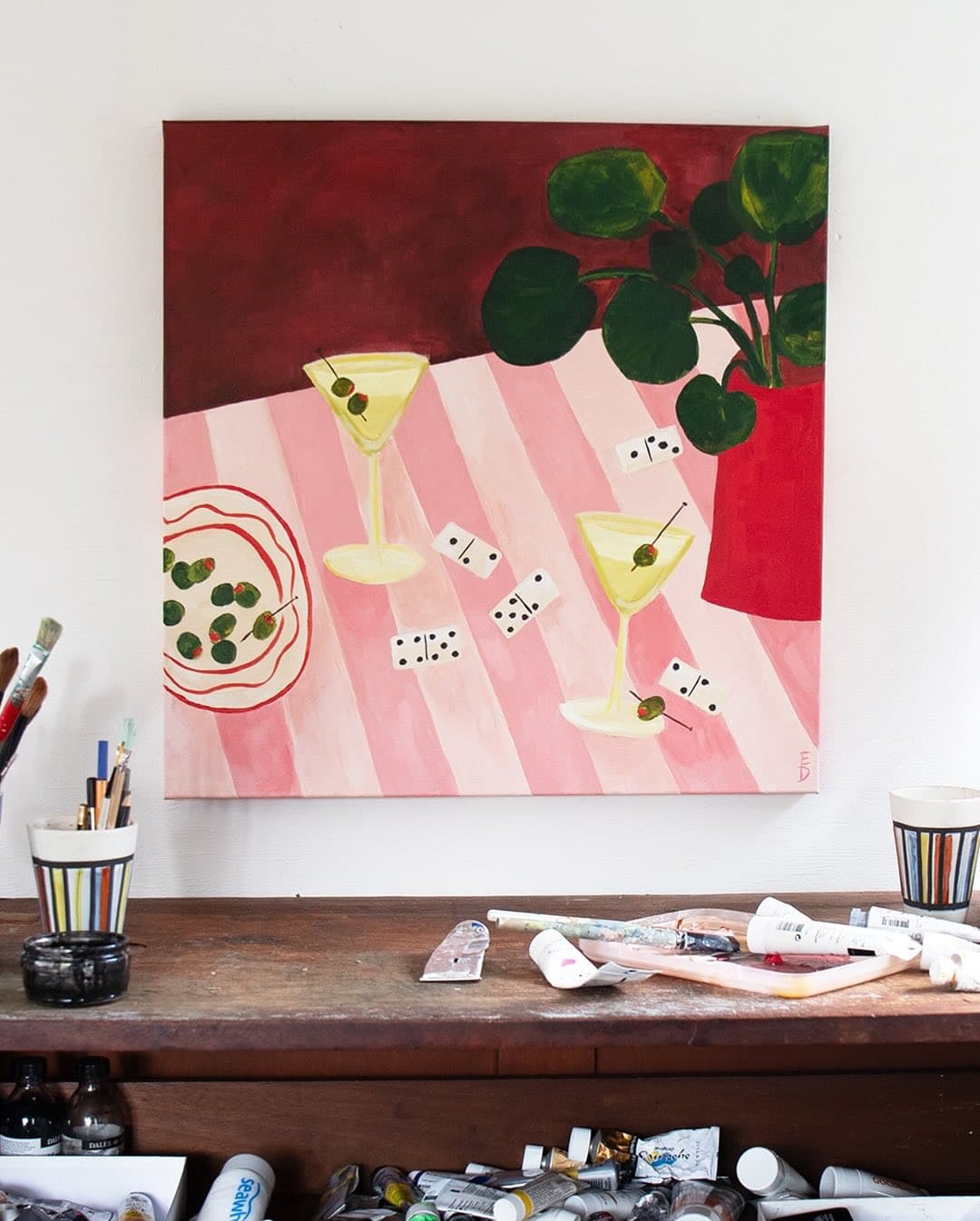
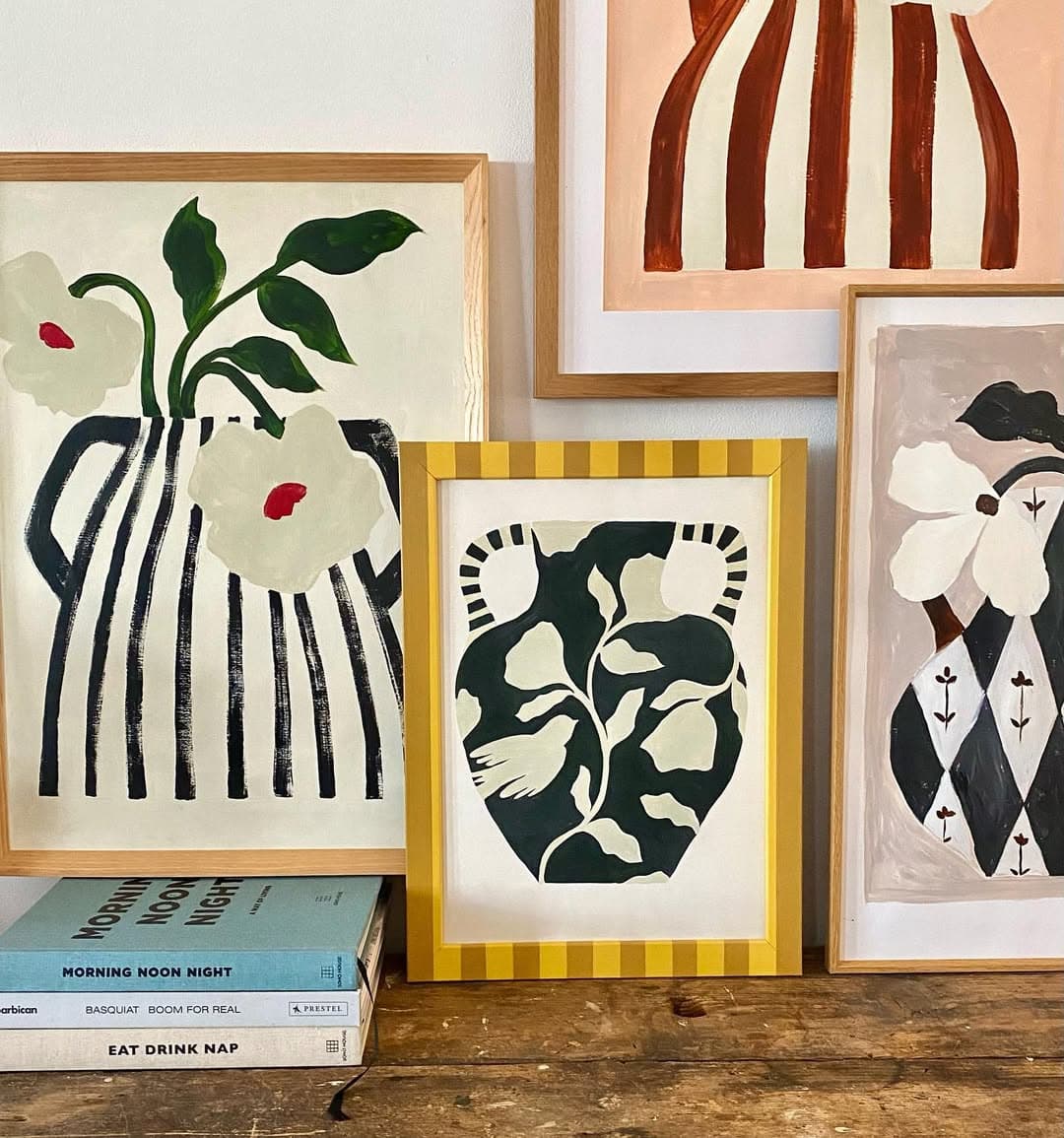
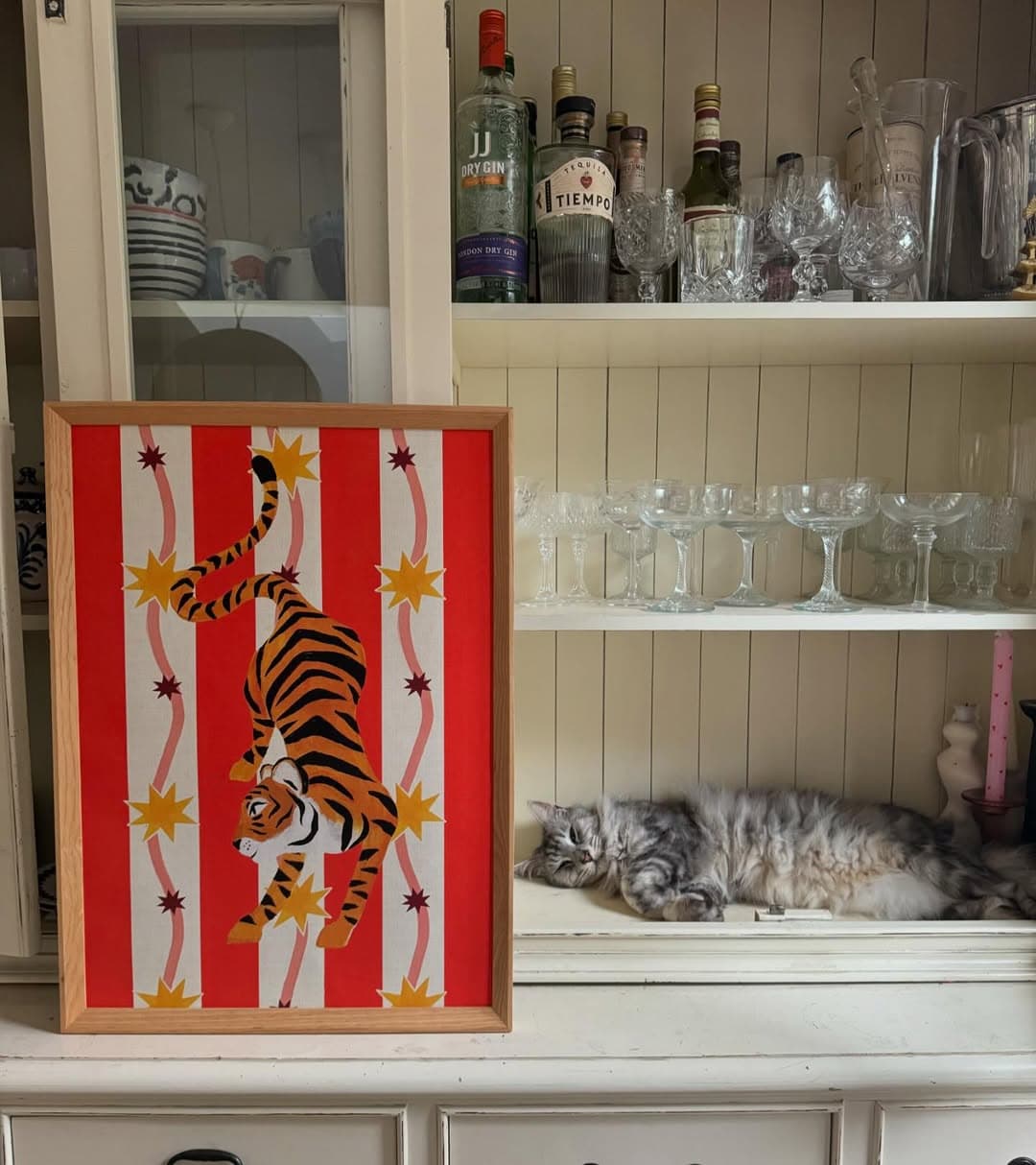
Emily Daborn is the creative force behind The Good Life Home, a London-based studio specialising in contemporary art and prints. With over 25 years of experience in the fashion, homeware, and stationery industries, including roles as Head of Print at Papier and Senior Print Designer at Oliver Bonas, Emily brings a refined eye and a wealth of industry insight to her work.
Now focused on her own collections and collaborations, she creates joyful, design-led pieces that celebrate pattern, colour, and the art of considered living.

1. Can you tell us a bit about yourself and your artistic journey?
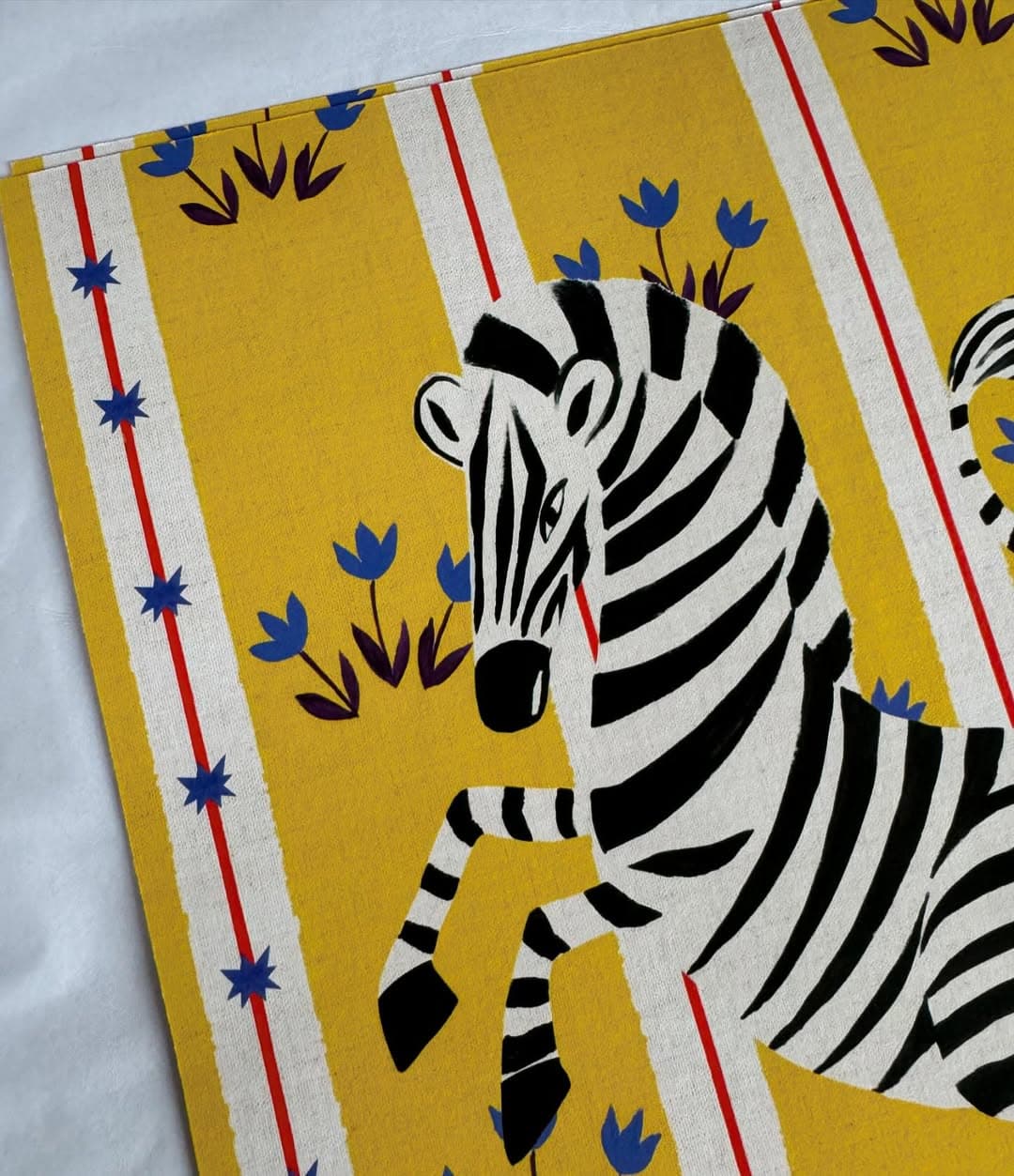
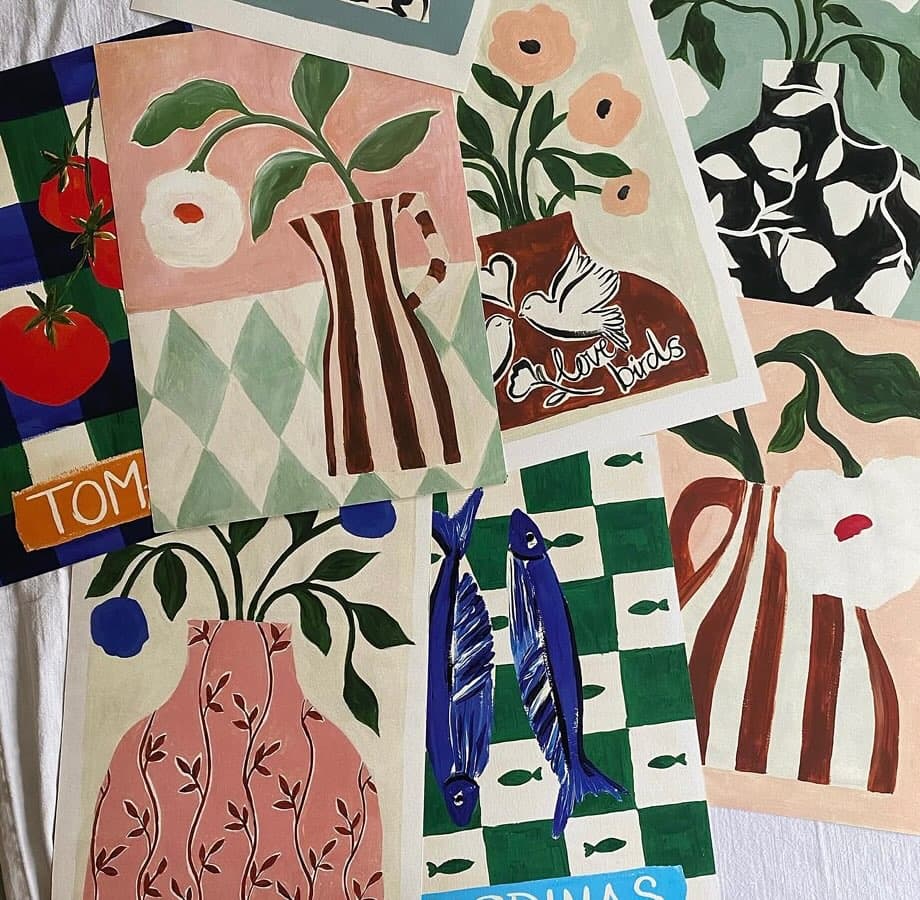
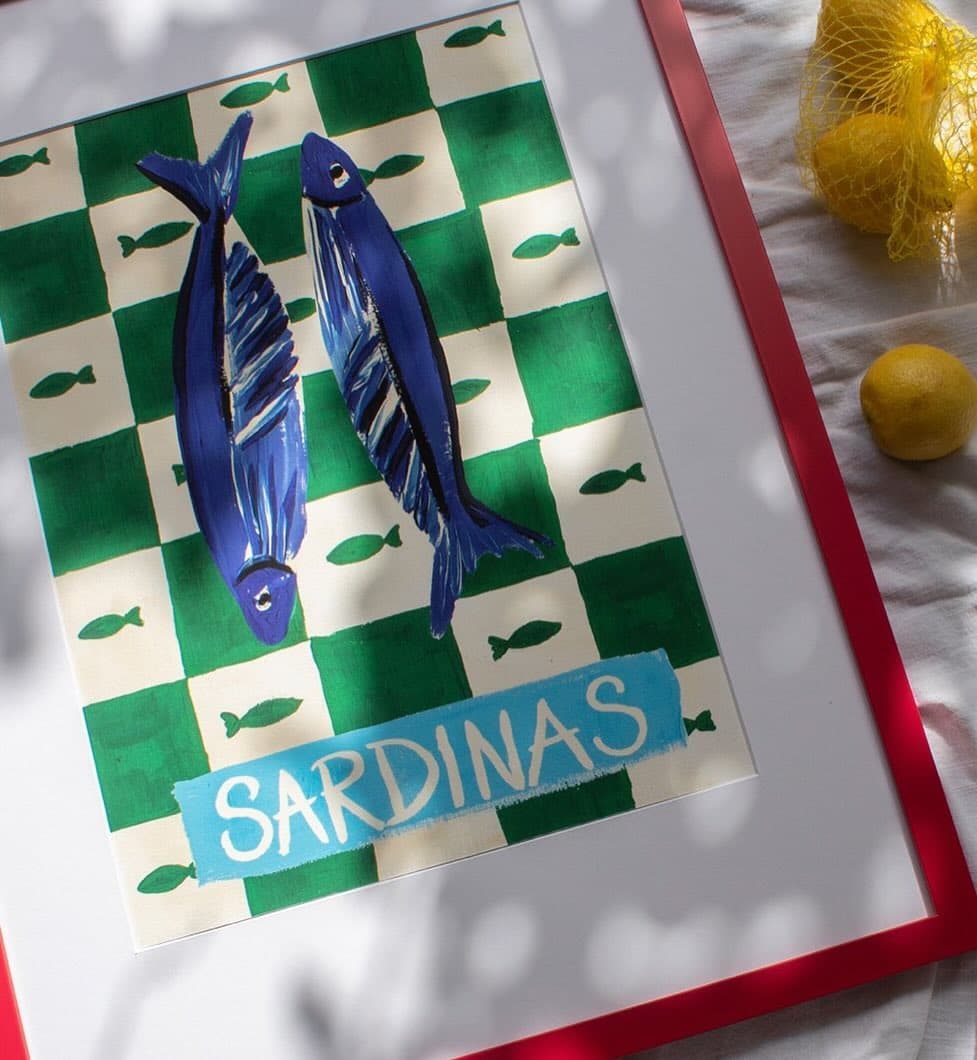
I’m a Print Designer and Artist, creating contemporary Original Art and Giclée Prints.
I studied Printed Textiles at Art college and have worked as a Print Designer all my career, designing for Fashion, Homewares and Stationery. Most recently Head of Print at Papier and Senior Print designer at Oliver Bonas, which completely reinforced my love of homewares. Now I concentrate on my own collections of contemporary Art and Print, together with collaborations with other likeminded designers and creators under The Good Life Home.
2. What inspired you to pursue your craft? Was there a defining moment or influence that sparked your passion?
I think it goes back to when I was 10, drawing 80’s fashion designs (shows my age!!)… I wanted to be a fashion designer and remember a light bulb moment of, what if I could have a career doing what I love. The other influence was having the best crazy A level Art teacher!! Brilliantly bonkers and inspiring!
Your craft
3. How would you describe your work in three words?
Playful, Colourful and Expressive.
4. What materials or techniques do you use, and why are they important to your process?
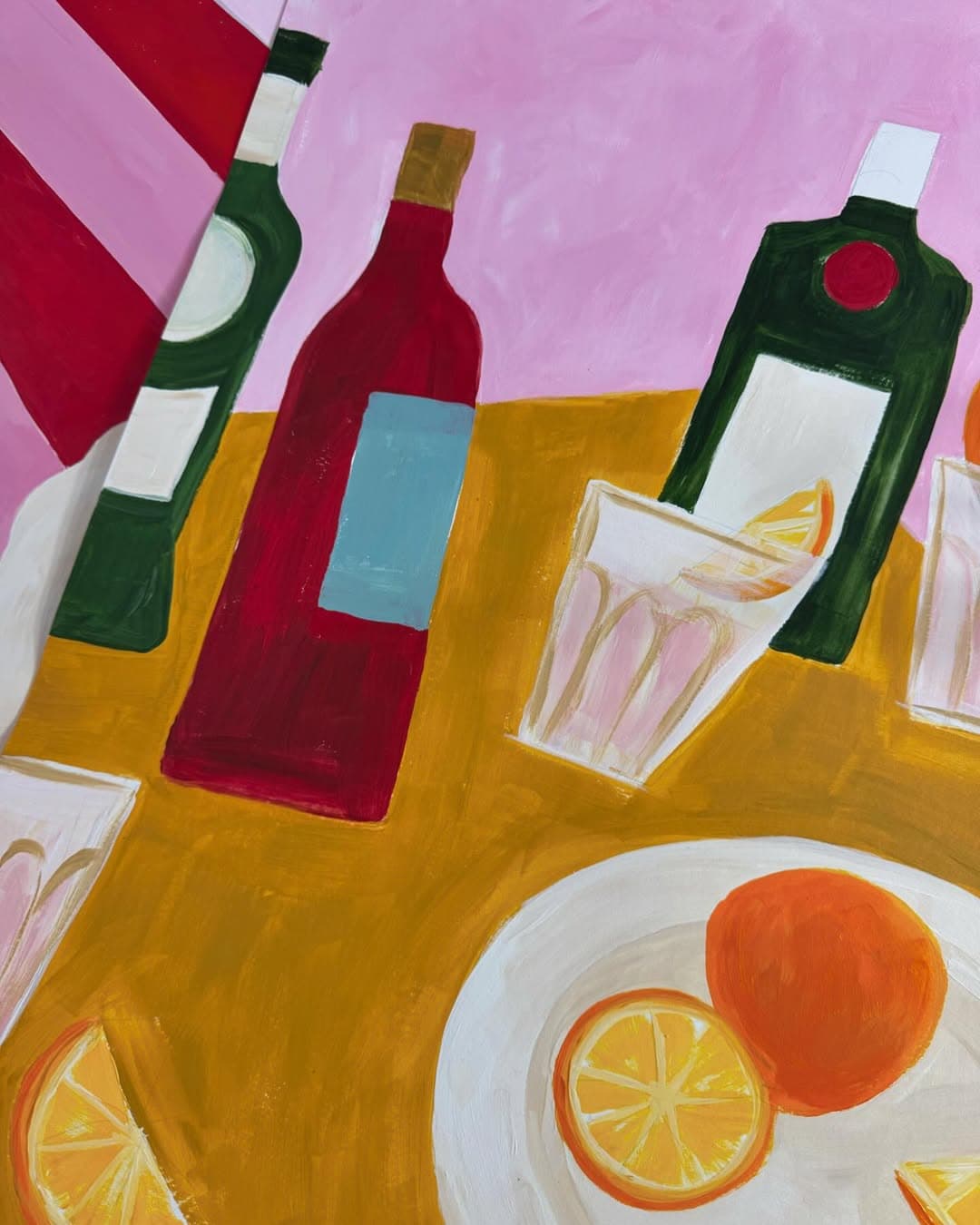
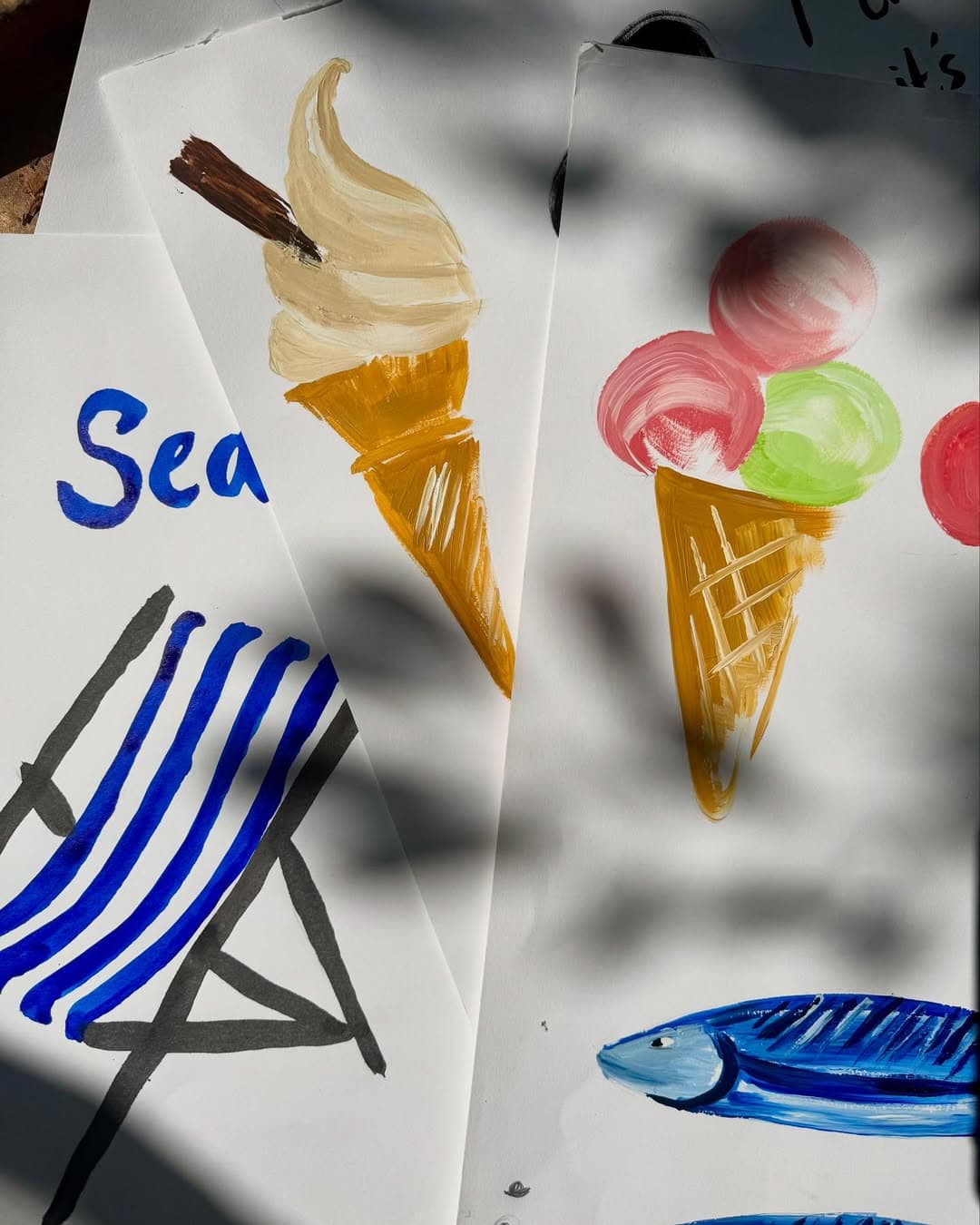
I love to start everything by painting / drawing by hand. My Favourite medium is Acrylic! I’m not very neat so it’s perfect! I also love my Pental ink Pen for linear brush work. It’s so lovely and free and amazing for inky doodling!
If I’m working on a Print, I like to scan my drawings into photoshop. I rarely draw in Photoshop, I just use it as a tool to clean up, repeat and create designs. Another necessary part of the process is my Wacom tablet and Pen – I can’t use a mouse!
5. Can you tell us about a favourite piece you’ve created and the story behind it?
My Favourite piece is my Bespoke Wallpaper design for interior design Studio Jill. It’s in different areas of New Park Manor Hotel and was a real collaborative project, taking inspiration from The New Forrest surroundings and Whimsical Alice in Wonderland…. Think inky mushrooms and animals in pyjamas!
Creative process
6. What does a typical day in your studio or workshop look like?
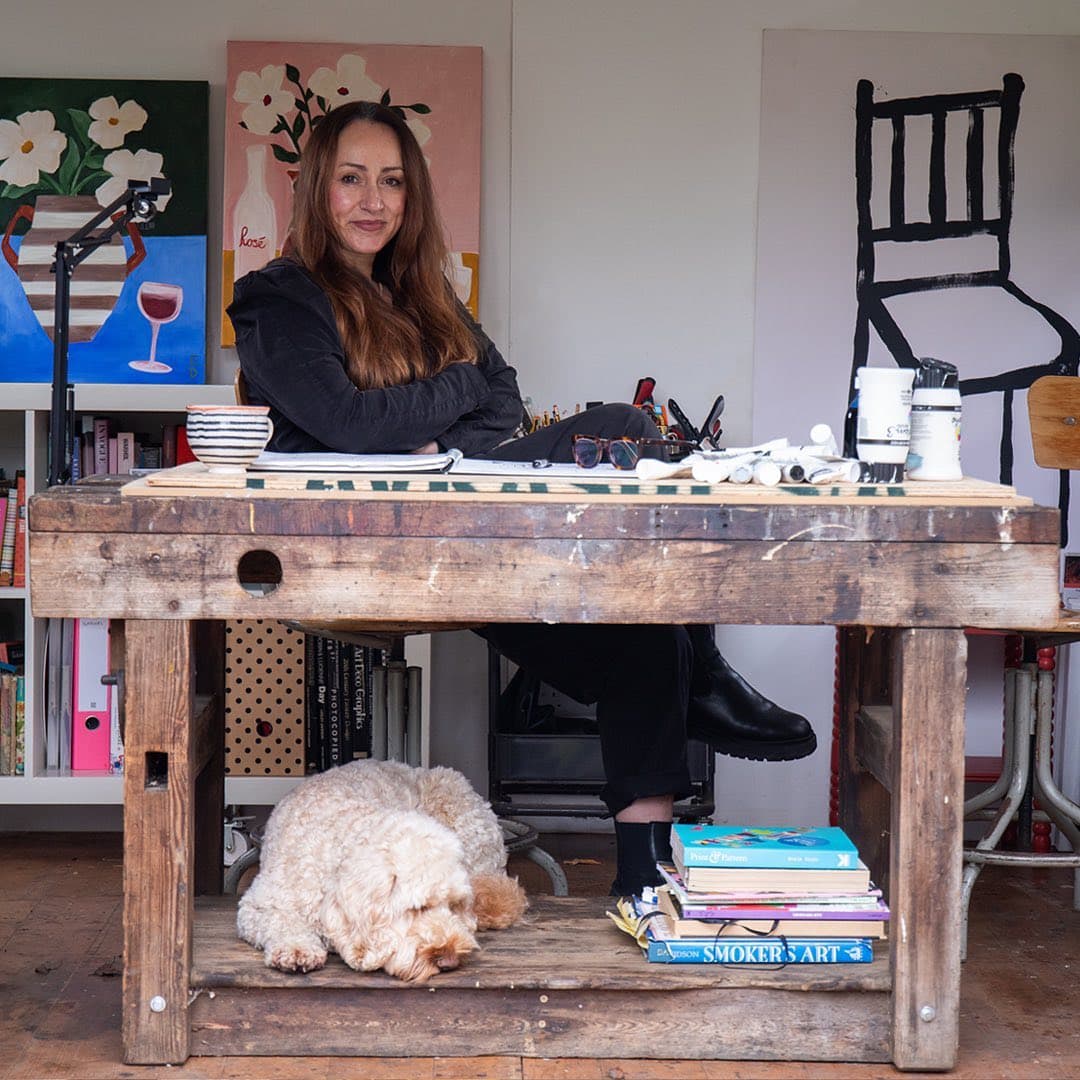
Coffee, packaging up orders, emails and meetings. Walking my lovely but naughty dog Ronnie. More Coffee and Creative time – either painting/ drawing or designing. In summer I’m in my garden studio .. ahem .. shed, which I LOVE. Winter, I’m at the kitchen table .. for now, but watch this space.
7. Do you have any unique rituals or habits that help you stay creative?
Coffee ,dog walk and Music -I’m a headphone girl as it makes me focus more. Doodling in a sketch book with a sharpie or ink pen always helps.
8. How do you handle creative blocks? Do you have any strategies or tips for overcoming them?
I think getting out and about is the best! Exhibitions and small independent shops to see what’s current, Vintage markets and Charity Shops for incredible print inspo! Ditch the computer and socials for the day, but take loads of photos. Also, Nothing beats meeting creative friends in the pub! ideas flow!!!
Challenges and successes
9. What’s the biggest challenge you’ve faced as a maker, and how did you overcome it?
Over the years while freelancing as a Print Designer there was A LOT of times I was designing something I didn’t like, whether it was the product or style of print, which takes the joy out of designing, but in the end it meant my handwriting is quite adaptable.
At college, they tell you to ‘find your style’ something I don’t believe in. Some people have this and it works for them. For me, my style is forever changing and I have worked with many different people because of it. I enjoy working in different ways and styles.
I think the other huge challenge can be the financial challenge starting your own thing, and this is still work in progress!
10. What’s been your proudest moment or achievement so far?
There have been a few moments I’m proud of but tbh,I still get the biggest buzz from having a career from what I love doing. I know a lot of people that just work for money and actually hate what they do.
Inspiration
11. Where do you draw inspiration from for your work? What sparks your imagination and creativity?
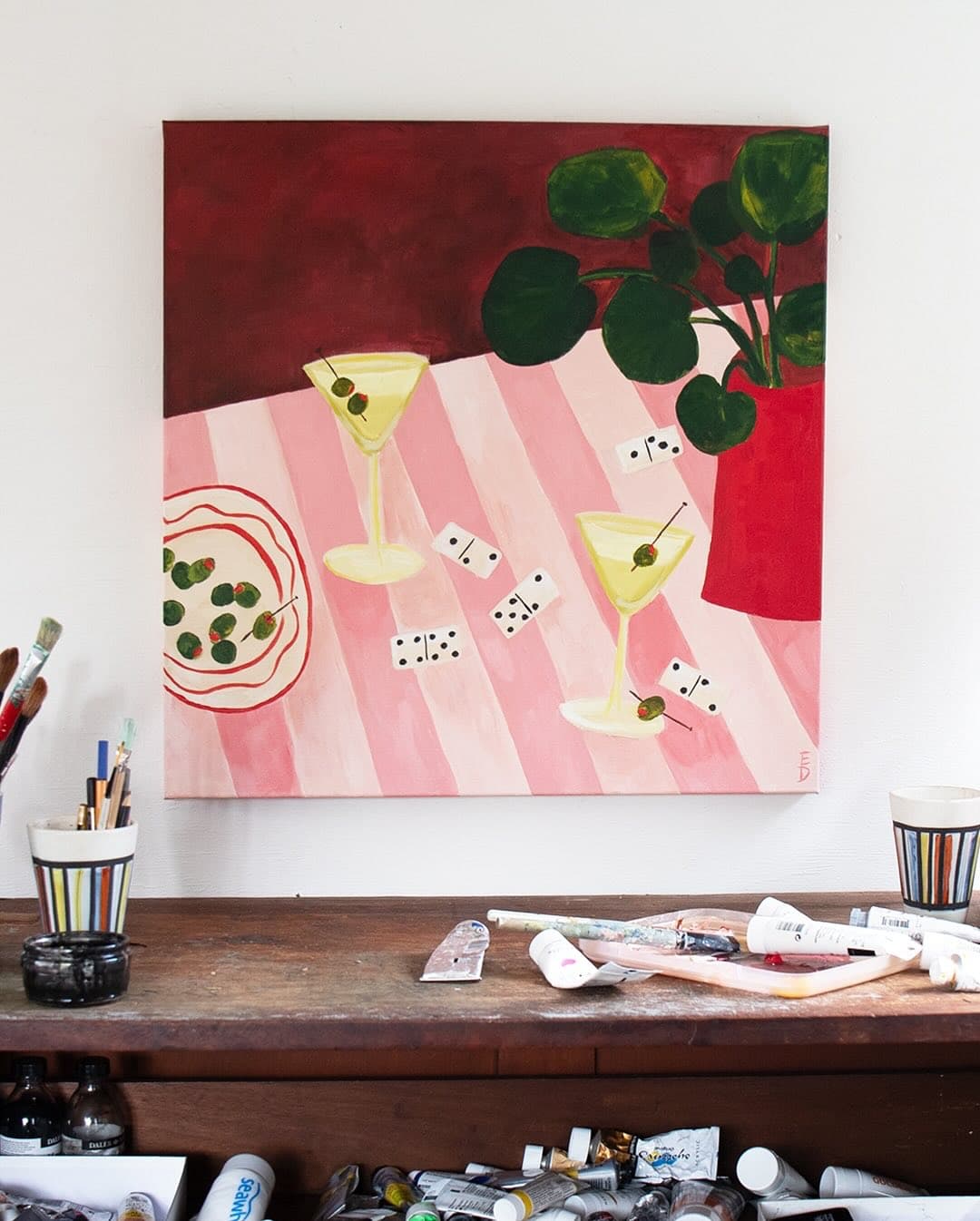
I like to paint ‘everyday still life’, so inspiration could be dinner with friends, or playing shithead on holiday. My work is based on what what I’ve been up to.
12. Do you have a favourite artist, maker, movement, or tradition that has influenced your craft?
So many!!! Too hard to define as I love so many different artists for different reasons! Milton Avery for colour, Mary Fedden and Pierre Boncompain for composition, Sonia Delaunay, and Wayne Pate for patterns, Jean Cocteau and Picasso’s playfulness and my kids art for everything. And many many more!
13. How does colour influence your practice; is it an important part of your process? Do you have a particular palette or favourites? Any go-to sources for colour inspiration?
Colour is so important! People will buy a painting or print to complement their colour scheme in their home, but sometimes people might start with the paintings and work the colour scheme around it!
I have a lot of art books which I’ve collected over the years which are great source when stuck for a burst of colour inspo. Milton Avery always seems to be great!
Perspectives and goals
14. What role does your environment play in shaping your creativity?
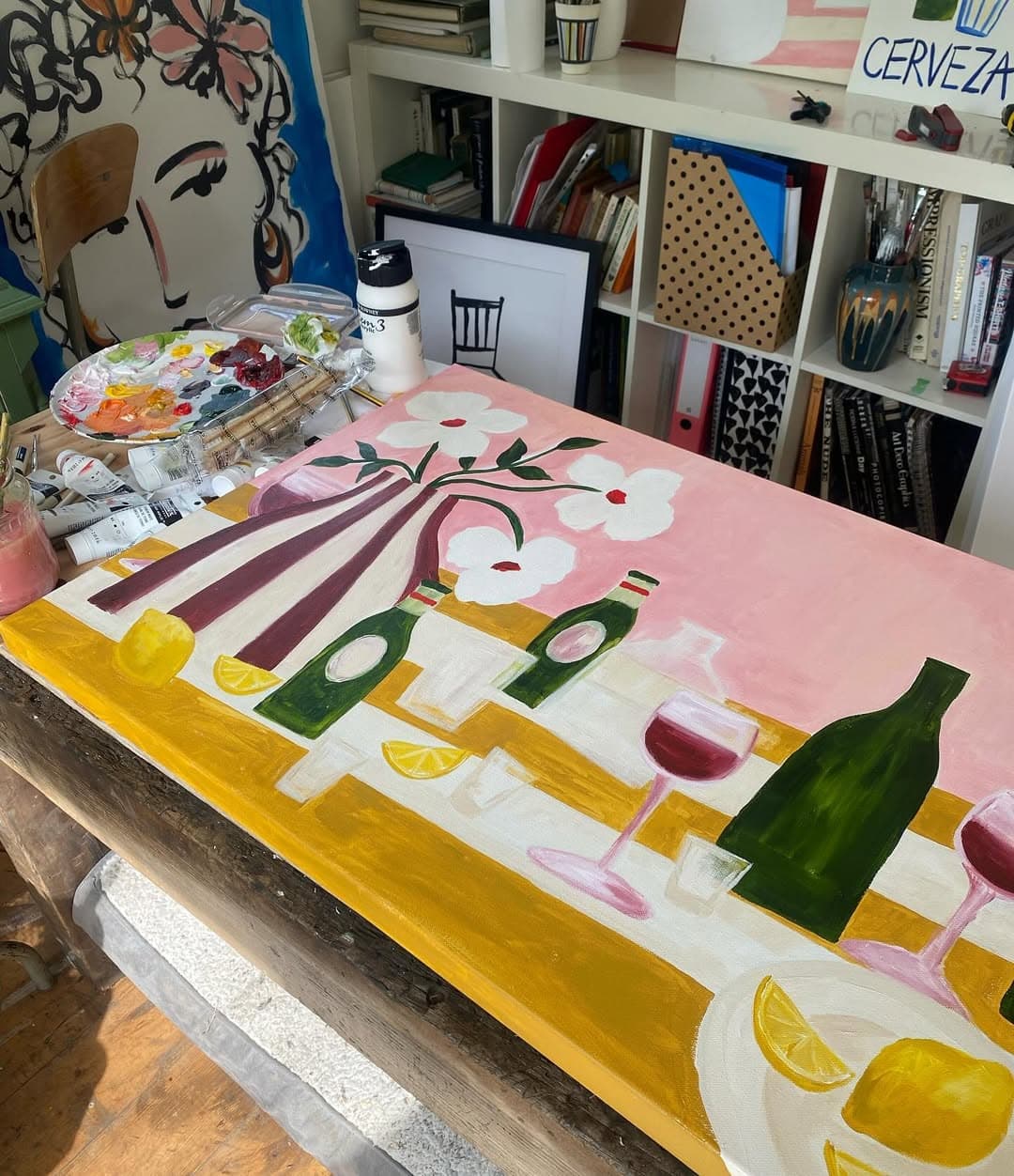
It’s so important! I need lots of daylight to see the colours and the space to be messy and free! If I am painting, I often work across a few canvases at a time. I also need a ‘clean area’ if I am designing on the computer. It hasn’t always worked out to have the right space!
15. What do you want people to feel when they experience your work?
I want them to feel happy!
16. What are you currently working on, and what excites you most about it?
I’ve have a few things in the pipeline for this year which is exciting! I working on some new print collections and Original Art, but I’m also hoping to expand into different homeware products!
Advice and reflection
17. What advice would you give to someone starting out as a maker?
Don’t be afraid to ask for advice. Everyone has been there.
18. If you could go back to the start of your career, what advice would you give your younger self?
To have more confidence. Not to overthink everything.
Closing thoughts
19. If you could collaborate with any artist, past or present, who would it be and why?
I’d love to collaborate with Joseph Frank on something Print and Pattern, And Jean Cocteau! -Perhaps help paint the murals on Villa Santo Sospir walls – something very inviting about painting so freely on a large scale!
20. Where can people find your work, and how can they support you?
My website, thegoodlifehome.co.uk and ig feed: @thegoodlifehome
I think one of the best ways of supporting me is seeing my work in stiu in peoples homes. I love how people style art differently, and it’s so nice to see a photo and see the print / painting when they are in their forever home.
From her London-based studio, Emily Daborn brings over 25 years of industry experience to The Good Life Home—her creative world of contemporary art and print. Blending bold design with a love for colour and craft, Emily’s work reflects a commitment to thoughtful, joyful living and collaboration with like-minded makers.
Discover her latest collections and follow along at The Good Life Home:
Support The Good Life Home by following along on Instagram and exploring the latest collections and collaborations on their website, a destination for thoughtful design and timeless print-led pieces.
Meet the Maker: Sasha Compton, Painting a Life of Purpose
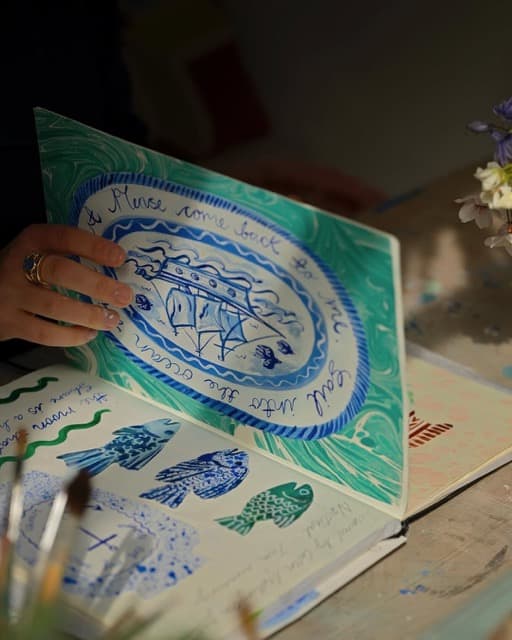
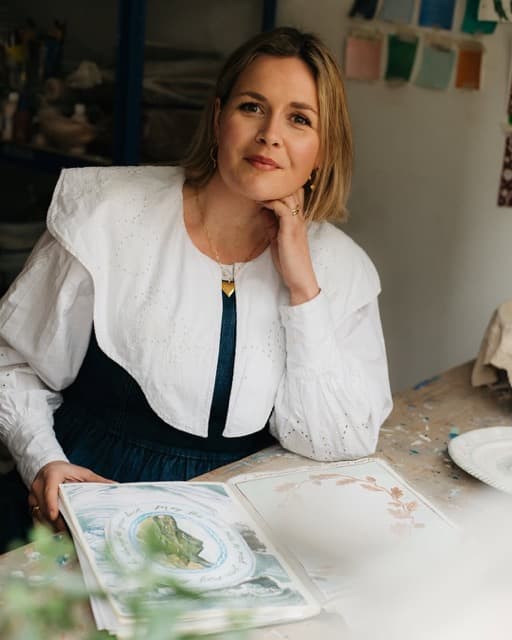
In this Q&A with Sasha Compton, we step into the vibrant world of a multidisciplinary artist whose hand-crafted works are rooted in sustainability, storytelling, and skill. Raised between North Yorkshire and the Isle of Mull, and now based in London, Sasha blends her background in illustration and graphic design with a passion for slow, thoughtful making.
Since launching her studio in 2020, she’s garnered international recognition and collaborated with leading brands, all while staying true to her belief in buying better and celebrating the beauty of handmade art.

1. Can you tell us a bit about yourself and your artistic journey?
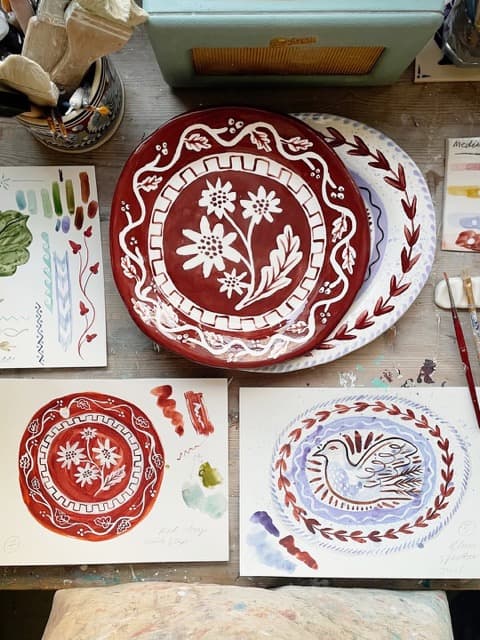
I am a British Artist and Designer based in London. Known for my colourful freehand style in painting or ceramics, I aim to transport viewers into a timeless world of Art by creating modern reinterpretations of classical concepts.
Using expressive and experimental techniques, I work with the colour theory to create decorative, whimsical and dreamlike artworks with the hope of bringing joy into people’s lives.
Inspired by nature, I grew up in a creative family, in North Yorkshire and the remote Isle of Mull, Scotland. I was awarded an art scholarship at the age of 14 years old and went on to study at Central St. Martins (2012, Illustration) and then at Chelsea College of Art (BA Graphic Design in 2015). I lived in Amsterdam for four years working as a Senior Graphic Designer, and moved back to London in 2022 where I now create in my colourful art studio in Lambeth.
2. What inspired you to pursue your craft? Was there a defining moment or influence that sparked your passion?
Ever since I was little, I knew my career would be creative. After university I explored a few areas in the creative industry but it wasn’t until 2020 that I felt a spark to pursue art as a full-time career.
I had been advised to go down the Graphic Design route at CSM as it guaranteed a secure income, but had always wanted to create physically. In 2020 I was working as a Graphic Designer and unfortunately witnessed a traumatic cycling accident in Amsterdam, I started focussing more on physical art (in particular ceramics) as a form of therapy, and soon realised that life was too short to not do something you love.
I suppose the accident put things into perspective for me. I made a business plan and started to take the next steps to becoming a full-time artist.
Your craft
3. How would you describe your work in three words?
Romantic, freehand, decorative.
4. What materials or techniques do you use, and why are they important to your process?
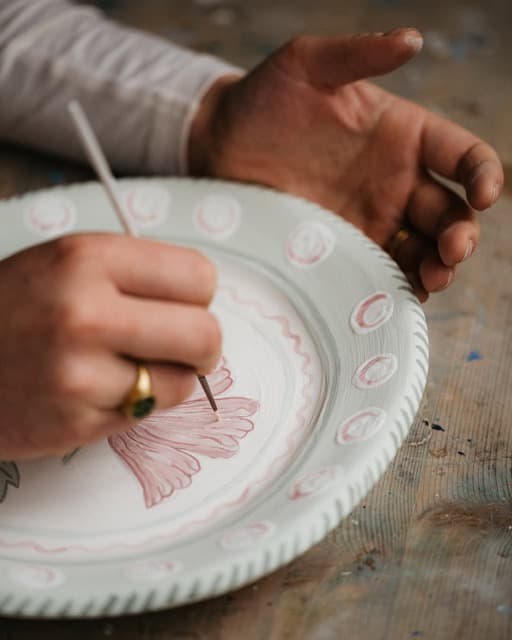
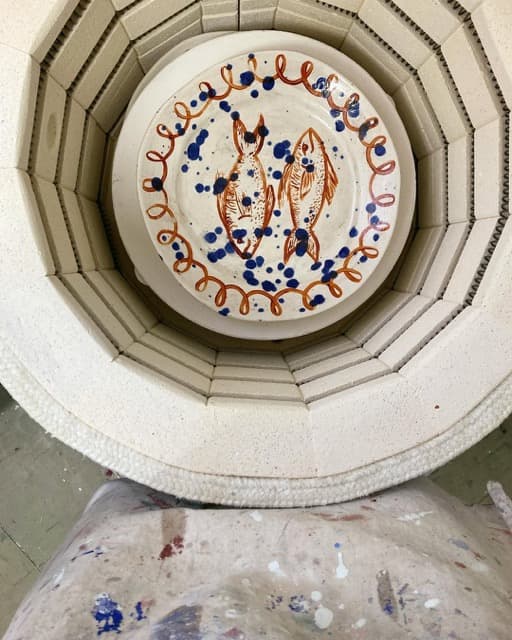
I like to use unpredictable materials like glazes, or watercolours. My work celebrates imperfections and character. Working with materials that feel like they have their own personality makes it an exciting process. I always think you can tell when an artist is enjoying making the artwork.
5. Can you tell us about a favourite piece you’ve created and the story behind it?
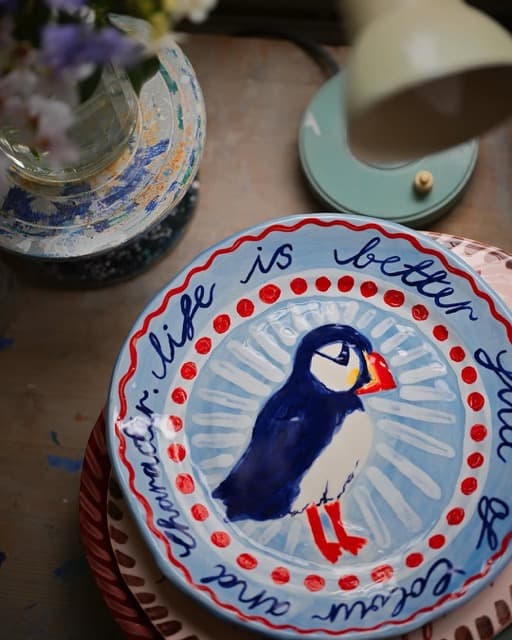
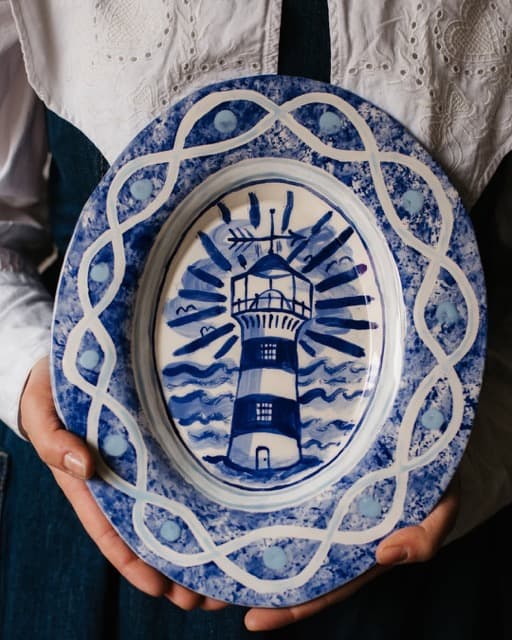
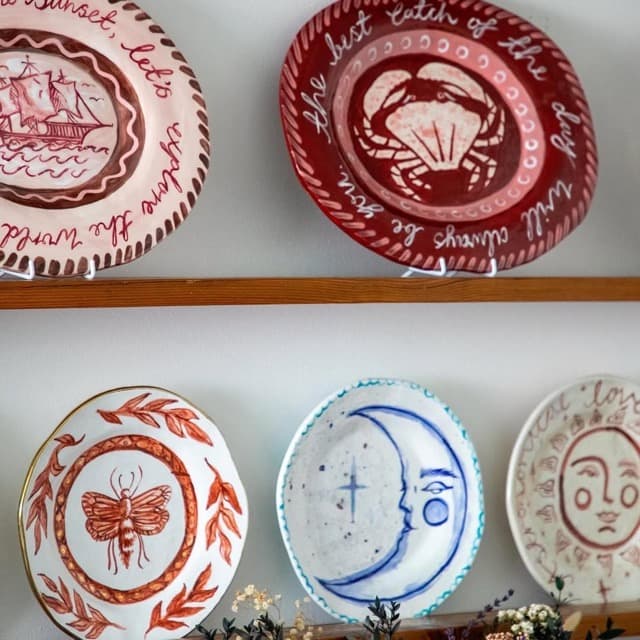
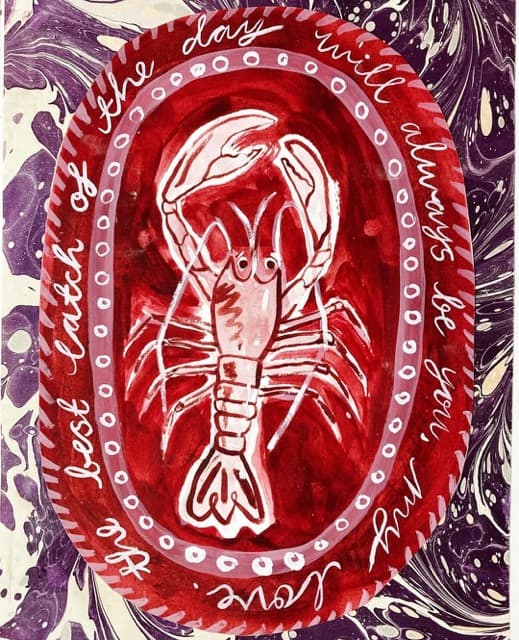
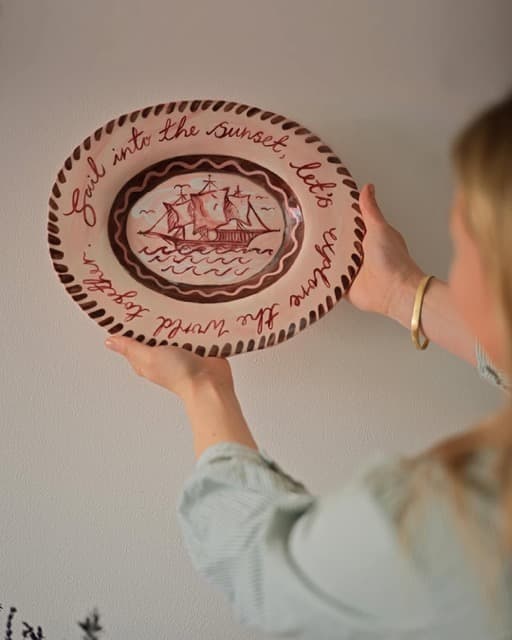
I’ve been focussed on developing my series of ‘Love Platters; a love letter to nature’. These are an ever-growing collection of ceramic platters which are handmade and glazed in my studio. Inspired by landscapes and happy memories in nature, the narrative for these works is an appreciate of nature. Each platter has romantic words written around the decorative border. The series questions ‘If you were to write a love letter to nature, what would you say?’ It feels very relevant for now.
Creative process
6. What does a typical day in your studio or workshop look like?
I tend to do my emails and admin at home with a coffee and then cycle to the studio. I collaborate a lot, often with Interior Designers or brands to create murals, lampshades and other decorative forms of art to their brief. So, I often have illustrations and samples to complete and meetings to attend. I always try to plan in an hour for sketching.
After lunch I focus on ceramics, working with clay or glazes and pack up for the day. No day is the same. Some days are dedicated to marketing plans, or accounts, or inspiration but those are less frequent.
7. Do you have any unique rituals or habits that help you stay creative?
No rituals as such, but I remind myself to ‘get fresh air, look up and stay curious.’
I think there are a lot of days where you don’t feel the ‘passion’, but as long as you are curious you will keep experimenting and playing which will lead to creativity.
8. How do you handle creative blocks? Do you have any strategies or tips for overcoming them?
I focus on something ‘easy’ that needs to be done and then the scary idea seems less scary. If it’s a prolonged block, I take a step back and seek inspiration in galleries, books or being out of my comfort zone. Running helps me a lot too.
Challenges and successes
9. What’s the biggest challenge you’ve faced as a maker, and how did you overcome it?
It is still one I struggle with but time-management and the lack of financial security. I write to do lists every day to keep me focussed and I try to make sure I always have a couple month’s rent saved up in case I have a slow month of sales.
I often pitch for work and get rejections which is always disheartening, but as each year goes on, I take the rejection less personally. The ups and downs are very normal in this industry. It’s the best feeling when you do get an exciting project!
10. What’s been your proudest moment or achievement so far?
I loved painting the window artwork for Martin Brudnizki’s shop And Objects in 2023.
I also adored painting a giant egg for The Queen’s Jubilee celebrations. The egg was exhibited on the streets of London with The Elephant Family (a charity endorsed by The King and Queen). My Fabergé inspired egg was selected by Fabergé to be exhibited for their coronation event in 2023.
11. What’s your favourite quote you’ve ever heard about your work? Who said it, or what was the name of the publication?
'Her focus is on crafting one of a kind pieces and limited runs, working against the mass production that's so rife in the homeware industry'
– HOUSE & GARDEN
Inspiration
12. Where do you draw inspiration from for your work? What sparks your imagination and creativity?
I am very inspired by architecture, patterns and nature, so a lot of my ideas come from just absorbing everyday life or thinking back to happy moments I can celebrate. I take a lot of photos for documentation and frequently update my mood board and sketchbook in my studio. I think collaboration is key to creative development too.
13. Do you have a favourite artist, maker, movement, or tradition that has influenced your craft?
I am influenced by various artists and movements and it’s always changing. Grayson Perry is probably my favourite artist. Perry was the UAL Chancellor in my time which I think played a huge part in his influence.
Illustration wise I admire Edward Bawden, and I find the woven 19th century nautical themed works by Colin Millington so charming. Decorative designs such as the patterns of Robert Adam often creep into my works.
Even though they were not early influencers on my practice, my work feels quite closely aligned to the Bloomsbury Group’s way of thinking too.
14. How does colour influence your practice; is it an important part of your process? Do you have a particular palette or favourites? Any go-to sources for colour inspiration?
I often try new colours and end up being drawn to my favourite colours. I love the Georgian colour palette (dusty pinks, greens) and colours of nature (mossy tones, browns and blues). In general, I only use 2 or three colours in an artwork. This limited colour and use of the colour theory allows a stronger outcome for what I am trying to achieve.
Perspectives and goals
15. What role does your environment play in shaping your creativity?
I have to be in the right mindset, so making sure I don’t have lots of deadlines at once is important to my productivity. I also need to feel comfortable so I often listen to the radio or light a candle in my studio. I like the presence of plans and the sounds of the Waterloo trains that go by the studio.
16. What do you want people to feel when they experience your work?
I would like for people to feel a sense of play and an uplifting emotion. Ideally the artwork doesn’t just ‘go with the sofa’. It’s always lovely when someone really ‘gets’ your work and the craftmanship that’s gone into it.
17. What are you currently working on, and what excites you most about it?
I am currently working on an illustration project for a client which is very detailed and a great challenge. I am also working on some ceramics for a group show at The Watts Gallery called ‘Spirit of Charleston’ (Open Feb-April).
I am also working on some ceramic plates for Interior Designer Rosanna Bossom which is also exciting as I have no idea how they will look in situ. Straddling the role of artist and designer is my dream balance so I am grateful when there is a mix.
Advice and reflection
18. What advice would you give to someone starting out as a maker?
I’m not really one to give advice as everyone has their own beautiful journey.
If I had to advise – it would probably be to ‘always give it a go, and if you can – plan. Also turn up to events as you never know who you might meet that could be a new creative friend or collaborator.’
19. If you could go back to the start of your career, what advice would you give your younger self?
Try to care less what others think, listen to what you feel is right, and don’t overcomplicate things.
Closing thoughts
20. If you could collaborate with any artist, past or present, who would it be and why?
I would adore to collaborate with an artist / brand like Diptyque or Ffern as I find their focus on nature is aligned with my work. I would also love to do a fabric range if there are any fabric suppliers out there who’d like some illustrations? (I have a few ideas..)
21. Where can people find your work, and how can they support you?
You can find my work on my website: www.sashacompton.com and via my Instagram: @sashacompton_design.
I link which galleries are selling my work on my Instagram. I often take on collaborations and commissions, so please get in touch if you have something fun in mind.
From her vibrant London studio, Sasha Compton champions handmade, sustainable design through expressive artworks and one-of-a-kind creations. With each brushstroke and carefully crafted detail, she celebrates creativity, tradition, and the joy of slow, thoughtful making.
Explore Sasha’s latest collection and follow her creative journey:
Support Sasha Compton by following her creative journey on Instagram and exploring her full collection on her website.
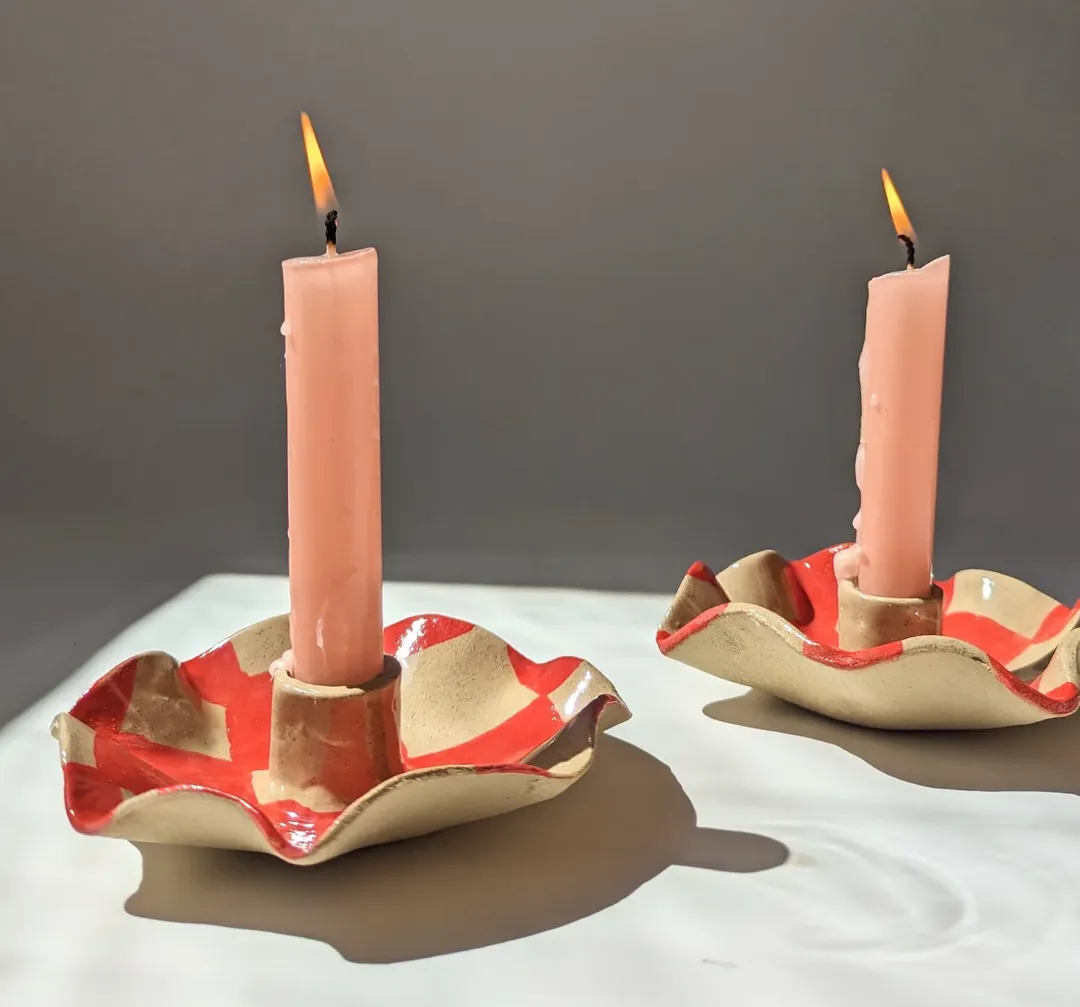
Meet the Maker: Rosie Gore, Crafting Colour and Character in Clay
In this Q&A with London-based ceramicist and designer Rosie Gore, we explore her hand-built approach to creating thoughtful, one-of-a-kind stoneware.
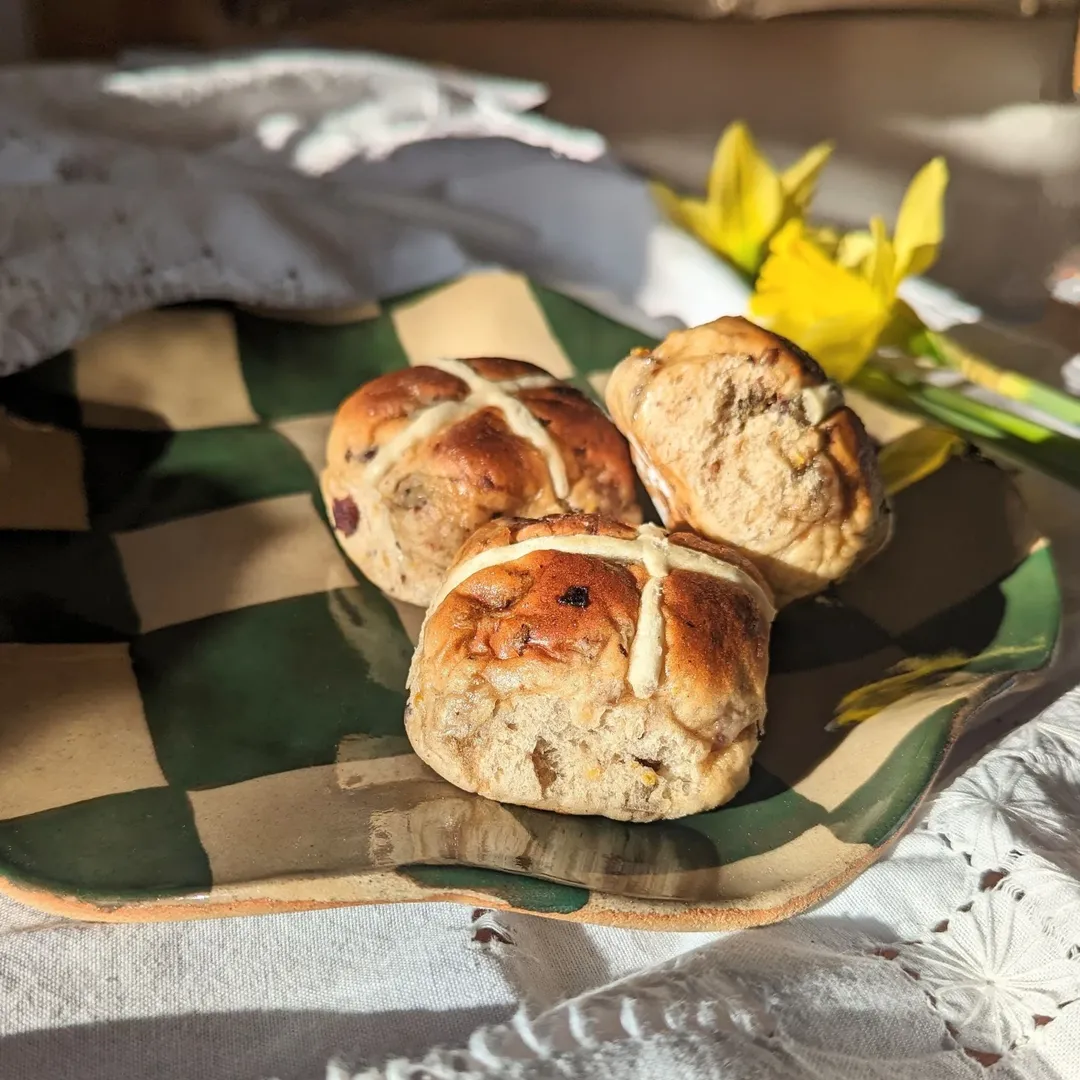
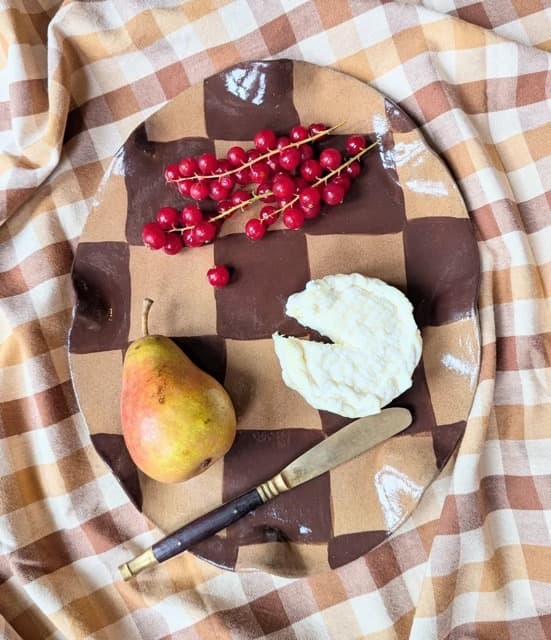
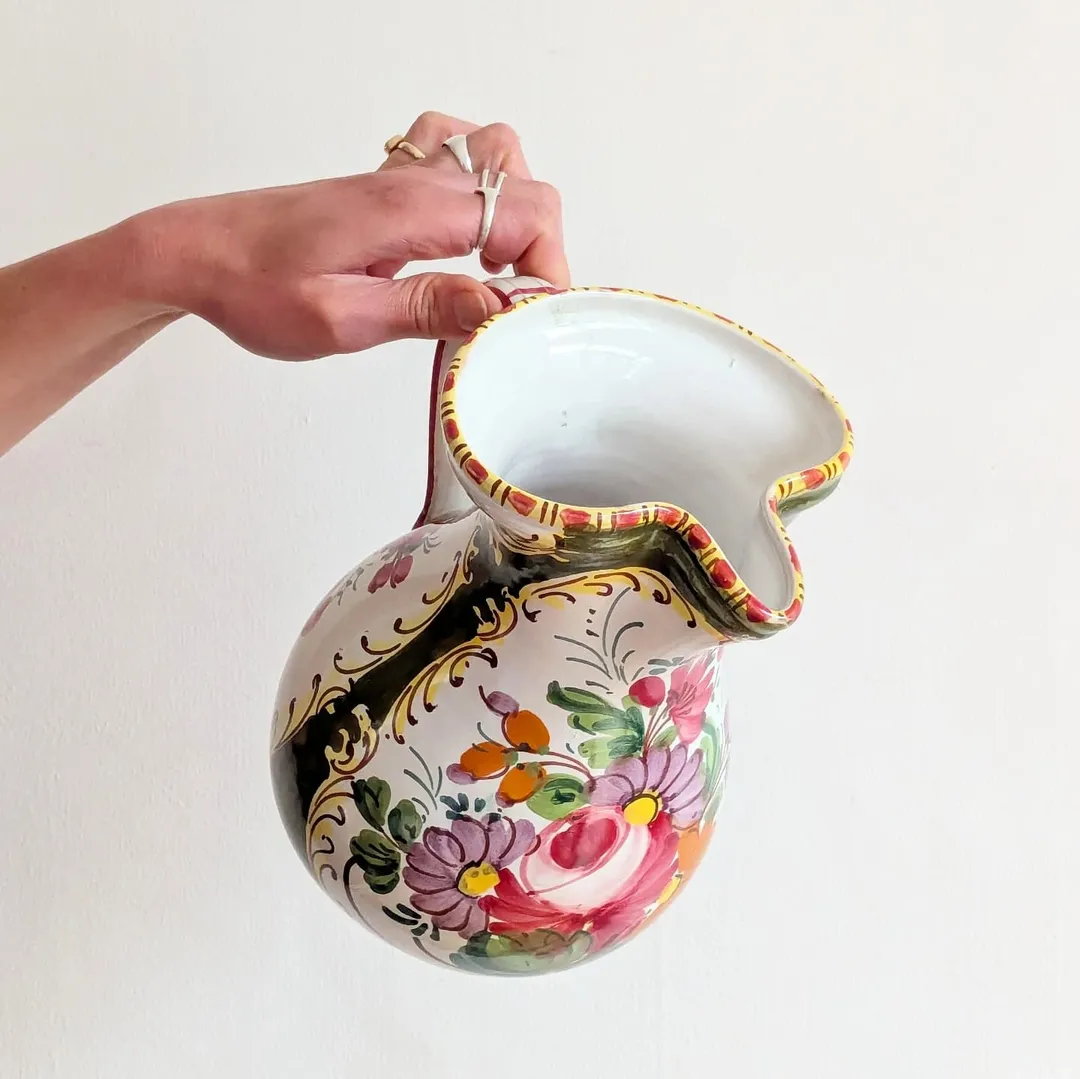
With a background in interior styling and a love for slow, intentional design, Rosie Gore shapes each piece by hand, balancing earthy textures with bright, painterly glazes. Her work embraces the beauty of imperfection, bridging the gap between rustic and modern, and bringing warmth, colour, and individuality into everyday living spaces.

1. Can you tell us a bit about yourself and your artistic journey?
I’ve always loved designing and making things since I was a child and being very dyslexic I quickly realised that this was where my strengths lay and definitely where I feel most confident. I was always painting, sewing, and making things, but for some reason the idea of studying anything artistic at university seemed very scary and would never lead to a ‘proper’ job.
After five years of working as a primary school teacher, I handed in my notice to go travelling around Central America for a year, but then two weeks later COVID struck and we went into lockdown, needless to say we didn’t make it to Mexico that year and I had to reassess my career options!
But there was most definitely a plus side in this difficult time, as having stopped teaching It let me see that although I loved some parts of it, it had also made me incredibly stressed and anxious, so I decided to try doing what I loved full-time and focused on my creative side.
I’d always made ceramics as a side hobby but now I finally had the chance to really invest in what I most loved doing and try to make a career out of it. I tutored and freelanced as an assistant stylist on interior shoots to keep the lights whilst I developed my ceramics.
To my delight (and quite honestly amazement), for the last year and half I have been working full-time for myself and developing my practice with such an amazing community of followers. All self-taught and learning as I go, it’s been such a liberating process and I’m so grateful and thankful for where I am now.
2. What inspired you to pursue your craft? Was there a defining moment or influence that sparked your passion?
A defining moment in my career was most definitely working as an assistant stylist on interior shoots, working alongside some incredibly talented interior stylists and creative directors, watching them curate the most incredible spaces filled with beautiful pieces which blurred the lines between pieces of art and functional items for the home.
There have been so many inspirations to my work over the past two years, but two which really stick out were firstly working with the most incredible pieces of artwork from MAH Gallery whilst assisting interior stylists; helping to curate living spaces full of texture, shape, colour and pattern. This cemented my belief in the beauty and importance of hand crafted pieces, which can be both a work of art and a usable item that brings joy to people.
The second, Charleston House. Home of artists Vanessa Bell and Duncan Grant, Charleston was where the 20th century’s most radical artists, writers and thinkers, the Bloomsbury group, met. The house itself is truly the most inspiring of places, covered with beautiful yet often whimsical, carefree hand painted patterns on mantel pieces, walls, doors, and ceilings, it reminds me of the importance of fun when making art, while also being such an important place historically for our culture.
Your craft
3. How would you describe your work in three words?
Natural, expressive, personal
4. What materials or techniques do you use, and why are they important to your process?
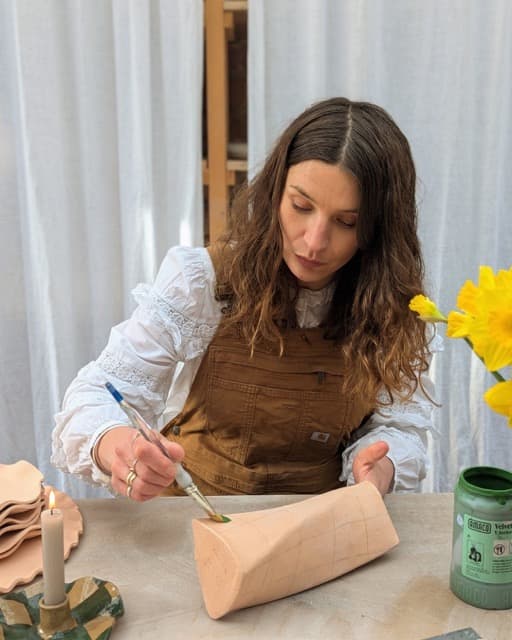
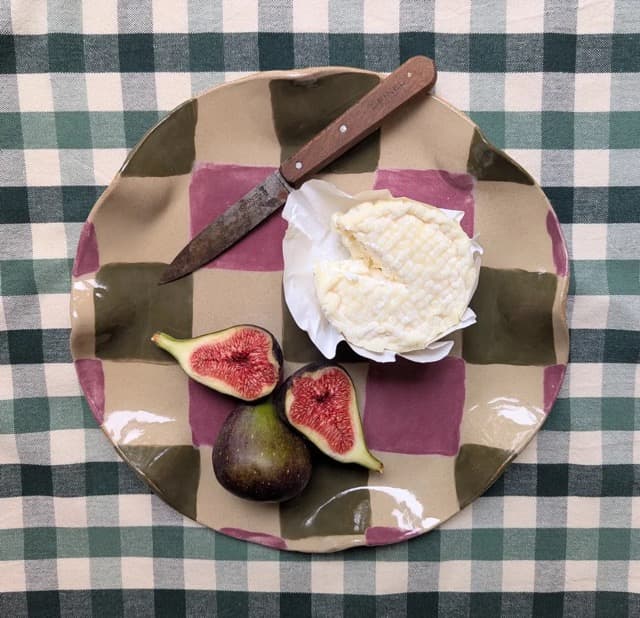
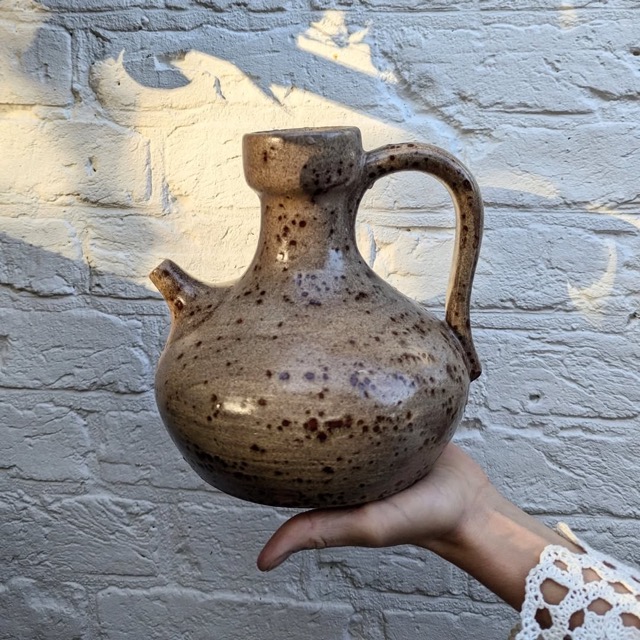
My ceramics are hand built in stoneware clay, from which I work to create organically shaped pieces which are then painted and glazed by hand. The speckled, organic, earthy tones of the stoneware are designed to balance the brightly coloured glazed patterns.
Shaping each piece by hand means they are all unique in their own way, and aims to emphasise my belief in creating unique, slow, sustainable pieces for the home.
5. Can you tell us about a favourite piece you’ve created and the story behind it?
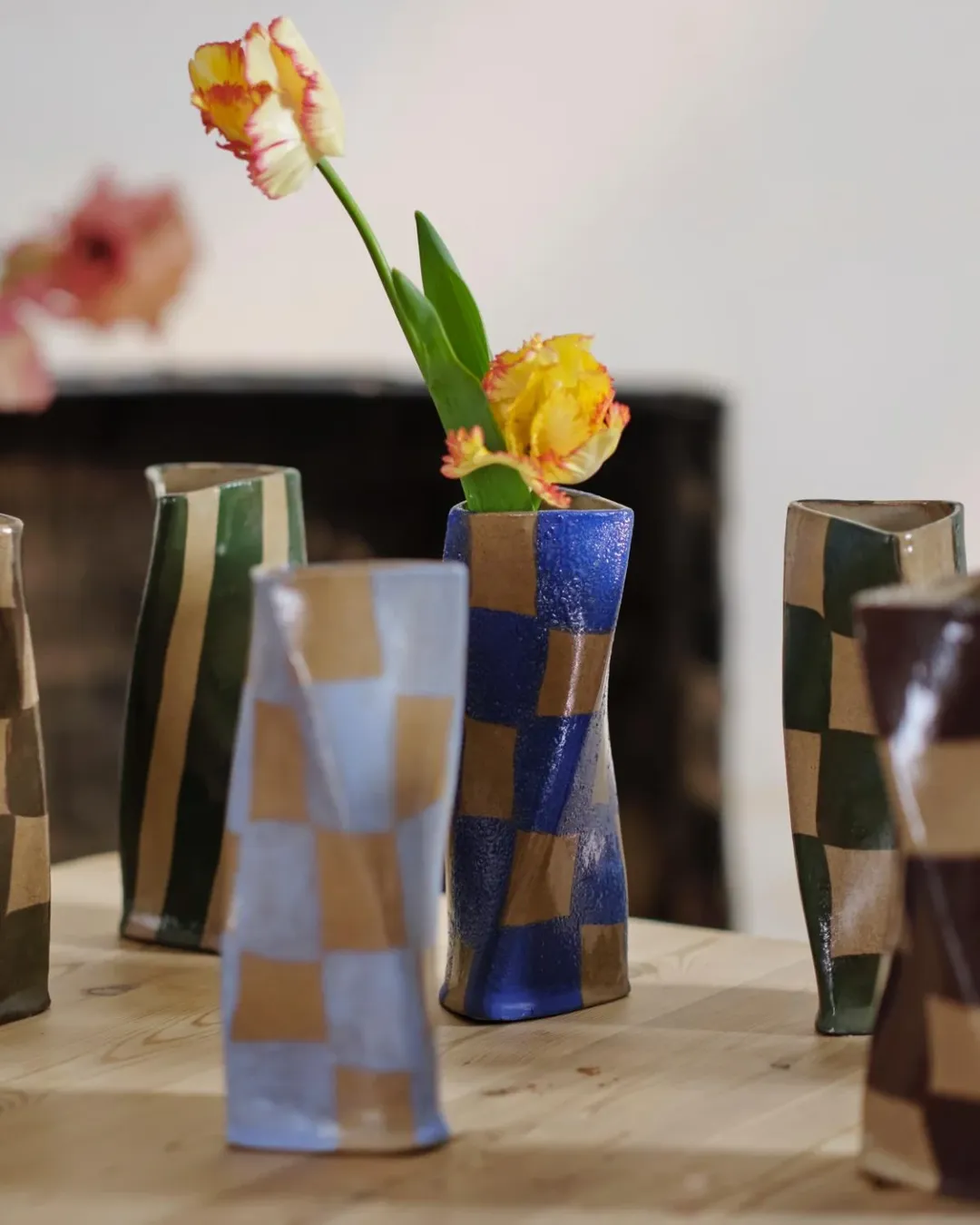
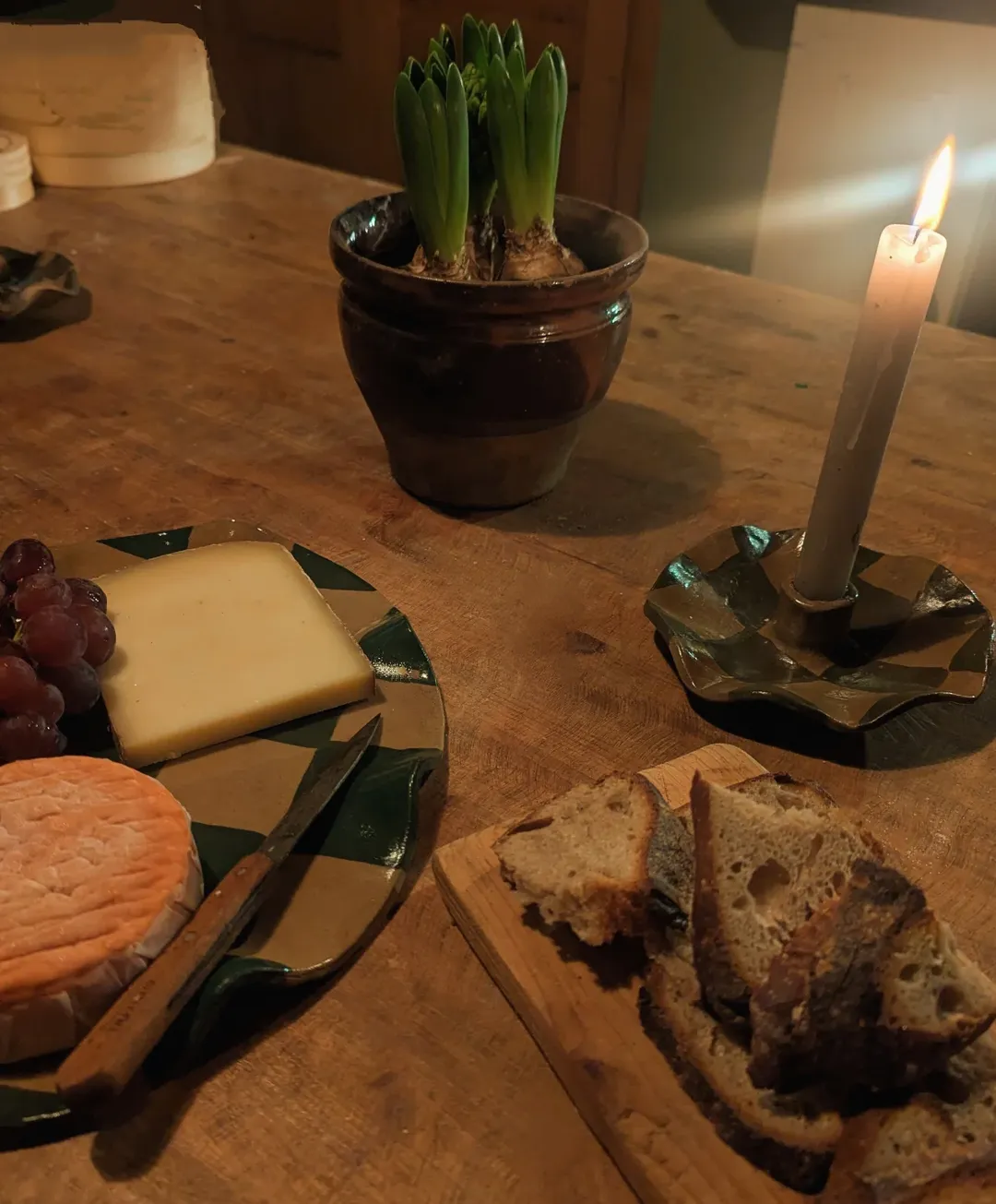
My Check Twist vases are probably my favourite piece so far and are probably the most iconic. I love check patterns but wanted to create a shaped vase where the pattern wasn’t just flat on it, but a shape that drew your attention as much as the pattern did. It took quite a lot of experimentation to come up with the final design, but I am so happy with how the final pieces look now.
Creative process
6. What does a typical day in your studio or workshop look like?
Having been a teacher where your days and even holidays are so regimented down to the minute, I now absolutely love that my time is my own. Depending on my schedule, sometimes I start work very early to start rolling out slabs upon slabs of clay, whereas other mornings I make myself a tea and sit in bed until 9am doing admin!
Depending on when I need to fire my pieces, my days are normally either a “making” day, or an order packing and admin day (although sometimes both!). Woman’s Hour is a daily must, along with many earl grey teas along the way.
7. Do you have any unique rituals or habits that help you stay creative?
To make sure I still always remain feeling energised and creative, whenever I’m making a batch to fire I always try to include a test for a new design idea.
This gives me so much excitement when the time comes to open the kiln!! For me this is really important, as sometimes finding the time to experiment and test ideas is really hard when you are really busy making orders.
8. How do you handle creative blocks? Do you have any strategies or tips for overcoming them?
For me I think taking a break is really important, I very rarely have new ideas come to me when I’m sitting down trying to think some up! They normally come when my mind is completely elsewhere and then I have to quickly jot it down or draw it. So my tip would be, go and do something else completely!
Challenges and successes
9. What’s the biggest challenge you’ve faced as a maker, and how did you overcome it?
It is quite a juggle! A great juggle, but there is lots and lots to learn on the go! Designing and making is only one part of it, so you have to be really organised and have quite a lot of initiative.
A challenge I have is planning for the year ahead, what I want to achieve and the industry deadlines for this, especially when there is so much work to do on a day-to-day basis too, so having a large yearly planner has really helped me keep on track with this.
10. What’s been your proudest moment or achievement so far?
Aside from the press coverage I’ve had without any PR agency, my proudest achievement has to be making a collection for Charleston House. Having my pieces there feels incredibly surreal!
11. What’s your favourite quote you’ve ever heard about your work? Who said it, or what was the name of the publication?
‘Your pieces are straight out of Charleston House!’
– A recent customer at a market exclaimed, which I was so delighted about!
Inspiration
12. Where do you draw inspiration from for your work? What sparks your imagination and creativity?
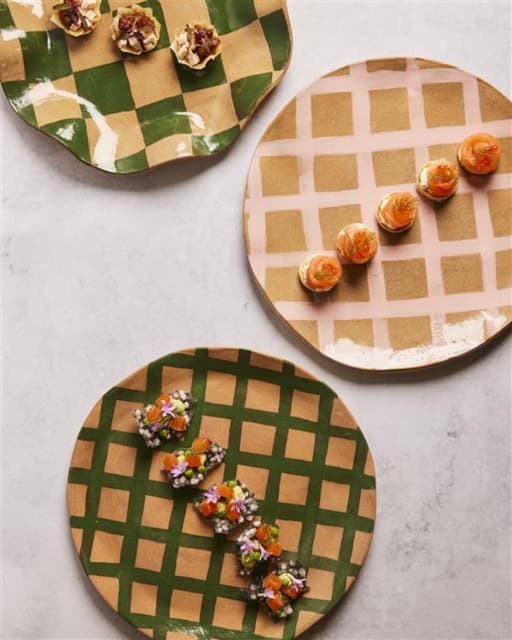
I draw inspiration from the living world around me, earthy colours inspired from nature which are complemented by traditional patterns such as check or gingham mixed with architectural shapes. The beauty in functional pieces really inspires me, pieces that are really beautiful and interesting but also can be used during a dinner party or displayed in a cabinet.
13. Do you have a favourite artist, maker, movement, or tradition that has influenced your craft?
It has to be the work of Vanessa Bell and Duncan Grant. Charleston is a house full of hand painted mantels, walls and doorways each showing signs of the maker’s paint brush strokes, hand sewn lampshades with visible wobbly stitching and ceramic pendant lampshades with fingerprint idents of the makers, all completely unique, personal and freeflow. The freeness of their work within the house really inspires me. It’s fun and free from pretense.
Another is the arts and crafts movement, specifically Standen House. I’ve been visiting here for years and it is one of my favourite places for inspiration. A place which is timelessly stylish.
14. How does colour influence your practice; is it an important part of your process? Do you have a particular palette or favourites? Any go-to sources for colour inspiration?
Colour is a huge part of my practice, giving a pop to the earthy, speckled tones of the stoneware. Different seasons call for different colours, but different styles are also suited to certain colours.
I generally prefer a more earthy colour palette- greens, browns & burgundies in varying shades. However, I love experimenting with trending colour combinations and get inspiration from designers like Studio Ashby, Beata Heuman and Colours of Arley.
Perspectives and goals
15. What role does your environment play in shaping your creativity?
My environment plays a big part in helping my creativity and generally making me feel like I’m in a productive and creative mindset. I’m now in between London and St Leonards and am loving being by the sea. I definitely feel calmer and happier closer to nature.
16. What do you want people to feel when they experience your work?
Just enjoyment and to know that it’s uniquely theirs.
17. What are you currently working on, and what excites you most about it?
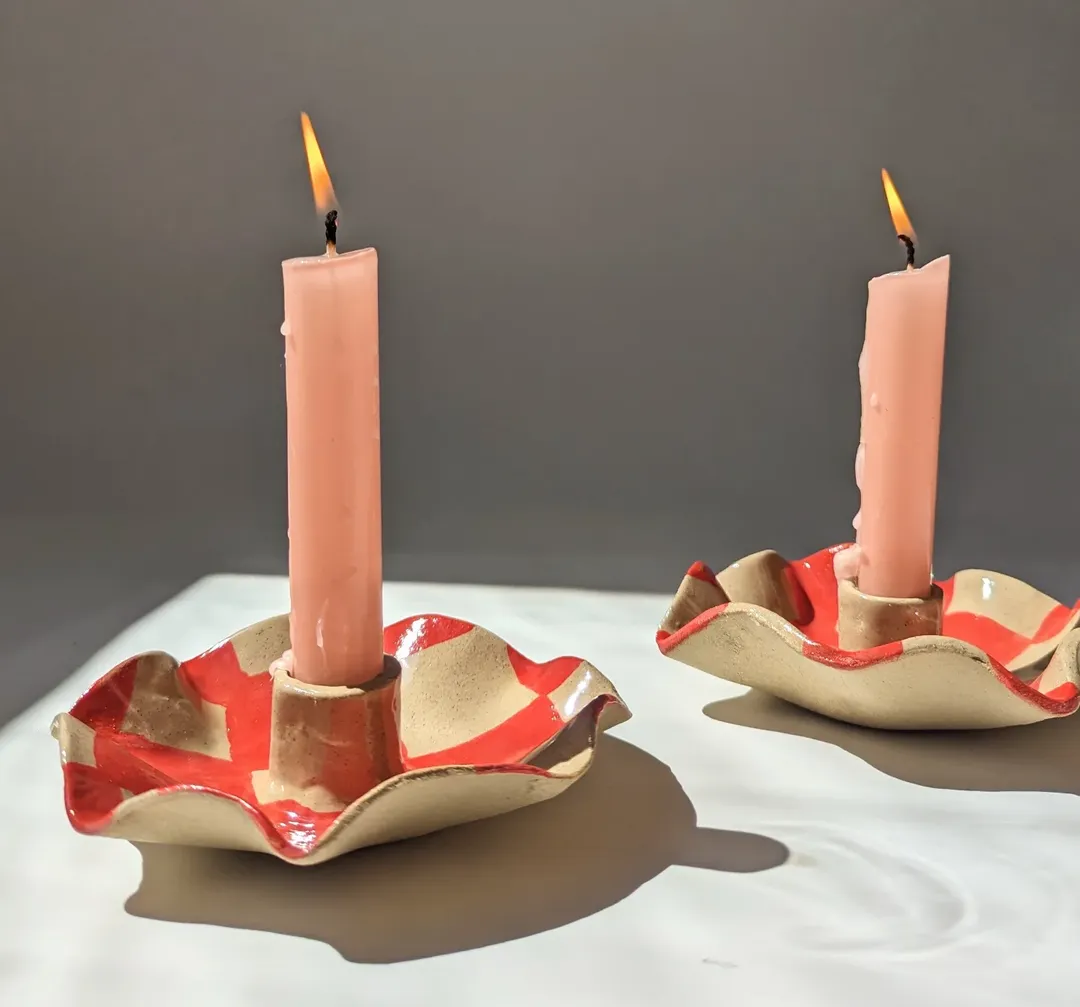
I’m currently working on a commission of some wavy candle sconces which I’m really excited about, can’t wait to experiment with which patterns look best for them.
Advice and reflection
18. What advice would you give to someone starting out as a maker?
To have confidence in your work but to also not be too precious about it. Not everything you design is going to be great and that’s OK. Trial and error is important, but I think as adults we are shaped into feeling like it’s a bad thing. Also some people will love something that you don’t like as much yourself!
19. If you could go back to the start of your career, what advice would you give your younger self?
To actually follow what you enjoy doing and what you feel most confident in. It’s really tricky as I think when you are young unless you have contacts within industries in subjects you are interested in, it all feels very daunting and you actually have no idea of the range of jobs there are out there. I’d tell myself to have a bit more confidence in myself.
Closing thoughts
20. If you could collaborate with any artist, past or present, who would it be and why?
Ivon Hitchens because I love his earthy colour palette and colour block patterns.
21. Where can people find your work, and how can they support you?
My website is the best place to find all of my work! Showing support on instagram is always a great help to spread the word!
From her London studio, Rosie Gore continues to champion handmade, sustainable design through her distinctive ceramic pieces. With every curve, brushstroke, and glaze, she offers a celebration of thoughtful craft, inviting us to find beauty in the details and joy in the handmade.
Explore Rosie’s latest collection and follow her creative journey:
Support Rosie Gore by following her creative journey on Instagram and exploring her full collection on her website.
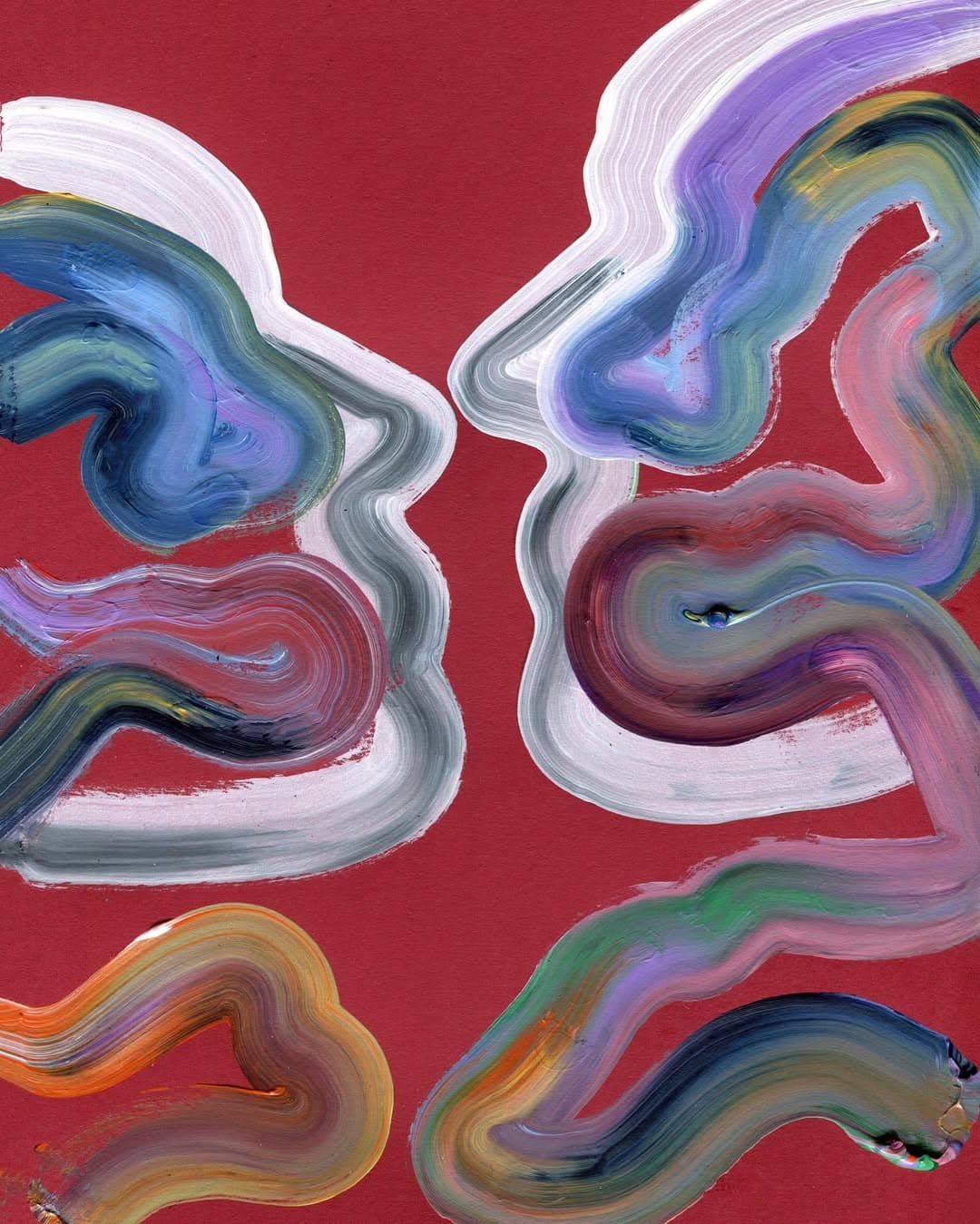
Meet the Maker: Where Art Meets Fashion with Robson Stannard
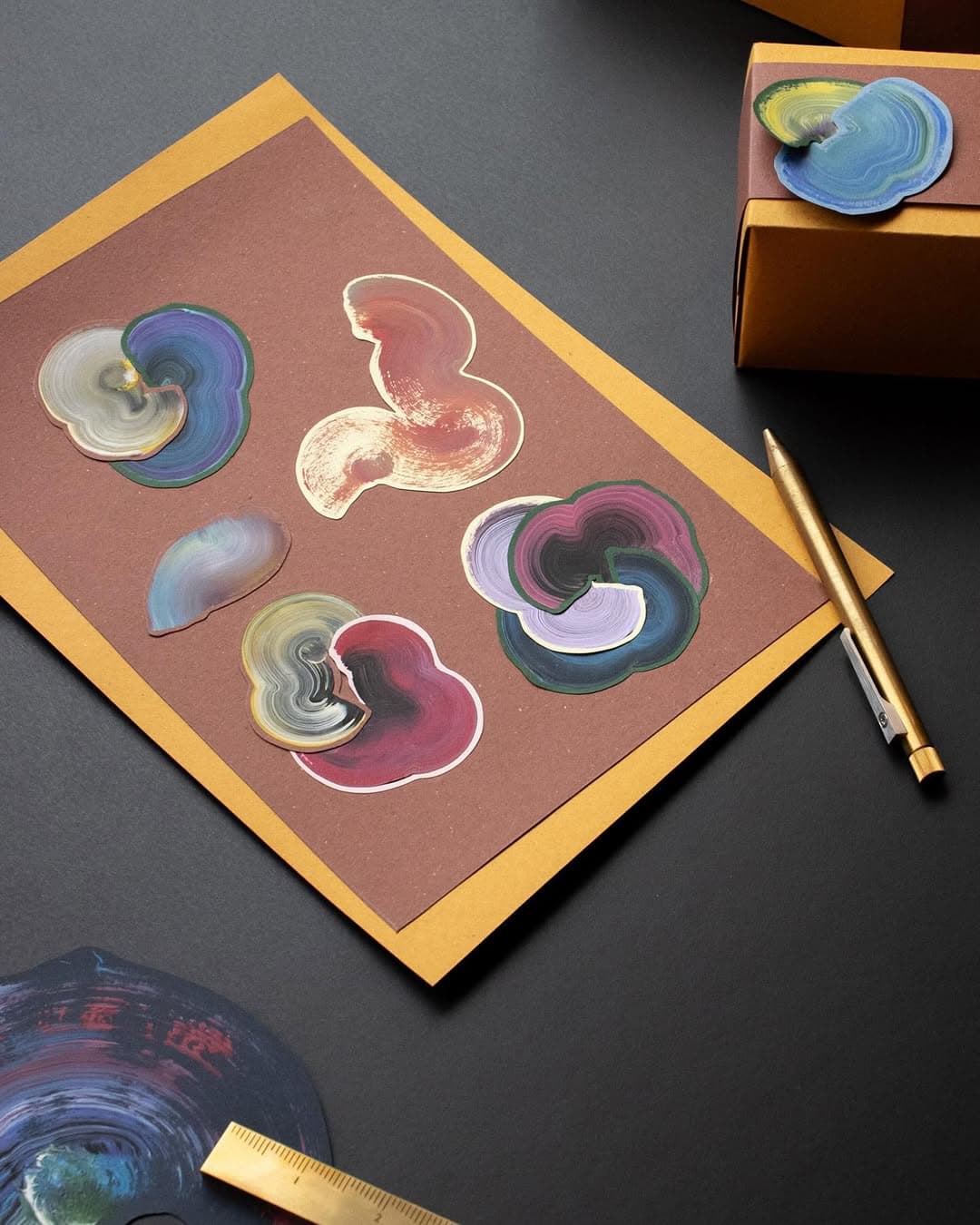
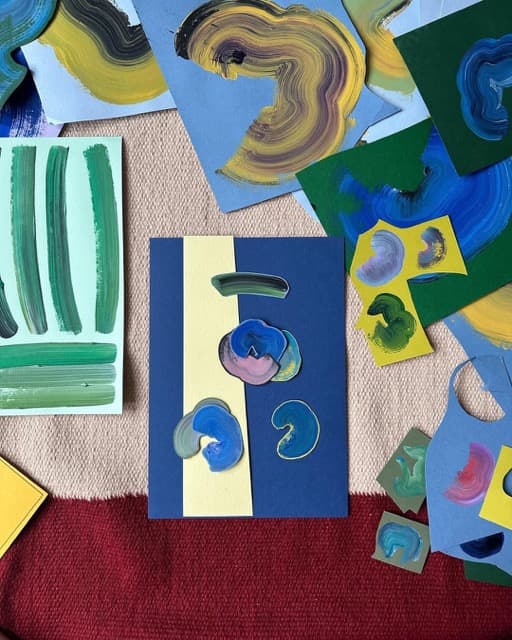
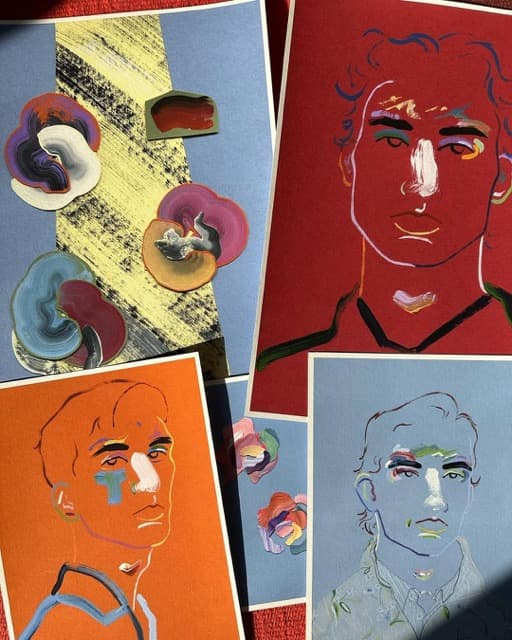
In this Q&A with Robson Stannard, the London-based fashion portrait artist shares the journey behind his vivid, intuitive style. Blending his background in Fashion Illustration with a fine art sensibility, Robson creates multi-media works that are as expressive as they are precise, each one exploring the human figure through energetic linework, tonal depth, and a distinctly playful edge.
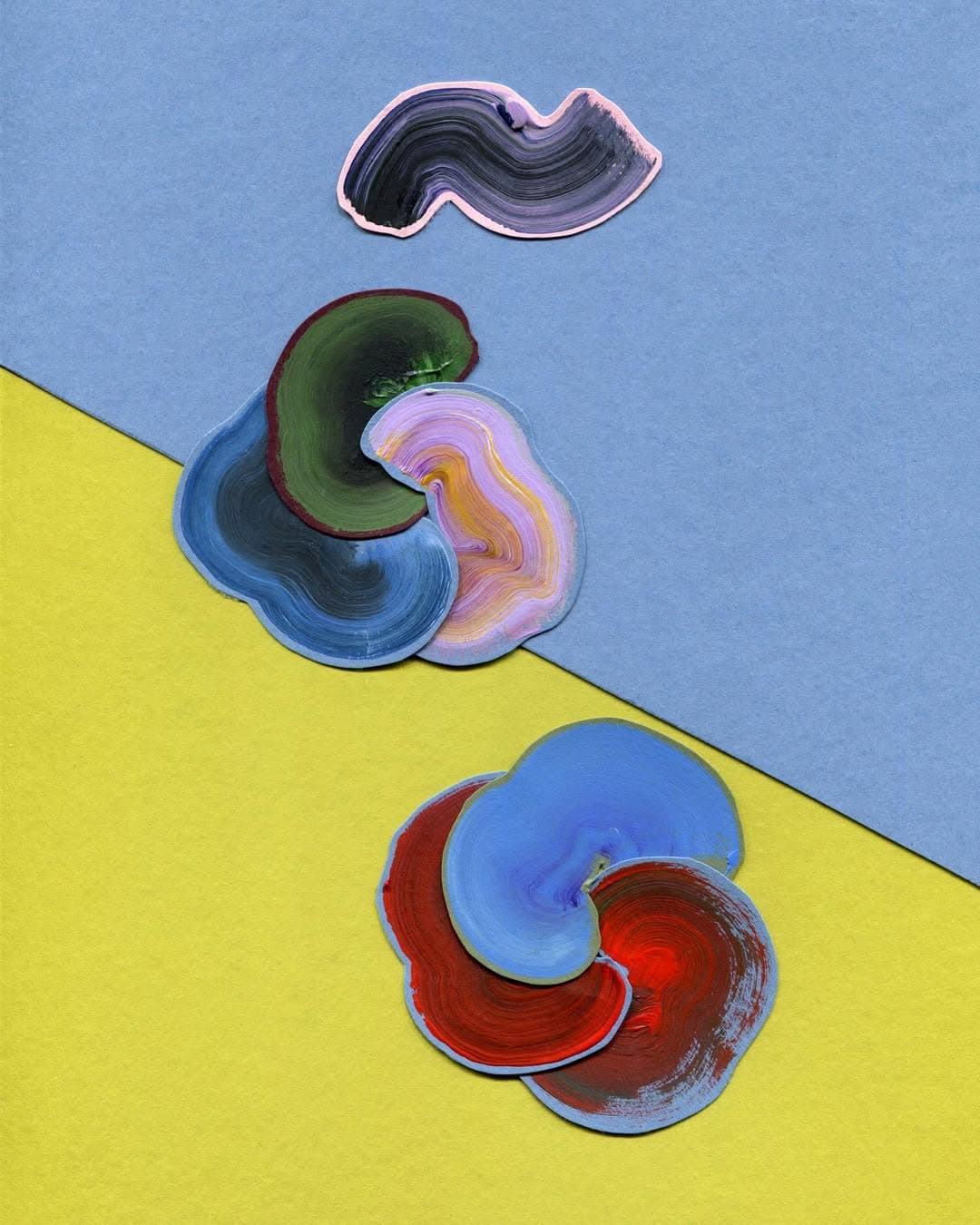
1. Can you tell us a bit about yourself and your artistic journey?
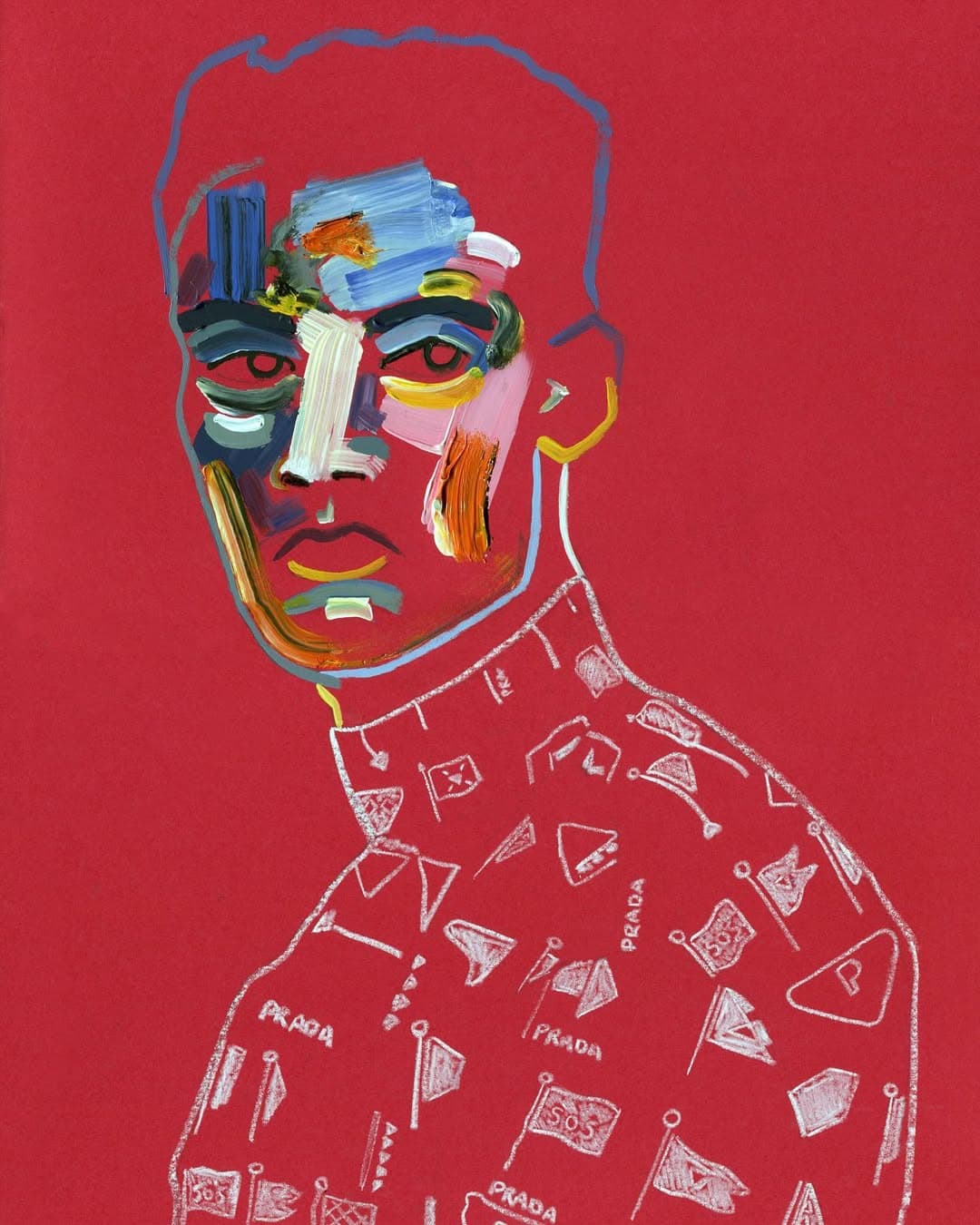
Robson Stannard graduated from the London College of Fashion with a degree in Fashion Illustration in 2017. Working fundamentally as a fashion portrait artist, he creates images using a variety of media. His vivid, illustrative aesthetic builds upon the human form with multi-tonal strokes of colour, in a way that is at once playful, yet always identifiable.
2. What inspired you to pursue your craft? Was there a defining moment or influence that
sparked your passion? I’ve always wanted to pursue a career based in the Arts, throughout school its what always felt like the right direction for me to explore.
Your craft
3. How would you describe your work in three words?
Playful, Graphic & Fluid.
4. What materials or techniques do you use, and why are they important to your process?
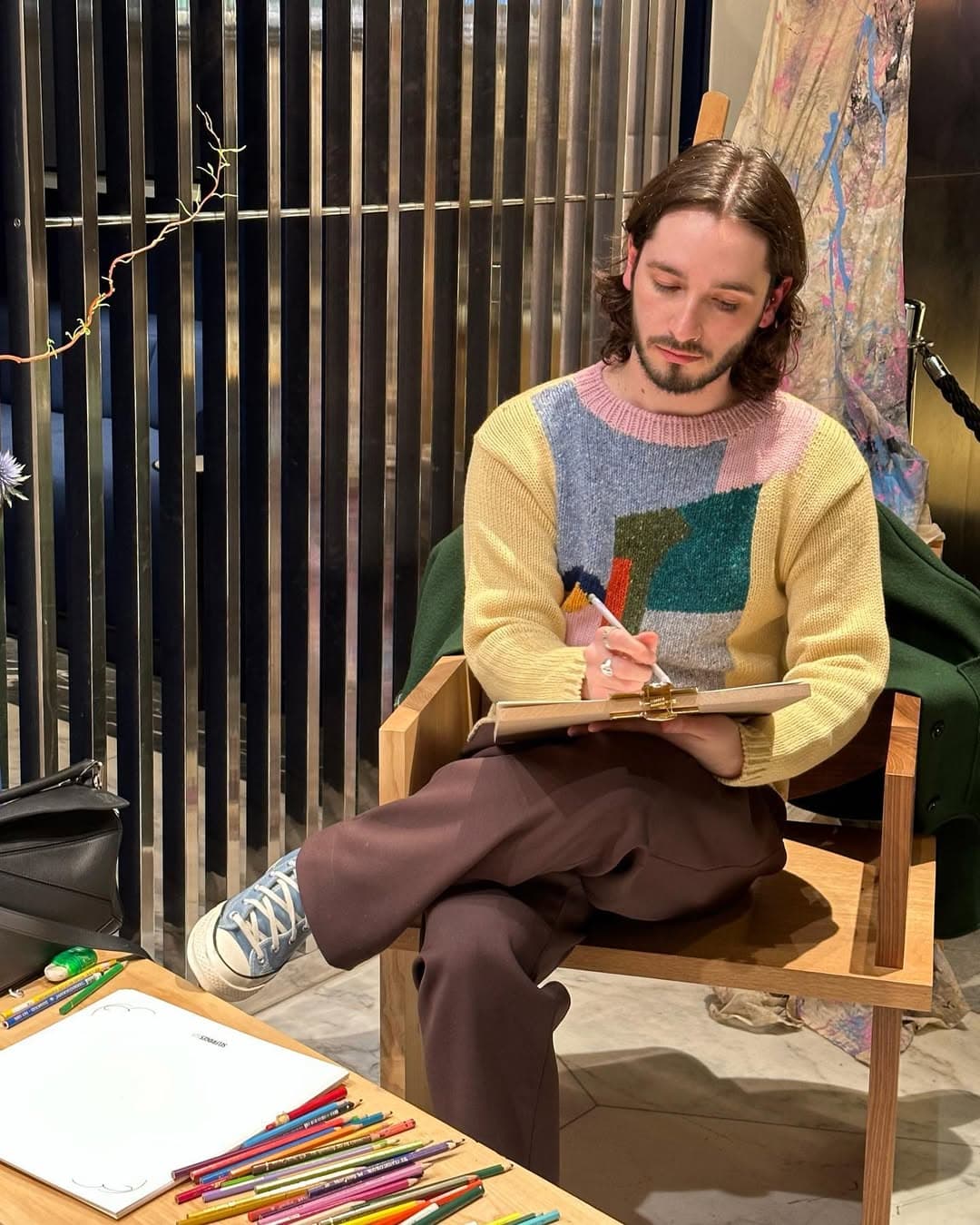
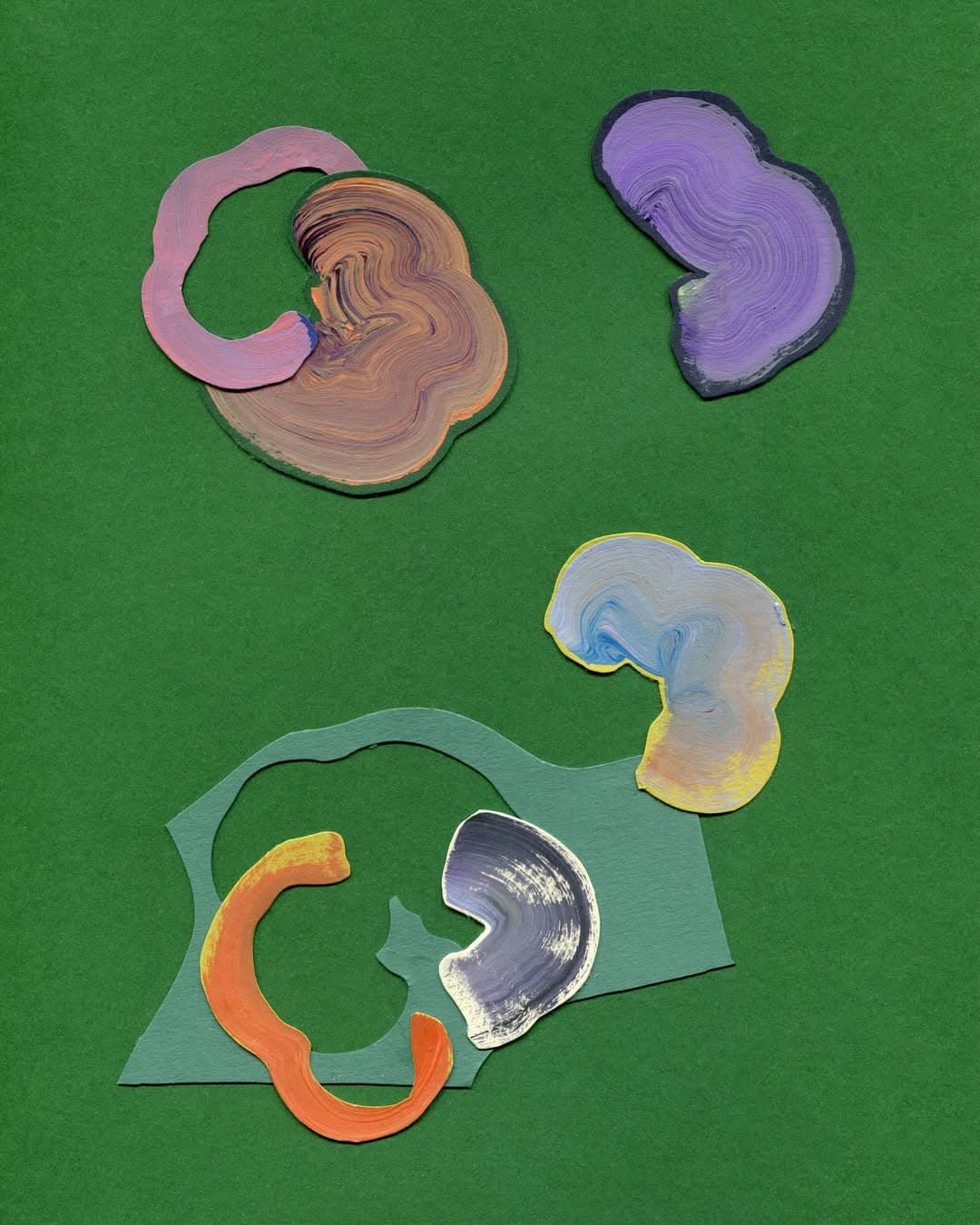
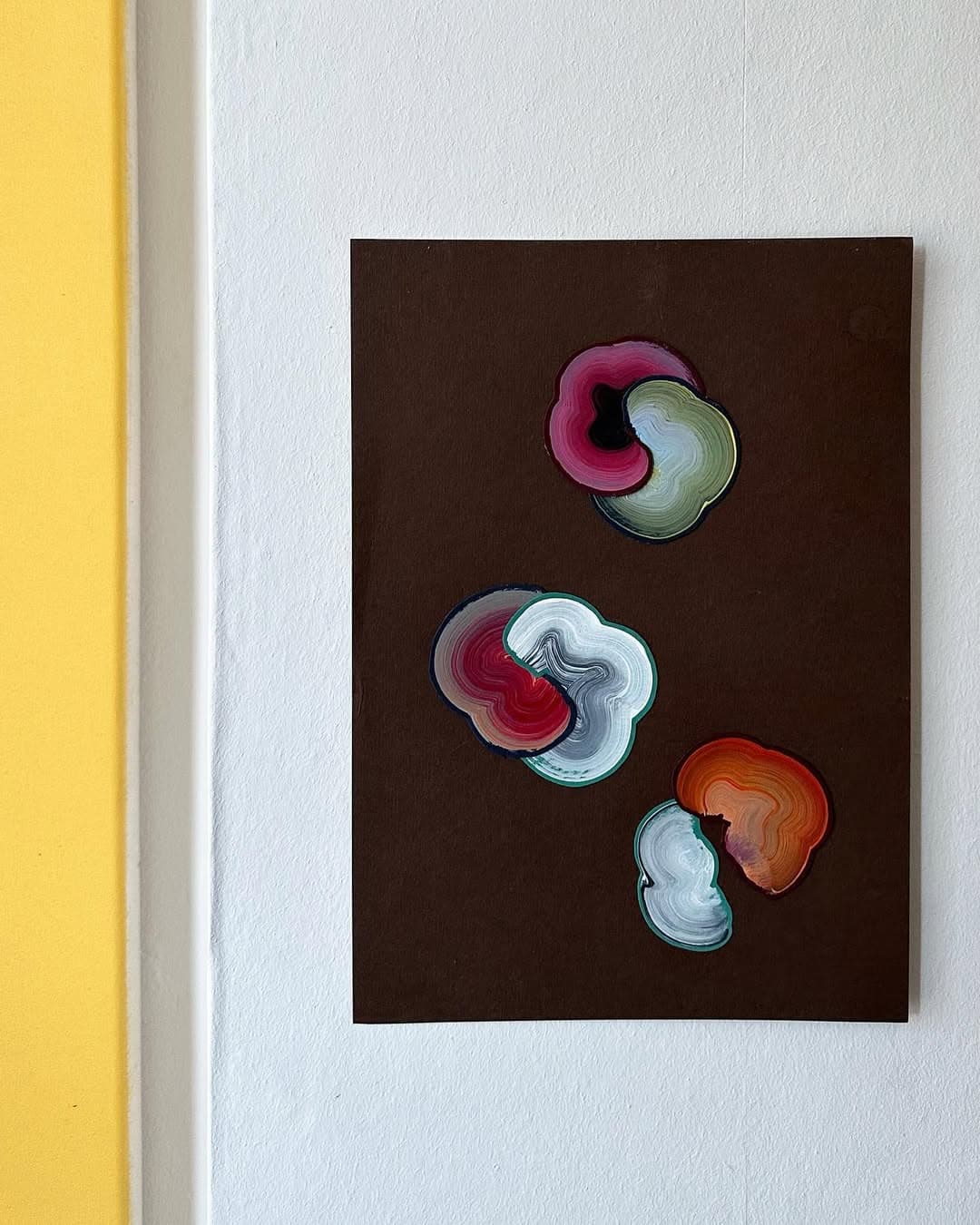
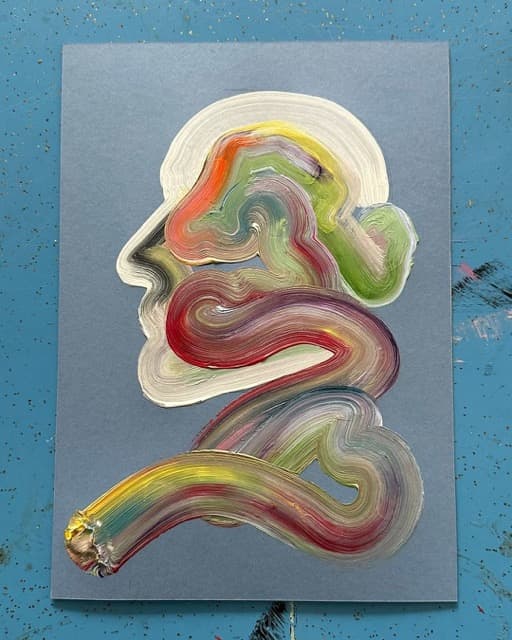
I mainly work in Acrylic & coloured pencils and then collage using these techniques.
Creative process
5. What does a typical day in your studio or workshop look like?
If its a day creating then I will always start by making a coffee to wake myself up and get the creative energy flowing, I will then aim to draw and paint as much as I can and catch up on any admin throughout.
6. Do you have any unique rituals or habits that help you stay creative?
Caffeine
7. How do you handle creative blocks? Do you have any strategies or tips for overcoming them?
Sometimes we all need a break and I think its important to realise as and when that’s approaching.
Inspiration
10. Where do you draw inspiration from for your work? What sparks your imagination and creativity?
Francis Bacon
11. Do you have a favourite artist, maker, movement, or tradition that has influenced your craft?
Francis Bacon and a plethora of illustrators.
12. How does colour influence your practice; is it an important part of your process? Do you have a particular palette or favourites?
Any go-to sources for colour inspiration? I aim to be as colourful and impactful with colour as I can.
Perspectives and goals
13. What role does your environment play in shaping your creativity?
Throughout lockdown when I was based in Suffolk, it shifted my work to begin to look at nature more and my flower collages were the result of this.
14. What do you want people to feel when they experience your work?
Joy
15. What are you currently working on, and what excites you most about it?
I am currently working on getting back into more fashion illustration portraits.
Advice and reflection
18. What advice would you give to someone starting out as a maker?
Create create create and aim to not compare yourself to others.
Closing thoughts
20. If you could collaborate with any artist, past or present, who would it be and why?
Francis Bacon, I think he’s an incredibly interesting figure and somewhat strange.
21. Where can people find your work, and how can they support you?
Mainly Instagram or through SHOWstudio
Blending fashion, portraiture, and expressive colour, Robson Stannard brings a bold, illustrative energy to everything he creates. Whether working on editorial commissions, large-scale collaborations, or live workshops, his distinctive style captures the human form with movement, emotion and unmistakable flair.
Explore Robsons’s latest collection and follow his creative journey:
Support Robson Stannard by exploring his dynamic, character-driven portraits and following along as he redefines the space between fashion and art, one bold stroke at a time.
Meet the Maker: Rachel Bottomley and Life in Colour
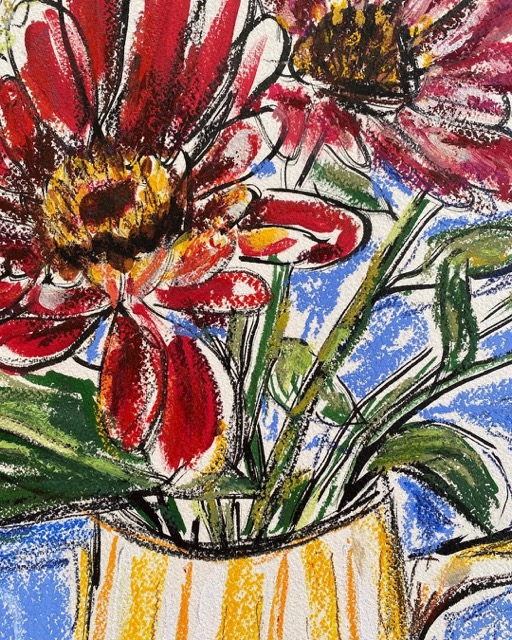
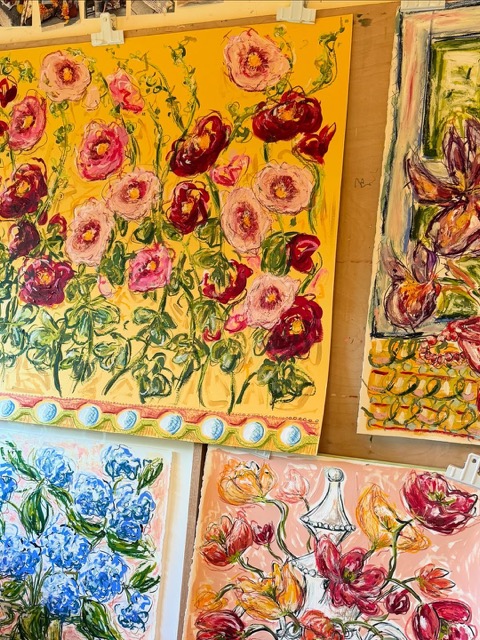
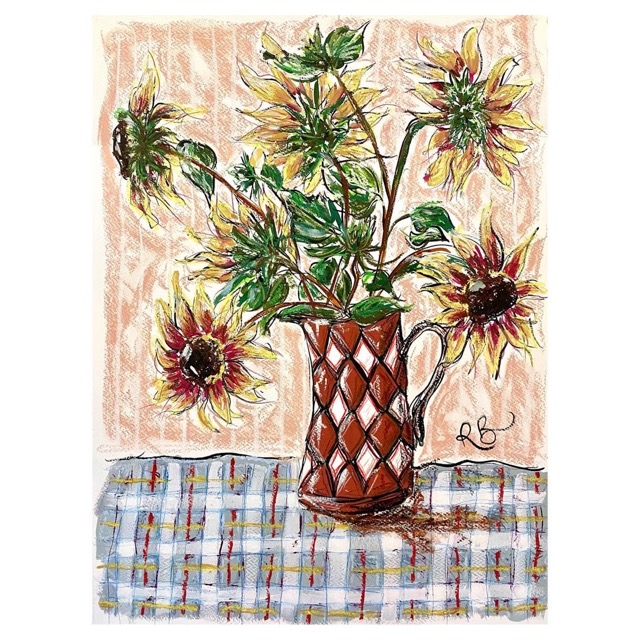
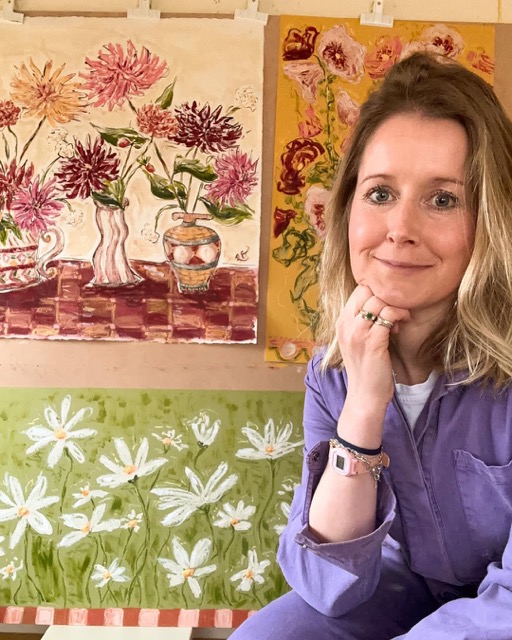
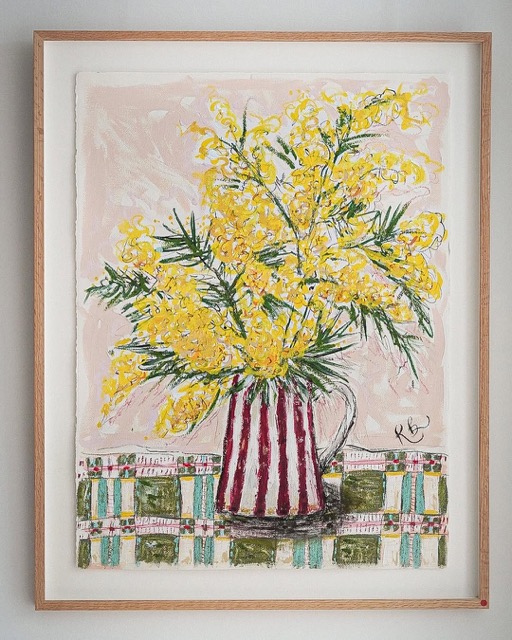
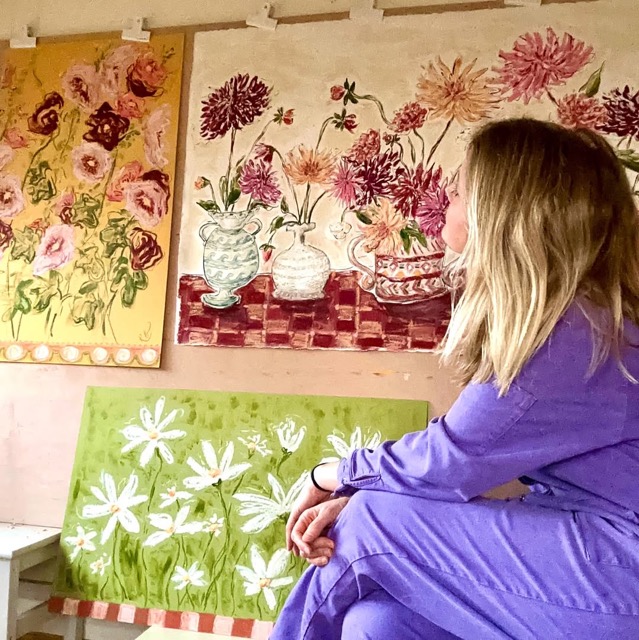
Working from her home studio in the Surrey countryside, contemporary painter Rachel Bottomley creates richly layered works that honour the joy of everyday life. Through intuitive use of acrylics, oils, pastels and pencil, her expressive pieces blend observation with imagination, capturing the essence of a moment in bold colour and fluid form. A self-taught artist who refined her practice through Turps Art School, Rachel’s distinctive style has gained recognition in both private and public collections, from the British Royal Family to collaborations with brands like Smythson and Sharland England. Her work is at once vibrant and grounding, offering a painterly invitation to pause, look closer, and celebrate the stories that shape our daily lives.

1. Can you tell us a bit about yourself and your artistic journey?
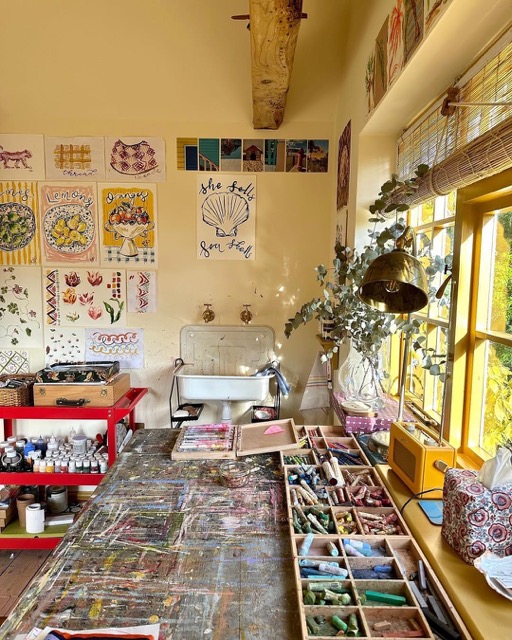
I am a contemporary painter based in South Surrey, working from my home studio surrounded by countryside. I live with my husband and two children, who are 7 and 5 years old. I am obsessed with colour, pattern and details. My wandering mind is often distracted by beautiful things which end up on my easel.
Growing up I always had a sketchbook on the go and loved anything creative. I didn’t go down the art route after school and trained to be a primary school teacher. I taught in schools for ten years until I had my children and it was then art found me again as I stepped away from teaching. Painting has been so important to me and given me headspace away from the challenges of parenthood. The immersive nature of my work allows me to be totally present and enter a different world becoming completely absorbed in my textured painting process.
2. What inspired you to pursue your craft? Was there a defining moment or influence that sparked your passion
There was definitely a defining moment. My journey as an artist took an exciting turn in June 2021 when I attended a liberating still life workshop with artist, Rose Electra Harris. My day with Rose opened my eyes to a new way of painting, allowing me to release my inhibitions and paint with my whole body engaged. Rose inspired me to paint exactly what I see and not what I think my painting should look like, as well as giving me the opportunity to engage with a range of media. She guided me into a place of freedom and total joy when painting.
Your craft
3. How would you describe your work in three words?
Joyful, energetic and layered
4. What materials or techniques do you use, and why are they important to your process?
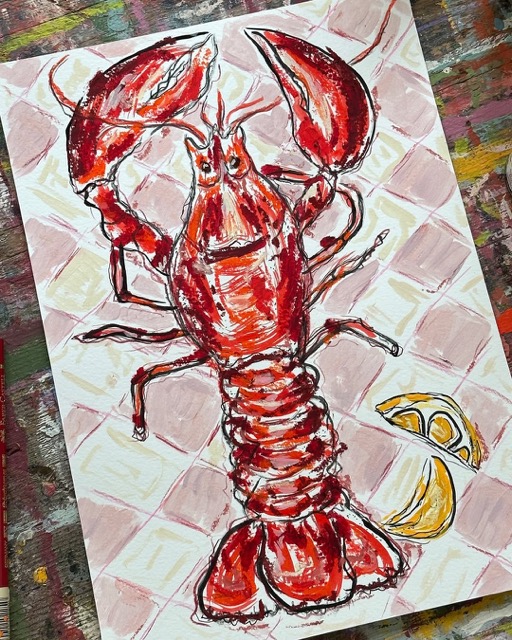
I savour the sensory experience of dusting pastels, gliding brushes, smearing oil sticks and dashing pencils into dynamic marks and intricate details. It’s immersive and the tactile nature of working with different media is part of the joy for me.
5. Can you tell us about a favourite piece you’ve created and the story behind it?
‘The Candy Shop’ This was a big painting—a celebration of spring—featuring three shelves lined with vases of flowers. Do you remember that feeling of stepping into a sweet shop? The walls lined with jars and you can almost taste the sweets before you’ve even picked them, your little paper bag ready to be filled to the brim. My favourites were (and still are!) bubble gum cola bottles. That’s exactly how I feel about flowers and vases—the same thrill and joy. The flowers in vases represent my kind of candy shop.
For this piece, I chose spring flowers and arranged them in the order they bloom in the garden. The top shelf holds snowdrops and hellebores—the first signs that spring is on its way. Below them, daffodils take their turn, bright and bold. And finally, the main event: the tulips, dancing in full bloom, announcing that spring is here at last.
There was so much emotion behind this painting—the thrill of colour, the playfulness of mismatched vases, the promise of change. It holds the sweetness of new beginnings, the warmth of sunlight just around the corner. If this painting hung in my home, I know it would make me smile. It’s a reminder that no matter how long winter feels, spring will always come.
Creative process
6. What does a typical day in your studio or workshop look like?
I work in my home studio a stones throw from a national nature reserve in the Surrey countryside, surrounded by nature. I’m a mother of two small children, so my day is sandwiched with the school run. I am very grateful that I have a job which works so well around my family. My working day usually consists of painting commissions, work for exhibitions and completing admin tasks like packaging prints.
7. Do you have any unique rituals or habits that help you stay creative?
I go through phases of feeling creative and then not at all. I think over time I have got better at stepping away from the studio when I’m not feeling creative and accepting it, rather than trying to fight it. It always come back and when it does, I can often have bursts of doing lots of work in a short space of time. If I don’t have a choice, for example, if I’m working towards an exhibition and have to produce work, I will look through images I’ve collected over time from travelling and magazines and root through my collection of textiles.
8. How do you handle creative blocks? Do you have any strategies or tips for overcoming them?
Luckily, I have never had a big creative block but I have tried to prepare for when it does inevitably happen by getting the highly recommended book, ’The Artist’s Way’. I have started to read it and there are some interesting ideas in it; one is having a date with yourself every week to do anything you want, such as a walk, exploring an antiques shop or sitting in a garden.
Challenges and successes
9. What’s the biggest challenge you’ve faced as a maker, and how did you overcome it?
Juggling all the jobs that need doing: painting, packaging, shipping, website admin, sales, PR, social media… the list goes on! It’s tough to keep on top of everything, but I think there are pros and cons of every job in life, so it’s just part of it.
10. What’s been your proudest moment or achievement so far?
When I hear my children telling people I’m an artist and when they tell me they love my paintings and get excited about them. My proudest moment professionally was my joint show on Portobello Road with artist, Camilla Perkins, curated by Amelia Maxwell. I was really proud to be showing alongside Camilla and over the moon that so many paintings sold.
11. What’s your favourite quote you’ve ever heard about your work? Who said it, or what was the name of the publication?
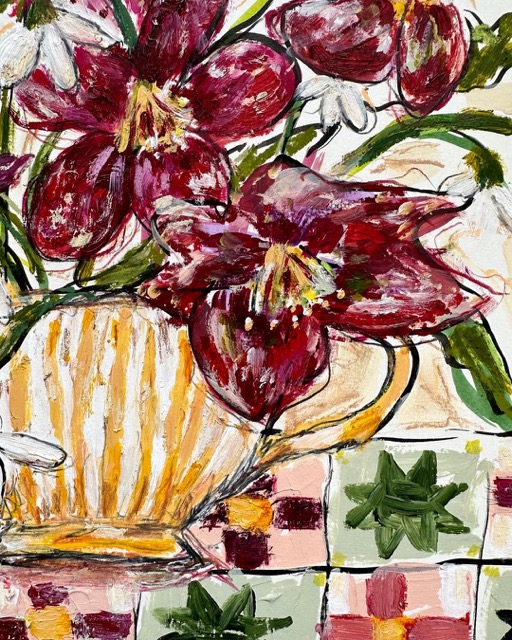
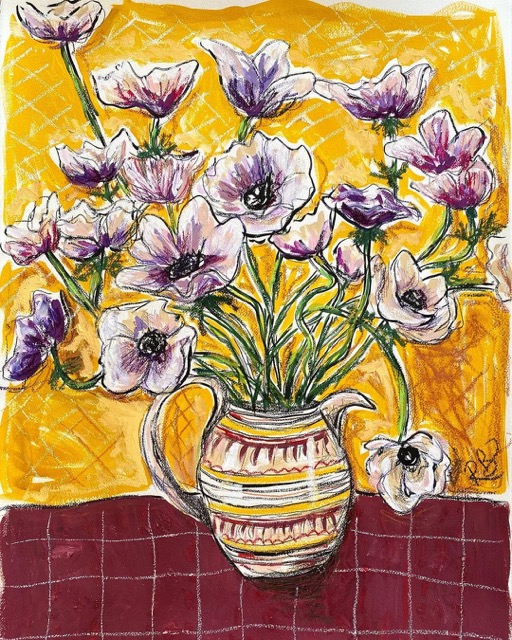
“Layering mediums with abandon, Bottomley’s work is filled with dynamic energy, each stroke a testament to the joyous symphony of hues found in the natural world. With exaggerated lines and playful compositions, she transforms still life into vibrant flower paintings with movement and rhythm, inviting us to dance alongside her colourful brushstrokes.”
– The House Magazine
Inspiration
12. Where do you draw inspiration from for your work? What sparks your imagination and creativity?
Inspiration finds me! Each painting begins with a scene or object that makes me look again. My friends call me a magpie, drawn to colour and detail that I take back to my nest and make my own. I love to think of my paintings in that way, full of treasures and collectibles.
The subject of my work is often flowers, but what gives it greater depth are the details I draw upon to bring my scenes to life. The intricate weave of a welsh blanket or playful patchwork quilting, handmade ceramics I’ve collected over time, encaustic tiles from Lisbon, and the colourful masonry of homes I’ve pottered past in Greece – these are all elements with which I decorate my artworks – a colossal memory bank of pattern and colour is raided with each and every painting.
13. Do you have a favourite artist, maker, movement, or tradition that has influenced your craft?
I’m am very drawn to Milton Avery’s use colour, especially how he added occasional pops of accent colour. He didn’t follow rules, “I never have any rules to follow… I follow myself”. As well as Avery, Emily Powell’s practice has become an huge inspiration to me. In a workshop, she encouraged us to “paint like nobody is watching” and “let your paintings look after you”. With this in mind, I am striving to place greater emphasis on connection, emotion and following my intuition in my own practice.
14. How does colour influence your practice; is it an important part of your process? Do you have a particular palette or favourites? Any go-to sources for colour inspiration?
Colour is a huge influence from me, drawn from everyday life, travels and my imagination. Piece by piece, I intuitively add to the puzzle of colour, pattern, and texture. Each component holds its own presence, but when placed in contrast with another, reveals something new and unseen. This layering and balancing of tension and harmony is at the heart of my process.
Perspectives and goals
15. What role does your environment play in shaping your creativity?
Each painting begins with a moment, object, or scene, from nature or everyday life that captivates me. This spark ignites my imagination and motivates me to reimagine, reinterpret and create.
16. What do you want people to feel when they experience your work?
Comfort and joy initially. Those who look closer will be rewarded with hidden treasures.
17. What are you currently working on, and what excites you most about it?
I have recently been so lucky to travel to India and Marrakesh. I am currently absorbing myself in all the photos, letting my ideas simmer and then I’ll be creating work inspired by my trips.
Advice and reflection
18. What advice would you give to someone starting out as a maker?
To go with your gut and try to ignore the negative voice in your head. Also, try not to criticise your work whilst you’re still working on it, focusing on enjoying the journey it’s taking you on instead. I’ll let you know if I work out how to do either of these things!
19. If you could go back to the start of your career, what advice would you give your younger self?
The same as my last answer!
Closing thoughts
20. If you could collaborate with any artist, past or present, who would it be and why?
I think I’d actually like to collaboration with an interior designer or textile company as I’d love to design my own fabrics and wallpapers.
21. Where can people find your work, and how can they support you?
From my website you can access my available work directly from my studio and I also keep my website up to date with my gallery works, with links to take you to their website. I do also make work available through instagram and sometimes sell pieces on my stories. I have a newsletter that you can sign up to on my website and I make sure I let my subscribers know first about new work, prints and exhibitions.
Support Rachel by exploring her vivid, joy-filled portfolio online, discovering her original paintings and commissions, and following her evolving practice as she brings more colour, emotion and energy into the world through art.
Explore Rachel’s latest collection and follow her creative journey:
Support Rachel by exploring her expressive, joy-filled paintings, discovering vibrant works that blend observation with memory, and following her creative journey as she captures everyday life in colour, pattern, and intuitive mark-making.