
Meet the Maker: The Artful Frames and Colour Stories of Poppy’s Studio
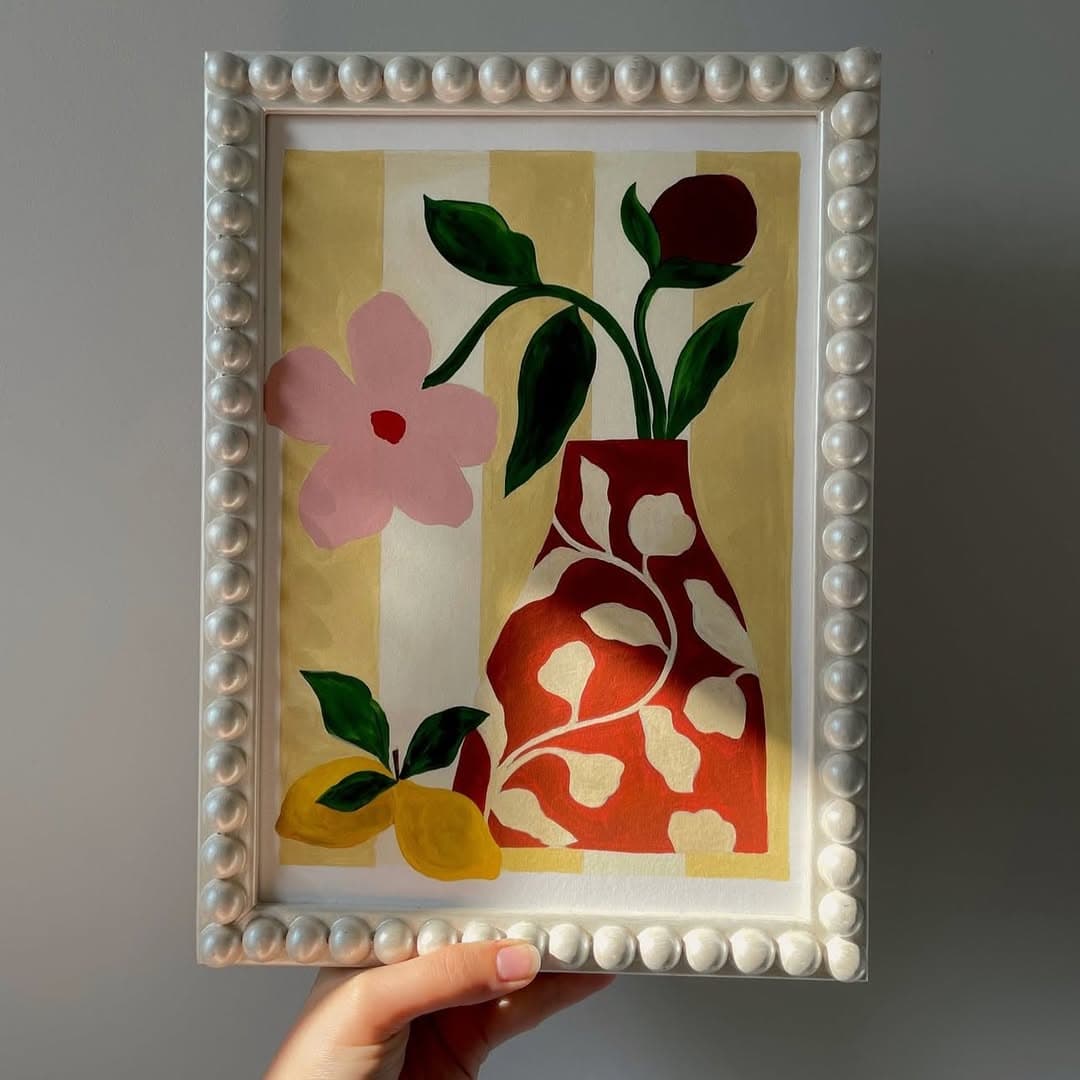
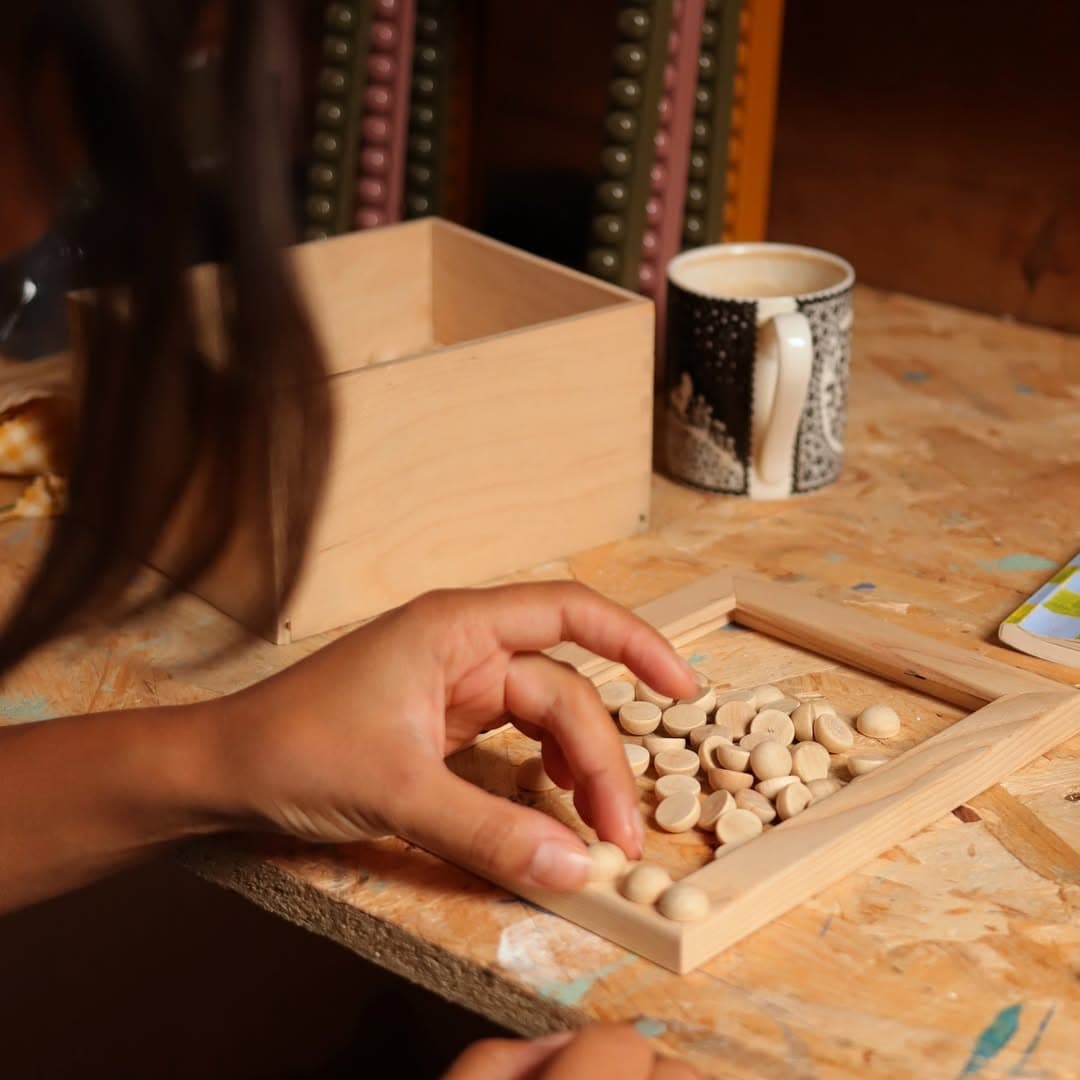
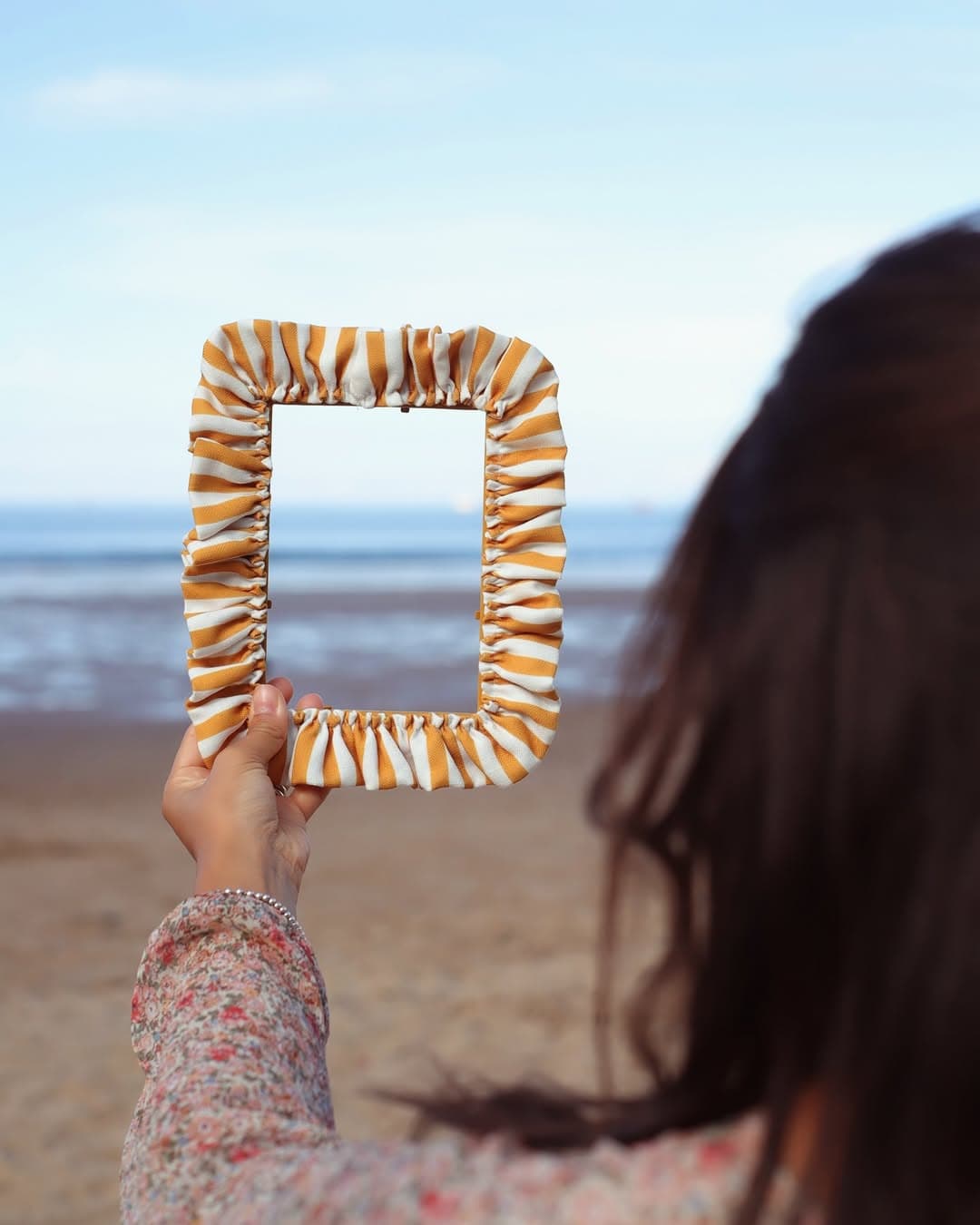
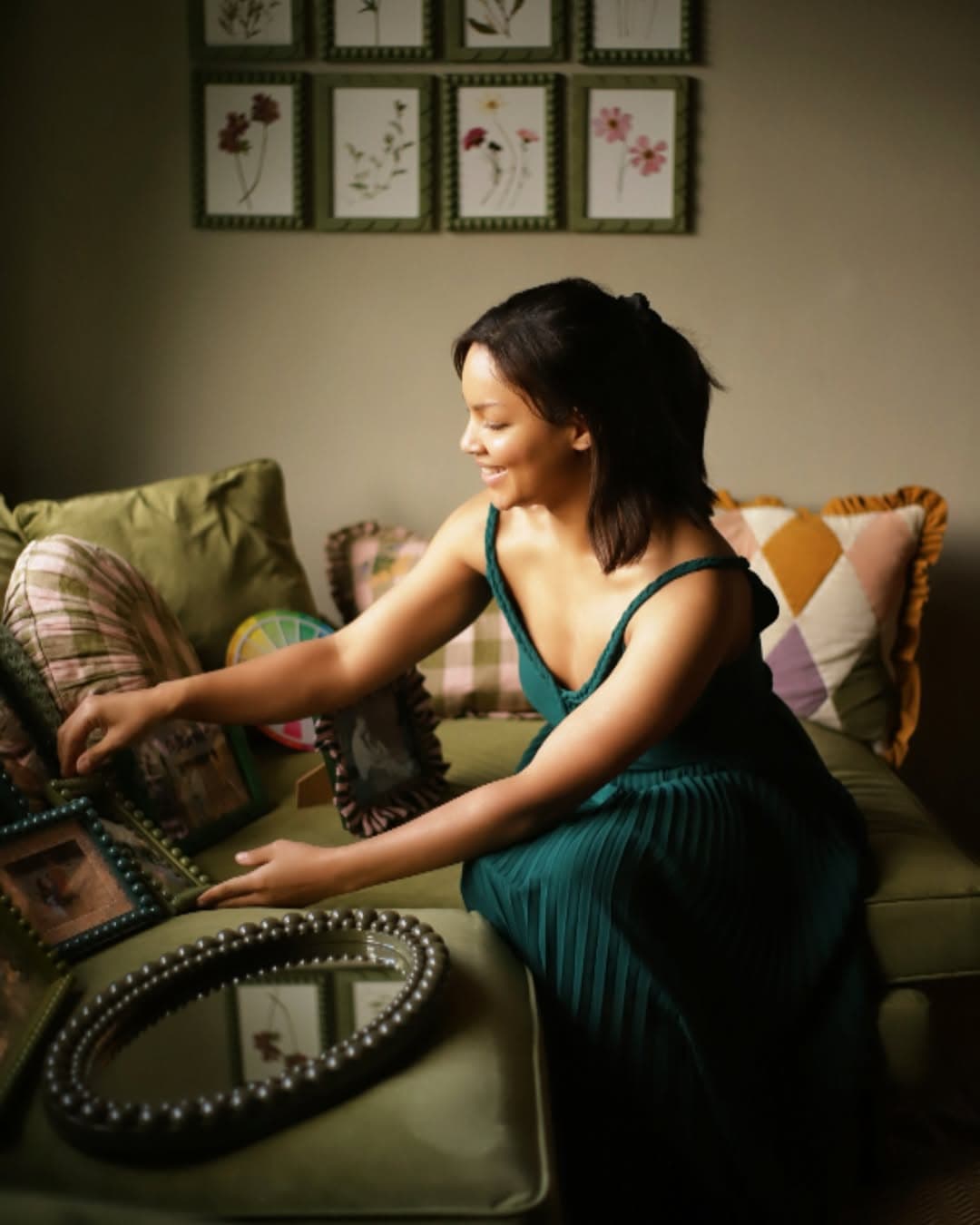
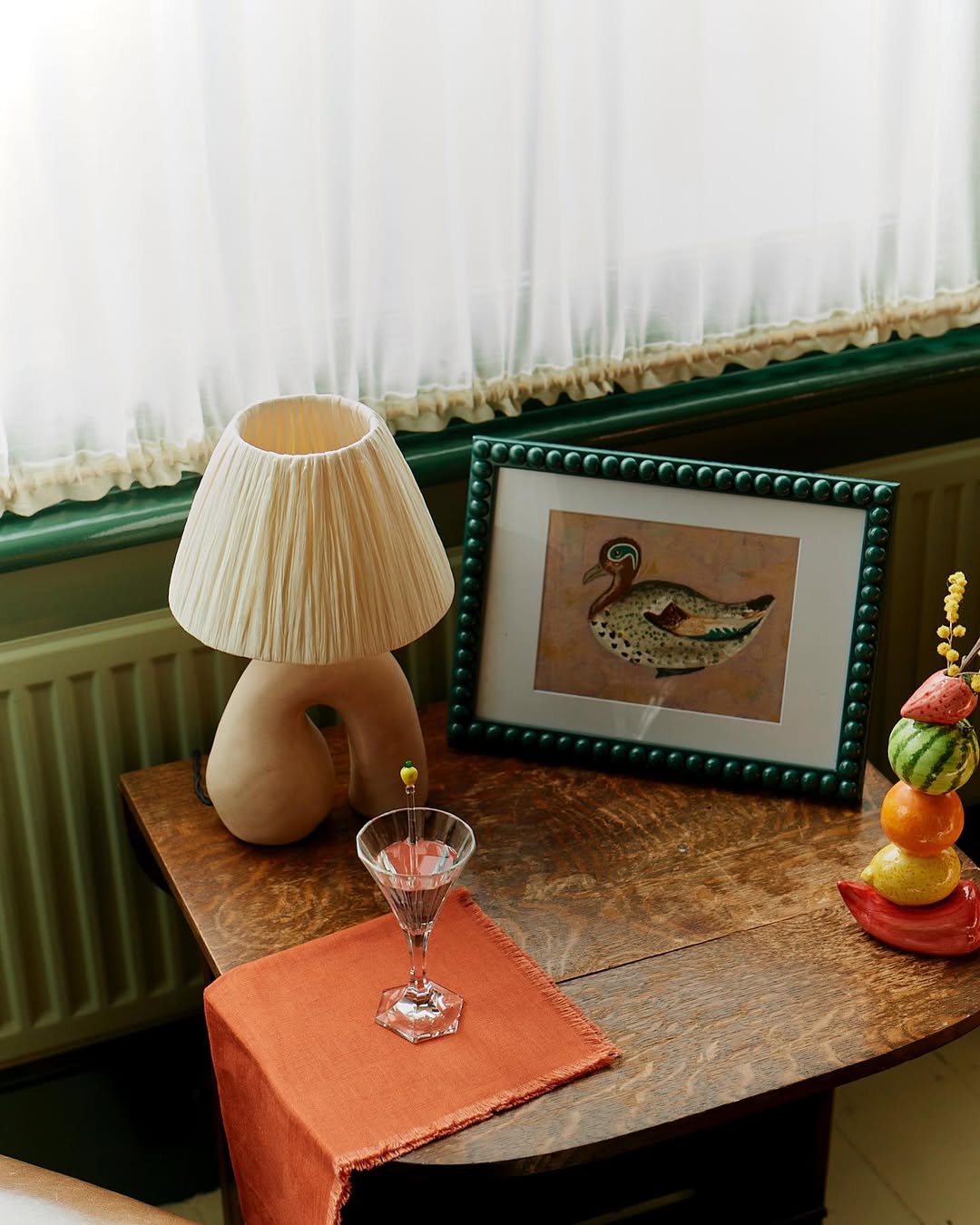
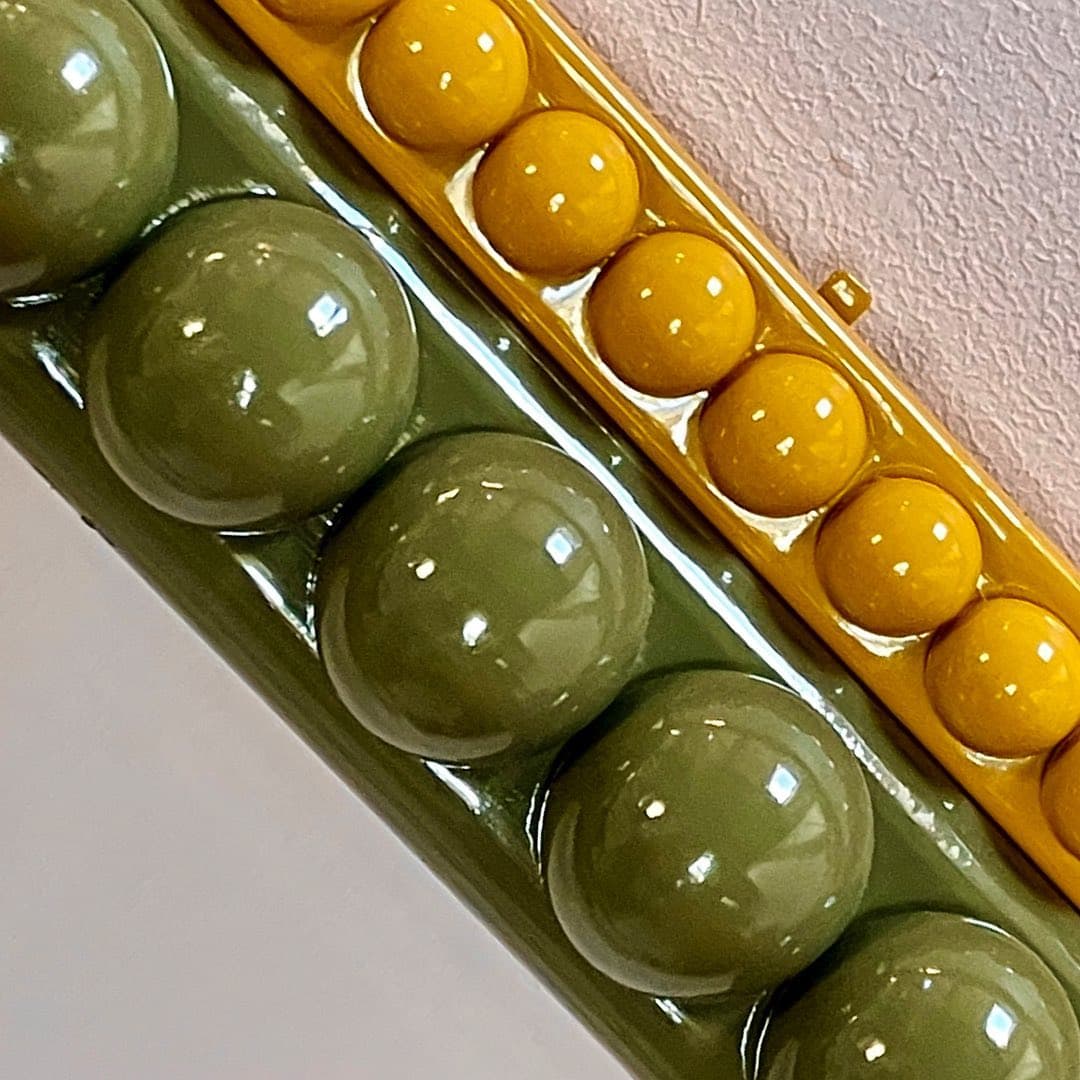
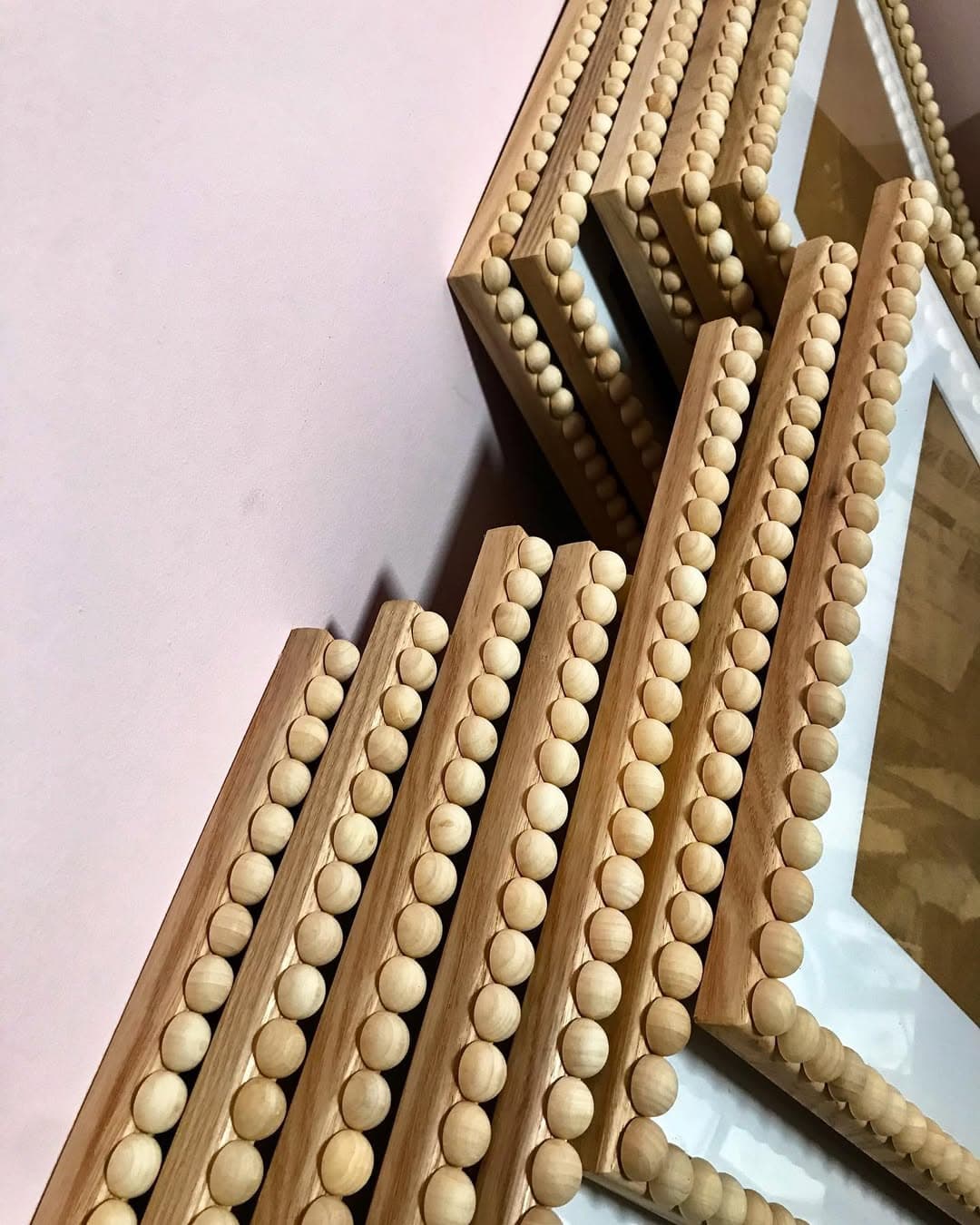
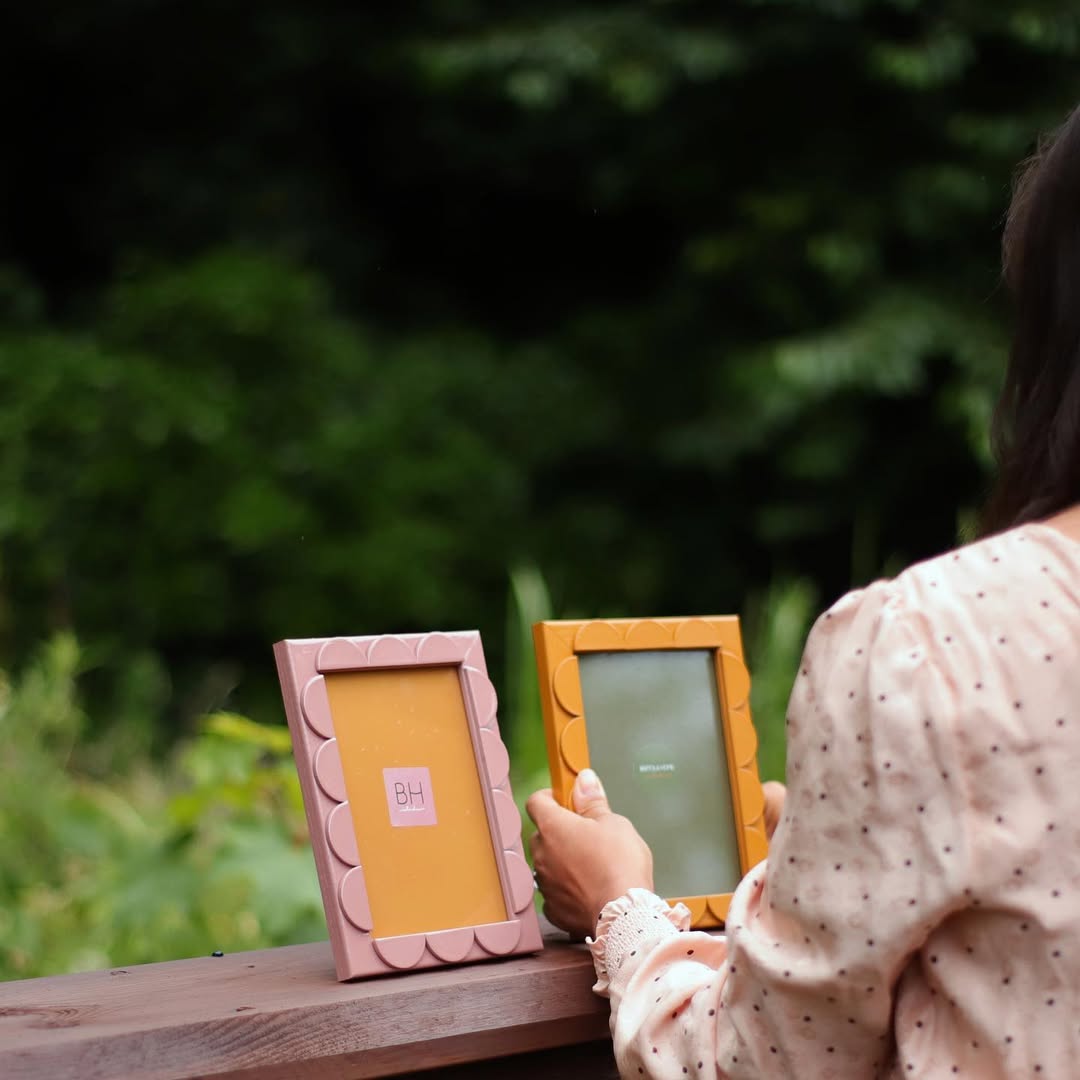
Working from her home studio, Poppy crafts distinctive picture frames that sit at the intersection of colour, craftsmanship, and emotional connection. With a background in Contemporary Art and a practice born during maternity leave in the stillness of the pandemic, she began by hand-building a single frame, an act that sparked a renewed sense of purpose. Each piece is meticulously made to order, combining traditional joinery, layered lacquer finishes, and carefully sourced materials. Guided by nature’s palette and a deep curiosity about how colour makes us feel, Poppy’s frames are both functional and expressive, designed to hold more than just what they display. Her work invites us to slow down, embrace beauty in the everyday, and surround ourselves with objects made with care.
1. Can you tell us a bit about yourself and your artistic journey?
I live and work in Yorkshire, in the north of England, with my husband and two young boys. My art journey began around 15 years ago when I pursued a contemporary art degree – some of my most carefree and creatively enriching days! During that time, I immersed myself into the world of colour, exploring both traditional and experimental painting techniques in a deeply intense way. Looking back, I can see how this experience has shaped the direction of my brand and continues to influence my design process to this day.
2. What inspired you to pursue your craft? Was there a defining moment or influence that sparked your passion?
After teaching for eight years, I felt a strong desire to do something creative again – it had been far too long. During my maternity leave, I decided to handcraft some bobbin frames as Christmas presents. The creative process felt like such a treat after so much time away from it, and the frames were incredibly well received, The positive response gave me a such a huge confidence boost that I decided to make more and sell them – the rest is history!
Your craft
3. How would you describe your work in three words?
Colour-rich, unique, timeless
4. What materials or techniques do you use, and why are they important to your process?
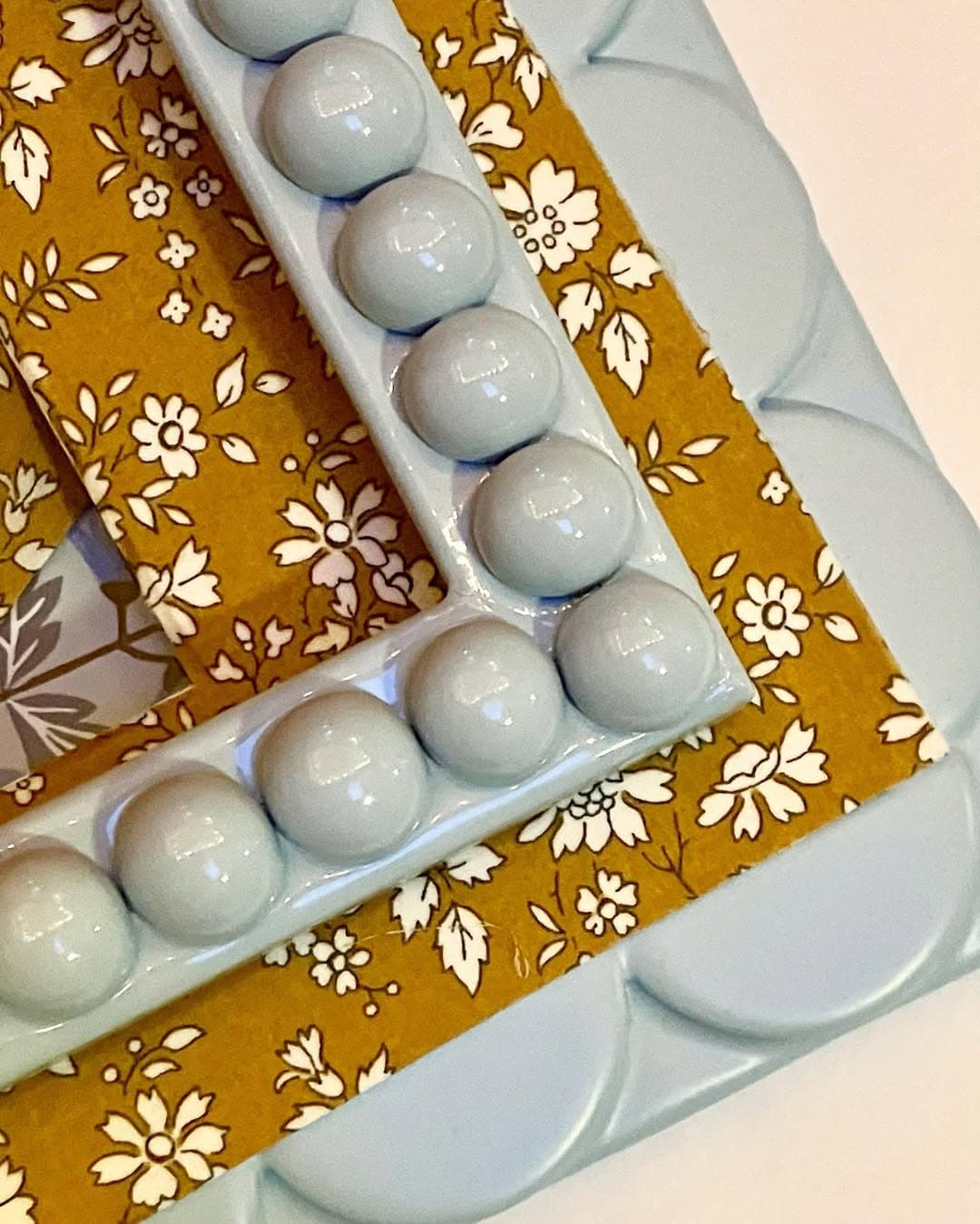
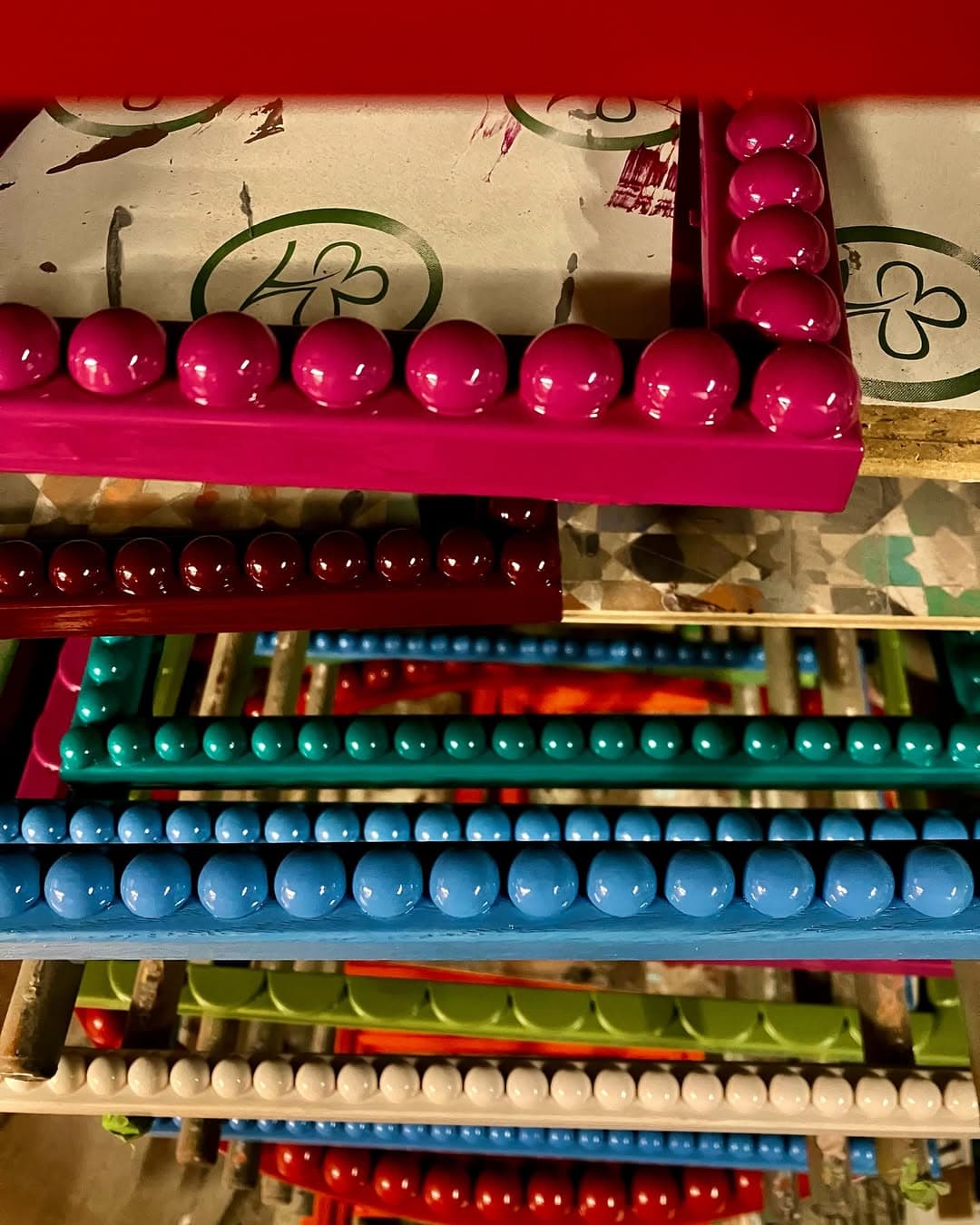
Materiality is at the heart of everything we create. We prioritise high-quality, robust wood, building up layers of lacquer or stain to achieve a rich, durable finish. We also love exploring unconventional pairings, combining materials like linen and wood to craft truly unique and standout pieces.
5. Can you tell us about a favourite piece you’ve created and the story behind it?
I’m incredibly proud of our latest product launch – wooden stamp mounts. I wanted to create something robust and rich and texture, adding a sense of importance and focus to whatever is being framed. The stamp-inspired outline evokes a sense of heritage and grandeur, making it the perfect way to highlight cherished photos and precious artwork.
Creative process
6. What does a typical day in your studio or workshop look like?
I am very lucky to be able to work with an incredible team, so each day feels really collaborative and very busy. The day starts by checking curing products and assessing whether they are ready to enter the finishing process – this is the quietest time of the day where we touch base as a team and set intentions or the day. The studio starts to then get busy as loud machines are switched on and processes are conducted. New pieces are assigned to enter production and existing products continue on their making journey. Although busy, we like to work calmly and maintain a chilled but productive work environment where making feels fun and satisfying.
7. Do you have any unique rituals or habits that help you stay creative?
I need time and space to think! Long car journeys where I can get lost in the scenery and work through ideas I have brewing in my head provide just that for me.
8. How do you handle creative blocks? Do you have any strategies or tips for overcoming them?
Do something else productive, away from the studio, like going for a walk with a camera and taking a photo of anything that catches your eye, or focus on a process-led/mindful activity like making bread. I find the change of focus helps to refresh my thoughts but still channel some element of creativity.
Challenges and successes
9. What’s the biggest challenge you’ve faced as a maker, and how did you overcome it?
A daily challenge is hand-making to order. The pressure is heavy most of the time, but I have to remind myself that people are investing in something truly one-of-a-kind and are happy to wait.
10. What’s been your proudest moment or achievement so far?
Building something recognised widely from nothing.
11. What’s your favourite quote you’ve ever heard about your work? Who said it, or what was the name of the publication?
"The frames are works of art themselves"
– I’ve heard this several times but it makes me so happy because I know what goes into making each one.
Inspiration
12. Where do you draw inspiration from for your work? What sparks your imagination and creativity?
It’s hard to pinpoint exactly because I find inspiration from anywhere and everywhere – a colour I spotted in my favourite fashion brand, the way a curtain moves in the breeze or the saturating hues of a winter sunset against the grey. Being open-minded and taking it all in is key.
13. Do you have a favourite artist, maker, movement, or tradition that has influenced your craft?
I have always loved Peter Doig’s colourful paintings. The way he uses striking colour combinations to elevate moments is kind of what I hope to achieve with our pieces.
14. How does colour influence your practice; is it an important part of your process? Do you have a particular palette or favourites? Any go-to sources for colour inspiration?
It’s a core element of everything we make. Our palette is often described as feminine but that hasn’t necessarily been intentional – they are just colours I adore and naturally work together. I often add colours to our collection when I feel really inspired by something I have seen and just can’t stop thinking about it.
Perspectives and goals
15. What role does your environment play in shaping your creativity?
It needs to be tidy enough to not feel chaotic but messy enough to feel productive.
16. What do you want people to feel when they experience your work?
That they have had something made especially for them and that the maker’s hand is evident and adds value to their unique piece.
17. What are you currently working on, and what excites you most about it?
I am currently exploring ways in which we can personalise our products, allowing customers to create something truly unique to them, I believe this will enhance the tailored experience we offer and further reinforce the one-of-a-kind quality that is so integral to our brand.
Advice and reflection
18. What advice would you give to someone starting out as a maker?
– You learn by doing.
– If you’re passionate about it then as long as you are consistent, you are bound to succeed.
19. If you could go back to the start of your career, what advice would you give your younger self?
It’s ok to say no.
Closing thoughts
20. If you could collaborate with any artist, past or present, who would it be and why?
I love Rob Ryan’s poetic screen prints and cut-outs. The idea of narratives within artworks intrigues me and I could totally envision his intricate work etched into our wooden mounts, telling a story.
21. Where can people find your work, and how can they support you?
You can find my work via our website: bertolahomestudio.com or via platforms Maison Flaneur, The Roost, Anthropologie and a handful of boutiques in the UK and around the world. People can support me by shouting loudly about Bertola Home Studio to their family and friends.
Guided by nature’s palette and a love of colour, Poppy creates handmade frames that pair unexpected combinations with thoughtful craft. Each piece is made to order using sustainable methods, from wooden joinery to layered lacquer, resulting in functional works full of care, process, and personality.
Explore Poppy’s latest collection and follow her creative journey:
Support Poppy by exploring her joyful world of handcrafted colour, discovering unique frames made with heart and precision, and following her creative journey as she continues to turn memory into artful design.

Meet the Maker: Polly Wolly Doodles and the Gentle Art of Framed Florals
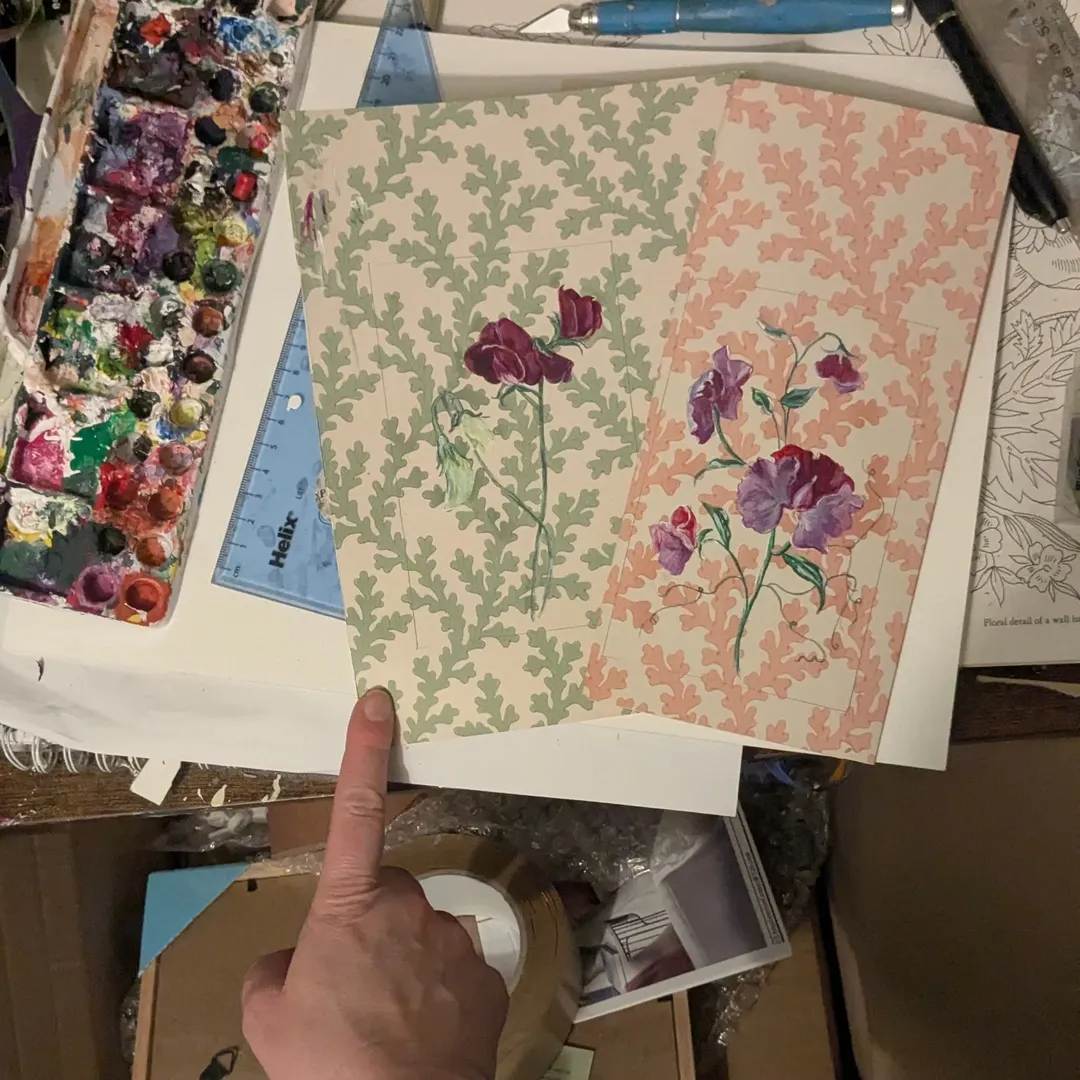
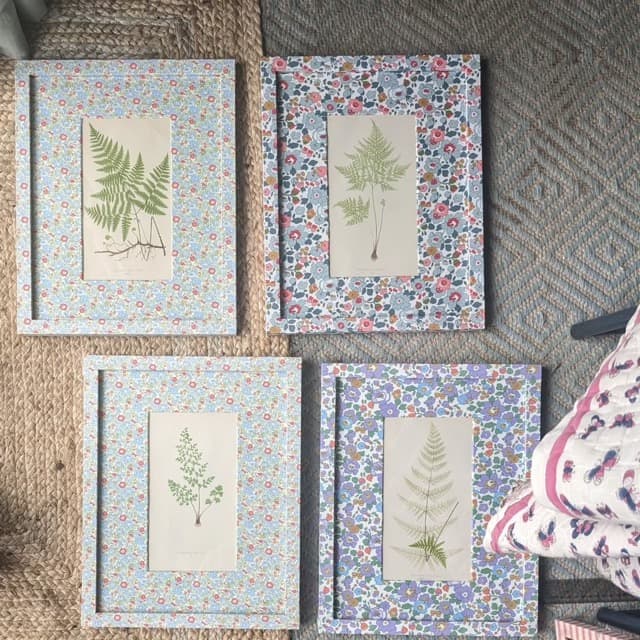
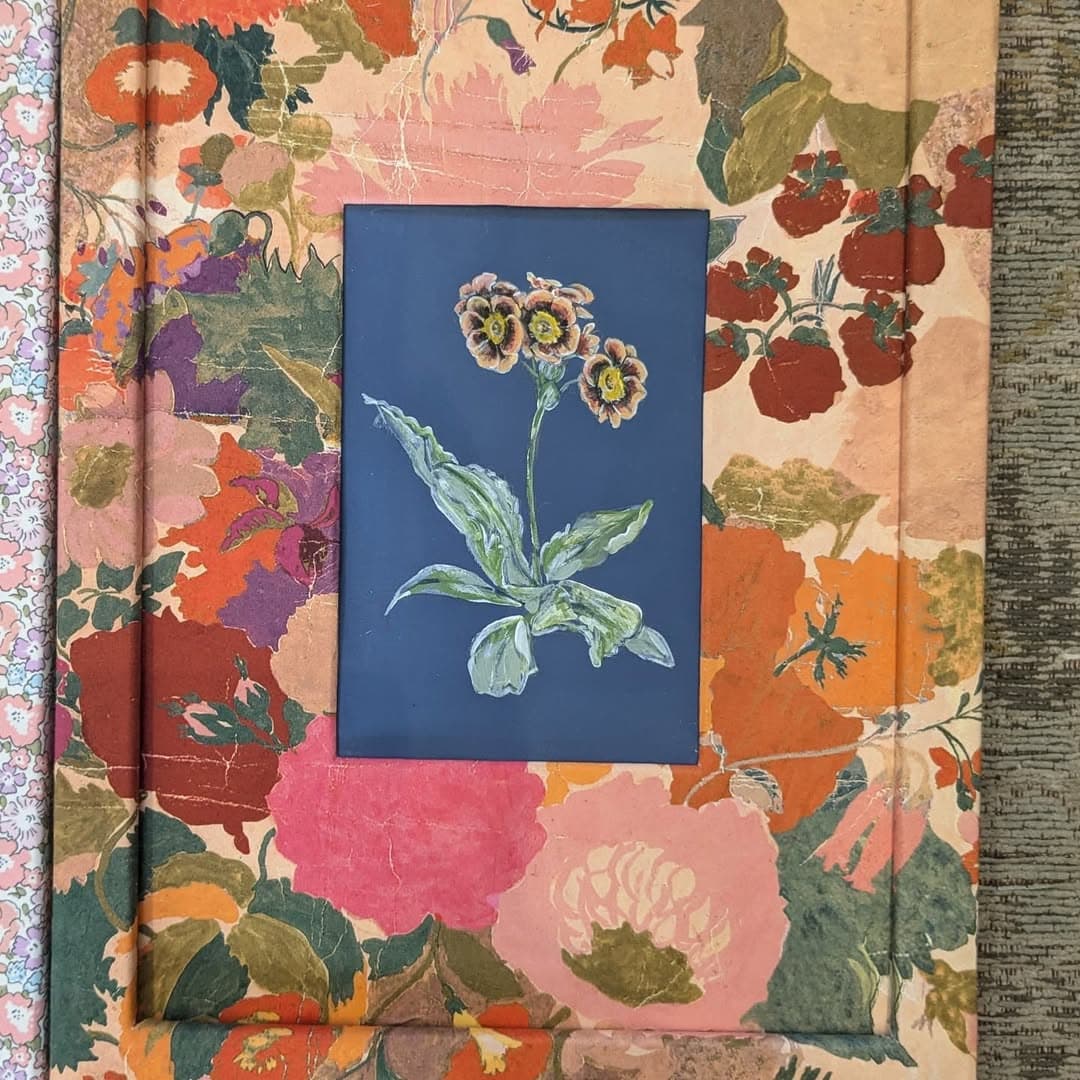
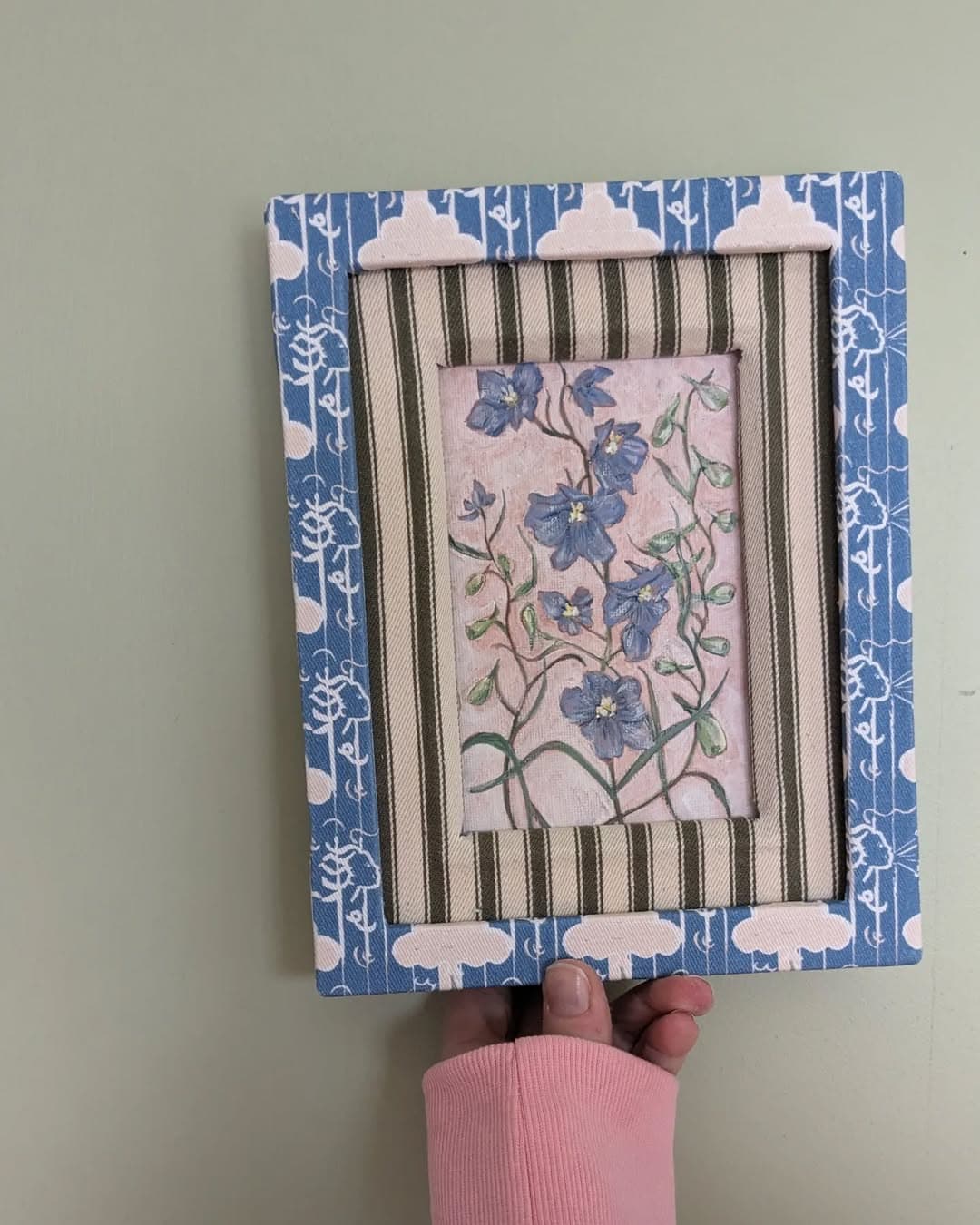
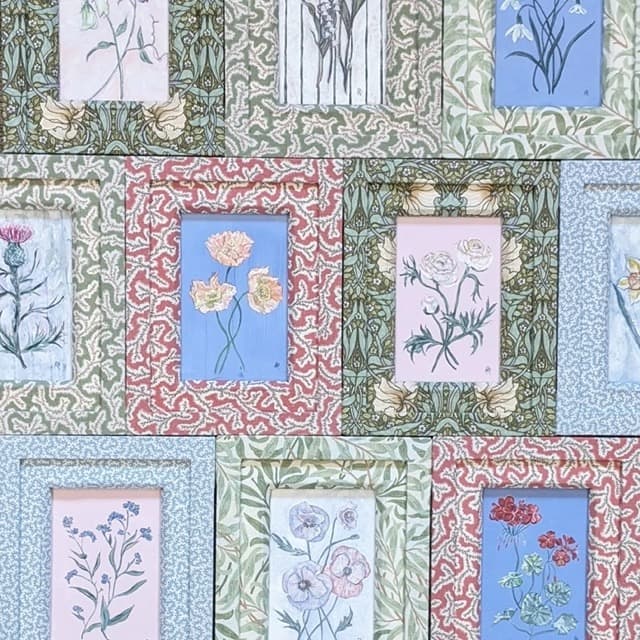
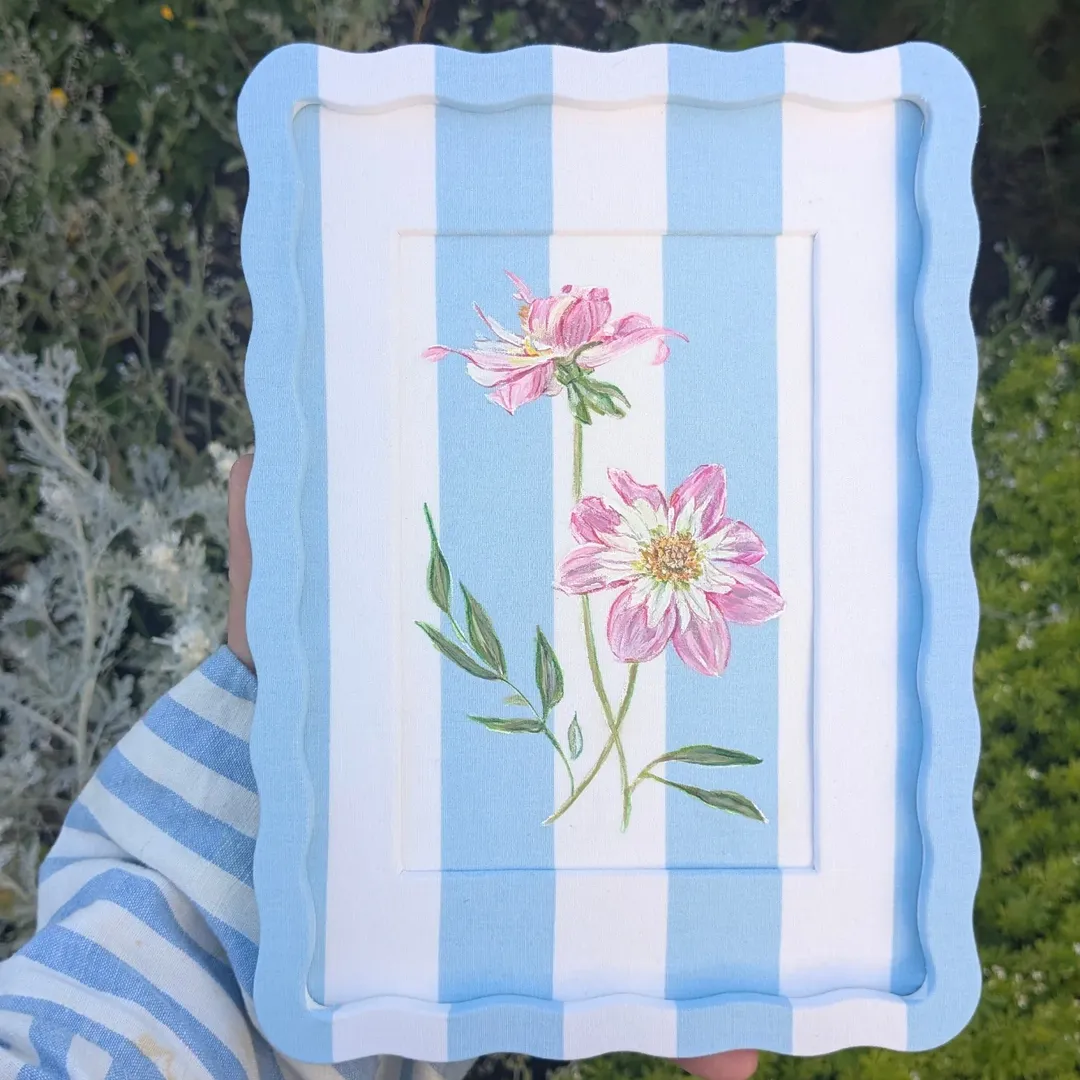
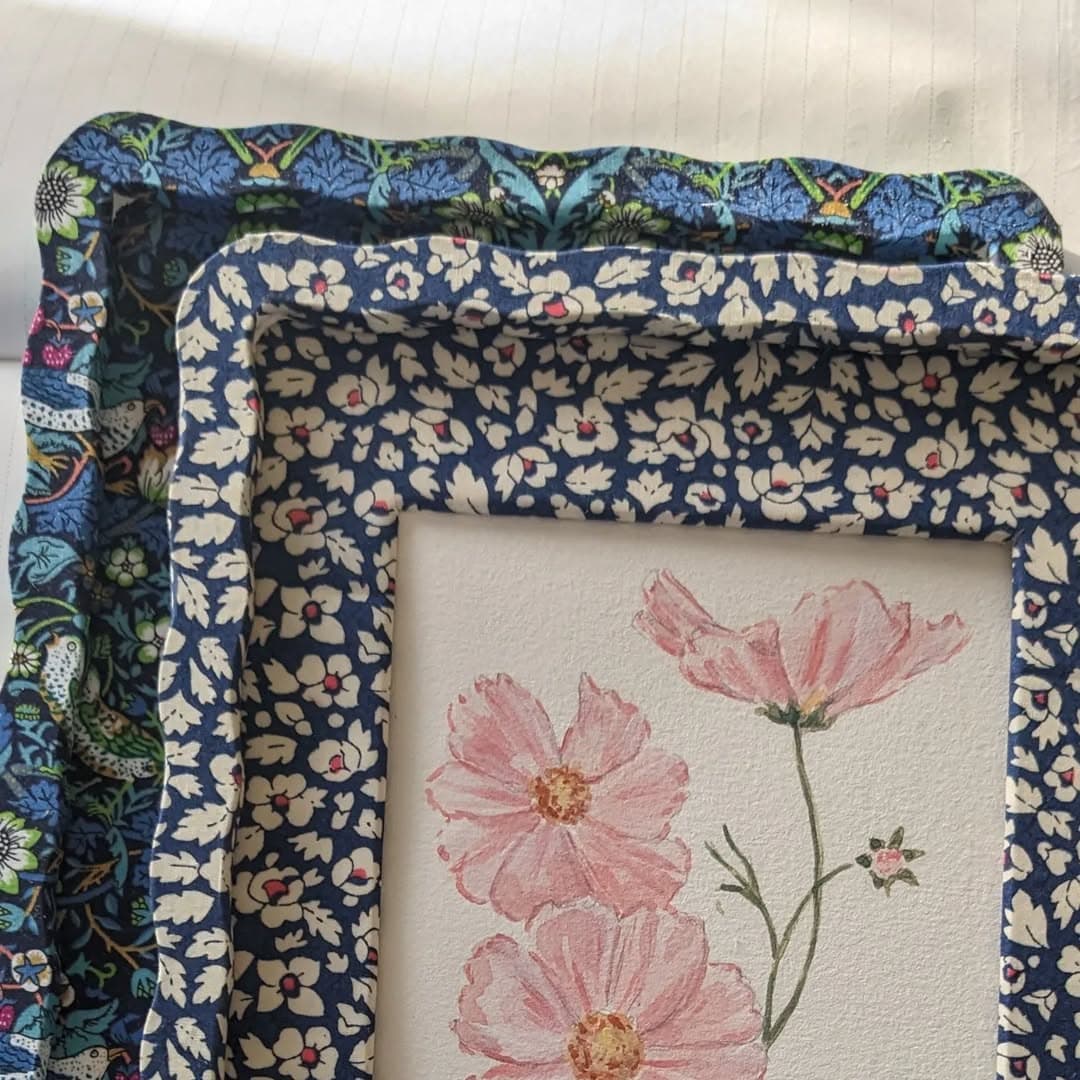
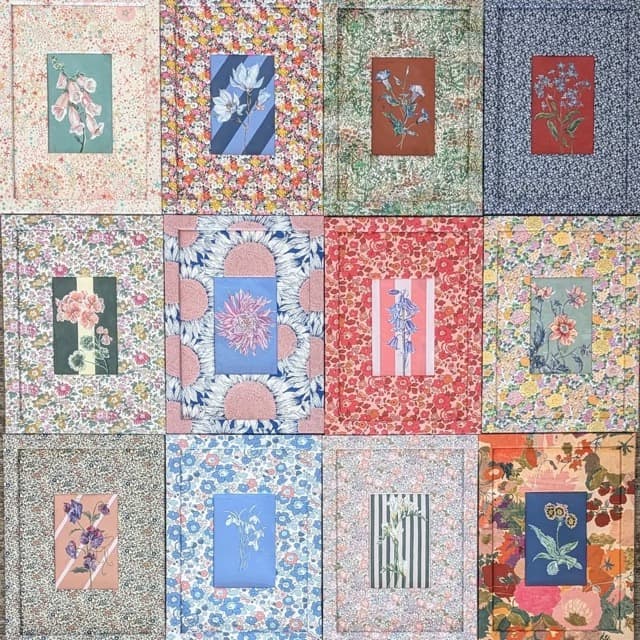
Polly Wolly Doodles brings her playful, painterly touch to the quiet poetry of the English countryside. A multi-disciplinary artist with roots in doodling and a flair for fabric, Polly creates delicate floral studies using chalk paint and acrylic, each one thoughtfully framed in textiles she wraps by hand.
Her consistent, neutral-led palette creates harmony across her pieces, while vintage and organic fabrics add depth, texture, and story. Blending past and present with care, Polly’s work invites us to slow down and enjoy the shifting beauty of the seasons.

1. Can you tell us a bit about yourself and your artistic journey?
I am based in Somerset, with three young children. Following the birth of my second child, and developing PND, I began to draw and paint as a way to come back to myself. I have since been diagnosed with ADHD – art is very much my special interest, and I feel like I haven’t quite scratched an itch if I don’t create something every day!
I initially offered pencil portraits, but then felt drawn to colour and botanicals, and so began to explore, first with oil pastels, then watercolour and now I offer originals painted using chalk paint, which are framed using fabrics and papers.
2. What inspired you to pursue your craft? Was there a defining moment or influence that sparked your passion?
It was feeling totally lost that inspired me ! I was looking after two small children on my own week in week out as my partner worked away from home and struggling with my mental health.
I had an accident involving my very overheated car that resulted in me getting really burnt on my face and arm – I think everything had to metaphorically and physically reach boiling point before I realised I needed something that gave my brain room to roam away from the demands of being a mum/running the home/domestic life.
Your craft
3. What materials or techniques do you use, and why are they important to your process?
I use chalk paint – which is natural and free of toxins. I use organic/reclaimed fabrics as much as possible – I love repurposing things like old cushion covers – trying to work as sustainably as I can feels important.
4. Can you tell us about a favourite piece you’ve created and the story behind it?
I created an entire auricular theatre of 9 individual paintings in a huge fabric covered frame – I loved it because I sat on the idea for nearly a year, and just felt very proud when I actually made it as I didn’t make it necessarily to sell but more to just ‘see’ it in real life
Creative process
5. What does a typical day in your studio or workshop look like?
Always starts with coffee, then if I am painting, I am really disciplined about sitting down to work by 9 at the absolute latest. I will listen to an audio book or one of my favourite podcasts and pretty much not lift my head up from my painting until I have to collect my kids from school! If I am making frames, I work on the floor, and gradually become more and more covered in glue and scraps of fabric until I emerge from the studio like some sort of sea monster.
6. Do you have any unique rituals or habits that help you stay creative?
Podcasts/audiobooks are a must, as is coffee – which is actually normally forget about but I need to have it on my desk.
7. How do you handle creative blocks? Do you have any strategies or tips for overcoming them?
When I feel blocked, I have to be really strict with myself and down tools. Stepping away, giving my head time to calibrate and just stopping for a moment is the only way through for me. I don’t create when I feel blocked, but I will turn to archives online to research things and try and find something to help me move forward and look at my issues in a new light. But really, I think often creative blocks are the brains way of calling for a break, so I try to make myself do that (which is easier said than done).
Challenges and successes
8. What’s the biggest challenge you’ve faced as a maker, and how did you overcome it?
The biggest challenge for me is managing my ADHD – its makes me so sensitive to rejection – perceived or real, it makes me hyper critical of myself, it makes me overload myself with choices so that moving forward can be really overwhelming. It makes the ‘boring bits’ (aka the essential, grown up parts !) of the job feel like pulling teeth as the reward centres in my brain feed off making art and enjoying how it looks etc as opposed to thinking about how I’m going to book a courier and package up my work on time.
9. What’s been your proudest moment or achievement so far?
Definitely having my work sold in Liberty.
Inspiration
10. Where do you draw inspiration from for your work? What sparks your imagination and creativity?
Gosh I spend HOURS researching historical artwork – I go back as far as medieval books of hours pages, trawling online libraries and looking at colours, compositions, pattern – thinking about how I can combine all the things I love into one single piece. I love looking at old fabric pattern books, relics of pieces and scraps of salvaged embroideries.
11. Do you have a favourite artist, maker, movement, or tradition that has influenced your craft?
I don’t have a singular favourite for any of these as Im just constantly moving through so much information and research that I am alway falling in love with something/someone new – but I really adore the Arts and Crafts movement, I come back to it a lot.
12. How does colour influence your practice; is it an important part of your process? Do you have a particular palette or favourites?
Any go-to sources for colour inspiration? Colour is vital – I play with it nonstop – I am self taught so things like colour theory aren’t lodged in my brain, so I have to learn through trial and error. I love mixing muted tones with vibrant dashes in my paintings. Go to sources for colour inspiration comes from my old botanical books which are mostly from National Trust second hand book shops and a treasure trove for inspiration.
Perspectives and goals
13. What role does your environment play in shaping your creativity?
I live in the Somerset countryside and watch the seasons changing day by day – I get so much out of being in my garden, identifying plants when out on walks, observing the sky and the birds – for me its all about soaking up and watching.
14. What do you want people to feel when they experience your work?
I want them to feel their dopamine levels rise, and their hearts and minds to feel happy and joyful!
15. What are you currently working on, and what excites you most about it?
I am working on a collection for Maison Flaneur, as well as some collaborations with some lovely brands – I really love collaborative work as it makes me feel like part of team which is important amongst all the days working alone in my studio.
Advice and reflection
16. What advice would you give to someone starting out as a maker?
Keep going – move forward, research, connect with fellow makers, be nice and own your mistakes.
17. If you could go back to the start of your career, what advice would you give your younger self?
To be kind to myself and have more self belief!
Closing thoughts
18. If you could collaborate with any artist, past or present, who would it be and why?
I would collaborate with Alida Withoos – she painted in 1600’s but her work feels modern somehow – its magical
19. Where can people find your work, and how can they support you?
I am on instagram, I have a website (which I’m a trying to learn how to use!) and I also sell my work in Liberty London – when I have drops, I update my instagram with all details as to where it will be available from so my advice is to follow me there!
Support Polly by browsing her soft-hued collections, discovering the tactile charm of her hand-framed florals, and following her journey as she continues to blend fabric, paint, and nature into something quietly extraordinary.
Explore Polly’s latest collection and follow her creative journey:
Meet the Maker: Helen Wilde and the Art of Textured Design
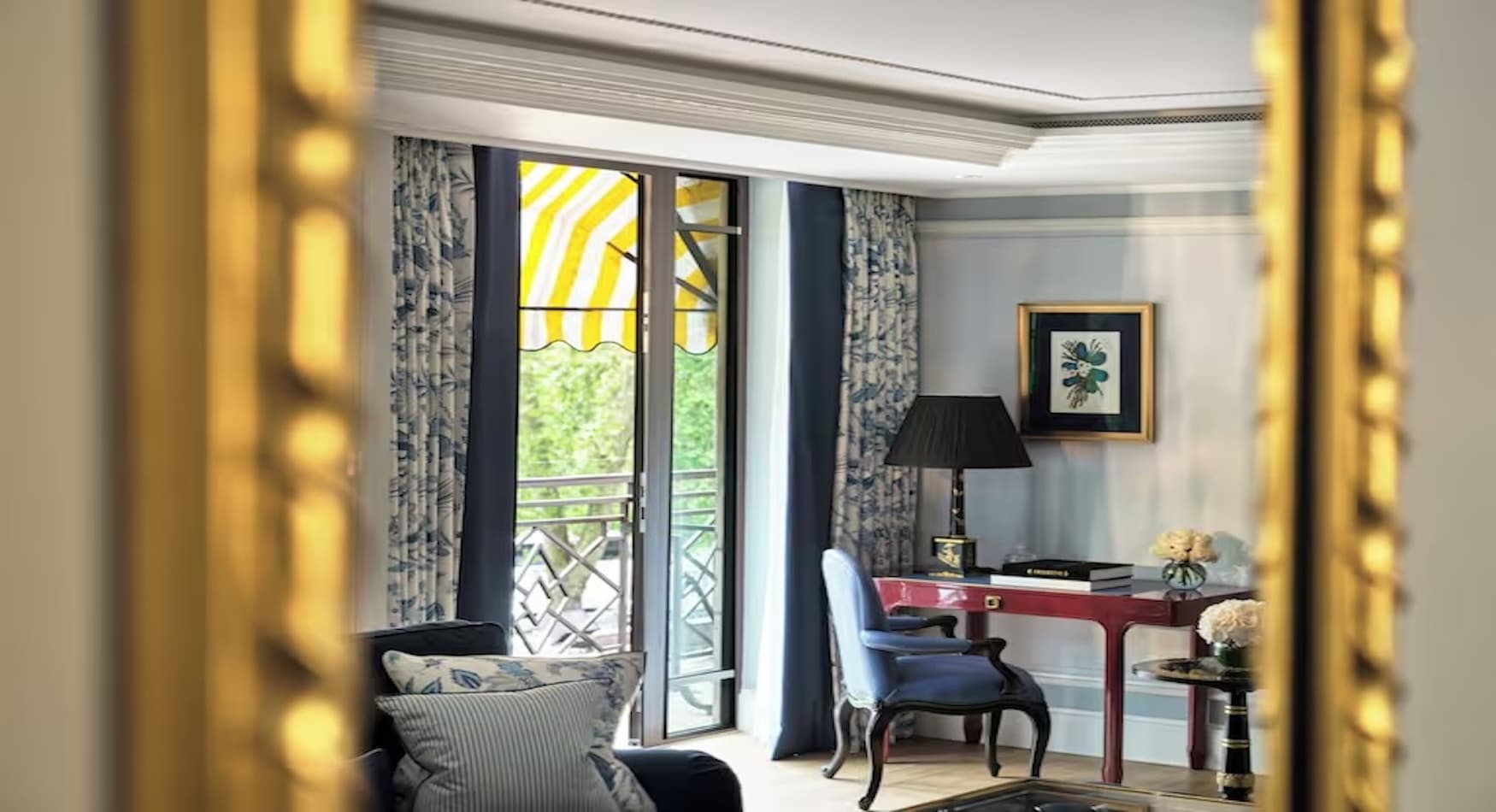
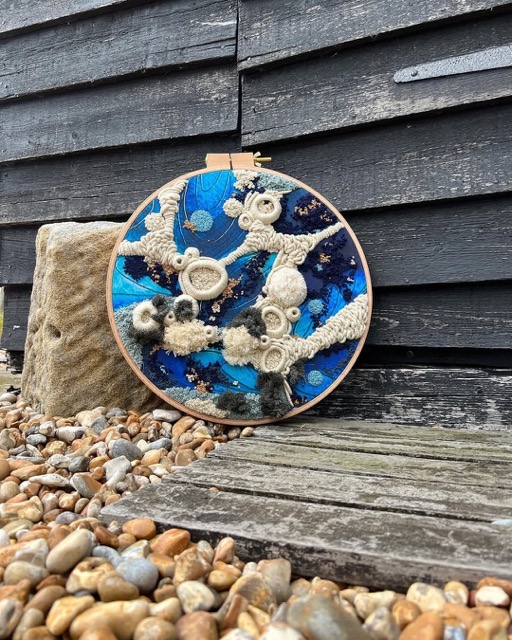
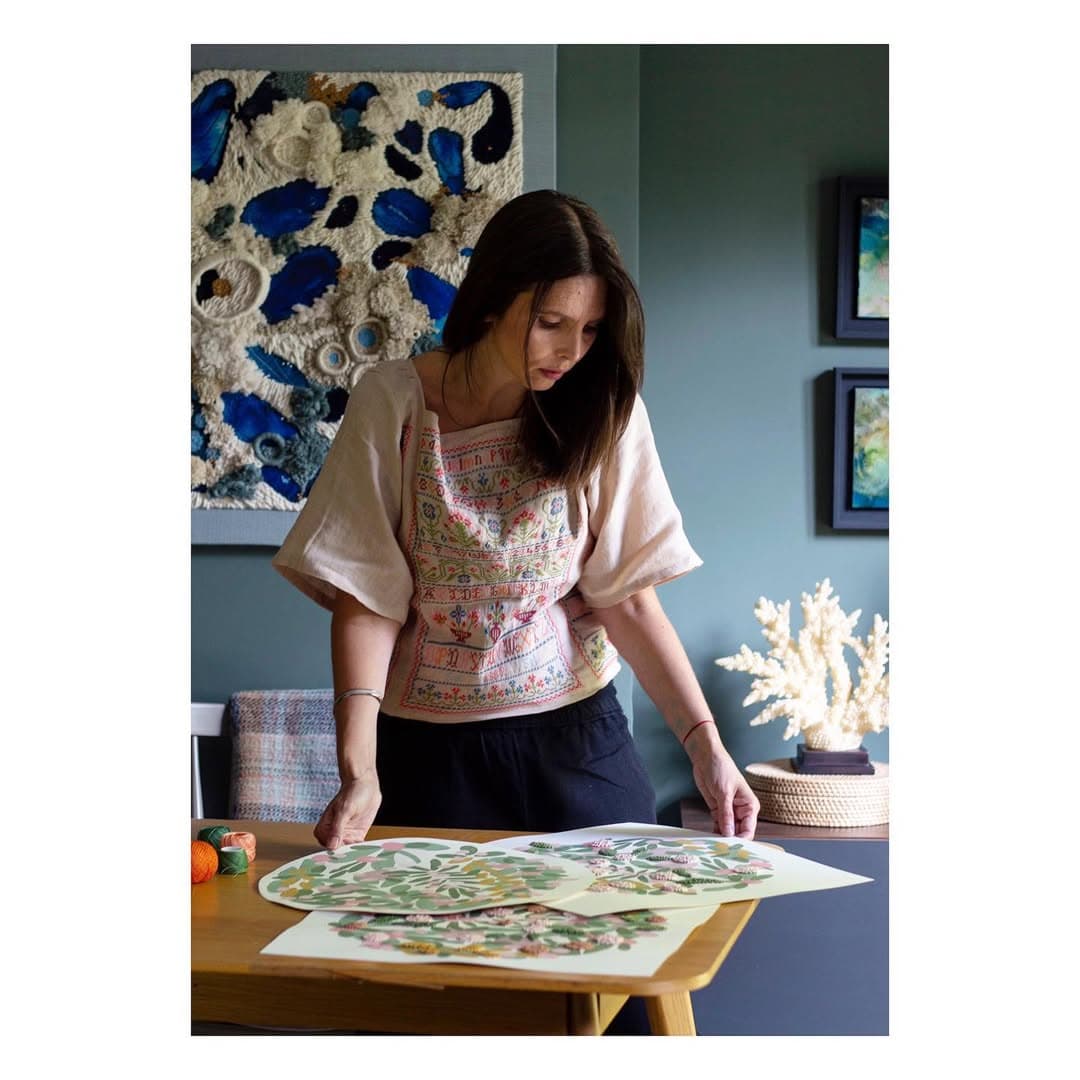
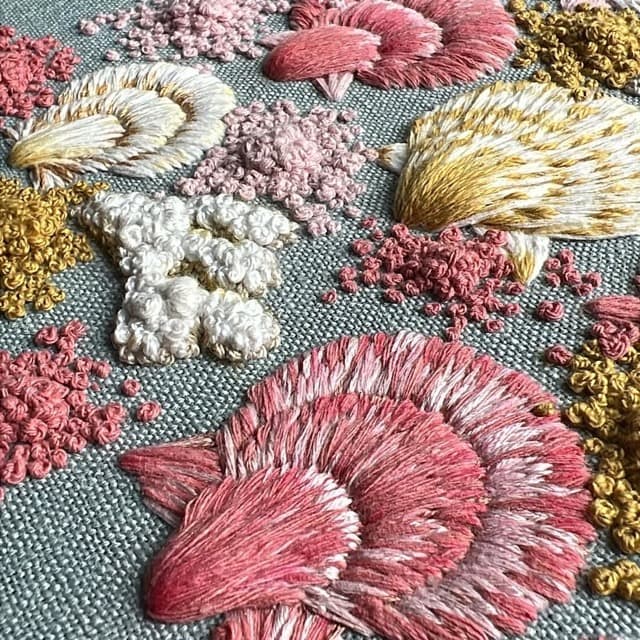
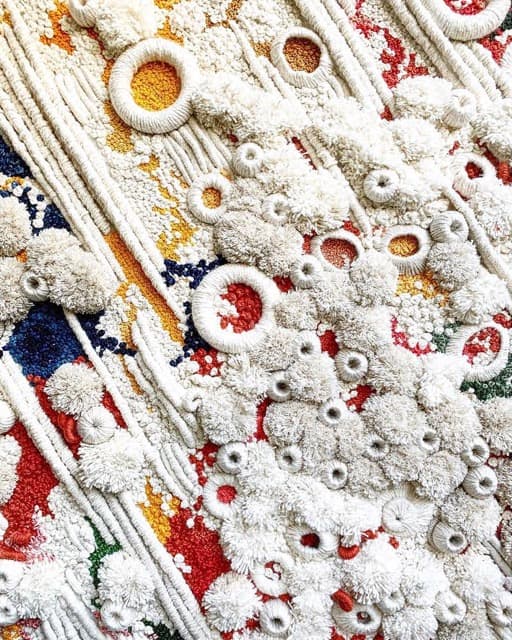
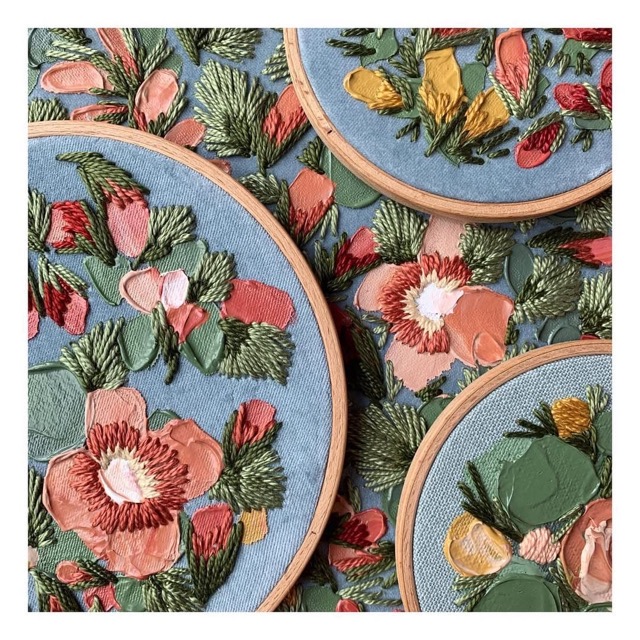
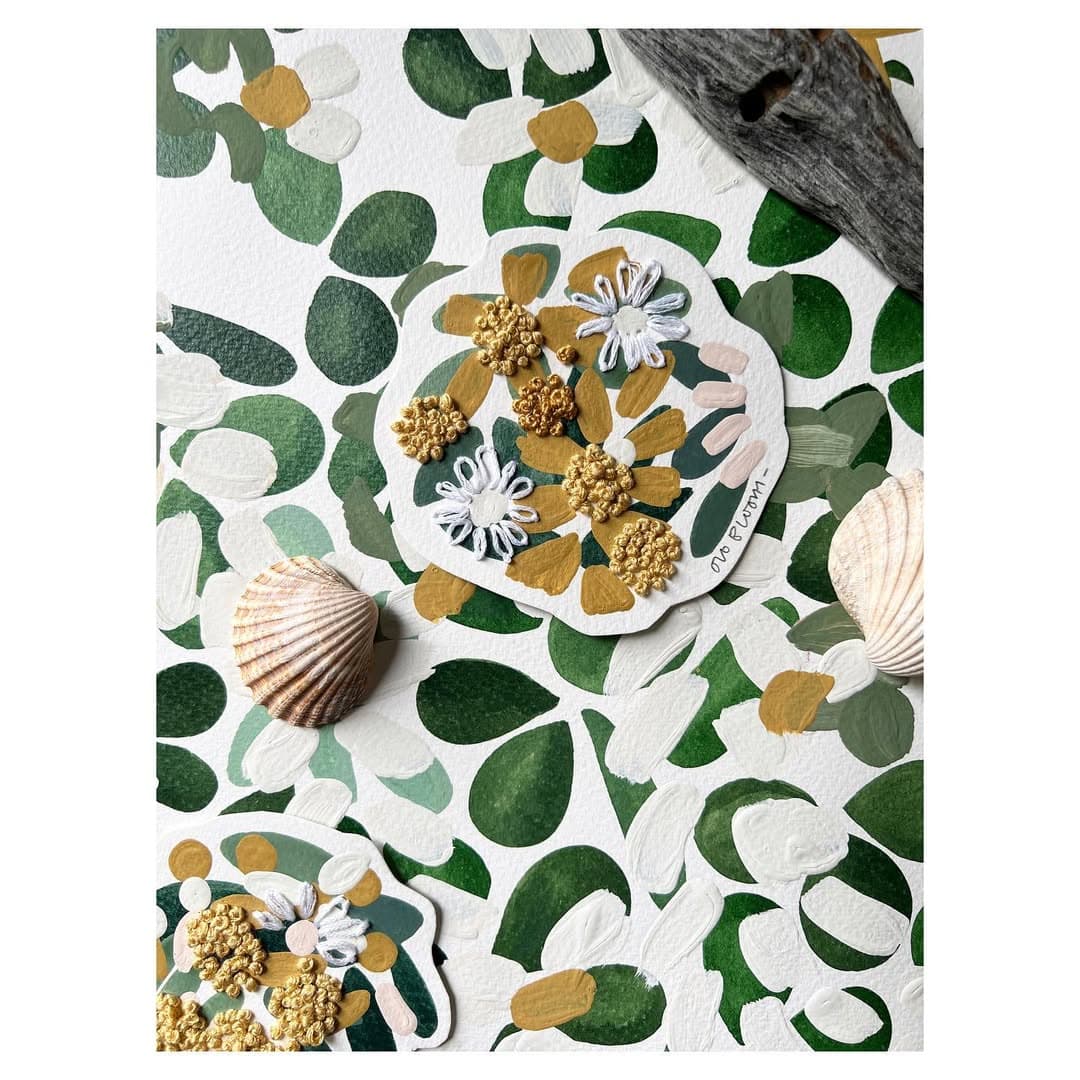
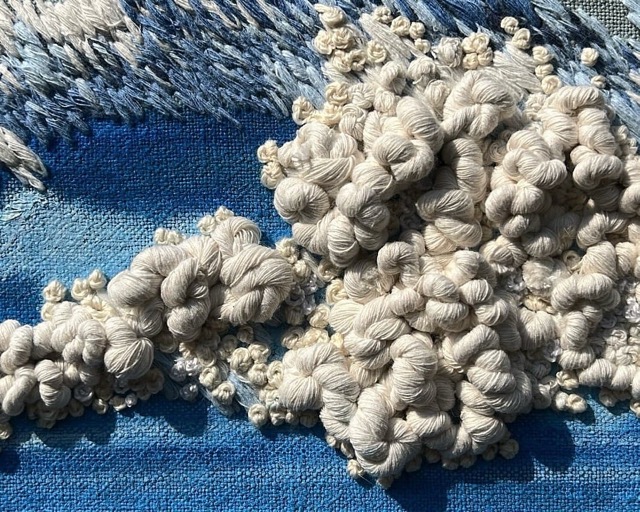
Blurring the lines between nature and fantasy, Helen Wilde creates richly layered textile artworks that burst with texture, movement, and colour. A Decorative Arts graduate and leading voice in modern embroidery, Helen transforms paper, fabric, yarn, and silk into enchanting botanical dreamscapes and tactile wildlife scenes.
Her evolving palettes mimic the seasons, while her innovative use of humble stitches, 3D forms, ceramic elements and painterly detail elevate each piece into something truly extraordinary. With work exhibited across the U.S. and collected around the world, from Elle Decoration features to The Dorchester’s walls, Helen continues to reimagine what fibre art can be.
1. Can you tell us a bit about yourself and your artistic journey?
I am a multidisciplinary artist, based in Derbyshire, my art is predominately led by embroidery but takes many forms, from textiles to paper and more recently ceramics & is inspired by my career so far, the places I’ve been and the people whom I have been lucky enough to work with such as Daniel Hanson, Vivienne Westwood and Tom Phillips.
2. What inspired you to pursue your craft? Was there a defining moment or influence that sparked your passion?
My family have always been very creative with an emphasis on traditional craft, being encouraged to pursue a handmade craft was nurtured from an early age and was encouraged even more during my degree – all based around traditional craft and practices.
Your craft
3. How would you describe your work in three words?
Textural, imaginative, evolving.
4. What materials or techniques do you use, and why are they important to your process?
I predominantly use embroidery, whether it be textile or paper based. The techniques are a combination of traditional stitches and contemporary explorations. Thus creating the forms and textures so featured within my collections.
Can you tell us about a favourite piece you’ve created and the story behind it?
One of my favourite season collections was a series of paper embroideries based around the gardens of Derek Jarman’s ‘Prospect Cottage’ – we spent a wonderful Summer in Dungeness, a true escape and then these pieces influenced a collection commissioned by the ‘Dorchester Hotel’, Hyde Park. London.
Creative process
6. What does a typical day in your studio or workshop look like?
I always start with tea, a litre of tea must be consumed. My studio is in the centre of my home, a 300 year old cottage that dictates where I will work during the day – in the Summer I’ll work outside, the Winter by the fire.
7. Do you have any unique rituals or habits that help you stay creative?
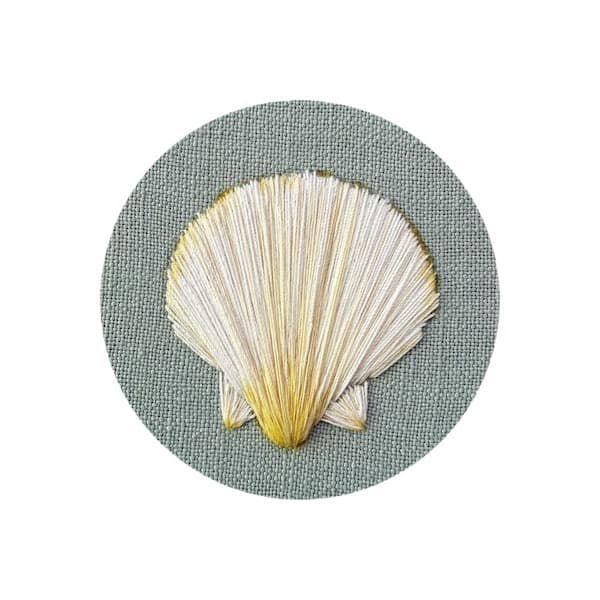
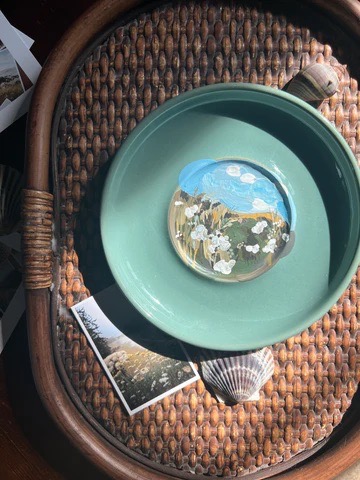
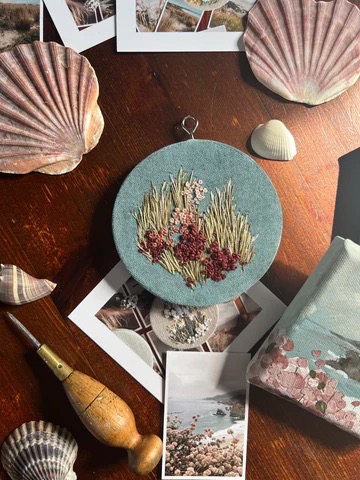
I have several folders with hundreds of images I have taken during my travels, whether these be sea shells and coral reefs, the gardens of Derek Jarman, or studies of seashells – every few weeks I’ll decide on my new direction by looking through these images & seeing what catches my eye.
Challenges and successes
8. What’s the biggest challenge you’ve faced as a maker, and how did you overcome it?
Deadlines I find increasingly difficult within commercial projects – not sleeping helps.
9. What’s been your proudest moment or achievement so far?
Being commissioned by the ‘Dorchester Hotel’ to create a collection of work for their new hotel suites. A legacy collection that will hang there for possibly longer than my lifetime.
10. What’s your favourite quote you’ve ever heard about your work? Who said it, or what was the name of the publication?
“An ambassador for modern day embroidery”
– Elle Decoration
Inspiration
11. Where do you draw inspiration from for your work? What sparks your imagination and creativity?
Currently and more often than not, the ocean, coral reefs and seashells.
12. Do you have a favourite artist, maker, movement, or tradition that has influenced your craft?
There are many people that I admire for their use of colour, texture and form. People like Geoffrey Bawa, for his approach to his practice, Tom Phillips for his use of colour, texture and experimentation and Jacques Cousteau for his exploration of the ocean are people I find myself returning to.
13. How does colour influence your practice; is it an important part of your process? Do you have a particular palette or favourites? Any go-to sources for colour inspiration?
Colour plays an enormous role, normally influenced by the natural environment – the blues and greens of the ocean which then influences every aspect of my life – including my home.
Perspectives and goals
14. What role does your environment play in shaping your creativity?
I like to surround myself by the themes I’m passionate about, unfortunately not living near the ocean means I have a wonderful collection of seashells.
15. What do you want people to feel when they experience your work?
Escapism.
16. What are you currently working on, and what excites you most about it?
A collection for a gallery based on the Scilly Isles – think rock pools, which I adore.
Advice and reflection
17. What advice would you give to someone starting out as a maker?
Try everything and anything, everything is practice.
18. If you could go back to the start of your career, what advice would you give your younger self?
Believe in yourself and your half way there.
Closing thoughts
19. If you could collaborate with any artist, past or present, who would it be and why?
Not necessarily and artist, but a movement. The Bauhaus – traditional methods, contemporary practice – heaven!
20. Where can people find your work, and how can they support you?
My own website, ovobloom.com
Waterside Gallery, St Mawes.
Bryher Gallery, Bryher, Isle of Scilly
Nahcotta Gallery, USA
Helen Wilde’s textile artworks blur the line between the real and the imagined, transforming natural inspiration into vibrant, multi-dimensional pieces. From delicate stitches to bold painterly textures, each creation reflects her unique vision where botanical beauty, colour, and craftsmanship meet. With an ever-evolving palette and a deeply intuitive approach to materials, Helen invites us to see embroidery not just as a technique, but as a richly expressive art form.
Explore Helen’s latest collections and follow her creative journey:
Support Helen by exploring her vivid, nature-inspired world online, discovering her sculptural fibre pieces, and following her artistic journey as she continues to stitch new stories with imagination and care.
Meet the Maker: Lizzie Scarlett Towndrow and the Charm of Handmade Keepsakes
Lizzie Scarlett Towndrow’s ceramics sit somewhere between functional homewares and curious keepsakes. Based in South London, Lizzie brings her background in illustration and textiles to every hand-built piece.
She draws on a long-standing fascination with ancient ruins and the stories they preserve, exploring the passing down of knowledge, the handmade processes, and how everyday objects can hold sentiment and memory. With a practice shaped by years of experimentation, from patchwork quilting to her MFA in Crafts, Lizzie continues to build a collection of tactile pieces that feel familiar yet deeply personal.

1. Can you tell us a bit about yourself and your artistic journey?
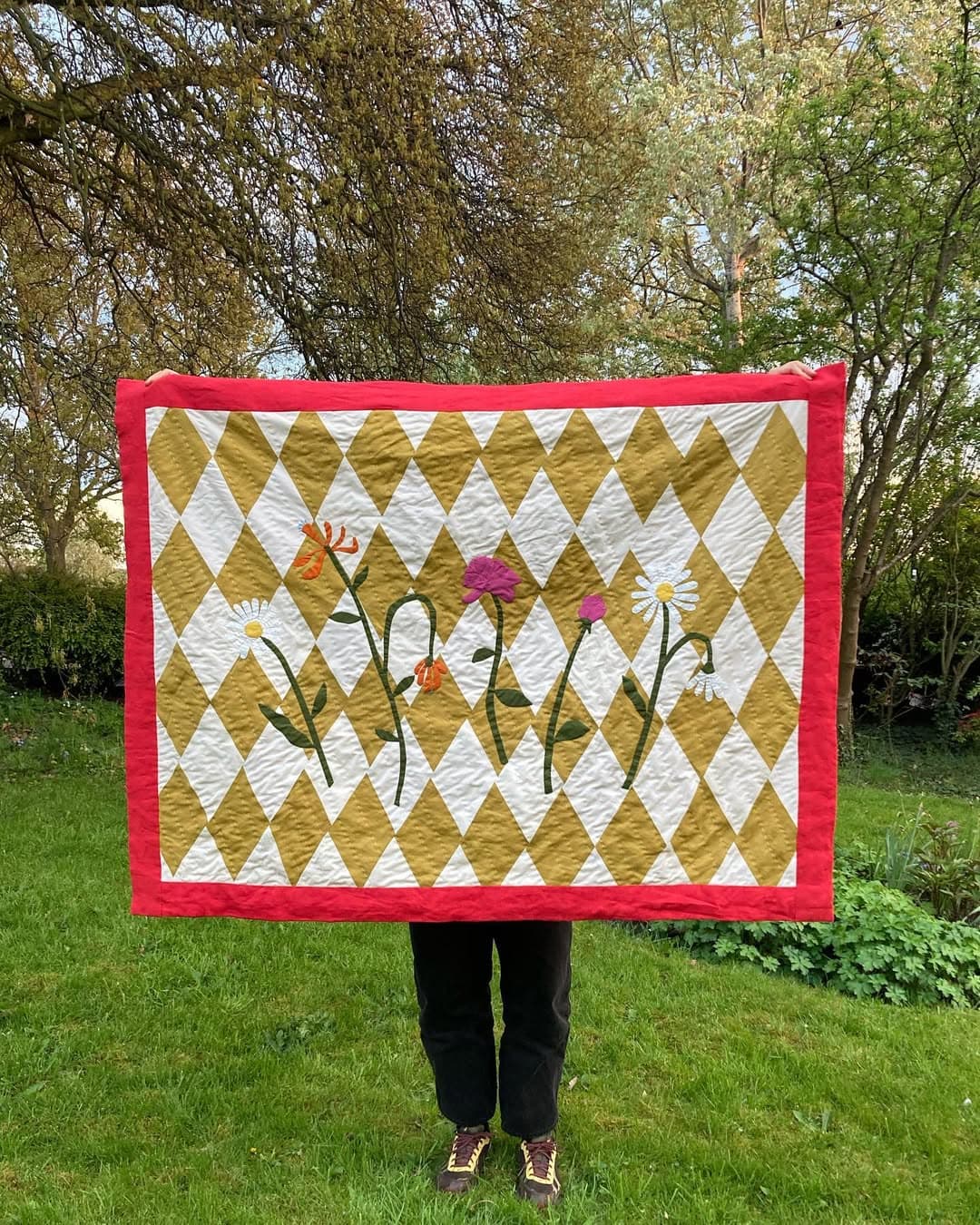
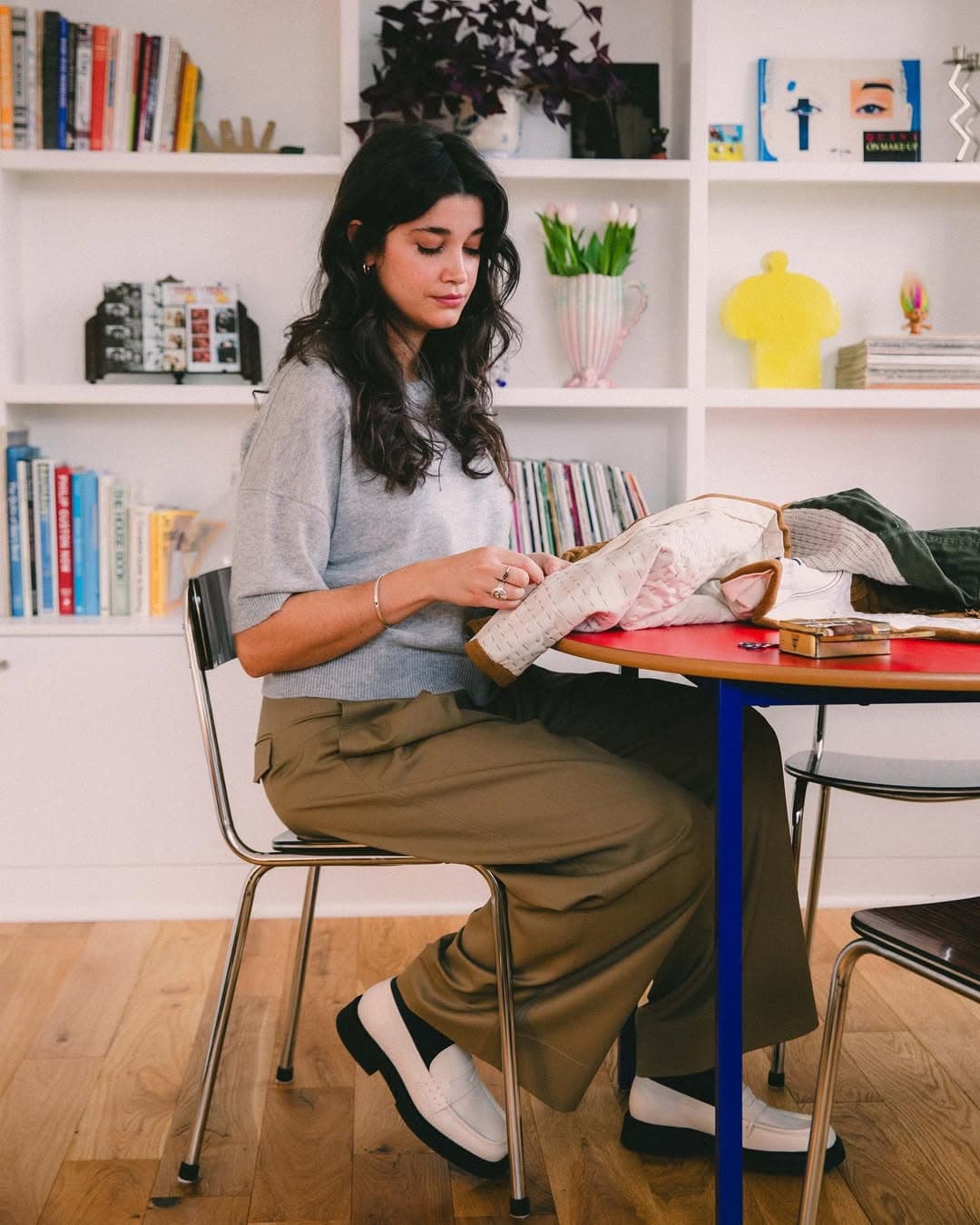
I started in illustration but soon found that a lot of the materials I was using to illustrate were textiles, which led to my Masters in textiles and crafts. I would say my primary practice is patchwork quilting, but for the last 15-plus years, I have also been playing with clay, making functional homeware, exploring the passing of knowledge, skills, and stories through making, interaction, and play, in my little South London studio.
2. What inspired you to pursue your craft? Was there a defining moment or influence that sparked your passion?
I learned lots of crafts from my Grandmother, embroidery, knitting, painting, baking, gardening, etc. I have always loved making with my hands, and through experimenting with ceramics during uni, I realised I could manipulate the clay in the same way as I would a textile pattern, making 2D into 3D.
Your craft
3. What materials or techniques do you use, and why are they important to your process?
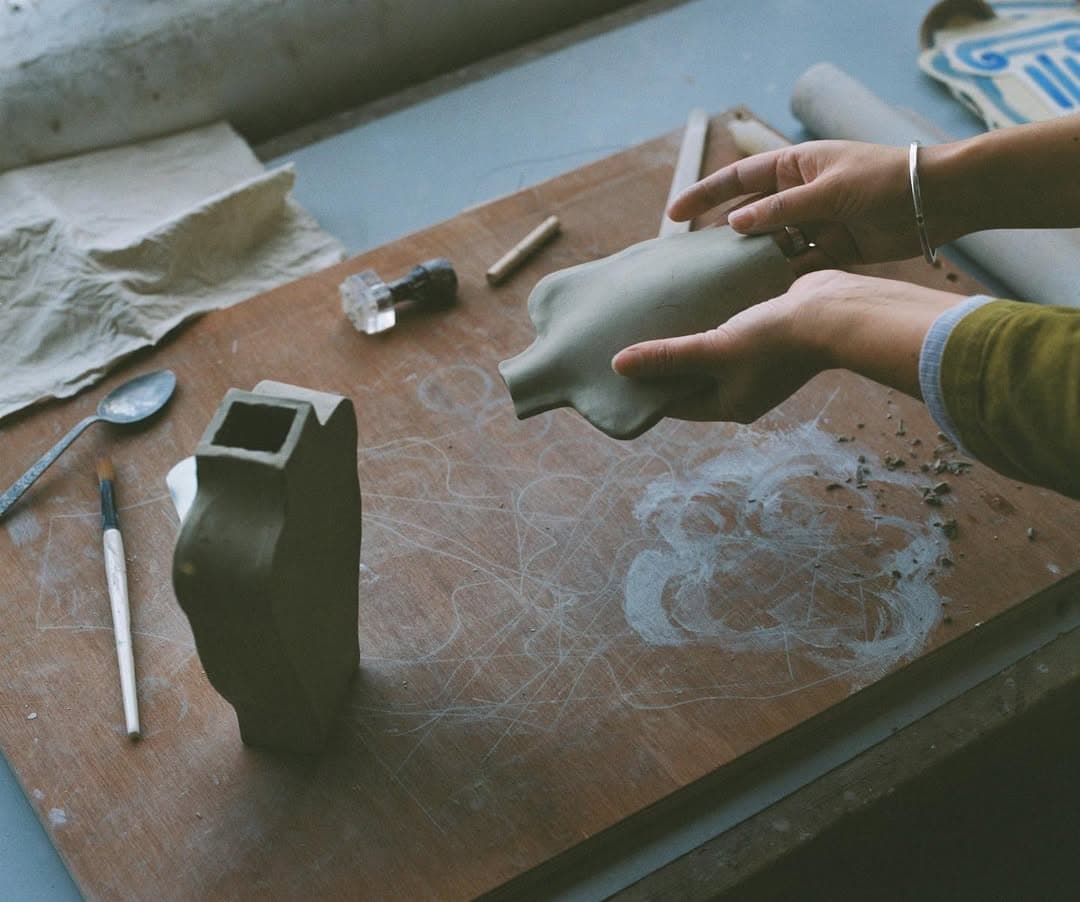
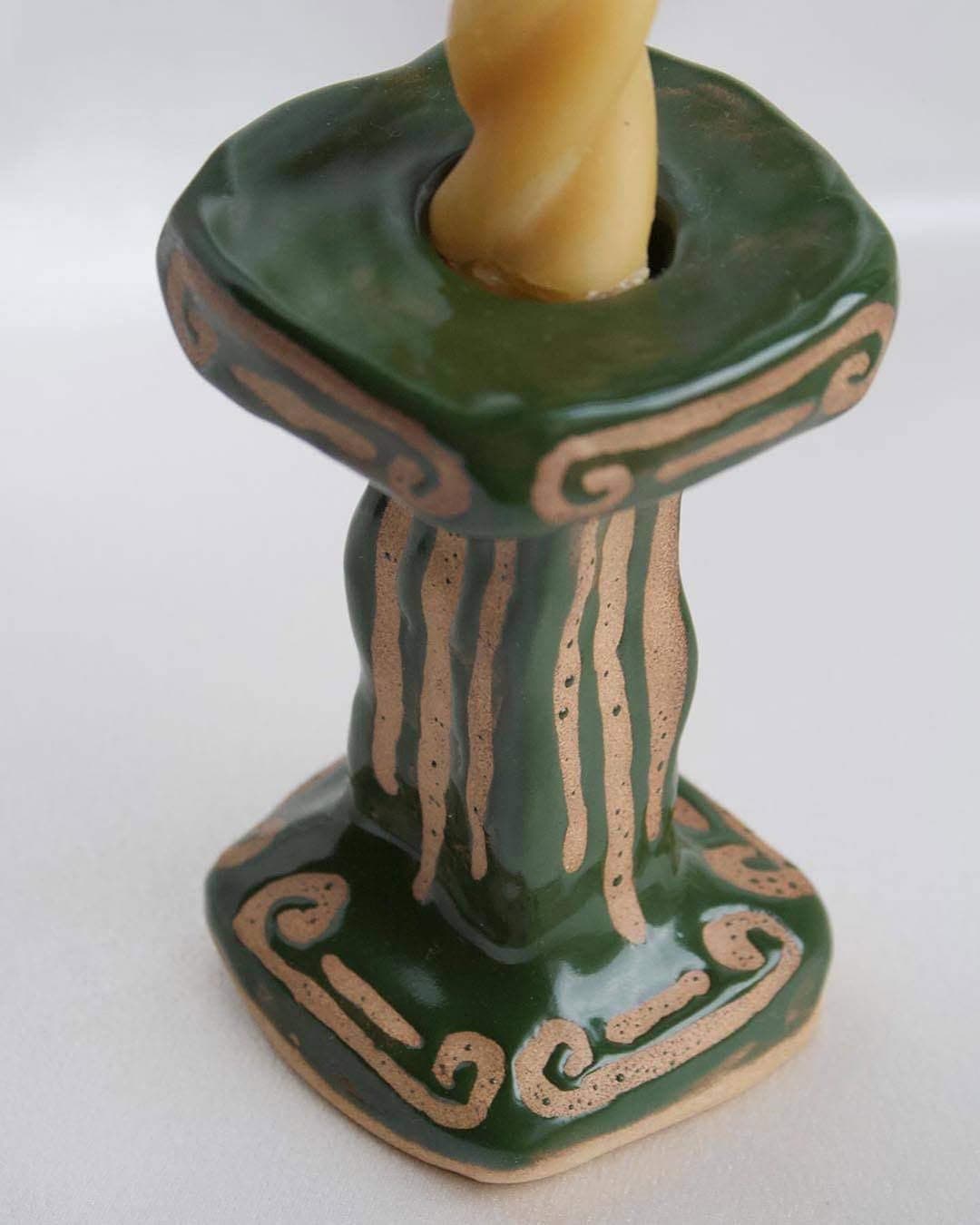
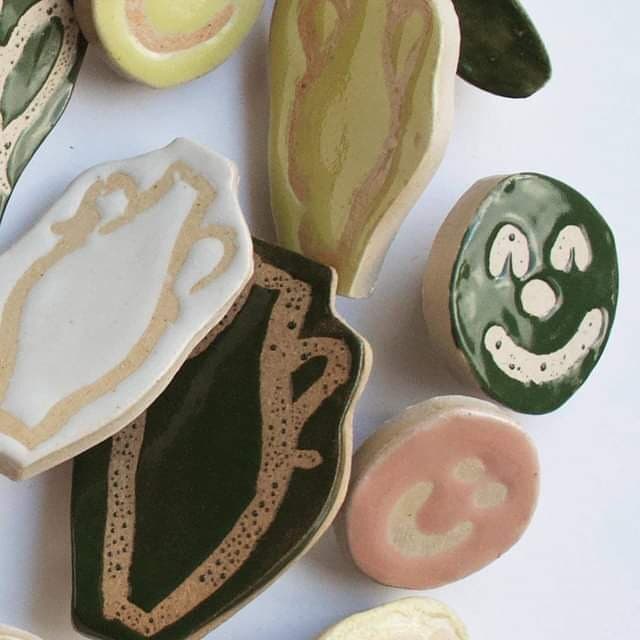
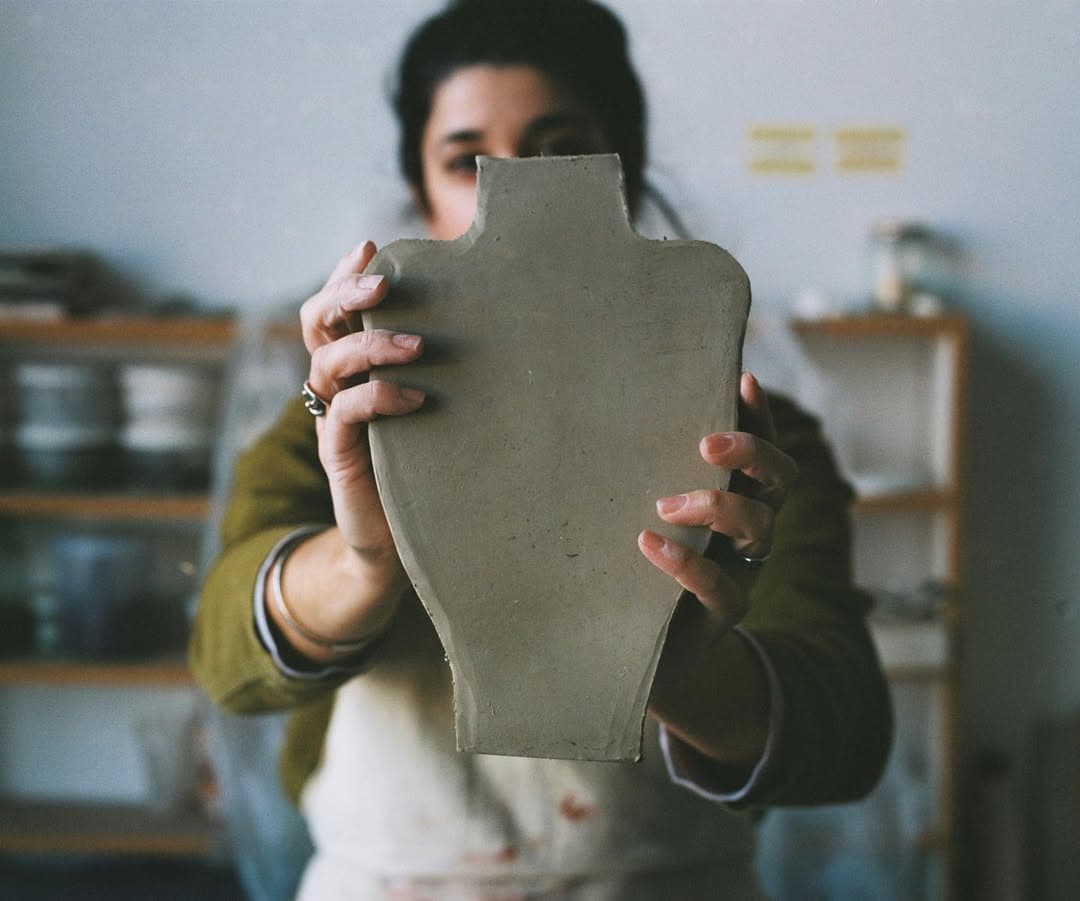
I mainly work with stoneware clay and hand-build each individual piece. Slab building allows each piece to be one of a kind, showing the marks I make with my fingers and hands.
4. Can you tell us about a favourite piece you’ve created and the story behind it?
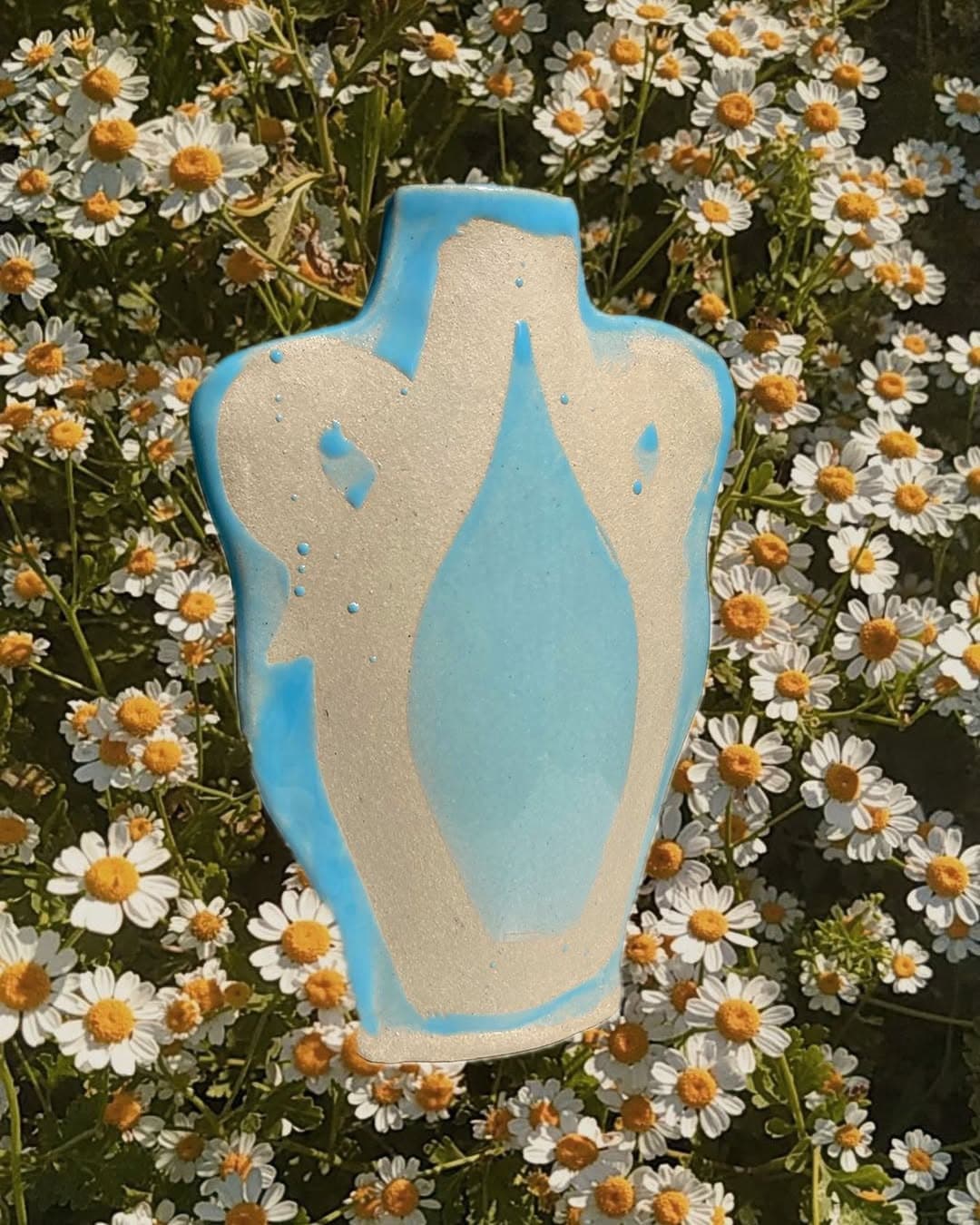
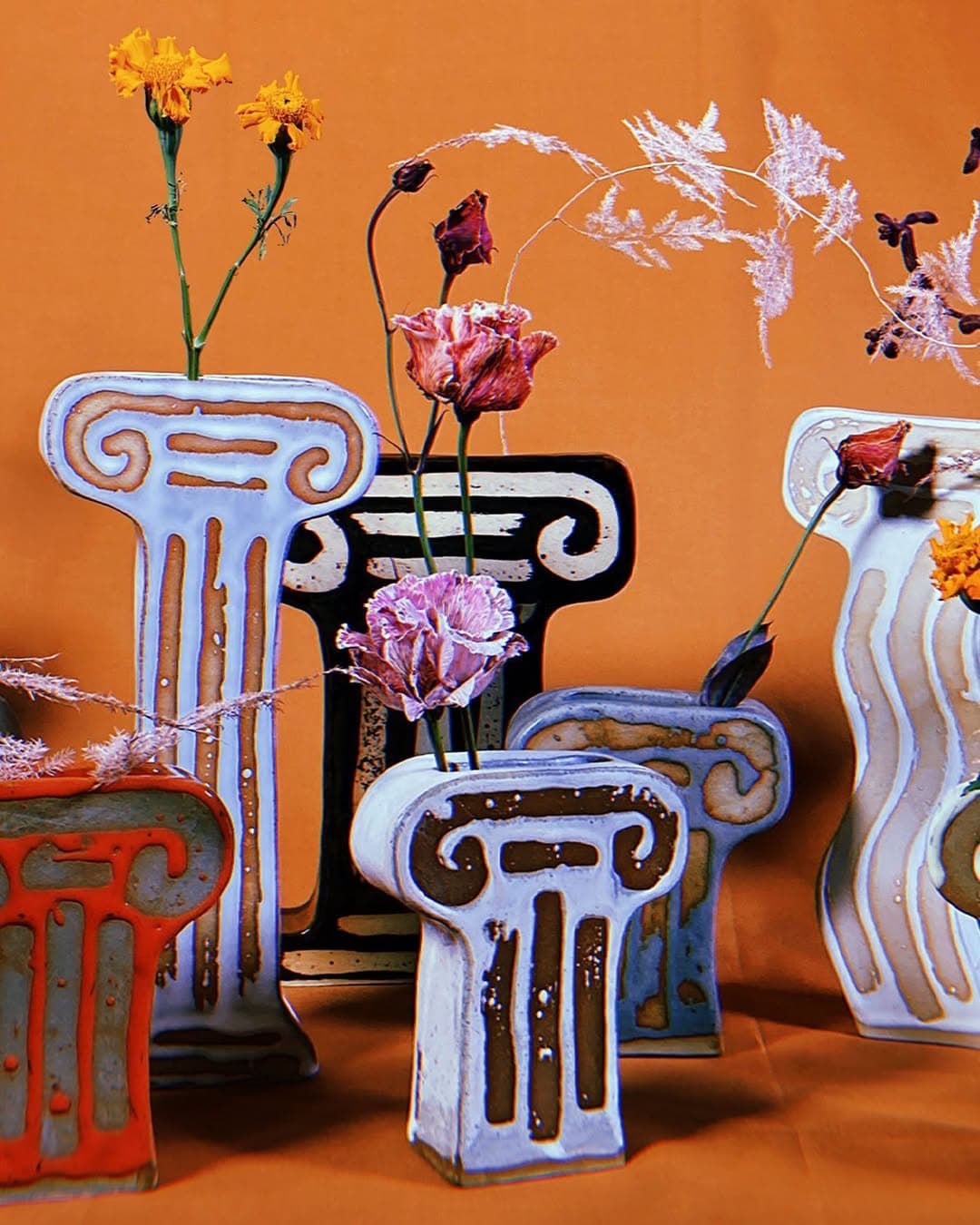
My classic vase, I call ‘Vase Vase’, as I draw the line of the vase shape onto the vase to bring out its silhouette. This is a shape I have been making for over 10 years and came from my interest in ancient Greek artifacts, the amphora vase.
Creative process
5. What does a typical day in your studio or workshop look like?
Like most crafts it’s a very slow process, I start by prepping the clay, rolling it out, and letting it stiffen up a little, then I will choose one of my template patterns to cut all the pieces out before constructing. I will have a few different designs on the go at the same time, all at different stages, so whilst one is drying, I can build another, or work on glazing. You can never have too many hands in a ceramic studio.
6. Do you have any unique rituals or habits that help you stay creative?
Not so unique but a good old fashioned sketchbook is always in my bag, I maybe do not sketch in them as much as I would like to, but full of notes and lists that consists of ideas, diagrams and to do’s.
7. How do you handle creative blocks? Do you have any strategies or tips for overcoming them?
When I’m coming up with new designs, I like to work in silence, sketching and making notes, I find with no distractions the hours pass by so quickly – plus snacks and coffee!
Also just playing, not having any idea what the outcome might be, but testing, practicing, seeing what works, and you never know what is going to come out of a ball of clay.
Challenges and successes
8. What’s the biggest challenge you’ve faced as a maker, and how did you overcome it?
Time – This is ongoing but i’m trying to manage it by giving myself deadlines and planning in my calendar day by day what I need to tick off.
Underselling your craft – Again this is something ongoing, trying to make sure I sell my work at its true value, taking into consideration all of the hours that has gone into making it and all materials and bills.
Cost of your craft – I think for most creatives its always challenging financially, being able to cover your cost of studio rent, materials, etc… This is something I think we always have to keep a close eye on, but its just about trying to keep ontop of it all and believing in myself.
9. What’s been your proudest moment or achievement so far?
It’s always special working on commissions or projects and seeing the final pieces in homes, stores, shoots and magazines, once everything has come together.
Inspiration
10. Where do you draw inspiration from for your work? What sparks your imagination and creativity?
I love traveling and visiting different museums and galleries, but mostly I love seeing people’s homes and work spaces, what they have, and how they use spaces and objects.
When I’m at home I look through lots of artist, interior, design and history books, then it is lots of doodling and notes. But i’m constantly looking for inspiration, theres nothing better than a wander and getting lost around London to spark ideas and my imagination.
11. Do you have a favourite artist, maker, movement, or tradition that has influenced your craft?
Theres a lot but theses are some of my favourites: Henri Rousseau’s paintings, Charles & Ray Eames home and designs, the community of Gees Bend and their quilts
12. How does colour influence your practice; is it an important part of your process? Do you have a particular palette or favourites? Any go-to sources for colour inspiration?
I do love a primary red, but then I tend to use more earthy tones such as the natural colour of the toasted sandy stonewear clay or deep earthy orangy red of terracotta clay.
This also depends on how the glazes I mix react, its always a guessing game and a surprise, and I find it hard to get the same glaze to look the same in each firing, but that is the fun of it and means no two pieces are the same.
As I mentioned above, I love the colours in Rousseau paintings, The Dream being my favourite.
Perspectives and goals
13. What role does your environment play in shaping your creativity?
Living in London everything is very fast-paced, I work for a textile designer in the day, then any evening or weekend I try to get into the studio. My studio is not only there to make my work, but there to make work and wind down, and switch off at the same time. I find working with clay very cathartic, the hours pass so quickly and I’m in my own little world.
14. What do you want people to feel when they experience your work?
I want them to smile and feel happy when looking at or handling work, and if it is something they own, to cherish and use forever and hopefully pass on
15. What are you currently working on, and what excites you most about it?
I would like to make more dinnerware, so currently making a set of plates for our home.
I am also excited to spend some time on developing my vases and working on new designs
Advice and reflection
16. What advice would you give to someone starting out as a maker?
Go for it, try and spend as much time as possible on your work so you feel really happy and confident with your outcome
17. If you could go back to the start of your career, what advice would you give your younger self?
Say yes to opportunities, don’t worry (about the money side), believe in yourself and go for it !
Closing thoughts
18. If you could collaborate with any artist, past or present, who would it be and why?
I think it would be really fun to collaborate on some kind of homeware with Ray Eames, I love her playful approach to design, colour, and materiality, especially her products aimed more so at children. Also just to have been able to hang out in their home and studio would have been a dream.
19. Where can people find your work, and how can they support you?
At the moment please message me through Instagram or email and I can send you my available stock list, but also if you are interested in orders and commissions, including my textile work
Lizzie Scarlett Towndrow’s ceramics are rich with quiet stories, playful yet poetic pieces that honour both the past and the present. Balancing function with feeling, her work celebrates the handmade as a form of preservation: of knowledge, of joy, and of small, everyday rituals. With each unique object, Lizzie invites us to see domestic spaces as places of memory, creativity and care.
Explore Lizzie’s latest collection and follow her creative journey:
Support Lizzie by exploring her playful, memory-infused ceramics, discovering hand-built pieces that blend function with storytelling, and following her creative journey as she reimagines everyday objects through humour, history, and heart.
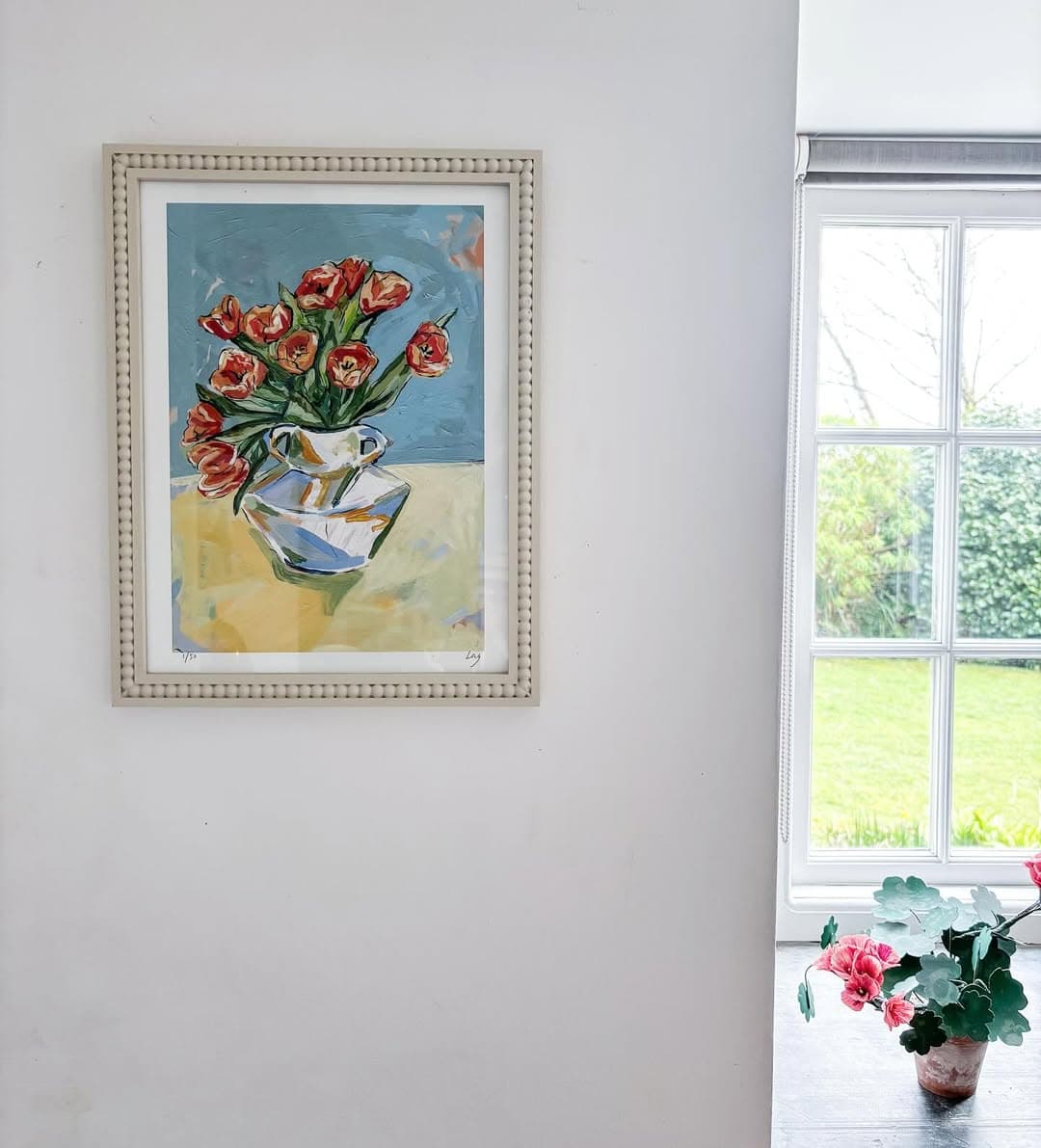
Meet the Maker: The Painted Stories of Ruth Ley and Ley Lines
In this Q&A, we chat with artist Ruth Ley, the creative force behind Ley Lines, a collection of hand-painted works that celebrate place, memory, and meaningful connection. Working from her studio in West Cornwall, Ruth draws inspiration from the landscape around her, often painting using flowers from her garden or natural objects found on coastal walks. Her pieces are personal, playful, and rooted in sentiment, whether it’s capturing a honeymoon fish or a beloved wedding bouquet. Ruth shares how storytelling shapes her practice, the joy of turning found objects into heirlooms, and why colour, character and sustainability sit at the heart of every Ley Lines creation.
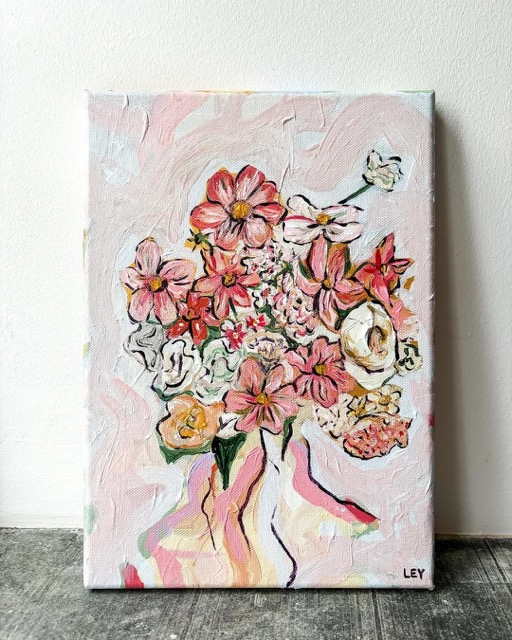
1. Can you tell us a bit about yourself and your artistic journey?
Creating art was always my main ambition. I studied a Foundation Year in Art and Design at Falmouth, but after facing a loss of confidence, I went down a different route – eventually finding my way into Art Direction for video production as a career. After returning to Cornwall with my young family, I rediscovered my artistic practice and started sharing my work online. To my surprise (and gratitude!), it quickly gained traction. I’m incredibly thankful to now be making work that I’m truly proud of.
2. What inspired you to pursue your craft? Was there a defining moment or influence that sparked your passion?
I definitely think that returning to Cornwall, being surrounded by nature, reminded me of what I had lost. The desire to be recognised both as an artist and as an individual – especially after having children – has really propelled me forward. I’m inspired to create pieces that are not only unique but also accessible, where possible, ensuring that original art is something everyone can appreciate and enjoy.
Your craft
3. How would you describe your work in three words?
Hand-printed, Joyful, Colourful
4. What materials or techniques do you use, and why are they important to your process?
Treading lightly on the earth is at the heart of my process. Our fabrics are sourced from a European mill powered by green energy. Our dyes are hand mixed and water based. Screen printing allows me to oversee the whole print process.
I love printing my fabrics by hand because I can make beautiful things locally. Screen printed fabrics are imperfect, unique and each separate piece tells its own story
5. Can you tell us about a favourite piece you’ve created and the story behind it?
A lovely project we recently worked on was decorating a Somerset yurt. Alice and I had a simple mission, not to buy anything new. We screen printed on old table cloths and covered the yurt walls with patterns. It was such a joy to create something from reclaimed materials and transform old fabrics with print.
Creative process
6. What does a typical day in your studio or workshop look like?
My dream day would look like this – coffee, moving my body – either pilates or a good walk, looking for inspiration in my garden or buying flowers locally, painting or drawing, a delicious lunch, more painting, spending time with my family and friends – ideally outside on a beach – and then dinner.
7. Do you have any unique rituals or habits that help you stay creative?
I’m currently short on time because of having young children, and it feels like my mind is fizzing with ideas that I just can’t get to. However, I’ve found that the limited time I have actually sparks my creativity. Having a set window to work in helps me stay focused and productive, as it pushes me to make the most of the time I do have, instead of getting stuck in procrastination (doom scrolling!).
8. How do you handle creative blocks? Do you have any strategies or tips for overcoming them?
A cliche, but getting outside into nature always helps me to stay inspired.
Challenges and successes
9. What’s the biggest challenge you’ve faced as a maker, and how did you overcome it?
I definitely agree with the saying ‘comparison is the thief of joy’. As soon as you start of compare your abilities or achievements to others, it can start to make you lack confidence. This is what happened on my Foundation year – I was surrounded by brilliant artists and completely lost sight of my personal offering. Putting yourself out there is so scary, but to be honest, i’ve found that the rewards are almost always worth it.
10. What’s been your proudest moment or achievement so far?
I don’t mean this to sound terribly commercial, but I think the first time someone bought a piece! It was honestly such a vote of confidence, that it really drove me to keep on making work and developing my style.
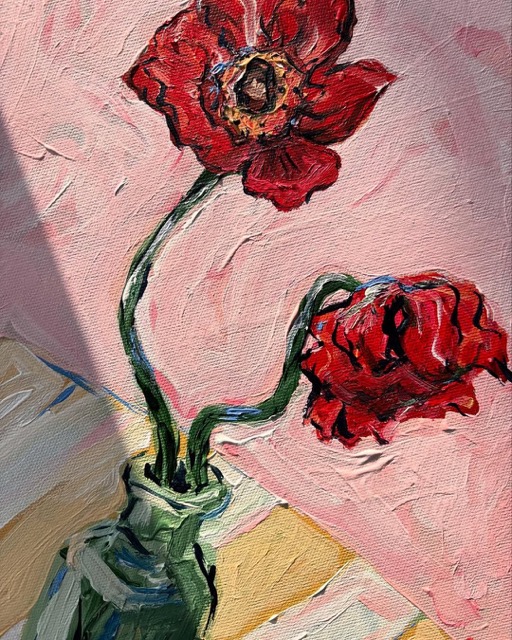
Another very cool moment was when a celebrity couple, who I really admire for their personal style, bought two of my paintings from a pop up (thanks to the shop Quinn Says!).
Inspiration
11. Where do you draw inspiration from for your work? What sparks your imagination and creativity?
I live in remote Cornwall and am very inspired by nature and the seasons.
12. Do you have a favourite artist, maker, movement, or tradition that has influenced your craft?
I absolutely love the paintings of Olive Guest – her use of colour and form are incredible.
I’m so inspired by a lot of the other makers on Makers Made too, across all of the disciplines. I love to see how people are working with their chosen mediums and constantly evolving to create works which are profound or inspiring or beautiful (or all of those things!).
13. How does colour influence your practice; is it an important part of your process? Do you have a particular palette or favourites? Any go-to sources for colour inspiration?
I also love that my pieces are generally quite bright, colourful and stylistic. There seems to be this miscommunication that ‘natural’ or ‘environmental’ means white or pared back. Nature is awash with colour and I want to embrace that and help people bring pops of colour into their homes (even if they prefer a pared back aesthetic generally).
Perspectives and goals
14. What role does your environment play in shaping your creativity?
I’m incredibly inspired by where I live and also the current period in my life. I’m inspired by the colours of the shells on the beach or the flowers in my garden, how my children draw, what colours they currently like… The seasons really affect my work – throughout this winter I have been drawn to much darker, richer hues and now that spring is around the corner, I’m suddenly reaching for much bolder brighter paints.
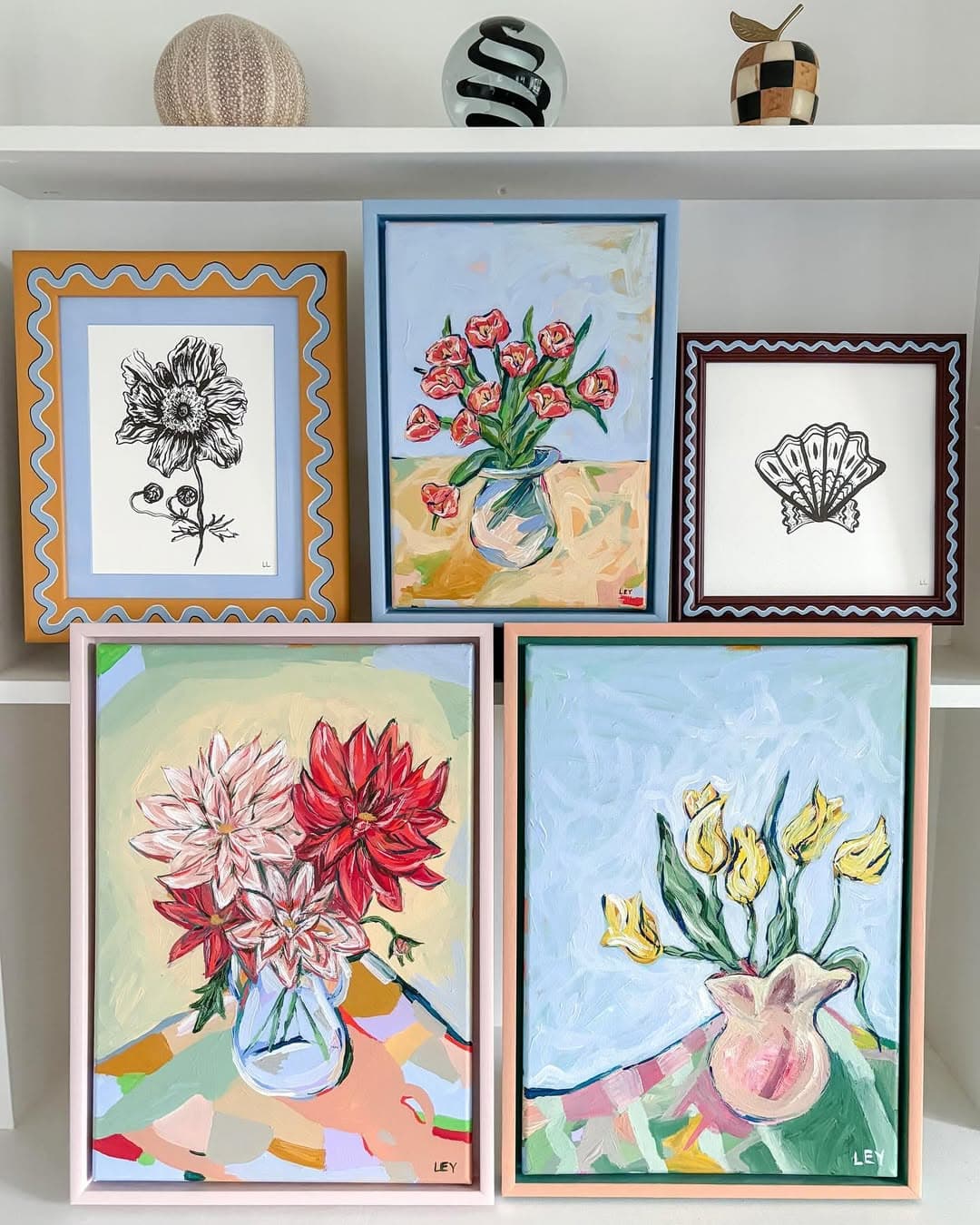
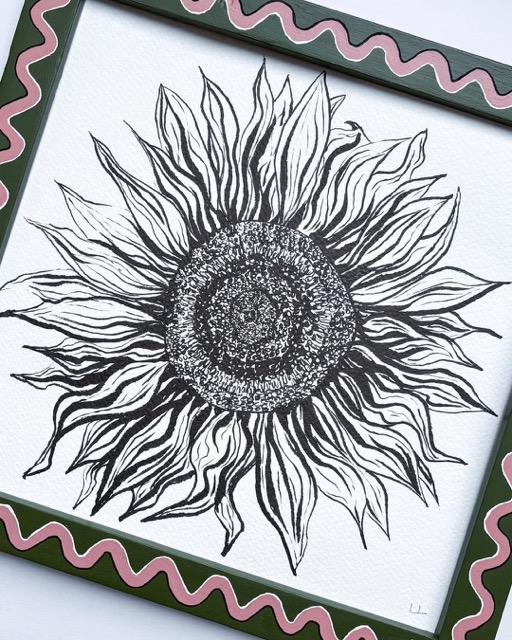
In terms of the bigger environmental picture, I try to be as sustainable as I can. The frames I use for my ‘ink+frame’ collection, are all preloved, so not only is each one unique but also getting a new lease of life.
15. What do you want people to feel when they experience your work?
I want people to feel excited by my work – i aim to create pieces which are desirable for interior spaces, but are also sentimental – I love to create works which will be treasured and loved. So much time and energy goes into creating each piece, even the tiny ones, that I really want that love to be reflected in the final pieces.
16. What are you currently working on, and what excites you most about it?
I’m currently in the process of hopefully moving into a larger studio space, so can’t wait to have the space to produce some much larger pieces. I can’t wait to see how my style translates to these larger scale pieces.
Advice and reflection
17. What advice would you give to someone starting out as a maker?
Back yourself and stay true to your own style.
18. If you could go back to the start of your career, what advice would you give your younger self?
Be more confident in what you have to offer – your people will find you!
Closing thoughts
19. If you could collaborate with any artist, past or present, who would it be and why?
I absolutely love the work of Sandra Blow – I’d love to have met and worked alongside her – her works are so striking. I’m also so drawn to the beautiful forms of Barbara Hepworth and she sounded like a strong character, so I would have loved to see her working.
20. Where can people find your work, and how can they support you?
My website is ley-lines.co.uk or you can see my work on instagram. Thanks so much for featuring my work.
Ruth Ley’s pieces are a celebration of colour, memory, and individuality. Whether it’s a personal commission or a ready-made piece, each artwork carries a sense of story and place created to bring character and emotion into the everyday. With a playful yet thoughtful approach to materials and meaning, Ruth invites us to decorate with pieces that truly feel like our own.
Explore Ruth’s latest collections and follow her creative journey:
Support Ruth by visiting the Ley Lines website, exploring her hand-painted, heirloom-inspired pieces, and following the colourful, sentimental journey of her West Cornwall studio on Instagram.
Meet the Maker: Joanna Ling and the Art of Considered Ceramics
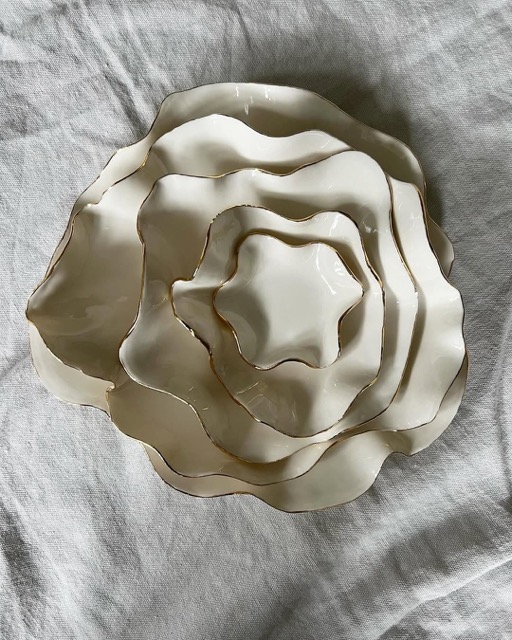
In this Q&A, we speak with Joanna Ling about the quiet elegance of her ceramic practice shaped by the English countryside and a considered approach to design. Joanna Ling explores how minimalism and meaning come together in each handmade piece, drawing on the gentle forms of fields, woods, and the spaces her work is destined for.
She shares her thoughts on the beauty of one-of-a-kind objects in a world of mass production, the satisfaction of working on bespoke commissions, and the role sustainability plays in her process, from brush-on glazes to careful material reuse.
With a client list that includes Matches Fashion, the National Portrait Gallery, and The Newt in Somerset, Joanna Ling’s ceramics resonate with those who appreciate thoughtful craft and timeless design.

1. Can you tell us a bit about yourself and your artistic journey?
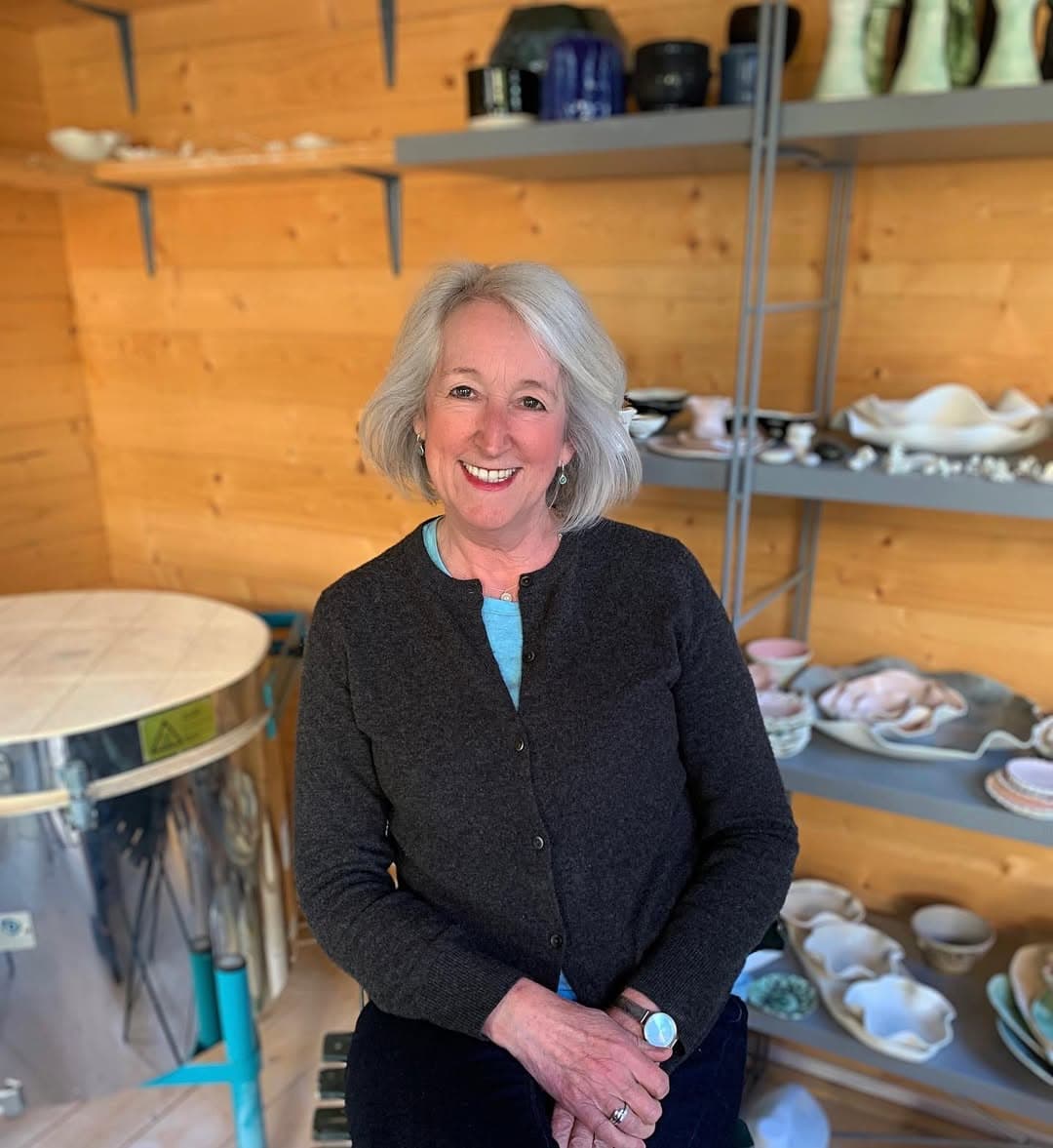
I design and make – mainly porcelain – ceramics from my garden studio. I worked at Sotheby’s for over 30 years and while I was there I did a ceramics evening class. I was immediately smitten and when I left Sotheby’s in 2018 I set up my ceramics business. It has been an incredibly rewarding journey since then!
2. What inspired you to pursue your craft? Was there a defining moment or influence that sparked your passion?
I have always been fascinated by ceramics. Soon after I started my ceramics evening class, I entered a porcelain bowl in the Sotheby’s annual staff exhibition which was, to my great surprise, bought by the chairman and other pieces were commissioned by a high level Sotheby’s client. This gave me the boost to start making ceramics commercially.
Your craft
3. How would you describe your work in three words?
Contemporary, unique, functional
4. What materials or techniques do you use, and why are they important to your process?
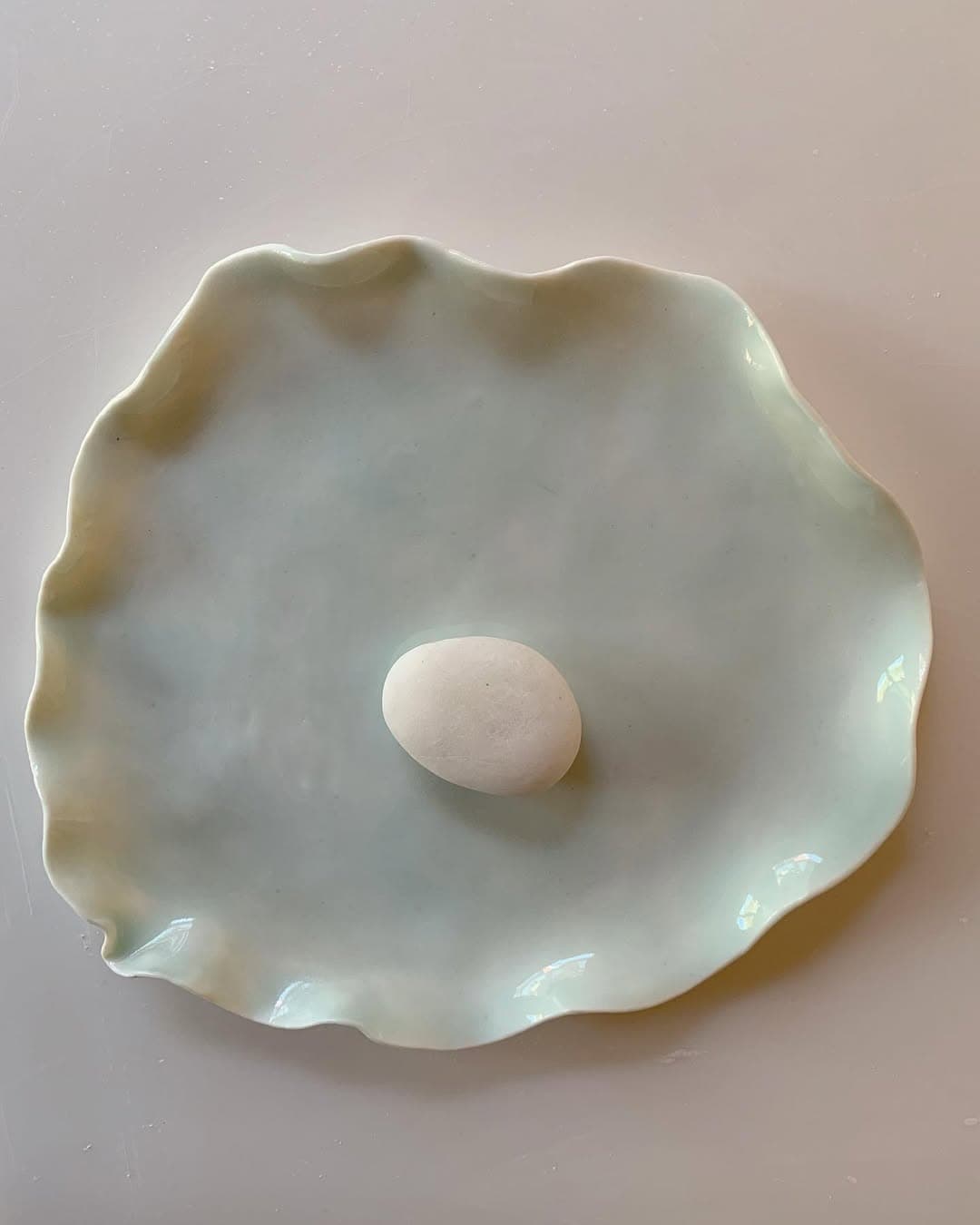
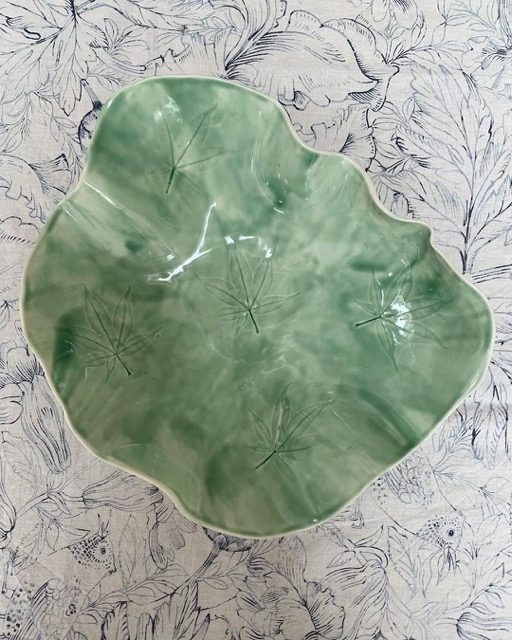
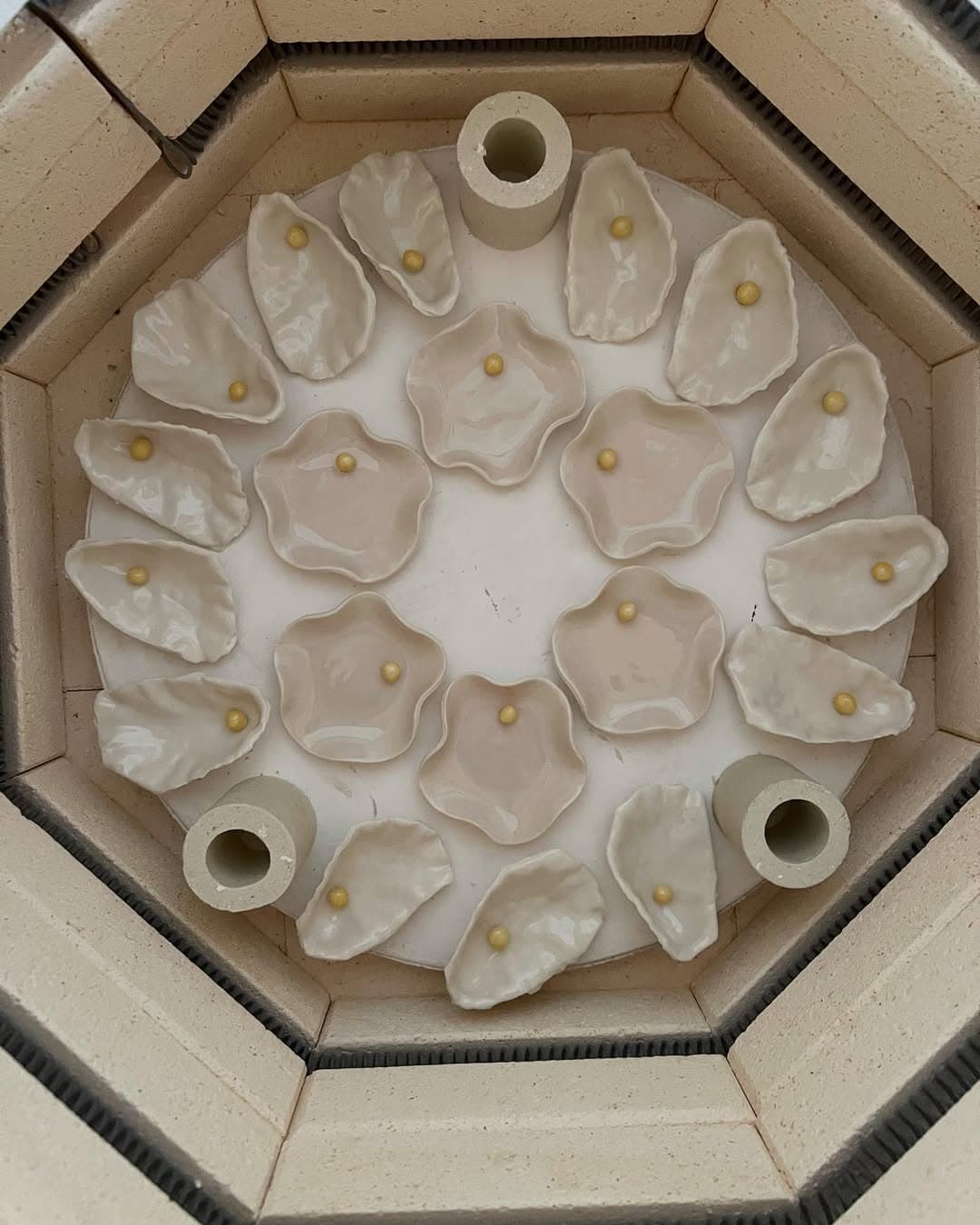
I work almost exclusively with porcelain because although it is a difficult clay to work with I love its delicacy and translucency once it has been fired. I normally use a transparent glaze to accentuate these qualities.
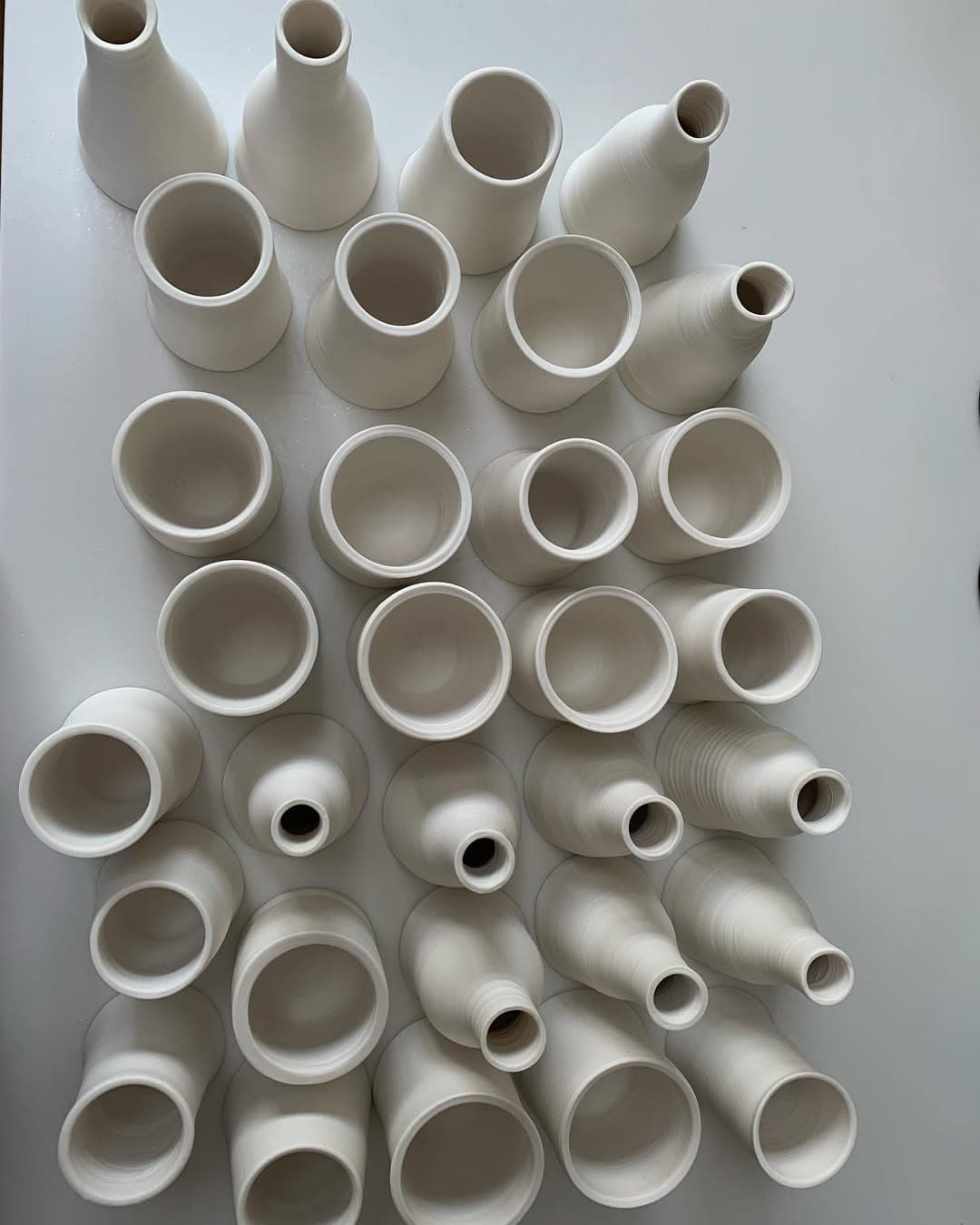
I either hand build or throw on the wheel or a combination of the two. As I make everything individually, no two pieces are the same, so when you buy from me you know that you have a unique work. In a bid for sustainability, I raw glaze my work with brush-on glazes and recycle wherever possible.
5. Can you tell us about a favourite piece you’ve created and the story behind it?
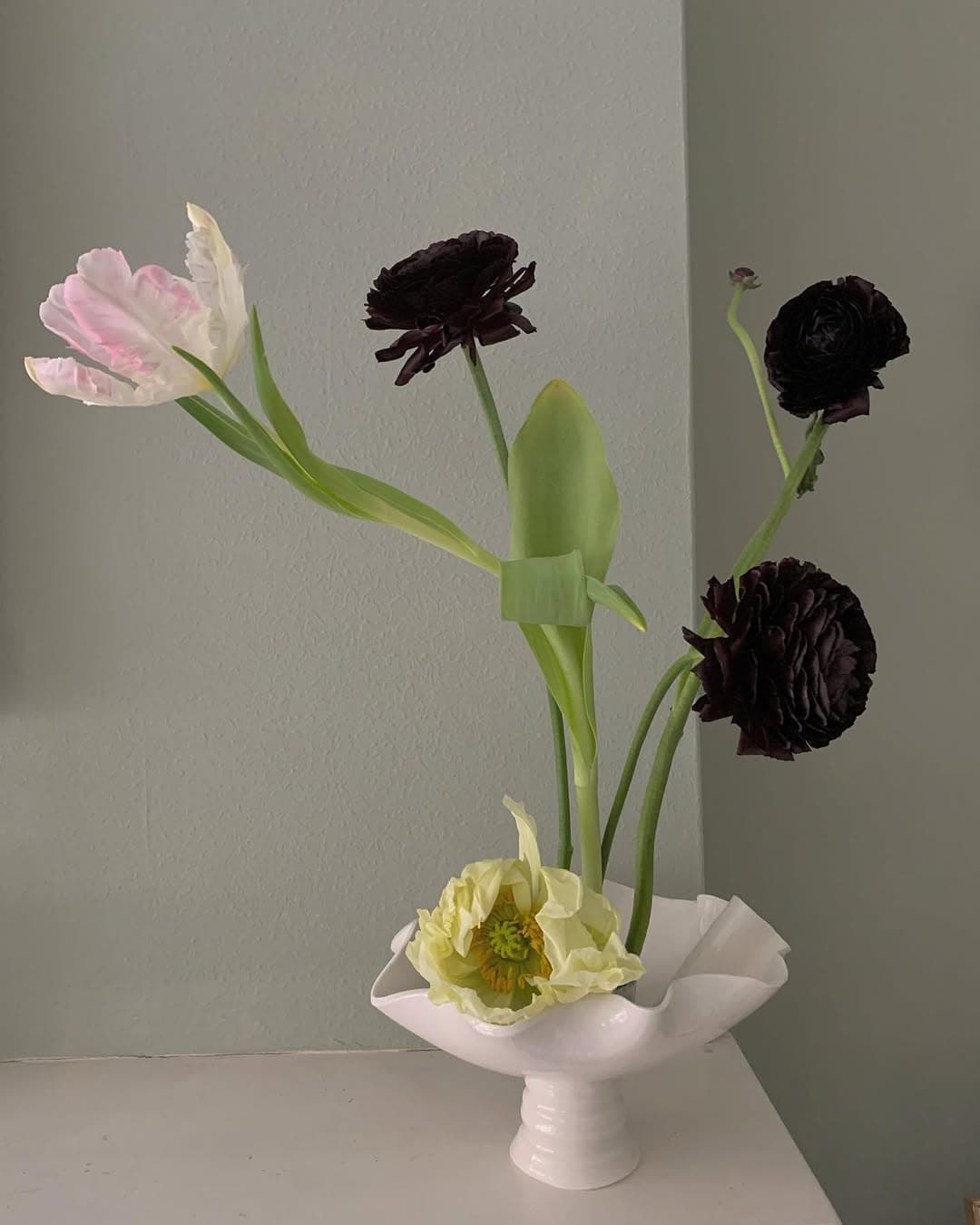
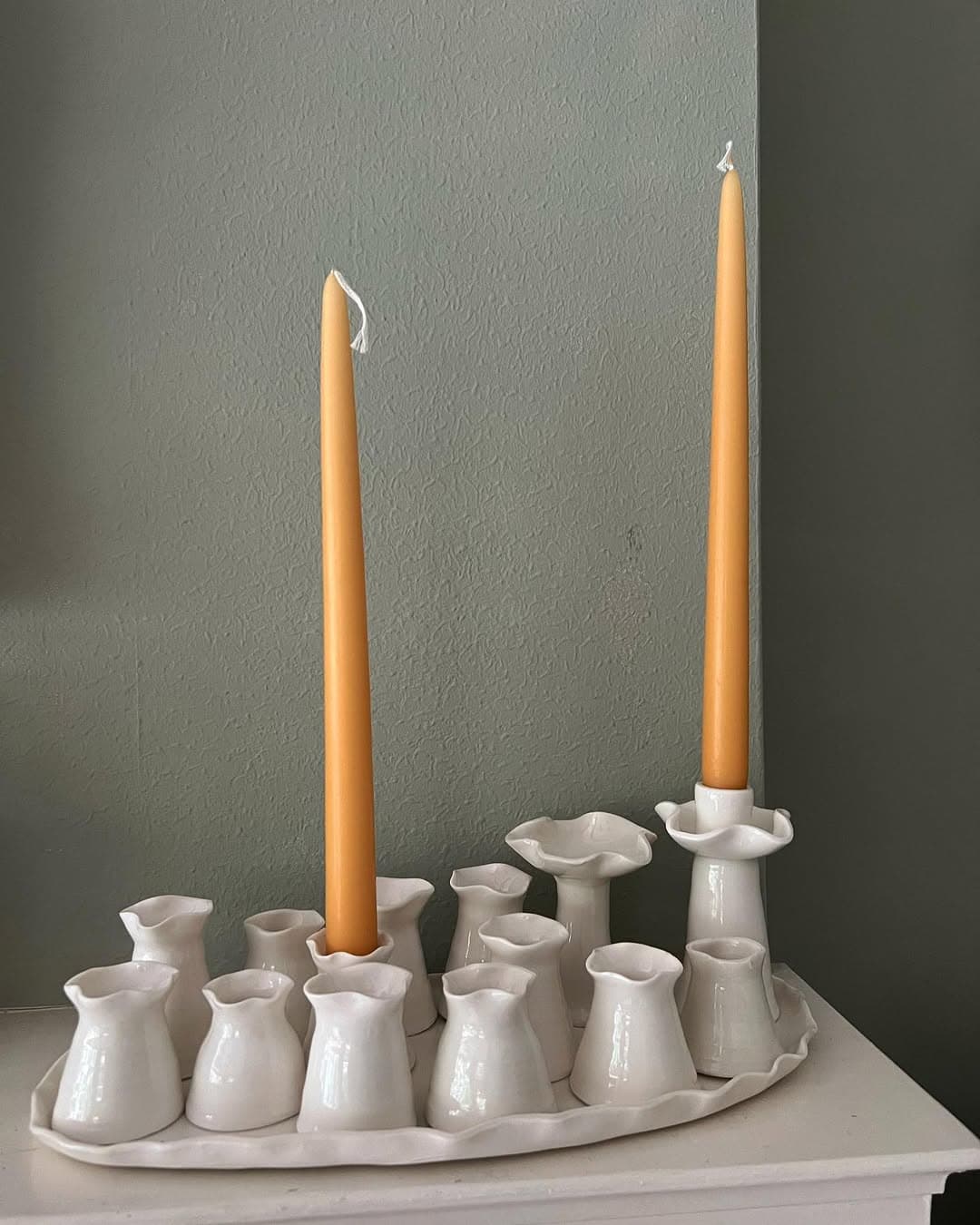
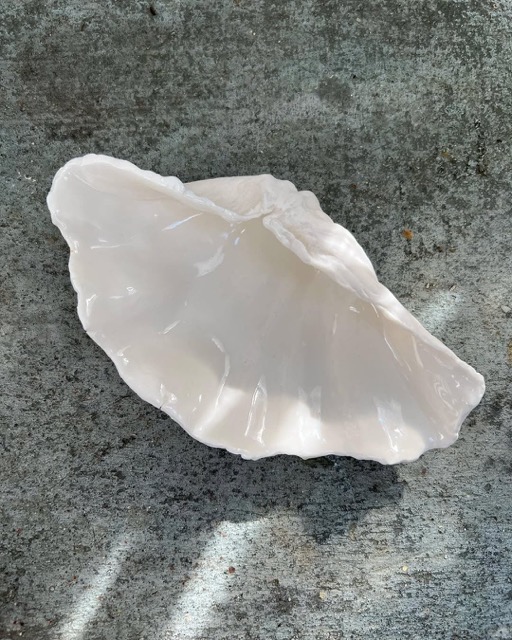
I have been making wave top pedestal bowls for many years and they are one of my most popular designs. I suddenly had an idea to make a vase version of it which I did last year and I love it because it works well with all my other designs but serves a different function, can be styled in so many ways and makes a great table centrepiece. I have now experimented with different sizes and heights so that they can be used for a single stem or an extravagant arrangement.
Creative process
6. What does a typical day in your studio or workshop look like?
All my days are different. Most of the time I am working on orders which means throwing on the wheel in my studio or hand building, often in my kitchen. Other days are glazing days and as with any business a lot of time is spent on admin.
Days when I open my kiln to discover how everything has come out are always exciting. If I have set off a lustre firing it is usually a joy to open to see the gold or silver highlighting the porcelain.
7. Do you have any unique rituals or habits that help you stay creative?
I always have my notebook with me should inspiration strike. My work is very much influenced by nature and I walk in Richmond Park most days and often come up with new ideas whilst there. I am an art historian by training and one of my great pleasures is visiting exhibitions and often I will see something, be it a colour, a design on a frame or ceramic piece in a painting that can lead to thoughts for new designs.
8. How do you handle creative blocks? Do you have any strategies or tips for overcoming them?
I am usually busy working on commissions which doesn’t leave me much time to work on new designs but I find when I have a quieter patch that is when I have time to think and plan and get motivated about new work. I have accepted, after several years of running a business, that work and creativity ebbs and flows and that is ok.
Challenges and successes
9. What’s the biggest challenge you’ve faced as a maker, and how did you overcome it?
The solitary nature of being a maker. Being part of Makers Made is a brilliant antidote to that. It’s great to be part of a supportive network and to be able to run ideas and problems past people who are in the same situation. I have also recently joined a couple of local artists groups which are similarly rewarding.
10. What’s been your proudest moment or achievement so far?
It’s always a thrill to be commissioned by a well known brand or establishment but I think my proudest moment was having my work stocked in the shop at The National Portrait Gallery to accompany a major Cecil Beaton show there. I ran the Beaton Archive at Sotheby’s for over 20 years and had a curatorial role in the show so to be involved with both my old and new career hats on was an amazing experience.
11. What’s your favourite quote you’ve ever heard about your work? Who said it, or what was the name of the publication?
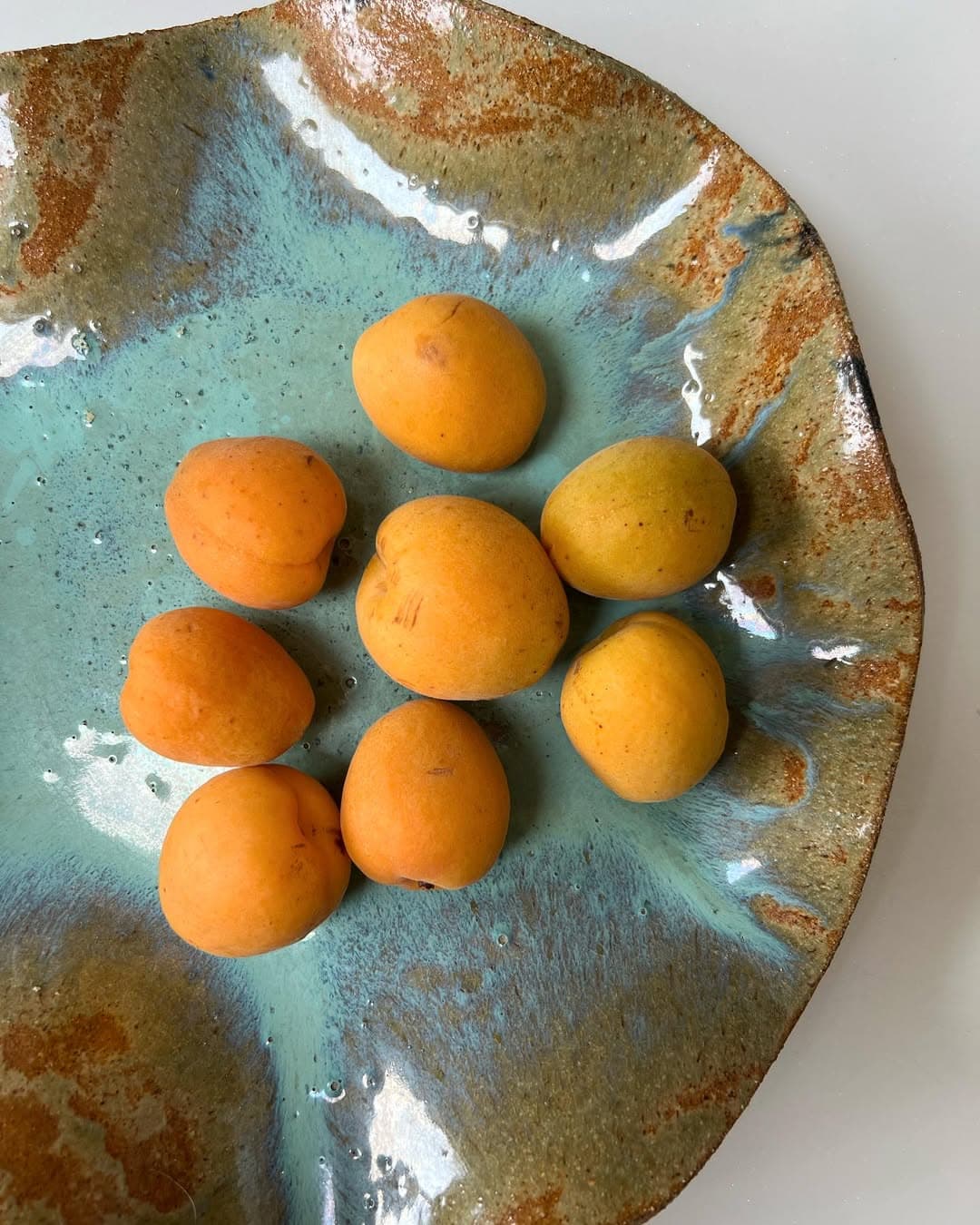
“I instantly loved your work when I first saw it - the delicacy, subtle tones, glazes and quirky shapes.”
- Birdie Fortescue
Inspiration
12. Where do you draw inspiration from for your work? What sparks your imagination and creativity?
The natural world – especially flowers and shells – and working on the Cecil Beaton archive has definitely had an influence on my work. He had such an amazing eye for design.
13. Do you have a favourite artist, maker, movement, or tradition that has influenced your craft?
The ceramics of Lucie Rie, paintings by Giorgio Morandi and the pared back aesthetics of Japan.
14. How does colour influence your practice; is it an important part of your process? Do you have a particular palette or favourites? Any go-to sources for colour inspiration?
Decoration is usually in the form of my ceramics and leaving them unglazed or with a transparent glaze brings out the inherent qualities in the porcelain clay. I sometimes use green, blue and pink glazes and love a bit of gold lustre to add a highlight to a piece.
Perspectives and goals
15. What role does your environment play in shaping your creativity?
A huge role. I am lucky enough to have my own studio in my garden. It is simple and functional but surrounded by greenery. It is a peaceful and soothing creative space.
16. What do you want people to feel when they experience your work?
That they are seeing something that is aesthetically pleasing but also functional and that they will enjoy it for a long time.
17. What are you currently working on, and what excites you most about it?
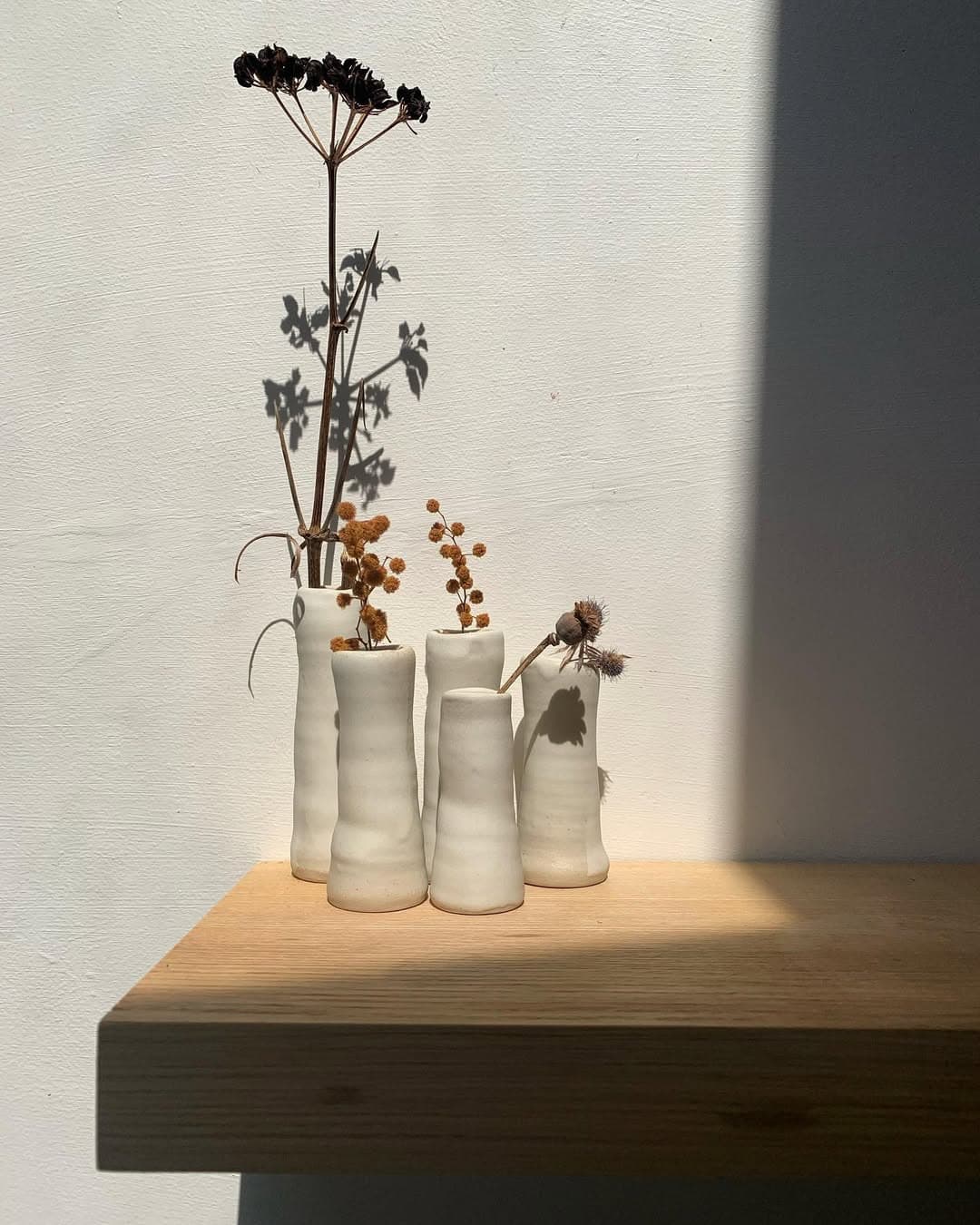
I was recently commissioned to make vases to go on each table in The Glade Bar at Sketch in London. I love making bespoke pieces for a particular place so this was perfect, particularly as it is such an amazing place!
Advice and reflection
18. What advice would you give to someone starting out as a maker?
Just go for it! If it is the right thing for you it will work and give you great pleasure and satisfaction. Don’t be afraid to approach stockists or galleries you would like to work with.
19. If you could go back to the start of your career, what advice would you give your younger self?
That things work out as they should. Don’t feel you have to stay in a job if you want to start your own business. My second and fulfilling career came about after leaving a company I had worked for for over 30 years. It was scary but so worth it. Be brave.
Closing thoughts
20. If you could collaborate with any artist, past or present, who would it be and why?
Lucie Rie. I would have loved to work with her in her small studio in Albion Mews and learn how she produced such beautiful work. She was so ahead of her time and her work still looks so contemporary.
21. Where can people find your work, and how can they support you?
I have various UK stockists including The Muse at Estelle Manor, The Newt in Somerset, Thyme England and Glassette amongst others. You can also buy direct from me by contacting me through my website or through my Instagram account. I have an Open Studio in May and November each year where new work, seconds and samples are for sale.
Visitors are also welcome to my studio at other times, by appointment. It’s always lovely when people see where the work is made and can find one-off pieces that aren’t usually available.
Joanna Ling’s ceramics blend restraint, story, and intention, each piece echoing both the English countryside and the person or space it’s made for. In a fast-paced world, her practice offers a slower, more meaningful way of making, where uniqueness is celebrated and connection is at the heart of every commission.
Explore Joanna’s collections and find out more about her studio practice:
Support Joanna by visiting her website, exploring her delightful creations, and connecting with her vibrant community on Instagram.
Meet the Maker: Folklore, Fabric, and the Natural Rhythms of Jessie de Salis
We catch up with Jessie de Salis in her Somerset barn studio to talk about the beauty of hand-printed textiles, the emotional depth to her bold designs, and how she captures the shifting moods of the natural world.
Jessie shares how folklore, memory, and landscape inform her process; and the quiet magic of printing by hand, embracing imperfection and individuality in every piece. We also discuss the joys and challenges of rural studio life, building a slow, intentional practice, and the stories woven into each batch of fabric Jessie creates.

1. Can you tell us a bit about yourself and your artistic journey?
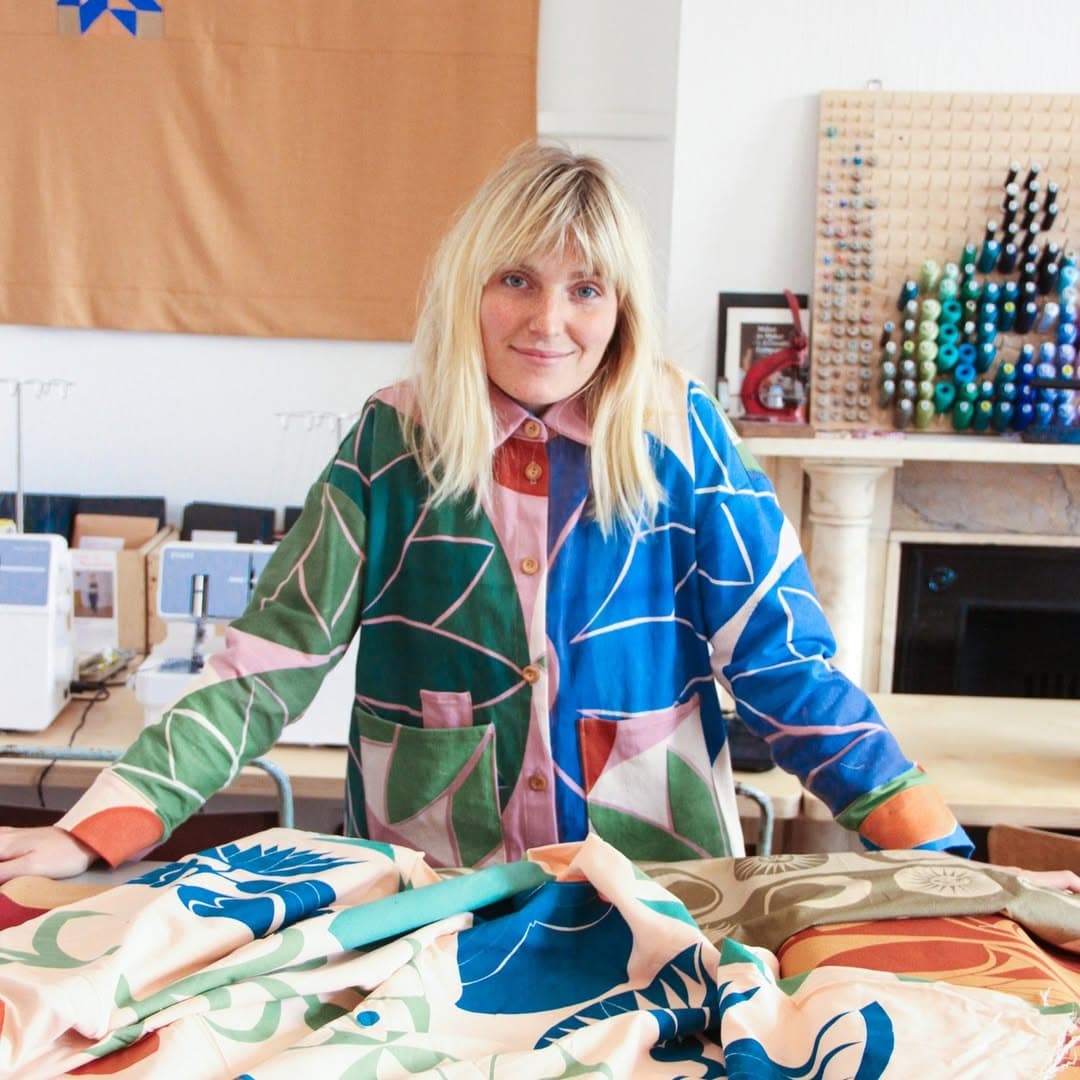
My name is Jessie de Salis, I am a textile designer and screenprinter. I have always been into textiles. At school I drew patterns over every piece of paper in my grasp. At uni, while studying textiles, I covered every scrap of the wall space with fabrics (at the time I thought this looked like a very sophisticated tent).
2. What inspired you to pursue your craft? Was there a defining moment or influence that sparked your passion?
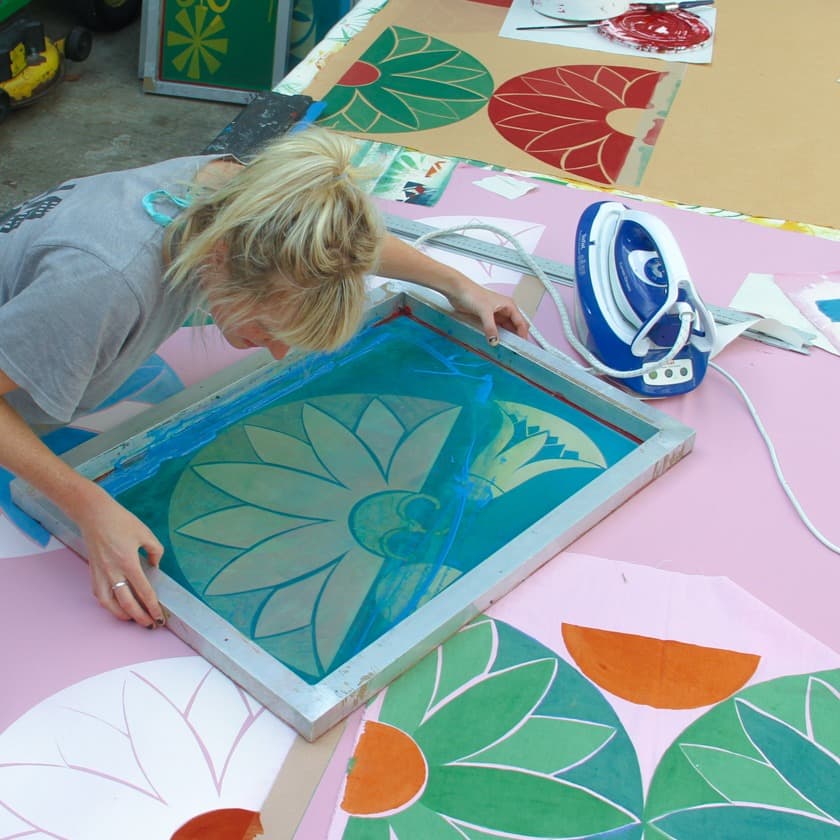
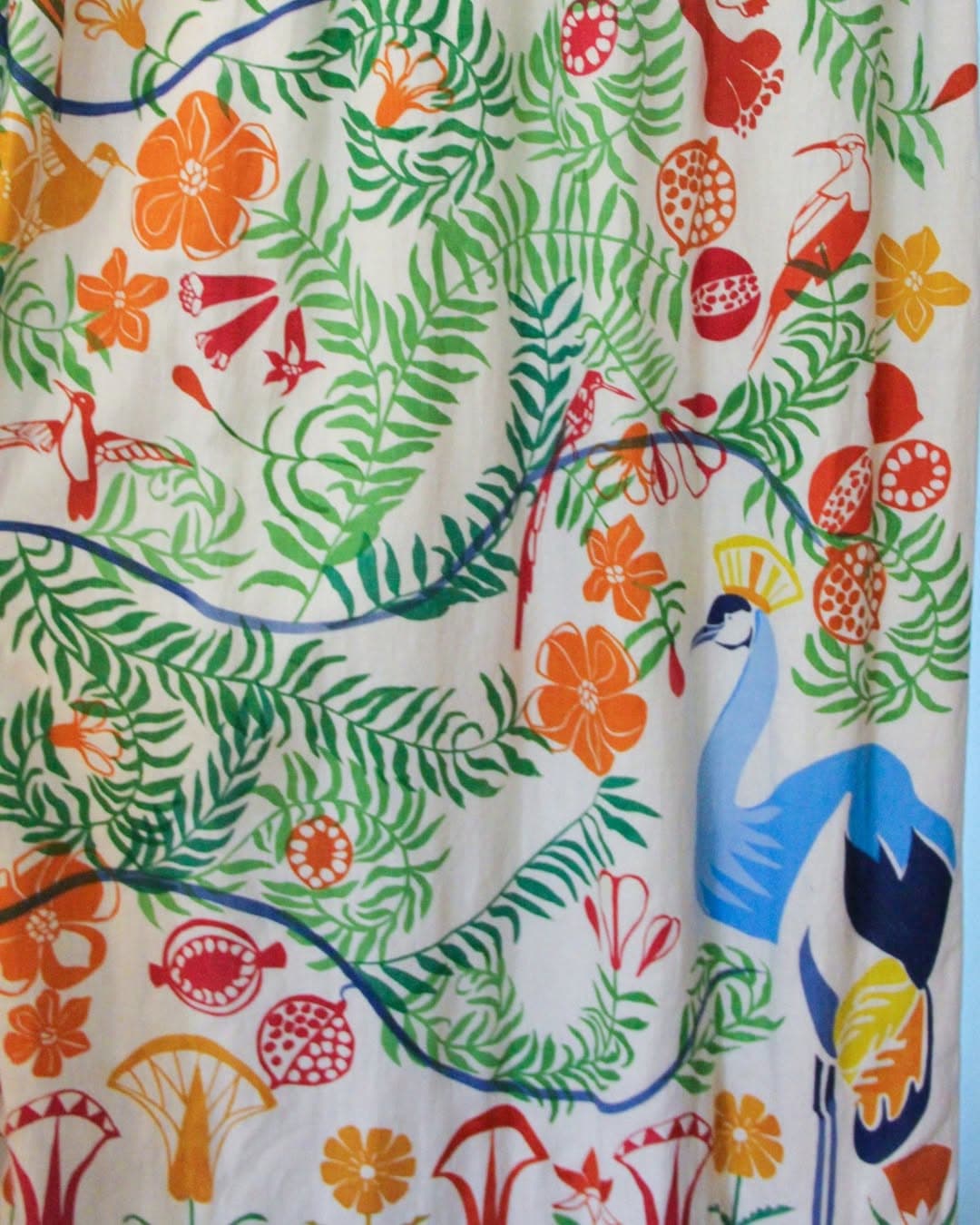
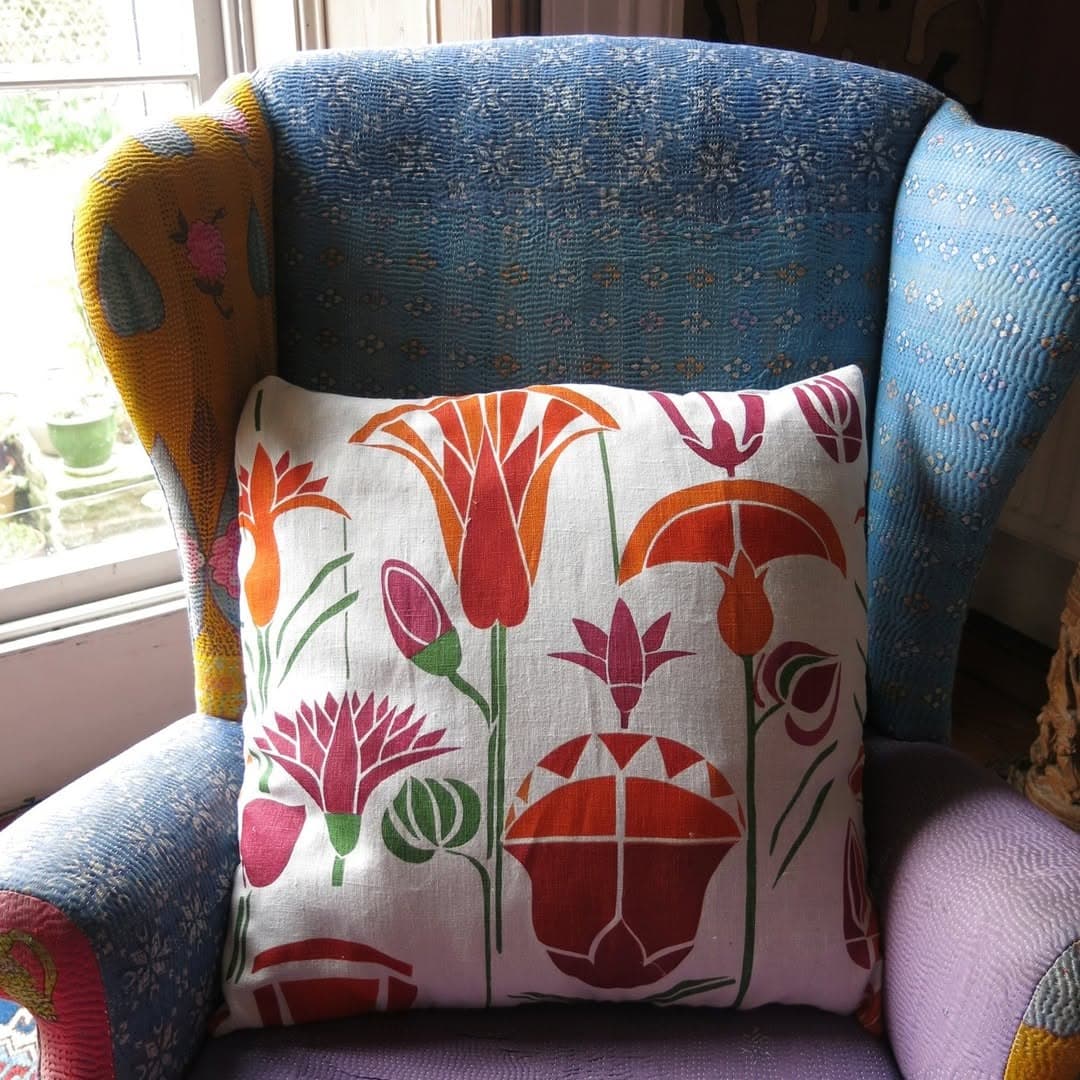
During lockdown I began my screen printing journey and developed my textile craft. I started screen printing on the kitchen table and realised “this is me now. I am a screen printer”. I fell in love with the look of hand printed fabrics: the way the inks sit on the cloth, the freshness of the colours and the crispness of the print. It’s the most exciting and satisfying moment when you print a design, lift up the screen and see your image come to life.
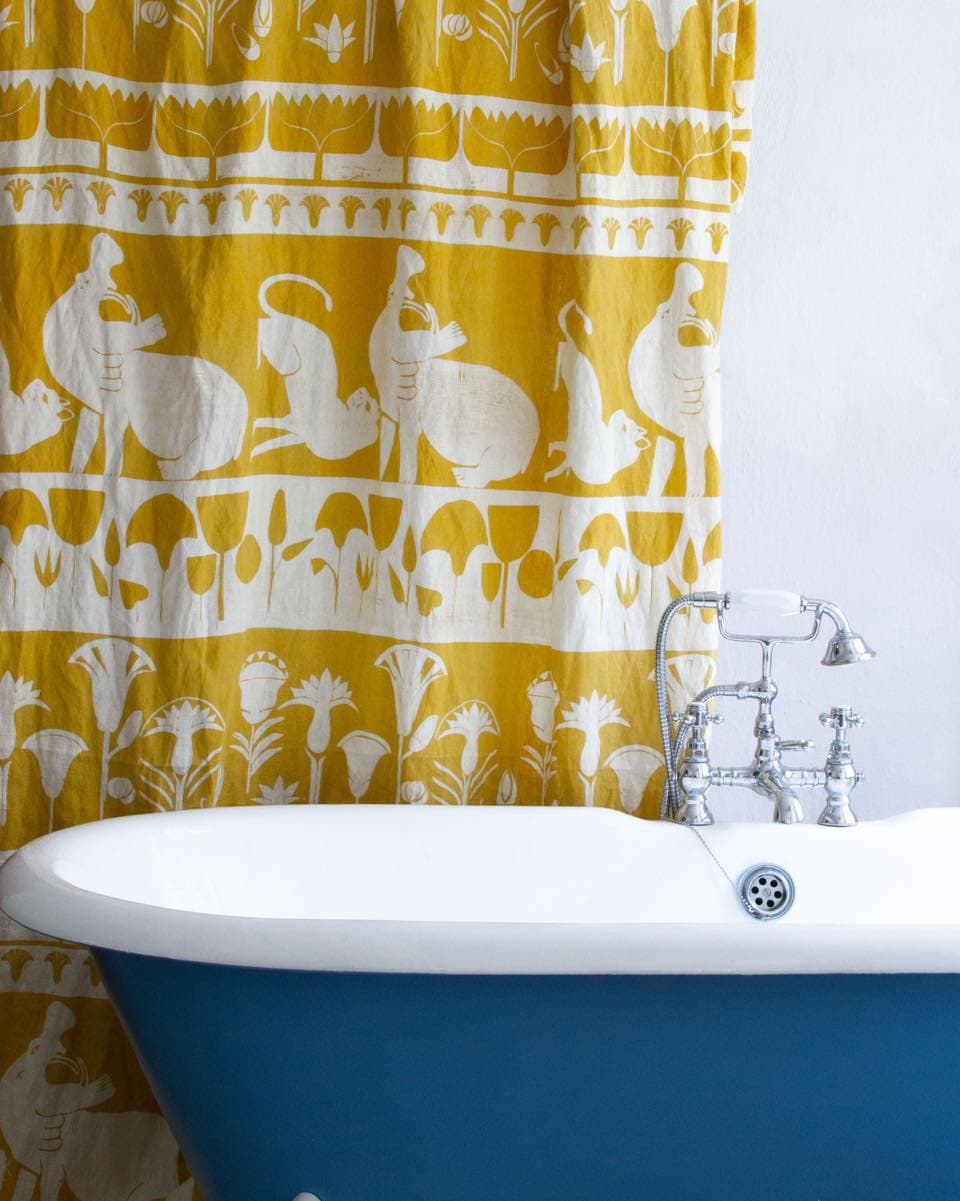
I work with my cousin Alice. We now hand print all our products in a Somerset barn, surrounded by the flowers and the bees. Treading lightly on the earth is a guiding principle. We aspire to make natural handcrafted pieces that will carry on telling stories for years to come.
Your craft
3. How would you describe your work in three words?
Hand-printed, Joyful, Colourful
4. What materials or techniques do you use, and why are they important to your process?
Treading lightly on the earth is at the heart of my process. Our fabrics are sourced from a European mill powered by green energy. Our dyes are hand mixed and water based. Screen printing allows me to oversee the whole print process.
I love printing my fabrics by hand because I can make beautiful things locally. Screen printed fabrics are imperfect, unique and each separate piece tells its own story
5. Can you tell us about a favourite piece you’ve created and the story behind it?
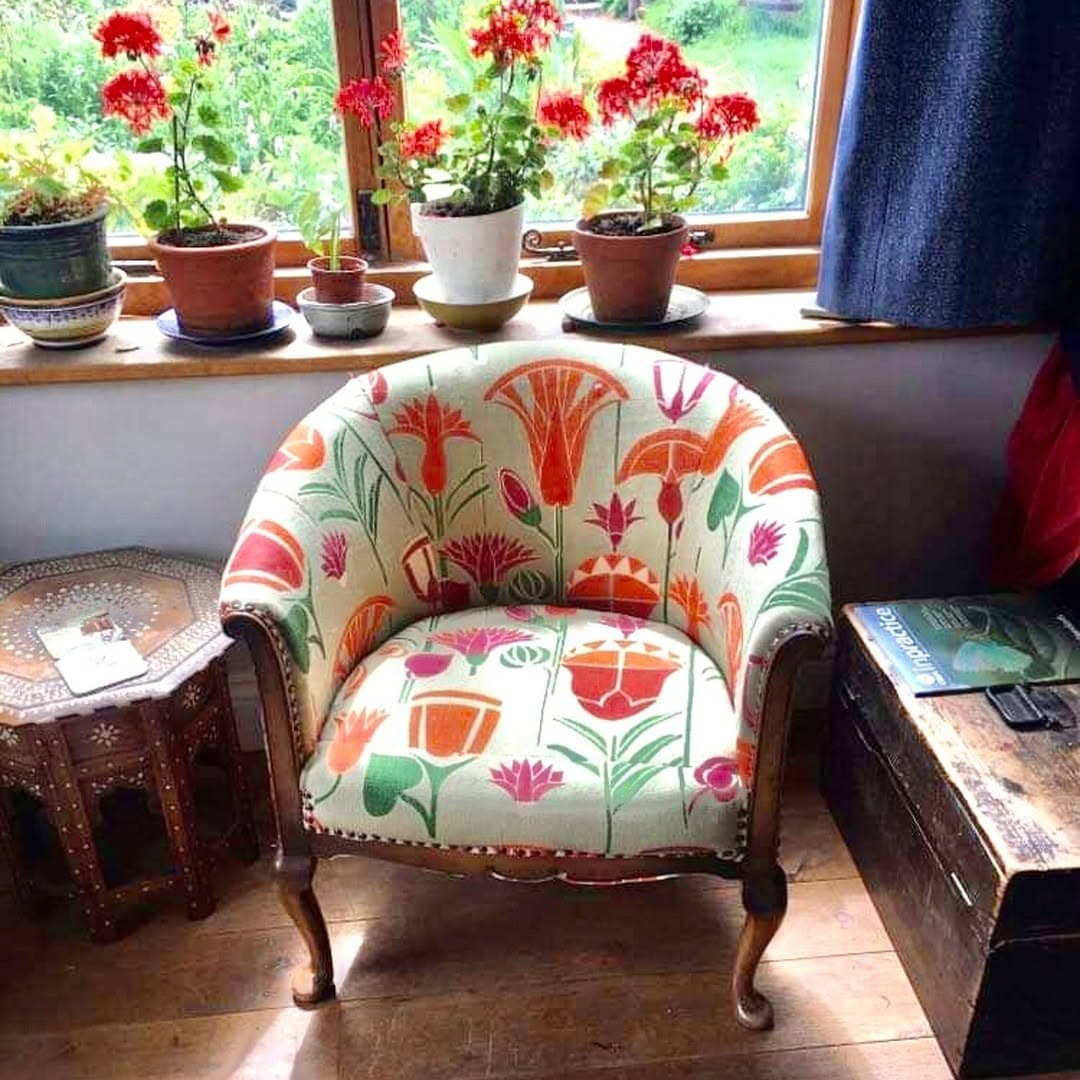
A lovely project we recently worked on was decorating a Somerset yurt. Alice and I had a simple mission, not to buy anything new. We screen printed on old table cloths and covered the yurt walls with patterns. It was such a joy to create something from reclaimed materials and transform old fabrics with print.
Creative process
6. What does a typical day in your studio or workshop look like?
Every day is quite different. My studio is great, I’m super lucky to have the space and totally wouldn’t be able to print big runs of fabric without it. Alice and work with the seasons which means long print days in summer when the light is good. Print days are a joy. It’s amazing to see a 10m fabric print coming alive in front of your eyes.
7. Do you have any unique rituals or habits that help you stay creative?
I am currently journaling and drawing every day. Even if it’s just a few words and a sketch on my bed it keeps the ideas going.
8. How do you handle creative blocks? Do you have any strategies or tips for overcoming them?
Being a designer is about collecting visual research wherever you go. This can be through places I visit, people I meet and stories of the past. If I’m feeling stuck I’ll try to go to galleries, buildings or botanical gardens and draw. Sometimes I’ll get a bunch of art books out and look at designs I find inspiring.
Challenges and successes
9. What’s the biggest challenge you’ve faced as a maker, and how did you overcome it?
Learning how to screen print perfect prints has been so hard, there is so much that can go wrong. I think the biggest challenge has been keeping motivated and starting again when something doesn’t go to plan, which happens from time to time when you’re doing everything by hand.
10. What’s been your proudest moment or achievement so far?
Setting up a print studio has been my proudest achievement I think. There has been so much research, building and planning involved and it’s taken years. I know it’s a small thing but it’s so nice getting photos from customers to see how they have used my fabrics.
11. What’s your favourite quote you’ve ever heard about your work? Who said it, or what was the name of the publication?
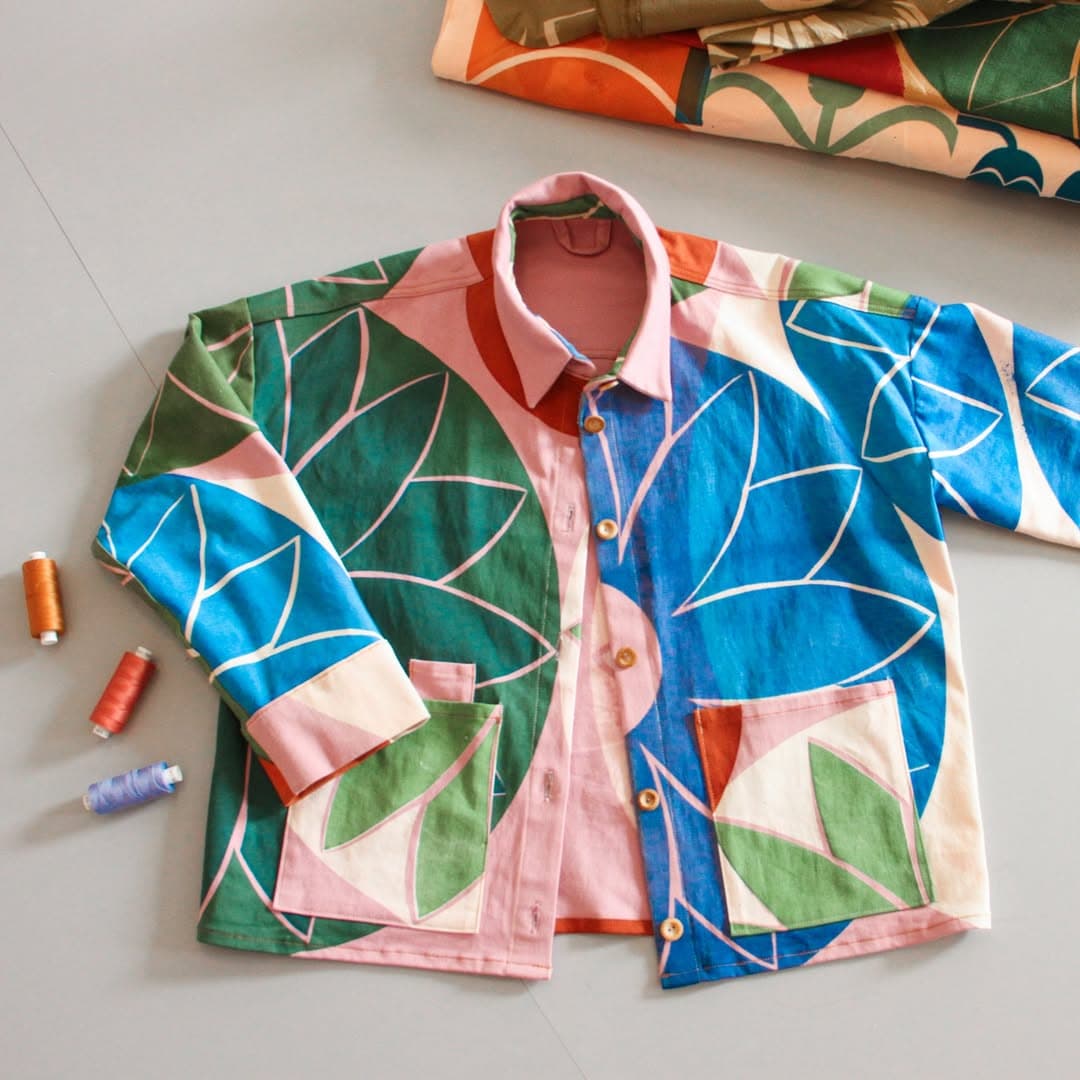
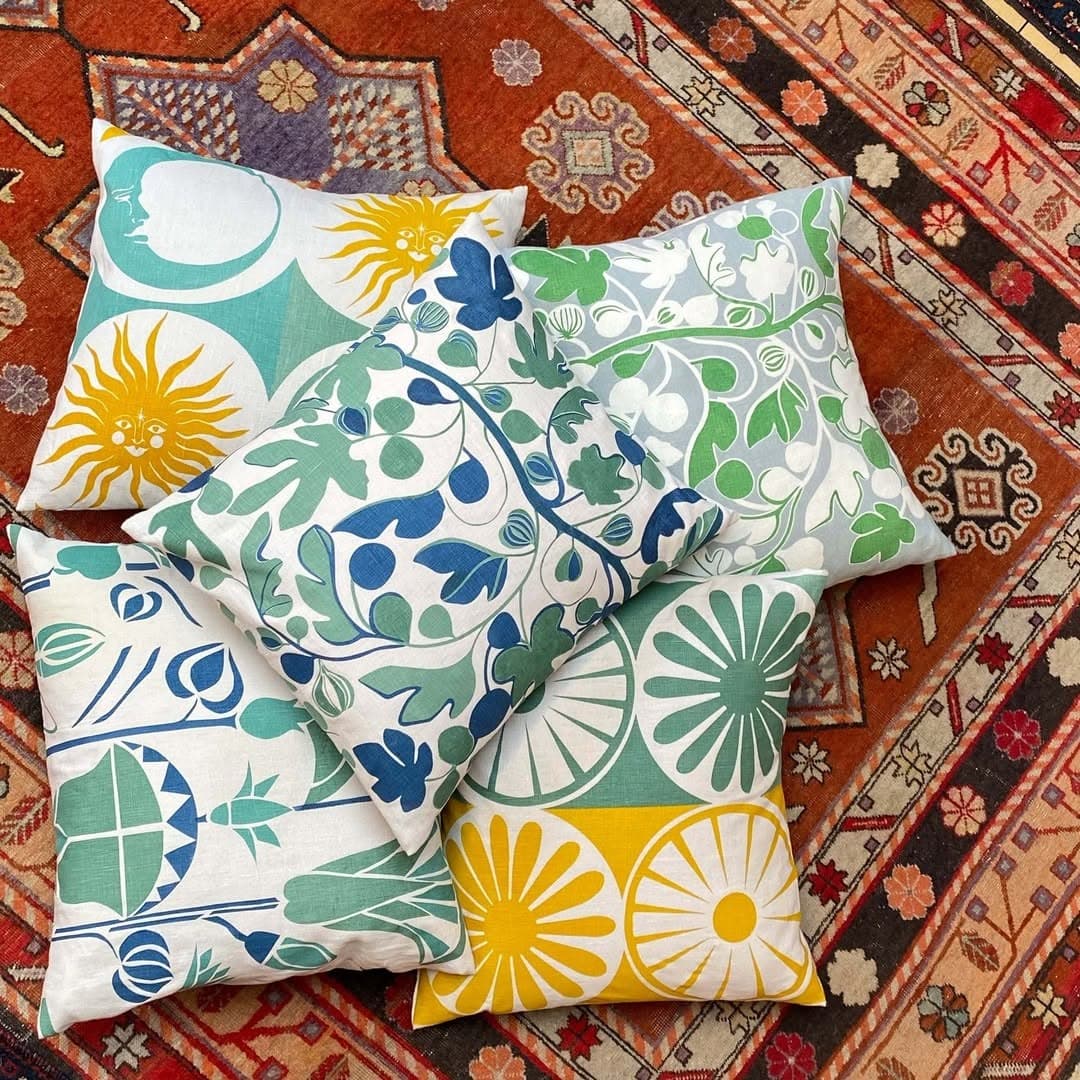
"Soft green pea plant tendrils curling around bed heads, Bauhaus inspired napkins adorned with vivid blue and soft green circles and gloriously sunny yellow petals spread gracefully across a table."
- Rosanna Spence, Bristol Life, March 2025
Inspiration
12. Where do you draw inspiration from for your work? What sparks your imagination and creativity?
I love bright and bold designs . Also, flowers, grasses, animals and trees. Nature is a constant source of inspiration, just look out your window and you have a pattern.
13. Do you have a favourite artist, maker, movement, or tradition that has influenced your craft?
I always find myself returning to the Bauhaus School of Art. I love Josef and Anni Albers. The clean crisp shapes from their work look so contemporary to me: beautiful satisfying circles and simple squares. The Bauhaus had such an inspirational attitude to design. For the Bauhaus, design is a considered and spiritual process.
Another huge inspiration is the amazing Hilna Af Klint. Her paintings are free, bright, expressive and on such a scale. I remember when I first saw her work I bought the book straight away, and became so obsessed with her paintings and her story. When I discover a designer I love to buy the book, listen to interviews and become immersed in their work.
A friend recently gifted me a beautiful hardback book of the work of Marimekko – the dream company in design and ethos! It was started by visionary Armi Ratia who converted an old oil cloth factory into an incredible textile printing studio where they printed huge scale fabulous designs. It’s a dream of mine one day to establish a textile collective in a disused building, creating sustainable and local textiles and building a local community of designers.
14. How does colour influence your practice; is it an important part of your process? Do you have a particular palette or favourites? Any go-to sources for colour inspiration?
I see the world through colour and remember it through colour. It really affects my mood. Even when I start a design using soft greys and a muted pallet, a bright colour will sneak its way in!
Colour leads my designs. It’s the first thing I work out. I like working with contrasting colours and seeing how colours relate to each other. A very pale pink next to a white looks muted, but next to a navy it pops. Screen printing limits my designs to 6 colours so the colours that are chosen need to be carefully considered. I create colour palettes through emulsion paint charts – a great way to quickly see what works together.
Perspectives and goals
15. What role does your environment play in shaping your creativity?
As I am writing this we are entering spring, which is my favourite season and brings me so much inspiration. The weather and the environment really affect how I create, when the world is warm and alive there’s nothing nicer to do than sit outside and paint designs.
16. What do you want people to feel when they experience your work?
I want my work to lift a space and brighten a room. My designs are quite bright and look best when picking up other colours.
17. What are you currently working on, and what excites you most about it?
I am currently figuring out how to hand print wallpaper. Paper works so differently to fabric and is used in a very different way. I love to think about how materials will be used and seen in a place and how this affects the design.
Advice and reflection
18. What advice would you give to someone starting out as a maker?
Being a maker can be tough, but it’s incredible to do what you love. Be slow, be perfect, be super proud of who you are and what you put out into the world. Also, something that many people have told me over the years, things always work in three.
19. If you could go back to the start of your career, what advice would you give your younger self?
Don’t take everything so seriously. You’re living your dream, have fun and enjoy the journey.
Closing thoughts
20. If you could collaborate with any artist, past or present, who would it be and why?
This is a fun question. Either William Morris or Mattissee
21. Where can people find your work, and how can they support you?
Mainly through our website: www.jessiedesalis.com. We have recently started selling through a company called Haines as one of their eco designers. We sell through interior designers, on some independent homeware online stores, some shops and hotels.
Jessie de Salis’ hand-printed fabrics blend bold storytelling, pastoral charm, and an appreciation for the handmade. Rooted in nature, her work honours the rhythm of the seasons and the beauty of variation, where every print holds its own quiet narrative.
Explore Jessie’s latest collections and follow her creative journey:
Support Jessie by browsing her website, discovering her joyful handmade pieces, and joining her colourful, creative world on Instagram.
Meet the Maker: Hodge Pots Approach to Conscious Clay
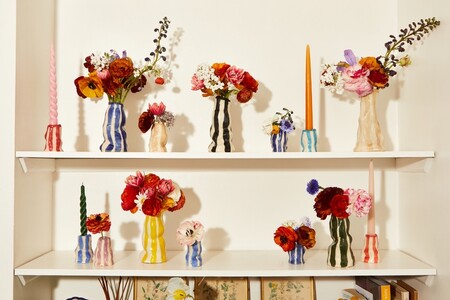
In this Q&A, we chat with Nikki Seymour, founder of Hodge Pots, about her journey into ceramics and the stories behind her joyful, hand-painted pieces. Nikki shares how travel, nature, and the buzz of North London inspire her designs, and opens up about the sustainable ethos at the heart of her practice. We delve into the rituals of her creative process, the challenges of building a small business rooted in craft, and the proud moments that keep her going, from studio milestones to seeing her pieces find homes near and far.
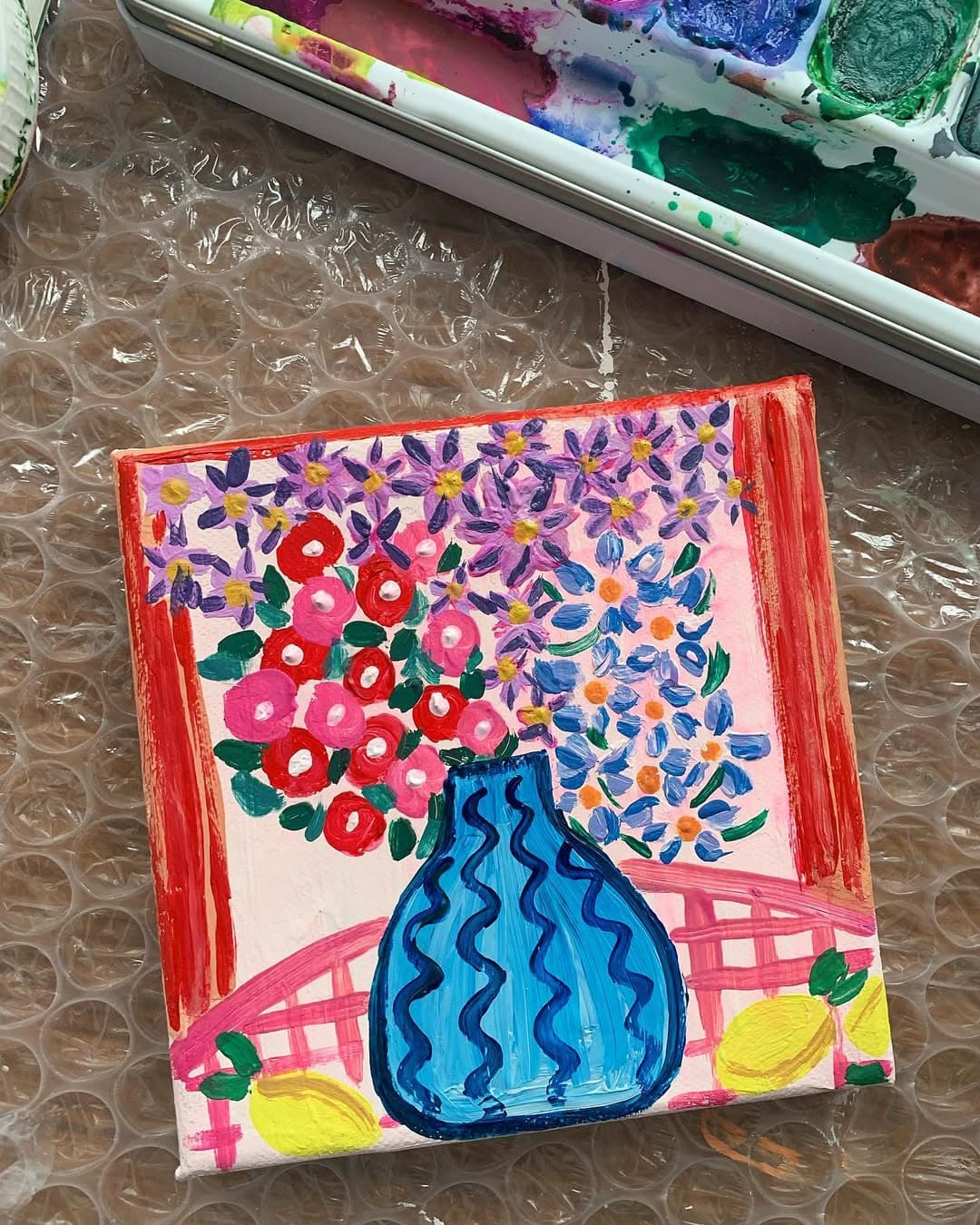
1. Can you tell us a bit about yourself and your artistic journey?
I’m Nikki, a North London-based artist with a background in fashion styling. For two decades, I worked with brands and luxury department stores like Selfridges and Harvey Nichols, styling shoots and curating window displays.
My journey with ceramics started unexpectedly during the pandemic. While on furlough, I needed a creative outlet and bought some clay, initially making pieces as gifts for friends and family. What started as a personal project quickly became something bigger—I fell in love with the process, and before I knew it, people were asking to buy my work. That’s when I realised I’d found something really special.
2. What inspired you to pursue your craft?
It all began with sharing my ceramics on Instagram—just as a way to document the process. But as more people started reaching out, asking if they could buy my pieces, I realised I had something worth pursuing.
Beyond that, working with clay is pure joy. It’s meditative, grounding, and offers a kind of creative freedom I hadn’t felt in years. Coming from the fashion world, where creativity is often shaped by external demands, ceramics gave me full control. There’s something really special about bringing an idea to life with your own hands, without anyone else’s say.
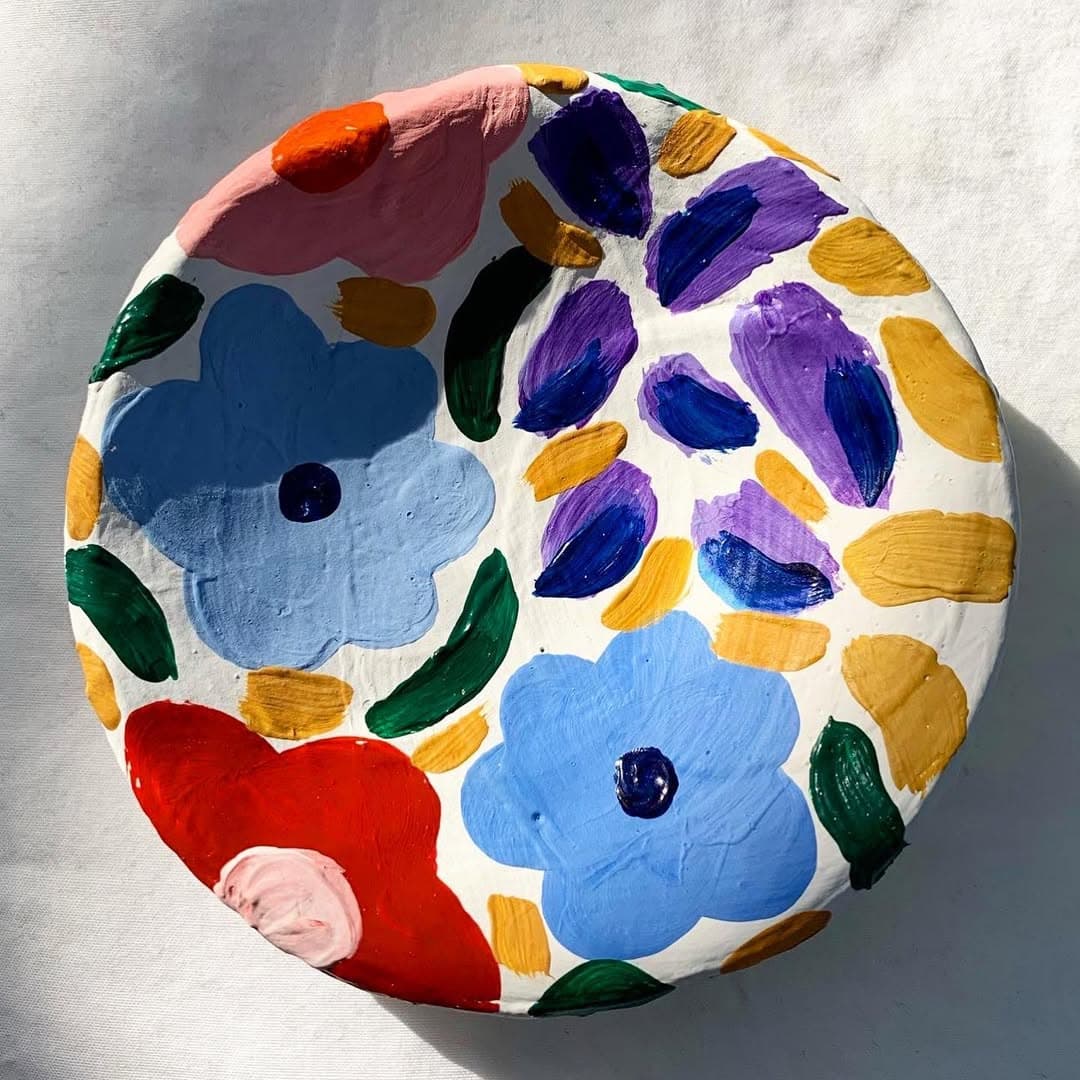
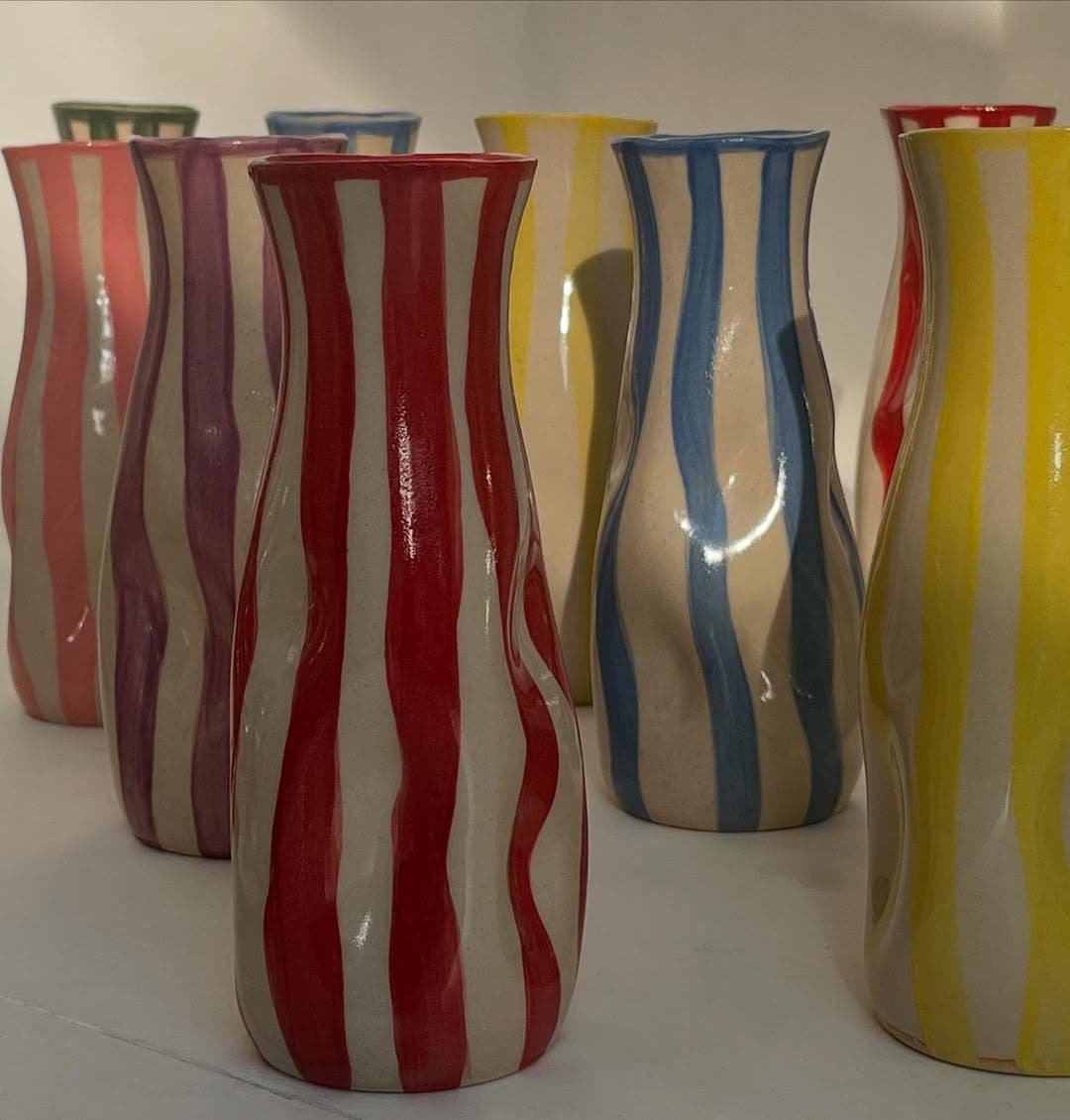
Your craft
3. How would you describe your work in three words?
Joyful, tactile, timeless.
4. What materials or techniques do you use, and why are they important to your process?
I hand-build all my pieces using stoneware clay. Sustainability matters to me, so I work with recycled clay that’s carefully processed by our studio technicians, ensuring nothing goes to waste.
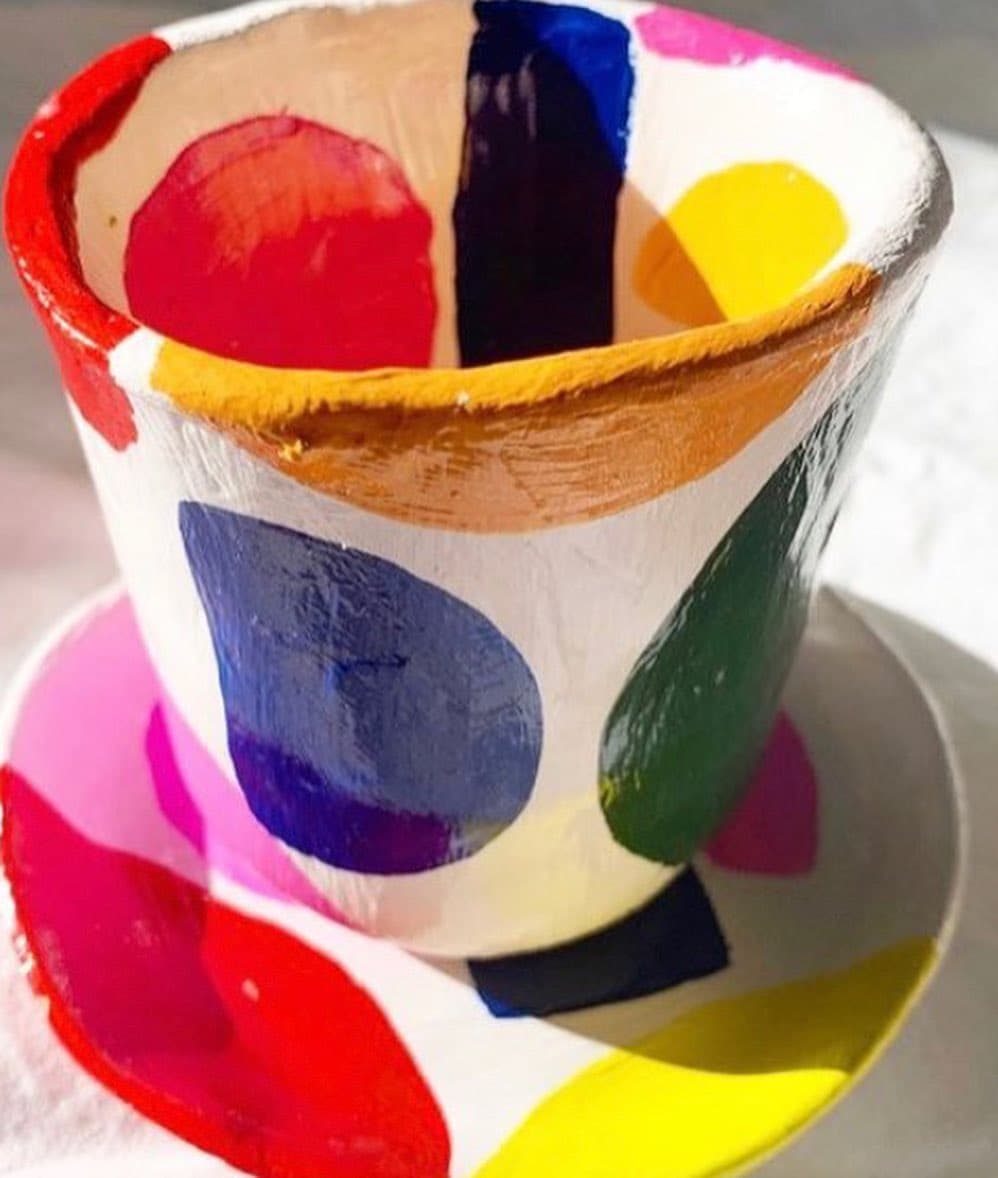
I primarily use coiling and slab-building techniques, which allow me to create organic, sculptural shapes. And then, of course, there’s the colour—bold, bright glazes are a signature of my work. I love the way they transform a piece, bringing warmth, energy, and personality to each one.
5. Can you tell us about a favourite piece you’ve created and the story behind it?
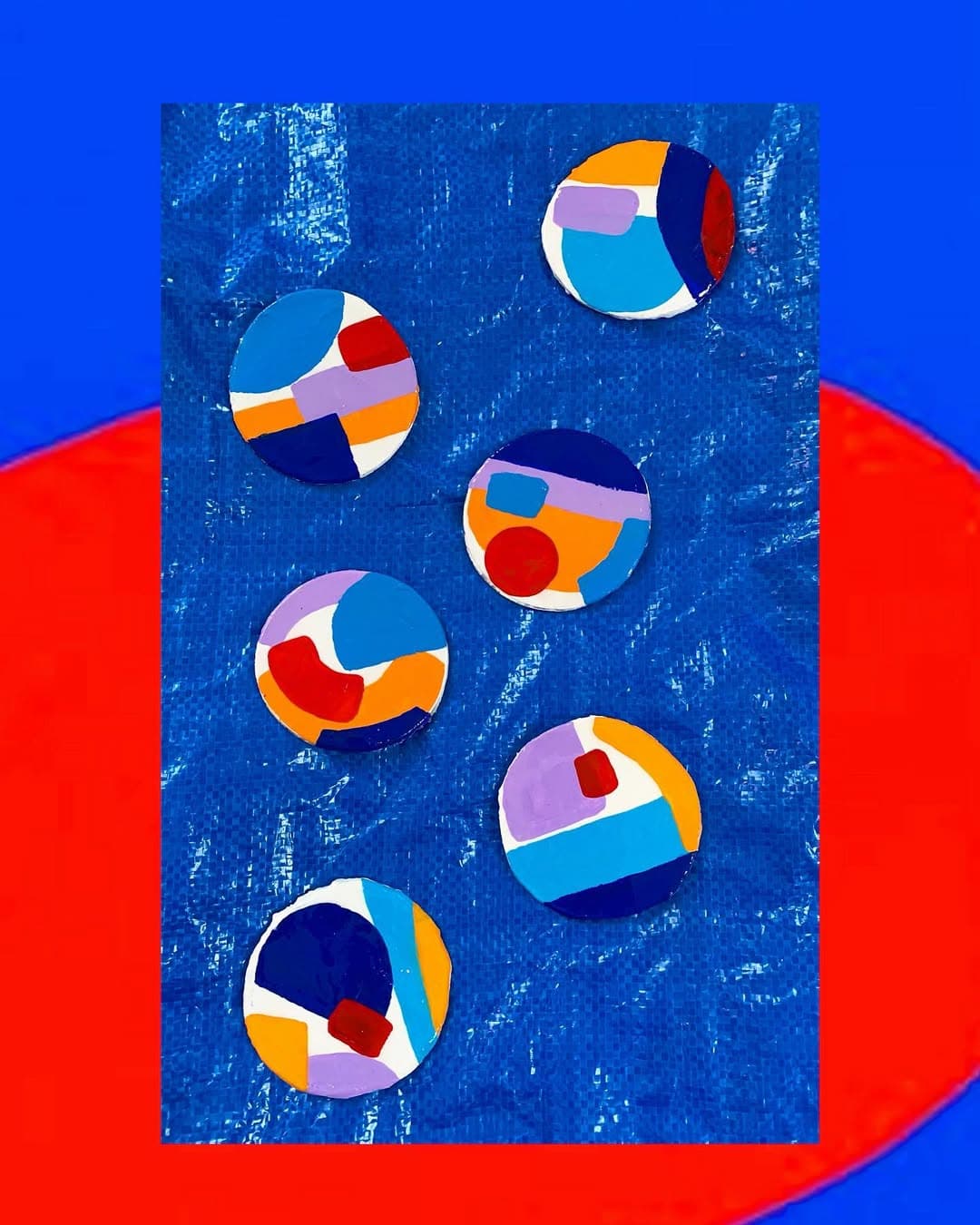
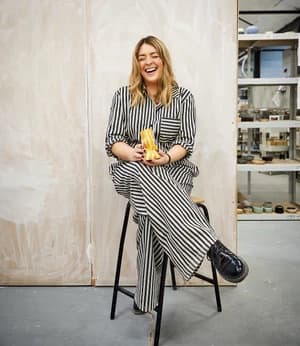
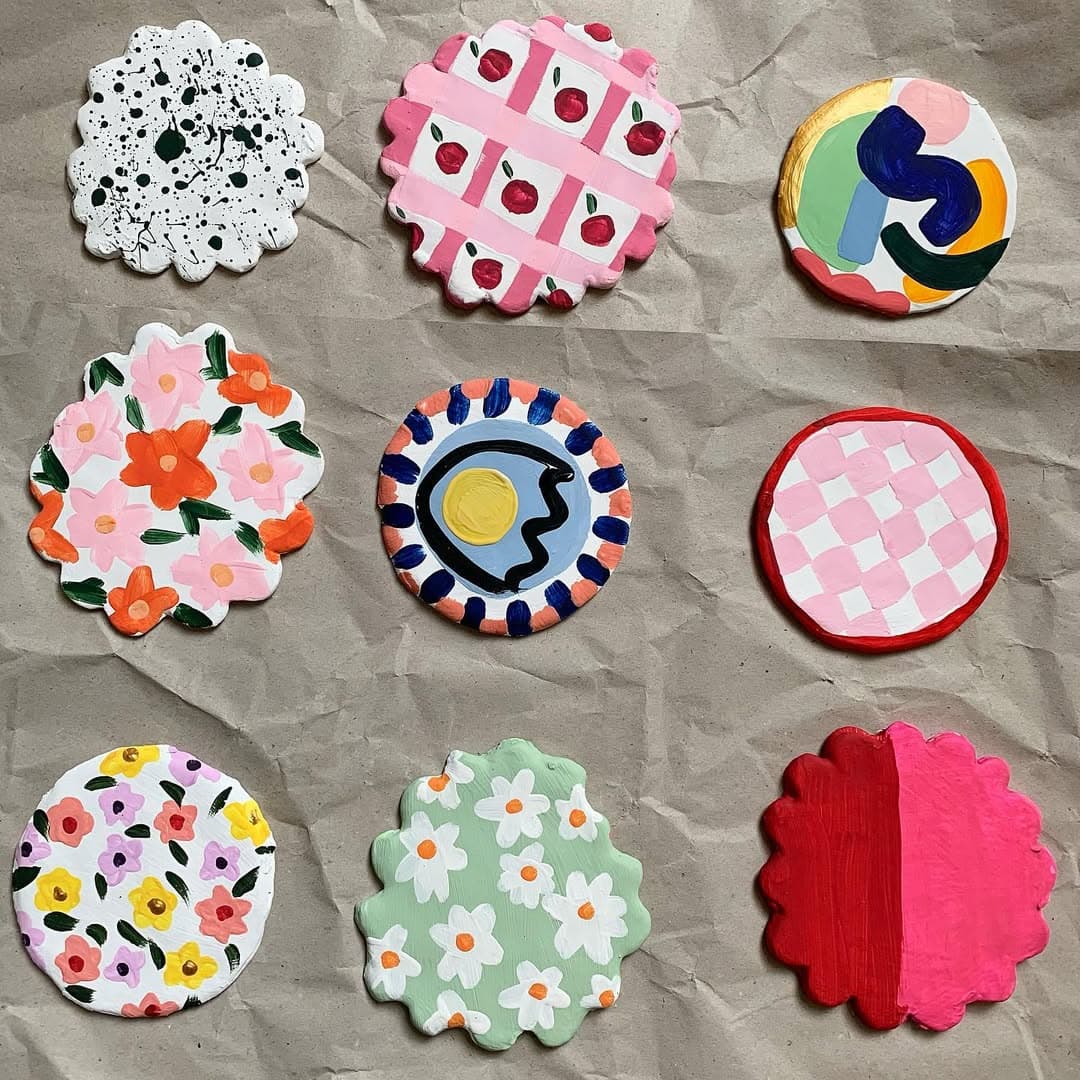
One of my favourites has to be the 200 ceramic coasters I made for my sister’s wedding. Each one was bespoke, stamped with the date on the back, and crafted with so much love. It was such a meaningful project—knowing that something I created would be part of such a special day made every moment in the studio feel even more rewarding.
Creative process
6. What does a typical day in your studio look like?
My day starts with Yorkshire tea and settling into my favourite spot at the studio—it’s my little ritual. Then, depending on what’s on my to-do list, I might spend the morning hand-building new pieces, painting pots, or glazing. There’s something really satisfying about seeing a piece come to life, layer by layer. The process is both calming and energising, and I’m at my happiest when I’m fully immersed in it.
7. Do you have any unique rituals or habits that help you stay creative?
I always start my studio days with a mug of Yorkshire tea and a bit of quiet time, just to settle in. But beyond that, nature is a big source of inspiration for me—whether it’s a walk in the woods, time by the sea, or just paying attention to textures and colours around me. And when I feel creatively stuck, I step away. A change of scenery—whether that’s a walk, an exhibition, or just a break—almost always sparks something new.
8. How do you handle creative blocks?
I’ve learned to trust the process. If I feel blocked, I don’t try to force it—I step away, do something different, and let my brain reset. Sometimes, revisiting old sketches or experimenting with a new technique helps. And if all else fails, I remind myself that creativity isn’t linear—some of my best ideas have come when I least expected them.
Challenges and successes
9. What’s the biggest challenge you’ve faced as a maker, and how did you overcome it?
Balancing creativity with the business side of things. As my work grew, I found myself juggling orders, logistics, and marketing—all things that can take you away from the creative process. I’ve had to learn to set boundaries, manage my time better, and accept that I can’t do everything at once. Having a strong support system—friends, fellow makers, and the amazing technicians at my studio—has helped me stay focused on what I love most: making.
10. What’s been your proudest moment or achievement so far?
Being asked to be a founding member of Makers Made was a big moment. The sense of community, especially among women makers, has been incredible. Seeing my work evolve over the years, gaining recognition, and being featured in the press—each milestone reminds me of how far I’ve come. It’s humbling, exciting, and always pushes me forward.
11. What’s your favourite quote about your work?
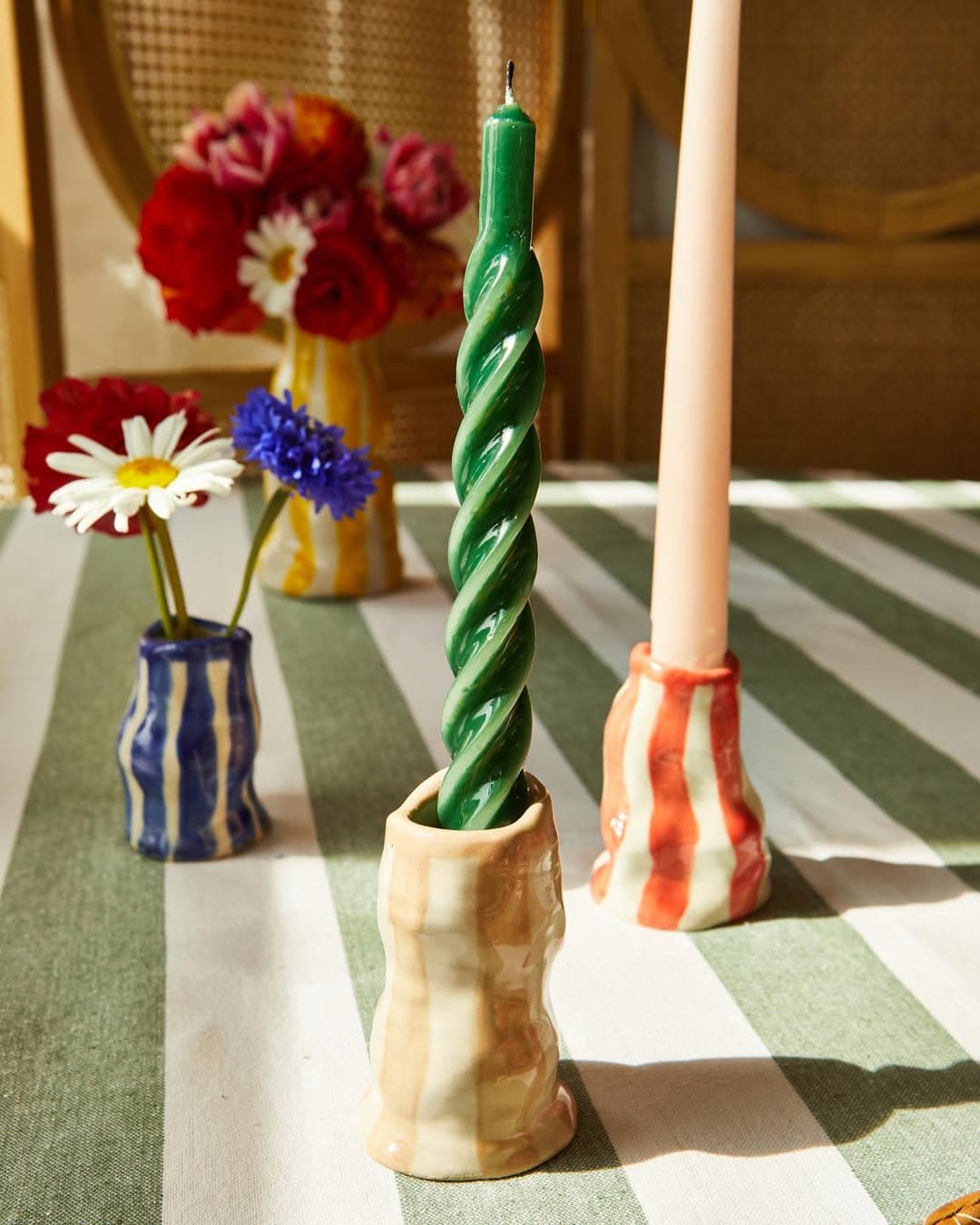
“Pairing smooth sculptural vases with higgledy-piggledy pots is a playful reminder to celebrate imperfection.”
- Homes writer Mandy Ando for Country Living UK

Inspiration
12. Where do you draw inspiration from for your work? What sparks your imagination and creativity?
Travel plays a huge role in sparking my creativity. A recent trip to Porto, with its stunning ceramics and tiled buildings, really set my imagination alight. Nature is another big influence—whether it’s the colours, textures, or shapes I find at the beach, in the woods, or wandering through the British countryside. Living in London also keeps me inspired, with its vibrant multicultural energy and all the exhibitions, festivals, and art happening around me.
13. Do you have a favourite artist, maker, movement, or tradition that has influenced your craft?
On a personal note, my grandad was a pottery and art teacher, so I grew up surrounded by his creations, which definitely shaped my appreciation for ceramics. My parents have a beautiful collection from artists like Springfield Pottery, Clive Bowen, and Sandy Brown. Last summer, I was fortunate enough to visit the studios of some of these incredible potters in Devon, and I even had the chance to try throwing with Philip and Franny Leach. The ceramic culture in that region left a lasting impression on me. I also draw a lot of inspiration from the Bloomsbury Group, particularly the Charleston Trust and Lee Miller’s house nearby. Those spaces are a real well of inspiration.
14. How does colour influence your practice; is it an important part of your process? Do you have a particular palette or favourites? Any go-to sources for colour inspiration?
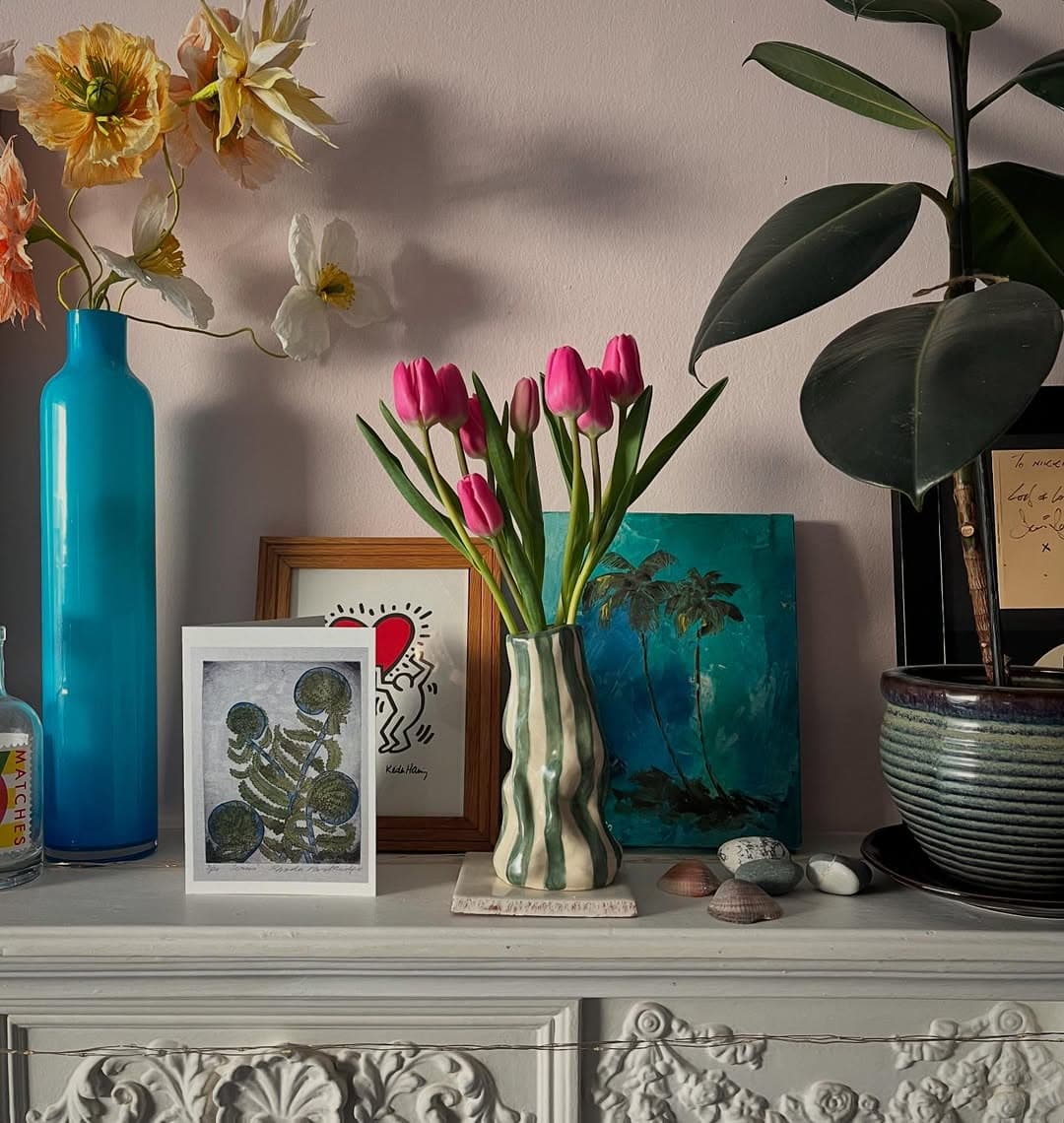
Colour is a huge part of my practice—always has been. When I started creating Hodge Pots, the world felt a little gloomy, so I wanted to make a joyful, vibrant collection filled with bold colours and playful designs. Colour inspiration comes from absolutely everywhere: fashion shows, nature, magazines, even architecture and packaging! I’m especially drawn to different shades of green, along with blues and pinks—honestly, all of it speaks to me.
Perspectives and goals
15. What role does your environment play in shaping your creativity?
My environment has a huge impact on my creativity. Living in North London, I’m constantly surrounded by energy, diversity, and art. It pushes me to think in new ways, explore different influences, and incorporate elements of the city’s eclectic spirit into my work. Whether it’s the buzz of the streets or the peaceful moments in nature, everything around me feeds into my creative process.
16. What do you want people to feel when they experience your work?
I want people to feel joy, fun, and warmth when they experience my work. I aim to create pieces that invite a sense of playfulness and make people smile. There’s a real warmth of spirit in what I make, and I hope it brings a little brightness into people’s lives.
17. What are you currently working on, and what excites you most about it?
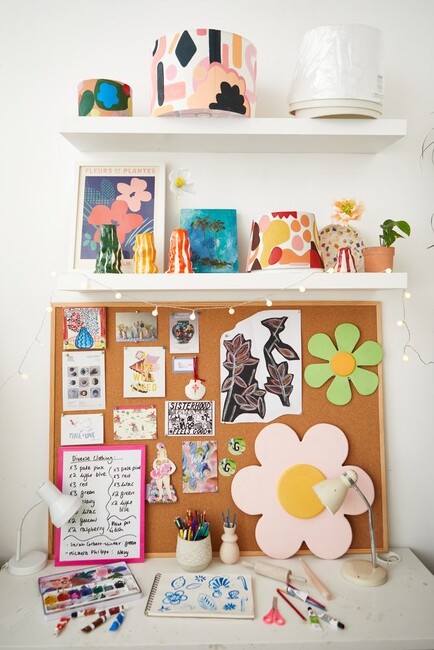
Right now, I’m working on some exciting collaborations and workshops that will lead to an adventurous summer. It’s all a bit hush-hush for now, but I’m really looking forward to seeing where these projects take me and the new creative connections they’ll bring.
Advice and reflection
18. What advice would you give to someone starting out as a maker?
My advice would be to stay authentic to yourself—make for yourself first and foremost. If you’re true to your own vision, everything else will follow. Don’t get caught up in what others expect of you.
19. If you could go back to the start of your career, what advice would you give your younger self?
Honestly, I wouldn’t change a thing. Even the mistakes have been part of my journey and helped refine my craft and my direction. Every experience—good or bad—shapes the path you’re meant to follow.
Closing thoughts
20. If you could collaborate with any artist, past or present, who would it be and why?
Without a doubt, I would collaborate with my grandad. He was such a huge influence on me, and it would be incredible to bring our creative worlds together.
21. Where can people find your work, and how can they support you?
You can find my work on Wonderful Makers Made, Maison Flaneur, and Dominca Marland. Of course, you can also visit my website, www.hodgepots.com, to see more of what I’m creating and how you can support my work.
Nikki Seymour’s hand-painted ceramics celebrate colour, sustainability, and a deep connection to place. Through Hodge Pots, she brings together playful design, conscious making, and a love for everyday beauty, crafting pieces that are as thoughtful as they are joyful.
Explore Nikki’s latest collections and follow her creative journey:
Support Nikki by visiting her website, exploring her characterful ceramic pieces, and following along with the joyful rhythm of her studio life on Instagram.
Meet the Maker: Harriet Says Hi, Serving Up Playful Homewares
In this Q&A, we chat with Harriet Says Hi about discovering her passion for tufting, the joy of creating tactile homewares, and how her playful, food-inspired designs came to life.
Harriet opens up about drawing inspiration from supermarket aisles, the unique rituals behind her creative process, and the challenges and triumphs of balancing creativity alongside a full-time job. She also shares her proudest moments, including curating a foodie-themed pop-up, overcoming creative insecurities, and her excitement about expanding her popular bath mat range.
1. Can you tell us a bit about yourself and your artistic journey?
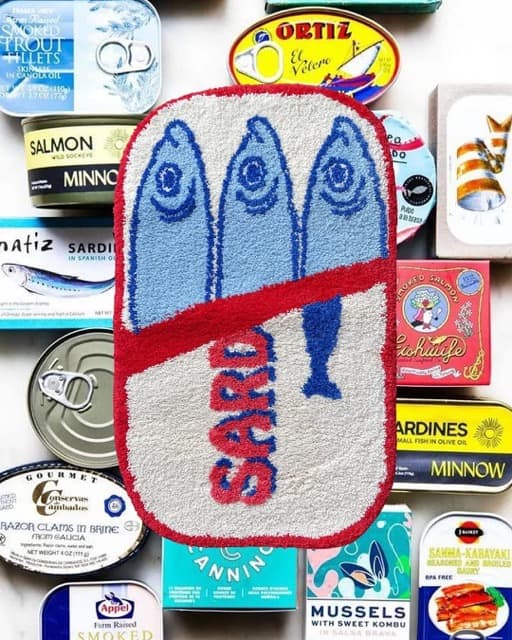
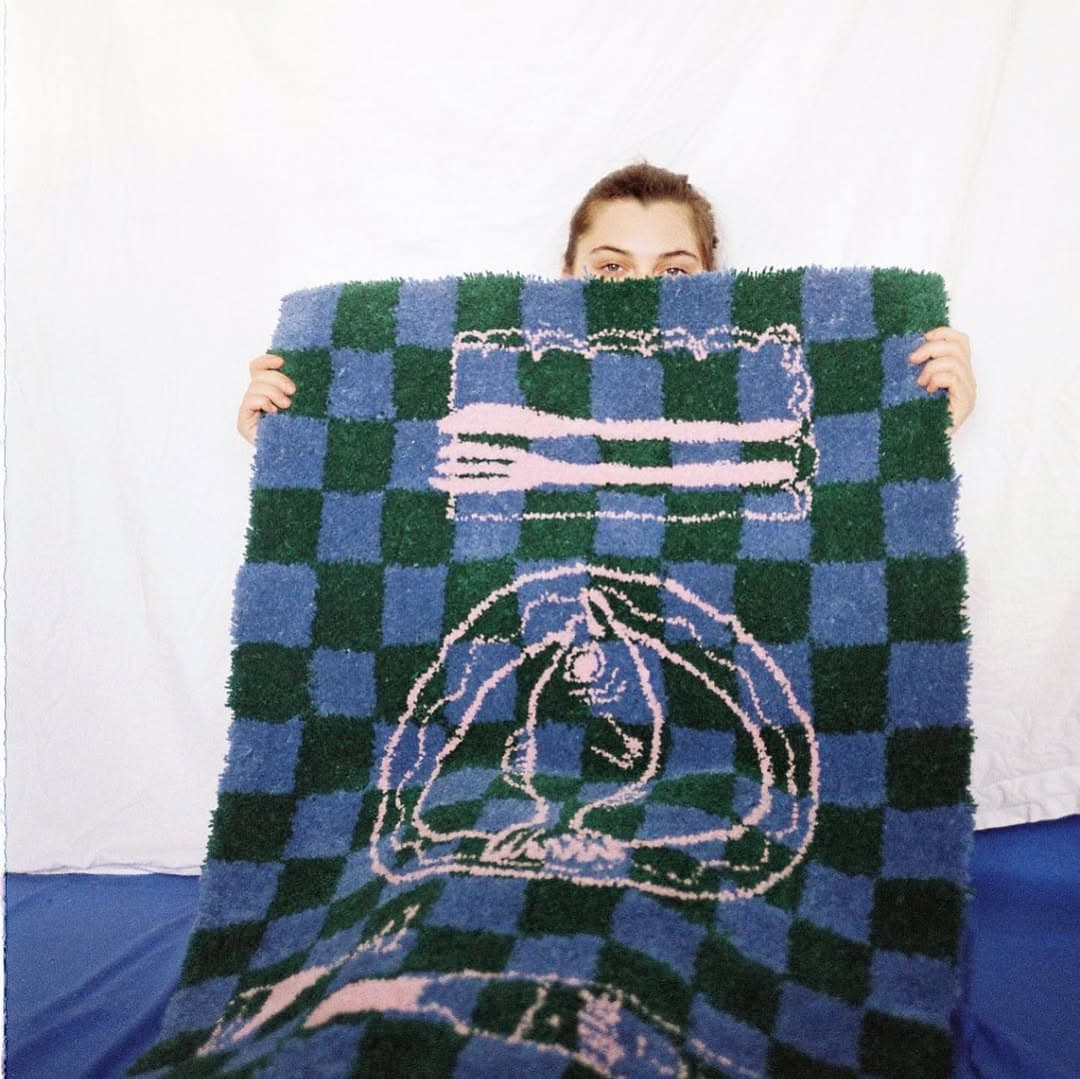
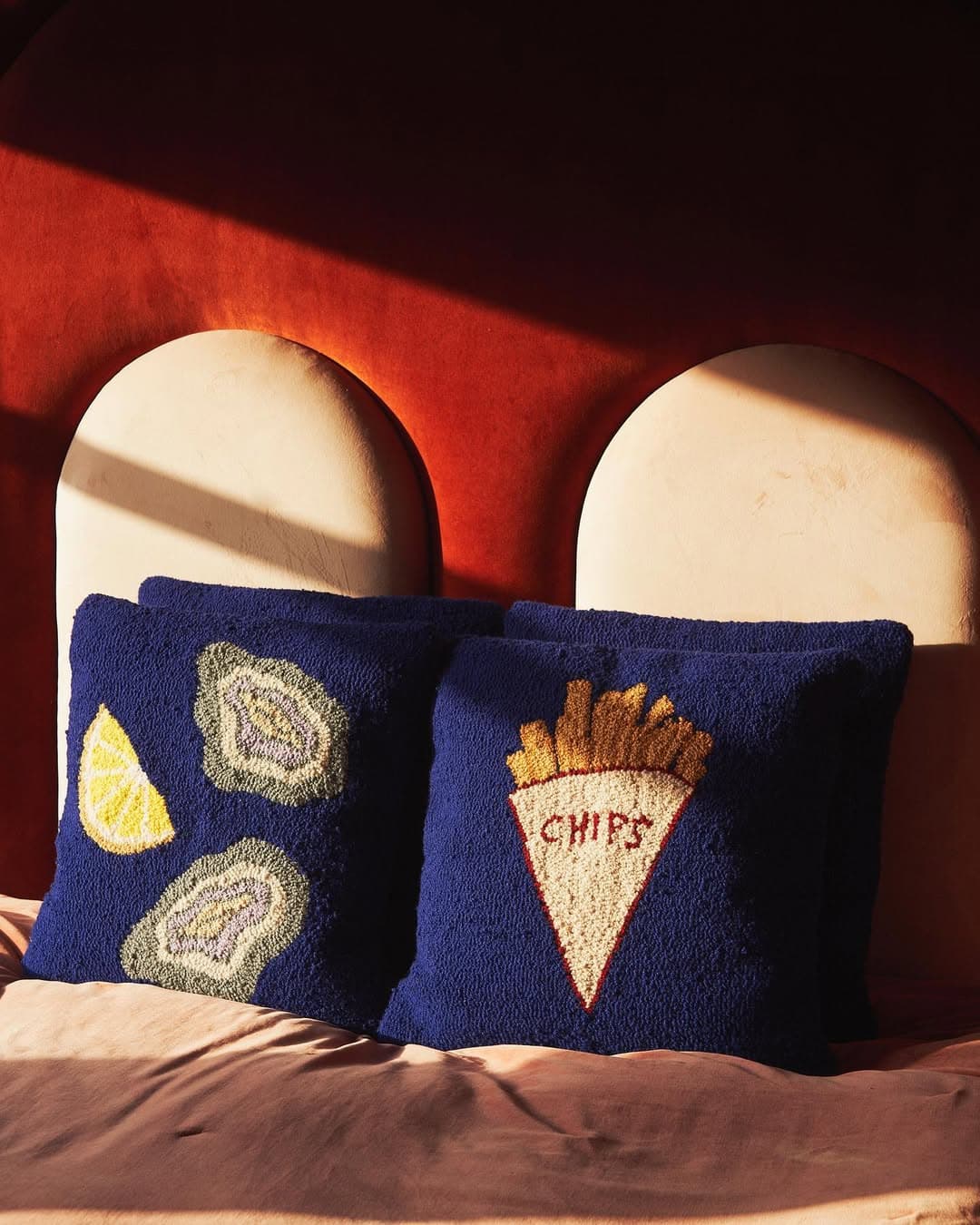
I have always been very creative, but never found a medium that I felt really fit me. After being inspired by all the brilliant tufting artists through social media, I decided to try it out and really loved the hands-on experience of creating my own textile art. This gave me an extremely fulfilling opportunity to create my own cushions and rugs, finally feeling as if I could express myself in a medium that felt right.
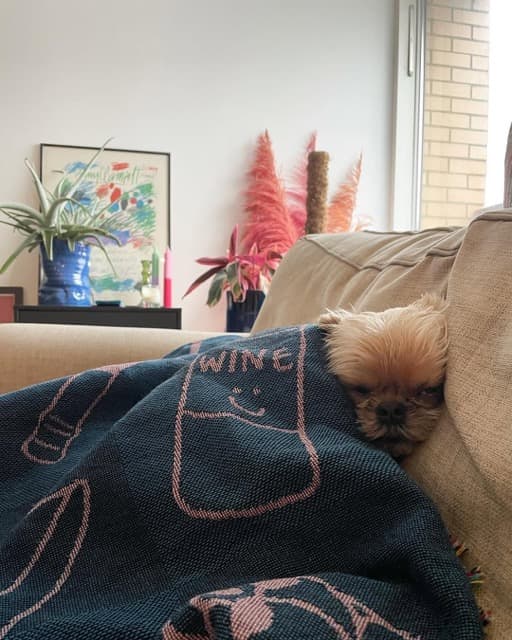
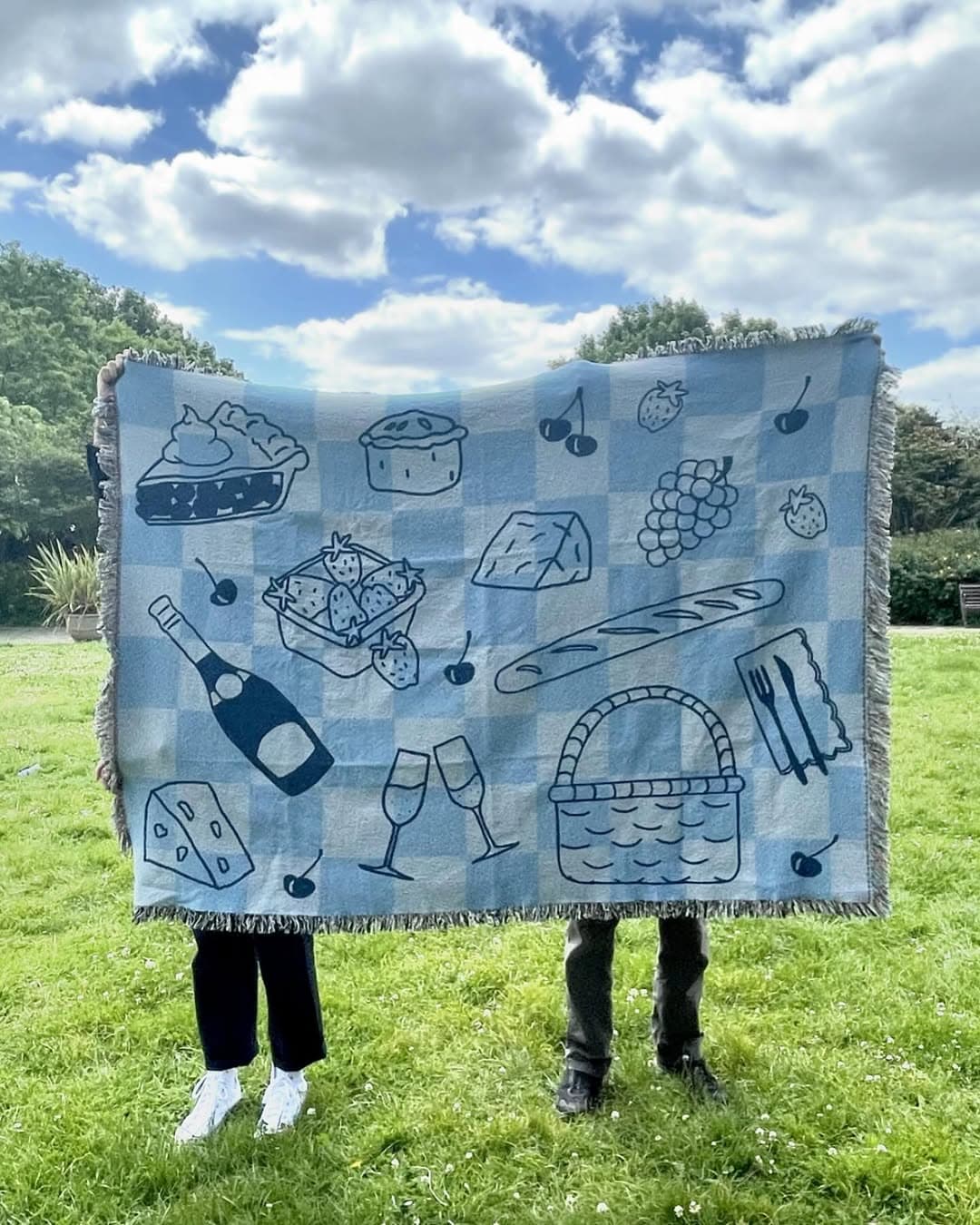
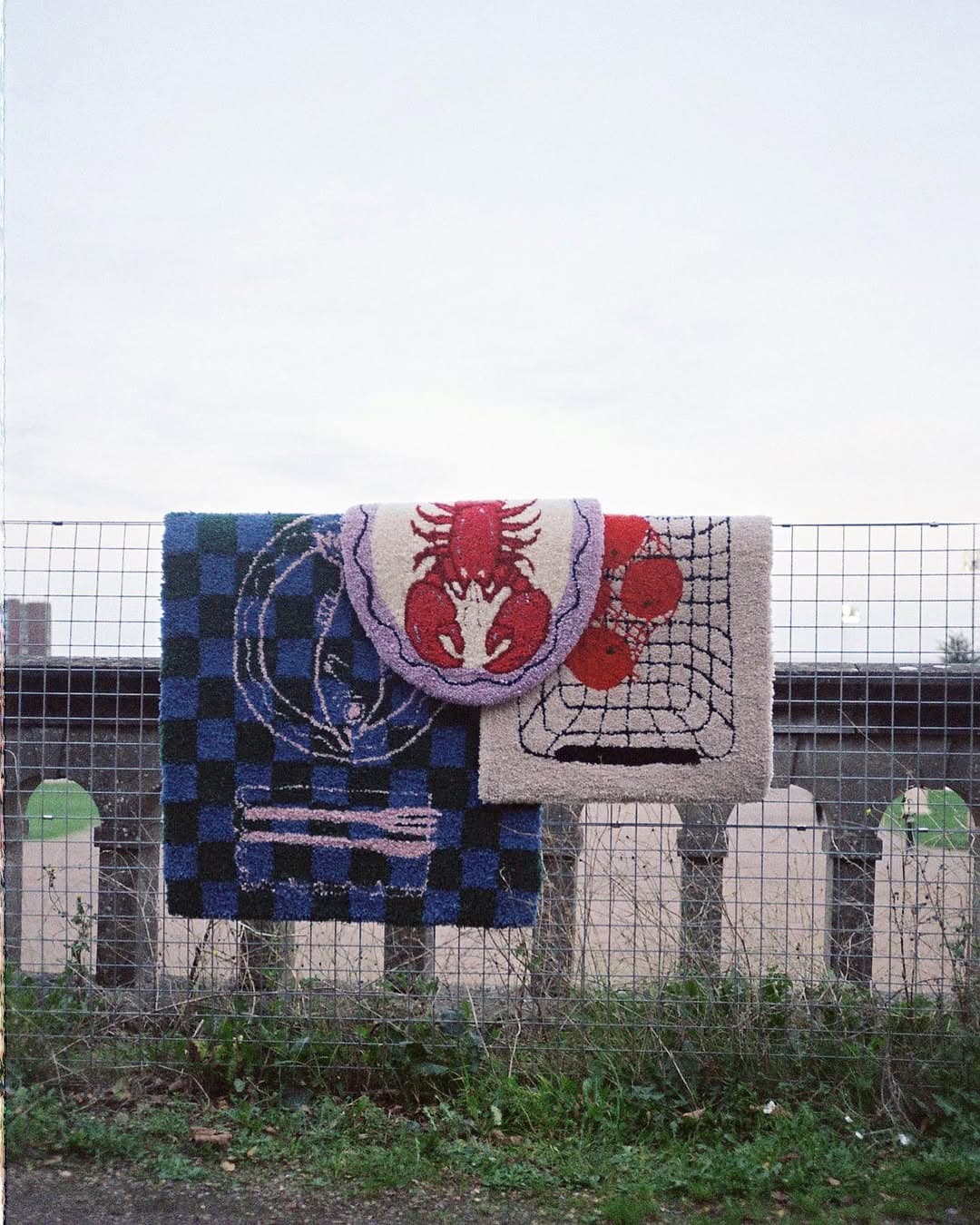
After developing my foodie-themed style, I branched out into designing blankets, bath mats, and accessories – enabling me to create more accessible products.
2. What inspired you to pursue your craft? Was there a defining moment or influence that sparked your passion?
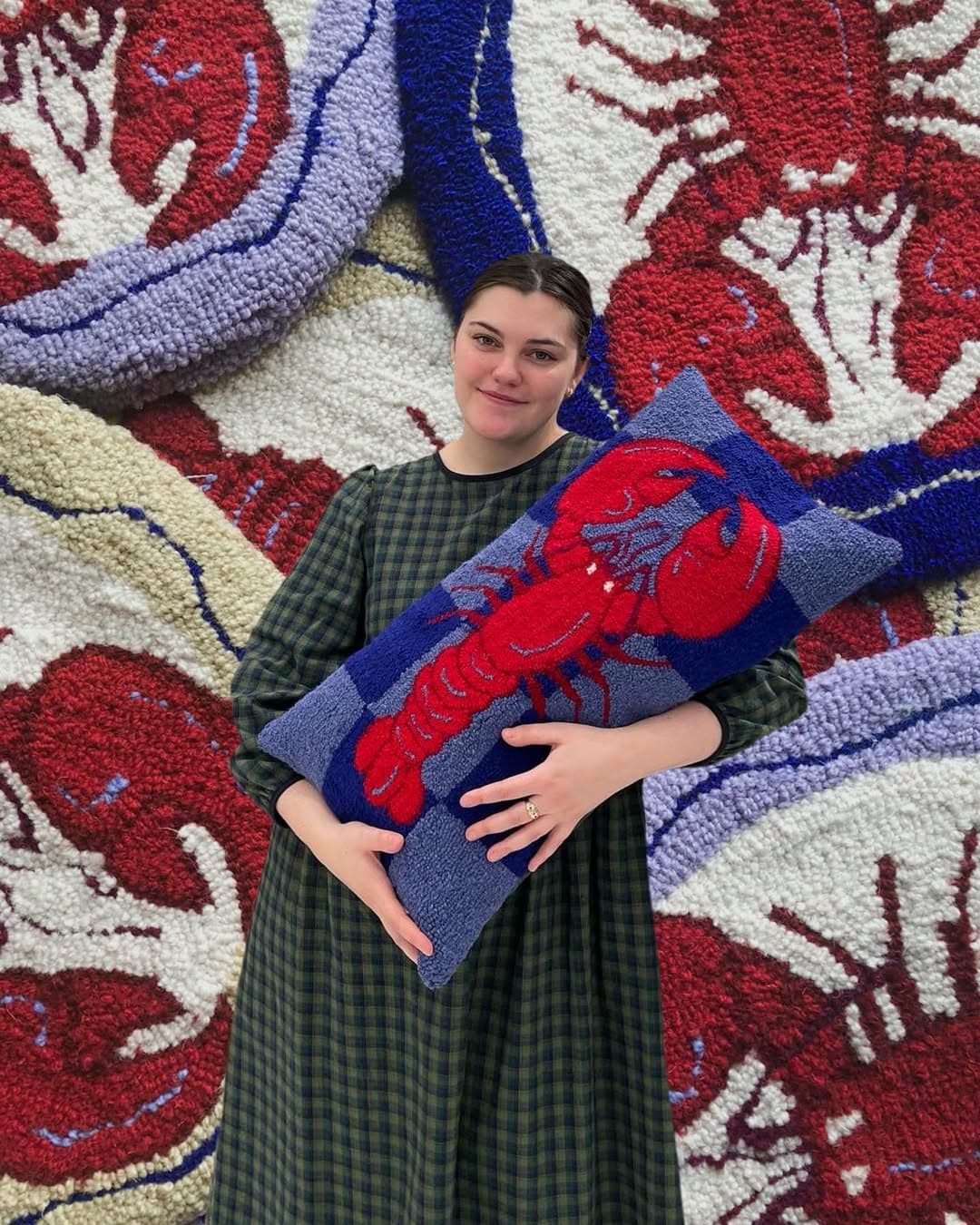
I’m sure we’ve all been heavily influenced by social media to try new things, and a few years ago there was a huge tufting-phenomenon that felt like it took over the creative industry. I loved the way you could use a hand-held machine to create art with wool, and turning this art into tactile, useable cushions felt like a huge breakthrough for me.
Your craft
3. How would you describe your work in three words?
Quirky, vibrant, and tactile.
4. What materials or techniques do you use, and why are they important to your process?
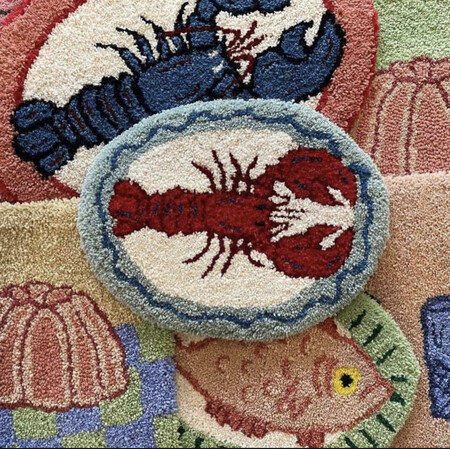
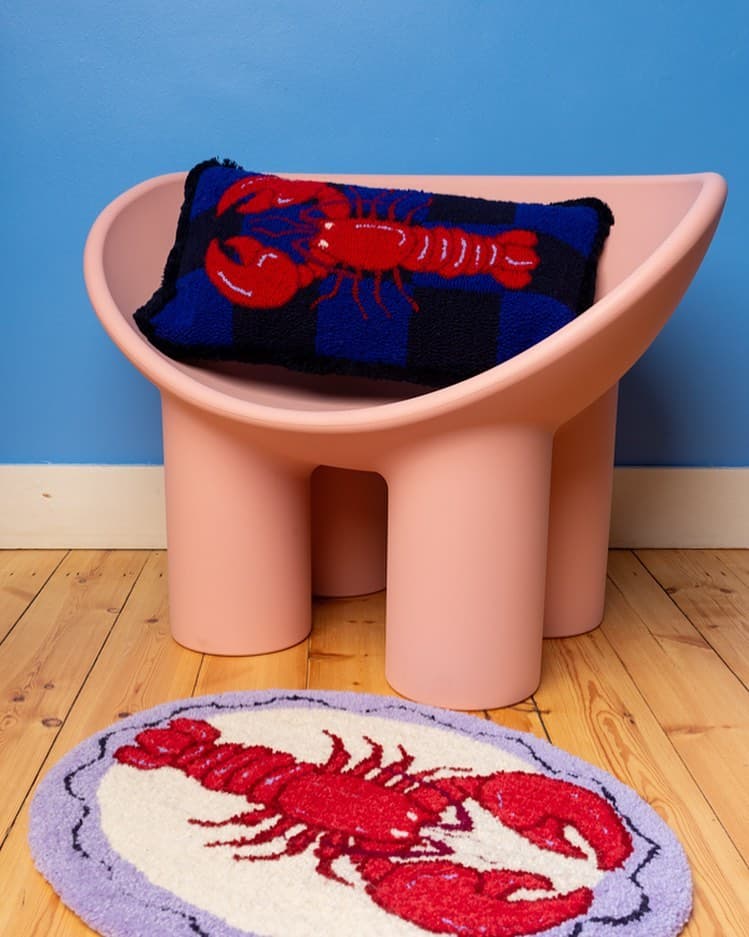
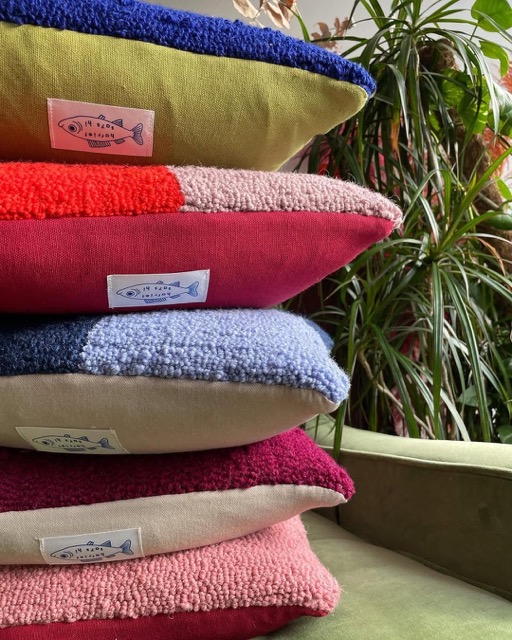
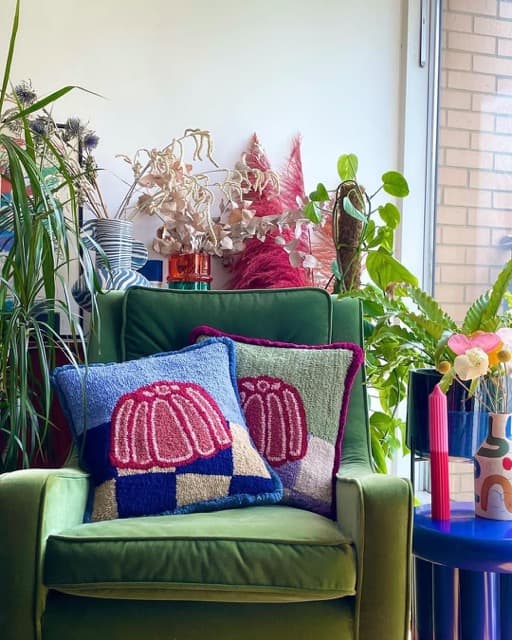
For tufting, I use a loop-pile tufting gun and deadstock Axminster wool to create my cushions. I also use a cut-pile tufting gun to create rugs, as this method forms a shaggy pile effect.
5. Can you tell us about a favourite piece you’ve created and the story behind it?
My favourite piece is probably my salt-and-pepper cushion. I love the weirdness of the vibrant red salt-and-pepper pots, boldly sat on a black and white checkered table, with an intense cobalt blue background and luxurious navy fringed trim around the outside. It was a piece that I always look back fondly on as it was the first moment I really felt a sense of pride in creating. These silly salt-and-pepper pots just spark a lot of joy for me.
Creative process
6. What does a typical day in your studio or workshop look like?
I currently run Harriet Says Hi alongside my full-time PR agency job, so a typical day of running my business is squeezed into late-night designing, tufting, and packing orders.
7. Do you have any unique rituals or habits that help you stay creative?
I wouldn’t say its particularly unique, but as my work revolves around food, I often take way to long in the supermarket looking around at all the funky packaging and products to draw inspiration from.
8. How do you handle creative blocks? Do you have any strategies or tips for overcoming them?
I like to put all my devices away and get my trusty notebook and pen out. I do some terrible shaky hand drawing of ideas I have stuck in my head and go back to basics before digitally designing pieces.
Challenges and successes
9. What’s the biggest challenge you’ve faced as a maker, and how did you overcome it?
I think my biggest challenge are my own insecurities. Social media is a great place to connect and market yourself as a maker, but I think it can also have a negative effect sometimes when you compare yourself to others.
10. What’s been your proudest moment or achievement so far?
I’ve always loved the idea of owning my own foodie-themed shop, and last year I curated a foodie-themed pop-up, bringing together 20 small businesses and deli-products under one roof. It took a lot of work, and I was so proud of what I had pulled off. Being surrounded by so many talented people’s work was amazing, and I had so much fun curating the space.
11. What’s your favourite quote you’ve ever heard about your work? Who said it, or what was the name of the publication?
"Grab the bubbly and a baguette, for it would be rude not to adhere to the menu artfully illustrated on this charming blanket by Harriet Says Hi"
- THE TIMES
Inspiration
12. Where do you draw inspiration from for your work? What sparks your imagination and creativity?
Food glorious food! Wandering the aisles of the supermarket and quirky deli shops is where you’ll find me. I love creating pieces centred around people’s favourite memories based around food.
13. How does colour influence your practice; is it an important part of your process? Do you have a particular palette or favourites? Any go-to sources for colour inspiration?
I love contrasting colours, and predominantly use blues and reds together.
Perspectives and goals
14. What do you want people to feel when they experience your work?
Food plays such a huge role in all our lives, and I’d love to think people see my pieces and draw on memories from their own experiences with food and loved ones.
15. What are you currently working on, and what excites you most about it?
I’m currently developing a wider range of my foodie-themed bath mats – they have been doing so well and I have more weird and wonderful designs in the works. I love that people can elevate their bath rooms with a giant slab of butter as a bath mat.
Advice and reflection
16. What advice would you give to someone starting out as a maker?
Form your own circle of creatives. Being a maker can feel quite lonely sometimes, but having people around you that you can bounce ideas off, cheerlead each other, and confide in, is really important.
Closing thoughts
17. Where can people find your work, and how can they support you?
I’m lucky enough to be stocked in some fabulous shops and online market places. My website is the place to go for new pieces and popular products, and once in a while you’ll find me at a market too.
Harriet Says Hi’s playful, foodie-inspired pieces blend vibrant colours, quirky concepts, and comforting tactile design. From joyful bath mats to whimsical cushions, her creations encourage us to savour life’s small pleasures and celebrate the memories we create around the table.
Explore Harriet’s latest collections and follow her creative journey:
Support Harriet by visiting her website, exploring her delightful creations, and connecting with her vibrant community on Instagram and at markets and pop-ups near you.
Meet the Maker: The Jazzy, Expressive World of Grace Percival
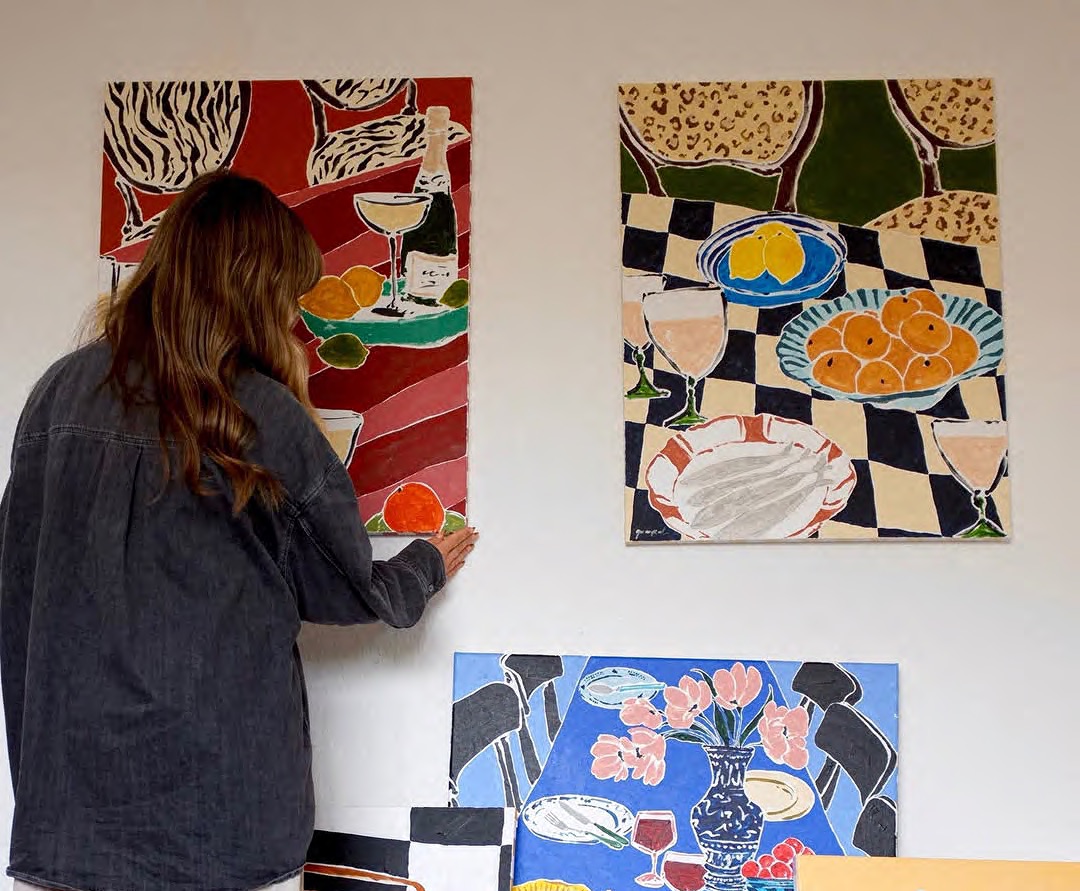
From her early love of fashion and textiles to collaborating with renowned brands, Grace Percival’s creative journey has been colourful, spontaneous, and filled with playful expression. With inspirations ranging from antique ceramics to bustling wine bars, her artwork captures everyday charm in a uniquely vibrant style. Here, Grace shares insights into her creative habits, her passion for vivid colours, and why coffee and tiny brushes are essential to her process.
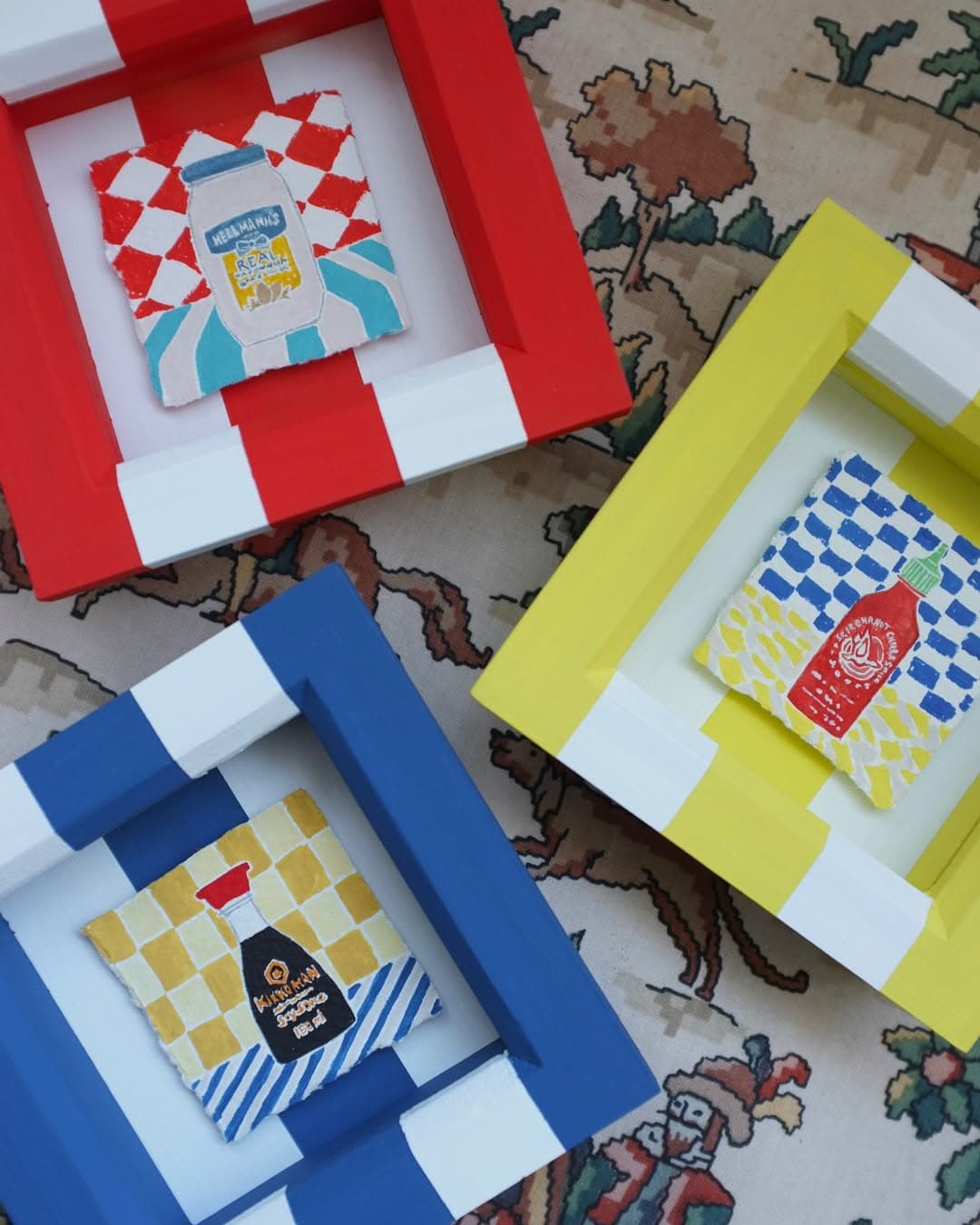
1. Can you tell us a bit about yourself and your artistic journey?
After studying fashion and textiles I thought I wanted to work in Bridal wear, this however, was short lived.
I then went on to search for a new route but wasn’t sure what I wanted to do. I came across an advert on a job site – on reflection, a very cheesy advert – for an internship that asked, “Do you love painting? Do you love drawing?” I decided I did love both of those things so took a shot.
After interning for a couple of solid years, I became a print designer selling to multiple different brands, before going freelance and working for a bunch of studios which I still do now.
Ultimately though, I love creating my own pieces which I started fairly recently. I really like the freedom and complete control: It’s great. I found it a bit daunting at the beginning but really sometimes you just need to start.
2. What inspired you to pursue your craft? Was there a defining moment or influence that sparked your passion?
Has to be my dad, he is amazing at all things creative. He’s always been my biggest influence.
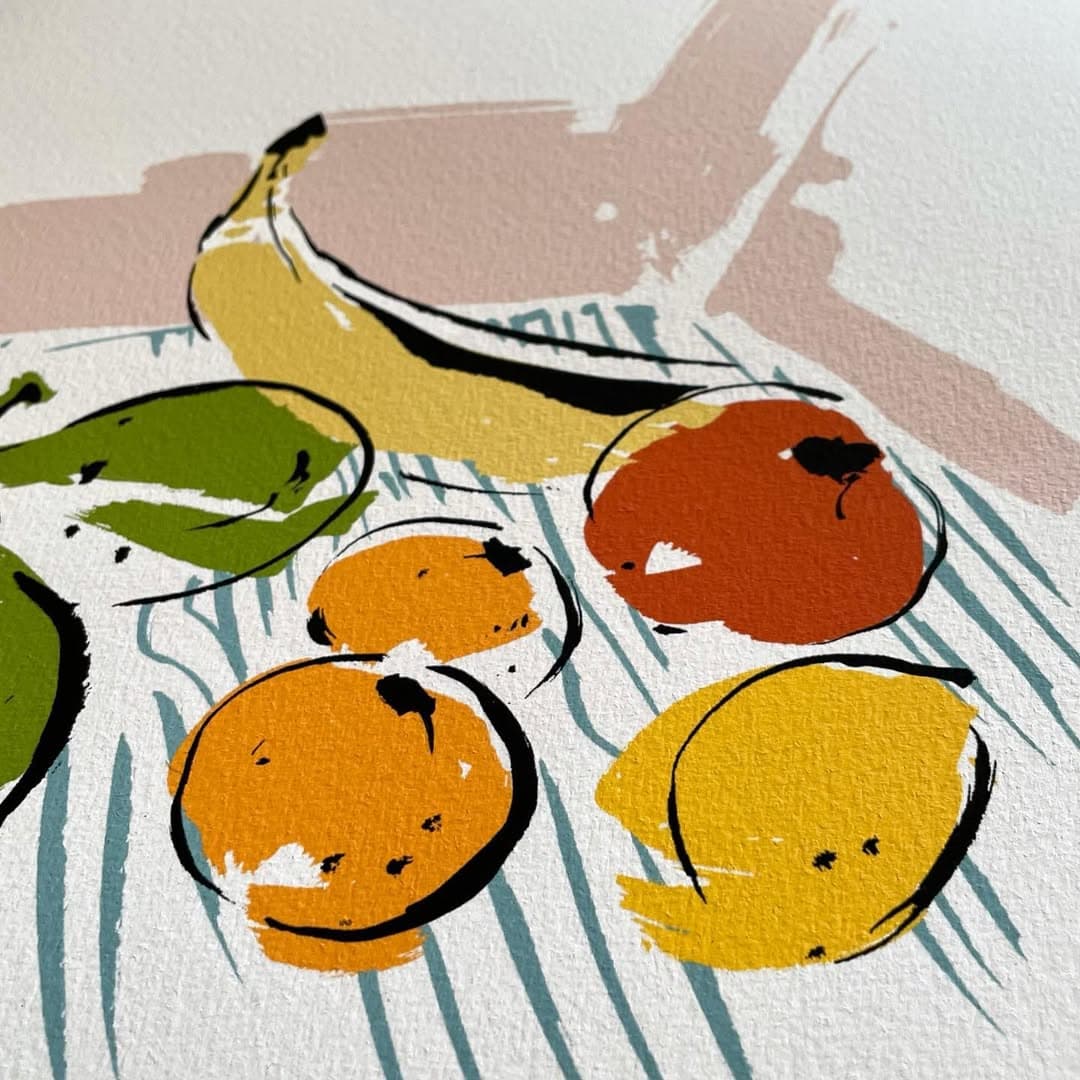
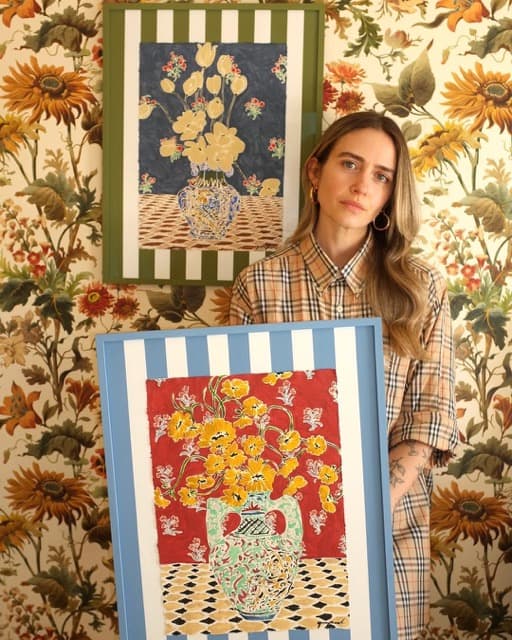
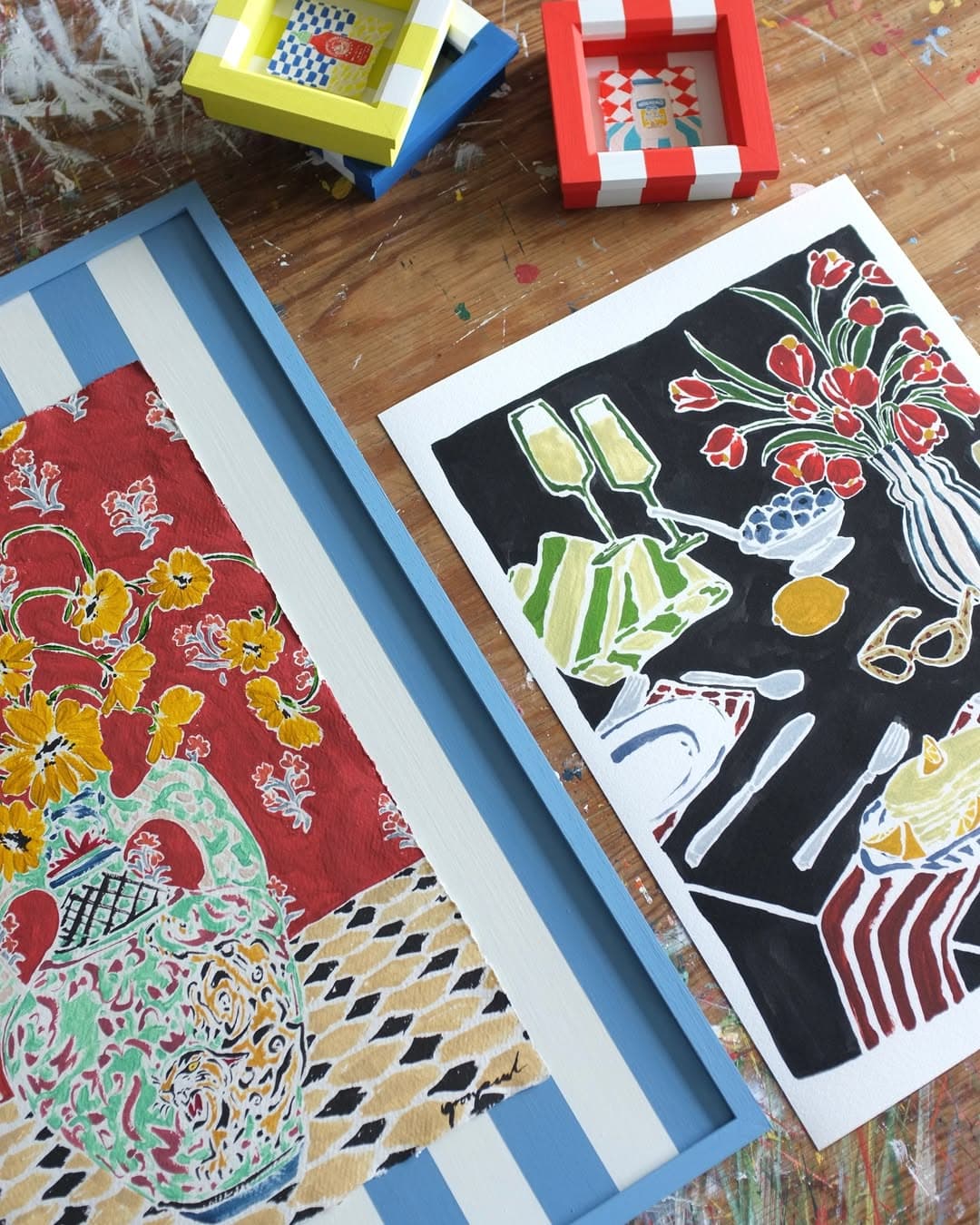
Your craft
3. How would you describe your work in three words?
Playful, vibrant and jazzy.
4. What materials or techniques do you use, and why are they important to your process?
Gouache paints, torn paper and the worlds smallest brushes.
5. Can you tell us about a favourite piece you’ve created and the story behind it?
‘Pat’s Chair’ it was the first big piece I created on canvas. The story behind it, I have a weird obsession with` chairs and leopard print so I combined the two.
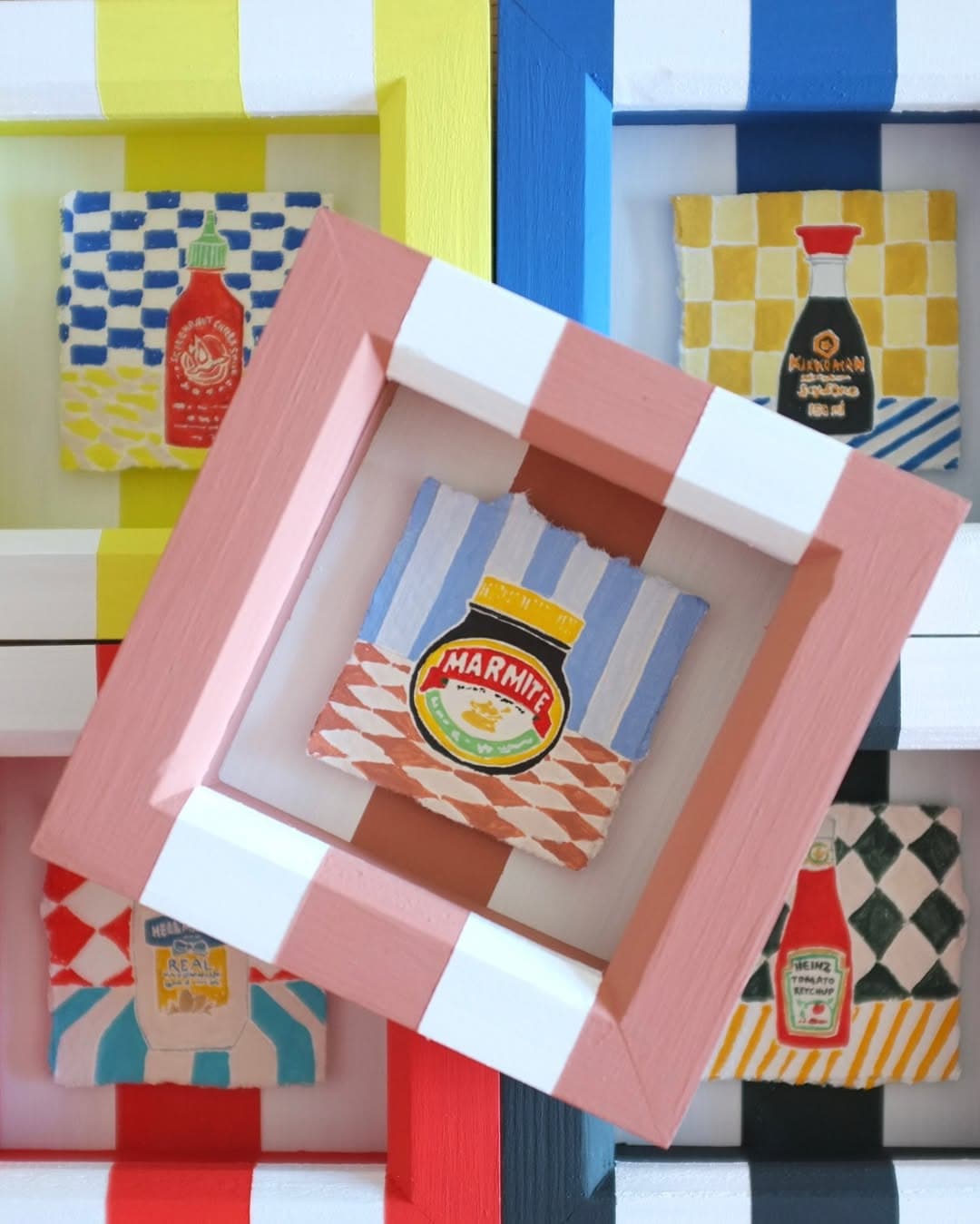
Creative process
7. Do you have any unique rituals or habits that help you stay creative?
It’s always difficult to pin point the exact spark of inspiration but I tend to fill my time with these habits – looking at interiors is a real hobby (old or new)/flowers and florists take up a bit of my time/ annoying to admit but instagram is almost always quite a big muse.
8. How do you handle creative blocks? Do you have any strategies or tips for overcoming them?
Coffee, lots of it.
Challenges and successes
9. What’s the biggest challenge you’ve faced as a maker, and how did you overcome it?
Comparing myself to other artists. I am still learning how to overcome this.
10. What’s been your proudest moment or achievement so far?
I have done a collection of my designs on t – shirts with Topshop, this was a huge moment.
11. What’s your favourite quote you’ve ever heard about your work? Who said it, or what was the name of the publication?
“Grace’s paintings effortlessly exude such charisma, with their painterly appearance and confident but loose line work.”
- MILIEU STUDIOS
Inspiration
12. Where do you draw inspiration from for your work? What sparks your imagination and creativity?
I’m currently obsessed with still lives. These always include ceramics, window shopping for vases is my favourite pastime. Wine bars are pretty much a constant, not necessarily for the reason you think. I like the table layouts, glasses, flowers, bottles and table cloths; they are usually ever changing too, so a constant source of inspiration, from the bottle branding to the bud vases on the tables.
13. Do you have a favourite artist, maker, movement, or tradition that has influenced your craft?
Kate Boxer, every time. Her work is unlike anyone else’s and she uses techniques I’ve never seen before.
14. How does colour influence your practice; is it an important part of your process? Do you have a particular palette or favourites? Any go-to sources for colour inspiration?
Choosing a colour palette is my favourite part, my phone is filled of screenshots. I always start with a rough sketch on my computer, then I can play around with the colours as much as I like. That way when it comes to painting I’m already confident my palette.
Perspectives and goals
16. What do you want people to feel when they experience your work?
My work is always very vibrant and playful, I like to think it brings a bit of fun to peoples homes.
17. What are you currently working on, and what excites you most about it?
I’m currently working on some large pieces that will be framed and painted in my classic colourful stripes. These are particular exciting as they incorporate lots of my favourite things; leopards, antiques and florals. They are jazzy.
Advice and reflection
18. What advice would you give to someone starting out as a maker?
Paint what you enjoy, not what you think others will like.
19. If you could go back to the start of your career, what advice would you give your younger self?
Keep slogging on, someone will buy something eventually.
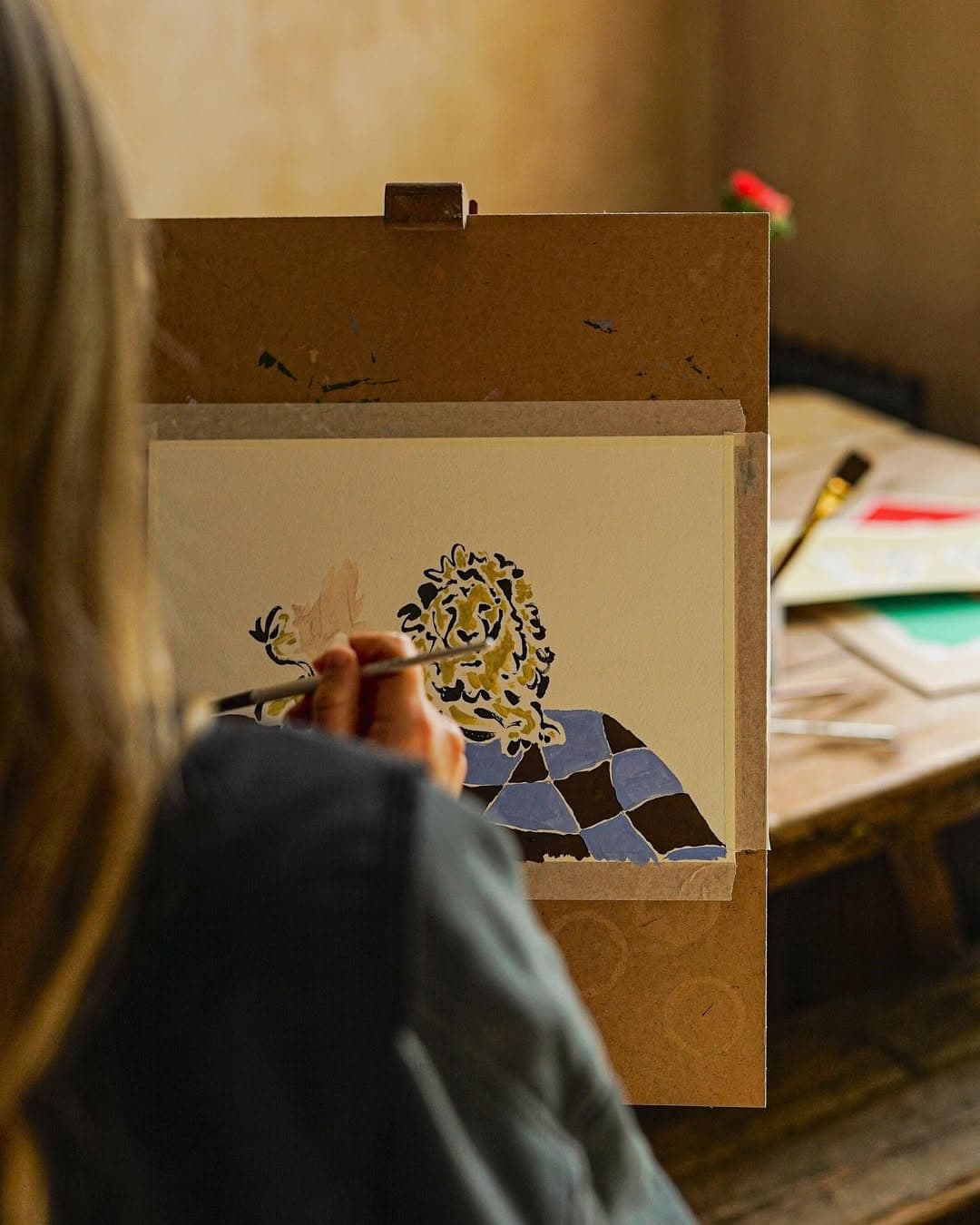
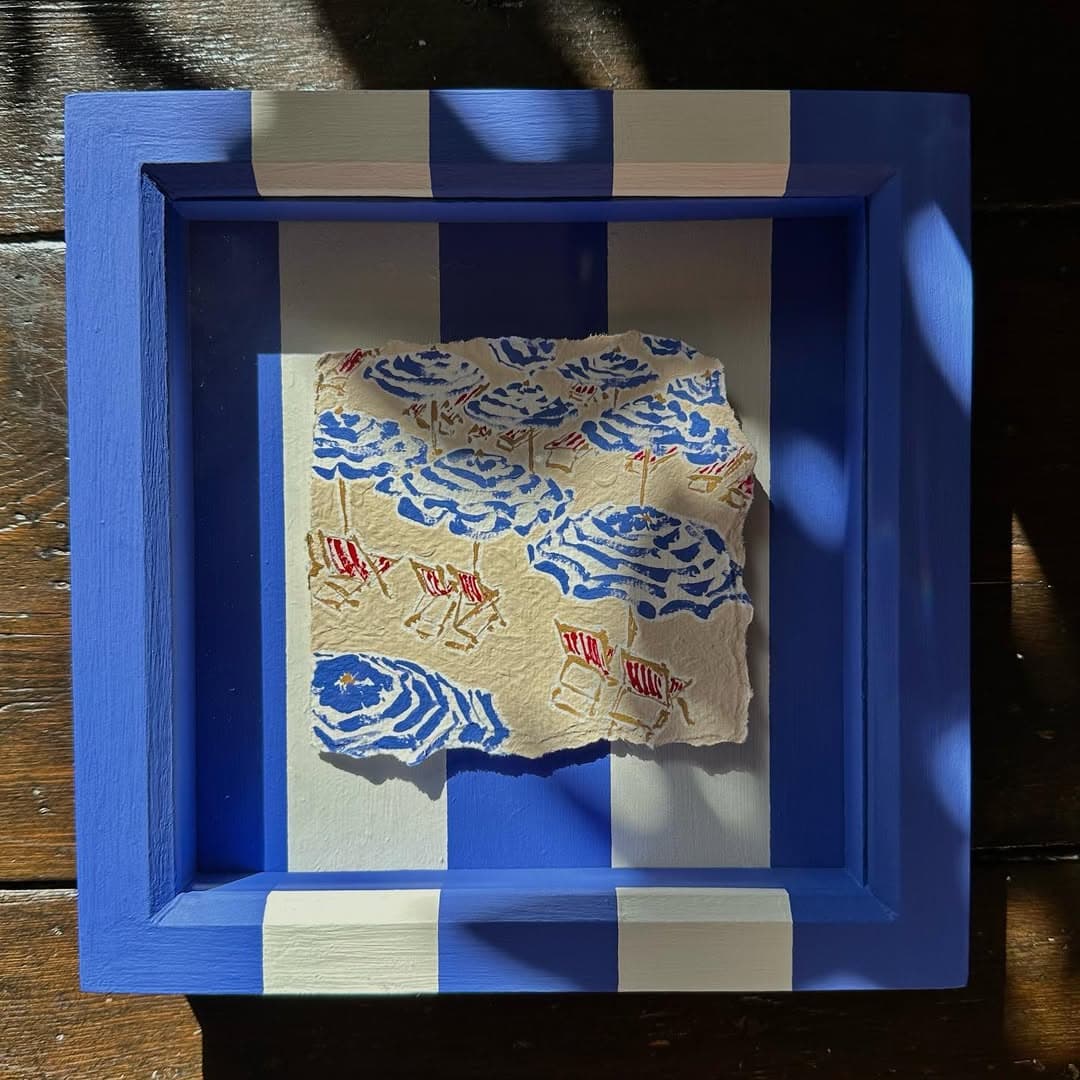
Closing thoughts
20. If you could collaborate with any artist, past or present, who would it be and why?
Has to be Hockney for me. I’ve always been a massive fun of how unique his work is, he has such original ideas.
21. Where can people find your work, and how can they support you?
They can find me at: www.gracepercivaldesign.co.uk
Explore Grace’s latest collections and follow her creative journey:
Support Grace by visiting her online shop, experiencing her creations at select boutiques, and following along as she continues to bring joyful creations into the world.
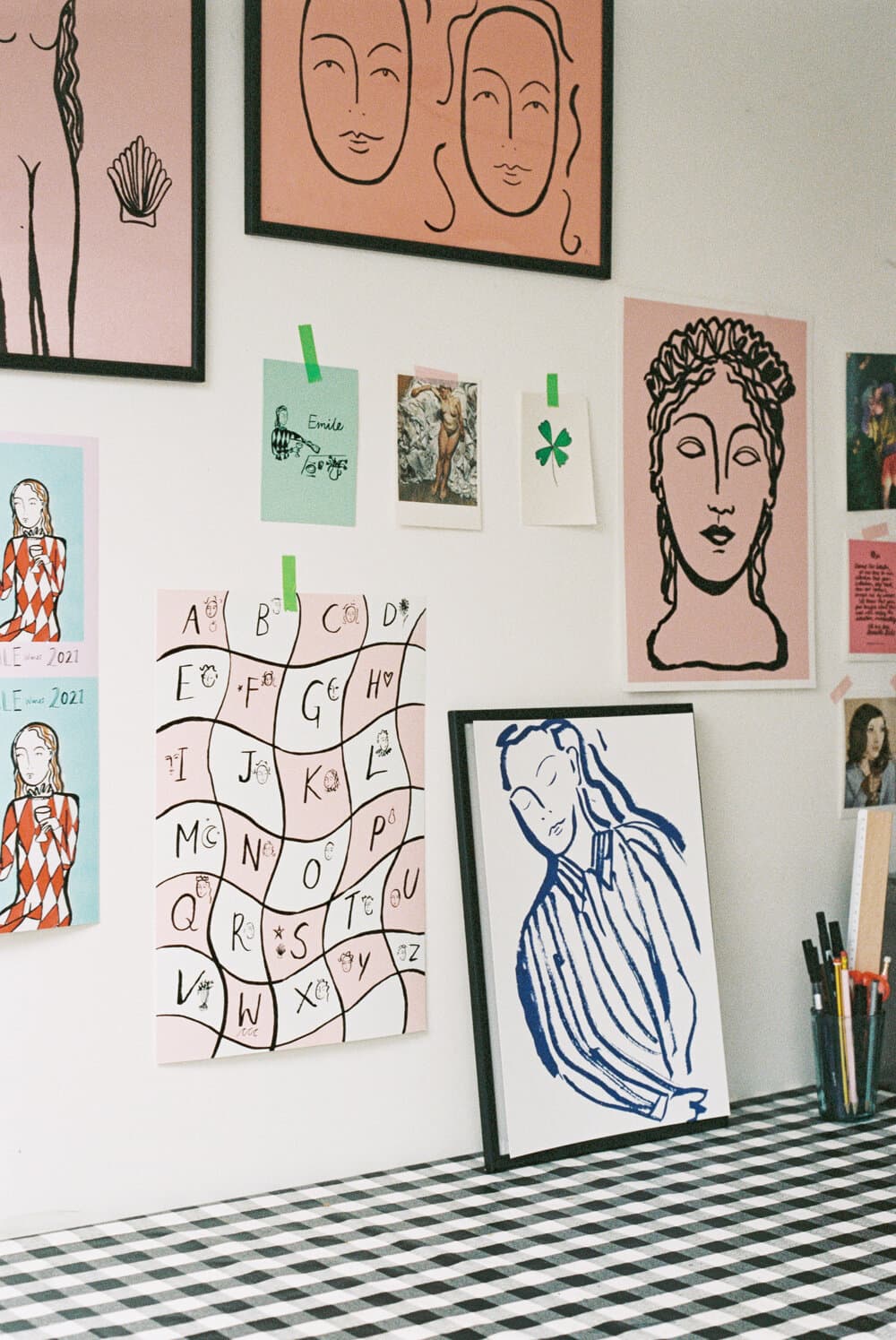
Meet the Maker: The Vibrant, Nature-Inspired Artistry of Frances Costelloe
We had the pleasure of chatting with Frances Costelloe, a self-taught artist whose vibrant and free-spirited drawings capture the essence of nature and everyday moments. Frances shares insights about her artistic upbringing, her love for quick, intuitive mediums like pastel, and the joyful spontaneity she brings to each piece. From her cherished tulip series to collaborations with esteemed brands, Frances offers an intimate glimpse into her creative world and the joy she finds in capturing life’s fleeting moments.

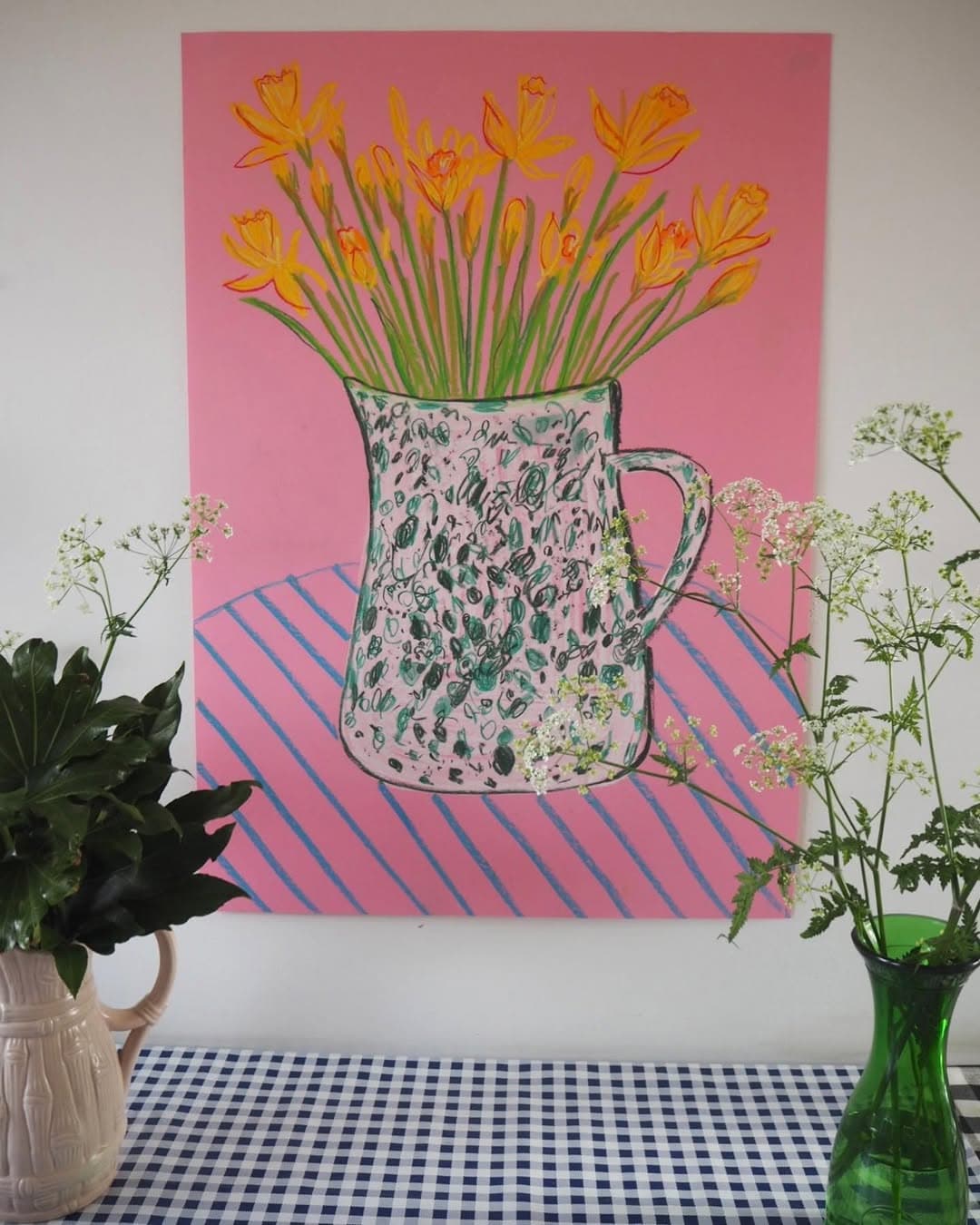
1. Can you tell us a bit about yourself and your artistic journey?
I always thought I would be an artist when I was younger as both of my grandparents were and I come from a creative family. I am self taught as I took a detour in the form of a politics degree however I had a great grounding at secondary school painting with oils whilst looking across the skyline of London. The city has always inspired me as there is something special about the light in the capital.
2. What inspired you to pursue your craft? Was there a defining moment or influence that sparked your passion?
Art was one of the few things I was really good at as a child when I didn’t find the rest of school that easy. I have always enjoyed the act of drawing and my practice across a variety of mediums always comes down to that.
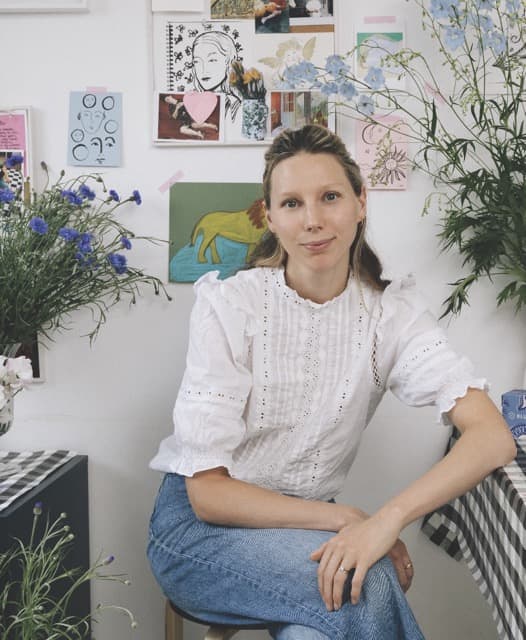
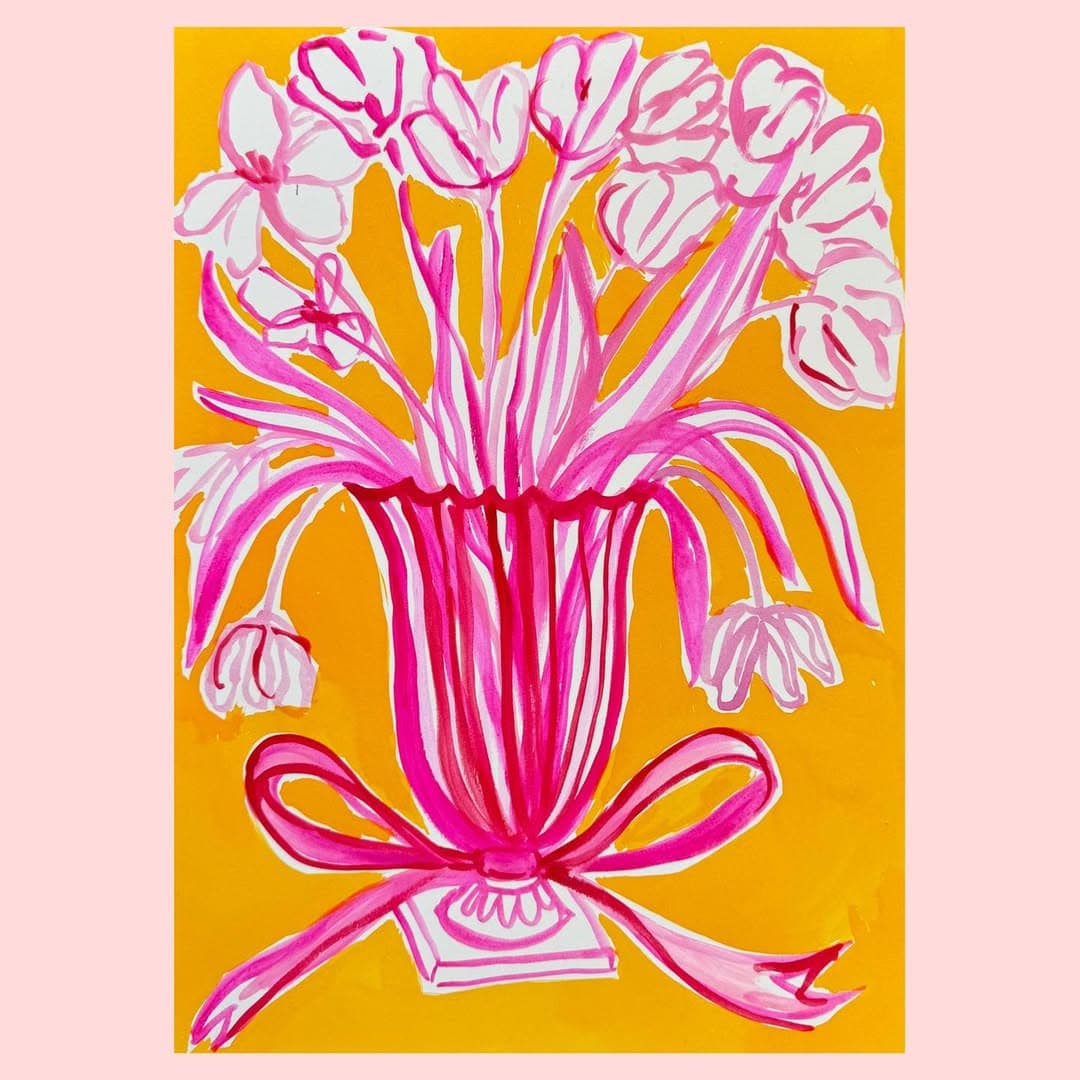
Your craft
3. How would you describe your work in three words?
Playful, free, born in nature.
4. What materials or techniques do you use, and why are they important to your process?
I like quick work. The idea of laboured work for me is not appealing. I love the speed of pastels and the simple colour play that can be achieved with the highly pigmented sticks. Lime has also been important to my work as it helps my drawings flow.
5. Can you tell us about a favourite piece you’ve created and the story behind it?
I love all my tulip works. I have a large catalogue of photos on my phone and draw these on repeat. Often I change all the colours but keep the basic shapes on a favourite composition the same.
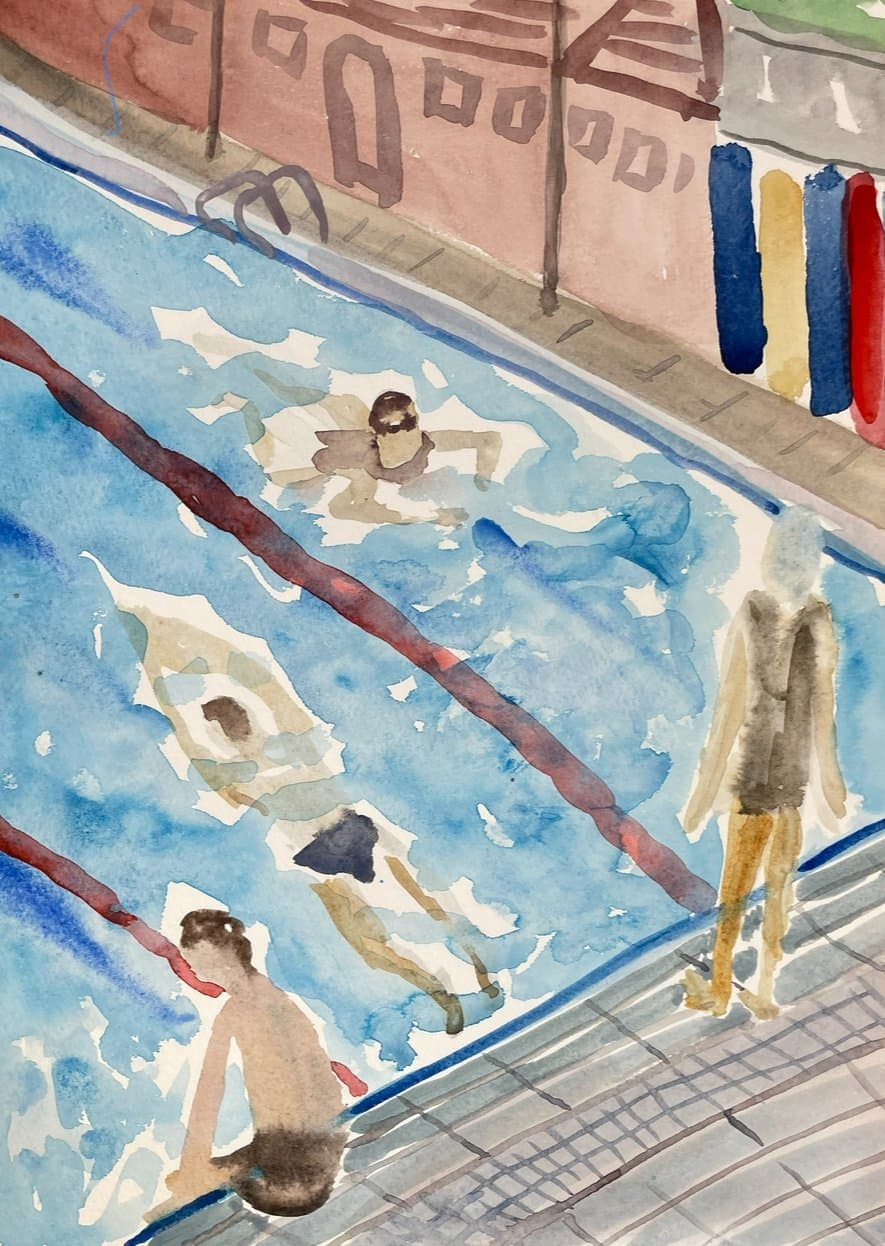
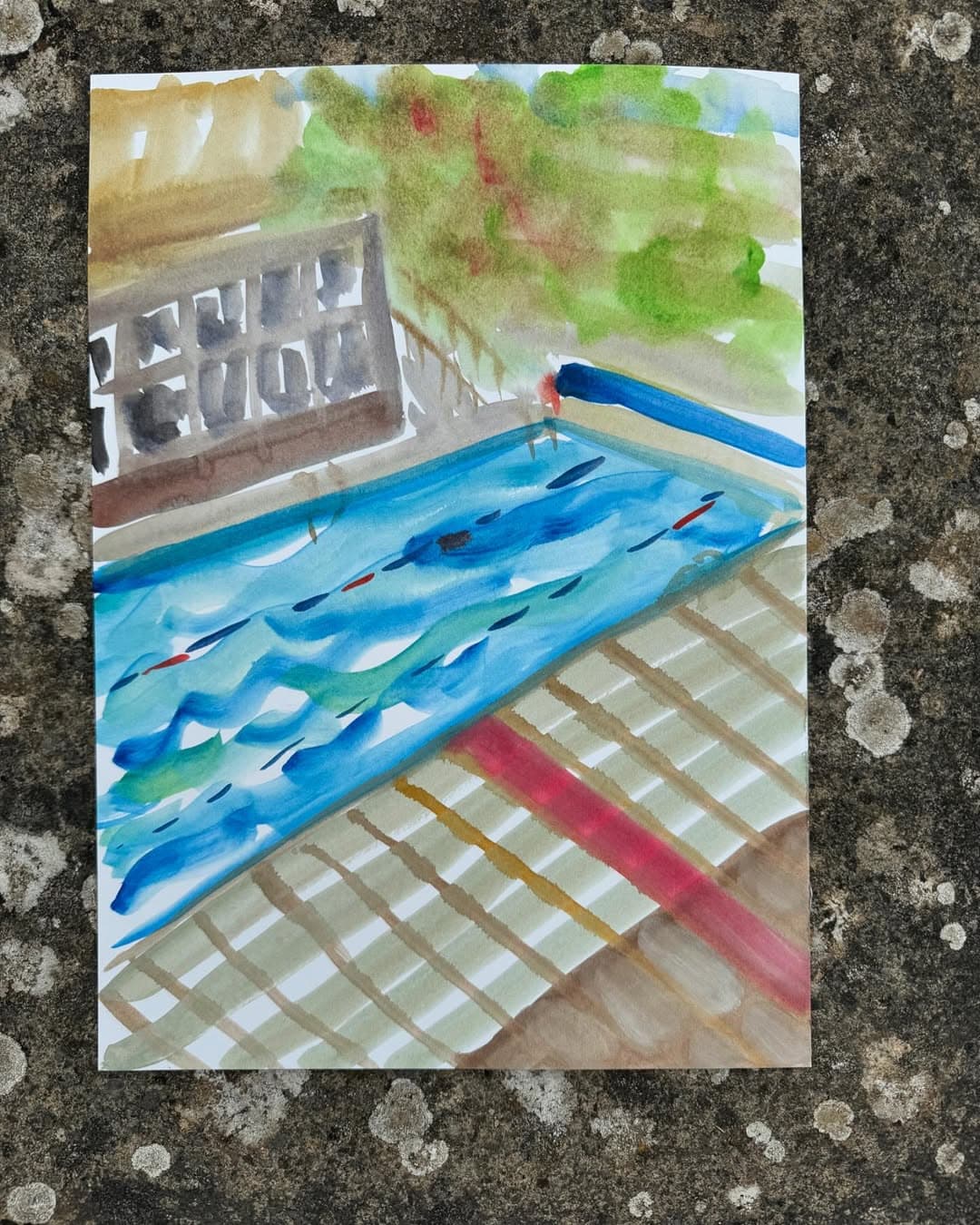
Creative process
6. What does a typical day in your studio or workshop look like?
I only work on my art part time. It usually involves large cups of english breakfast tea in cornishware mugs, making marks on big pieces of paper and my face smudged with pastel as I rush out the door to collect my kids.
7. Do you have any unique rituals or habits that help you stay creative?
Gallery visits- although this has not been a priority recently as I have been trying to focus on good health habits.
8. How do you handle creative blocks? Do you have any strategies or tips for overcoming them?
Make multiples and toss a lot out. Some gold will shine through.
Challenges and successes
9. What’s the biggest challenge you’ve faced as a maker, and how did you overcome it?
Trying to paint extremely large portraits of the staff of a hotel in Mozambique while extremely pregnant so I couldn’t properly reach the top of the paper on my drawing board.
10. What’s been your proudest moment or achievement so far?
Getting into Liberty less than 5 months after launching my brand which I started while my son was 6 months.
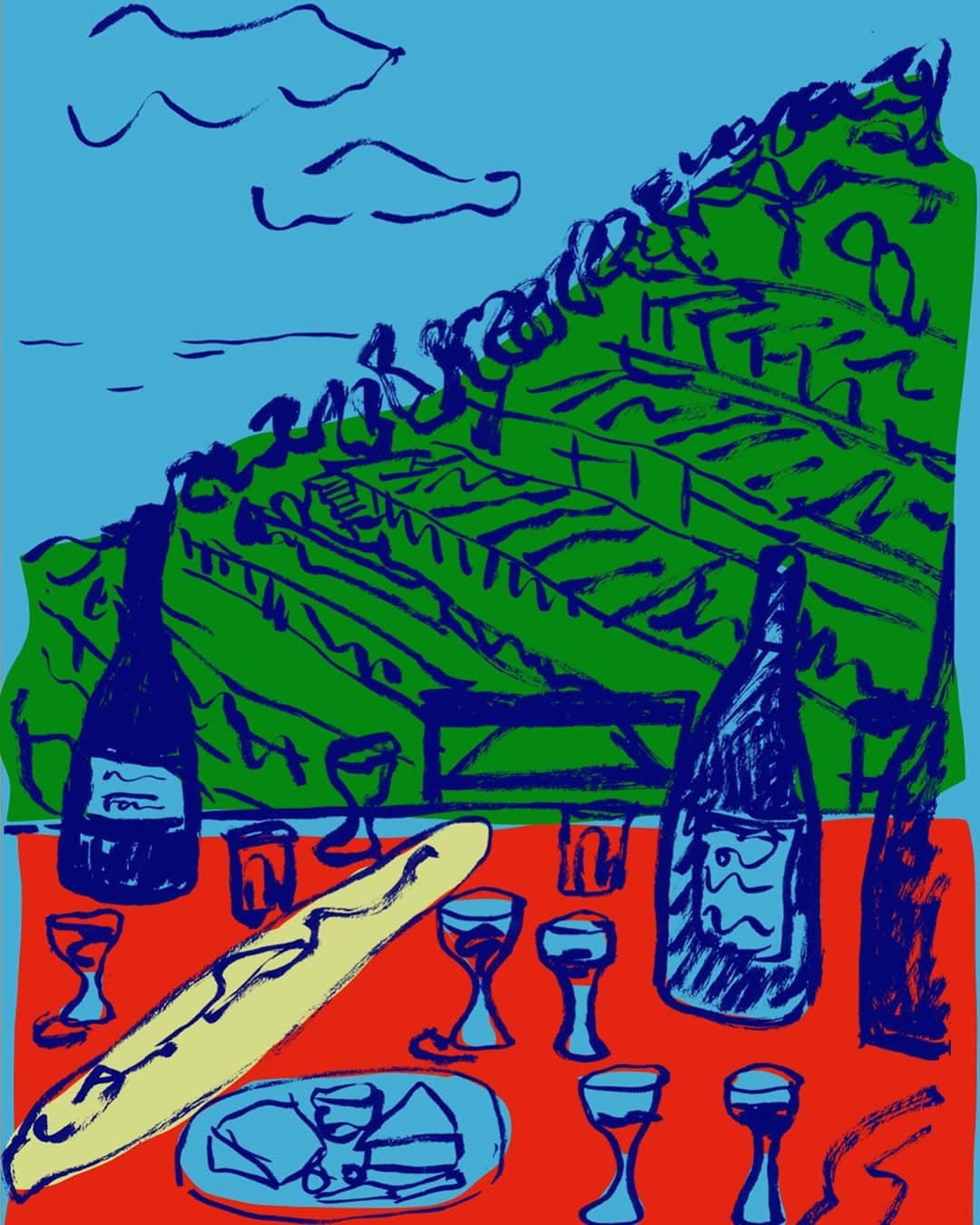
Inspiration
11. Where do you draw inspiration from for your work? What sparks your imagination and creativity?
Always Van Gogh.
12. Do you have a favourite artist, maker, movement, or tradition that has influenced your craft?
I love Matisse and Van Gogh. I am obsessed with colour and they are masters. I also love Tracy Emin and think she is superb at painting the figure.
13. How does colour influence your practice; is it an important part of your process? Do you have a particular palette or favourites? Any go-to sources for colour inspiration?
Colour is very important – it’s more about a feeling, an energy a vibration. I don’t have rules.
Perspectives and goals
14. What role does your environment play in shaping your creativity?
A pretty large role. I take a lot of photos and these inform my practice. I am often trying to sum up a feeling from a meeting, a meal, a still life. Capturing the energeticness of life in a single frame of a picture.
15. What are you currently working on, and what excites you most about it?
Two collaborations with brands I respect. They will both mean I have to cover new ground and explore new mediums and surfaces.
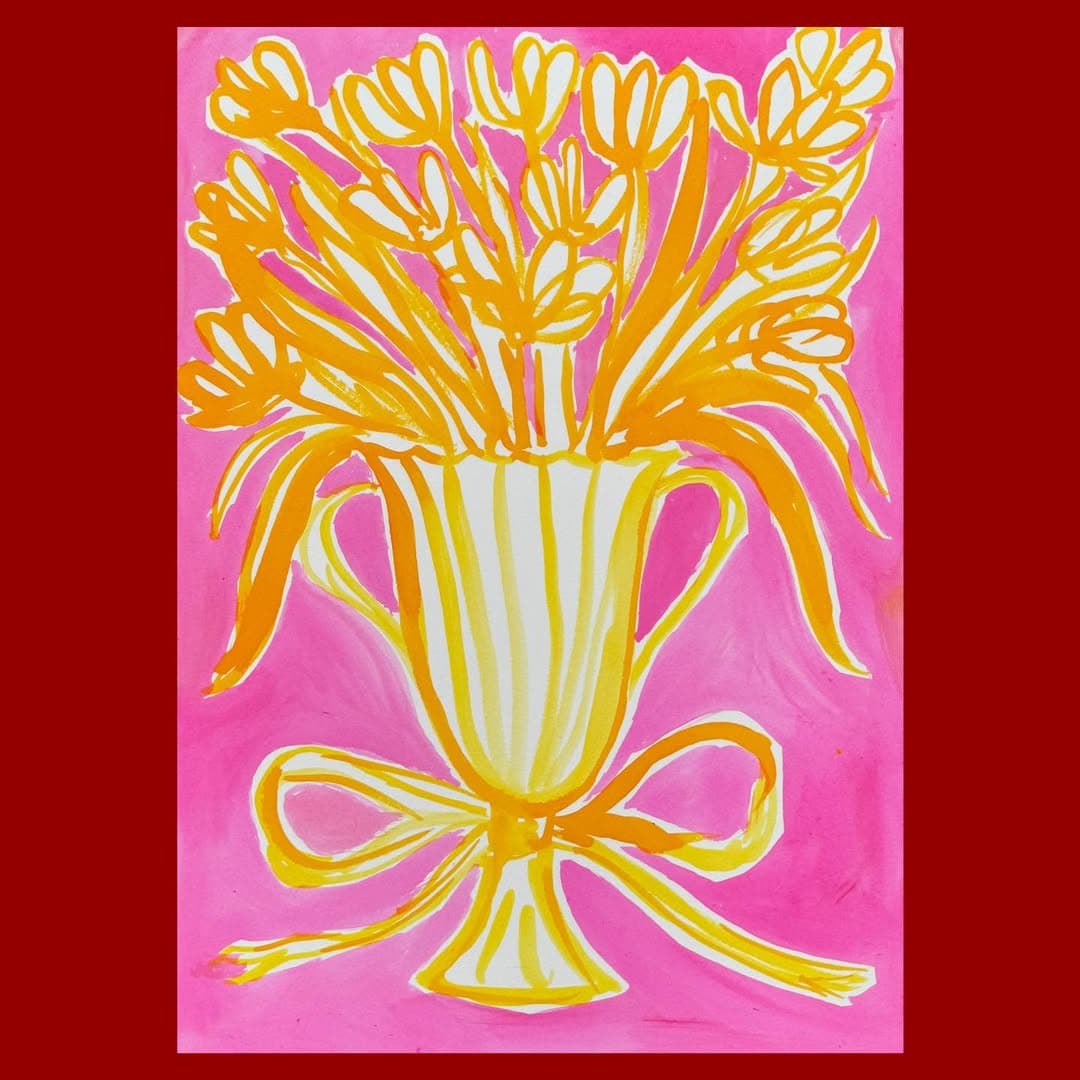
Advice and reflection
16. What advice would you give to someone starting out as a maker?
Have another job too!
17. If you could go back to the start of your career, what advice would you give your younger self?
Trust yourself, do what makes you feel good.
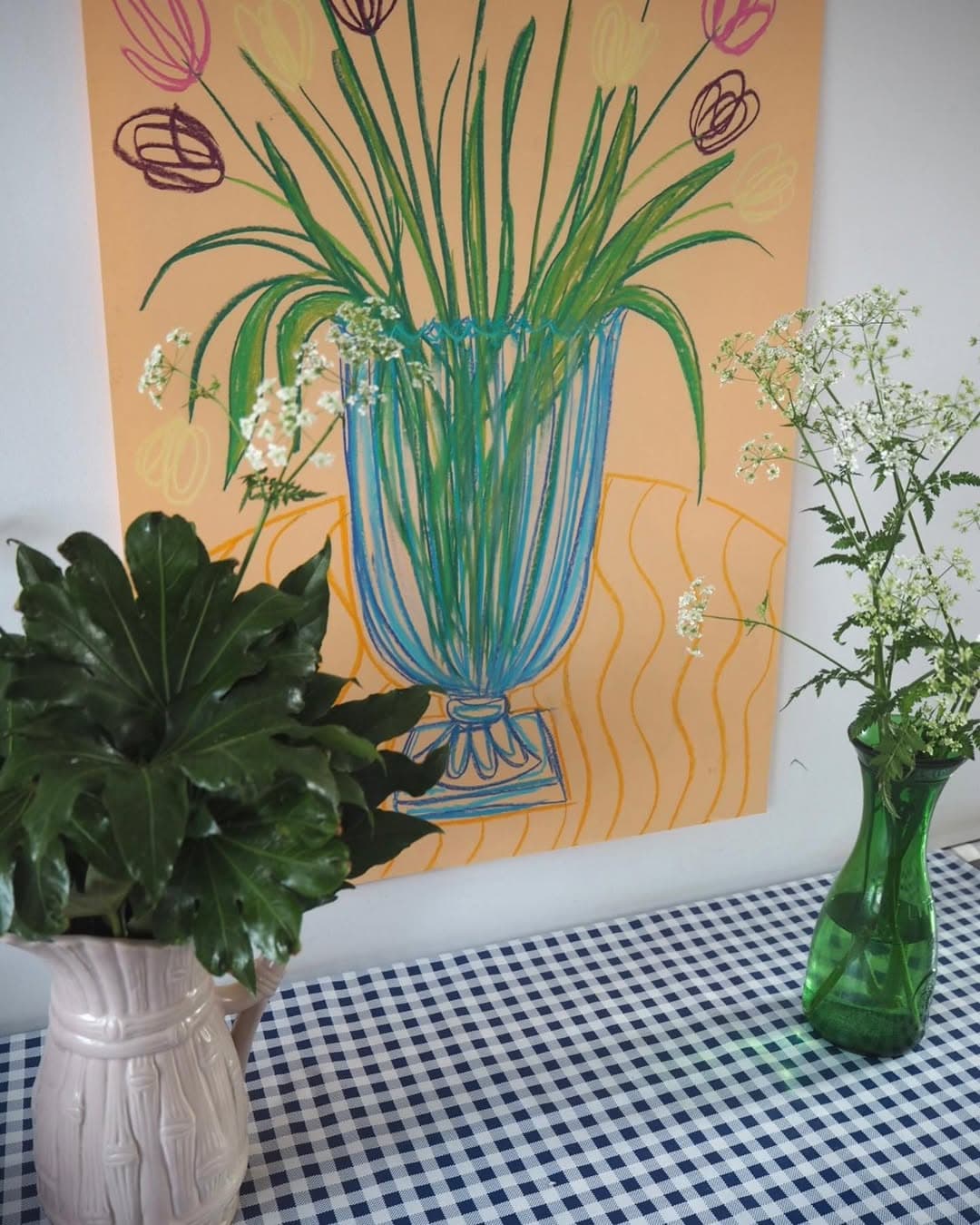
Closing thoughts
18. If you could collaborate with any artist, past or present, who would it be and why?
I would love to glaze more ceramics. I would love to go to Picasso’s studio and create a collection of bowls and plates and jugs..
Frances Costelloe’s work brings spontaneity and rich colour inspired by nature, everyday moments, and the vibrant energy of life.
Explore Frances’ creations at: