Meet the Maker: The Art of Accuracy with David Perry
We recently connected with David Perry, whose vibrant glass creations are characterised by meticulous precision and bold, geometric patterns. David shares his fascinating journey from an IT career to embracing a creative life in Cornwall, where the coastal surroundings inspire his dynamic glasswork. He delves into his passion for the science and artistry behind fused glass, the joy he finds in perfecting each hand-cut square, and how continuous learning and environmental consciousness drive his evolving practice.

1. Can you tell us a bit about yourself and your artistic journey?
I was born in Mitcheldean and lived in Gloucestershire, starting my career making spectacles in a factory, moving onto pensions, and then I.T. for over 15 years. I moved to Cornwall in 2011 and although I initially continued working in IT, living by the sea and adapting to the Cornish way of life had a big impact on me. I wanted to explore life in a more creative way including scuba diving and photography. In 2017 I took the plunge and became self-employed with my photography and fused glass, also tinkering with ceramics. Although my artistic journey started a little later in life, I have embraced it and have grown as a person as well as in my art. In 2022 I went one step further and became a part-time life drawing model and encourage others in their artistic journey.
2. What inspired you to pursue your craft? Was there a defining moment or influence that sparked your passion?
I attended a local fused glass workshop and was hooked, I really wanted to learn more about the science behind fused glass and to see how far I could use the materials to push my creative boundaries. I gave myself two years to see if I could start making an income from my art and knowledge; it is now 2025 and I still feel the excitement of working with glass and knowing that my art is enjoyed in homes all over the world.
Your craft
3. How would you describe your work in three words?
Chequers, precision, colourful
4. What materials or techniques do you use, and why are they important to your process?
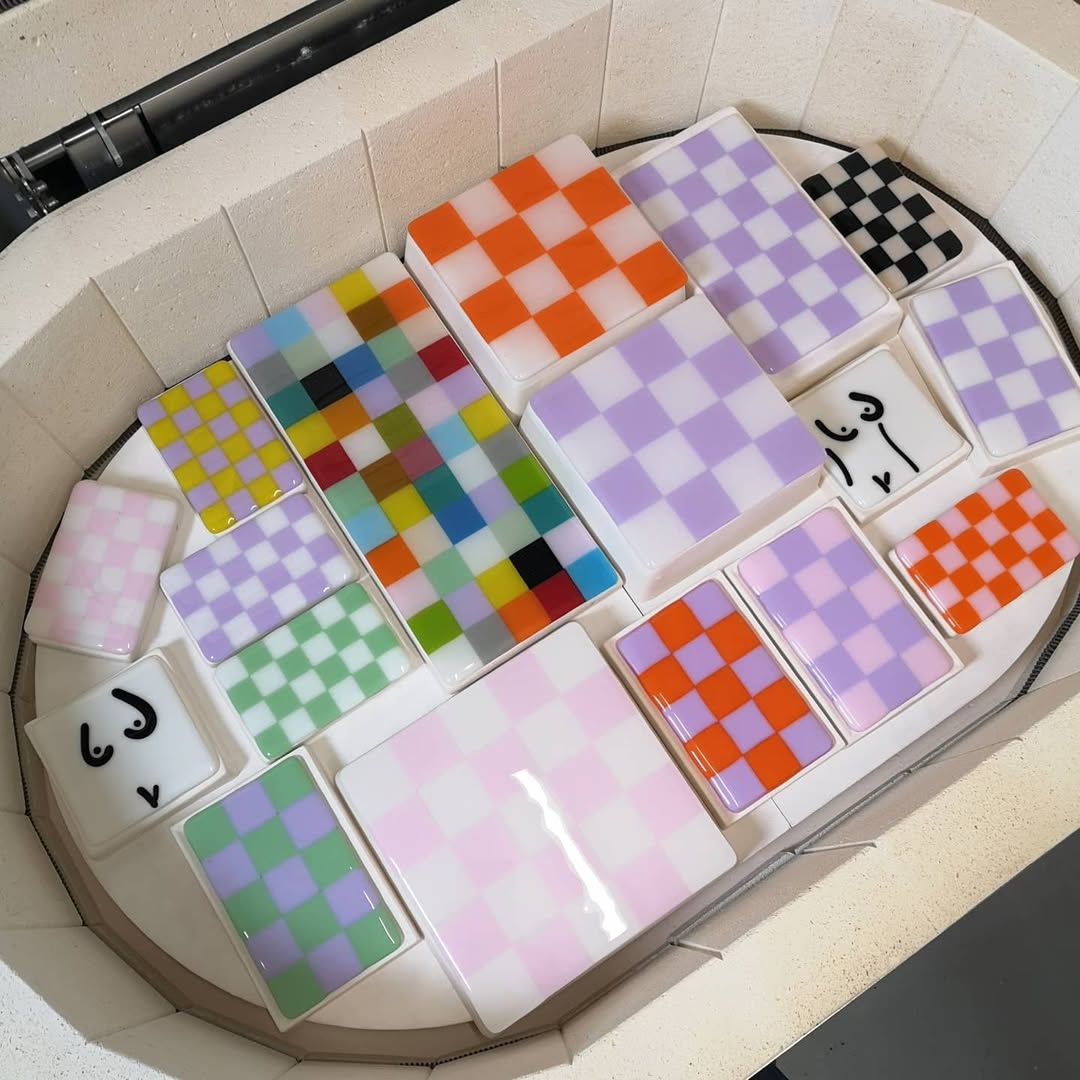
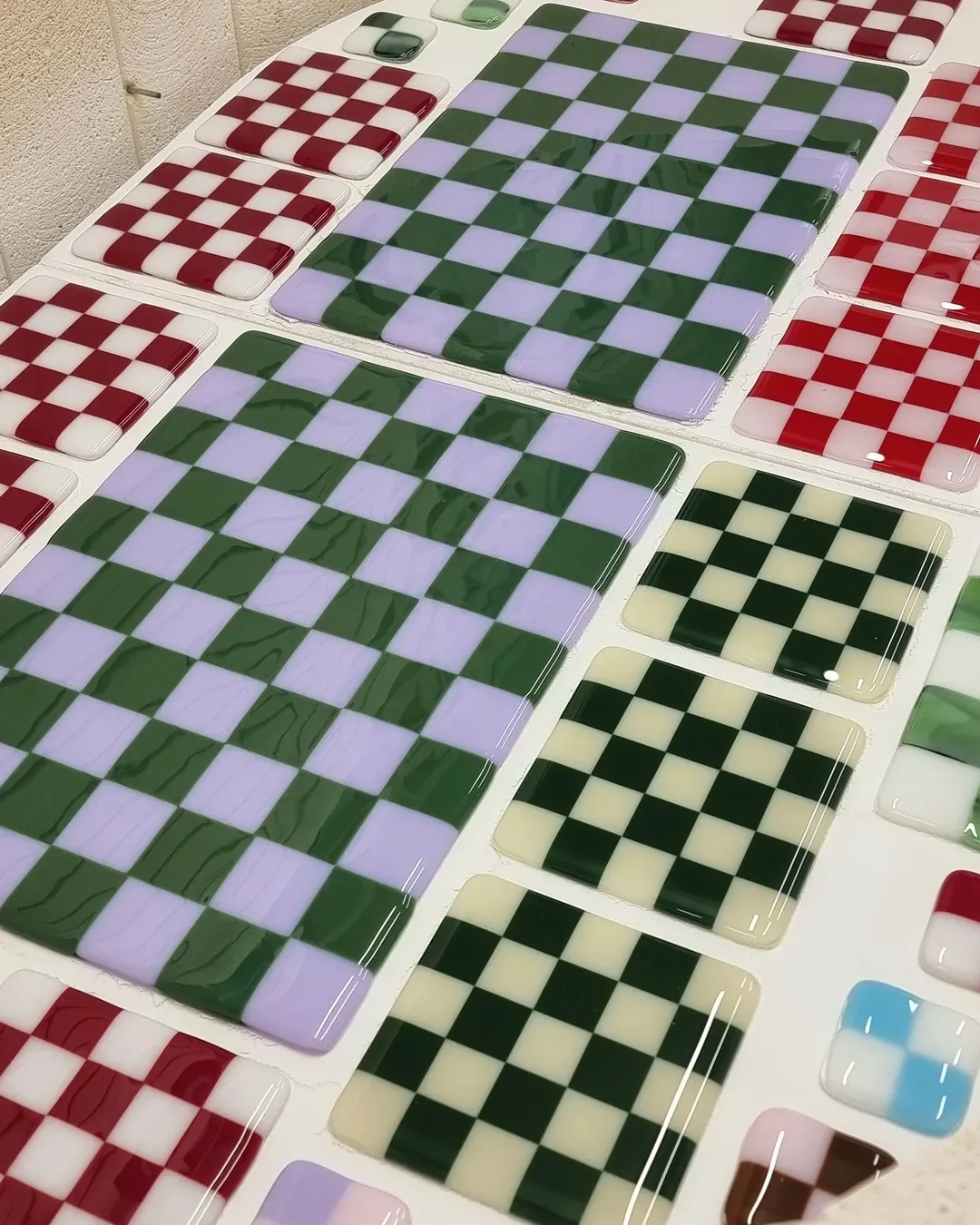
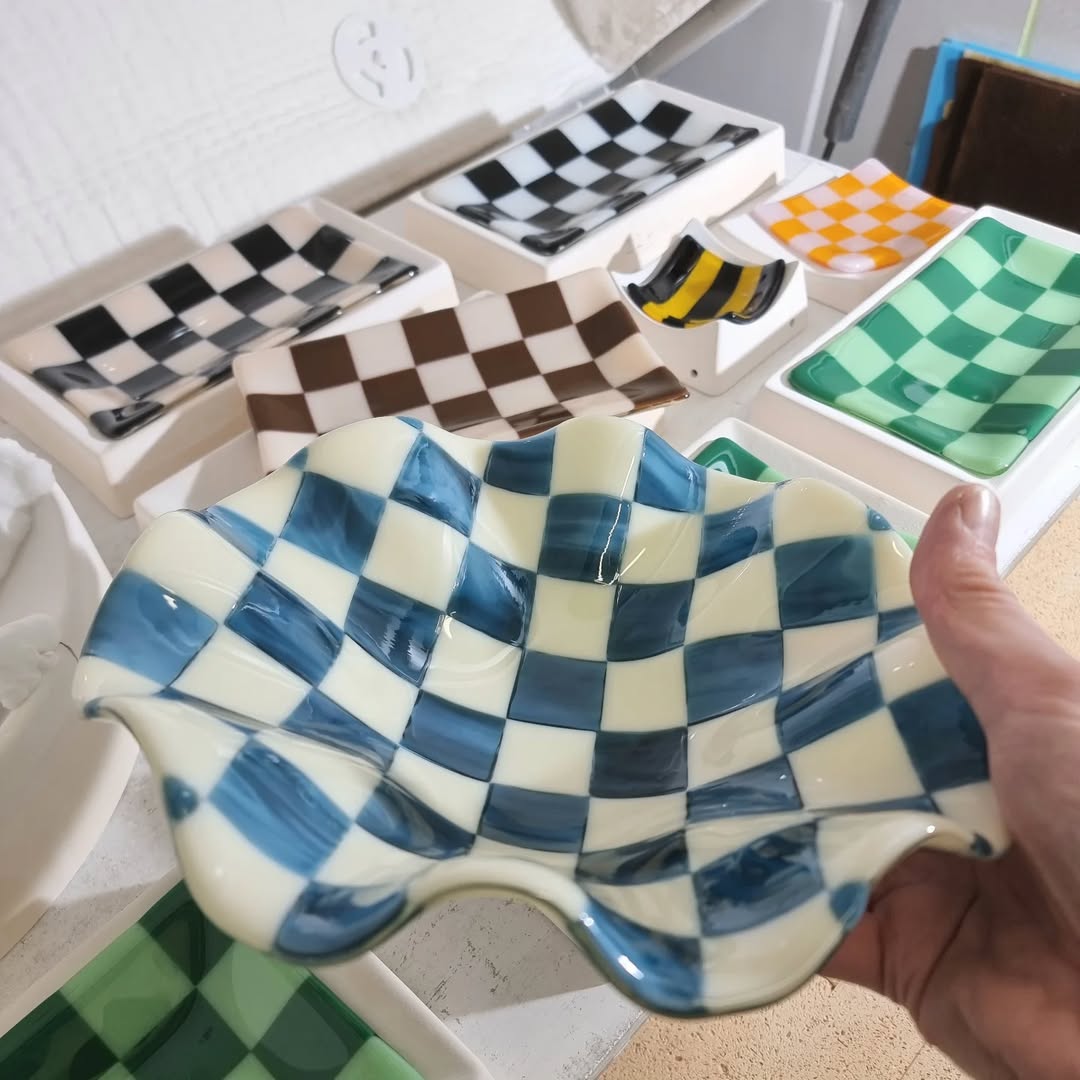
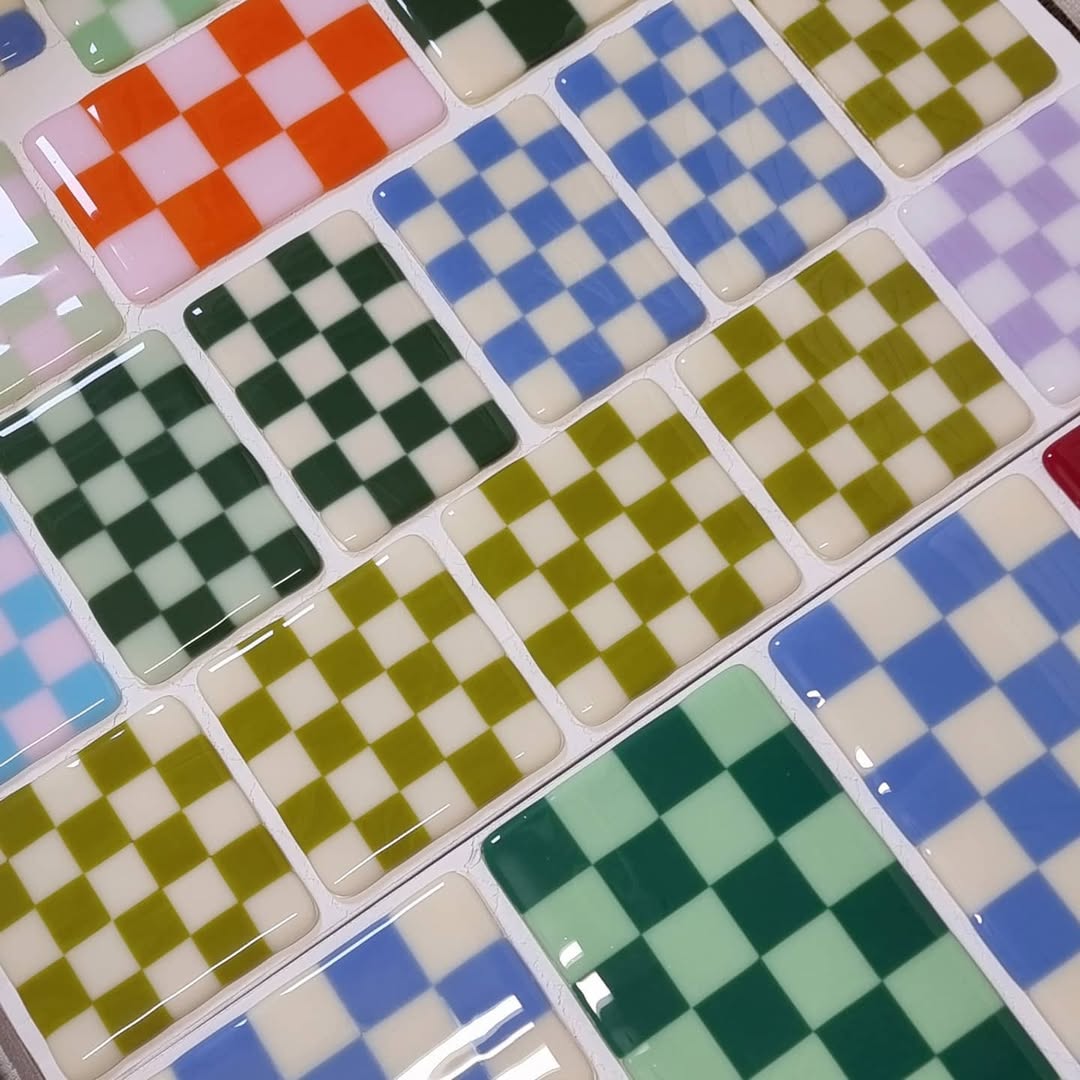
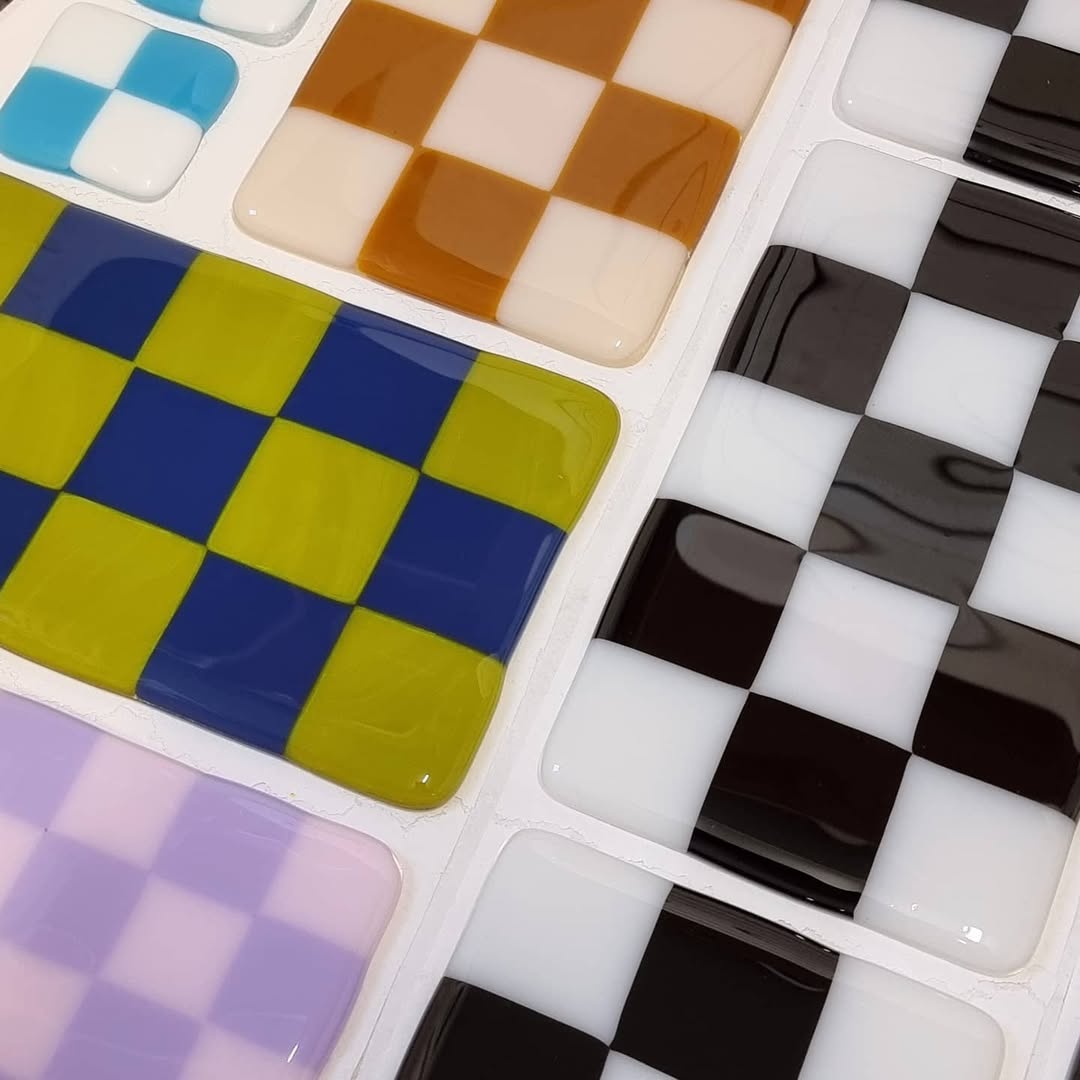
Chequered patterns are my best-selling products, and I take great pride in meticulously hand-cutting each piece of glass to ensure they are as perfectly square as possible. This precision of the crisp lines allows the pieces to fit seamlessly together in the kiln, creating the signature look I love to see in my pieces.
5. Can you tell us about a favourite piece you’ve created and the story behind it?
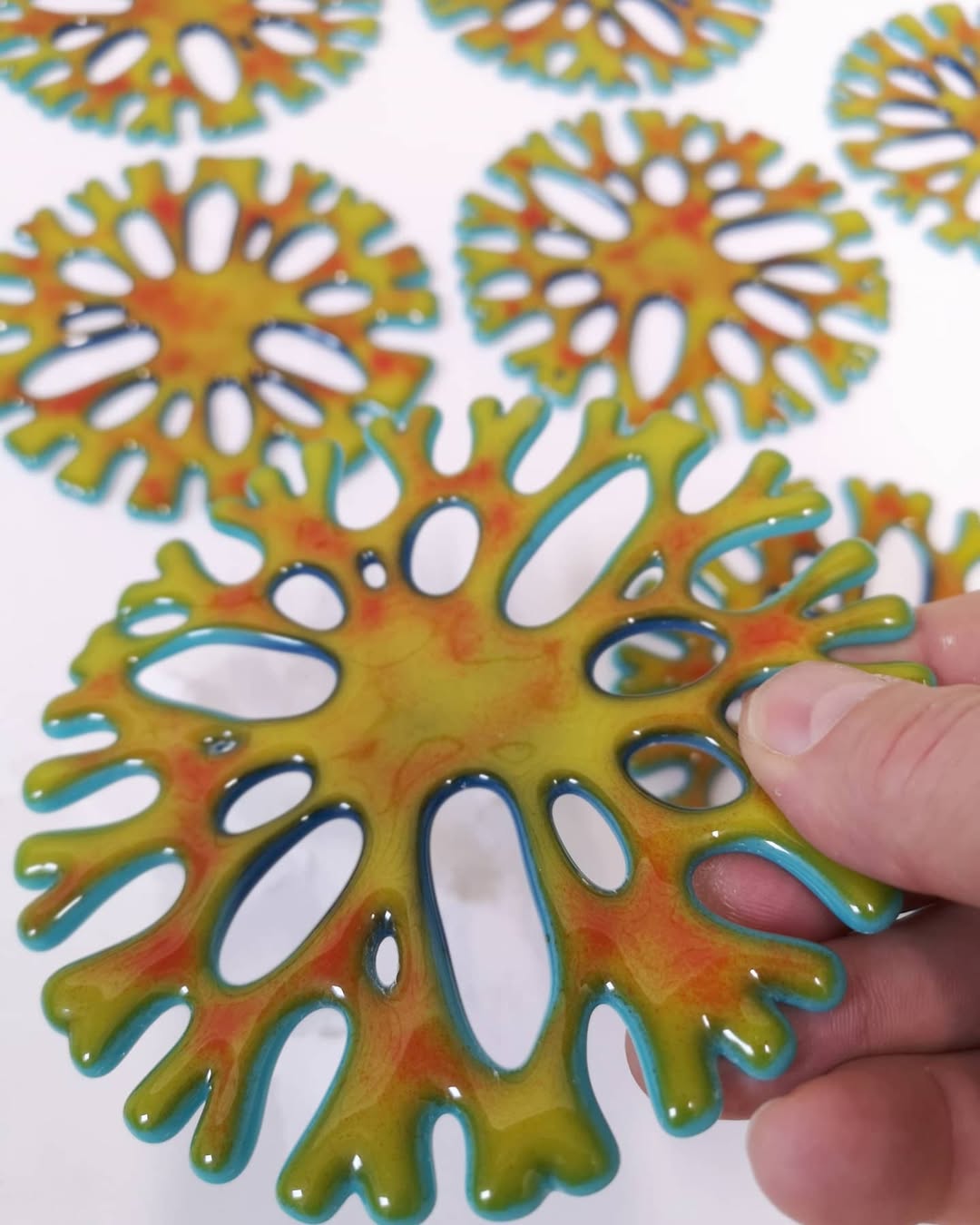
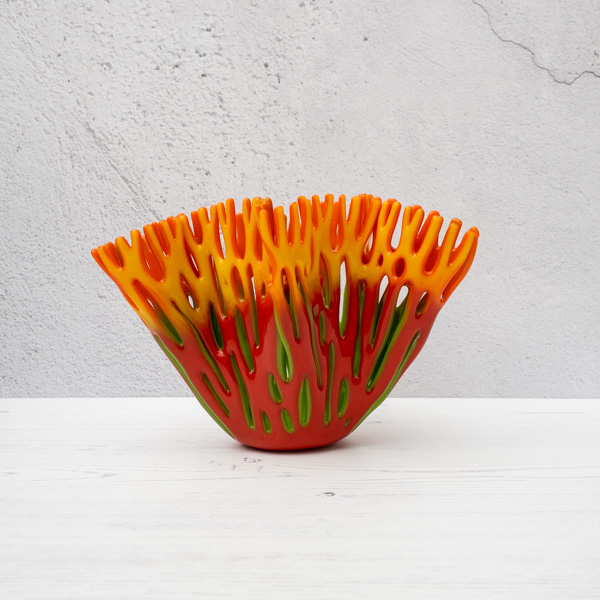
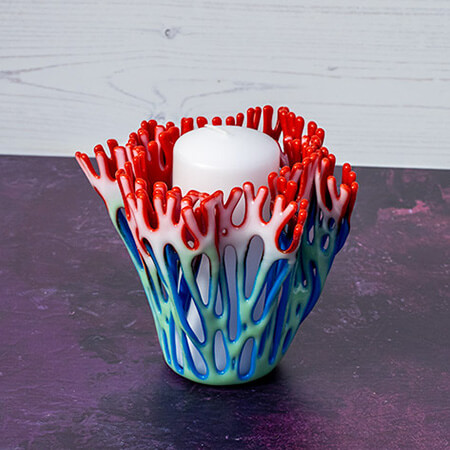
I really enjoy working with glass powders (instead of the normal flat glass sheets I use for most items), as the powders blend and can be layered to create unique pieces like my crackle bowls and coral style vase.
Creative process
6. What does a typical day in your studio or workshop look like?
Squares, squares and more squares! Did I mention squares!? After planning what needs to be made and fits in the kiln space, the next task is hand cutting hundreds of squares, stacking them in piles so I know which ones will go where and then hand cleaning each one as they are placed on top of a clear glass base inside the kiln. The squares are then carefully nudged around to get them as square and linear as possible.
7. Do you have any unique rituals or habits that help you stay creative?
I really had to think about this question… glass can be manipulated in so many ways that I feel I have barely scratched the surface. I am always learning and have several books and tutorials that I am studying to tantalise my creative taste buds. Speaking of taste buds, I do love a cup of TeaPigs tea while I am in the workshop.
8. How do you handle creative blocks? Do you have any strategies or tips for overcoming them?
Living next to the Cornish coast means I am only a short drive away from walking on the clifftops or beaches or going to woodland to photography nature. If time is a little tight it is time to put the kettle on and have a cup of tea, giving me time to reflect. My I.T. background also means I find website redesigning a refreshing change or using my skills to edit product photography.
Challenges and successes
9. What’s the biggest challenge you’ve faced as a maker, and how did you overcome it?
My biggest challenge is trying to maintain social media and their algorithms daily. Instagram is my favourite media to keep viewers updated, but I have learnt that trying to post several times a day across multiple platforms is just not achievable. Just do what you can as and when you are able to.
10. What’s been your proudest moment or achievement so far?
Being interviewed on Channel 4 TV “Stephs Packed Lunch” back in 2021 surrounded by my glasswork. It was a very nerve-racking experience knowing that thousands of UK viewers watched at lunchtime, but I absolutely loved such a brilliant experience, and I will never forget it.
11. What’s your favourite quote you’ve ever heard about your work? Who said it, or what was the name of the publication?
#Obsessed
- The most popular word from my amazing followers on Instagram.
Inspiration
12. Where do you draw inspiration from for your work? What sparks your imagination and creativity?
I have always found geometry and linear lines intriguing; I like the clean and contrasting effect it creates. Chequers or checks are a timeless pattern, but science also plays a part as not all colour combinations and glass types are compatible.
13. Do you have a favourite artist, maker, movement, or tradition that has influenced your craft?
Checkers is everywhere from game boards, fashion, art and architecture to motor racing, so there is whole range of traditions throughout history from the very first checkered floor to the first chess board that have influenced me. Artists who have inspired me include Bob Leatherbarrow, Glenda Kronke, and Marguerite Beneke; all artists who have shared their knowledge and continue to influence my work.
14. How does colour influence your practice; is it an important part of your process? Do you have a particular palette or favourites? Any go-to sources for colour inspiration?
I live a rainbow of colour every day and I do enjoy creating a new combination. Some glass can contain metals which can react with other colours, so science also plays a part in creating the palettes I use. I find inspiration in nature and the many hues you see on the cliffs around Cornwall, and from my social media followers and their suggestions.
Perspectives and goals
15. What role does your environment play in shaping your creativity?
I hand built my workspace at home, so have the shortest commute in the mornings. As soon as I step into my workshop and am surrounded by glass sheets and powders, and put my music on, I feel inspired.
16. What do you want people to feel when they experience your work?
I want my work to make people smile and leave a lasting impression. In a world where we do not always have space for art in our homes, I feel I cross the barrier of creating art pieces that are also practical and will last a lifetime.
17. What are you currently working on, and what excites you most about it?
All things glass fascinates me, so in 2025 I am learning lampworking to create glass sculptures. I am conscious of the environment when I work and ideally, I will use the leftover glass I already have to do this. This will open new avenues for me as the designs you can make are endless. I have 3 very large books to read through first, so watch this space.
Advice and reflection
18. What advice would you give to someone starting out as a maker?
Starting your own craft business for the first time can be very daunting. I would say to always believe in your products, enjoy the journey of creating as much as the selling. Plan your days to keep yourself focused and get in touch with other creatives for support and advice. Keep yourself visible online or in your local area, depending on where you are focusing your sales. It is an exciting and rewarding journey.
19. If you could go back to the start of your career, what advice would you give your younger self?
Having a creative outlet is so rewarding, start now and believe in yourself.
Closing thoughts
20. If you could collaborate with any artist, past or present, who would it be and why?
I think it would be glass artist Bob Leatherbarrow who creates some amazing artwork from sheet glass/glass powders but also produced some very detailed books/videos explaining about how and why glass acts in certain ways from heating, melting, cooling, annealing. He has taught me a lot and inspired me when I started out and continues to do so today.
21. Where can people find your work, and how can they support you?
All of my items for sale are listed on my website davidperryglassceramics.uk and always lots of photos on my socials including Instagram, TikTok and also BlueSky, but the easiest way to find all my socials is via linktr.ee/davidperryuk
David Perry’s glass art brings precision, vibrant colour, and joyful design into everyday spaces. Each handcrafted piece balances practicality with artistic beauty, creating functional artworks designed to uplift homes and captivate imaginations.
Explore David’s latest collections and follow his creative journey:
Support David by visiting his website, engaging with him on social media, and discovering the colourful world of his striking glass art.

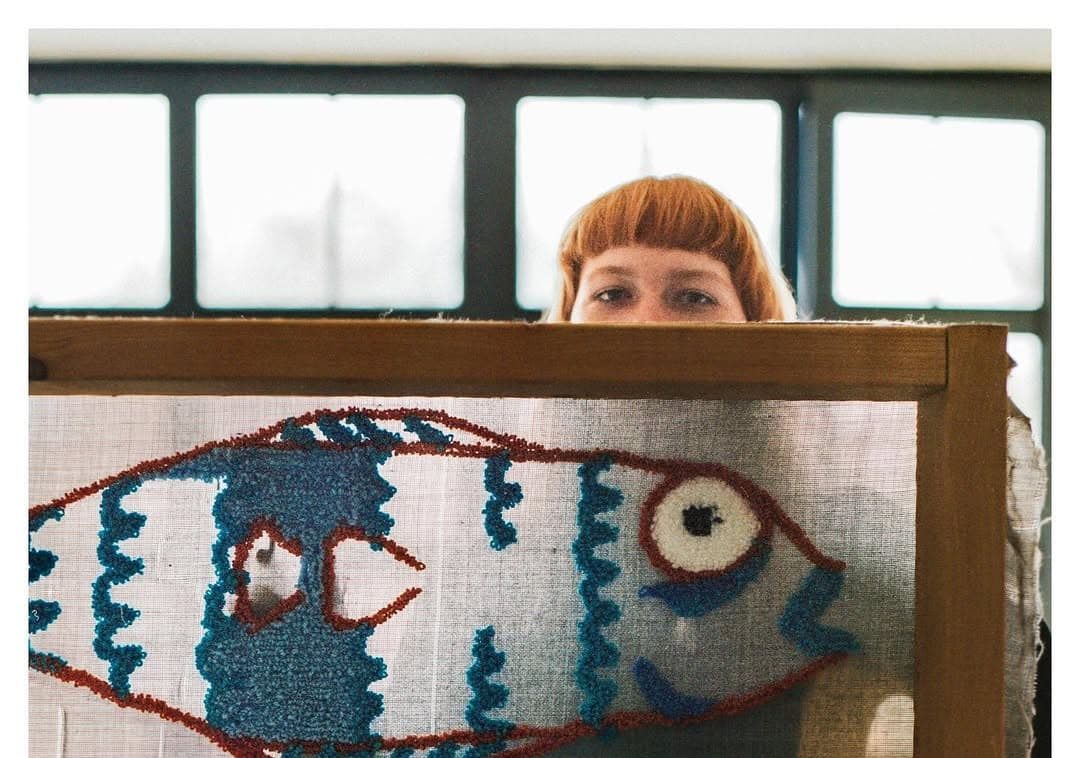
Meet the Maker: Daisy Tortuga Autobiographical Artworks
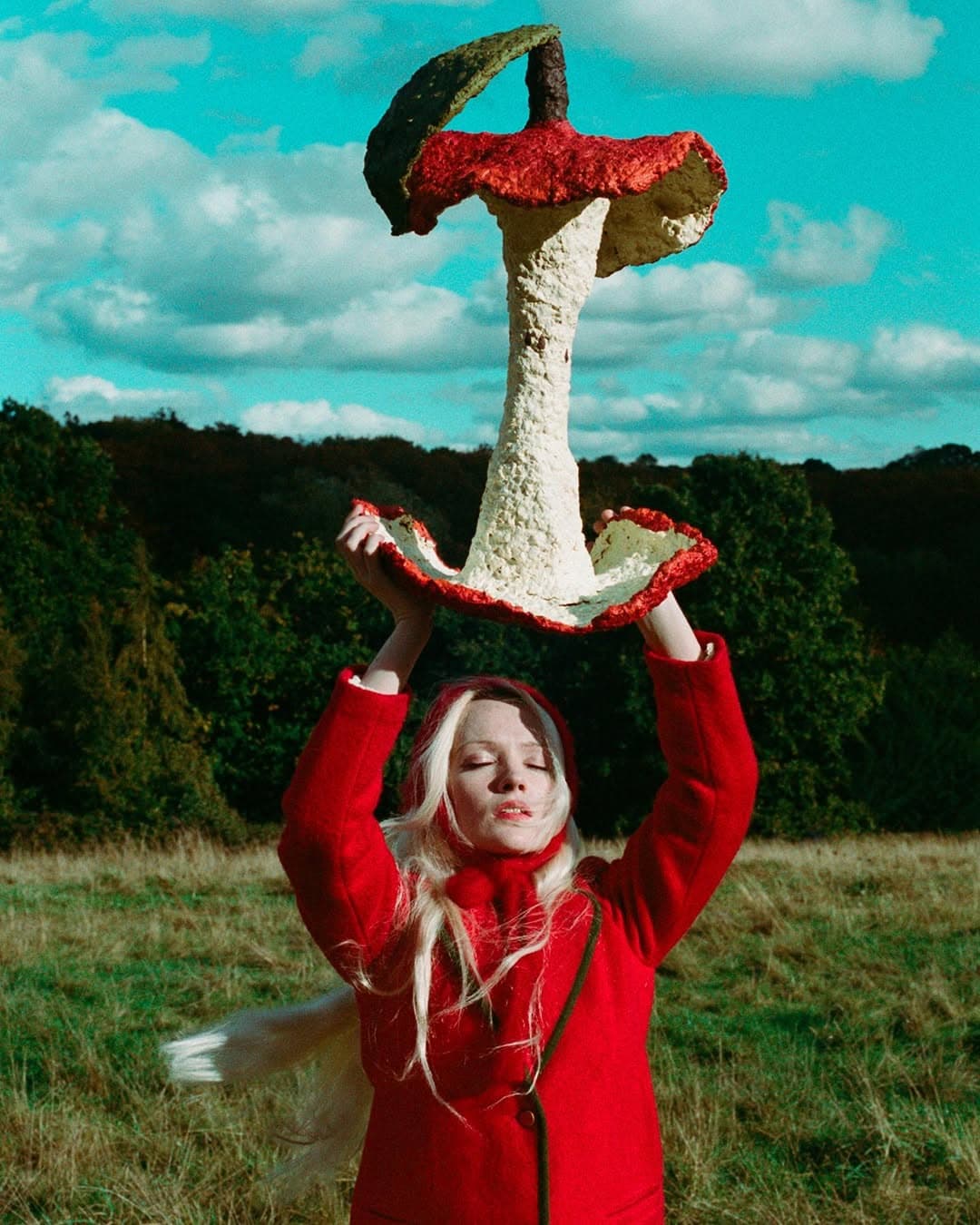
We recently caught up with Daisy Tortuga, an artist whose practice spans craft-based mediums, exploring the playful and autobiographical through textiles, ceramics, and music. Daisy shares stories from her creative journey, from crafting waistcoats for her childhood cat to finding catharsis in tufted rugs. We delve into how limitations fuel her creativity, her love for outsider and folk art, and the balance between experimentation and practicality. Daisy offers thoughtful insights on finding joy and authenticity in making art and embracing one’s unique path.
1. Can you tell us a bit about yourself and your artistic journey?
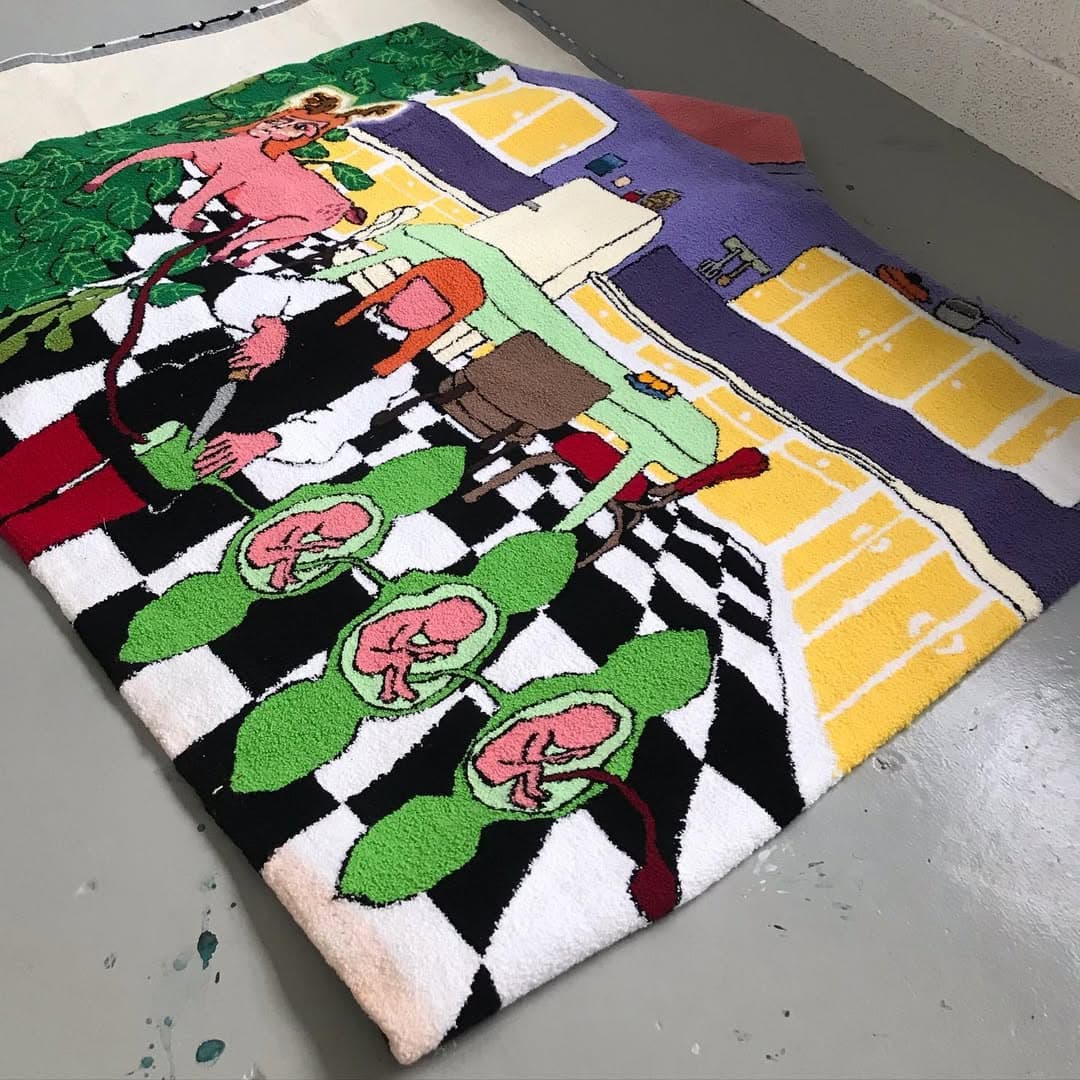
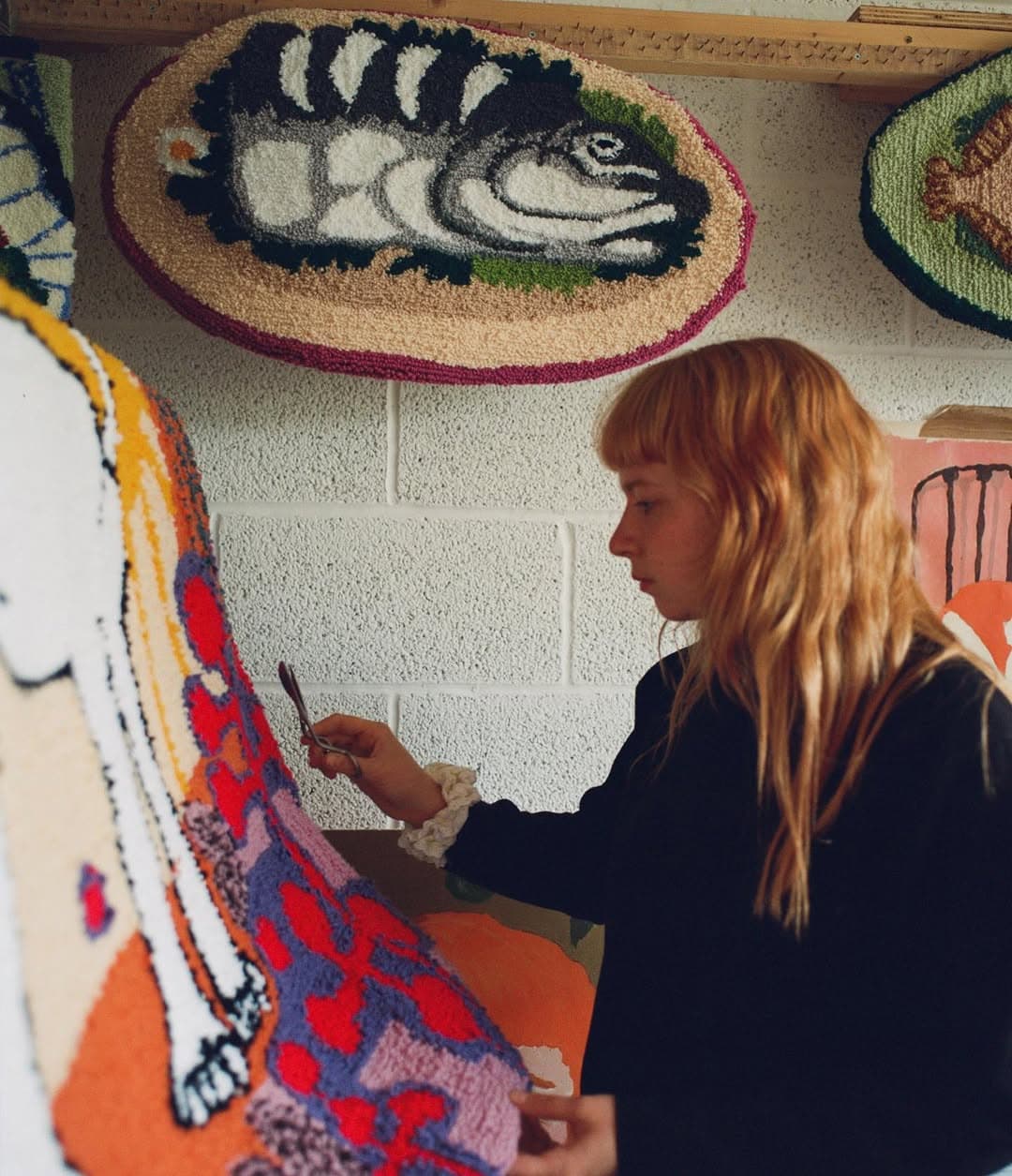
I have always enjoyed making things, it’s the only thing I have ever felt good at. I would describe myself as an artist that enjoys working in craft based mediums. I’ve never liked painting or drawing particularly, I think with craft mediums there is always a limitation with the material which makes me more excited than the endless possibility of paint colours for example. I like to use tangible materials like fabric, wool and clay; using their limitations to tell stories.
2. What inspired you to pursue your craft? Was there a defining moment or influence that sparked your passion?
My earliest memory of craft was making clothes for my cat Apricot when I was 5 or 6. I wasn’t able to sew yet but I stapled the seams together and made him a collection of waistcoats. My practice isn’t miles away from this now, not that I make clothing for animals but my work is very much led by what I feel like making at that time. My work has a connection of shared visual language but crosses many materials and forms.
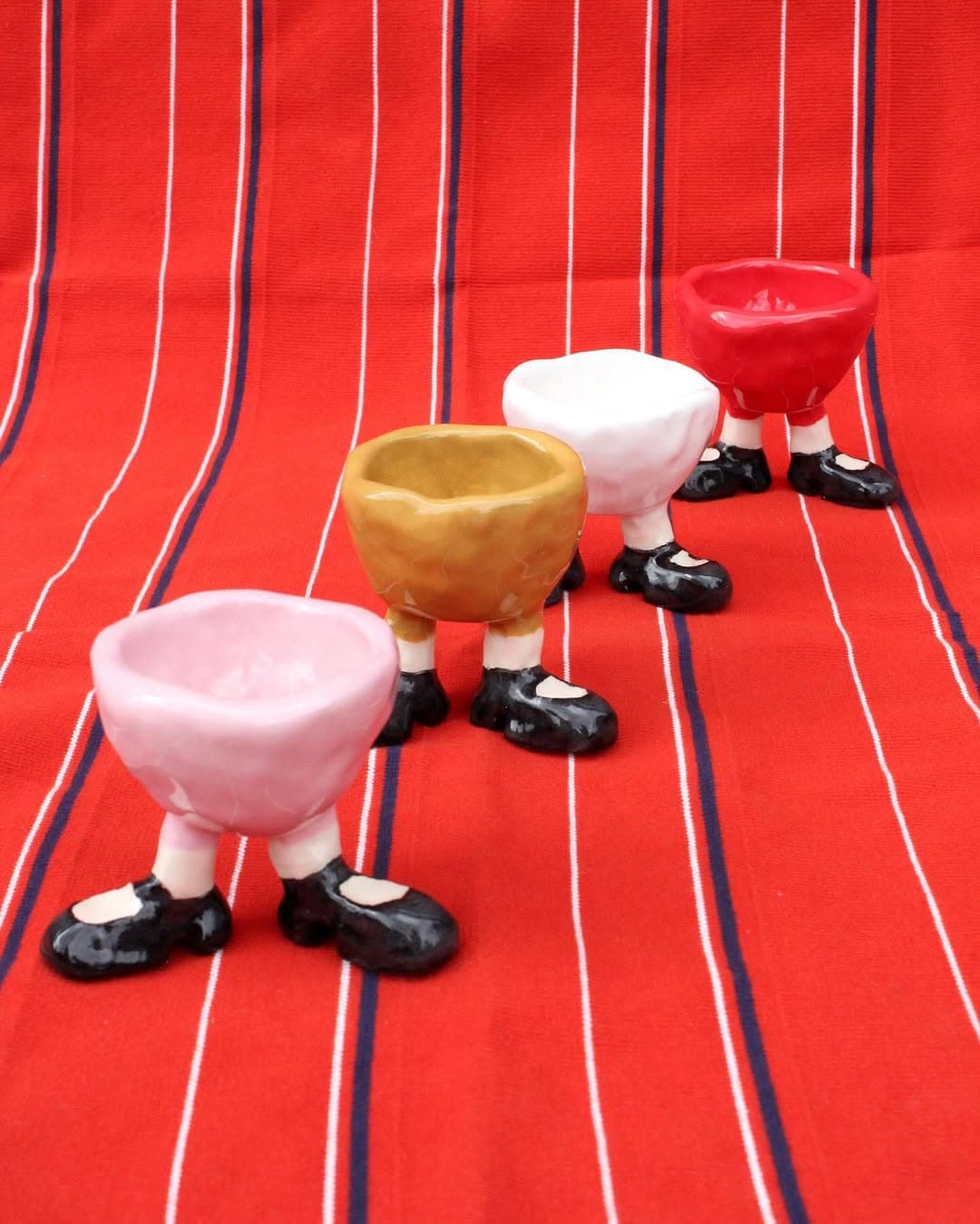
Your craft
3. How would you describe your work in three words?
playful, autobiographical, tactile
4. What materials or techniques do you use, and why are they important to your process?
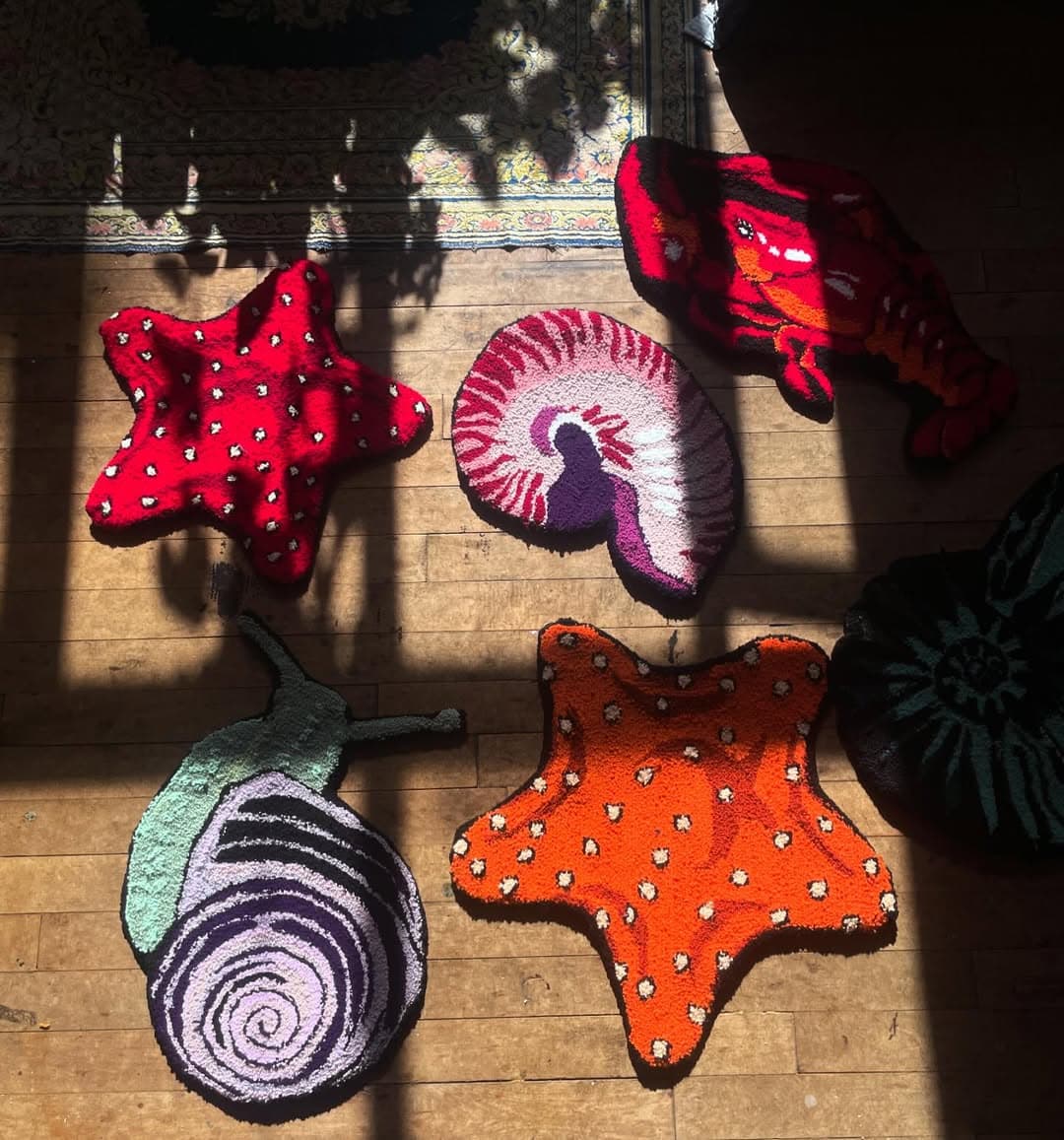
I work mainly in tufted rug using wool, knitting using a domestic knitting machine and in clay. These materials are important to me because they allow me to make illustrations but through more tactile materials than just paper and pen. As previously mentioned, the materials all have limitations, for example when making a rug my frame can only make a certain size, the yarn colours are already dyed and so deciding what to do within these limitations is what I work within. Also using traditionally female techniques is something I feel connected to and continuing this tradition is something I’m interested in. I am also a songwriter and musician, for me my music lives in the same world I have created visually.
5. Can you tell us about a favourite piece you’ve created and the story behind it?
My favourite collection of work I have made was an exhibition I did called ‘New Rug, New Me’ in 2021 at The Truman Brewery in Shoreditch. I had a period of time constantly making rugs with autobiographical stories throughout and the work was made compulsively and in complete flow. I was extremely unhappy at the time and found catharsis in the body of work.
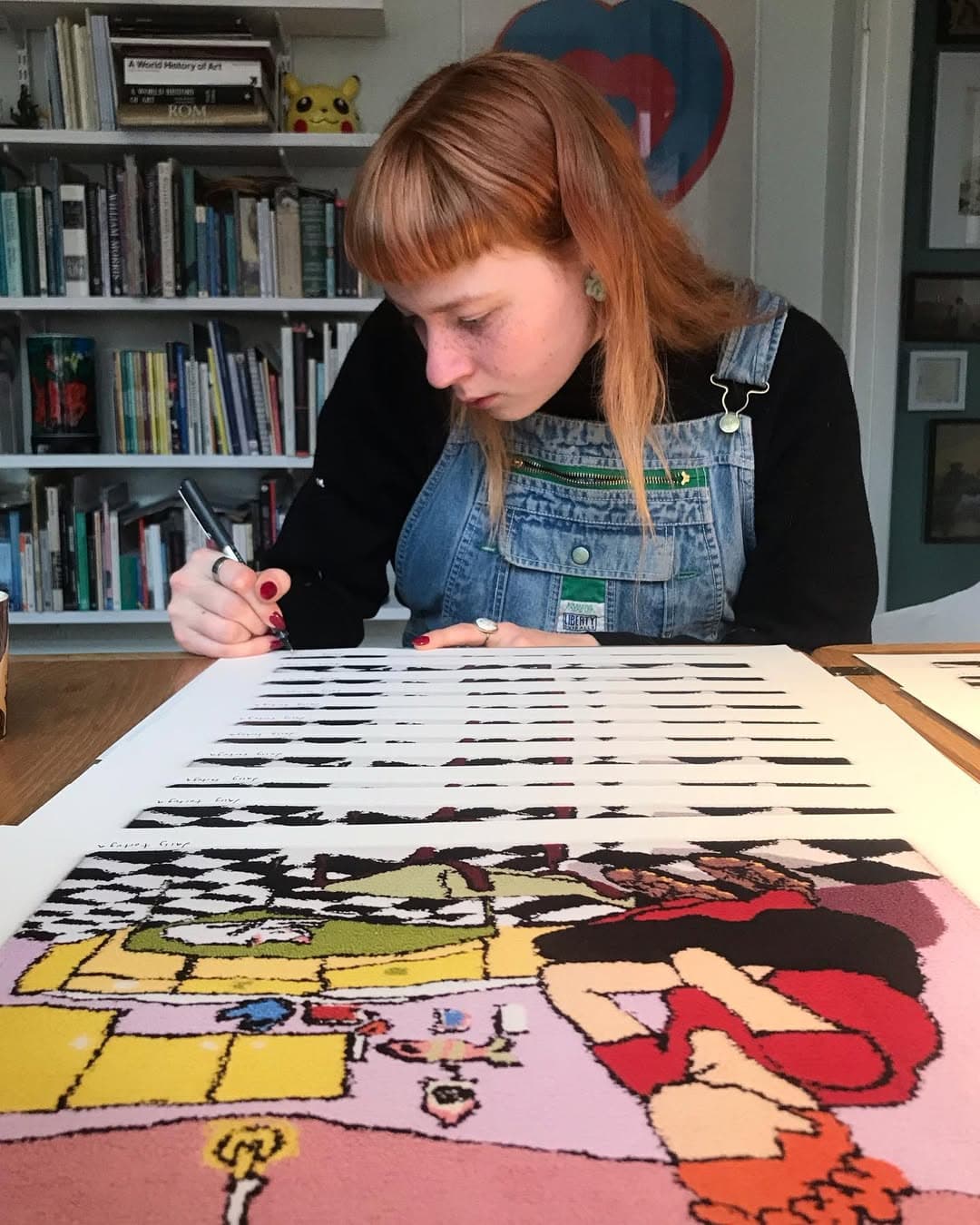
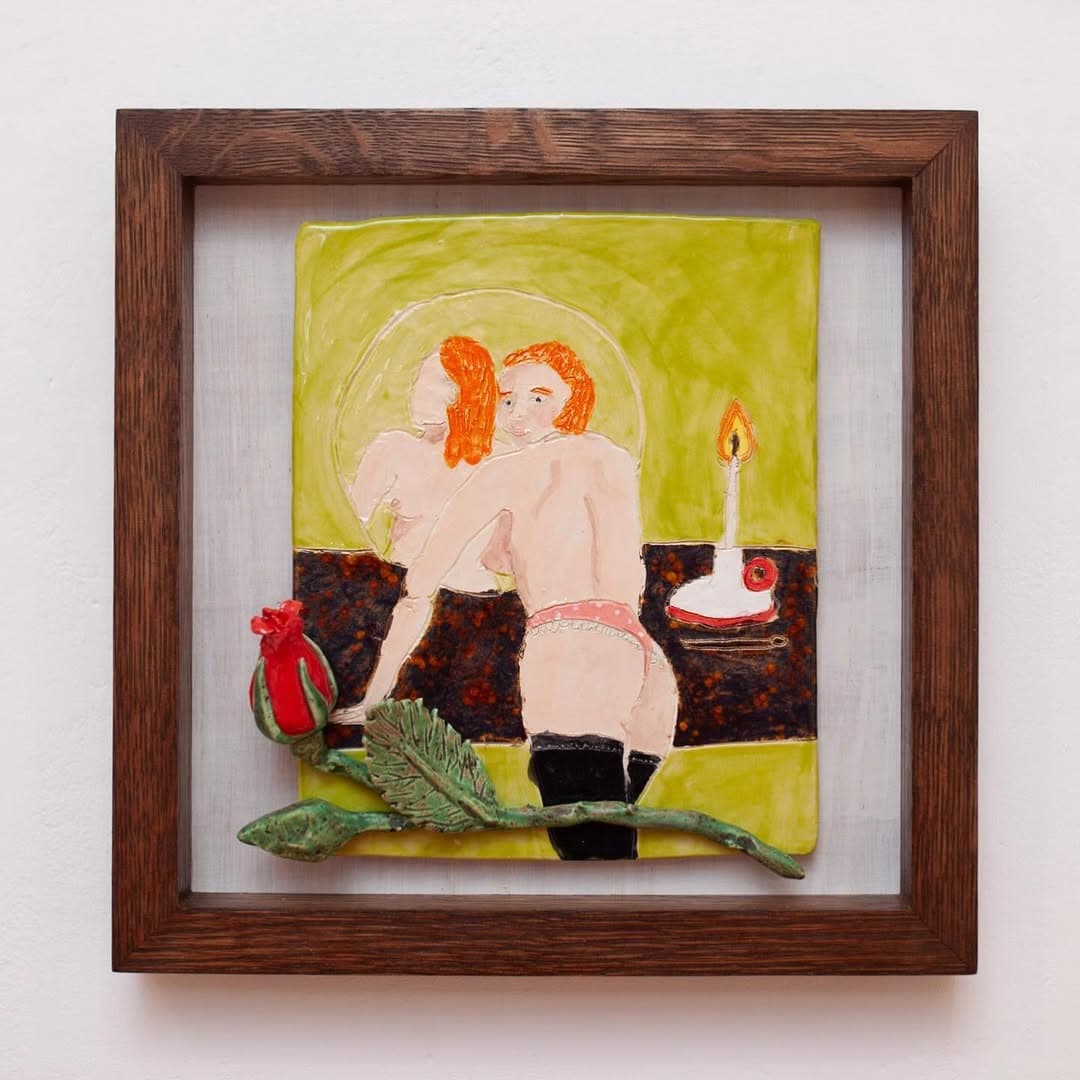
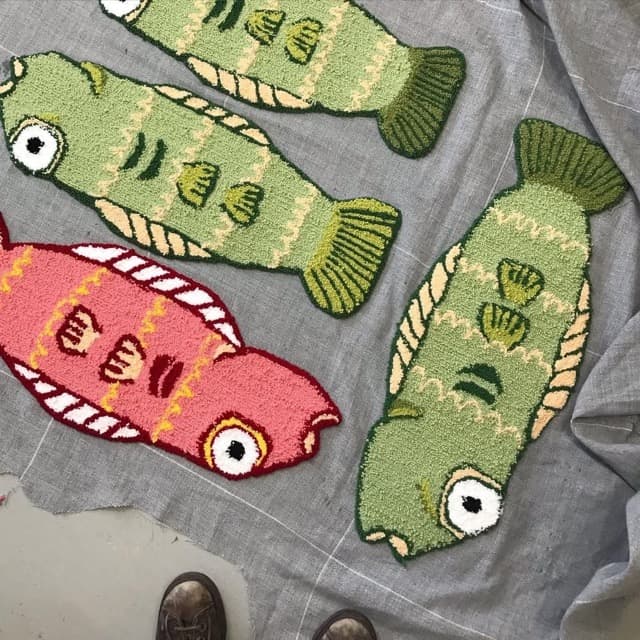
Creative process
6. What does a typical day in your studio or workshop look like?
I get to my studio around 10 am. I’m quite absorbed in my work when I’m working and don’t tend to procrastinate. I take cigarette breaks, make to-do lists, listen to podcasts and occasionally watch crap TV. I leave the studio at around 6 pm
7. Do you have any unique rituals or habits that help you stay creative?
Cigarettes
8. How do you handle creative blocks? Do you have any strategies or tips for overcoming them?
I find not working for a while the best thing for a block. Not being allowed to make work can make you miss it.
Challenges and successes
9. What’s the biggest challenge you’ve faced as a maker, and how did you overcome it?
Needing to make money at the same time as trying to experiment and take risks within my practice – still working on this
10. What’s been your proudest moment or achievement so far?
Finding my work in a charity shop
11. What’s your favourite quote you’ve ever heard about your work? Who said it, or what was the name of the publication?
‘Bitterly vindictive yet ultimately charming’
- Hard of Hearing Magazine about my bands EP
Inspiration
12. Where do you draw inspiration from for your work? What sparks your imagination and creativity?
I’m interested in outsider art/folk art. I think work made intuitively and without the intention of an audience is most interesting. I find myself inspired by literature, music and domestic spaces.
13. Do you have a favourite artist, maker, movement, or tradition that has influenced your craft?
I think craft work by women is an area of interest for me. Victorian needle point, handicrafts etc. This work was never considered art and I believe this is where the most pure, inventive creation can come. When there is no great intention of audience.
14. How does colour influence your practice; is it an important part of your process? Do you have a particular palette or favourites? Any go-to sources for colour inspiration?
My work definitely has a lot of colour, i’m not sure about a particular palette, I just add colours quite freely and don’t think about them too much.
Perspectives and goals
15. What role does your environment play in shaping your creativity?
I like to be alone when i’m working. I also like to wear headphones and be completely absorbed in what i’m doing, not distracted by phone messages etc. My studio also needs to be a place I feel safe and is decorated to my liking.
16. What do you want people to feel when they experience your work?
I’d like people to feel a sense of connection to something they might have experienced, like a story or character that resonates with them. Or simpler than that just an object that brings them joy.
17. What are you currently working on, and what excites you most about it?
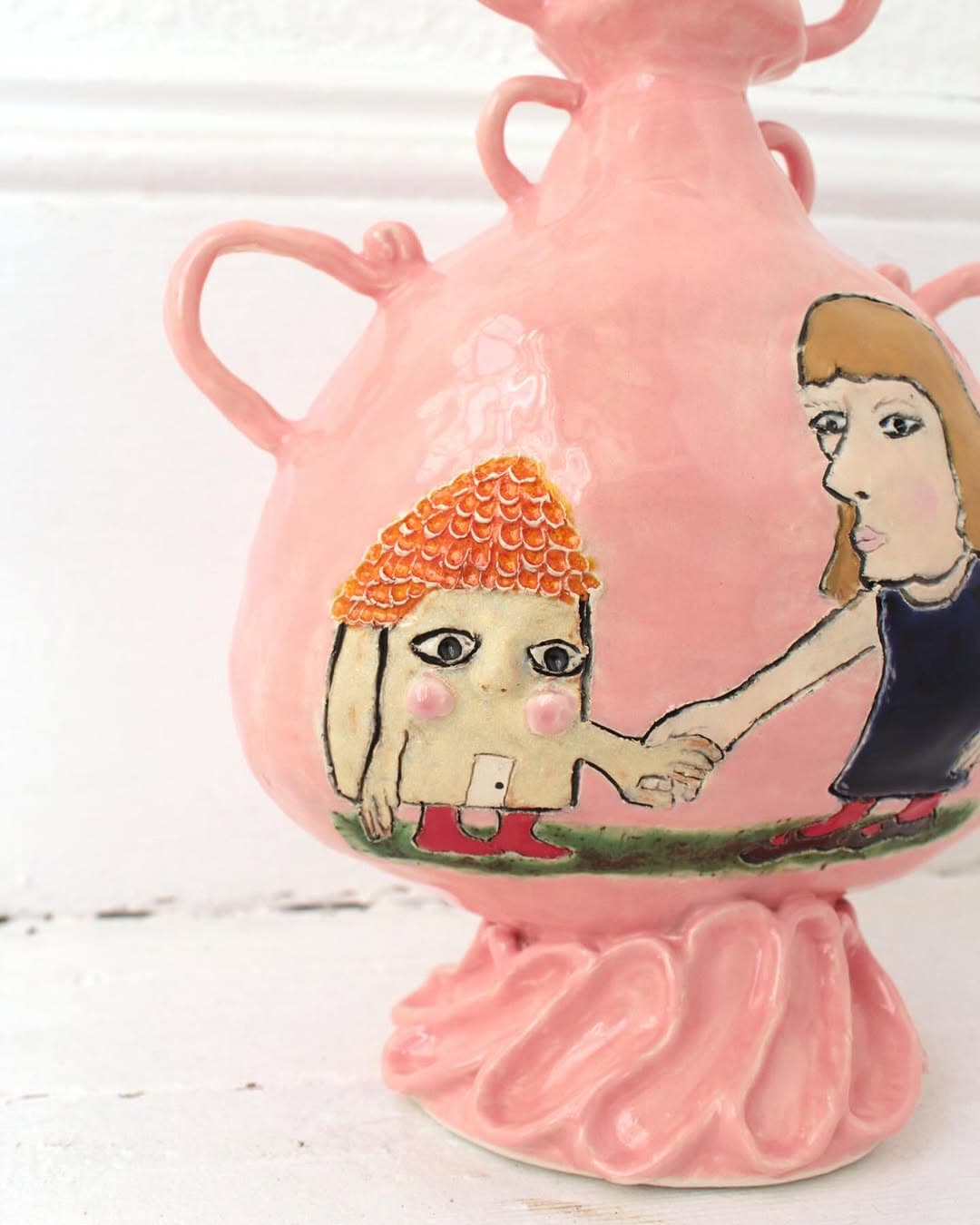
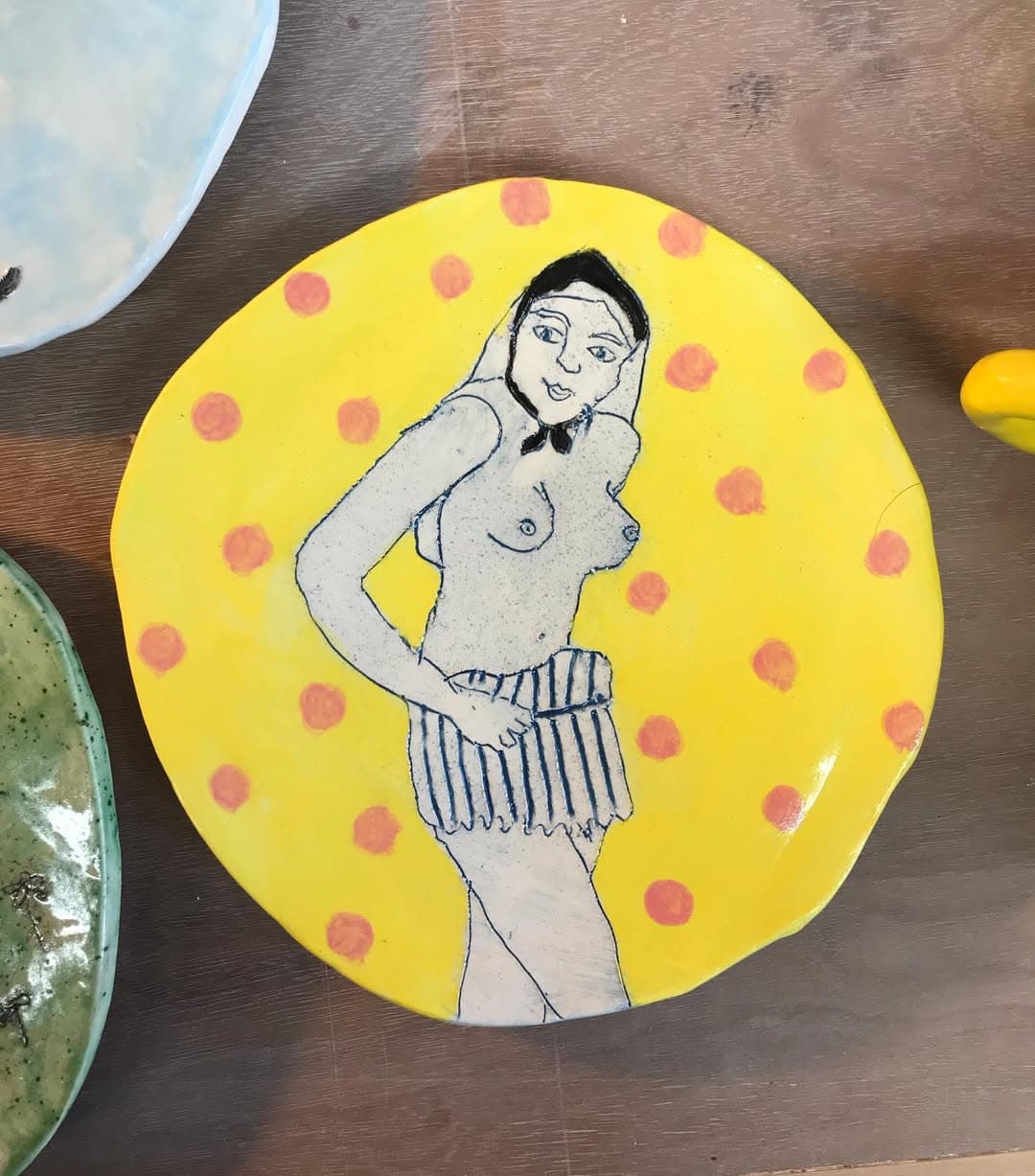
I’m going to work on some more self portraits this year, I hope to make some vases a bit more similar to my textile work. I also want to make a collection of jumpers.
Advice and reflection
18. What advice would you give to someone starting out as a maker?
Do your own thing. Try not to follow trends
19. If you could go back to the start of your career, what advice would you give your younger self?
If I could tell myself at 16 that I could be a professional artist I would have been very pleased. I didn’t know I would be able to be a full time artist, I had never met anyone who had a creative job. I think its good to remember there are so many jobs involved in the creative world and you can always find your niche.
Closing thoughts
20. If you could collaborate with any artist, past or present, who would it be and why?
Black Sabbath
21. Where can people find your work, and how can they support you?
They can support me on my website daisytortuga.com or over on Instagram.
Daisy Tortuga’s vibrant, tactile artworks blend storytelling, playful exploration, and heartfelt connection, creating pieces that resonate deeply with everyday experiences. Her multidisciplinary approach crosses boundaries, offering joyful and introspective pieces that invite personal connection and warmth.
Explore Daisy’s latest collections and follow her creative journey:
Support Daisy by visiting her website, following her on Instagram, and staying tuned for her exciting new projects.
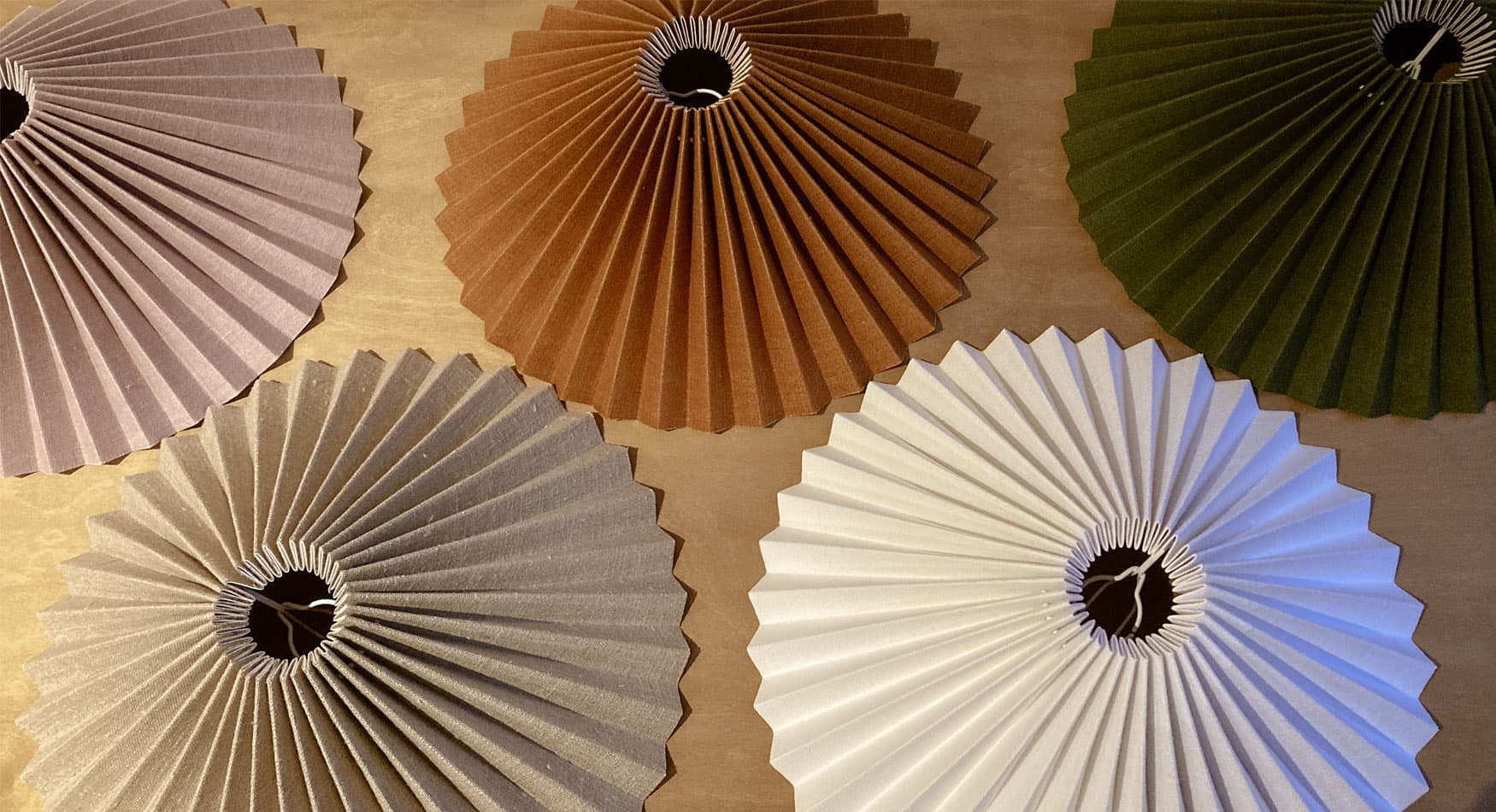
Meet the Maker: The Precise, Sculptural Creations of Ceau Store
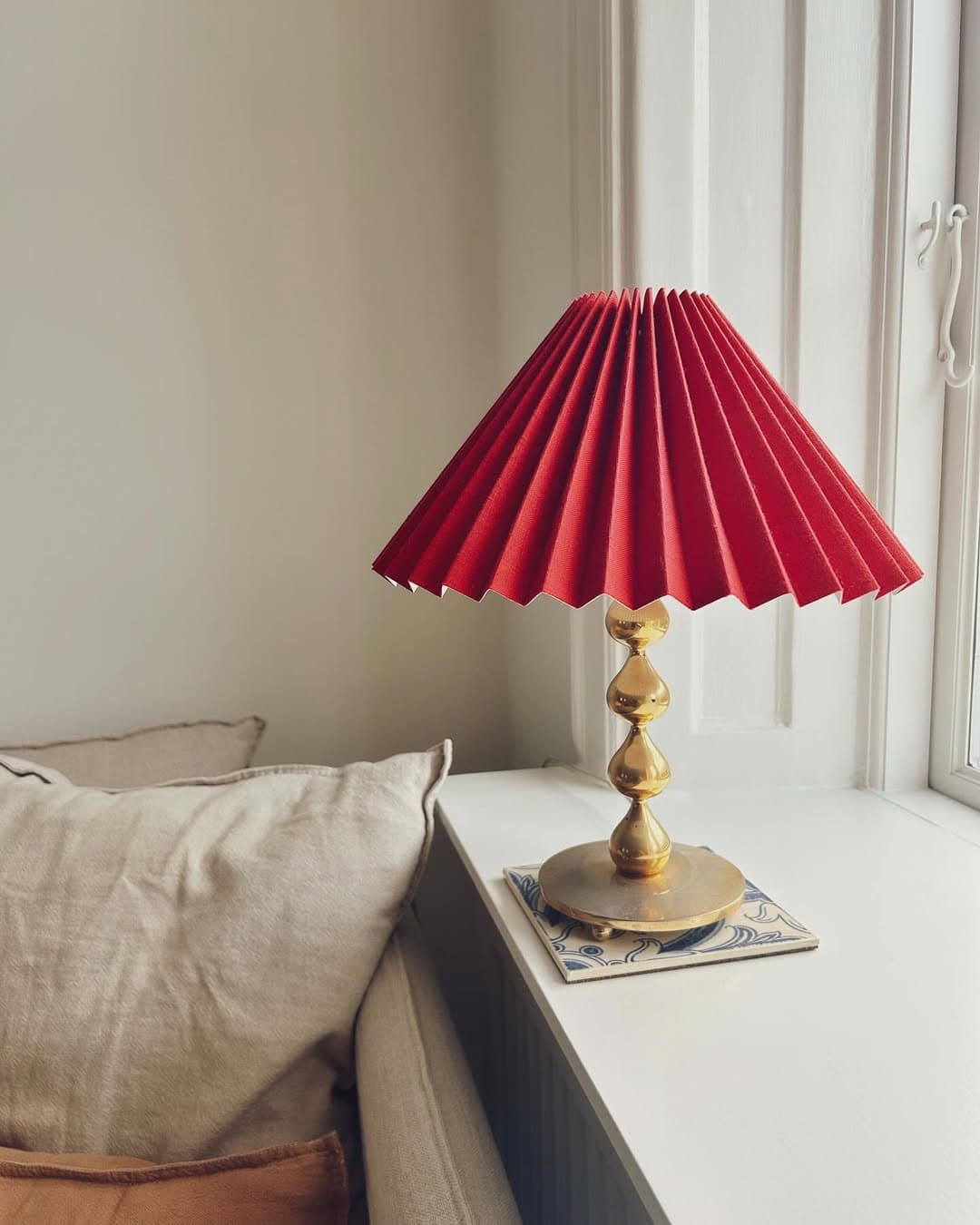
In this Q&A, we sit down with the maker behind Ceau Store to explore her journey—from childhood projects to crafting the elegant, sculptural lampshades that have become her signature. She shares her love for tactile materials, thoughtful sustainability choices, and how creative problem-solving shapes her imaginative designs. We also discuss overcoming challenges, memorable moments like being featured in Elle Decoration, and the joy she aims to bring to everyday spaces.
1. What inspired you to pursue your craft? Was there a defining moment or influence that sparked your passion?
I’ve always made things, even as a child I would be constantly asking my mum if I could make something. And I’ve always loved paper and fabric and tactile materials. I used to collect leaflets when I was really young and I once made a full dolls house, furniture and all out of A4 paper sheets. I’m sure if I saw that now it would be terrible but at the time it felt like I’d created a masterpiece. Creating and making is a total happy place for me.
Your craft
2. How would you describe your work in three words?
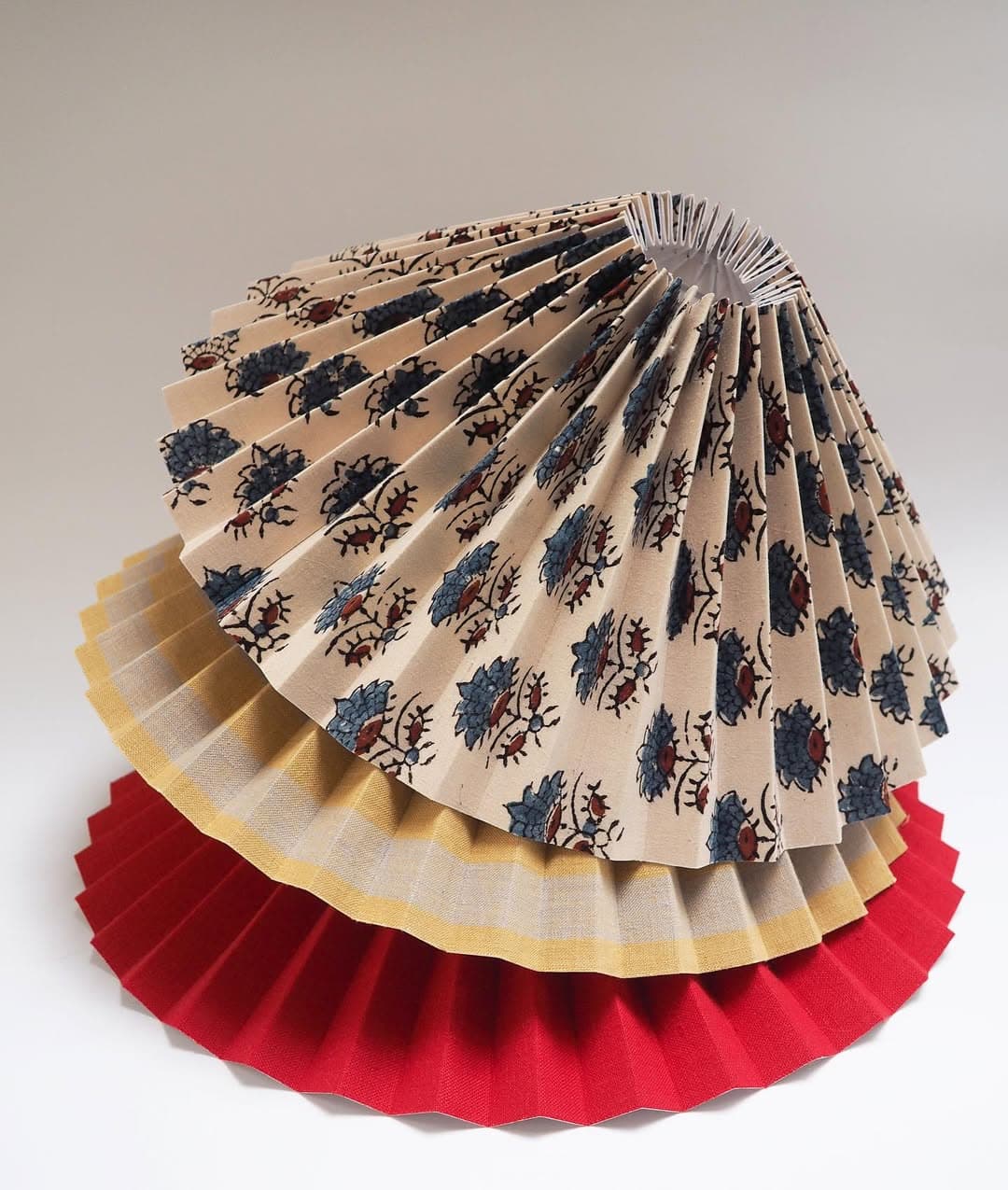
Precise, Sculptural, Cosy
3. What materials or techniques do you use, and why are they important to your process?
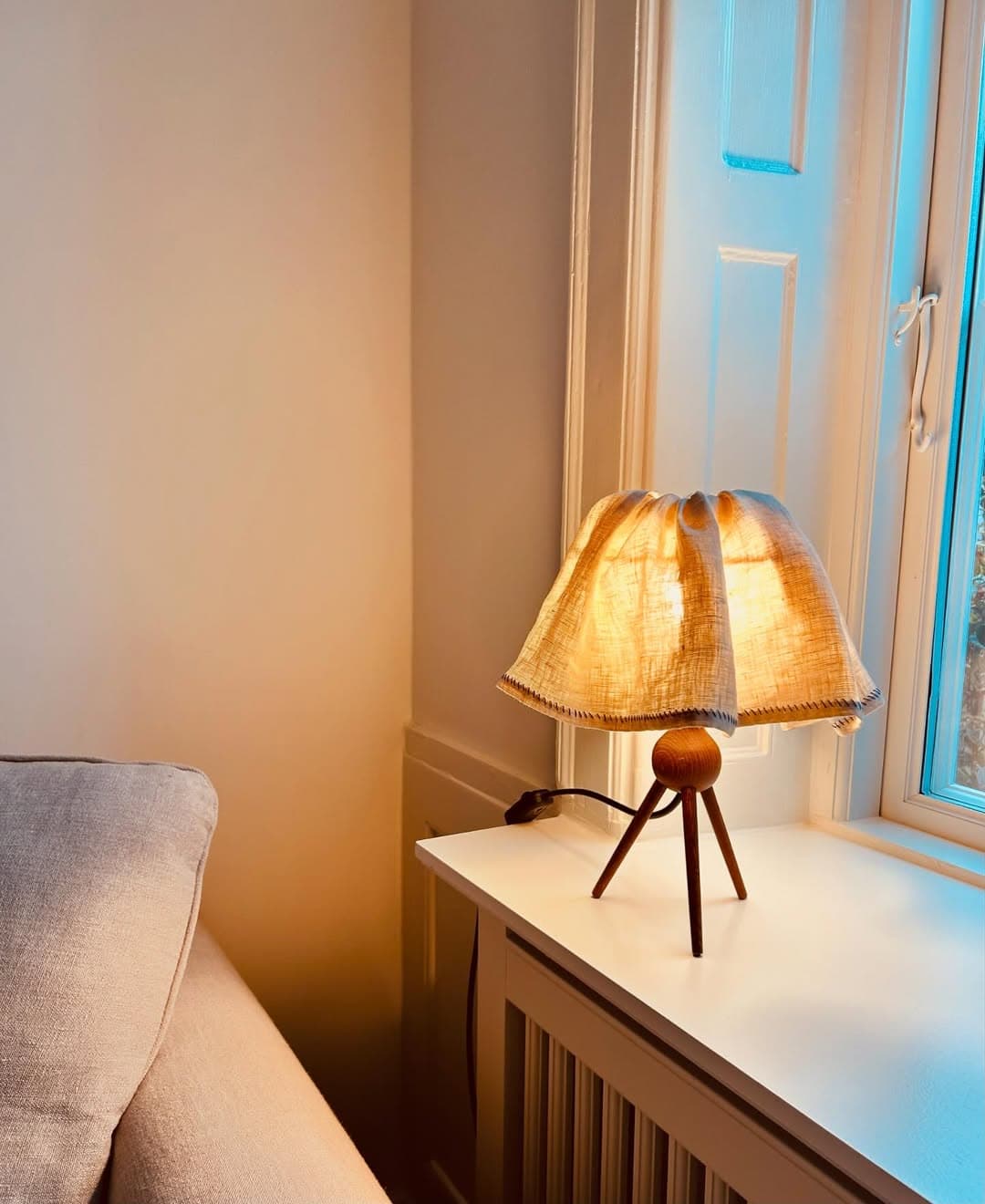
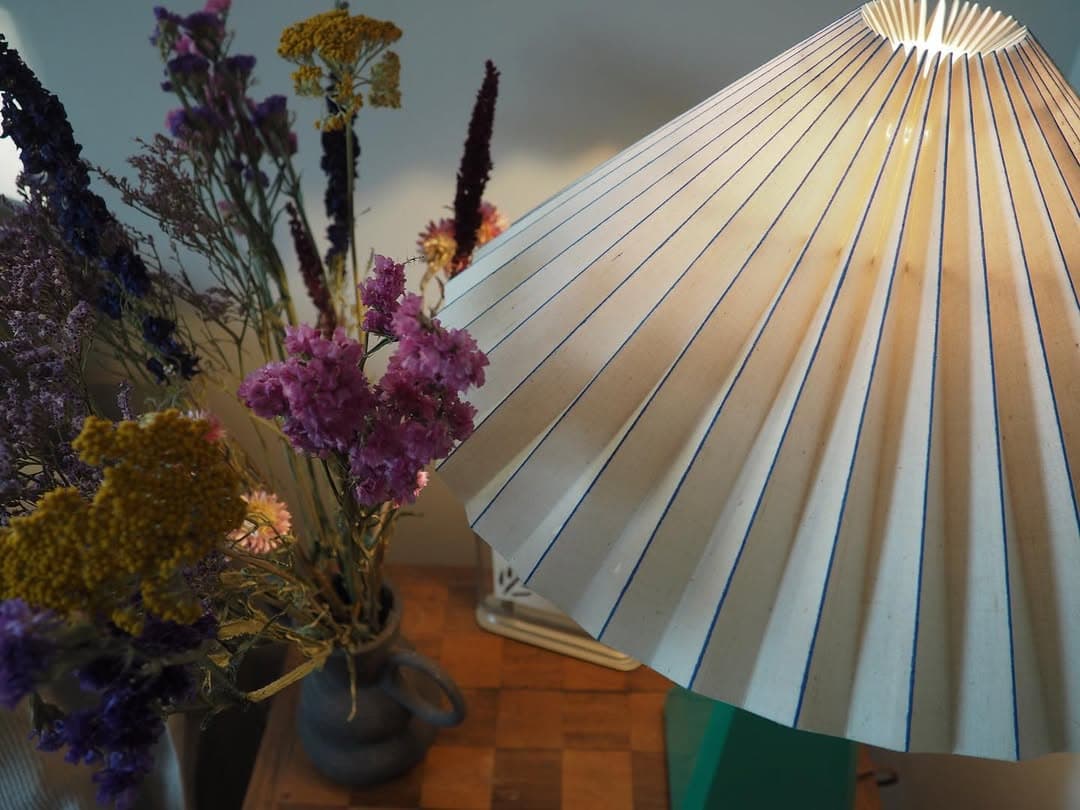
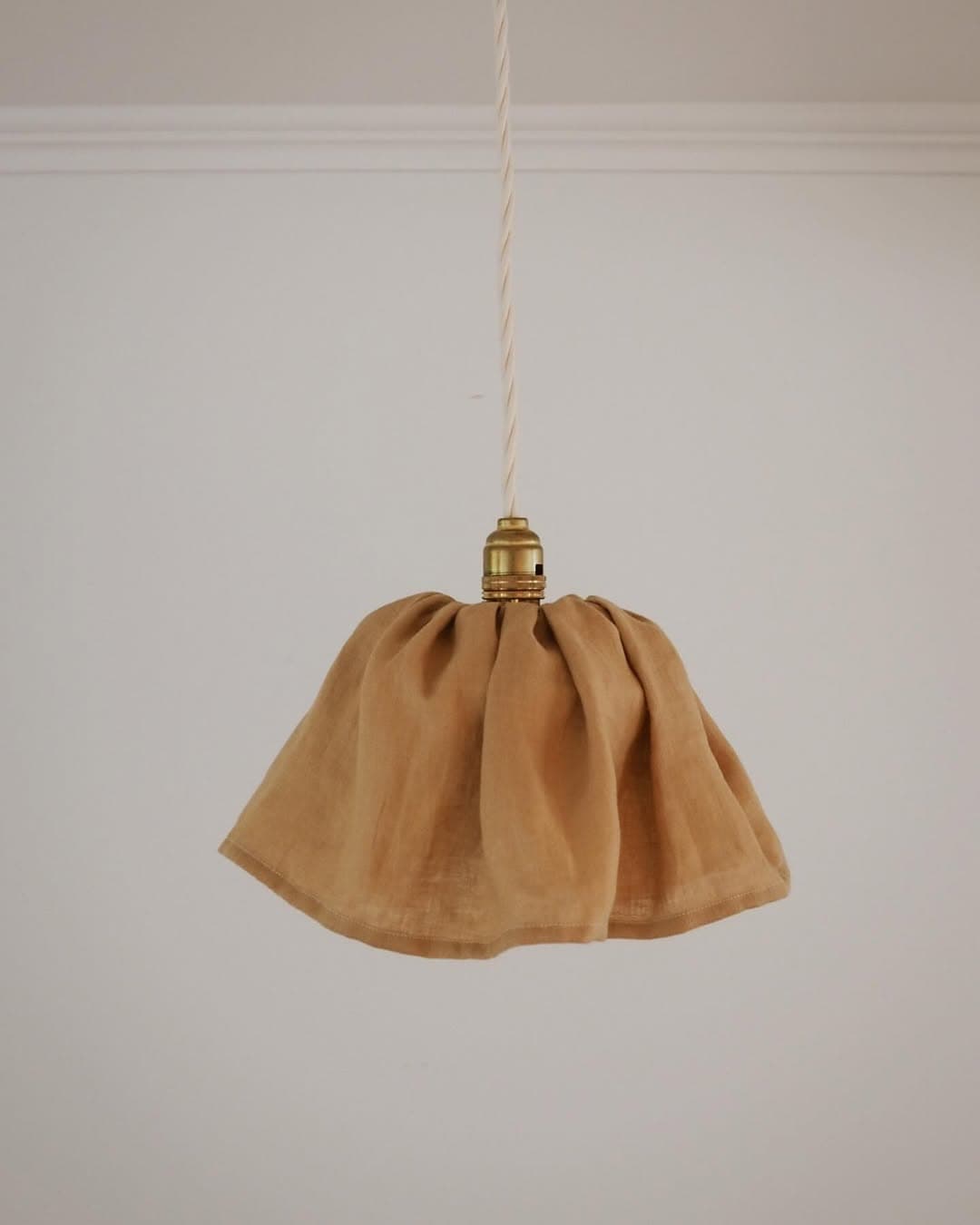
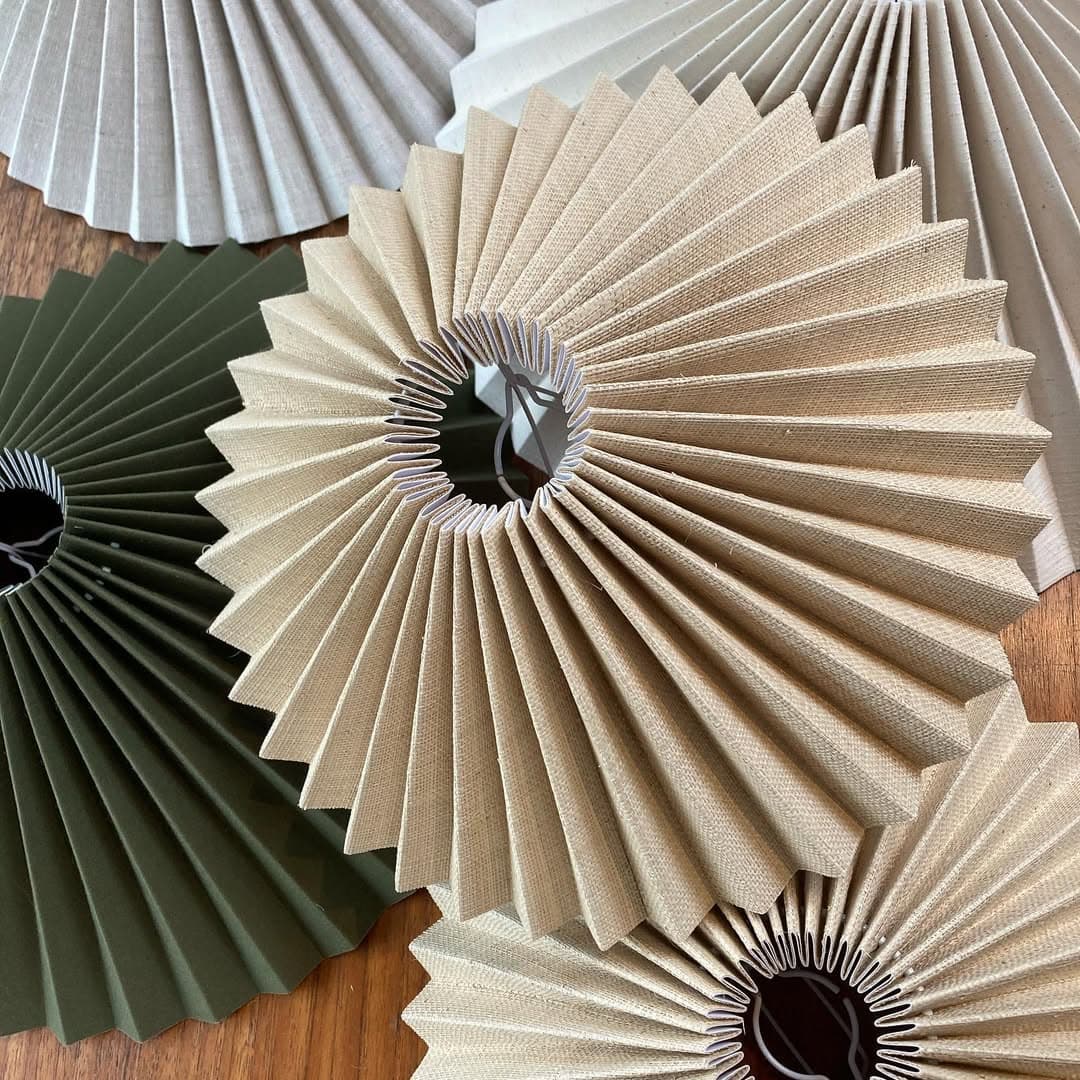
All the materials I use are carefully considered, and all come from other small businesses. The lampshade backing is a beautiful thick card, chosen because it’s more sustainable than the alternative plastic but also because it gives an intrinsic beauty and tactility that you wouldn’t get from plastic. The fabric is all natural- Cotton or Linen, no polyester or polycotton. These choices add to the design of the lampshades they are part of what makes them beautiful.
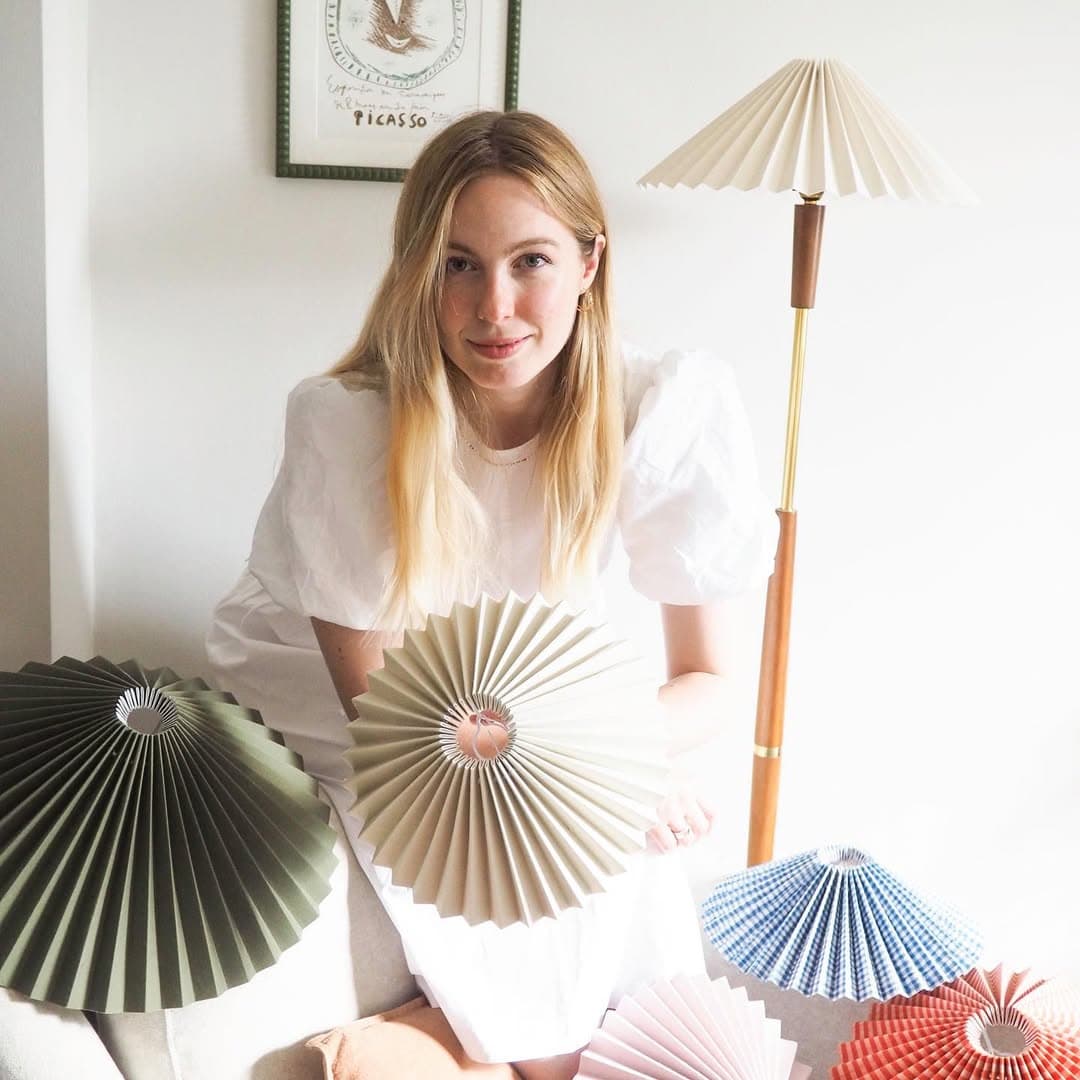
In terms of techniques, I don’t think I do any “standard lampshade” making techniques. When I started making the pleated lampshades there wasn’t even an online “how to” on what to do so I created my own process and techniques, worked out all the tools and materials that I needed to created what I had in my head and over time I’ve tweaked these so that I can produce the best quality lampshades possible.
Creative process
4. What does a typical day in your studio or workshop look like?
Every day before starting work in the studio I take my dog for a walk with my husband and son. This is such a lovely start to the day regardless of the weather, I find that connection to nature and my family really helps me to get my head in the right space for the rest of the day. Then every day is different, if I have lampshades to make I’ll get started on those straight away, normally with a podcast in my ears and just head down focus on making those. Some days I have meetings and calls most recently with web designers and also a manufacturer who is creating part of some new products that I’m launching soon. I also spend time designing, exploring new colour options, fabrics, ideas for new products. Then at 4pm I go and collect my son from nursery and that’s my working day finished.. until he’s in bed at least.
5. Do you have any unique rituals or habits that help you stay creative?
I write all of my creative thoughts/ideas down and always on paper with a pencil, I’m very analogue with stuff like that and can’t get my thoughts out if I do it on my phone or computer. I find making mood boards really helpful, collating images or ideas that inspire all in one place definitely helps me to solidify what I’m thinking.
Challenges and successes
6. What’s the biggest challenge you’ve faced as a maker, and how did you overcome it?
Plagiarism, unfortunately I think this is something that a lot of creatives have to deal with especially when putting yourself and your work out there. Not to go into too much detail/specifics I had a not great situation with someone buying one of my lampshades and then using it to replicate the lampshades and to be honest it was devastating. When you put so much time, effort, energy into creating something from scratch it’s hard to handle. Initially I got bogged down in legal options (of which there are not many) and it was a really stressful upsetting time but I realised a more powerful way to deal with it was to focus that energy into making my creations better, develop new ideas and use it as motivation to do better and make more of the ideas I had for Ceau Store a reality.
7. What’s been your proudest moment or achievement so far?
Honestly every sale I make is like a pinch me moment. Sounds so cheesy but I think a lot of small business owners can relate to that especially when they make the products. Every time I get a request or sale from an Interior Designer my stomach does a little flip and when my lampshades were bought for the Hoxton hotel in Barcelona too. Also, the Lampshades being in Elle decoration, a publication I have coveted from a young age, that felt like a crazy moment.
8. What’s your favourite quote you’ve ever heard about your work? Who said it, or what was the name of the publication?
A customer once likened getting hold of one of my lampshades to getting Glastonbury tickets.
Inspiration
9. Where do you draw inspiration from for your work? What sparks your imagination and creativity?
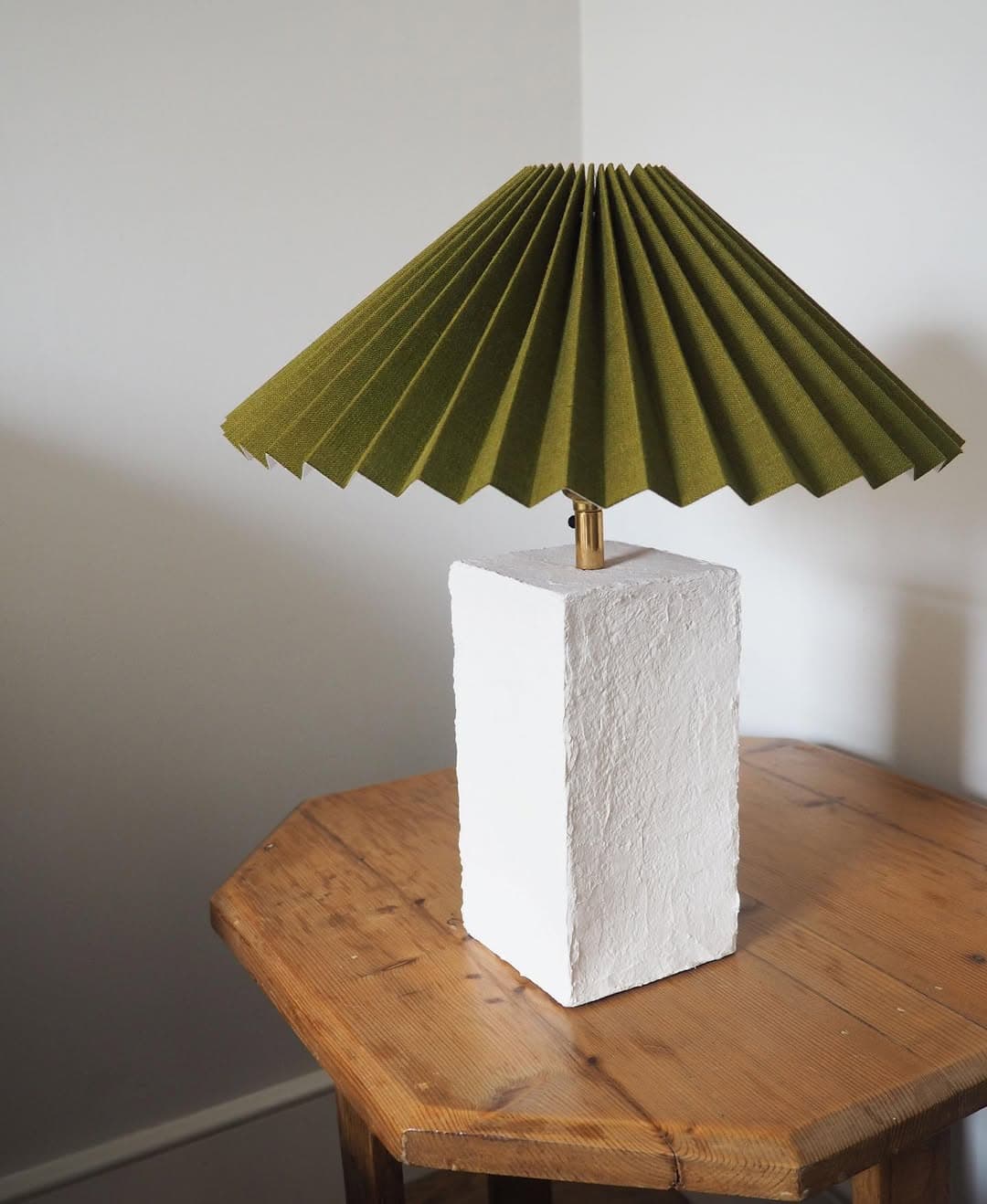
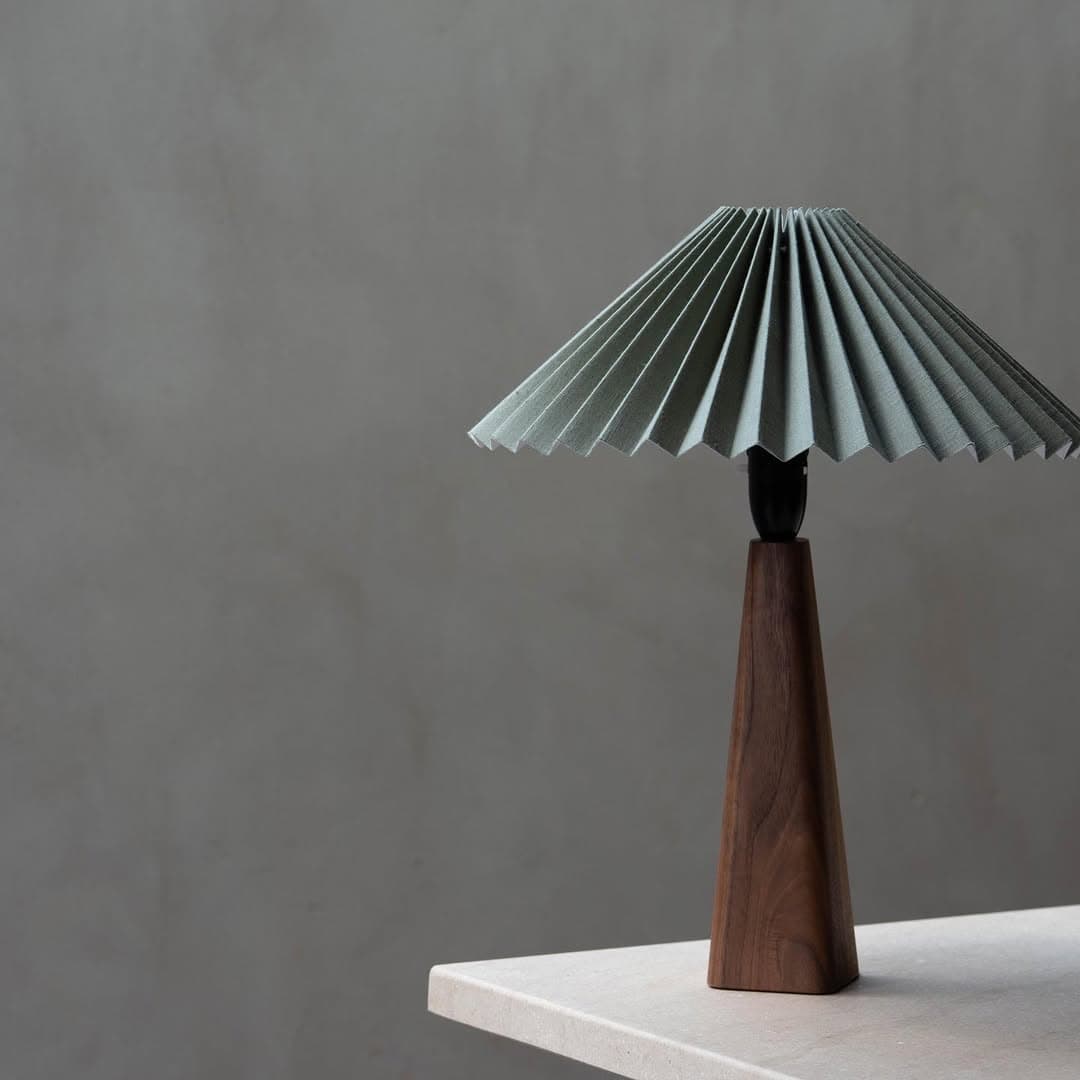
The essence and idea of home definitely influences my decisions and fuels my imagination. Form, texture, pattern, colour and how that relates to and enriches our homes and lives is so interesting to me. Little nuances and details can make all the difference and I love paying attention to that. For example, the shadow that comes from the pleated lampshade when lit is really pleasing and unexpected. Those little details that come from creation is a really lovely thing to pay attention to. It may not be immediately evident but I think you can see these intricacies- the care, the thought comes through in the final outcome.
I almost feel like this is a bit of a cliché that I learned from art college but problem solving also fuels my imagination and creativity. If I have boundaries or a problem to solve/get around, the outcome can often be more valuable than if all the possibilities were endless.
10. Do you have a favourite artist, maker, movement, or tradition that has influenced your craft?
Jean Cocteau, Miro, Picasso, Matisse. I love the abstract, whimsical, playful, colourful work of these artists. Since having my son I’ve also fallen for the illustrations of Ludwig Bemelmans- we read a lot of Madeline, illustrations are amazing, the stories however are a little odd but he seems to like them.
11. How does colour influence your practice; is it an important part of your process? Do you have a particular palette or favourites? Any go-to sources for colour inspiration?
I always think about colour when creating a new shade or collection, it’s really a primary focus and I always consider how the colours I choose will work in an interior space. When picking colours or fabrics its more of a feeling I get when I know something is right and will work well.
Perspectives and goals
12. What do you want people to feel when they experience your work?
Joy! I don’t have a very serious job, if I’m not bringing joy to people’s lives with the lampshades then I think I’ve missed the point.
13. What are you currently working on, and what excites you most about it?
I have a new lighting collection in the works and I’m so excited about it because it’s all designed to pair perfectly with the lampshades, colour, shape, style everything. So now people can buy a lampshade and have a perfect match, be it a wall light, pendant or table lamp, available to them.
Advice and reflection
14. What advice would you give to someone starting out as a maker?
Don’t compare yourself to others, it’s really hard not to especially in this environment of oversharing but if you can find your thing and focus on that, the rest will follow.
15. If you could go back to the start of your career, what advice would you give your younger self?
Don’t rush, you have time and often more interesting things pop up along the way.
Closing thoughts
16. Where can people find your work, and how can they support you?
At the moment just on my website ceaustore.com and my Instagram account. There’s definitely a shift away from Instagram at the moment and I think it’s pretty healthy so signing up to my newsletter would be the best way to support me and my work.
Ceau Store’s lampshades beautifully combine thoughtful design, sustainability, and cosy sophistication, making them striking yet joyful additions to any home interior. Each piece carries meticulous attention to detail, colour, and form, creating unique lighting solutions that enhance everyday spaces.
Discover Ceau Store’s latest collections and follow her creative journey at
Support her by signing up for the newsletter and exploring her beautiful creations.
Meet the Maker: Aeyglom's Colourful Craftsmanship
In this Q&A, we chat with Aey of Aeyglom, exploring her artistic journey from childhood in Chiang Mai, Thailand, to establishing her ceramics studio in the UK. Aey shares the personal significance behind her brand name, her love for porcelain’s challenging beauty, and her vibrant approach to creating colourful ceramic pieces. She also discusses the delicate balance between creativity and business, drawing inspiration from global architecture, and her excitement for upcoming projects like expanding into lighting.
1. Can you tell us a bit about yourself and your artistic journey?
The brand name – aeyglom – is a combination of my Thai nickname Aey and the word Glom, meaning circle – the shape and form often reflected in my work. Having spent my childhood in Chiang Mai, Thailand, I moved to the UK as a teenager and graduated with a BA in three-dimensional design, specialising in ceramics before starting my own small ceramics studio.
2. What inspired you to pursue your craft? Was there a defining moment or influence that sparked your passion?
Design and homeware have always been a real passion, my love of food, design and ceramics featuring regularly throughout my career.
Your craft
3. How would you describe your work in three words?
Creative, Precise, Colourful
4. What materials or techniques do you use, and why are they important to your process?
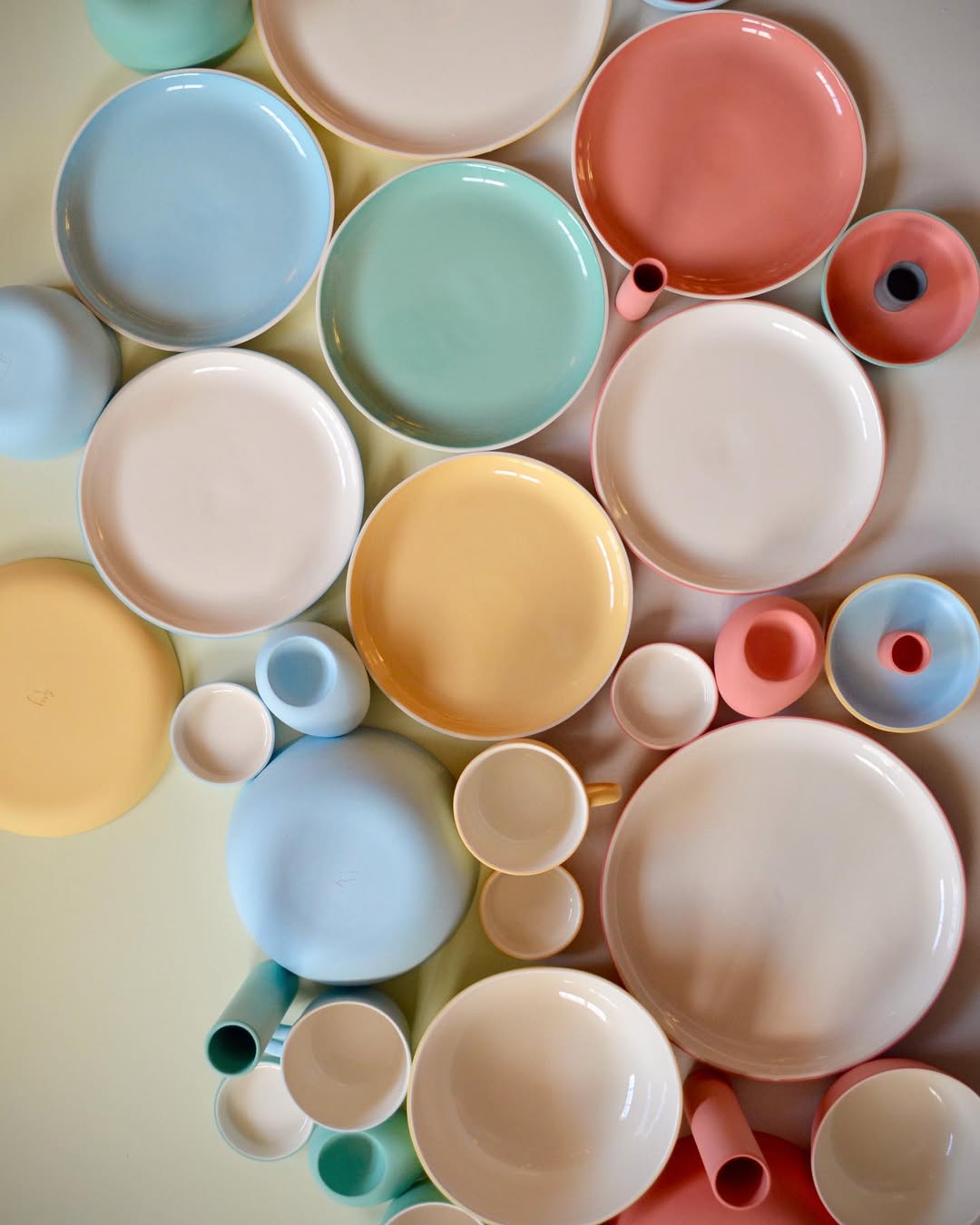
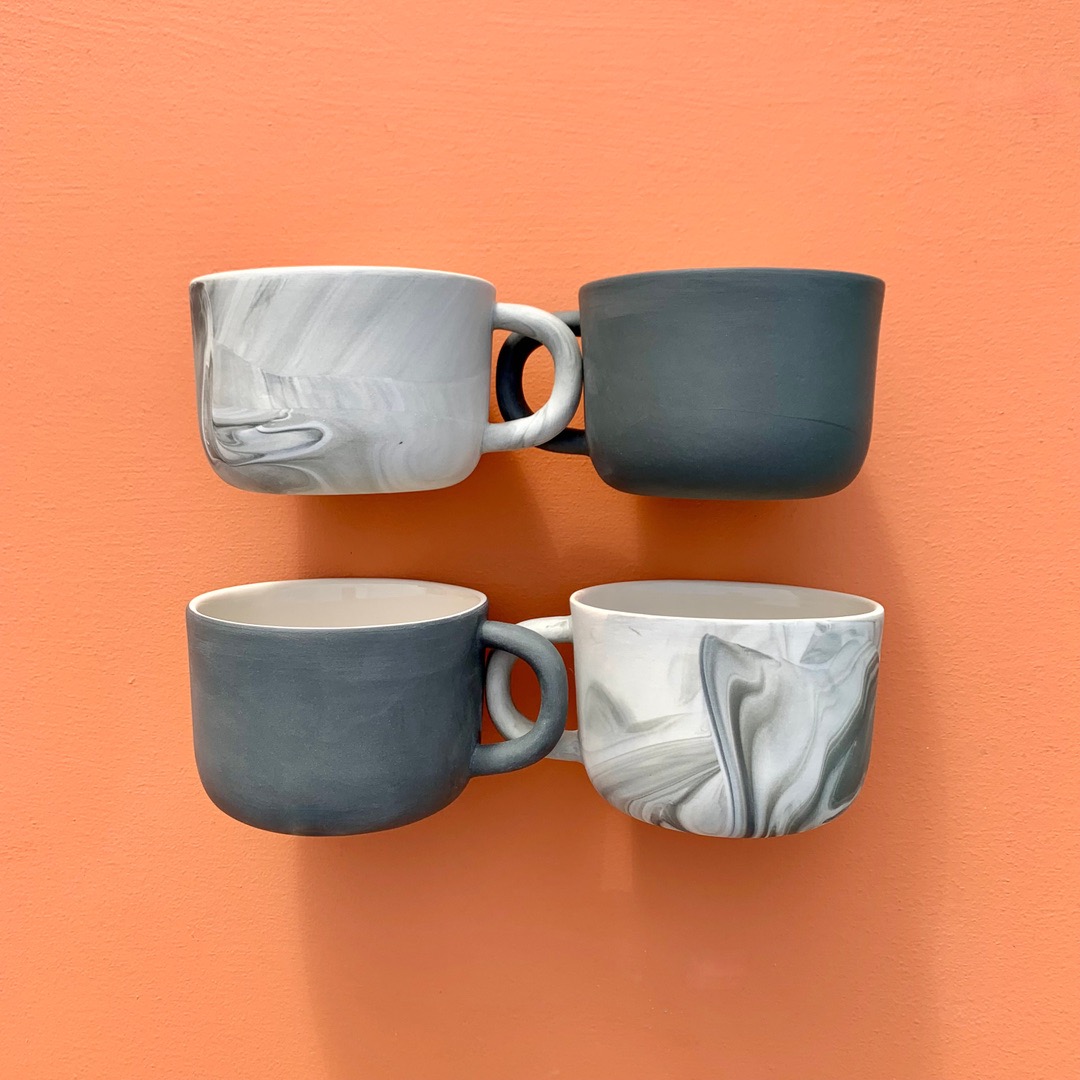
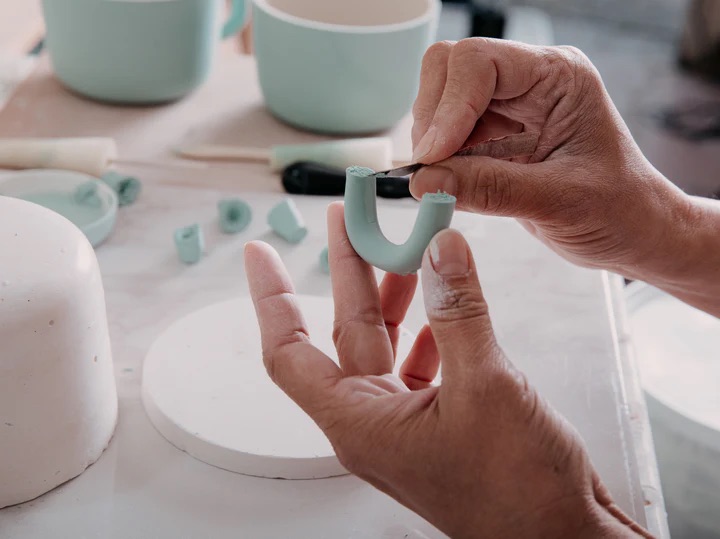
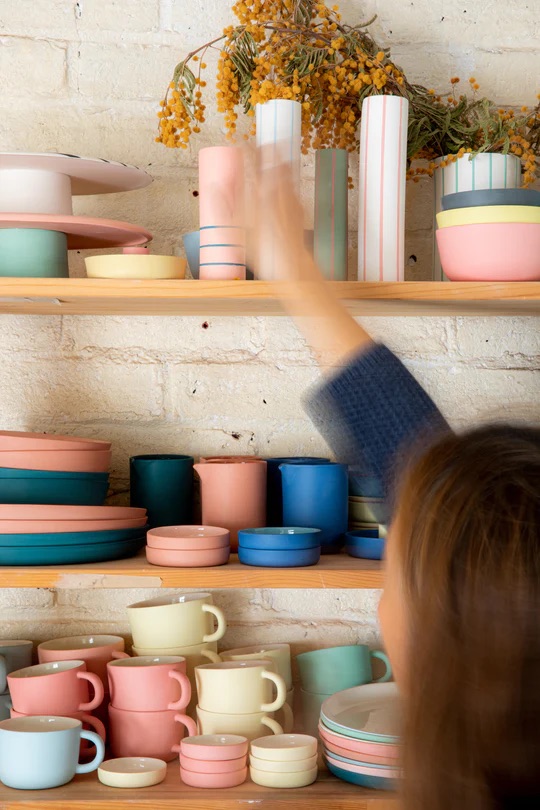
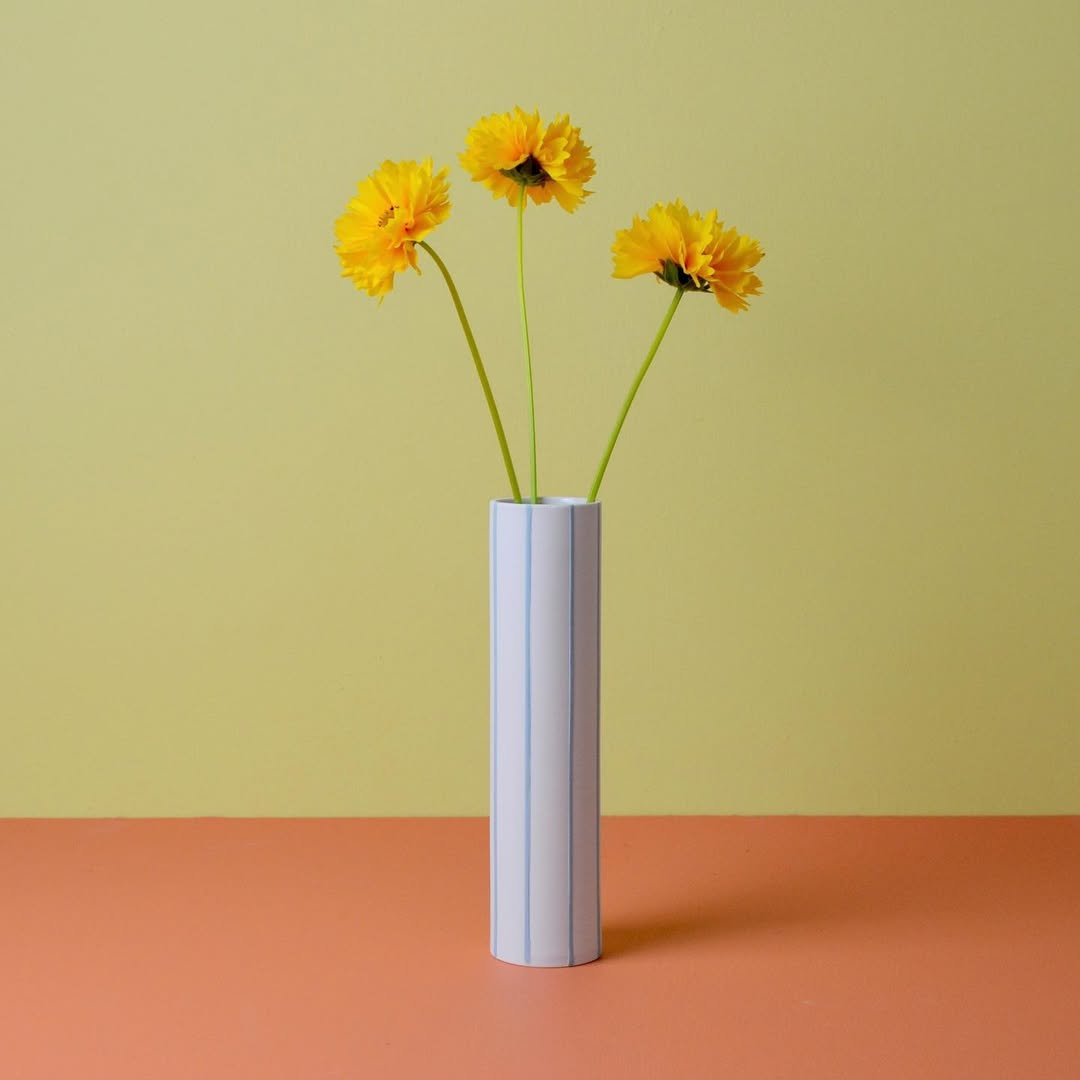
I love working with porcelain, although it can be very challenging! The material is very delicate and prone to mistakes, but the final finish is very smooth and has a luxurious feel. This love of working with porcelain stems from my time at university, and the freedom of experimenting with mixing colours into porcelain and testing the translucency. I started out making porcelain lights before moving onto tableware.
5. Can you tell us about a favourite piece you’ve created and the story behind it?
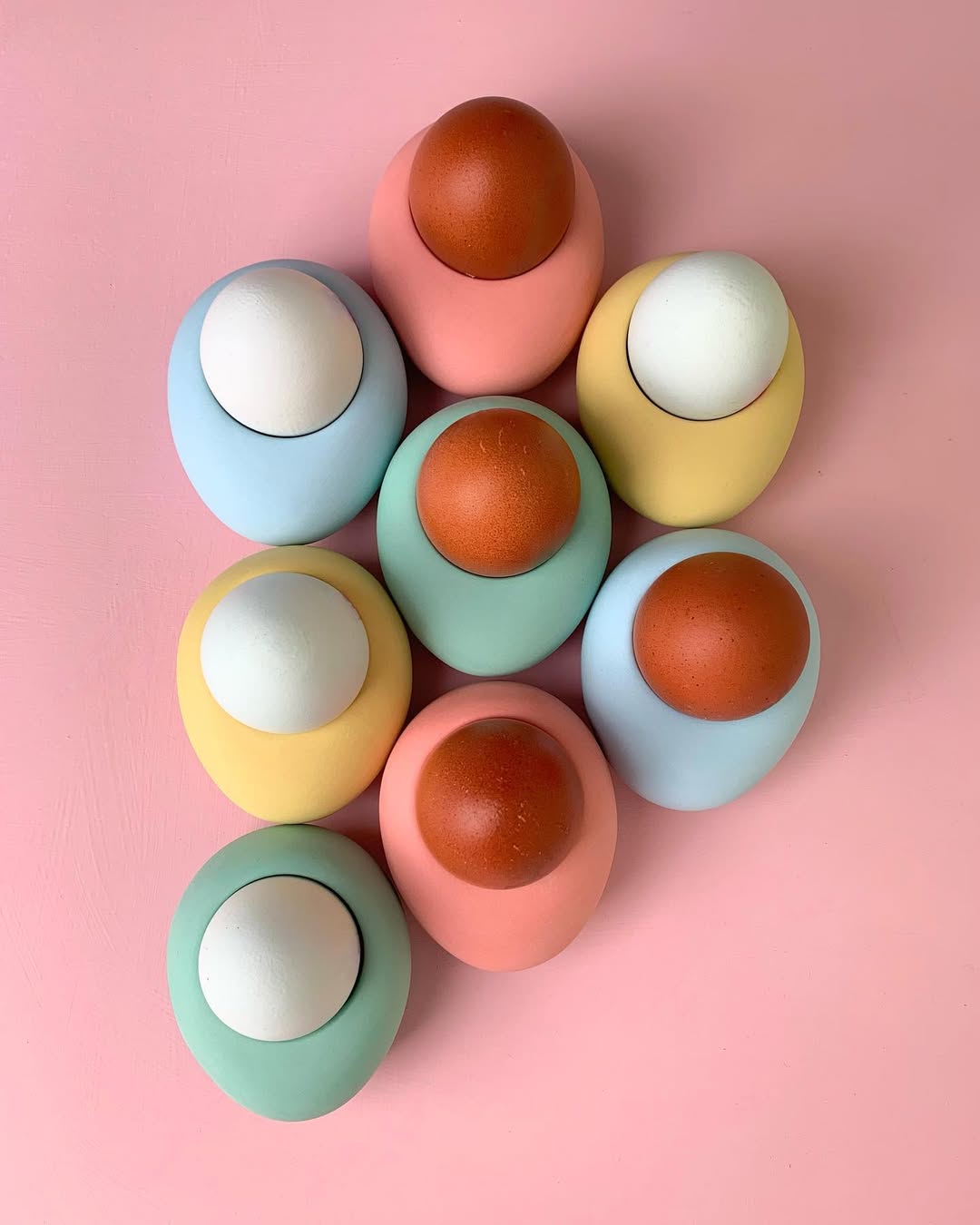
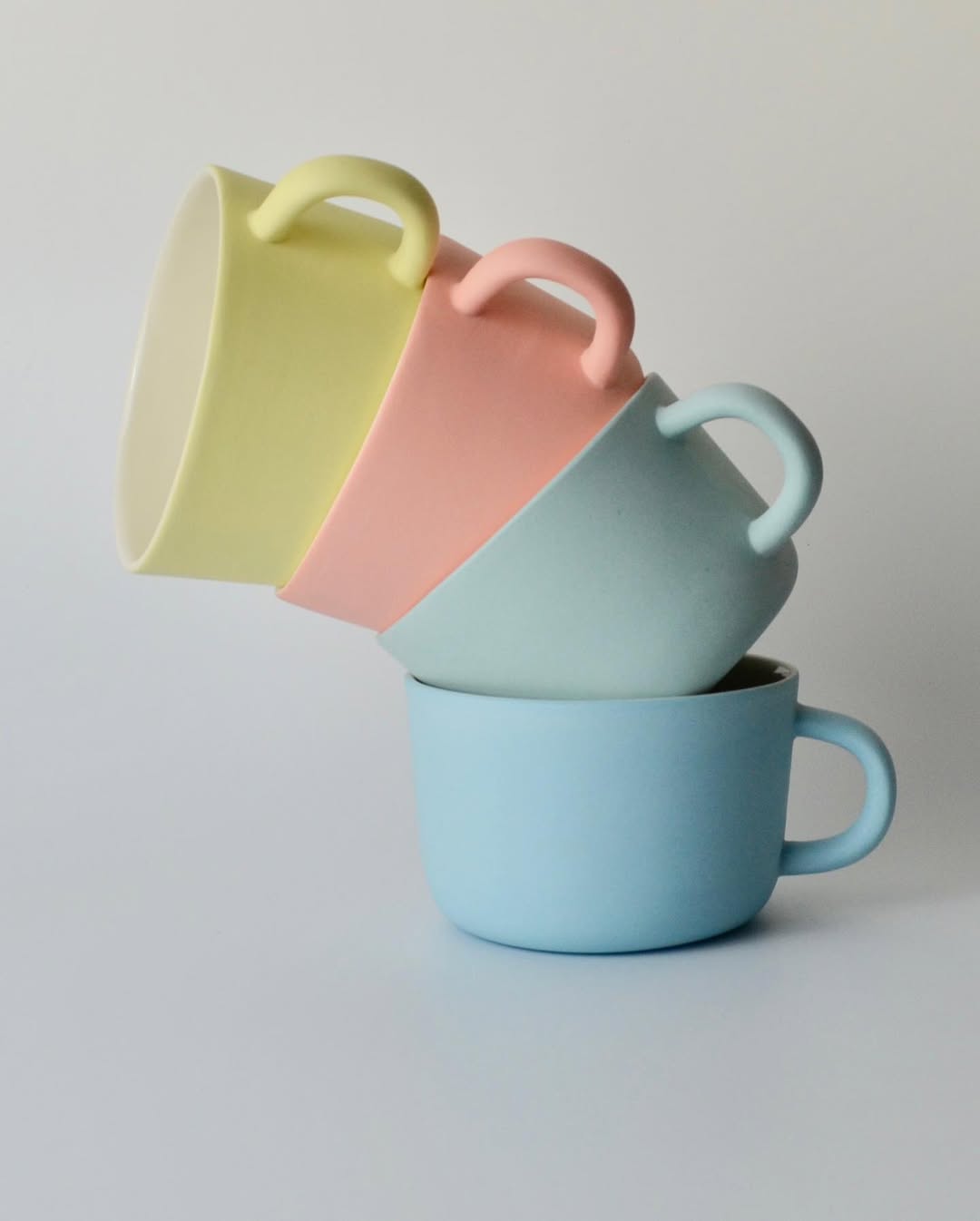
The Kelly Egg Cup is my favourite piece in my collection. It is named after one of my dear friends, Kelly, whom I met 20 years ago and who has supported me throughout my creative career. The shape of the egg cup is very tactile and lovely to hold. There are eight colours in the collection.
Creative process
6. What does a typical day in your studio or workshop look like?
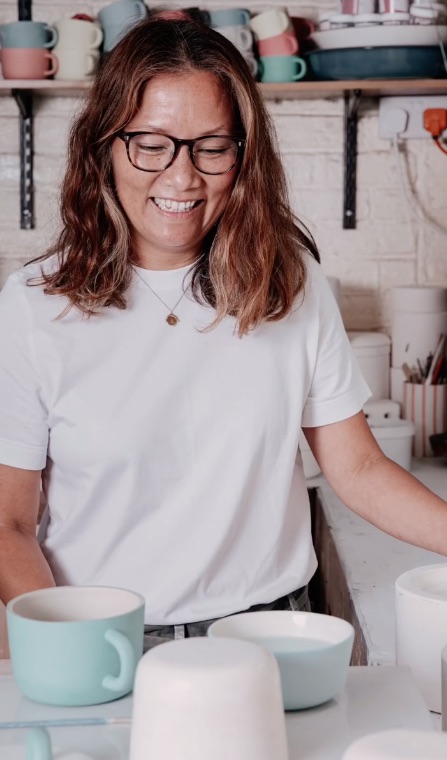
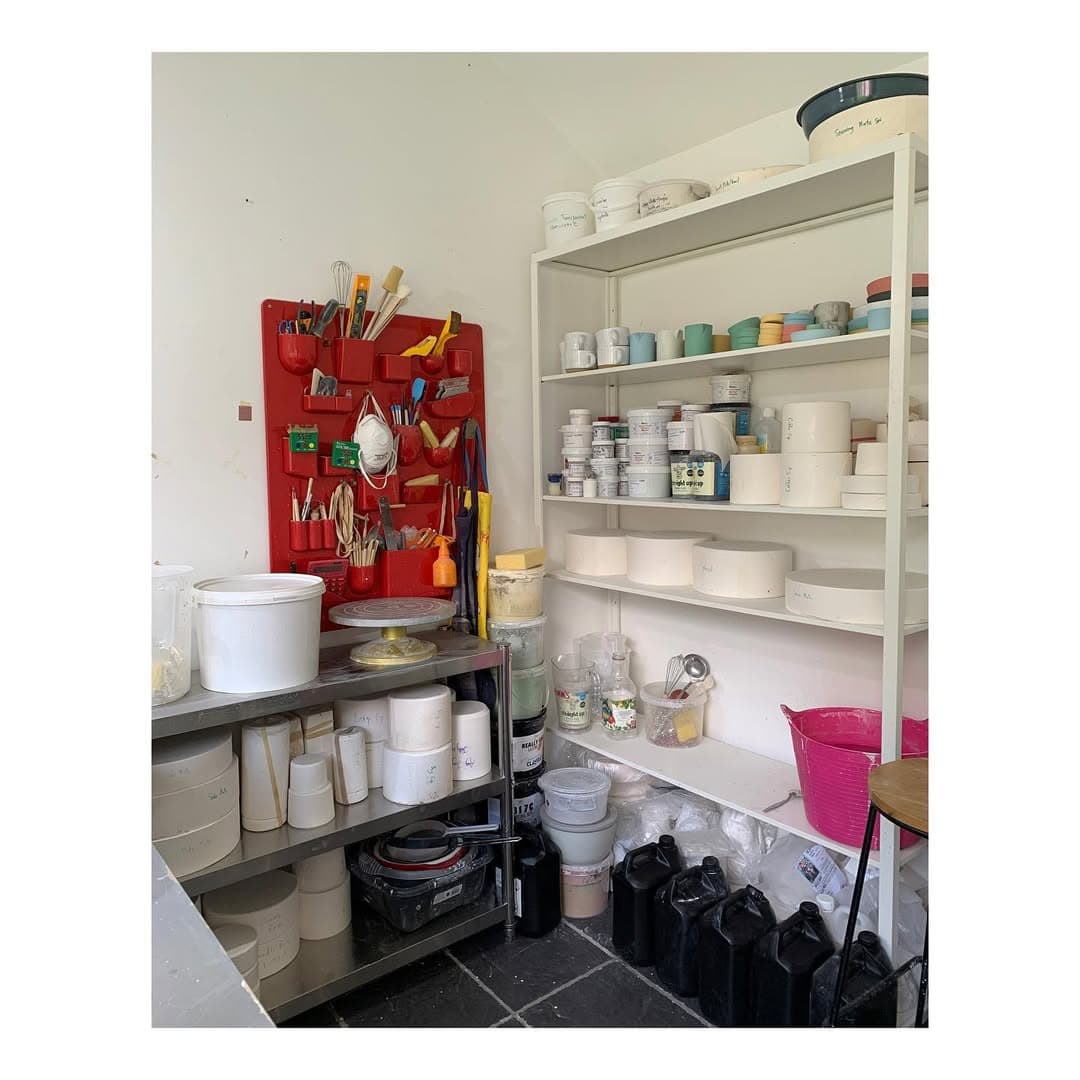
My studio is in my garden at home. After the school drop-off and a dog walk, I spend my time in the studio making, casting, and mixing new colours. Each piece requires time and patience to create. Porcelain is a strong material but also very delicate, requiring care and attention. I work in small batches—some days, I focus on casting new pieces. Each cast needs to be left in the mould overnight before being turned out to dry. I love spending time in my studio; it’s very calming and rewarding when everything comes out of the kiln perfectly.
7. Do you have any unique rituals or habits that help you stay creative?
Design and homeware have always been a real passion of mine. My love of food, design, and ceramics has featured regularly throughout my career, inspiring my creativity and work.
8. How do you handle creative blocks? Do you have any strategies or tips for overcoming them?
When I have a creative block, I keep making and experimenting. If I have an idea in my head, sometimes I need to create it first to see if it will work or not.
Challenges and successes
9. What’s the biggest challenge you’ve faced as a maker, and how did you overcome it?
Running a small business isn’t just about making. I build my own website, do all the photography, manage social media, handle customer service and enquiries—all alongside creating my work. The biggest challenge is balancing the creative side with the demands of running a business, as it needs to stay afloat. I’ve had to learn how to juggle multiple roles while ensuring my creativity isn’t compromised.
10. What’s been your proudest moment or achievement so far?
There have been many proud moments. One was when I participated in a craft fair for the first time, selling directly to customers and receiving great feedback. In my second year of business, several press outlets contacted me to feature my work. One of my dreams has been to supply a restaurant or hotel, and that became a reality last year—my egg cups are now being used and admired in a hotel establishment.
Inspiration
11. Where do you draw inspiration from for your work? What sparks your imagination and creativity?
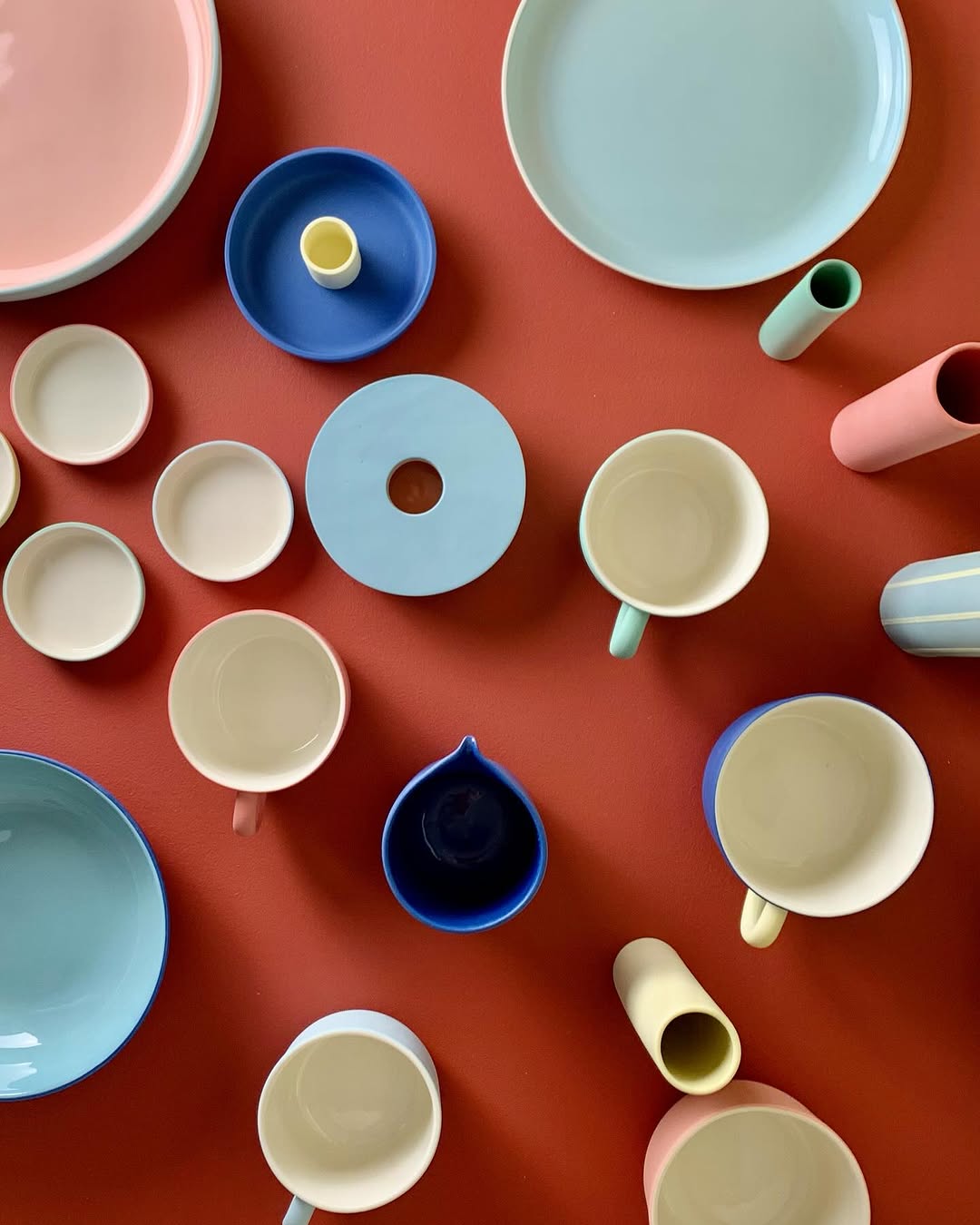
My work is very colourful, and I love creating vibrant ceramic pieces. My inspiration for colours comes from the architecture around the world, such as the vibrant buildings in Miami and the colourful houses on the hills of the Amalfi Coast.
12. Do you have a favourite artist, maker, movement, or tradition that has influenced your craft?
I admire the work of many ceramic artists. Their creativity and craftsmanship inspire me, and I draw influence from various styles and techniques within the ceramic community.
13. How does colour influence your practice; is it an important part of your process? Do you have a particular palette or favourites? Any go-to sources for colour inspiration?
Colour plays a significant role in my work. I love working with vibrant hues, and my palette is often inspired by the colours found in architecture around the world—such as the bold buildings in Miami or the colourful houses on the hills of the Amalfi Coast. These vibrant scenes spark my imagination and influence the colours I choose for my ceramic pieces.
Perspectives and goals
14. What do you want people to feel when they experience your work?
I want people to enjoy looking at, holding, and using my work, whether for decoration or when eating from it.
15. What are you currently working on, and what excites you most about it?
I’m working on adding a lighting range to my collection, which I’m really excited about.
Advice and reflection
16. What advice would you give to someone starting out as a maker?
Just do it—make, experiment, and keep it simple. Not everything will work, but great work can come from accidental mistakes.
17. If you could go back to the start of your career, what advice would you give your younger self?
Keep going and stick with it, even when it’s tough. It will be rewarding in the end.
Closing thoughts
19. Where can people find your work, and how can they support you?
You can find my work on my website, aeyglom.com, where you’ll also find a list of stockists. I also attend craft fairs and maker markets—details are available on my Instagram story.
Aeyglom ceramics embody precise craftsmanship, vibrant colours, and thoughtful design, resulting in beautiful pieces that bring joy and elegance to everyday living. Inspired by global architectural hues and crafted with meticulous care, Aey’s work invites people to experience the simple pleasures of handcrafted beauty.
Explore Aey’s latest collections and follow her creative journey:
Support Aey by exploring her ceramics online, discovering her collections at craft fairs and markets, and staying connected through her website and Instagram.
Meet the Maker: The Playful, Joyful Pottery of Kate Sellers
In this Q&A, we speak with Kate Sellers, the founder of K.S. Creative Pottery, about her journey from visual merchandising and prop styling to discovering pottery as a deeply therapeutic and joyful creative practice. Kate shares how personal challenges sparked her pottery passion, leading to success and collaboration with prestigious brands like Liberty. She offers insights into her creative rituals, the influences behind her playful designs, and the importance of finding balance and joy in her work.
1. Can you tell us a bit about yourself and your artistic journey?
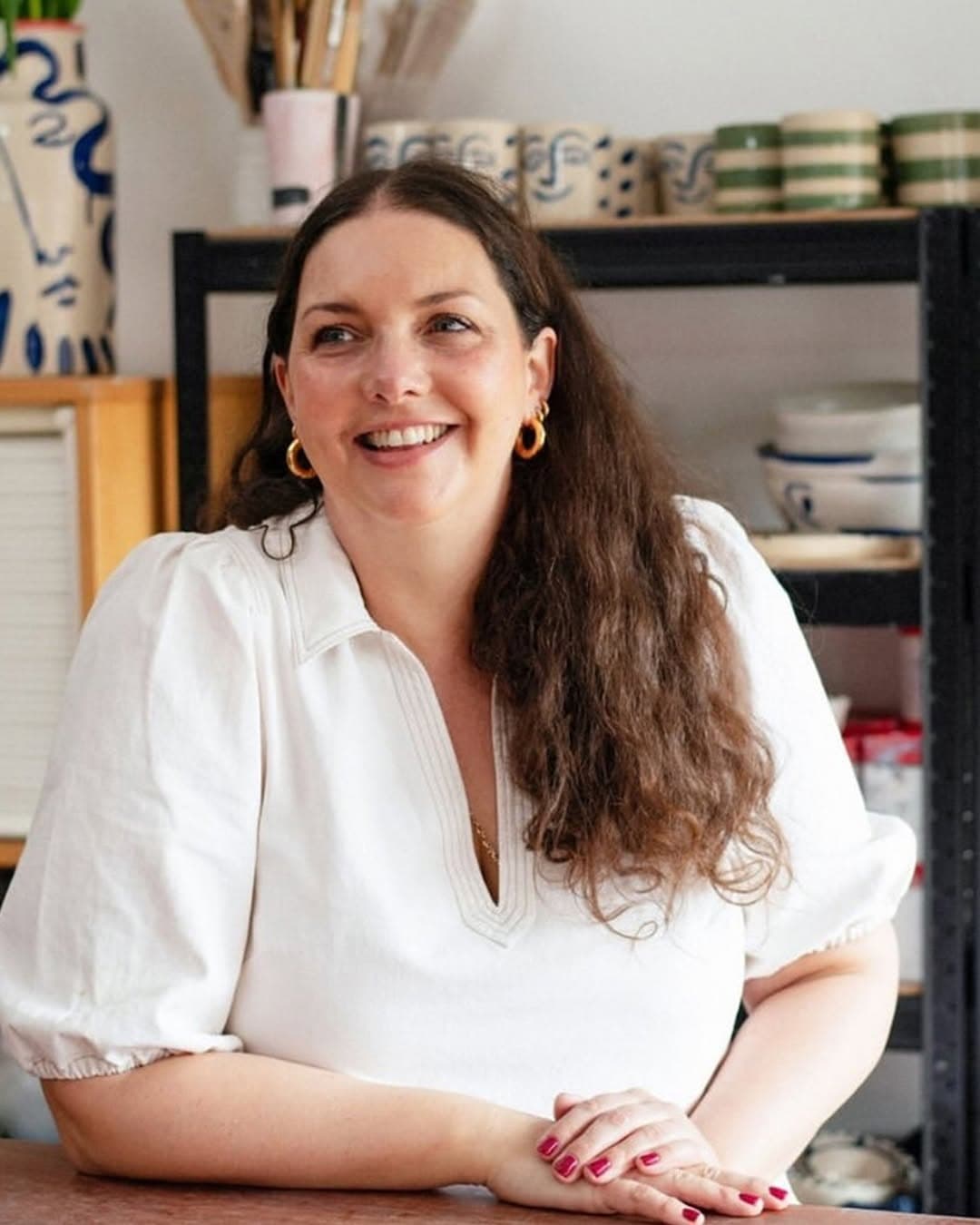
My name is Kate and I am the founder of K S Creative pottery. I am a multi disciplinary creative working as a Prop and Set stylist, with a career in Visual merchandising for various fashion brands.
2. What inspired you to pursue your craft? Was there a defining moment or influence that sparked your passion?
My friends gifted me a weekend workshop at the Kiln rooms. I was living in London and after losing my Dad and going through a break up life was a bit bleak. I did a degree in Decorative arts and I hadn’t realised how much I had missed making with my hands. I found the course extremely therapeutic and I was totally hooked. My teacher at the time realised that I had an immediate affinity with throwing and offered me a space at her studio where I could just sit and throw. It was wonderful and became the highlight of my week.
When I moved back home to Kent a few years later it was finding a studio where I could continue to make that was the priority. Then lockdown hit, Eunice who runs my new studio realised that I would need to continue to make so kindly offered me a wheel to borrow, I placed it in the tiny shed in the garden and began to make daily. Photo shoots and commercial work shut down so I channeled all my energy into photographing what I had been making and started to build a following on Instagram. This led to me catching the attention of the buyers at Liberty and my pottery brand was launched the following summer with an exclusive collection that sold out.
Your craft
3. How would you describe your work in three words?
Unique, playful, small-batch
4. What materials or techniques do you use, and why are they important to your process?
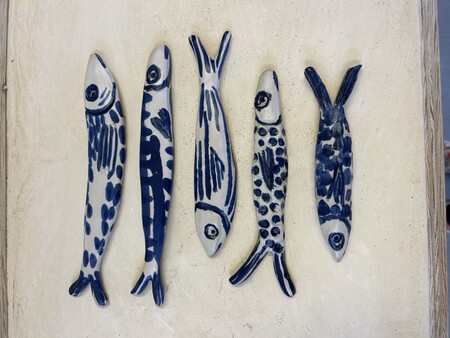
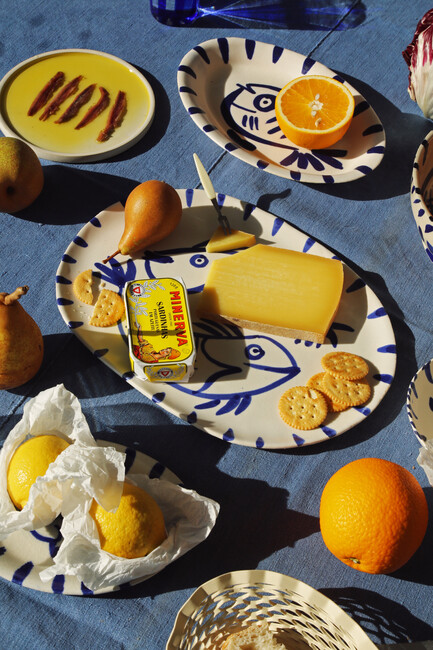
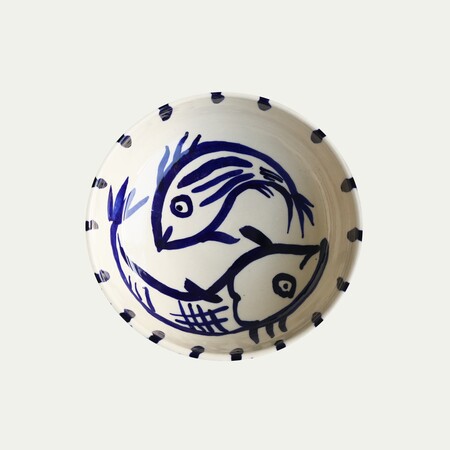
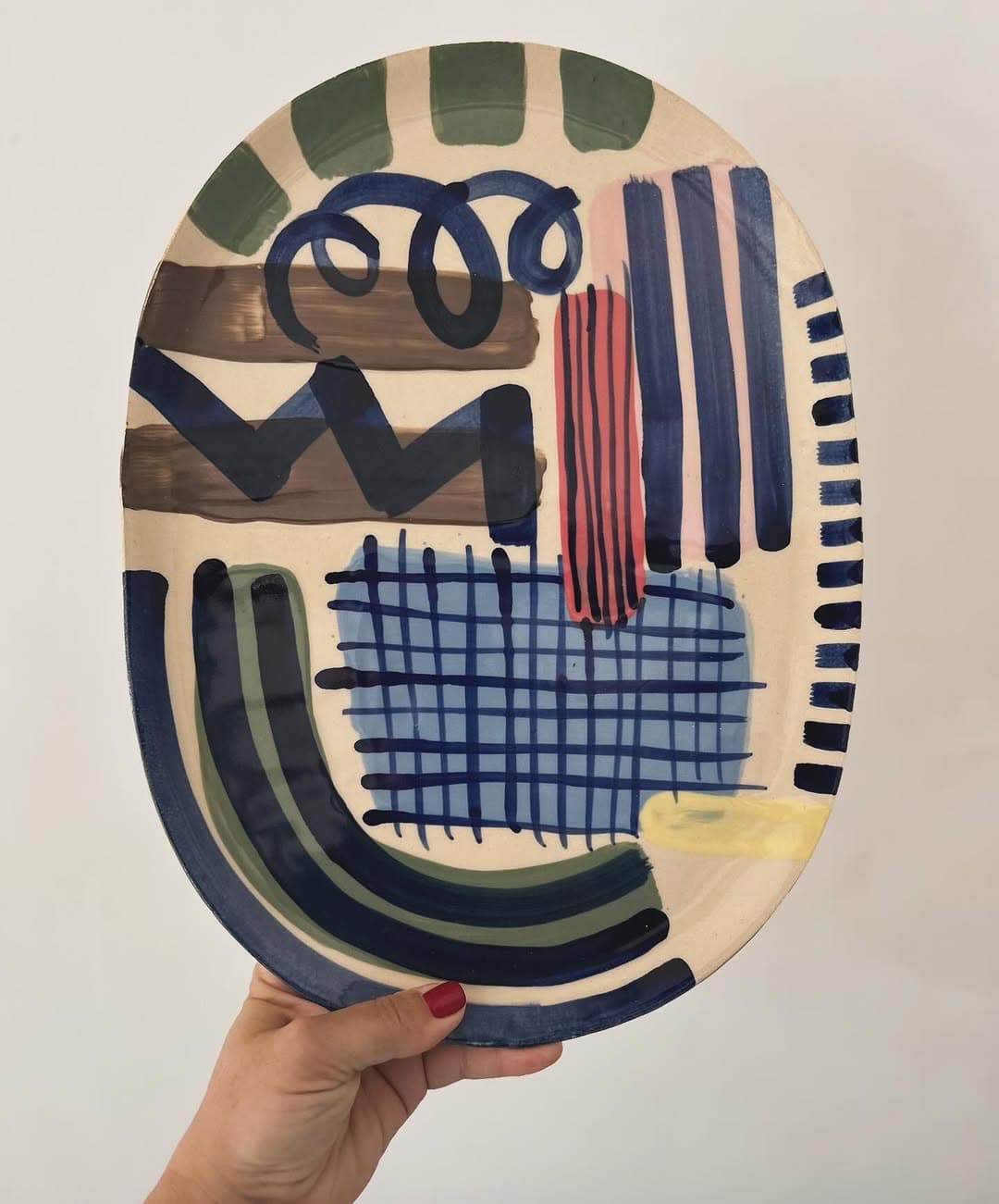
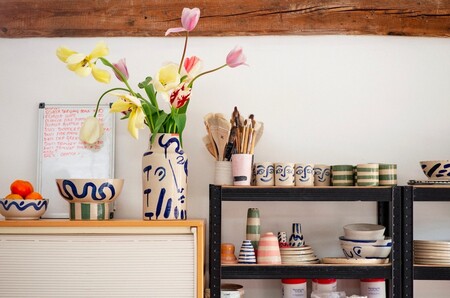
I throw on the wheel and Hand build using Staffordshire white stoneware. Decorating in coloured slips and simple glazes, sometimes finishing my pieces with a cobalt oxide hand painted design.
I enjoy hand finishing my pieces, often not planning out my design prior to painting. I love that each piece is completely unique.
5. Can you tell us about a favourite piece you’ve created and the story behind it?
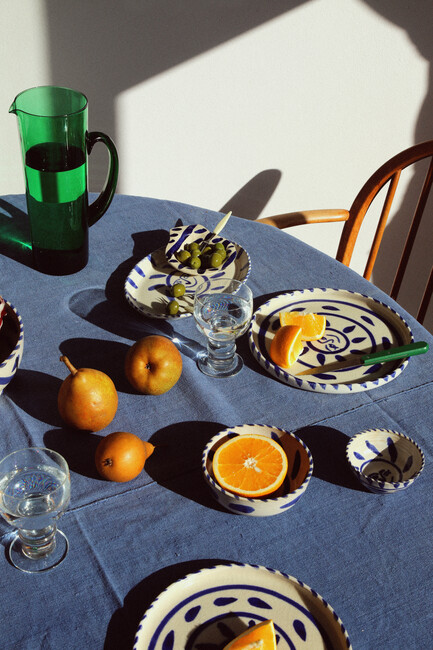
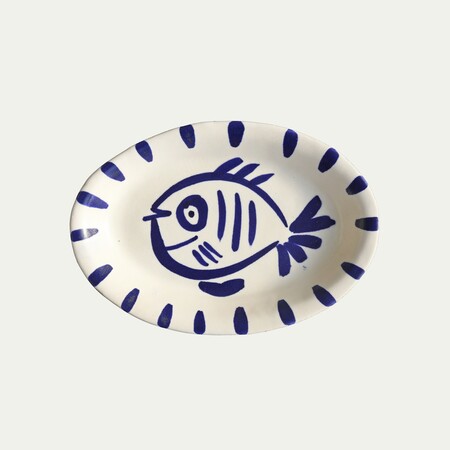
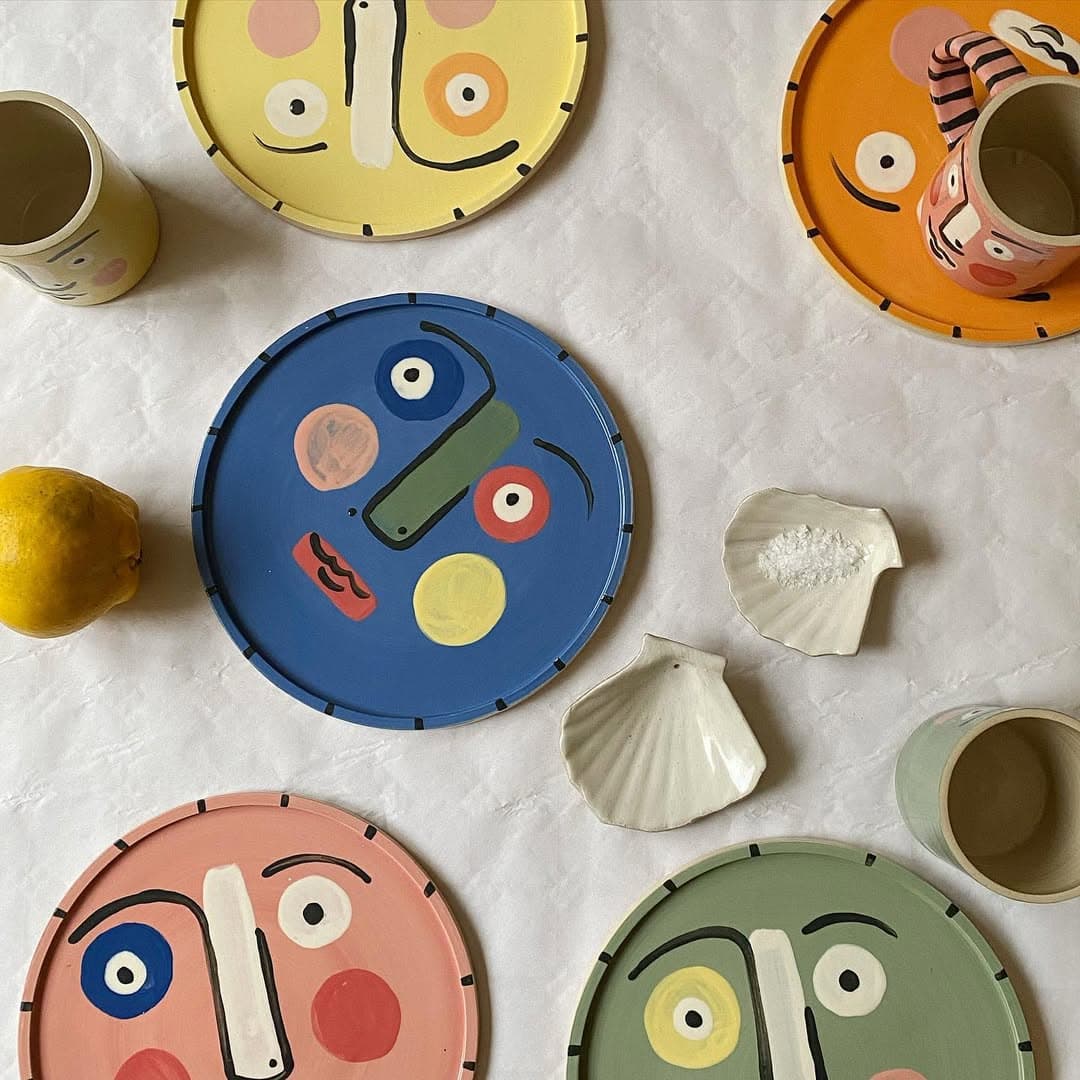
I really enjoy working on a larger scale and a huge round platter I made recently is a current favourite. I am also very fond of my Isolation face collection, fun and playful in bright colours that spark joy.
Creative process
6. What does a typical day in your studio or workshop look like?
I start my day in the studio with a nice coffee from the cafe next door. I write a to do list on the board and get my clay prepared for the day. Weighing out and wedging clay ready to be thrown or rolling out clay if I am planning to hand build.
I save all my admin work for home as I have to fully focus whilst making otherwise things go wrong. I listen to Guy Garvey or a good podcast and get into the zone, making away until it is dark or I’m hungry!
7. Do you have any unique rituals or habits that help you stay creative?
I love to look through old magazines and as much as I love going to exhibitions I don’t do it nearly as much as I should. Instagram and pinterest are great starting points for a creative boost but I often go down rabbit holes started off by pinterest ending somewhere really interesting.
8. How do you handle creative blocks? Do you have any strategies or tips for overcoming them?
I try to allow myself to step away if I am feeling blocked. Take time out to read, travel, talk to friends and go to the seaside. This always revives me.
Challenges and successes
9. What’s the biggest challenge you’ve faced as a maker, and how did you overcome it?
I think my biggest challenge came from my biggest success. I received my first wholesale order from Liberty for over 600 pieces and they needed to be delivered within 4 months. Everything was handmade and painted. Two kilns failed in the process meaning I lost around 60 plates and caused a big repair bill for the kiln.
10. What’s been your proudest moment or achievement so far?
Getting my first wholesale order from Liberty for a debut collection of limited Isolation face plates that sold out.
11. What’s your favourite quote you’ve ever heard about your work? Who said it, or what was the name of the publication?
"KS Creative Pottery's unique Isolation Face Plates are a cult tableware item”
- LIBERTY
Inspiration
12. Where do you draw inspiration from for your work? What sparks your imagination and creativity?
All around me I would say, I love the sea living near the Kent coast and I love to travel. I have been visiting Sicily for 23 years and I find the heritage for artisanal pottery very inspiring. I love to visit different villages to see how their style and use of colour varies. I collect pieces that I bring home and refer back to.
13. Do you have a favourite artist, maker, movement, or tradition that has influenced your craft?
As well as Sicilian artisan pottery I am very intrigued by artist movements and groups. I am drawn to the colours and geometry of The Bauhaus movement and the freedom and expression Charleston/ The Bloomsbury group.
14. How does colour influence your practice; is it an important part of your process? Do you have a particular palette or favourites? Any go-to sources for colour inspiration?
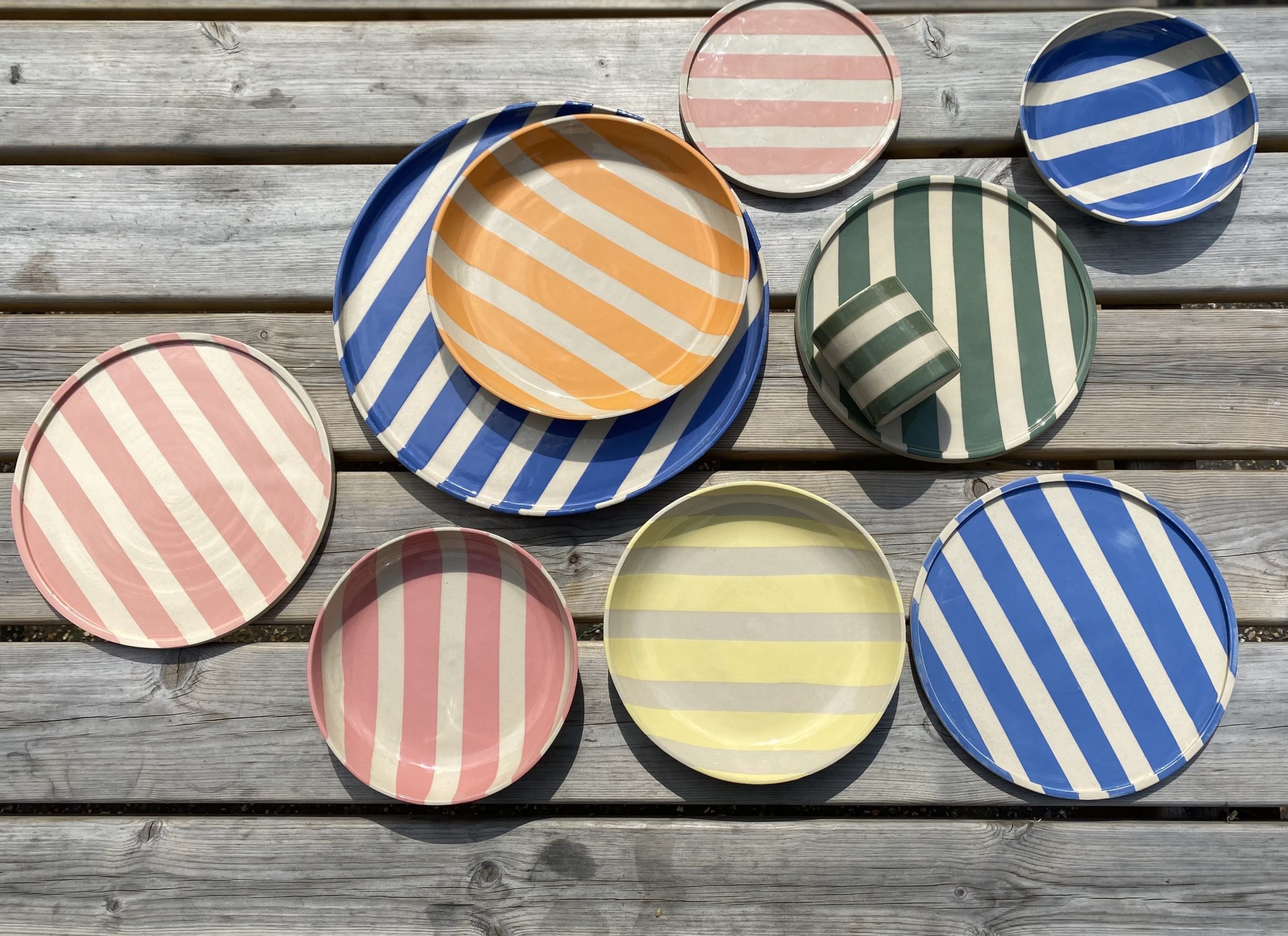
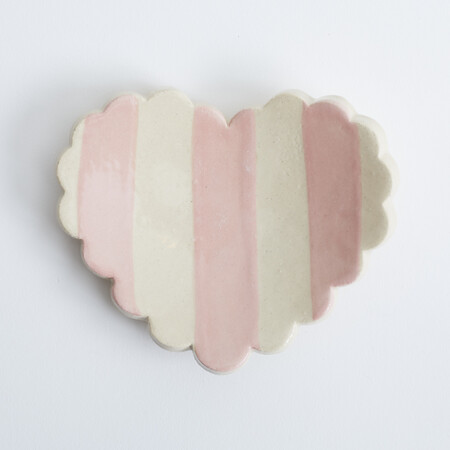
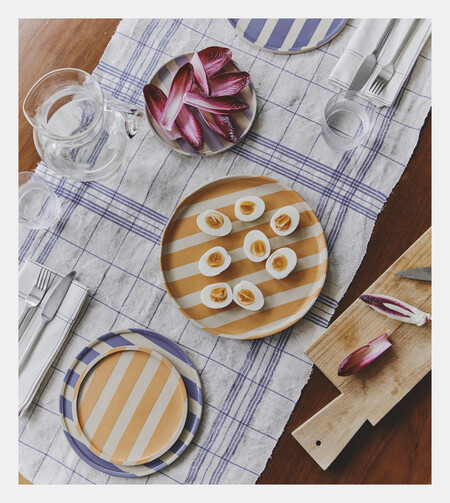
I am so inspired by colour and very drawn to unusual colour combinations. I dress predominantly in black or blue but love to explore colour within my work and find it makes my pieces joyful. I love a sludgy olive green with a lemon yellow and a soft pink. I find the book ‘ A Dictionary of Color Combinations’ a great source. I would say my palette is unique and inspired by holidays and the seaside. Stripes have always been in my life and I was called stripey Kate at university. I love to use bright but soft colours in my Duci stripes, trying to toe a line between playful and sophisticated.
Perspectives and goals
15. What role does your environment play in shaping your creativity?
I live in the Kent countryside and not far from the sea so the environment around me really plays a big part in my creativity. I am inspired by the colours of the land and space around my home and studio. I find a walk along the sea shore or even my drive through the high bush lined country lanes to the studio really give me the space to think and to create.
16. What do you want people to feel when they experience your work?
I hope that my pieces spark joy and that they add interest to peoples homes. Making you smile in your day to day moments.
17. What are you currently working on, and what excites you most about it?
I am very pleased to be working on a new collection for The Courtard Museum gallery and a collection of Fish for the National Gallery. I am also working on developing my workshops and possibly doing my first retreat this year.
Advice and reflection
18. What advice would you give to someone starting out as a maker?
Always make pieces that you love and that you enjoy making.
19. If you could go back to the start of your career, what advice would you give your younger self?
I have had a really varied career and I have thoroughly enjoyed my work, generally working with really nice people who are great at what they do. I think that the only advice I would give is do what you love and start making/ working with clay a lot sooner, as I have found it so cathartic and is probably the calm I needed when I was younger.
Closing thoughts
20. If you could collaborate with any artist, past or present, who would it be and why?
I would love to have worked in the pottery at Charleston with Vanessa Bell and Duncan Grant, or have been part of the Bauhaus. I would also have loved to have collaborated with Barbara Hepworth or Picasso. But in terms of today I would love to work with artist Rosie Harbottle, I am taking a painting course with Rosie in April and I can’t wait to explore paint and oil pastels with her. I love her style and hope to start to produce work on paper as well as in clay.
21. Where can people find your work, and how can they support you?
I have a website where you can shop directly with me – kscreativepottery.com
Or my work is available in a The Courtard museum shop and handful of small local boutiques:
The Courtard Museum – Somerset house London
Lamp London Home – Peckham Rye
Aime – Ledbury rd London
Rae Lifestyle – Rye
Kate Sellers’ ceramic designs are vibrant and uplifting, intended to bring joy to everyday moments. Influenced by the seaside landscapes of Kent and artisanal traditions of Sicily, her pottery adds warmth, character, and a touch of playful elegance to any home.
Explore Kate’s latest collections and follow her creative journey:
Support Kate by visiting her online shop, experiencing her creations at select boutiques, and following along as she continues to bring joyful pottery into the world.
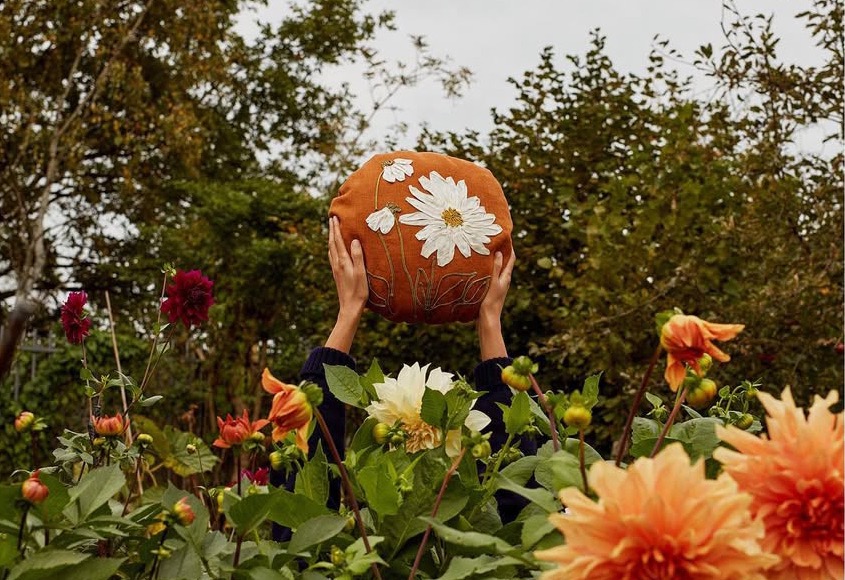
Meet the Maker: The Embroidered Narratives of Lora Avedian
Meet the Maker: The Embroidered Narratives of Lora Avedian In this Q&A, we chat with Lora about her artistic journey, her love for antique materials, and the influence of her multicultural heritage. She shares insights into her creative process, including overcoming challenges, celebrating key achievements like her residency at the Barbican, and what it means to create joyful, vibrant textile pieces inspired by nature and history.

1. Can you tell us a bit about yourself and your artistic journey?
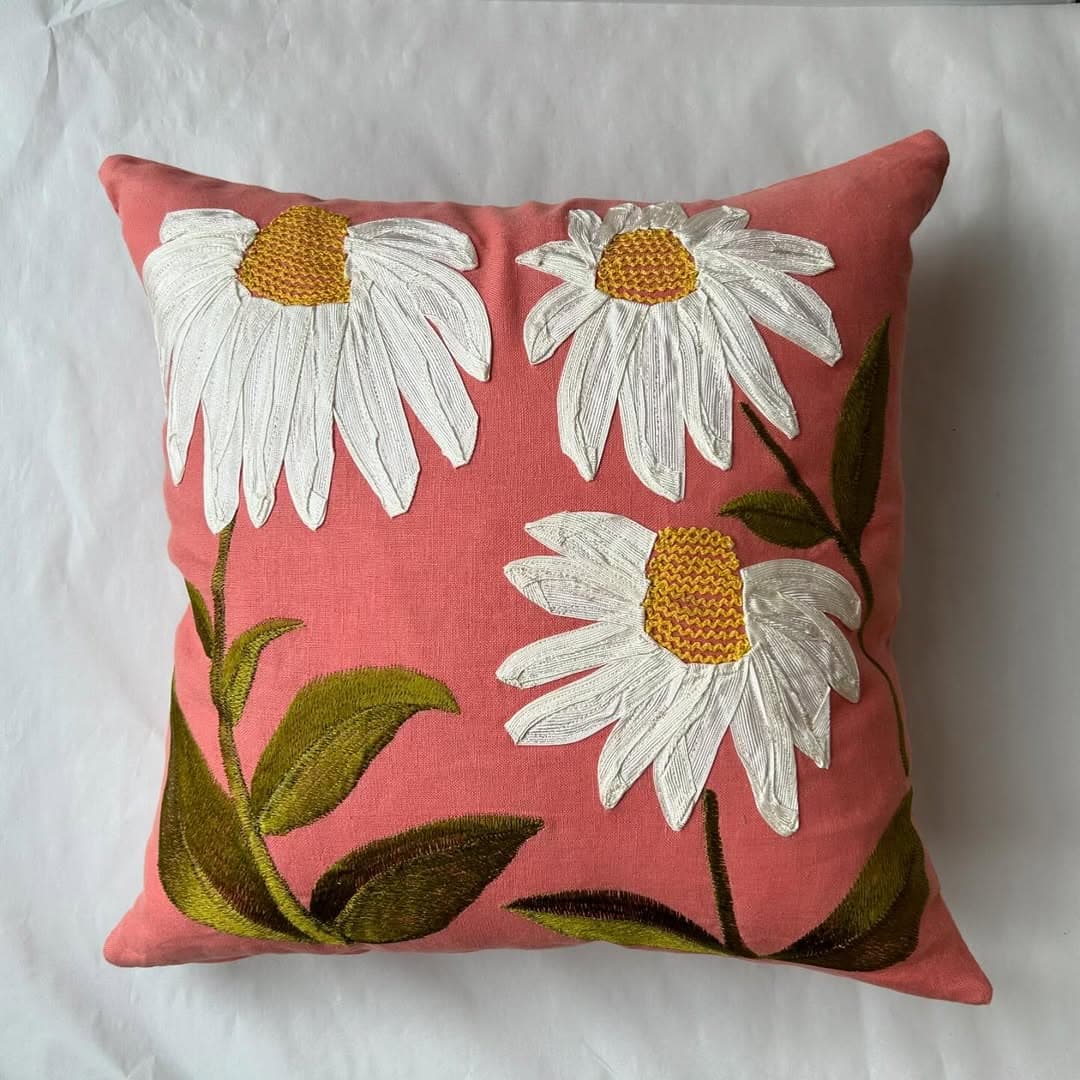
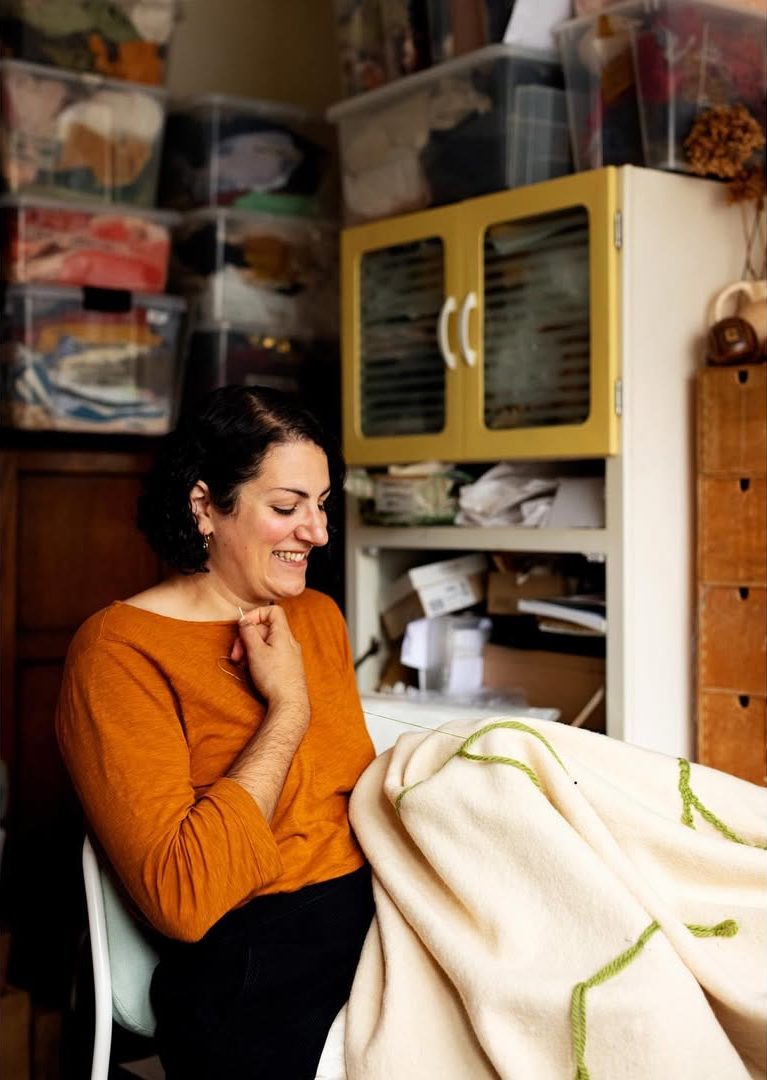
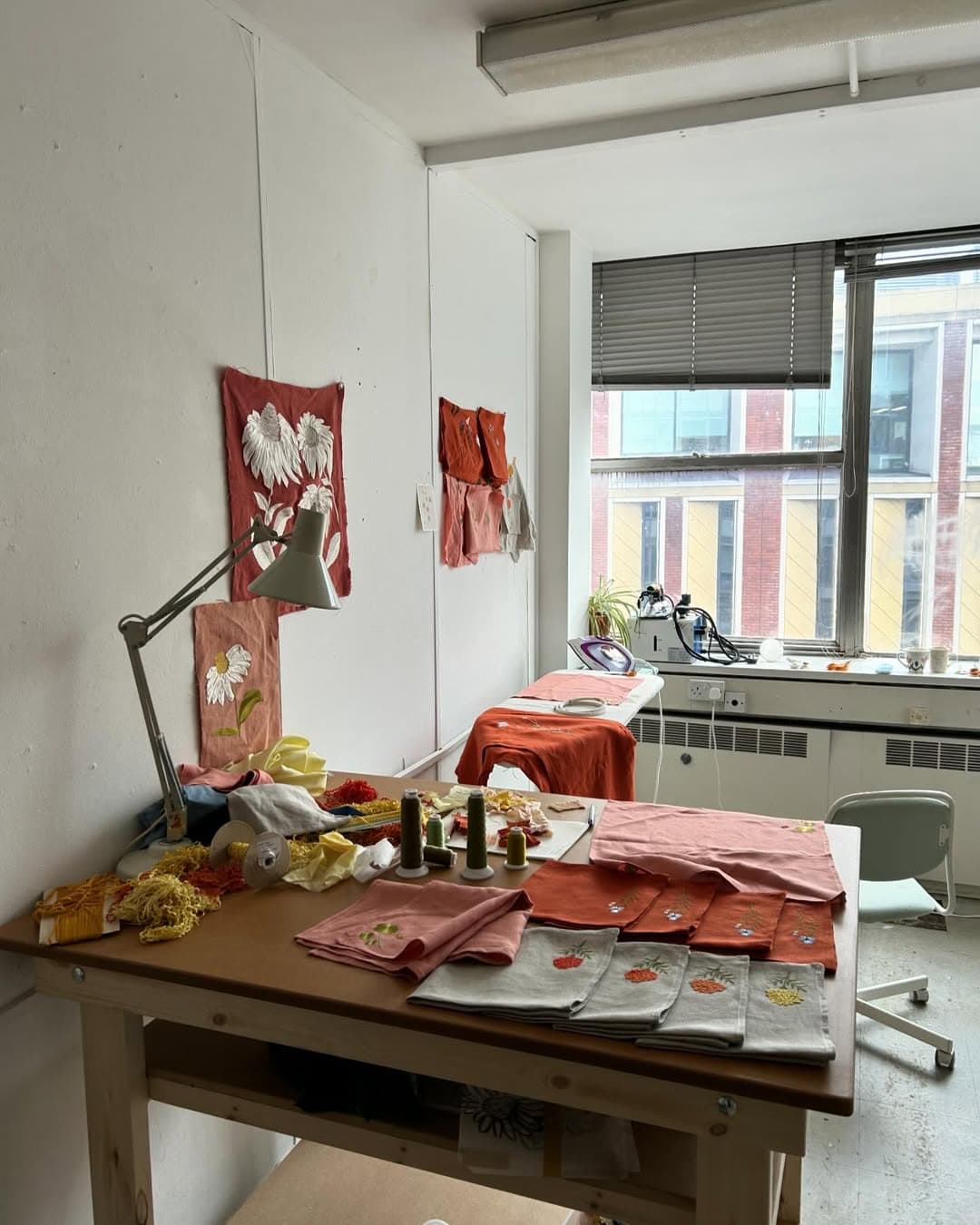
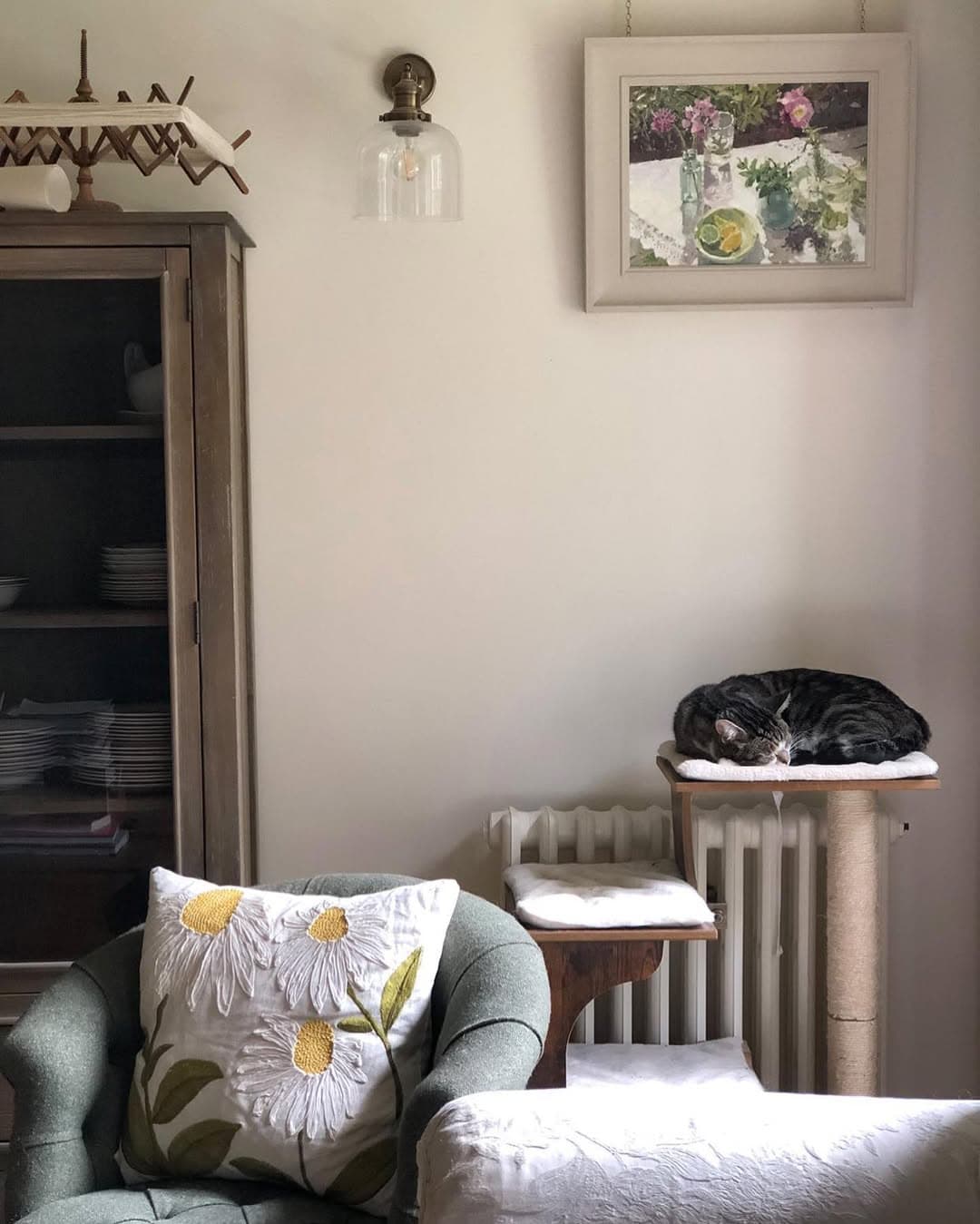
My work sits between textile design and art, encompassing everything from large-scale installations at venues like Barbican Centre and the Chelsea Flower Show to embroidered linen and soft furnishings. Which are all made by me in small batches or as exclusive collections for select retailers such as the V&A shop, and Fortnum & Mason. I studied Mixed Media textiles at the Royal College of Art and have been interested in embroidery in particular since I was a teenager. In between my BA in Embroidery at Manchester Metropolitan University and MA at the RCA I did a stint of about 7 years working for artists and designers and eventually worked as a set designer and prop stylist for still life photography. I love to create visual narratives with colour, texture and materials, which I took into my work at the RCA and has become a part of how I create my textile work.
2. What inspired you to pursue your craft? Was there a defining moment or influence that sparked your passion?
My mum got me into textiles as she had studied print design, and so I always had an appreciation and interest in textiles. When I met Karen Nicol when I was a teenager that really opened up my eyes to the possibilities of embroidery and she told me about the BA and the MA that I ended up doing, so I owe a lot of my career to meeting her.
Your craft
3. How would you describe your work in three words?
Tactile, floral, illustrative
4. What materials or techniques do you use, and why are they important to your process?
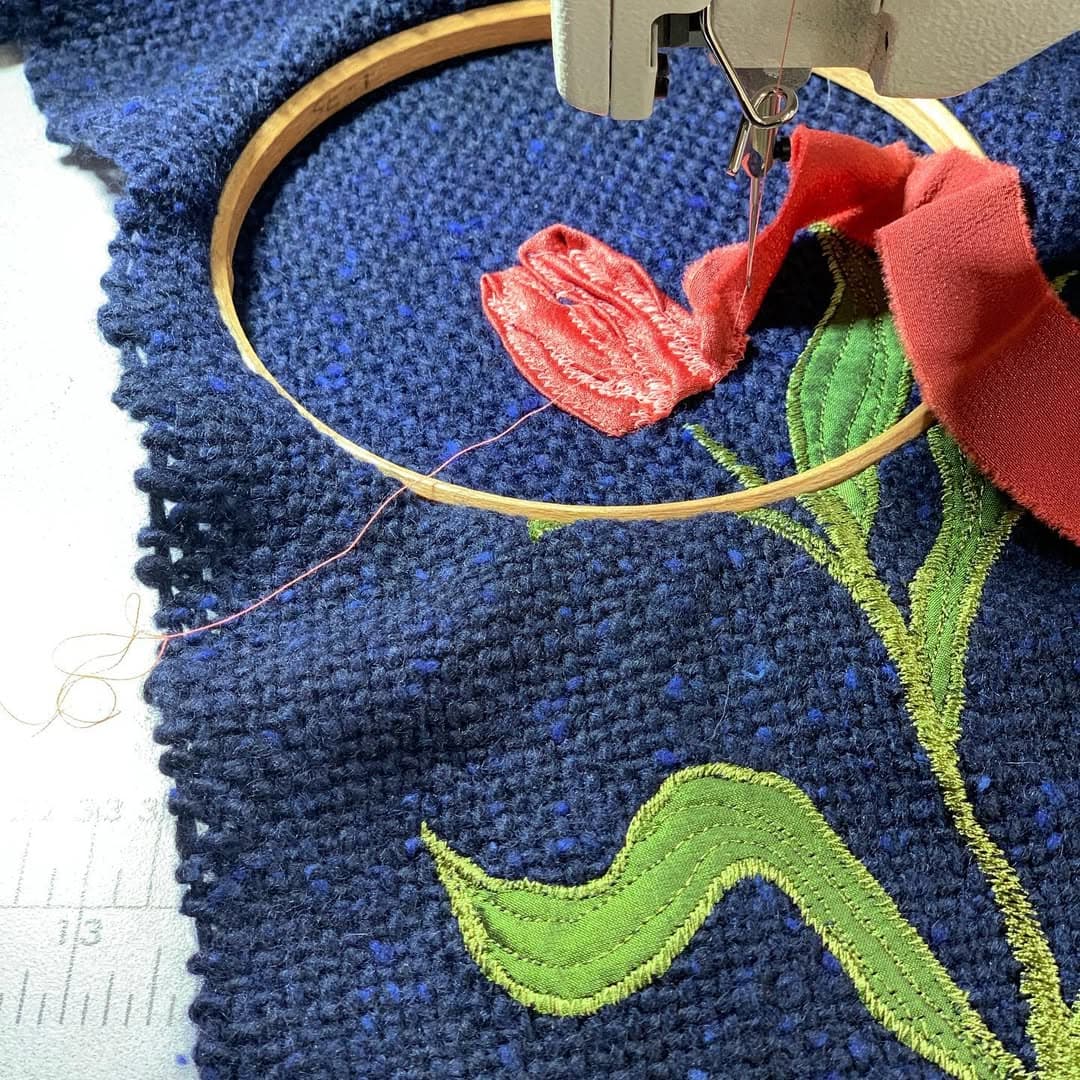
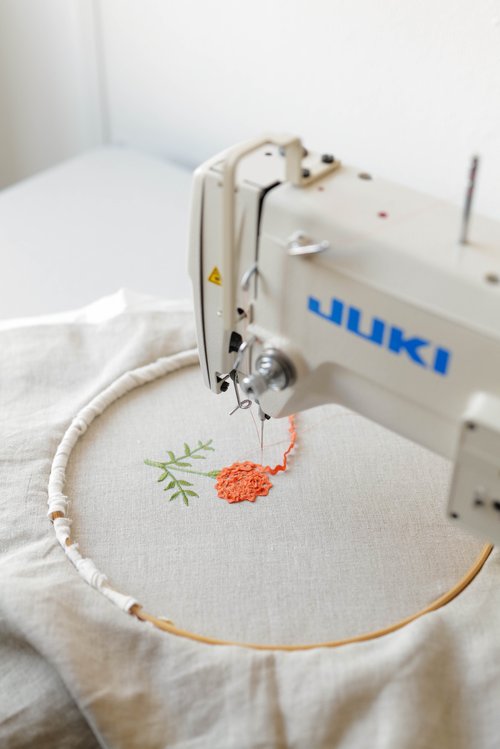
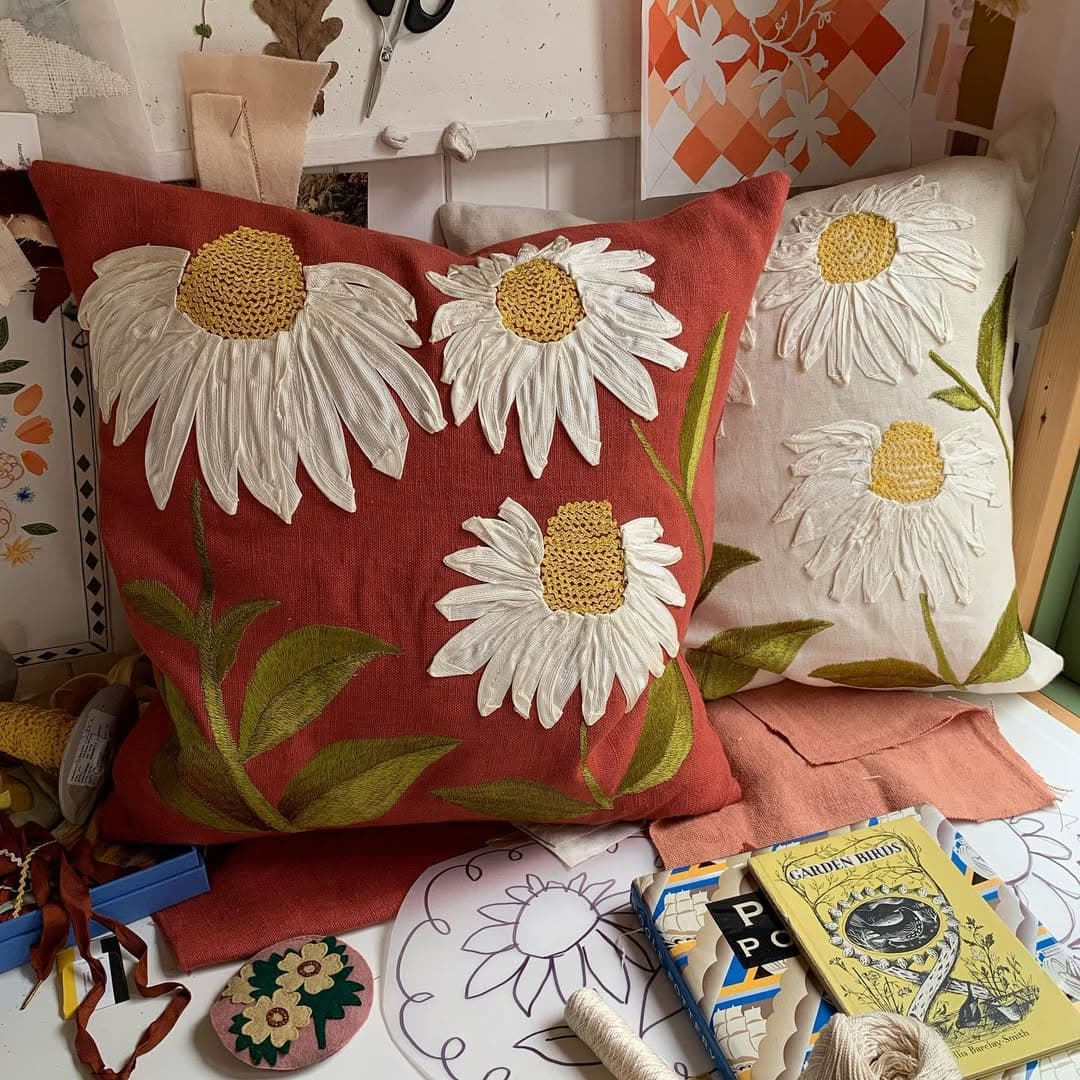
I like to use natural materials, like linens and wools to work on, and I am really keen on using second hand materials so I am always scouring the antique markets to find reels of beautiful ribbons or braids. The process of looking for these materials is something I love, the fact that they are often made in the early 20th century means they have a certain quality that it’s really hard to find now with new materials. I use these braids and ribbons to do an embroidery technique called ‘couching’ which I started using during my MA, and have developed a way of doing with my hand guided machine. It’s a key technique for me, and I even wrote a book about it!
5. Can you tell us about a favourite piece you’ve created and the story behind it?
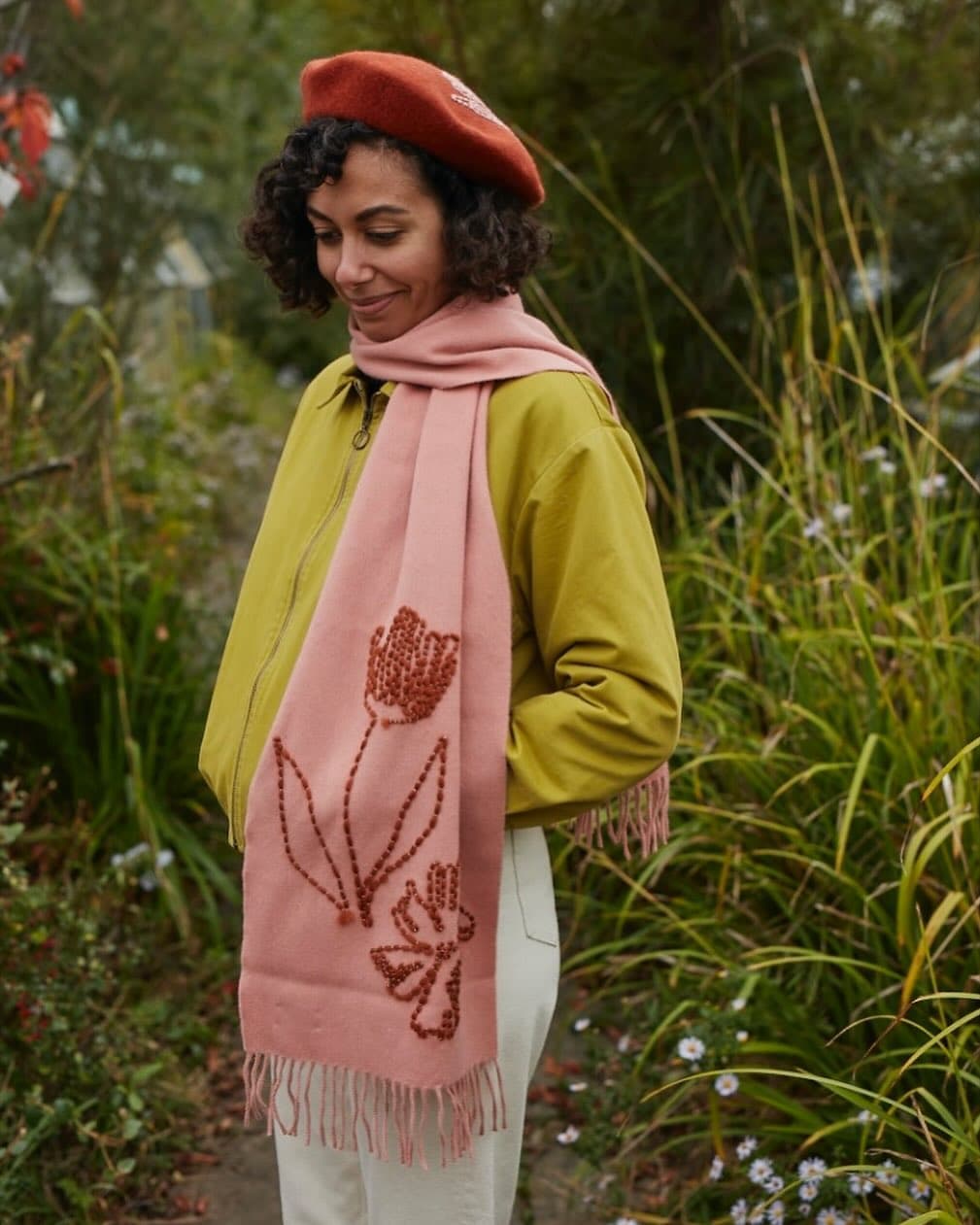
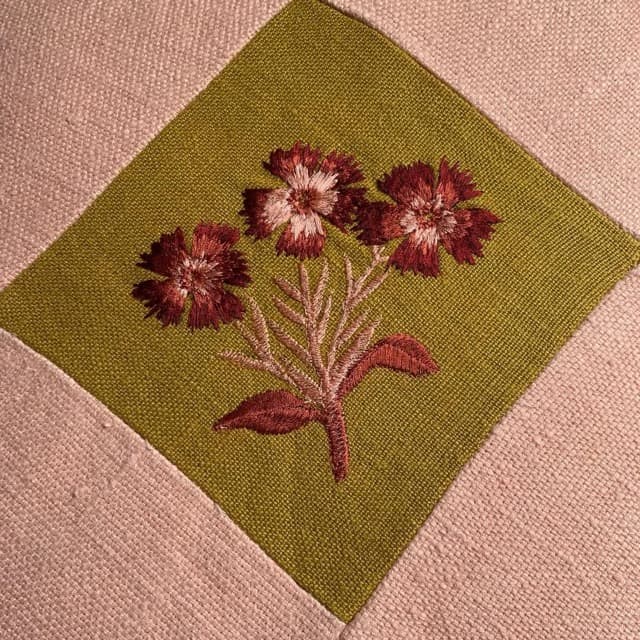
I think my favourite piece I have made is still one from my masters, which is a large ‘cape’ which works as a wall hanging. It’s the thing I probably spent the most time and effort creative and the photographs of it still get used in articles, and I often get asked to do commissions off the back of it. It has hand embroidered tulips using braid, and three dimensional pleated carnation flowers, with 3D leaves and machine embroidered stems. I hand dyed almost every part of it, it was a real labour of love. The flowers and colour palette are symbolic of flowers and fruit of Iran and Armenian, where my father is from. It is probably the one piece of work that is most referenced by clients for projects.
Creative process
6. What does a typical day in your studio or workshop look like?
I will get into the studio, stick the kettle on, and make myself a cup of tea. Unless I have an ongoing project I often sit and look at my mood board for a moment, and try to plan my day, writing a list is really key for me to get anything done. I will usually work for a few hours and then have my lunch at my desk. I try to go for a walk to clear my head if I have a lot going on. I usually have to leave quite early to pick up my kids so I try and make the most of my time in the studio!
7. Do you have any unique rituals or habits that help you stay creative?
I like to go to the usual galleries and exhibitions, or a National Trust house or garden. I also love to go to markets, charity shops and car boot sales. The weird and wonderful bits and pieces I can find at that sort of place can really inspire me.
8. How do you handle creative blocks? Do you have any strategies or tips for overcoming them?
Going for a walk, having a dance, doing something completely different, and listening to music!
Challenges and successes
9. What’s the biggest challenge you’ve faced as a maker, and how did you overcome it?
Not having enough space to make work is a challenge, and not knowing when to say no to projects that are out my depth. I have learnt to reach out to people for help, and it’s so often that when I speak to people about a project most things can be resolved. I think you have to make these mistakes to learn from them and get better as a business person – it’s hard to be an artist who has to do it all!
10. What’s been your proudest moment or achievement so far?
Writing a book was a great achievement. Early in my career not long after I graduated from my MA I was asked to do be artist in residence at the Barbican Shop, and with that I was asked to design the Christmas decorations for the entrance way and that was a big pinch me moment.
Inspiration
11. Where do you draw inspiration from for your work? What sparks your imagination and creativity?
I love going out into nature, there is just so much to be inspired by. I really enjoy going to the British museum to look at the ancient objects. The V&A is a particular favourite of mine, I don’t think I could ever get bored of it, especially the glass and ceramics rooms. I have a lot of books, and also find a lot of inspiration from antique clothing; Portobello market on a Friday is a real treat for the eyes.
12. Do you have a favourite artist, maker, movement, or tradition that has influenced your craft?
I am a big fan of the Bloomsbury Group, and their Omega Workshops project. I would say their colours and aesthetic have been really influential but there are so many people who’s work I love, it’s really hard to say! It’s always a big mix of things for me.
13. How does colour influence your practice; is it an important part of your process? Do you have a particular palette or favourites? Any go-to sources for colour inspiration?
I think colour is so important to an artist, it really helps to define your work. When I was at the RCA they had a colour room, with draws full of colour swatches, and I spent a lot of time there working on my colour palette. I referenced my visual research, and in particular a film called Colour of Pomegranates which I used a still from t get my palette. I think that really helped bring my work together in the end and I have stuck to it ever since.
Perspectives and goals
14. What role does your environment play in shaping your creativity?
I collect a lot of seemingly random and probably quite objects from car boot sales, twigs from walking in the woods, shells from going to the seaside. All of these things will feed into my work, whether it’s a colour, a texture or a shape of something. I love to be surrounded by my things, and see them on my walls, both at home and in my studio.
15. What do you want people to feel when they experience your work?
Joy! I want people to feel happy when they see the colours and textures of my work.
16. What are you currently working on, and what excites you most about it?
I am working on a new collection of embroidered artworks and interior samples coming in October 2025. Both of these things are things I have thought about for a while, and I am really excited to finally get them out of my head and into the world.
Advice and reflection
17. What advice would you give to someone starting out as a maker?
Show people your work, tell them what you do. Don’t be shy!
18. If you could go back to the start of your career, what advice would you give your younger self?
Have more confidence in your work, keep doing your research, and keep making what you like, not what you think everyone else will like.
Closing thoughts
19. If you could collaborate with any artist, past or present, who would it be and why?
This is so hard! I would love to collaborate with Louise Bourgeois and make some embroidery for her, I love her use of textiles and colour.
Lora Avedian’s work seamlessly combines embroidery, storytelling, and a deep appreciation for colour and texture, creating pieces that feel contemporary yet nostalgic. From large-scale installations to delicate embroidered linens, her creations are meticulously crafted delights.
Explore Lora’s latest collections and follow her creative journey:
You can sign up to my mailing list for (infrequent but excellent) Studio News letters.
Meet the Maker: Ruby Bateman's Timeless, Heartfelt Creations.
In this Q&A, we speak with artist Ruby Bateman about her lifelong artistic journey—from childhood creativity at the kitchen table to studying at the Royal College London, and now working from her cosy studio in Devon. Ruby shares insights into her intuitive creative process, the emotional narratives woven through her paintings, and how ancient histories, myths, and folk culture deeply inspire her work. She discusses the joy of collaboration and the importance of authenticity in the artistic journey

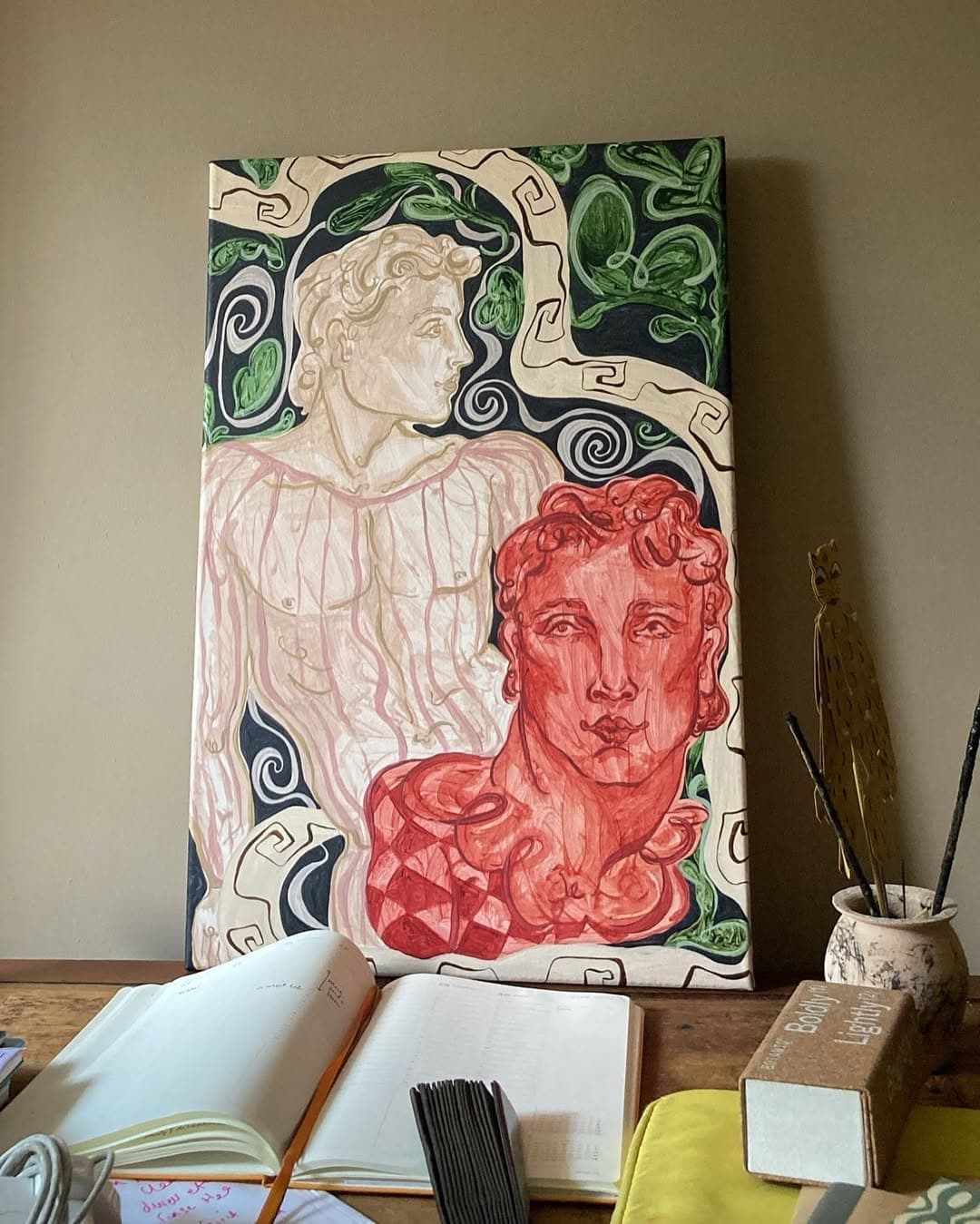
1. Can you tell us a bit about yourself and your artistic journey?
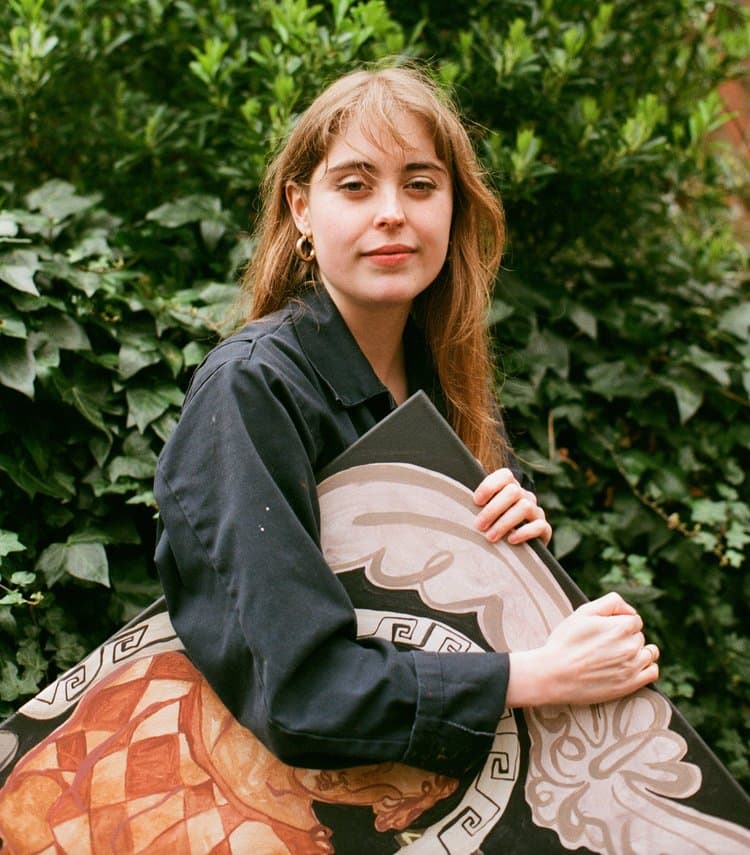
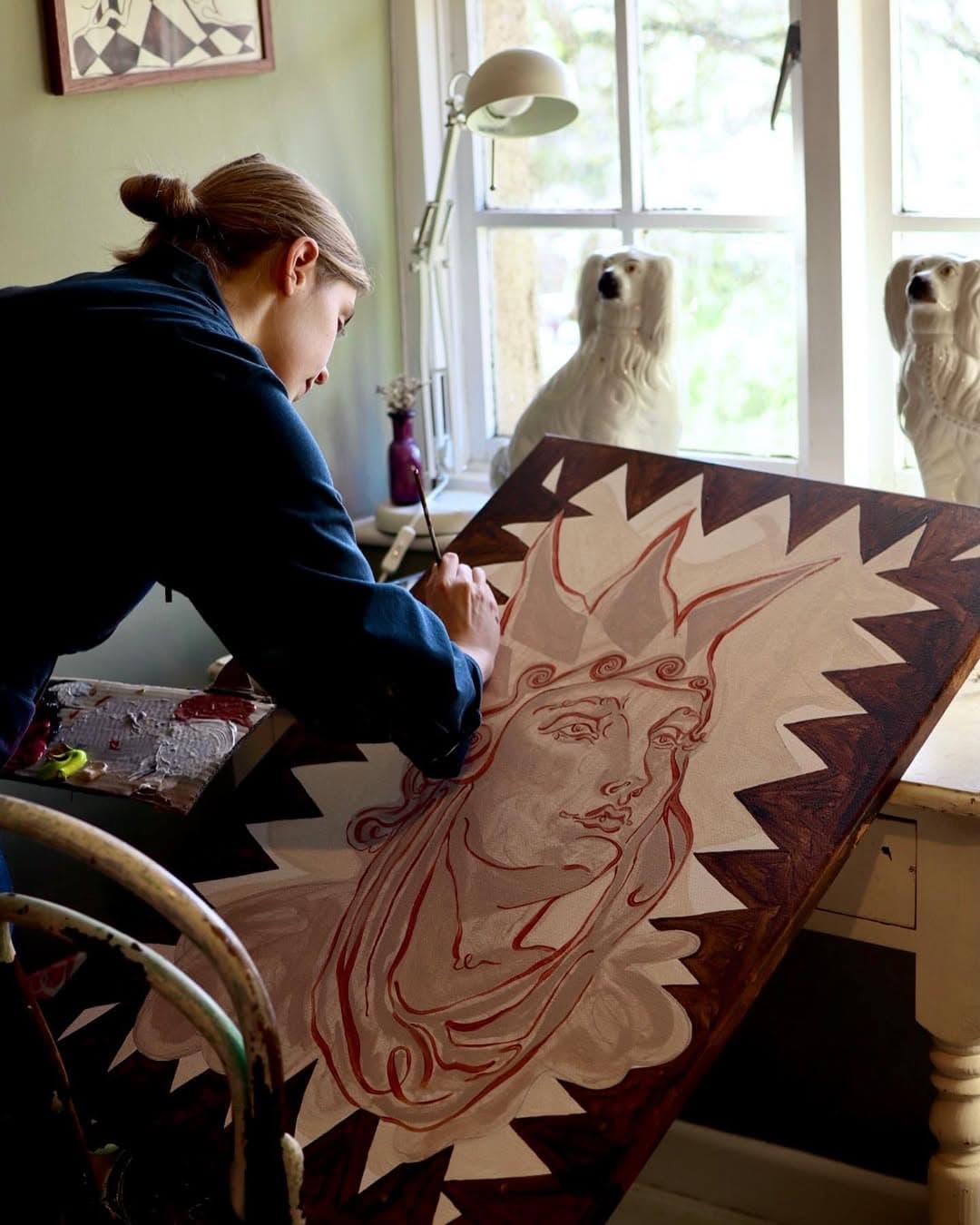
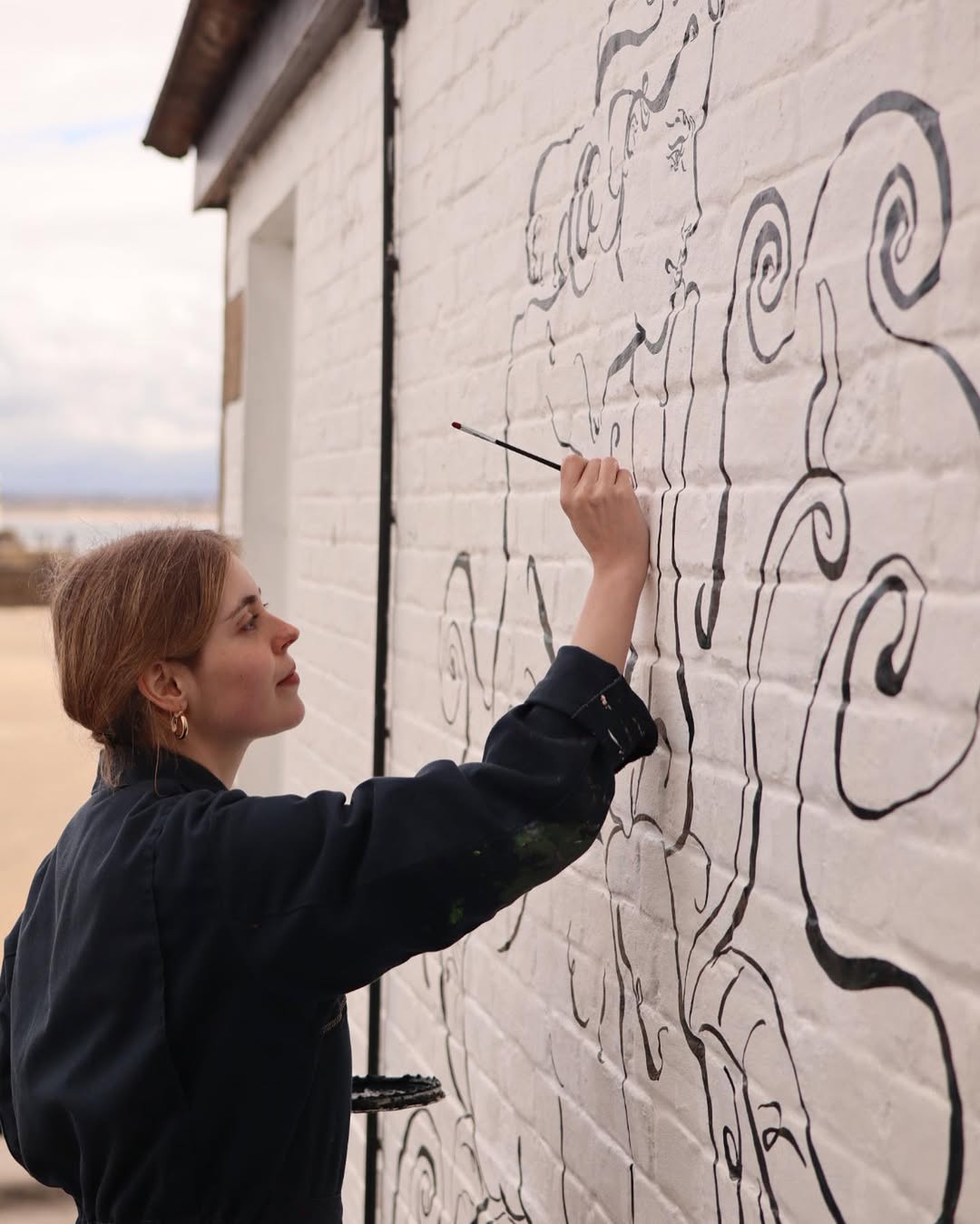
My artistic journey started at the kitchen table around age four; making mechanical dolphins out of card and computers out of cereal boxes, eventually leading me to study a print at Brighton, and then a Masters at the Royal College London. Now you can find me at my home studio in Devon, painting and drawing which I love best.
2. What inspired you to pursue your craft? Was there a defining moment or influence that sparked your passion?
It has always been an intuition of mine, something that has not felt like a choice. I remember saying aged five that I wanted to be an artist and a mummy, and I still stand by that.
Your craft
3. How would you describe your work in three words?
Swirly. heartfelt. old-worldy
4. What materials or techniques do you use, and why are they important to your process?
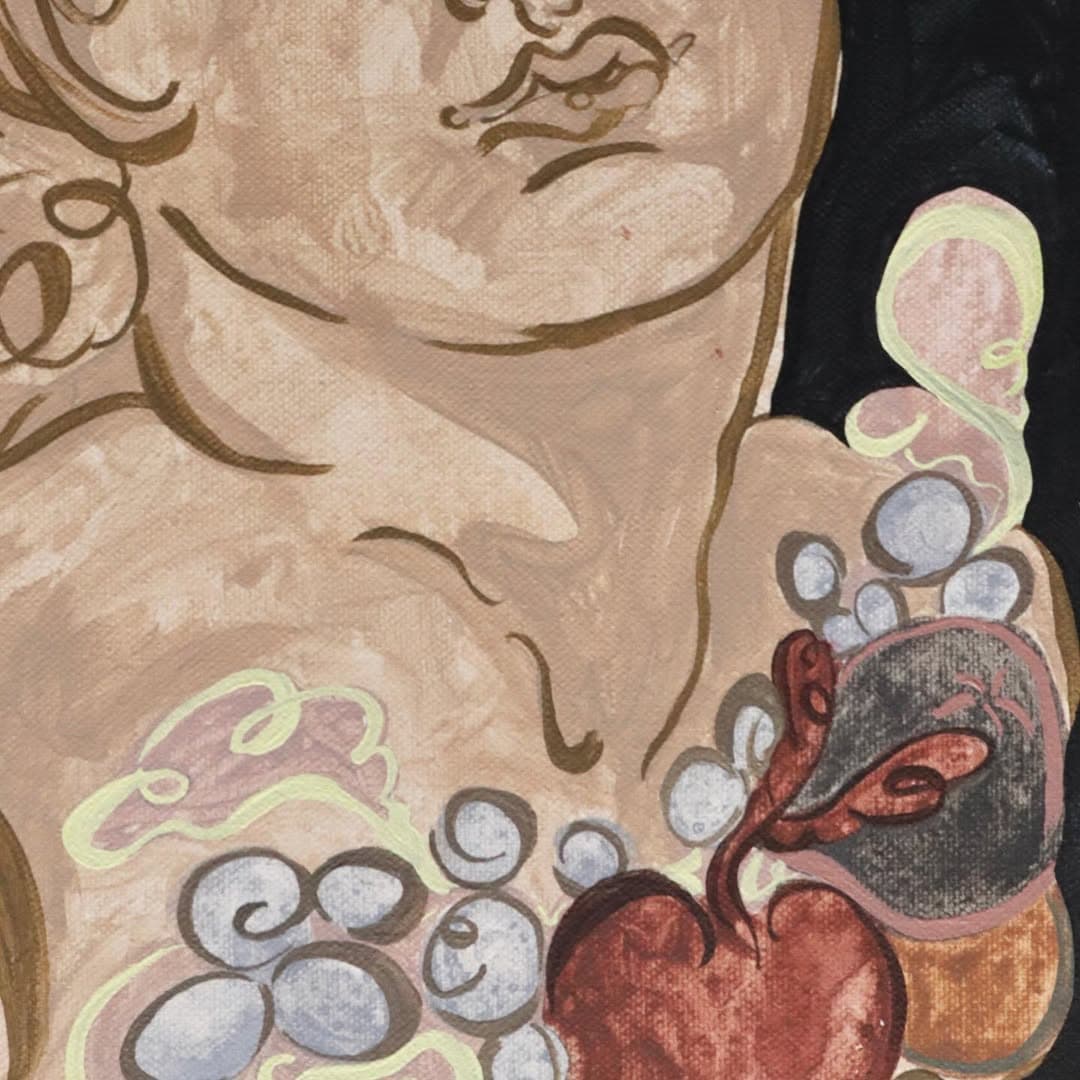
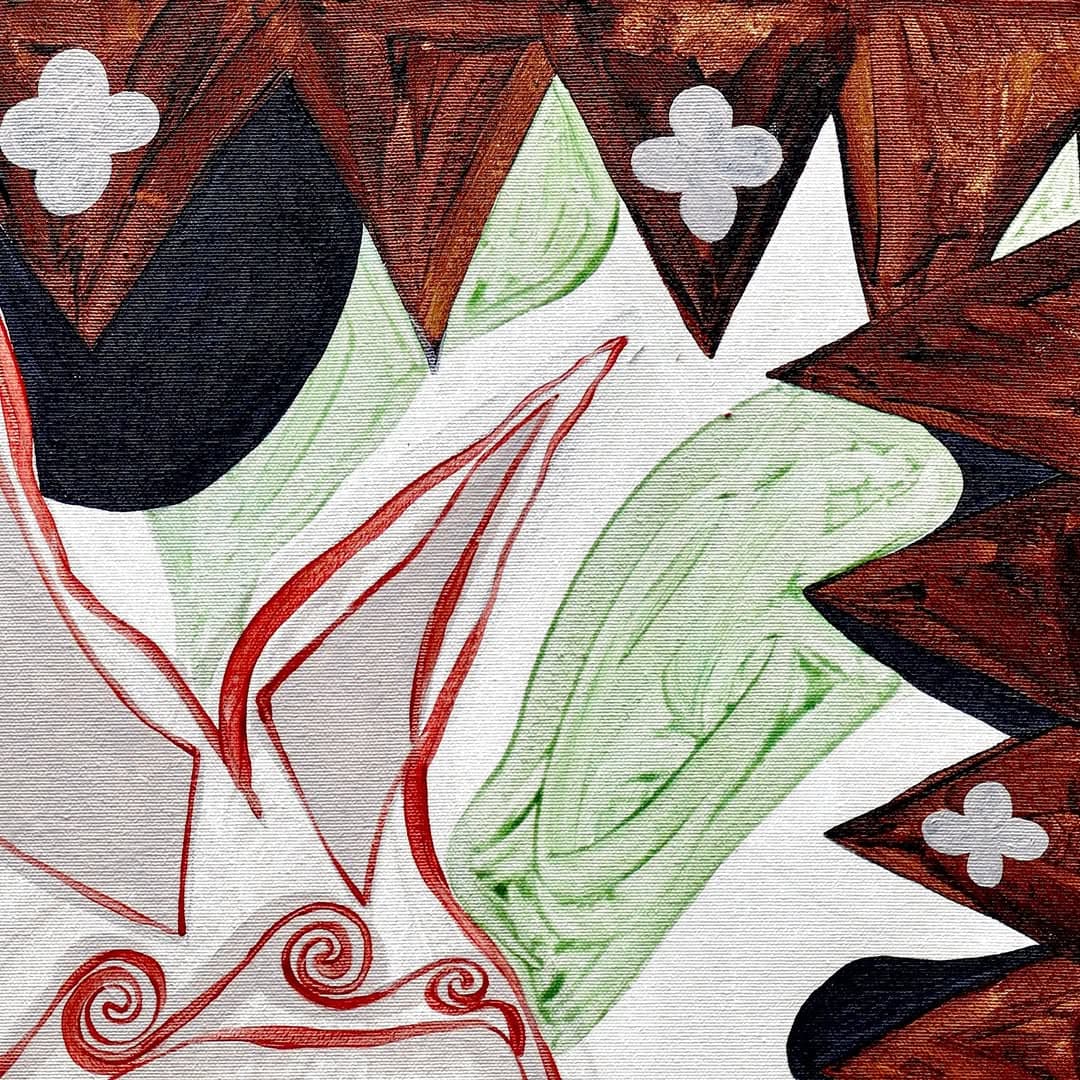
I’d ideally like to paint in oil, but I’m so sensitive to smells I can’t stand it! To compromise I’ve tried to make my acrylic paintings as ‘liquid’ and gestural as possible. It’s dryness does appeal to my impatient side, and I do quite like how immediate it is to use.
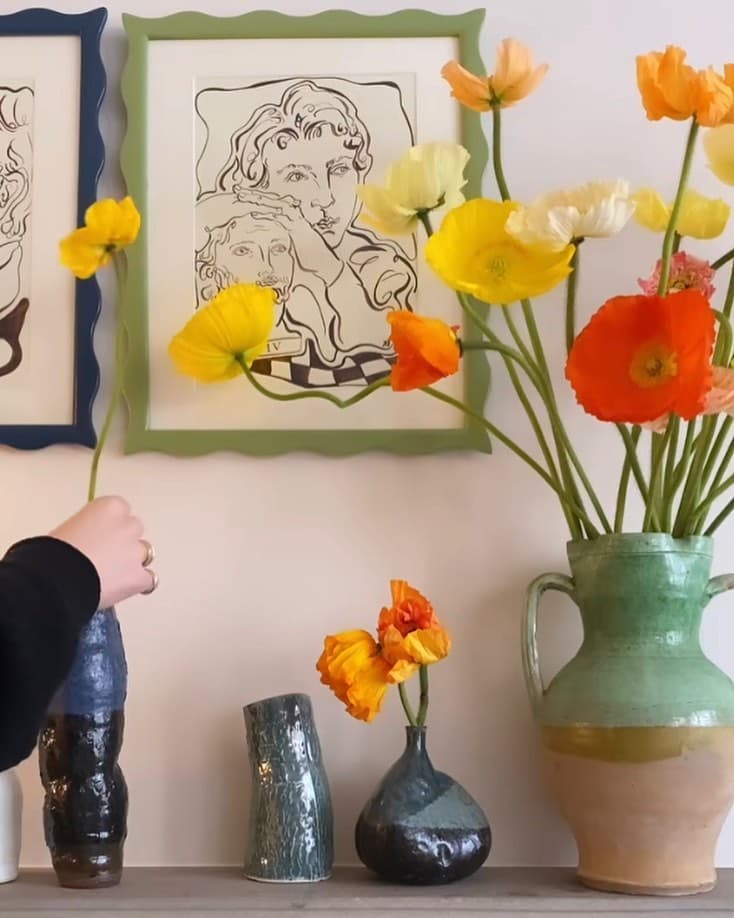
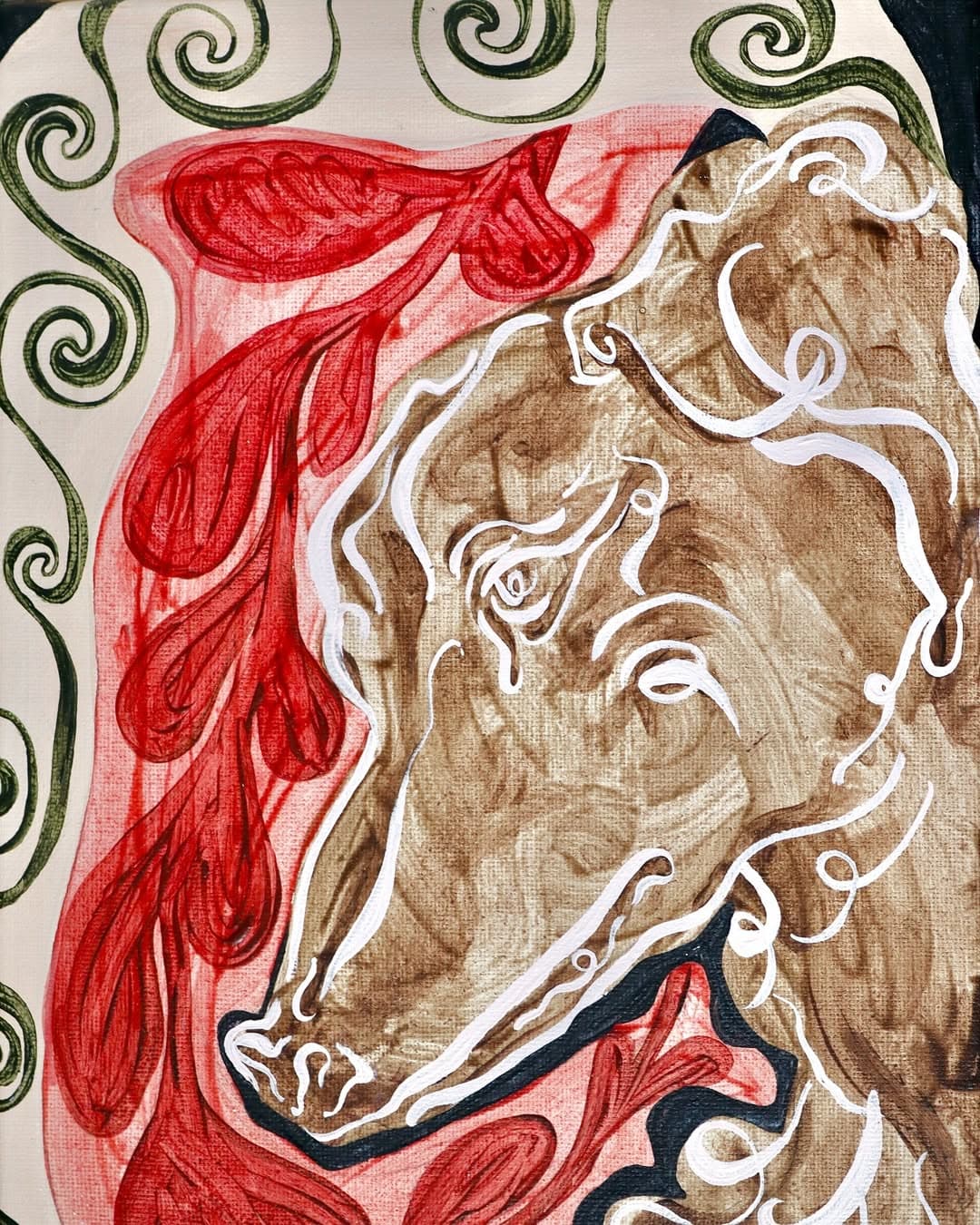
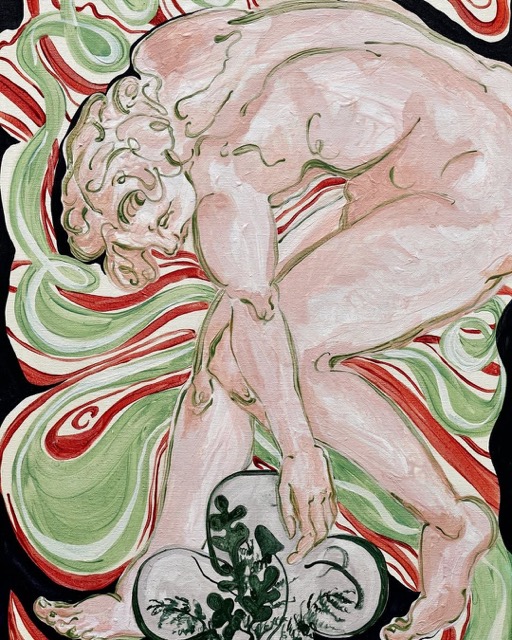
Every single work starts out with a pencil drawing, so that has always been at the heart of my process, whether it be an indian ink drawing on cartridge paper or acrylic painting on cotton canvas.
5. Can you tell us about a favourite piece you’ve created and the story behind it?
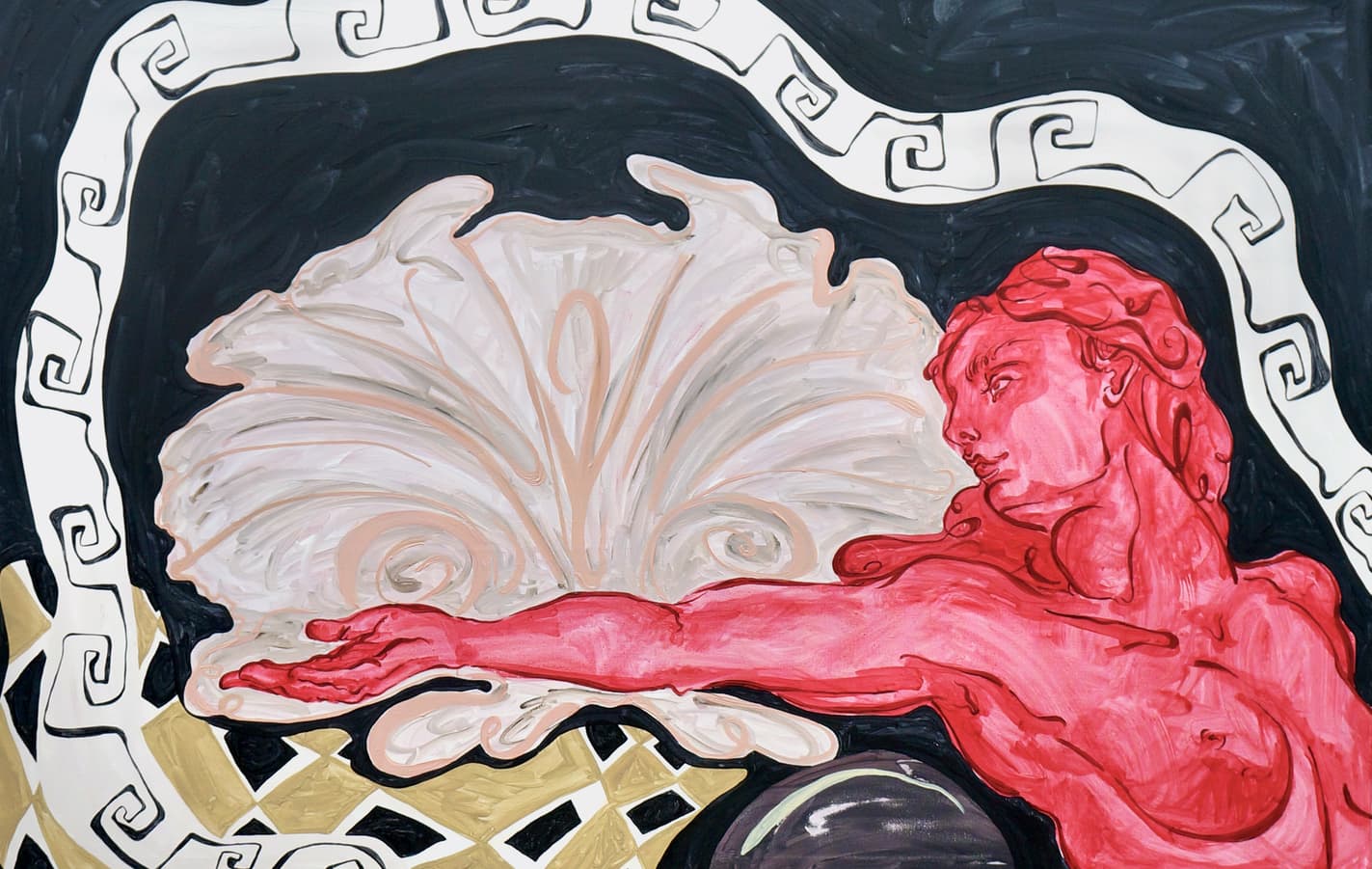
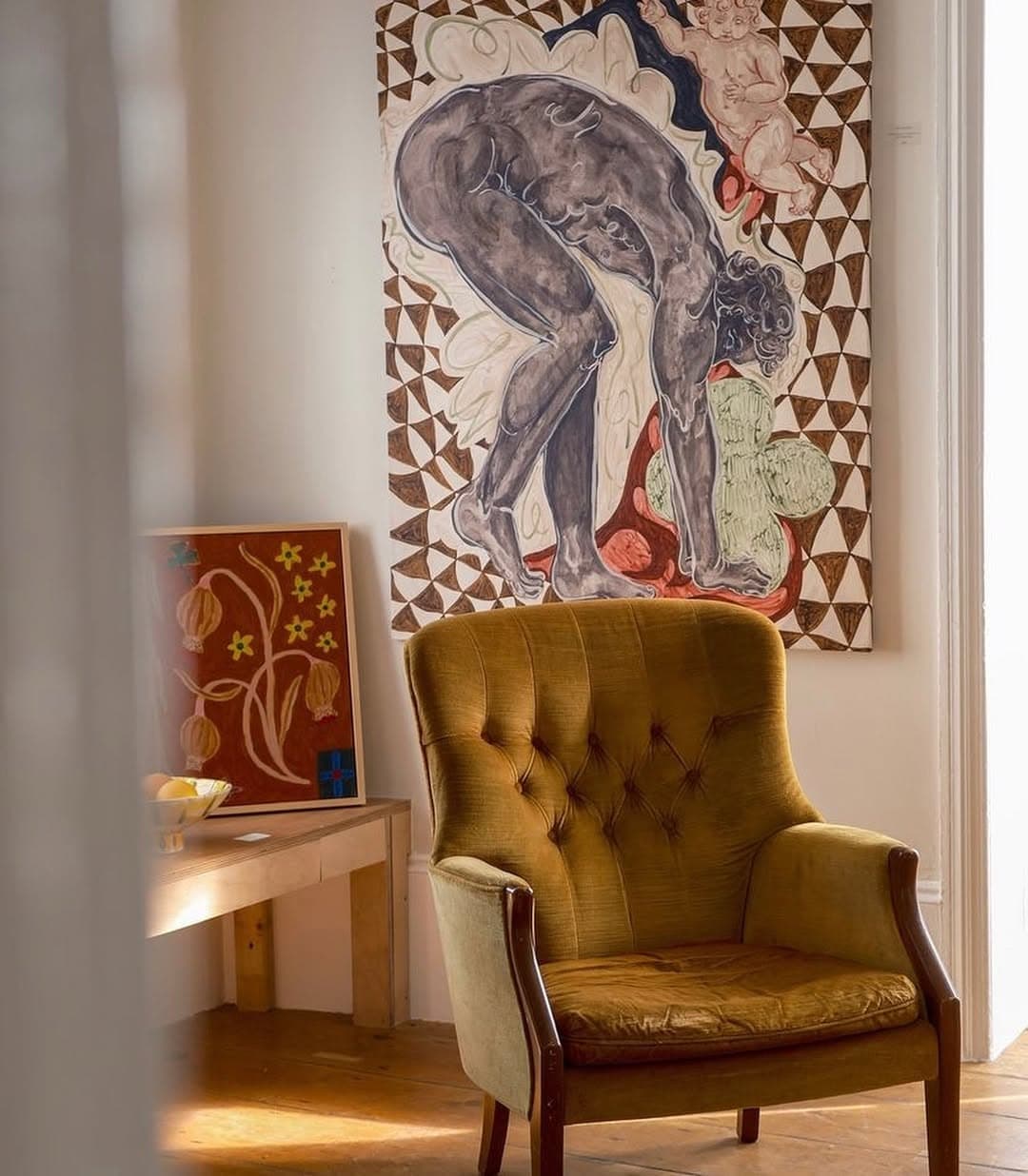
A favourite work of mine is ‘Many Have Walked But Not in Your Shoes’ acrylic on canvas triptych. This large two piece was the show stopper at my solo exhibition ‘PASSAGE’ at Haricot Gallery in 2023. It’s about pilgrimage; the transformational act of walking and paying reverence to a place. As Satish Kumar suggests, if we walk more like pilgrims on this Earth rather than tourists (self-serving and looking to find things to consume), we might have a richer, healthier planet and inner self. This painting marks the places I hope to visit around the UK, my birthplace and heritage, which I hope to pilgrimage to one day.
Creative process
6. What does a typical day in your studio or workshop look like?
My art making is cosy and domestic, with frequent trips to the kitchen for tea and snacks! I will wake up and get straight to work in my home studio, and will enjoy a 9-5 working day, suiting my morning personality. I will always be listening to something, Radio 4, podcasts, music. It’s wide ranging to hold me through a variety of moods and more often than not challenging scenarios in the studio.
7. Do you have any unique rituals or habits that help you stay creative?
I have a very large pinterest board which I save all my drawings references to. I love to draw from classical statues, old masters paintings and turn of the century black and white photographs.
A stick of palo santo or copal will usually be burning which grounds and inspires me, with continuous tea throughout the day.
8. How do you handle creative blocks? Do you have any strategies or tips for overcoming them?
I will always just try to make something. Perseverance and showing up for the work is integral, even if I don’t feel like making. I still haven’t figured out the secret to making a piece of work I like, it can suddenly come about when I am exhausted and stressed after trying for ages and not being in the mood. Or it can come when I am relaxed, ready and in flow. It’s this cosmic comedy I live with, so I just have to show up and see what happens!
Challenges and successes
9. What’s the biggest challenge you’ve faced as a maker, and how did you overcome it?
Expectation and reality are always a challenge for me. The painting I expect will come out, verses the painting which actually emerges. I essentially don’t have the control I think I do which creates tension. Ink drawing for me is easier, it is like playing an instrument, but painting is the true challenge, it is like conducting an orchestra. There is so much to balance and lose control of. I always chuckle to myself when I go to create a series of work in the same colour scheme, as I find it impossible to mix the same colour twice, so each work will insist on coming out exactly as it is regardless of the effort I put it to manipulate it elsewhere. It is a process of acceptance, which I might always be working through.
10. What’s been your proudest moment or achievement so far?
All my solo shows have been a gift to me, a validation that my work matters to someone. You spend all your days alone, creating, in this echo chamber of yourself, unable to actually see the work for what it is. When a gallery come along and chooses YOUR things, it is the greatest catharsis. It says that people are ready and interested in what you’ve been doing and your particular perspective and expression. The job that you do that bewilders most people actually exists for a moment in the ‘real world’.
Inspiration
11. Where do you draw inspiration from for your work? What sparks your imagination and creativity?
I’ve always loved old worlds, ancient Rome/Greece, the Medieval, Georgian and Victorian England, myths, folklore and legends. I’m hardwired to live in these places, so my creativity naturally springs from there. Some shout outs to William Blake, Weird Walk magazine, Dr Martin Shaw, the Bloomsbury Group Artists, The Bible of British Taste, Julia Maragret Cameron, Luke Edward Hall and Faye Weiwei.
Engaging with nature, old landmarks, ancient stones, cathedrals, moorlands, churches, castles, National Trust homes, walkways, bridlepaths, ancient (rainforests) woodland, ceremonies, rituals, plant magic and old stories connect me to a deeper creative consciousness and open heartedness.
12. Do you have a favourite artist, maker, movement, or tradition that has influenced your craft?
Around age 17 I discovered Frida Kahlo, who imprinted narrative, introspection and the soulfulness of being a woman (artist) onto me. I felt very close to her and still do. I managed to visit her homes in Mexico last summer in 2024, which was a wonderful pilgrimage for my old artist self. Shortly after came William Blake, another soul shaker, who’s ecstatic relationship to art making and his own uniqueness was deeply magical.
13. How does colour influence your practice; is it an important part of your process? Do you have a particular palette or favourites? Any go-to sources for colour inspiration?
Red is my spirit colour, so I will generally stick to that tonality. I love looking at Charleston House Bloomsbury Group artists for colour inspiration and William Blake’s coloured prints. I will tend to mix brown into most my colours as I prefer a more muted range, something slightly more natural.
Perspectives and goals
14. What role does your environment play in shaping your creativity?
Where I live in Devon, we are experiencing a rich revival of folk culture which has been highly influential in my work. Local writers, makers, galleries and musicians are connecting to our old heritage and stories. In recent works I’ve been creating drawings based off retellings of myths and folktales from local writers, I’ve loved connecting to their work in this way.
15. What do you want people to feel when they experience your work?
To experience beauty and rest within my some of my images, and in others ask questions around our connection to this world, where do we come from, what is our true nature and how can we create a more peaceful intuitive life (together).
16. What are you currently working on, and what excites you most about it?
As mentioned previously, I’m making work based off local writer’s myths and legends, but also interested in origin stories. The stories we tell ourselves, the stories that live in our bodies and the stories we have inherited through generational trauma. How do we honour these and transform them.
Advice and reflection
17. What advice would you give to someone starting out as a maker?
The work always should come first. Instead of worrying about which gallery to exhibit in or how to exhibit your work, make the work steadily and be an artist. All the rest will follow in due course.
18. If you could go back to the start of your career, what advice would you give your younger self?
Connect to the way you started out with painting and drawing, not what you think is fashionable or what people want to see.
Closing thoughts
19. If you could collaborate with any artist, past or present, who would it be and why?
I’d love to collaborate with Kate Bush and do an installation of artwork and music together! I think her songwriting shows how much she reads, her brilliant enquiring mind and emotional depth. To make work in collaboration her stories and unique vision would be phenomenal!
20. Where can people find your work, and how can they support you?
Contacting me directly for commissions and sales is always a massive help! You can find me through Makers Made, my website rubybateman.com and giving me a follow on instagram @ruby__bateman
Ruby Bateman’s art beautifully blends introspection, mythology, and a rich sense of heritage, expressed through swirling lines, heartfelt narratives, and evocative colours. Her creations invite viewers to find both rest and reflection, connecting deeply with timeless themes and stories.
Explore Ruby’s latest collections and follow her creative journey:
Discover Ruby’s Work:
Support Ruby by reaching out directly for commissions, following her artistic adventures on Instagram, and engaging with her captivating creations through Makers Made.
Meet the Maker: The Colourful, Sustainable World of Annie Strachan
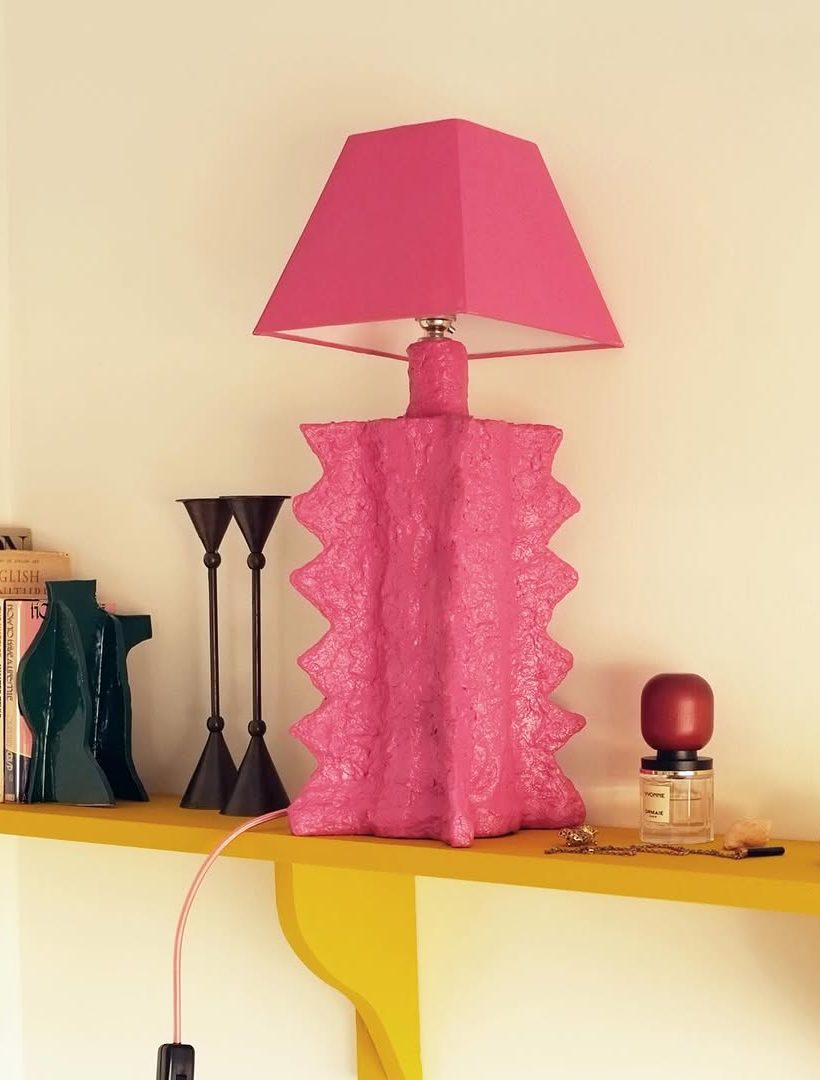
In this Q&A, we talk with artist Annie Strachan about her creative journey, her bold approach to sculpture and functional art using papier-mâché, and her passion for sustainability and experimentation.
Annie shares insights into how popular culture and vintage design inspire her playful creations, the importance of balancing creative practice with wellbeing, and the exciting collaborations that have shaped her vibrant career.

1. Can you tell us a bit about yourself and your artistic journey?
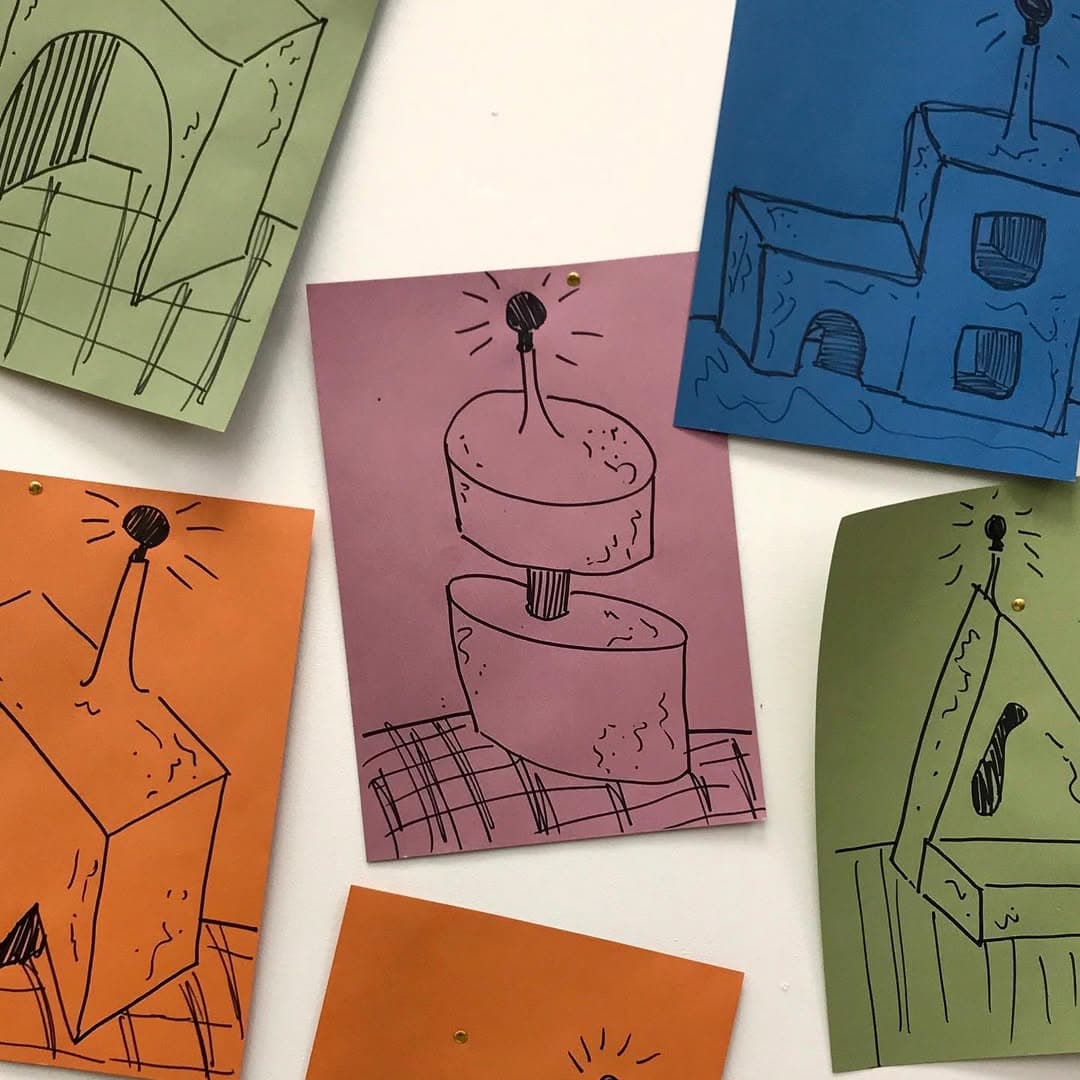
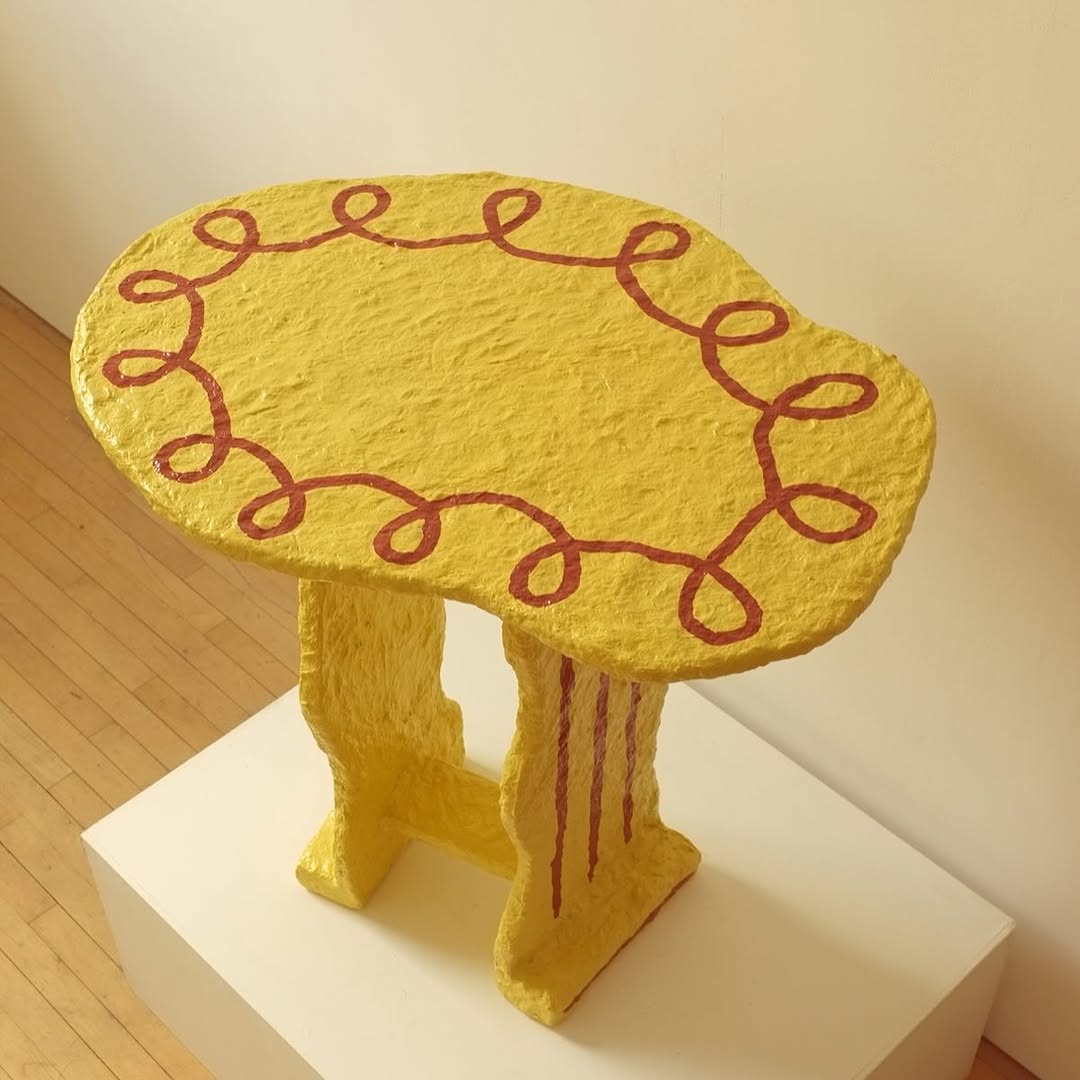
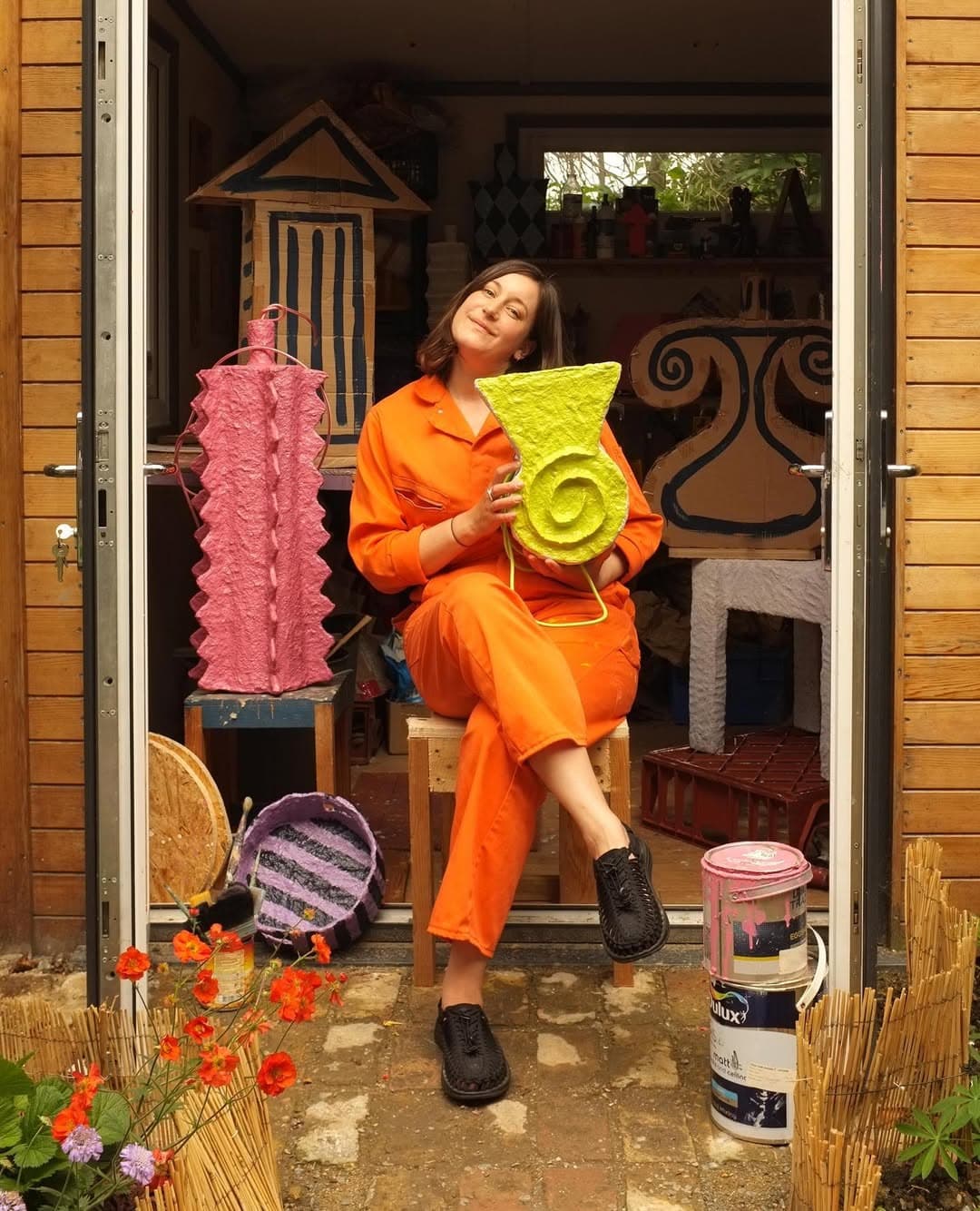
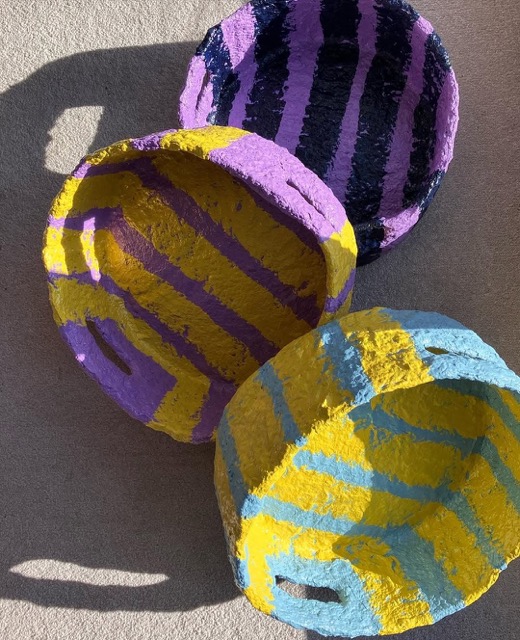
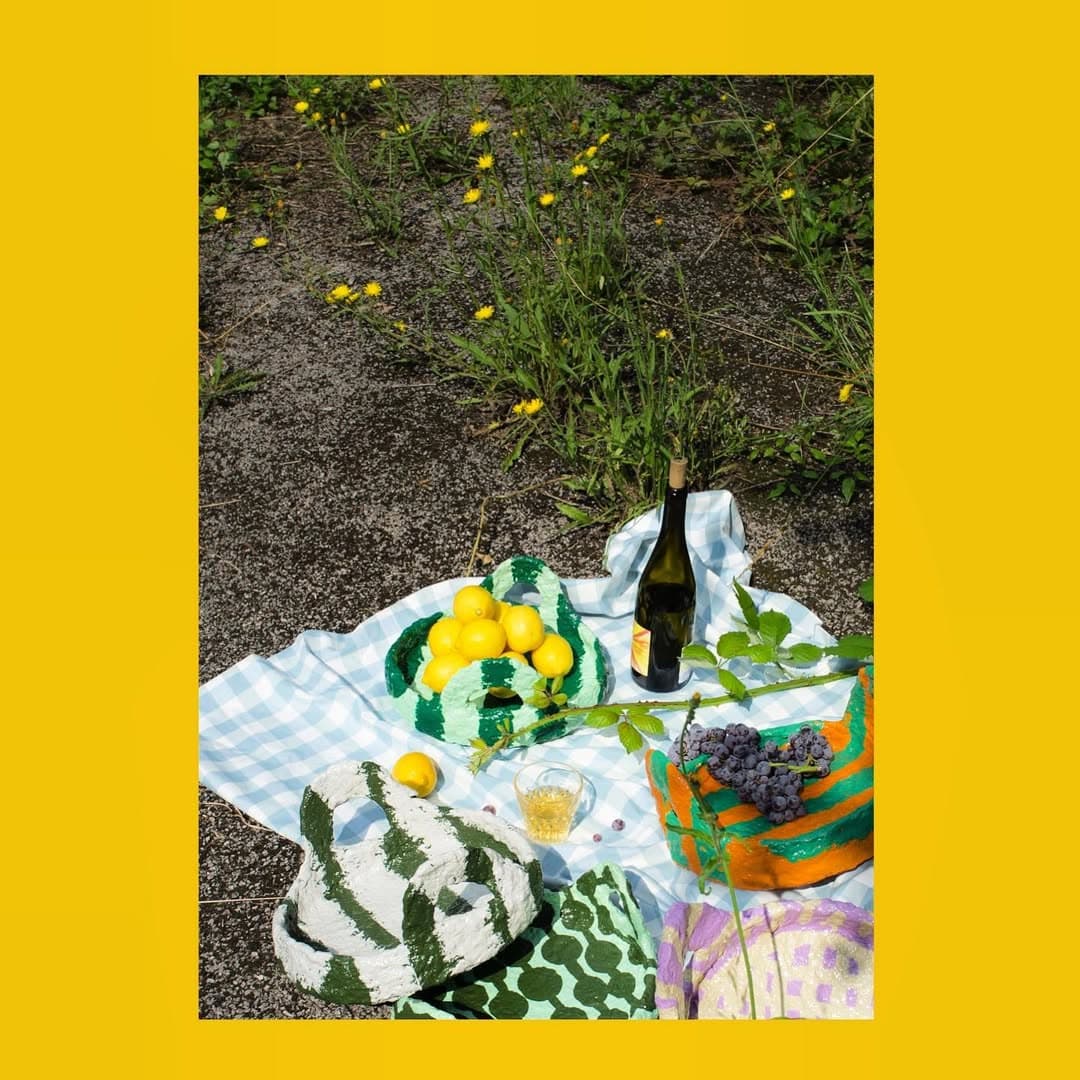
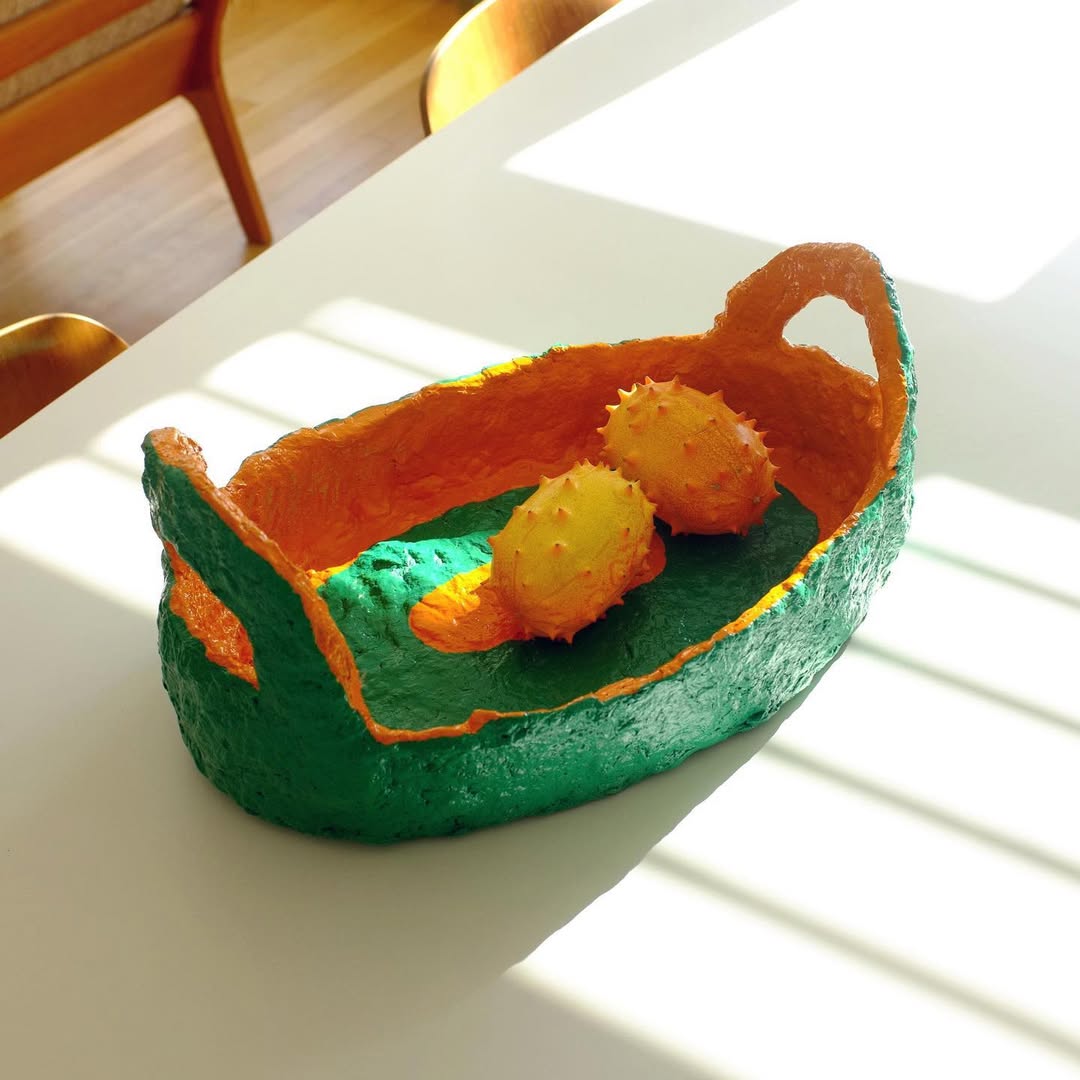
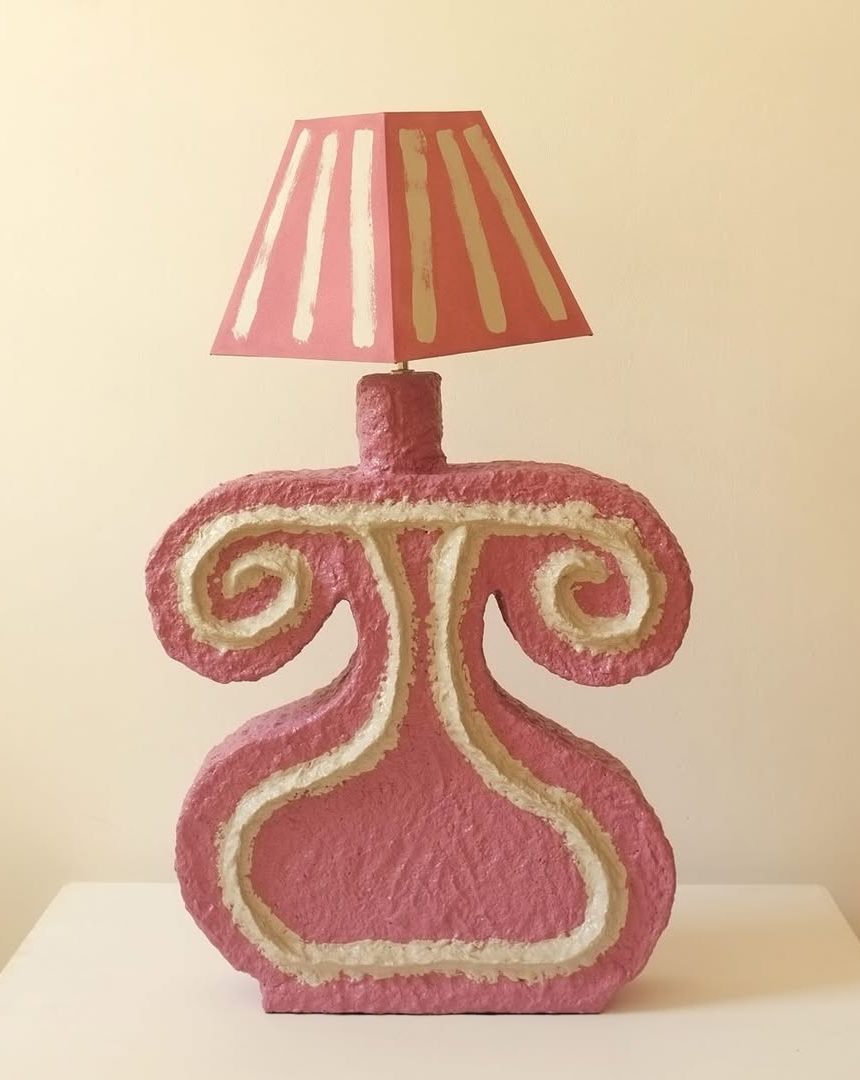
I studied Fine Art at Chelsea College of Art and design, graduating in 2011. I’ve always been influenced by avant-garde furniture and interior design and it’s relationship to trends in popular culture. I started working with papier-mâché a few years ago as a means to explore more experimental forms for the production of functional sculptures.
2. What inspired you to pursue your craft? Was there a defining moment or influence that sparked your passion?
For several years, I struggled to maintain an active art practice whilst working full-time and eventually made the decision to cut my hours and devote the rest of my time to making artworks in more financially viable way. This meant realigning my thinking about art and concept driven work. I decided to reject this and take a more light hearted approach that embraces craft and the job of having a hobby.
Your craft
3. How would you describe your work in three words?
Colourful, Sustainable & Experimental
4. What materials or techniques do you use, and why are they important to your process?
I prioritise sustainable materials and techniques to minimise my carbon footprint. All of the paper and wood I use is recycled and electrical parts are sourced from UK based manufacturers.
Traditionally, I like to work at scale and am constantly changing and evolving my style so it’s important to work with low cost materials that are readily accessible. 5. Can you tell us about a favourite piece you’ve created and the story behind it? I am regularly commissioned to create unique pieces for art exhibitions and this always turns out to be some of my favourite work.
In 2024 I collaborated with Felt Collections and ceramicist Kelly Jessiman to produce an immersive artists dinner with custom furniture, lighting and ceramics. I also had the chance to collaborate with Atelier100 in 2023, producing one-off pieces for a solo installation in their West London show. Some of these very special pieces are available to buy through Makers Made.
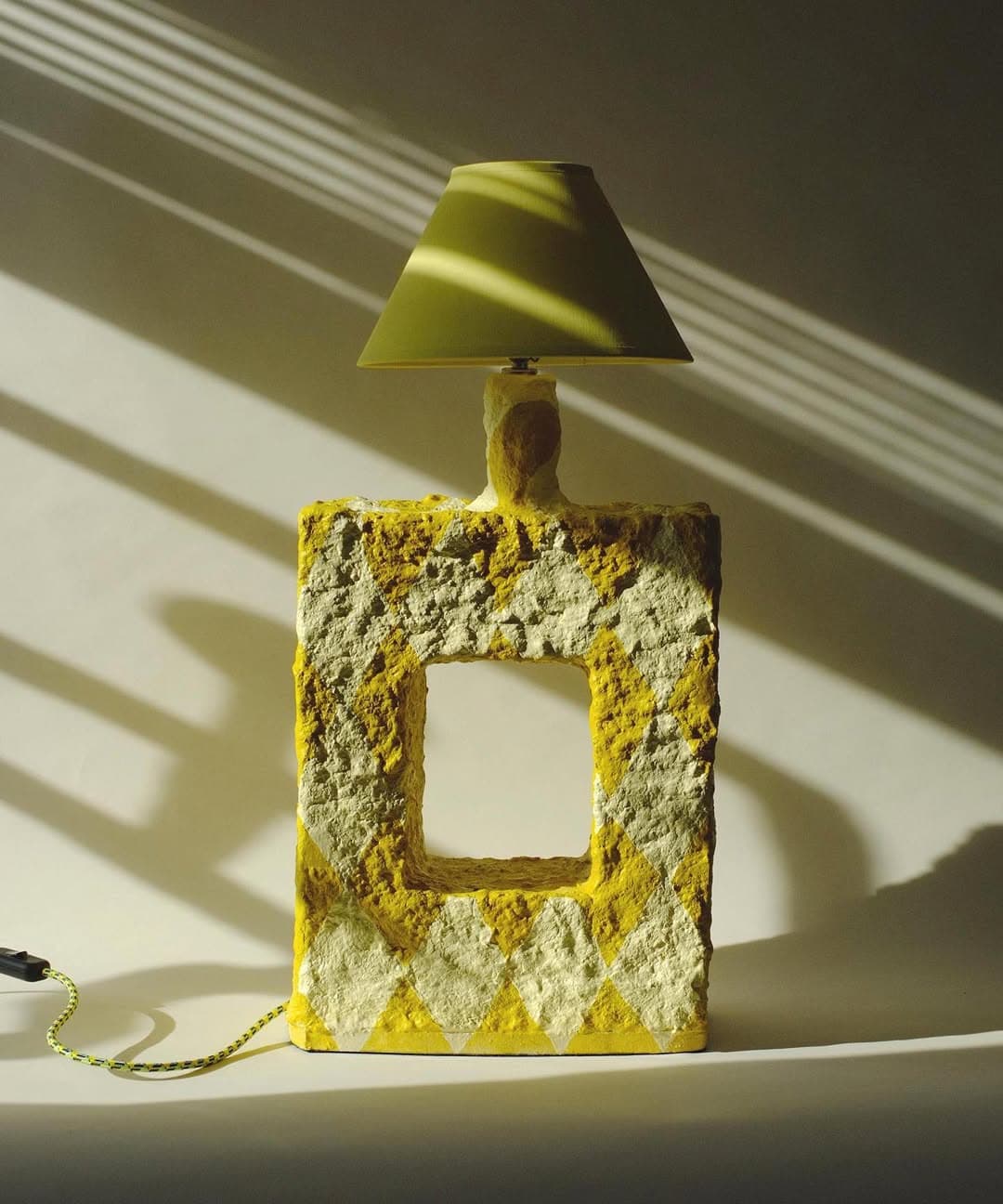
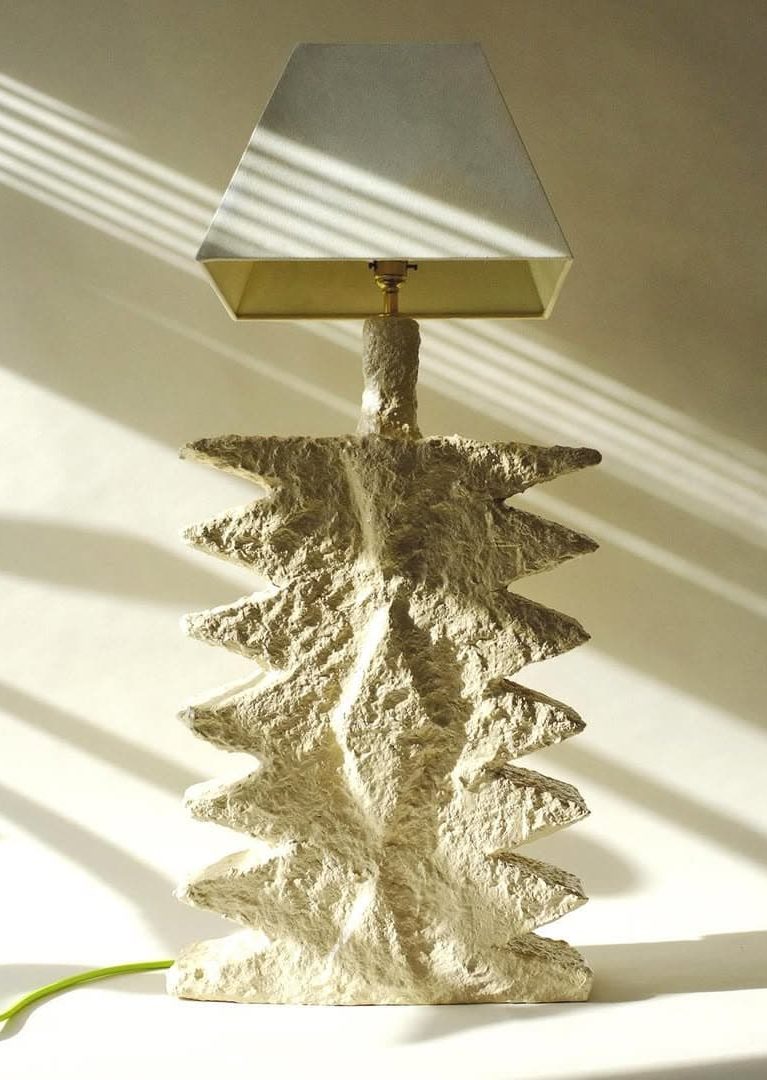
The pinnacle of functionality is creating lighting for commercial interiors and I’m incredibly proud to have two of my lamps in daily use at the independent wine bar, Joyce in Brockley, South East London. I’ve also produced a series of unique sconces for the restaurant in the basement of Margate House Hotel and am looking forward to them opening up to the public later this year!
Creative process
6. What does a typical day in your studio or workshop look like?
My making process is very time consuming and occupies most of my days in the studio. I’m lucky to have a home studio where can I enjoy regular cups of tea and blasting my favourite music. I curated a regular series of playlists of some of music I like to work to and you can find these linked on my website.
Most of the materials I work with are recycled so I tend to spend a lot of time shredding paper or cleaning and cutting wood scraps to more manageable dimensions. The processes involved in working with papier-mâché to ensure pieces maintain their structure, whilst in development, require allowing plenty of time for drying between stages of making.
7. Do you have any unique rituals or habits that help you stay creative?
My rescue dog Destiny is the light of my life. Since getting her a year ago, I’ve found that the need to structure my day around healthy breaks and regular walks and cuddles helps me to stay creative. Breaking up intense or tiring days in the studio with a walk in the park is a good way to process my achievements in the studio and better manage my time. 8. How do you handle creative blocks? Do you have any strategies or tips for overcoming them?
I’ve learnt that if I’m not feeling creative or excited by a project then I just can’t push myself in that direction. It’s really important as a creative person to give yourself breaks and ensure you are looking after your physical and mental wellbeing. Normally if I’m having trouble engaging with my practice, it’s because I need to stop and allow myself to just focus on simpler more achievable goals.
Challenges and successes
9. What’s the biggest challenge you’ve faced as a maker, and how did you overcome it?
The first two years of establishing my practice were both exciting and challenging as I had the blind ambition needed to foolishly believe I’d one day be getting press attention and working with interior designers! I was also super aware of needing to prove to loved ones that my vision for a successful practice was achievable. It’s been exhausting juggling a commitment to work alongside getting something like this off the ground but I’m glad I was able to show that if I worked hard enough I could succeed, even with limited industry contacts, money or a Masters degree!
10. What’s been your proudest moment or achievement so far?
2024 was a great year for press for me, from It’s Nice That to Dezeen, but most of all, being selected by House and Garden magazine to feature in their Design 100! I’ve also had the opportunity to collaborate with incredible interior designers and curators, including Studio 2LG, L’absurde Object, Domenica Marland, Prospect Refuge and Felt Collections.
11. What’s your favourite quote you’ve ever heard about your work? Who said it, or what was the name of the publication?
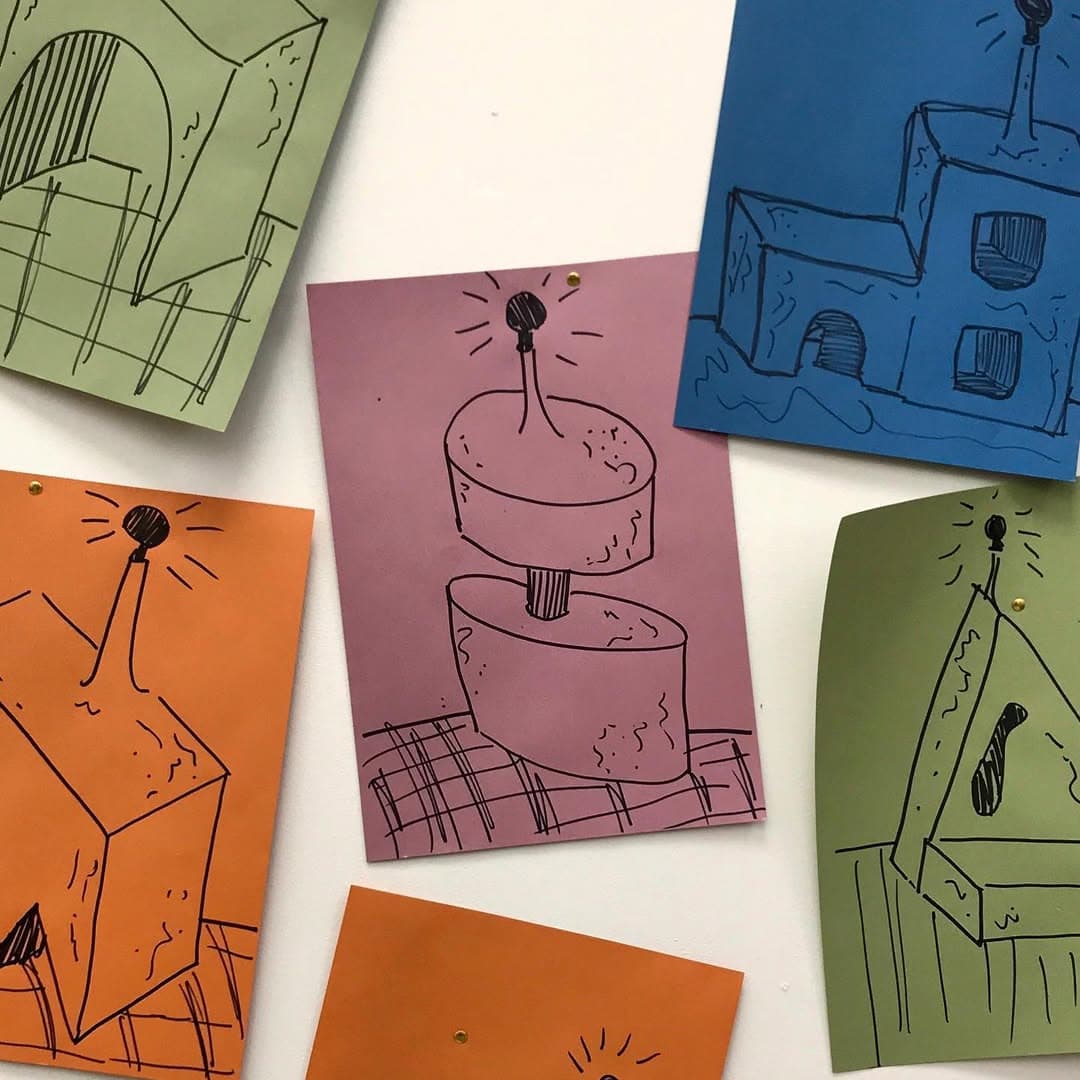
“Take some techniques from slab building and woodwork, throw in some inspiration from post-war Hollywood cinema set design, and you’ve got pop sculpturist Annie Strachan.”
- It’s Nice That
Inspiration
12. Where do you draw inspiration from for your work?
What sparks your imagination and creativity? I have an obsession with archival books and magazines and often draw on imagery taken from my own collection of vintage copies of ID, Architectural Review, Domus, The Face, World of Interiors and House & Garden. I’m also lucky enough to have inherited a very special collection of 1960s & 70s interiors magazines from my Oma called Schöner Whonen which was are brilliant resource!
13. Do you have a favourite artist, maker, movement, or tradition that has influenced your craft?
I’m very inspired by popular culture in terms of music, design and more commercial forms of art. I was really into the Memphis design collective while I was studying at uni because of their thesis of producing high art/ design while referencing trash culture like kitschy retro American diners. I see a lot of that reflected in the colour palate and playfulness of my pieces.
I want my work to be chic but unpretentious and I think that’s why their aesthetic appeal was so enduring and went on to influence popular design right through the late 1980’s and 1990’s. Similarly I’m a big fan of John Waters and how important curating a style is in his early films as well as more commercial successes like, Hairspray. I remember finding a copy of the Pink Flamingos VHS in a video store when I was 16 or 17 and falling in love, I’ve been influenced ever since!
14. How does colour influence your practice; is it an important part of your process? Do you have a particular palette or favourites? Any go-to sources for colour inspiration?
Colour is extremely important to me and that’s reflected in my work but, something that may not immediately be obvious is how restrained I actually am in it’s use. I find it’s really important to balance this with how out-there the shape of pieces is
Perspectives and goals
15. What role does your environment play in shaping your creativity?
Sustainability and reducing environmental impact is key to my practice. Not only are many of the materials I use recycled or repurposed but I also source electrical parts from UK based manufacturers. My processes rely on manual labour and I don’t import parts from overseas so that the money I make goes back into supporting UK businesses like Manchester based S. Lilley & Son who supply all of my lamp holders.
16. What do you want people to feel when they experience your work?
I hope that my work is uplifting and inspires more creativity. 17. What are you currently working on, and what excites you most about it? I’ve been moving very slowly into 2025 after several years of working non-stop. I want to use this time to go back to my roots and think about showcasing my work in new environments. I’m also developing some new lamp designs which I think will be some of my cutest yet!
Advice and reflection
17. What advice would you give to someone starting out as a maker?
Creating is one of the most rewarding things but you need to be really thick skinned to try to make it in your own right. Remember that everyone is struggling, you just need to believe in what you’re putting out there and find your audience.
18. If you could go back to the start of your career, what advice would you give your younger self?
Don’t sacrifice your well-being in order to be a people pleaser.
Closing thoughts
19. Where can people find your work, and how can they support you?
I have a shop on my website anniestrachan.co.uk and also sell a selection of pieces through independent retailers and galleries as If you head to my Instagram page @pulpsculptuur you’ll find links to all of these. I also exhibit regularly in gallery shows and sometimes at pop-up markets which is always a great way to meet clients face to face. These are regularly updated on my website anniestrachan.co.uk and Instagram. Thank you so much for taking the time to share your story. Once your feature is ready, we’ll send it to you to review before it goes live. After that, we’ll share it with the MAKERS MADE community and encourage you to share it with your own audience too.
Annie Strachan’s distinctive papier-mâché creations blend joyful colour, whimsical forms, and thoughtful sustainability, making functional sculptures that uplift spaces and inspire creativity. Her innovative approach and dedication to environmentally conscious design set her work apart, capturing both charm and artistic integrity.
Explore Annie’s latest collections and follow her creative journey:
Support Annie by visiting her online shop, connecting through Instagram, and experiencing her vibrant creations at exhibitions and pop-up markets.
Meet the Maker: The Thoughtful Ceramics of Ali Hewson
In this Q&A, we chat with ceramicist Ali Hewson about her artistic journey from illustration to ceramics, the joy she finds in working with clay, and how historical research deeply informs her practice. Ali shares insights into her mindful use of materials, the daily rhythms of her studio life, and the constant balancing act between work and rest. We also explore her thoughtful approach to sustainability, inspiration from historical ceramics, and her advice for emerging makers.
1. Can you tell us a bit about yourself and your artistic journey?
I started making ceramics whilst on my Foundation at Camberwell College of Art, then carried on throughout my degree (in illustration). It was only after moving to Norfolk when I could get a proper studio that I was able to properly see through my ideas in clay, and 11 years later am still in the same studio building! Drawing still plays a huge part in my work, as does research into historical ceramics from all over the world.
2. What inspired you to pursue your craft? Was there a defining moment or influence that sparked your passion?
I just love ceramics and clay, it is endlessly interesting to me.
Your craft
3. How would you describe your work in three words?
Thoughtful… I don’t know any more sorry
4. What materials or techniques do you use, and why are they important to your process?
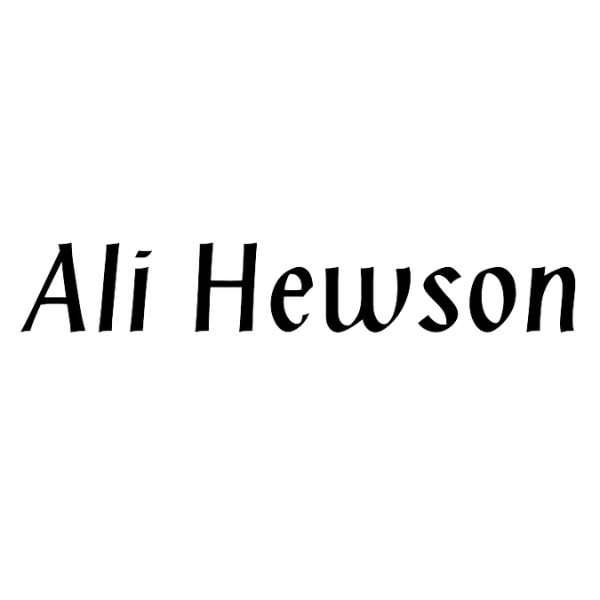
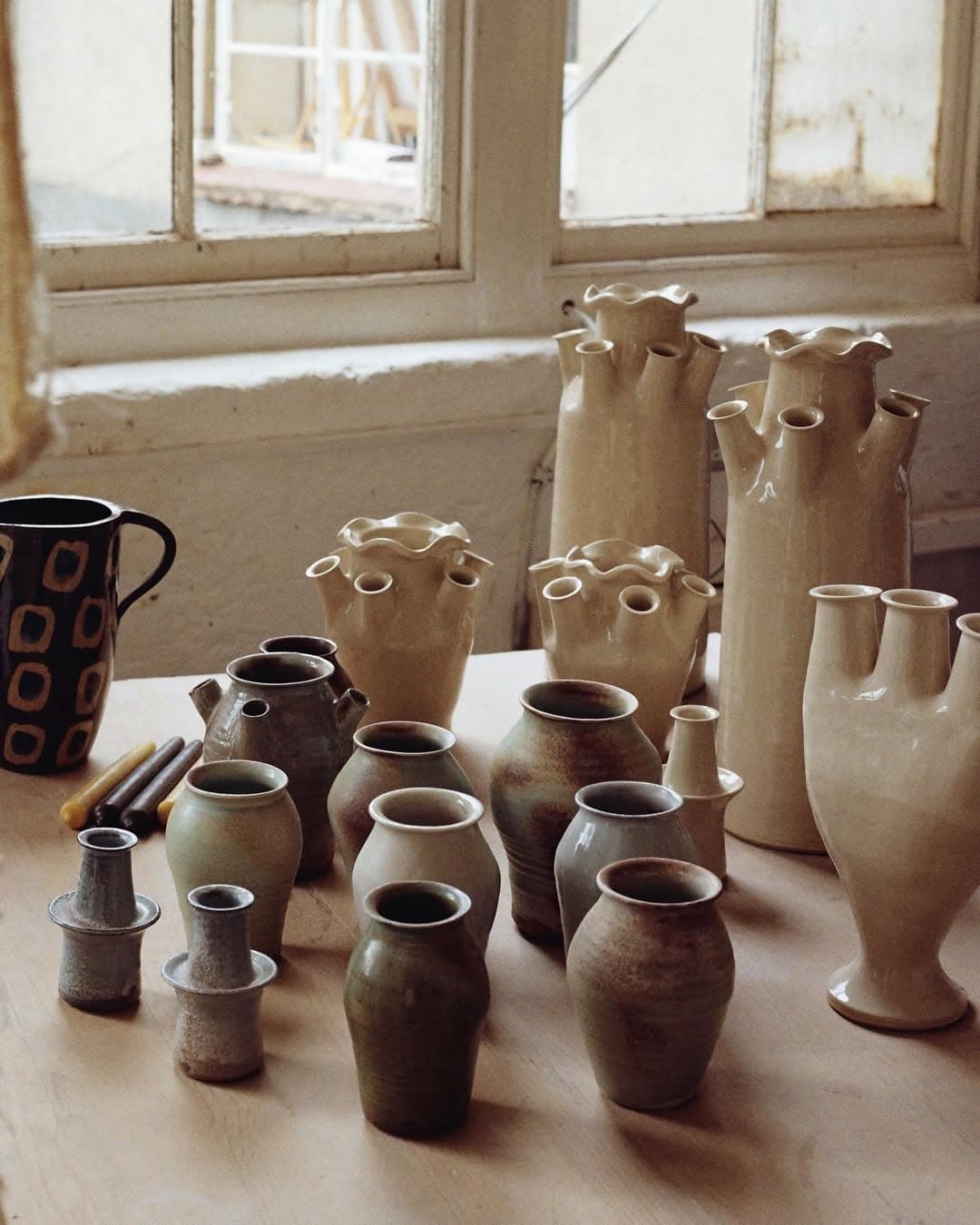
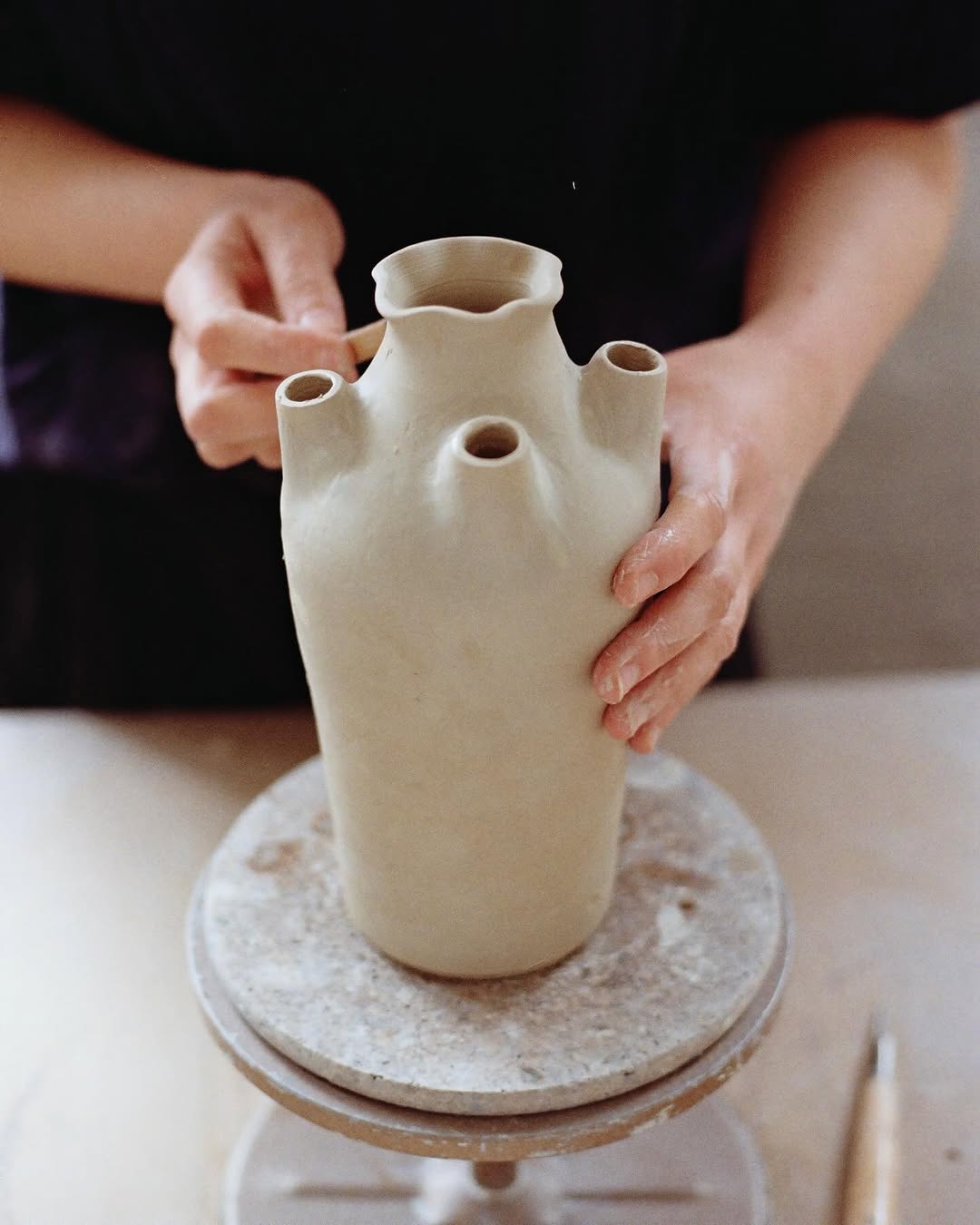
I use a small group of materials- the corner stones being metal oxides and a German white clay. All my slips/ colouring comes from this starting point. I think this helps tie everything together, whilst also ensuring I have minimal waste in the studio and can recycle as much of the materials I use as possible. This is important to me both environmentally, and in terms of giving myself boundaries whilst creating work- otherwise the options for what you can do in clay are limitless!
5. Can you tell us about a favourite piece you’ve created and the story behind it?
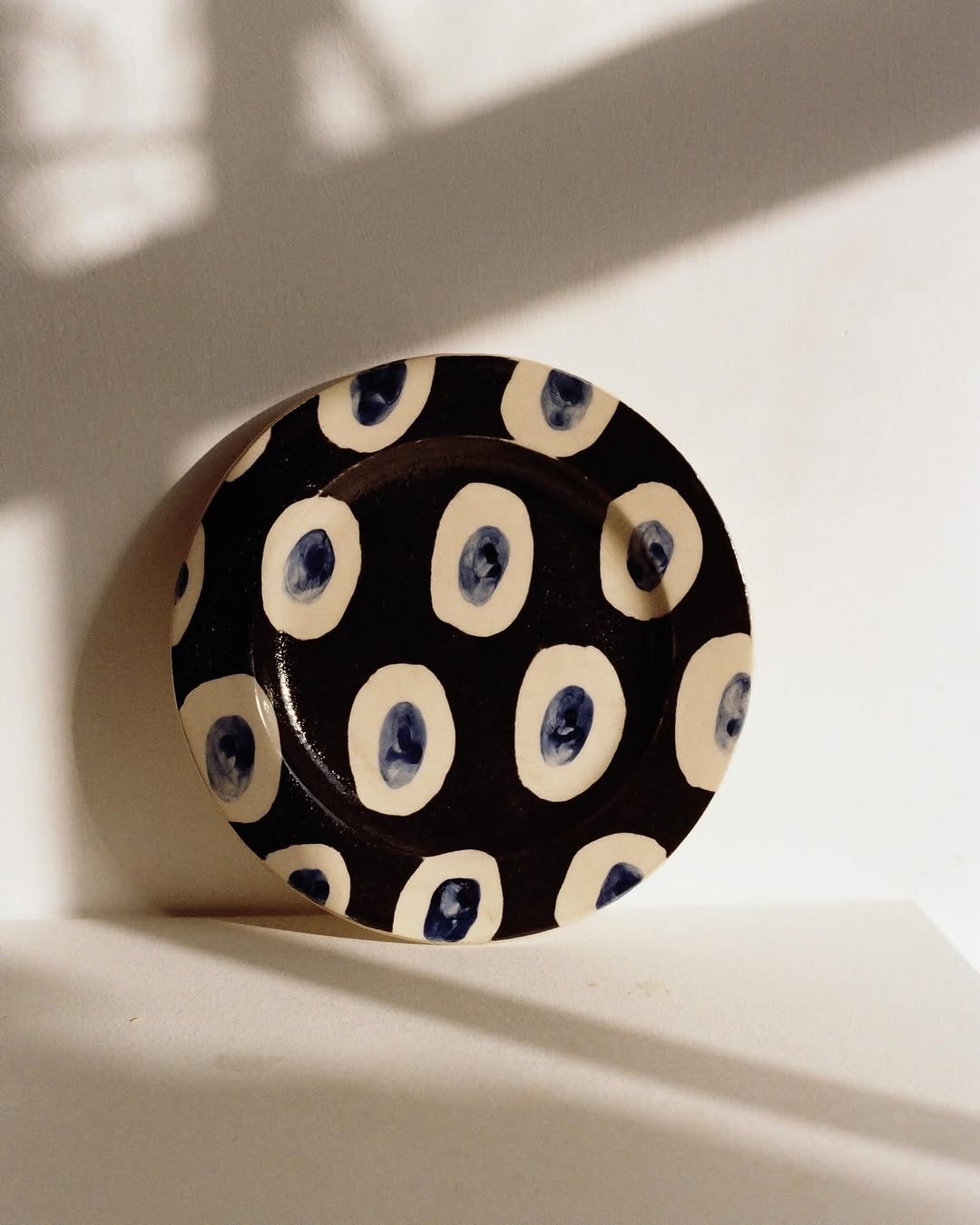
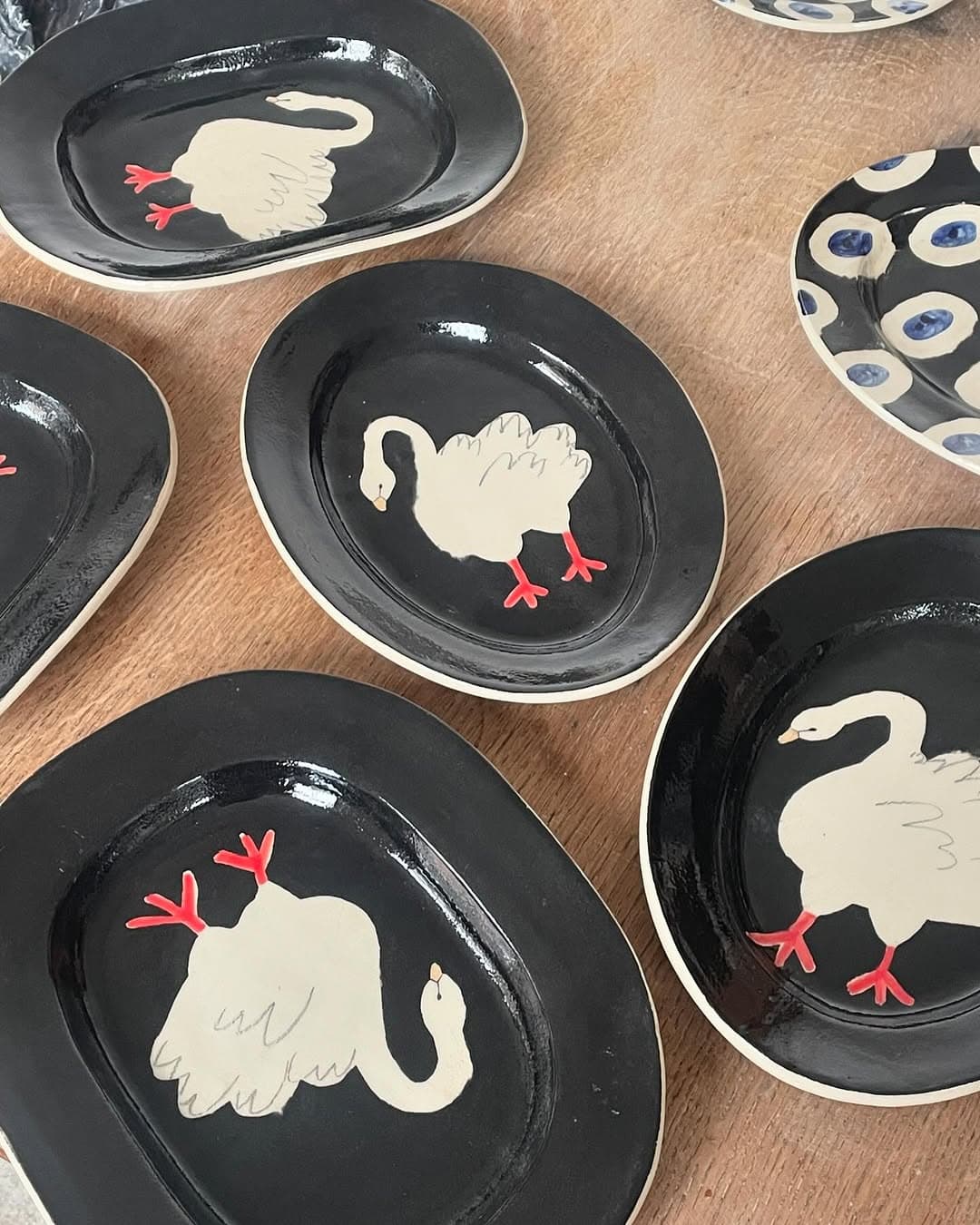
I particularly love working on repeated motifs, swans and grapes come up a lot in my work. There isn’t really a story behind it just comes from looking and processing things around me.
Creative process
6. What does a typical day in your studio or workshop look like?
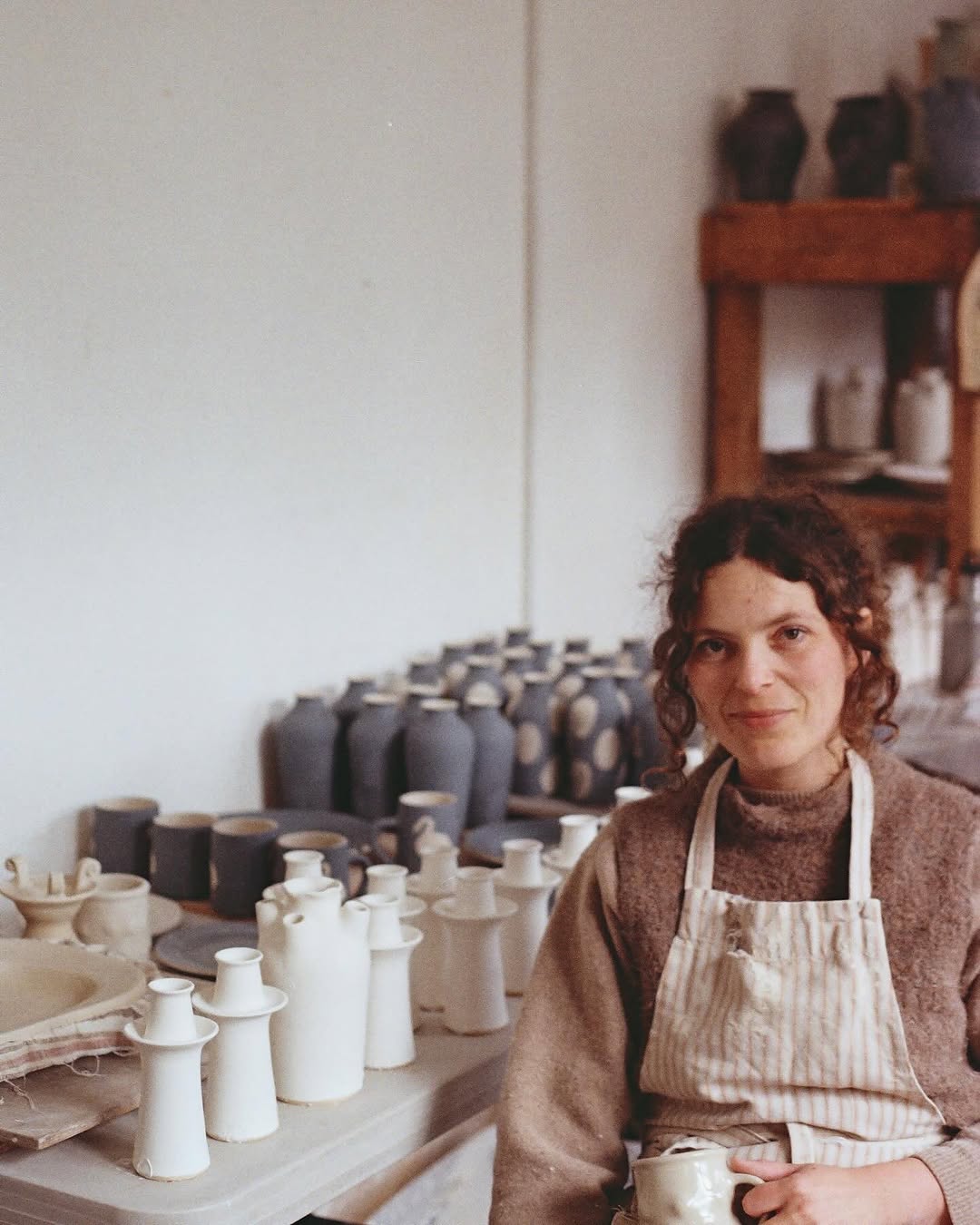
I normally have quite a mixed day as I do everything myself, from packing to admin to making. I start with a swim at the local pool on my way in, then usually make a coffee and a to do list/ check urgent emails. My studio looks over factory rooftops and I’m lucky to see a lot of sky from inside, but I try and get outside either to eat lunch or have a walk to my local Oxfam to get some fresh air! I try and group jobs together but a day can get quite hectic and full of different tasks/processes. In ceramics it’s super important how each day runs into the next in the studio, so it takes a fair bit of planning in regards to what you do on day one then day two etc. I normally end the day with a post office run or a trip to the kiln. I listen to music or podcasts pretty much all day long, if anyone has any recommendations please let me know!
7. Do you have any unique rituals or habits that help you stay creative?
Not unique- just looking at things! I try and spend as much research time as possible in museums, or doing first hand research through mudlarking. Research books are the next best and are endlessly inspiring to me.
8. How do you handle creative blocks? Do you have any strategies or tips for overcoming them?
Probably by doing the above! Seeing my favourite pieces in museum collections always makes me feel inspired again.
Challenges and successes
9. What’s the biggest challenge you’ve faced as a maker, and how did you overcome it?
Balancing my time in the studio and having a life outside of it! Still working on it, but this year I took most of January off and that definitely helped mentally reset me from the mindset of everything will fall apart if I’m not in the studio 24/7. When I have big deadlines I can end up being in the studio until gone midnight, every day of the week- it just leads to burnout.
10. What’s been your proudest moment or achievement so far?
Going full time about 4 years ago, and somehow managing to keep in going, is the thing I’m proudest of.
Inspiration
11. Where do you draw inspiration from for your work? What sparks your imagination and creativity?
Historical ceramics from around the world
12. Do you have a favourite artist, maker, movement, or tradition that has influenced your craft?
Too many, I particularly love 17th century London delftware and slipware though.
13. How does colour influence your practice; is it an important part of your process? Do you have a particular palette or favourites? Any go-to sources for colour inspiration?
The colour palette I use is drawn directly from my materials- so cobalt blue, iron red/brown, an off-white clay, black slip. They are inherently natural and soft and go together, I somehow end up wearing all the same colours as my work too!
Perspectives and goals
14. What role does your environment play in shaping your creativity?
It informs how I choose materials and how I structure my business- I am very careful about making tests and aware that once ceramics are fired they last for thousands and thousands of years. I normally make pieces to order so I know that everything going in the kiln has a home to go to.
15. What do you want people to feel when they experience your work?
I’d like them to enjoy using, or living with my work
16. What are you currently working on, and what excites you most about it?
I am currently working on some special collaborations which I’m excited to share soon
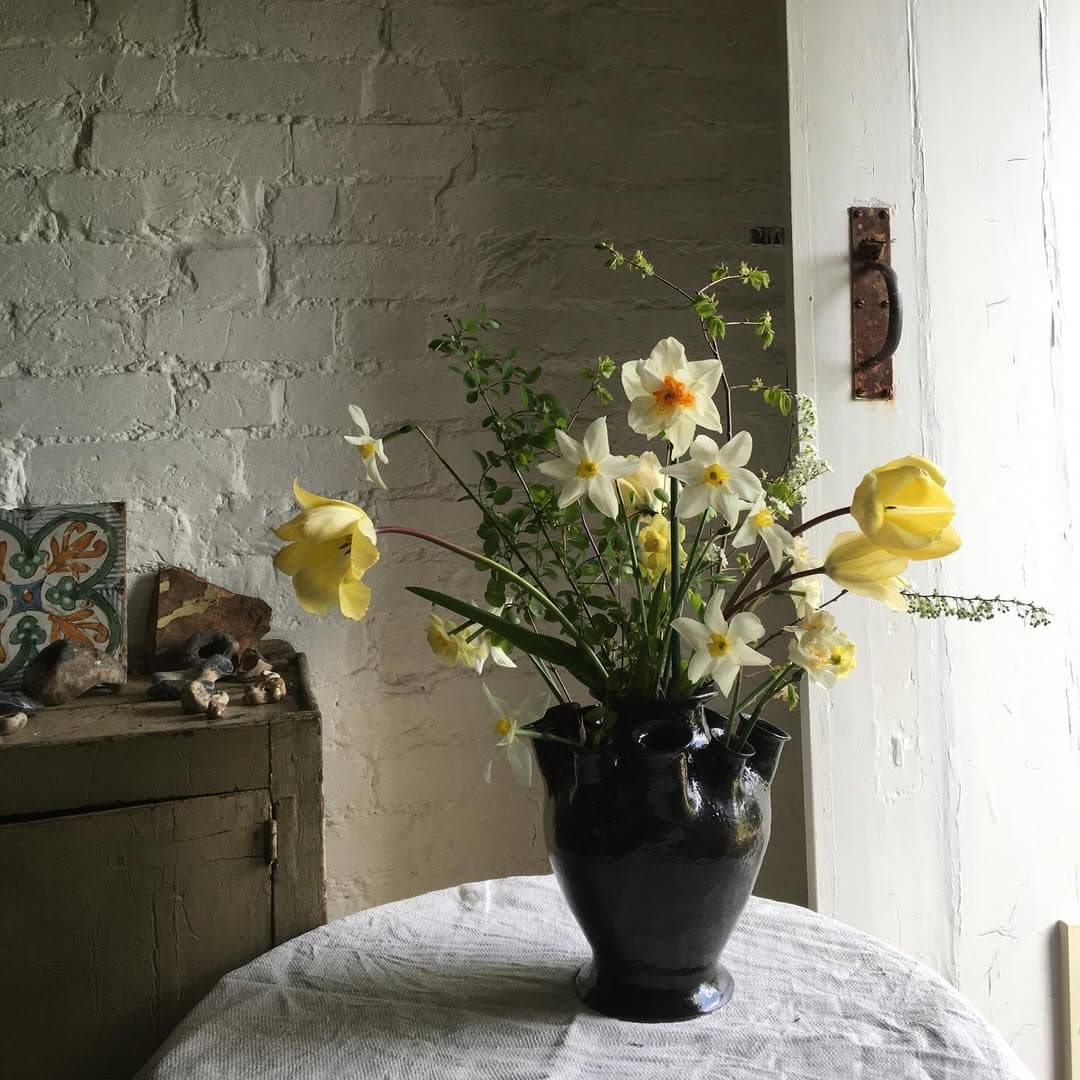
Advice and reflection
17. What advice would you give to someone starting out as a maker?
Stay true to yourself, be thoughtful and considerate
18. If you could go back to the start of your career, what advice would you give your younger self?
I would try to give myself more confidence, I always have imposter syndrome!
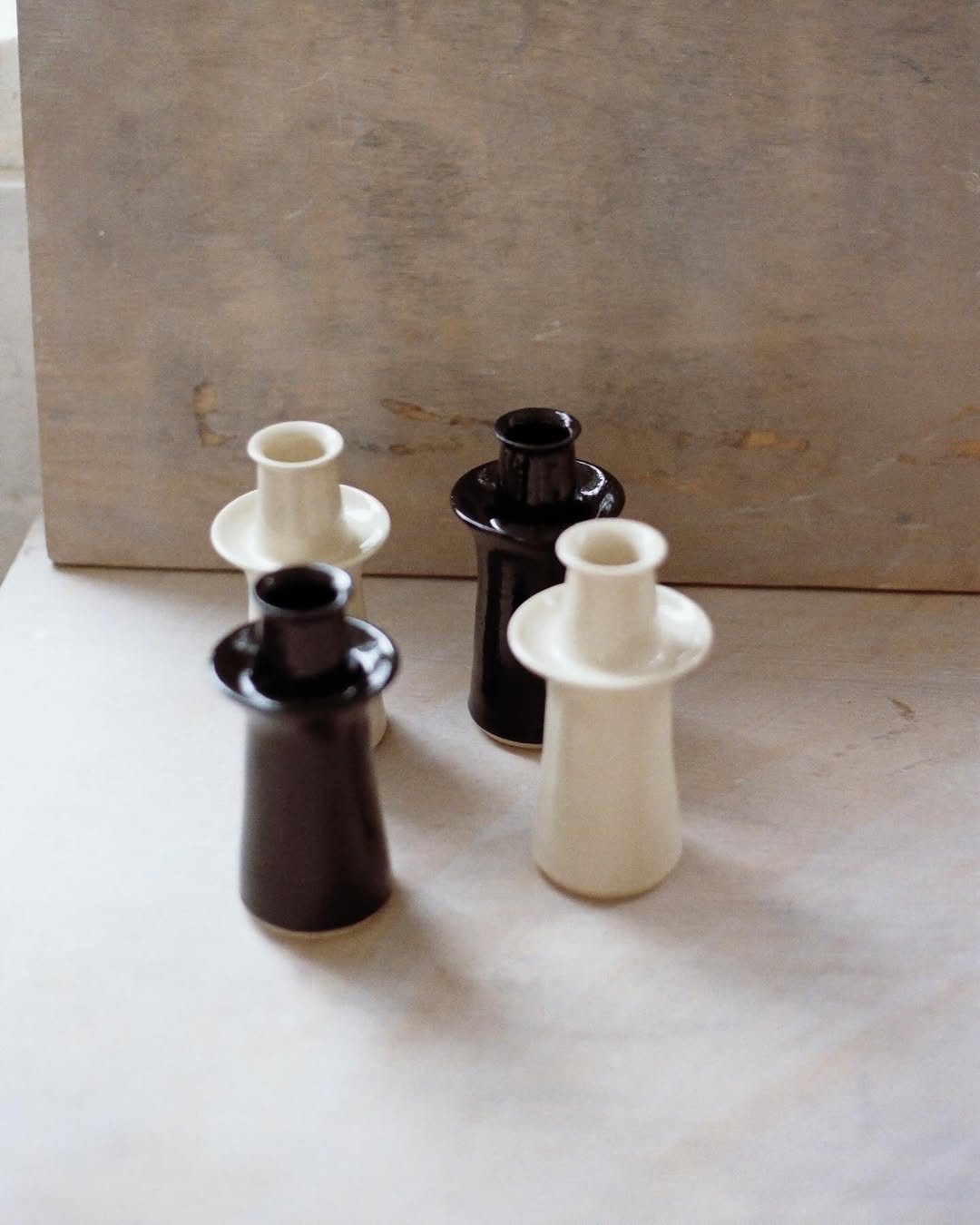
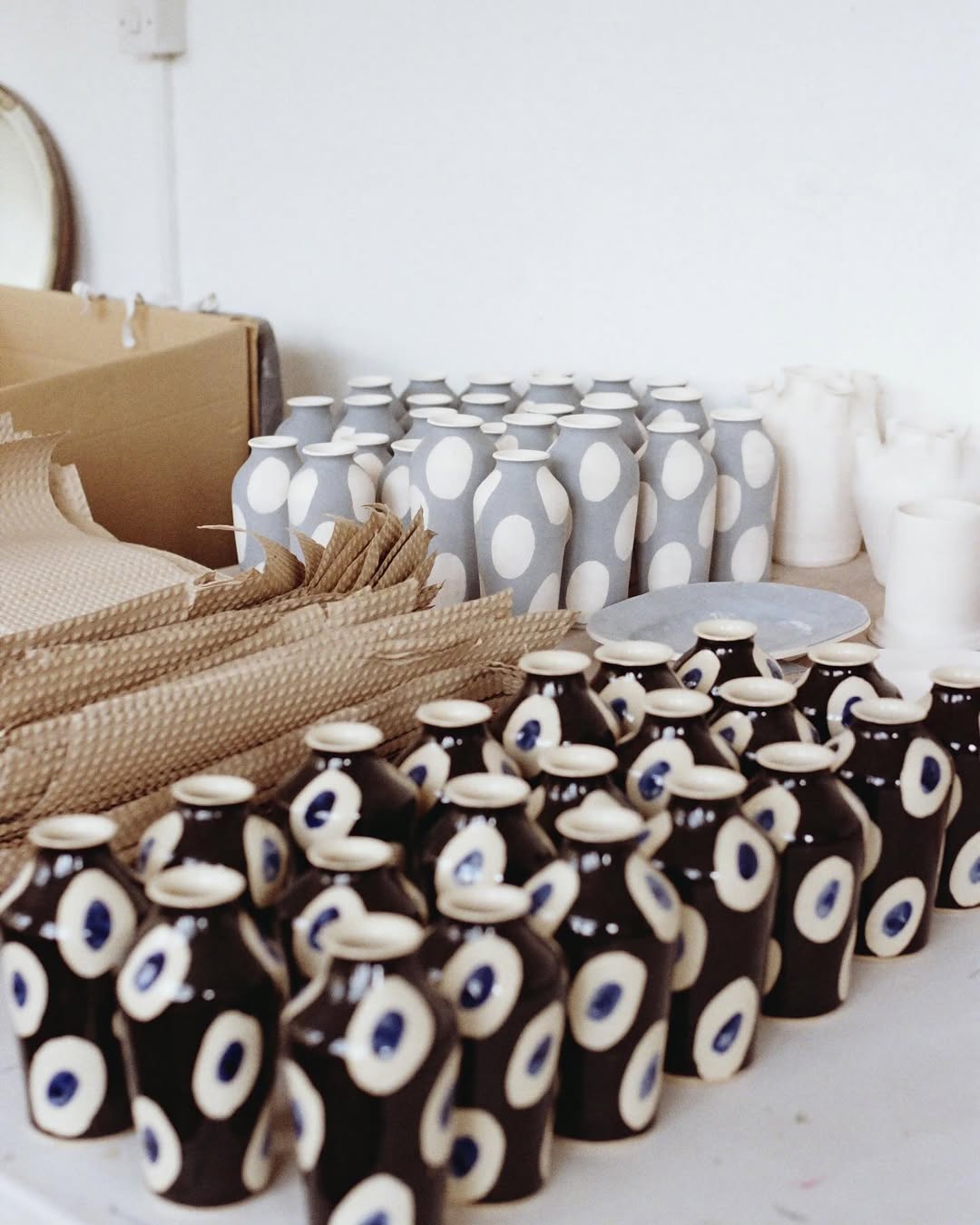
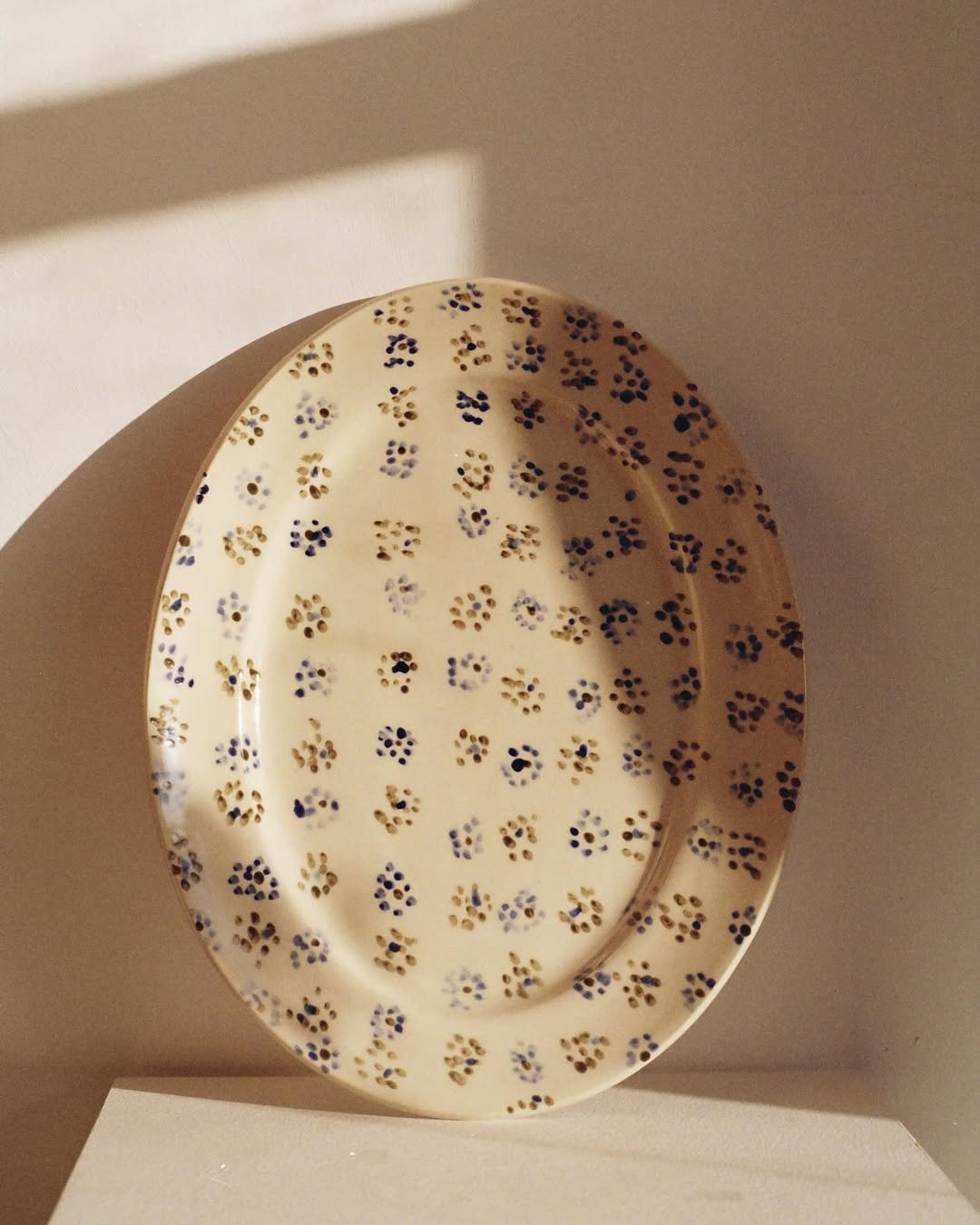
Closing thoughts
19. If you could collaborate with any artist, past or present, who would it be and why?
Maybe Josef and Annie Albers as a duo. I’ve always been interested in art education and I admire how this feeds into their work. Plus they had a great research collection of objects at home, and their work is also great obviously.
20. Where can people find your work, and how can they support you?
They can find my work at alihewson.co.uk
And support my through signing up to my newsletter, or ordering through my shop — thank you!
Ali Hewson’s ceramics embody simplicity, timeless elegance, and thoughtful craftsmanship, creating pieces designed to be cherished for generations. Her commitment to sustainability and careful consideration of materials results in objects that effortlessly blend beauty and function.
Explore Ali’s latest collections and follow her creative journey:
Discover Ali’s Work:
Support Ali by subscribing to her newsletter and exploring her beautifully crafted ceramics online.
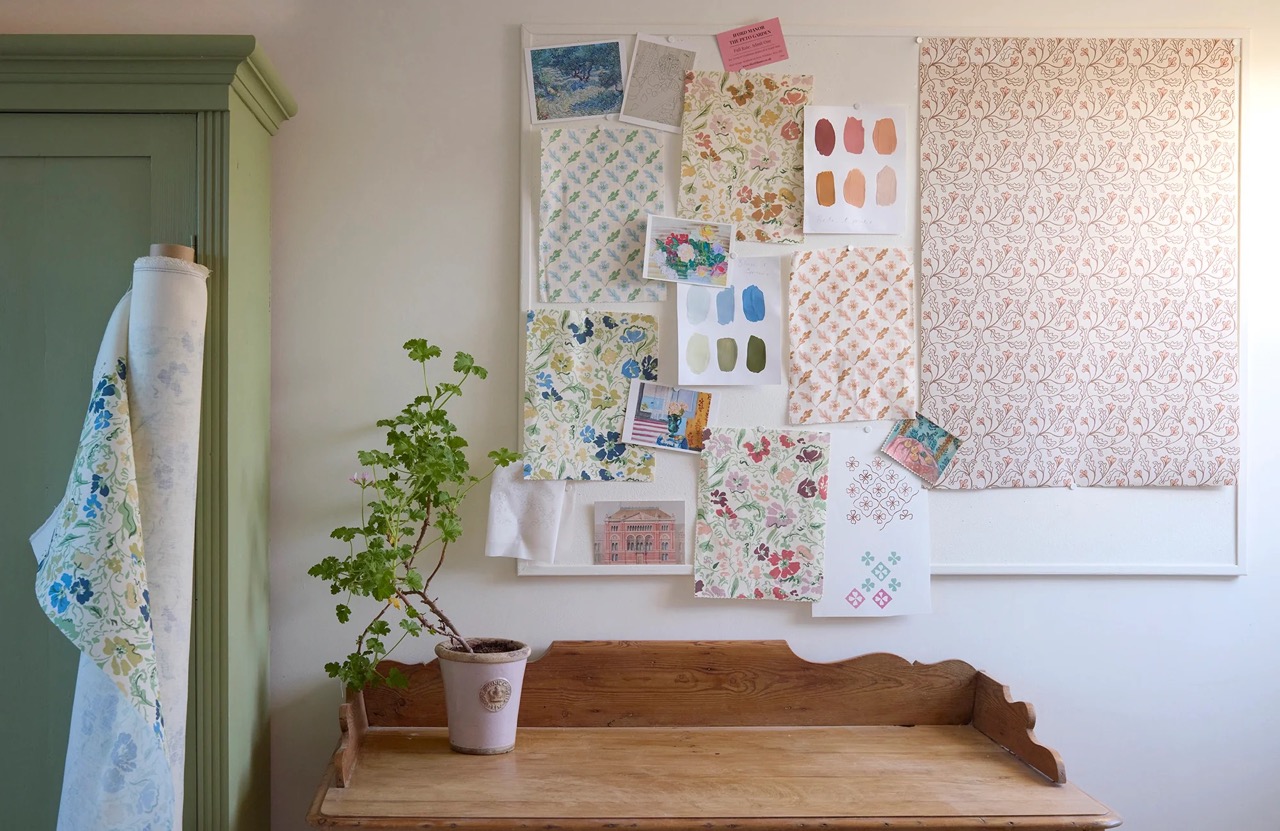
Meet the Maker: The Painterly, Joyful Patterns of Sophie Harpley
In this Q&A, we talk with Sophie Harpley about her inspiring journey back to art after a winding path, how working at the V&A Museum ignited her creative passion, and the courageous leap to pursue pattern design professionally.
Sophie shares insights into her distinctive painterly style, the joys of working by hand with gouache, and her belief in the importance of imperfections. We also discuss overcoming creative blocks, the influence of iconic female artists, and the empowering moments that have defined her career.
1. Can you tell us a bit about yourself and your artistic journey?
It has been a winding path! I’d been glued to a sketchbook since childhood but found it difficult to squeeze my creativity into the school-curriculum-shaped-mould and didn’t do very well there. Feeling like I’d ‘failed’ in something I loved at only 18 sent me off on an entirely different path for a while. I barely picked up a paintbrush for several years. But when it came to finding a job I was soon working in the most creative places I could find; an illustrated children’s book publisher, a fabric and homewares shop and a role at the V&A Museum.
Eventually the urge to be a hands-on creative again led me back to university. I think I had something to prove to myself and the education system. I gained an MA in a subject called ‘graphic arts’. I was on cloud nine amongst the facilities at UWE. I tried every kind of printmaking and I was specialising in pattern by the end of it. But I would even stay extra hours to try all the other subjects, like pottery and various textile classes, I couldn’t get enough.
The great thing about coming back to study a bit later is you really appreciate the opportunity and work very hard. I knew a lot more about who I was by that point and how much I believed that art mattered. It was almost therapeutic to be immersed in it all again. I think this experience put a little ‘fire in my belly’ too. It bothers me a lot just how many 18-year-olds are told that art is not a serious subject; or that there are no careers in it; or that you have to do it in a certain way to be ‘good enough’.
Henri Matisse famously said: ‘creativity takes courage’ and I feel it’s very true.
After finishing my MA, I went on to design for interiors brands. But I always kept up my illustration practice in my spare time. Early on I met a Buyer for John Lewis with some patterned kitchen linens I’d made. She said ‘you have about 5 SKUS and you need at least 30 to be stocked here.’ I didn’t have the capital to create all those products so she suggested I keep going with illustration commissions and creating stationery – so I did!
I also went freelance to allow more time for my art practice. When some floral cushions I made were picked up for a Chelsea Flower show styled stand and the cover of Country Living, I felt a little bit braver about growing a fabric range. But it wasn’t until the pandemic coincided with maternity leave, that I really stopped to reflect on what I was doing and decided to take my personal work more seriously.
Once my little one was at nursery I began making wallpapers and then fabrics by the metre. It’s going well and after dreaming for such a long time of painting patterns for a living, it feels pretty ‘pinch me’ to be doing it.
2. What inspired you to pursue your craft? Was there a defining moment or influence that sparked your passion?
Working at the V&A Museum. That was the period when I was really starting to think (to quote Mary Oliver) ‘what am I going to do with my one wild and precious life?’ I found it strangely frustrating to be working in such an awesomely inspiring place, but not a very creative role.
So I went to art school and the rest is history! But I do quite vividly remember a particular moment, looking around the V&A on my lunch break, and literally feeling giddy with the urge to make something. I really wanted to draw and paint and create things hands-on but I’d lost confidence. That’s when the idea to study again began to form.
Your craft
3. How would you describe your work in three words?
Relaxed, joyful, painterly.
4. What materials or techniques do you use, and why are they important to your process?
I paint every pattern using gouache and watercolour paper. I have quite an impulsive painting style and I try to let that lose quality come through, even when I have planned a design. I love imperfections and work that shows the human touch. It’s very intentional and important to me that you can tell my wallpapers and fabrics were designed by hand.
5. Can you tell us about a favourite piece you’ve created and the story behind it?
At university I made a huge printed tapestry, the whole thing was illustrated. Sometimes I long to do quite an ambitious one-off piece like that again. It was a bespoke piece inspired by a Georgian house which had so many decorative details.
Creative process
6. What does a typical day in your studio or workshop look like?
No typical day! When you wear all the hats, you just have to keep rotating between them; post-lady, accounts department, web designer, social media assistant – it’s not all glamourous. But of course my favourite days are the ones immersed in painting and design.
Once I’m in the zone, I’m there for months at a time and other things fall to the wayside, but it’s bliss. I lose track of time and just experiment with colours and motifs all day. It’s a very exciting process to be painting on paper and thinking ‘this could end up on someone’s wall’.
7. Do you have any unique rituals or habits that help you stay creative?
In love mood-boarding and it really helps me begin a project fresh. Just gathering all my recent inspirations and having a good look through; books, clippings, postcards etc.
8. How do you handle creative blocks? Do you have any strategies or tips for overcoming them?
Do something different. Staring at the page will never help. Exercise and a change of scene will. Also be kind to yourself, have a cuppa and a biscuit, call a friend. Then ask yourself some questions; who is this for, what is this about, why isn’t it working etc. Get some sleep and try again.
Challenges and successes
9. What’s the biggest challenge you’ve faced as a maker, and how did you overcome it?
It’s always challenging. The moments of imposter syndrome never go away but you get better at taming the beast. And the highs make it all worth it.
10. What’s been your proudest moment or achievement so far?
Winning a Homes & Gardens Award for my first wallpapers in 2023.
11. What’s your favourite quote you’ve ever heard about your work? Who said it, or what was the name of the publication?
"Sophie's painterly creations are always uplifting and bring a smile."
- BRITISH VOGUE
Inspiration
12. Where do you draw inspiration from for your work? What sparks your imagination and creativity?
I see pattern inspiration everywhere from nature to antique textiles and modernist art. My favourite days are spent either in a gallery, antique market or walking in nature. As a result my work is a melting pot of ideas, bringing a fresh twist to tradition.
13. Do you have a favourite artist, maker, movement, or tradition that has influenced your craft?
I love the post-impressionist painters like Rauol Duffy, Matisse and Vanessa Bell. I love their free and spontaneous approach. I’m always drawn to the histories of women artists especially and of course those who specialised in pattern like Sonia Delaunay or Paule Marrot. But also just the fighting spirit required of people like Barbara Hepworth or Frida Kahlo to make it as female artists in the era they lived.
14. How does colour influence your practice; is it an important part of your process? Do you have a particular palette or favourites? Any go-to sources for colour inspiration?
I do have quite a distinct colour palette and it’s been described by others variously as; muted, tertiary, jewel-tone… I guess it’s anything but primaries for me! I like to mix and make interesting colours and every colour is a bit unusual – off-white, reddish-pink, muddy-yellow. I’m a colour tinkerer.
Perspectives and goals
15. What role does your environment play in shaping your creativity?
I’m a visual sponge, so everything I see influences me. Yes I think surroundings are vital, I think it changes everything actually. I wish I had a bit more space! I always feel like the more space I have I will just fill it – so my work will get bigger and more ambitious.
By default of living in London, space is at a premium. I love my studio and it’s very homely and full of things that inspire me, but you can never give an artist too much of two things; light and space. Oh and peace and time! So that’s four… There was never a truer statement than Virginia Woolfe and ‘a room of one’s own’.
16. What do you want people to feel when they experience your work?
Joy, peace, pleasure, a little nostalgia and positivity.
17. What are you currently working on, and what excites you most about it?
Aside from the thrill of launching makers made with my wonderful co-founding artists?! I’ve also just launched a new little collection of printed papers and linen called Evolve. I’m taking it to show at London Design Week (March 2025) which is exciting if a little nerve wracking. But I hope to do myself proud!
Advice and reflection
18. What advice would you give to someone starting out as a maker?
If you are passionate about something, keep going, keep learning and don’t let anything stop you. There are no wrong moves only experiments.
19. If you could go back to the start of your career, what advice would you give your younger self?
Your mum is right, you should go to Falmouth School of Art.
Closing thoughts
20. If you could collaborate with any artist, past or present, who would it be and why?
It would be fun to step back in time into Charleston Farm House and help Vanessa and Duncan paint the lot from top to bottom.
21. Where can people find your work, and how can they support you?
I would love to work on more bespoke projects and perhaps collaborate with a paint company.
Sophie Harpley’s designs blend relaxed charm with vibrant colours, bringing joy and a sense of timeless nostalgia to everyday spaces. Her painterly approach and distinctive palettes offer fresh takes on tradition, creating textiles and wallpapers that uplift and inspire.
Explore Sophie’s latest collections and follow her creative journey:
Support Sophie by exploring her bespoke collections, and stay tuned as she takes her work to exciting new platforms like London Design Week.