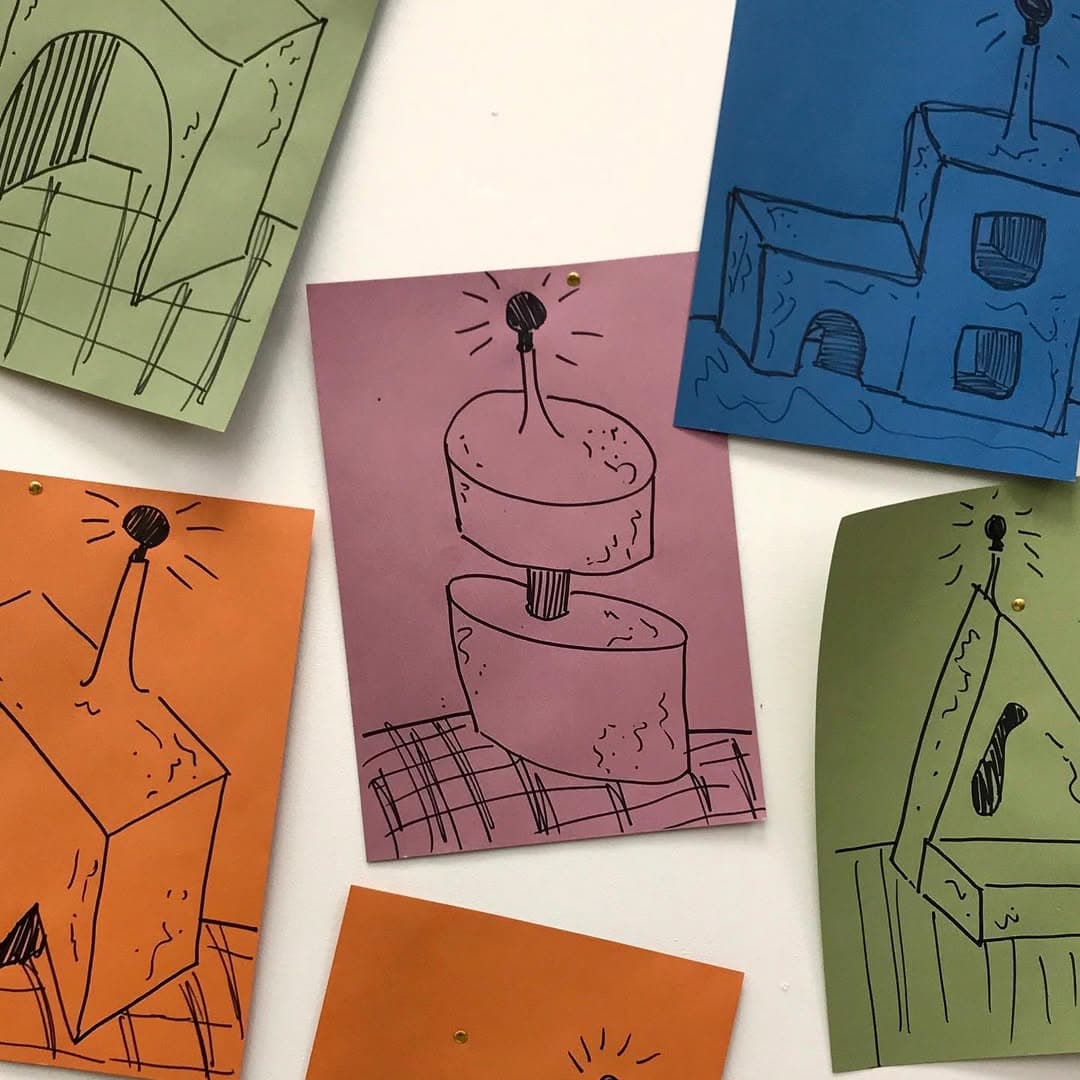
Meet the Maker: The Colourful, Sustainable World of Annie Strachan
In this Q&A, we talk with artist Annie Strachan about her creative journey, her bold approach to sculpture and functional art using papier-mâché, and her passion for sustainability and experimentation.
Annie shares insights into how popular culture and vintage design inspire her playful creations, the importance of balancing creative practice with wellbeing, and the exciting collaborations that have shaped her vibrant career.

1. Can you tell us a bit about yourself and your artistic journey?
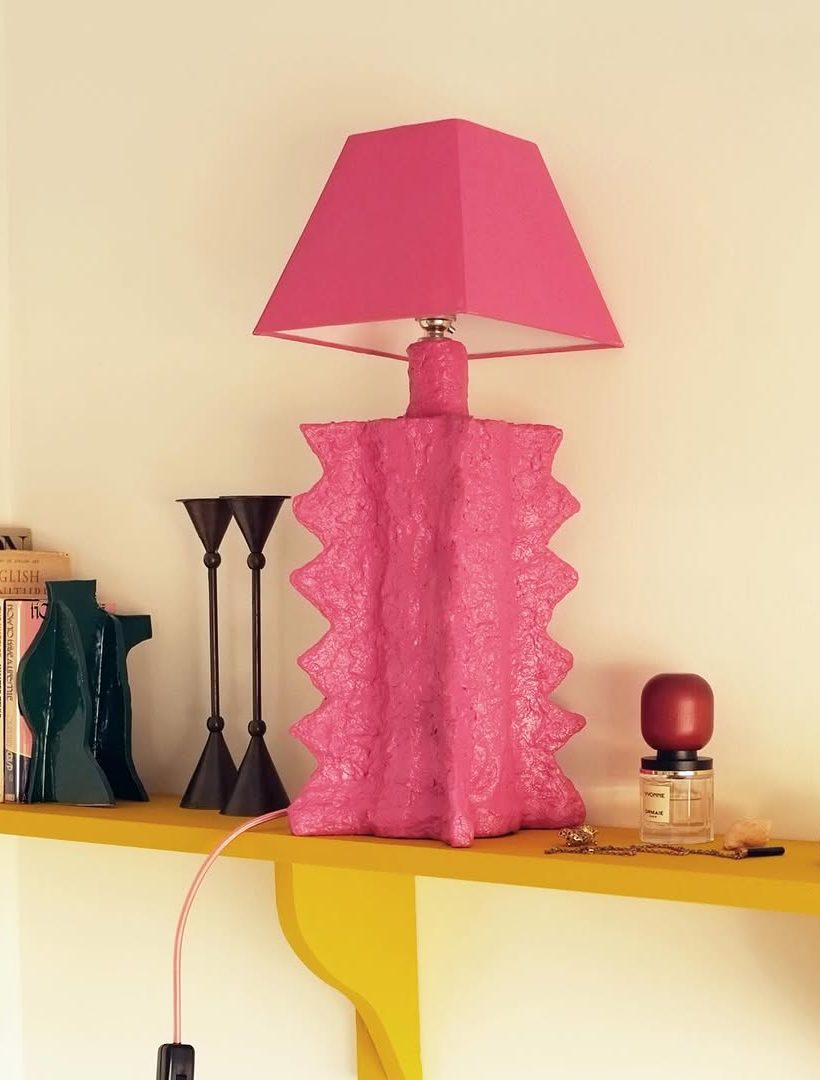
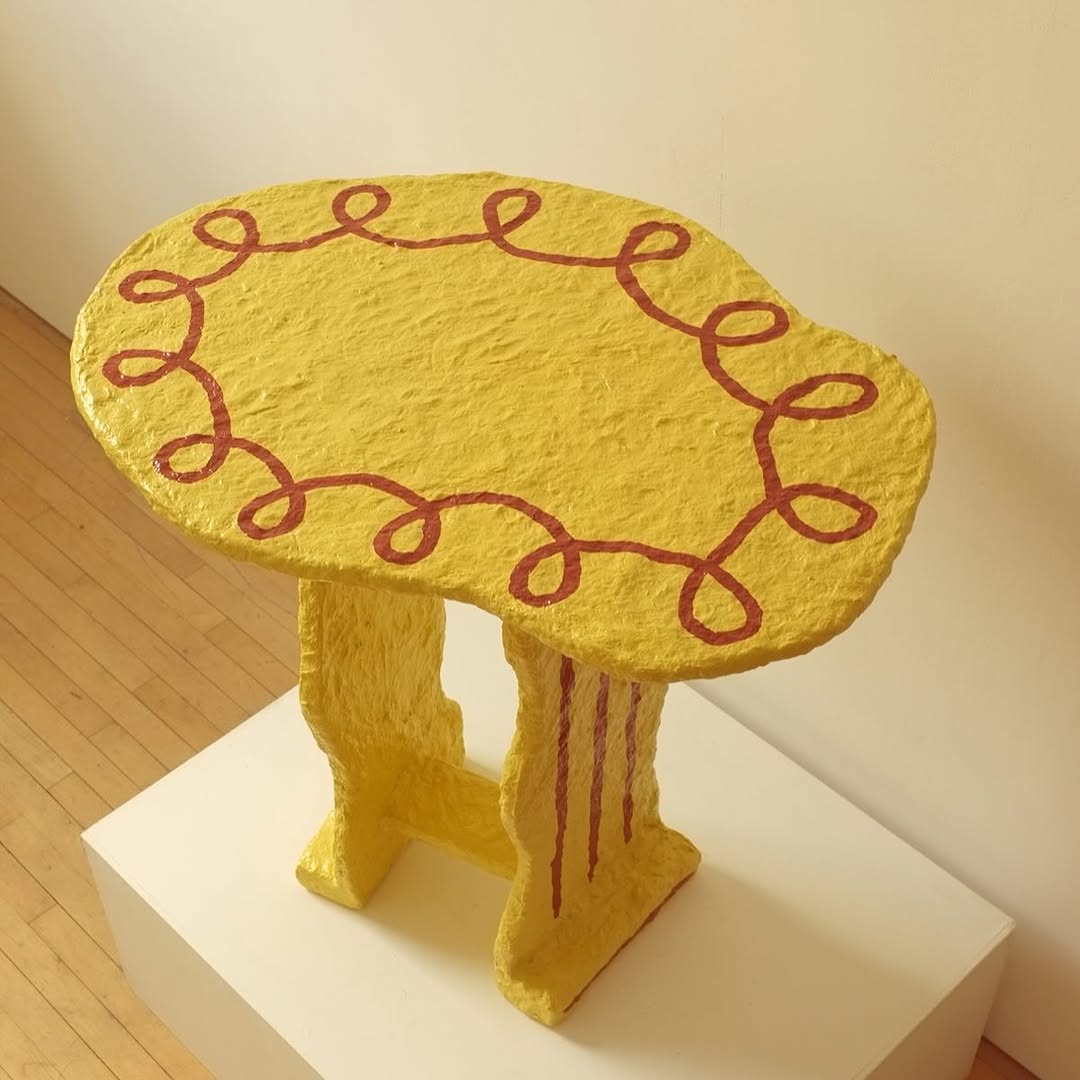
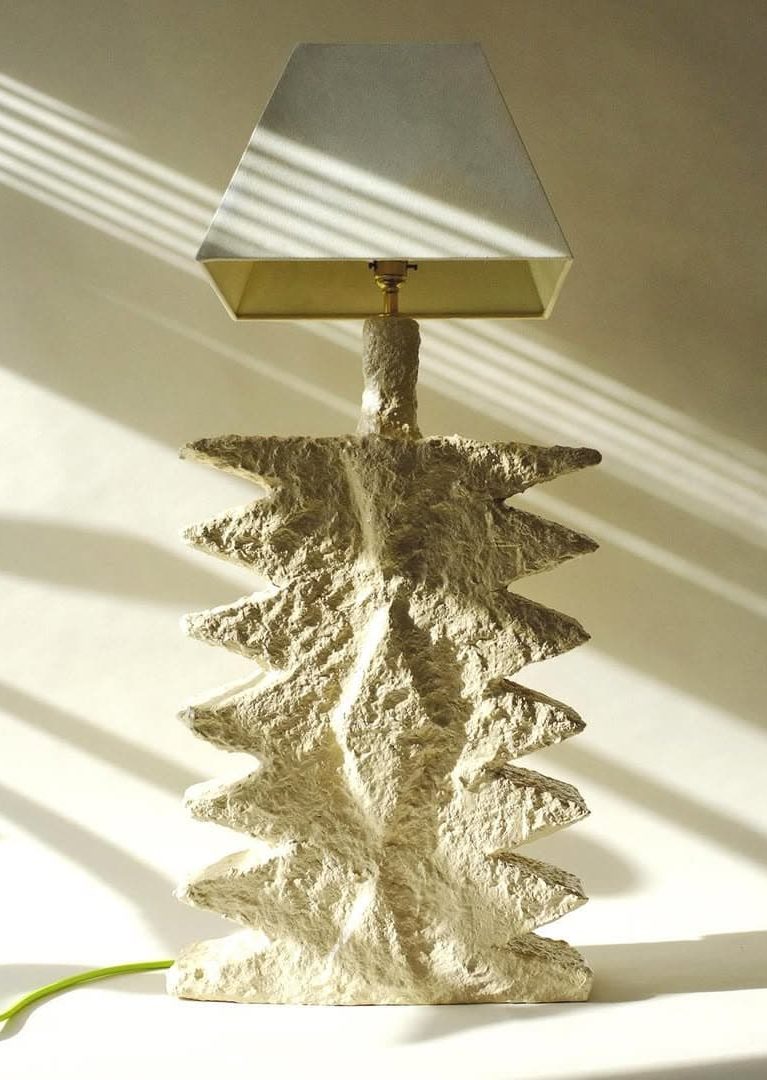
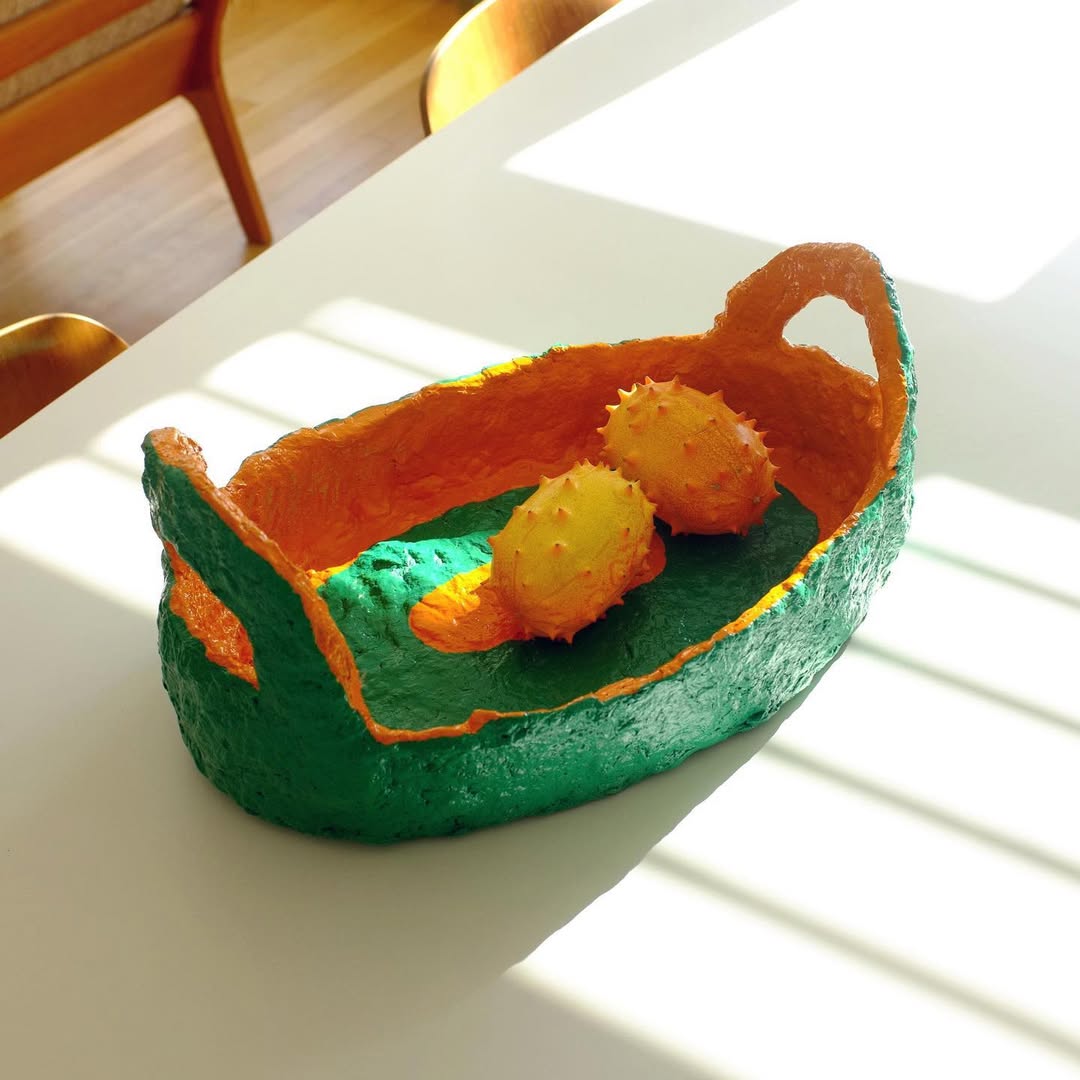
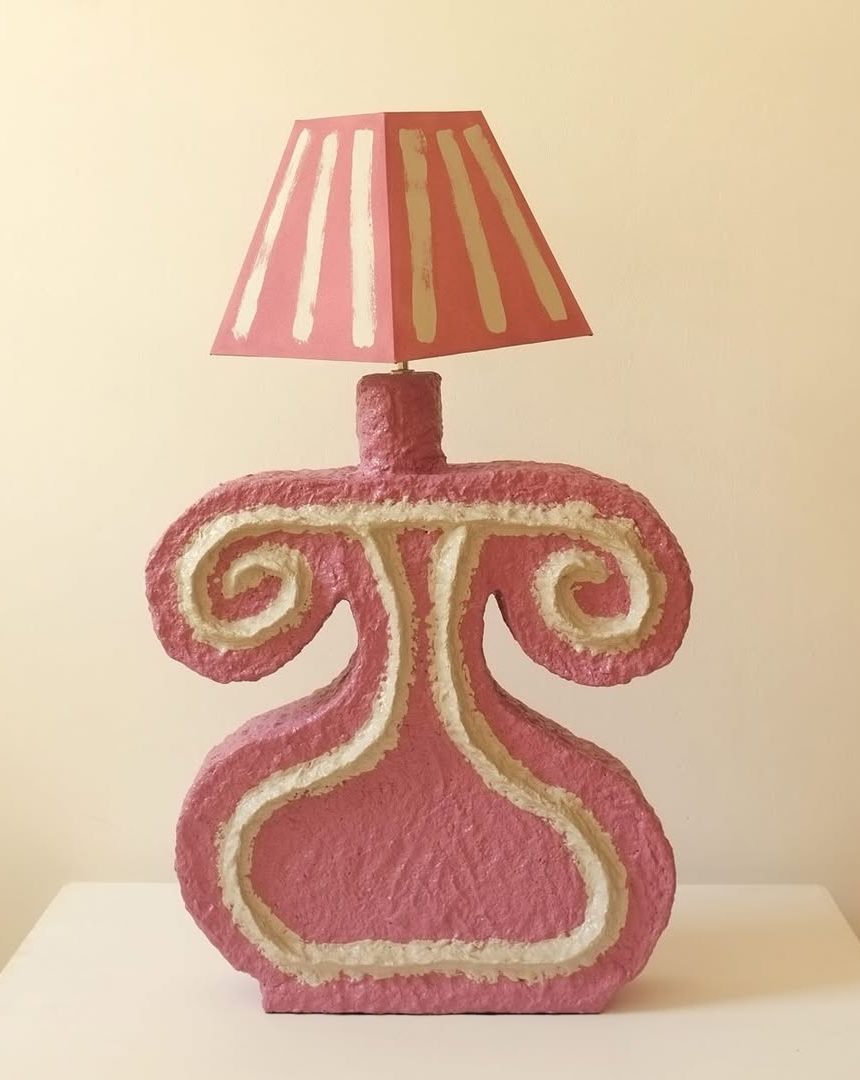
I studied Fine Art at Chelsea College of Art and design, graduating in 2011. I’ve always been influenced by avant-garde furniture and interior design and it’s relationship to trends in popular culture. I started working with papier-mâché a few years ago as a means to explore more experimental forms for the production of functional sculptures.
2. What inspired you to pursue your craft? Was there a defining moment or influence that sparked your passion?
For several years, I struggled to maintain an active art practice whilst working full-time and eventually made the decision to cut my hours and devote the rest of my time to making artworks in more financially viable way. This meant realigning my thinking about art and concept driven work. I decided to reject this and take a more light hearted approach that embraces craft and the job of having a hobby.
Your craft
3. How would you describe your work in three words?
Colourful, Sustainable & Experimental
4. What materials or techniques do you use, and why are they important to your process?
I prioritise sustainable materials and techniques to minimise my carbon footprint. All of the paper and wood I use is recycled and electrical parts are sourced from UK based manufacturers.
Traditionally, I like to work at scale and am constantly changing and evolving my style so it’s important to work with low cost materials that are readily accessible. 5. Can you tell us about a favourite piece you’ve created and the story behind it? I am regularly commissioned to create unique pieces for art exhibitions and this always turns out to be some of my favourite work.
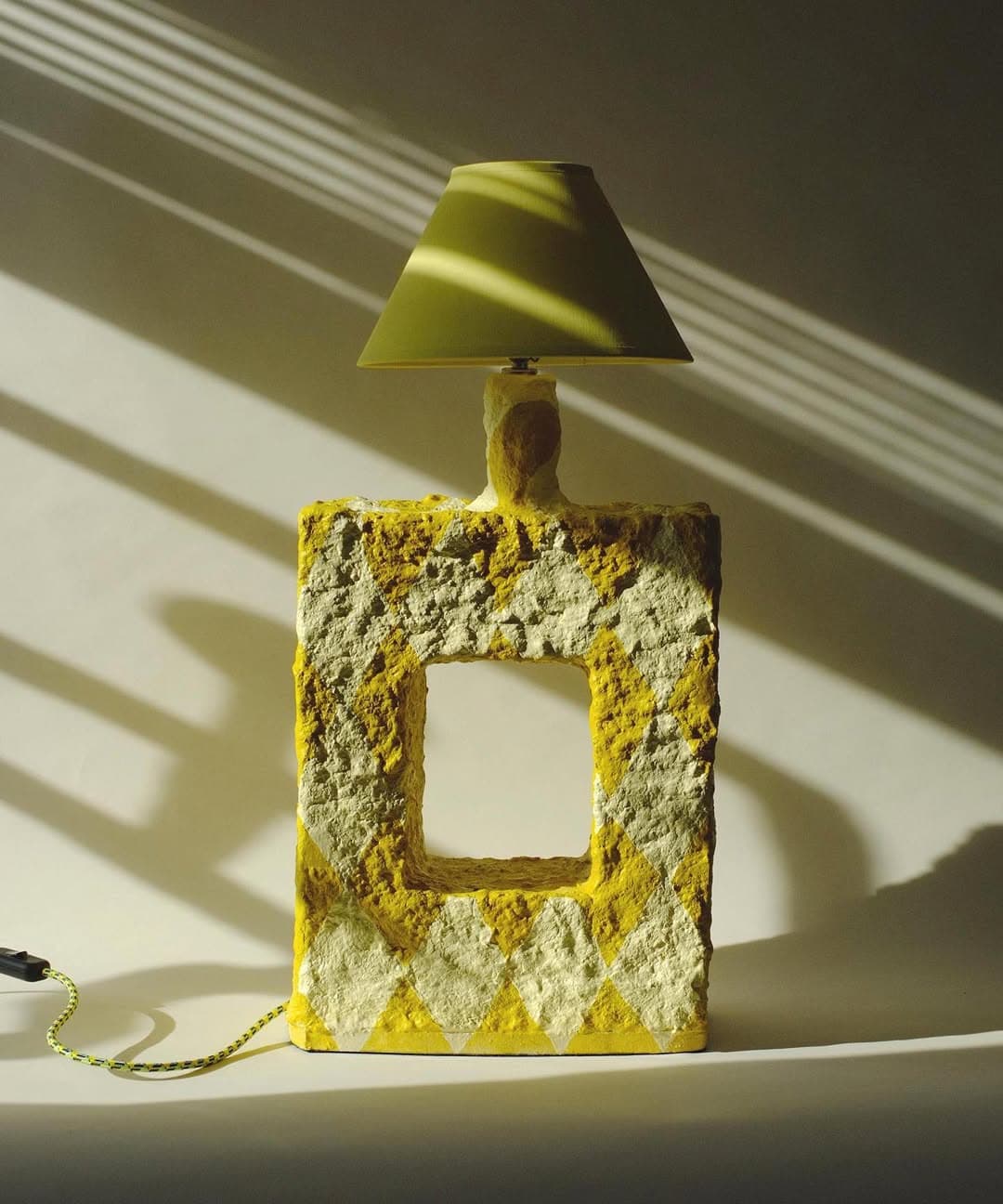
In 2024 I collaborated with Felt Collections and ceramicist Kelly Jessiman to produce an immersive artists dinner with custom furniture, lighting and ceramics. I also had the chance to collaborate with Atelier100 in 2023, producing one-off pieces for a solo installation in their West London show. Some of these very special pieces are available to buy through Makers Made.
The pinnacle of functionality is creating lighting for commercial interiors and I’m incredibly proud to have two of my lamps in daily use at the independent wine bar, Joyce in Brockley, South East London. I’ve also produced a series of unique sconces for the restaurant in the basement of Margate House Hotel and am looking forward to them opening up to the public later this year!
Creative process
6. What does a typical day in your studio or workshop look like?
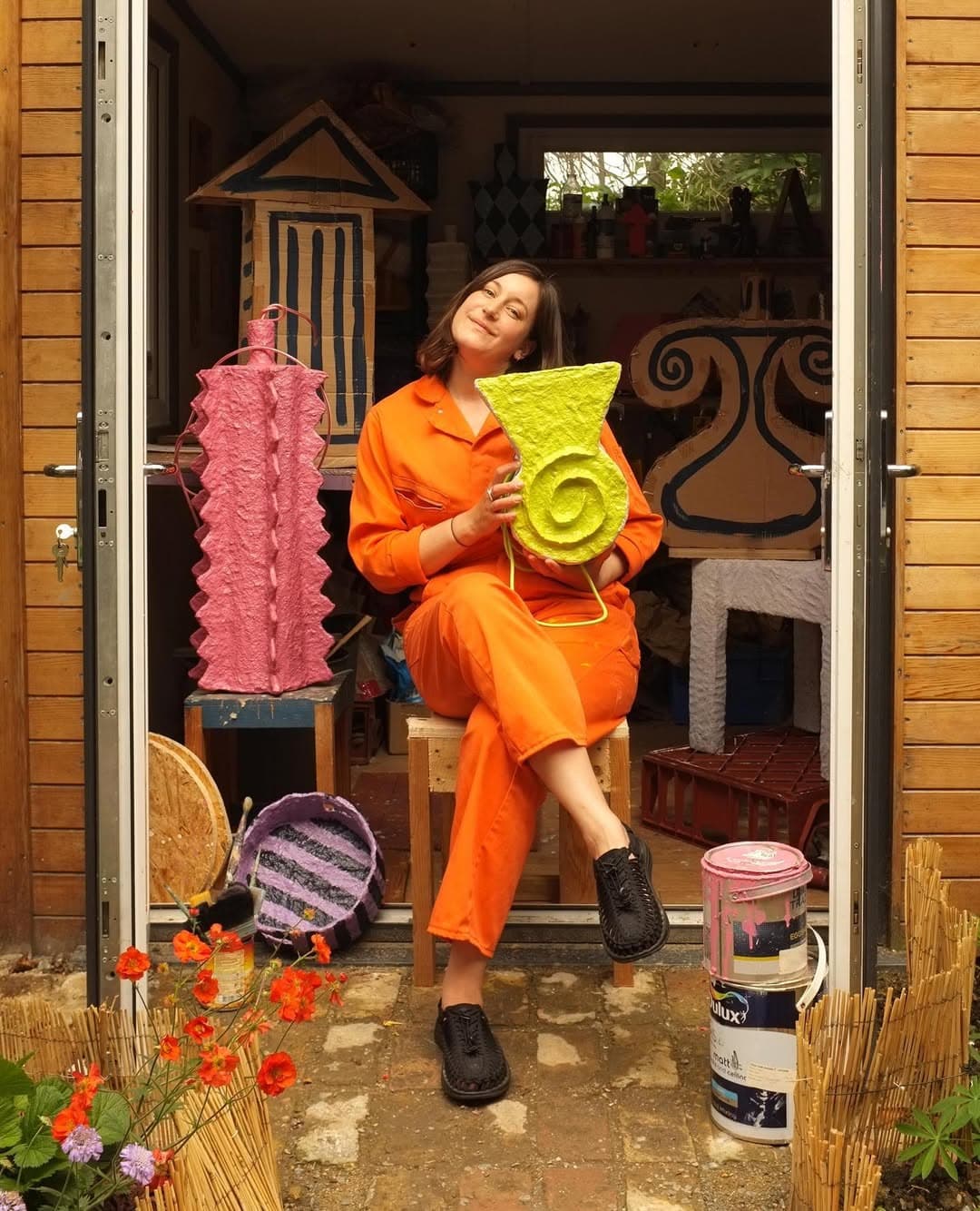
My making process is very time consuming and occupies most of my days in the studio. I’m lucky to have a home studio where can I enjoy regular cups of tea and blasting my favourite music. I curated a regular series of playlists of some of music I like to work to and you can find these linked on my website.
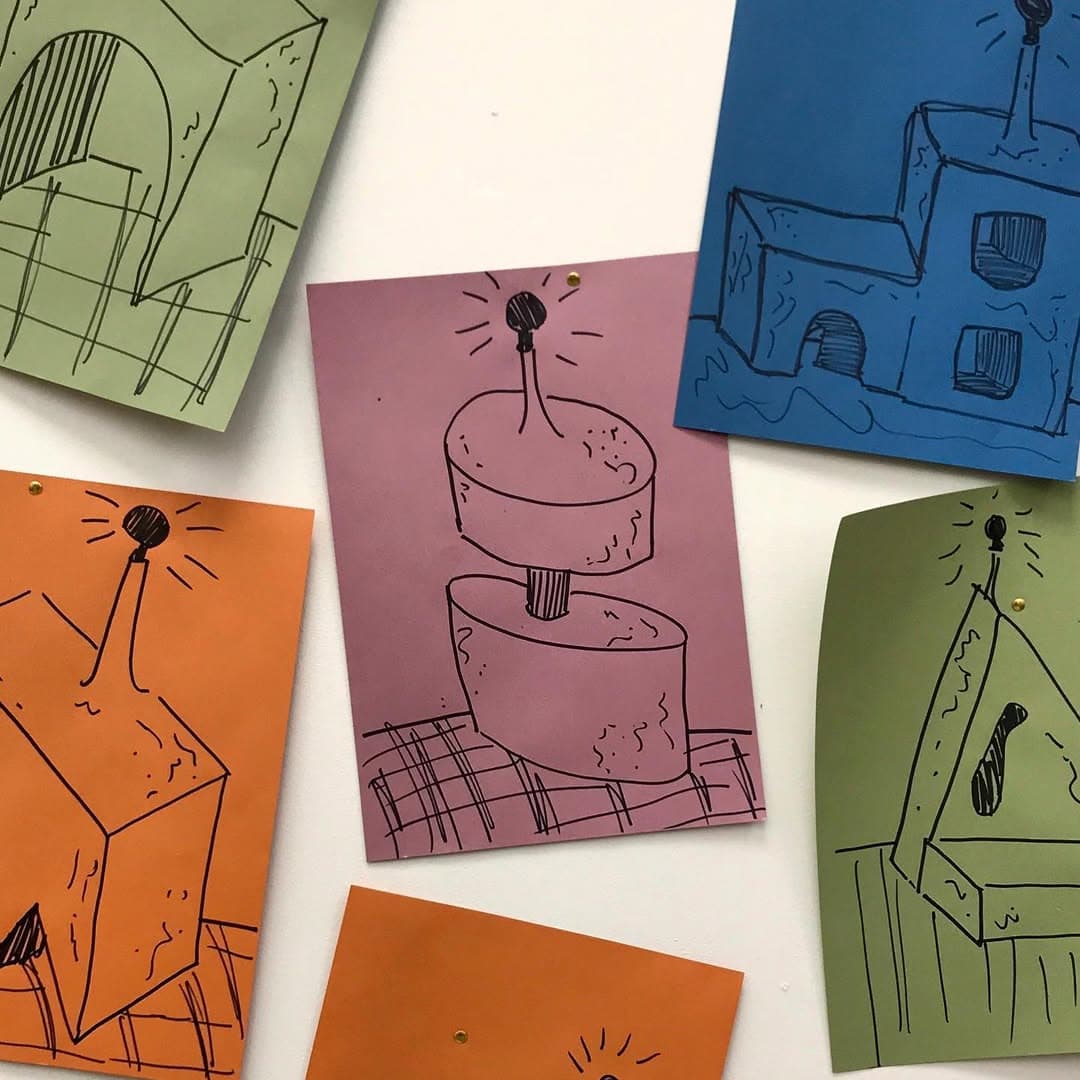
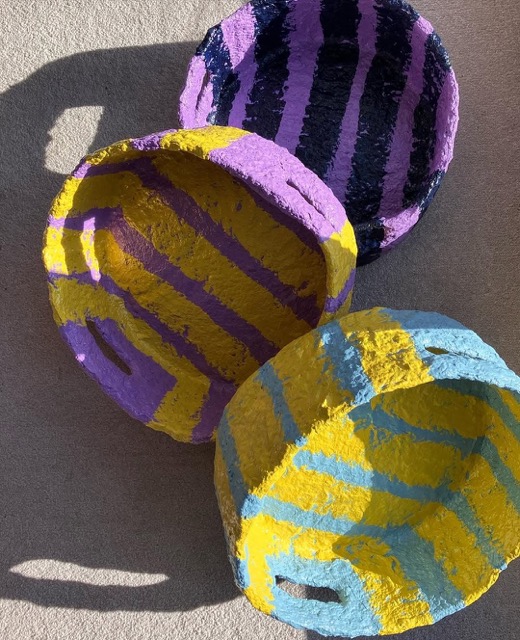
Most of the materials I work with are recycled so I tend to spend a lot of time shredding paper or cleaning and cutting wood scraps to more manageable dimensions. The processes involved in working with papier-mâché to ensure pieces maintain their structure, whilst in development, require allowing plenty of time for drying between stages of making.
7. Do you have any unique rituals or habits that help you stay creative?
My rescue dog Destiny is the light of my life. Since getting her a year ago, I’ve found that the need to structure my day around healthy breaks and regular walks and cuddles helps me to stay creative. Breaking up intense or tiring days in the studio with a walk in the park is a good way to process my achievements in the studio and better manage my time. 8. How do you handle creative blocks? Do you have any strategies or tips for overcoming them?
I’ve learnt that if I’m not feeling creative or excited by a project then I just can’t push myself in that direction. It’s really important as a creative person to give yourself breaks and ensure you are looking after your physical and mental wellbeing. Normally if I’m having trouble engaging with my practice, it’s because I need to stop and allow myself to just focus on simpler more achievable goals.
Challenges and successes
9. What’s the biggest challenge you’ve faced as a maker, and how did you overcome it?
The first two years of establishing my practice were both exciting and challenging as I had the blind ambition needed to foolishly believe I’d one day be getting press attention and working with interior designers! I was also super aware of needing to prove to loved ones that my vision for a successful practice was achievable. It’s been exhausting juggling a commitment to work alongside getting something like this off the ground but I’m glad I was able to show that if I worked hard enough I could succeed, even with limited industry contacts, money or a Masters degree!
10. What’s been your proudest moment or achievement so far?
2024 was a great year for press for me, from It’s Nice That to Dezeen, but most of all, being selected by House and Garden magazine to feature in their Design 100! I’ve also had the opportunity to collaborate with incredible interior designers and curators, including Studio 2LG, L’absurde Object, Domenica Marland, Prospect Refuge and Felt Collections.
11. What’s your favourite quote you’ve ever heard about your work? Who said it, or what was the name of the publication?
“Take some techniques from slab building and woodwork, throw in some inspiration from post-war Hollywood cinema set design, and you’ve got pop sculpturist Annie Strachan.”
- It’s Nice That
Inspiration
12. Where do you draw inspiration from for your work?
What sparks your imagination and creativity? I have an obsession with archival books and magazines and often draw on imagery taken from my own collection of vintage copies of ID, Architectural Review, Domus, The Face, World of Interiors and House & Garden. I’m also lucky enough to have inherited a very special collection of 1960s & 70s interiors magazines from my Oma called Schöner Whonen which was are brilliant resource!
13. Do you have a favourite artist, maker, movement, or tradition that has influenced your craft?
I’m very inspired by popular culture in terms of music, design and more commercial forms of art. I was really into the Memphis design collective while I was studying at uni because of their thesis of producing high art/ design while referencing trash culture like kitschy retro American diners. I see a lot of that reflected in the colour palate and playfulness of my pieces.
I want my work to be chic but unpretentious and I think that’s why their aesthetic appeal was so enduring and went on to influence popular design right through the late 1980’s and 1990’s. Similarly I’m a big fan of John Waters and how important curating a style is in his early films as well as more commercial successes like, Hairspray. I remember finding a copy of the Pink Flamingos VHS in a video store when I was 16 or 17 and falling in love, I’ve been influenced ever since!
14. How does colour influence your practice; is it an important part of your process? Do you have a particular palette or favourites? Any go-to sources for colour inspiration?
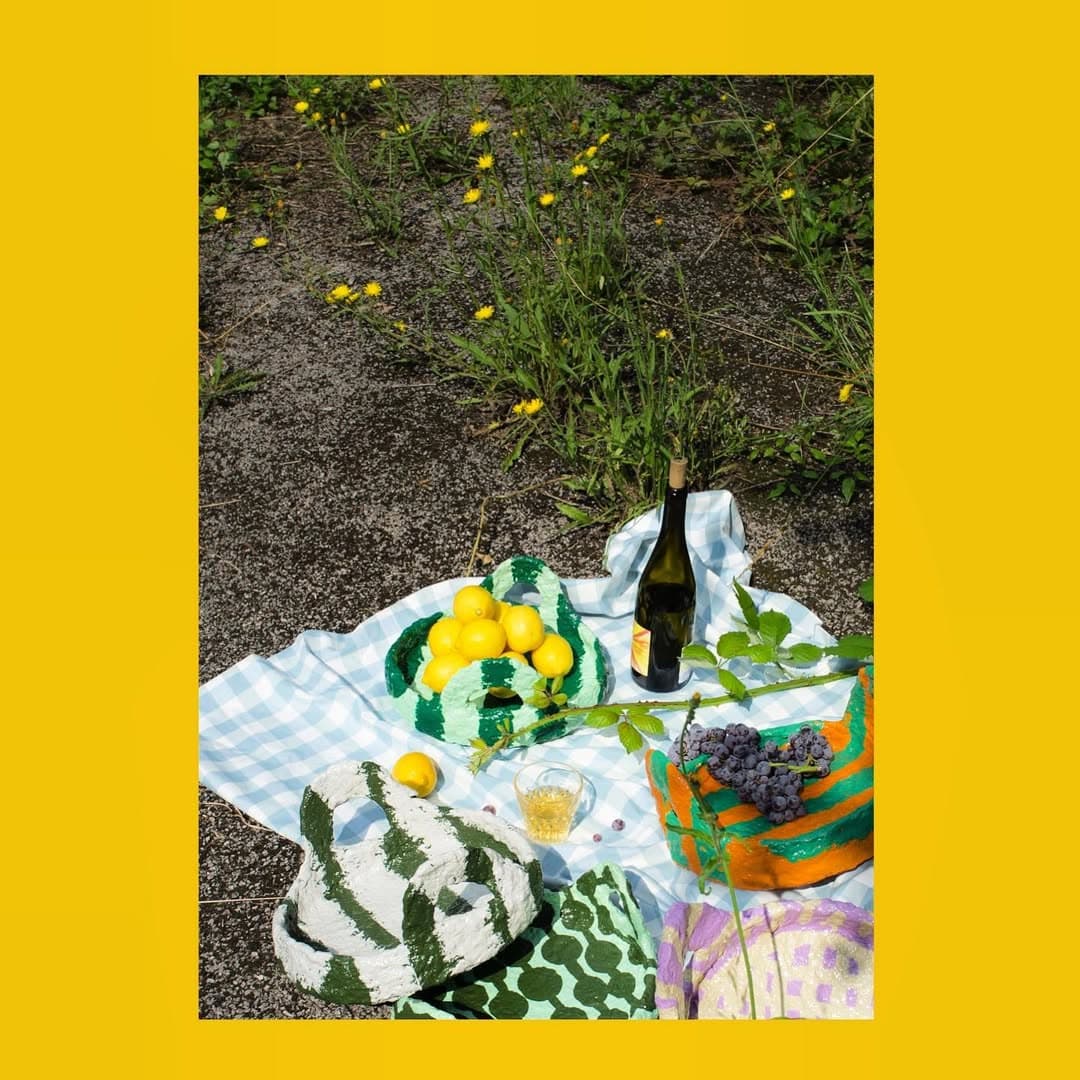
Colour is extremely important to me and that’s reflected in my work but, something that may not immediately be obvious is how restrained I actually am in it’s use. I find it’s really important to balance this with how out-there the shape of pieces is
Perspectives and goals
15. What role does your environment play in shaping your creativity?
Sustainability and reducing environmental impact is key to my practice. Not only are many of the materials I use recycled or repurposed but I also source electrical parts from UK based manufacturers. My processes rely on manual labour and I don’t import parts from overseas so that the money I make goes back into supporting UK businesses like Manchester based S. Lilley & Son who supply all of my lamp holders.
16. What do you want people to feel when they experience your work?
I hope that my work is uplifting and inspires more creativity. 17. What are you currently working on, and what excites you most about it? I’ve been moving very slowly into 2025 after several years of working non-stop. I want to use this time to go back to my roots and think about showcasing my work in new environments. I’m also developing some new lamp designs which I think will be some of my cutest yet!
Advice and reflection
17. What advice would you give to someone starting out as a maker?
Creating is one of the most rewarding things but you need to be really thick skinned to try to make it in your own right. Remember that everyone is struggling, you just need to believe in what you’re putting out there and find your audience.
18. If you could go back to the start of your career, what advice would you give your younger self?
Don’t sacrifice your well-being in order to be a people pleaser.
Closing thoughts
19. Where can people find your work, and how can they support you?
I have a shop on my website anniestrachan.co.uk and also sell a selection of pieces through independent retailers and galleries as If you head to my Instagram page @pulpsculptuur you’ll find links to all of these. I also exhibit regularly in gallery shows and sometimes at pop-up markets which is always a great way to meet clients face to face. These are regularly updated on my website anniestrachan.co.uk and Instagram. Thank you so much for taking the time to share your story. Once your feature is ready, we’ll send it to you to review before it goes live. After that, we’ll share it with the MAKERS MADE community and encourage you to share it with your own audience too.
Annie Strachan’s distinctive papier-mâché creations blend joyful colour, whimsical forms, and thoughtful sustainability, making functional sculptures that uplift spaces and inspire creativity. Her innovative approach and dedication to environmentally conscious design set her work apart, capturing both charm and artistic integrity.
Explore Annie’s latest collections and follow her creative journey:
Support Annie by visiting her online shop, connecting through Instagram, and experiencing her vibrant creations at exhibitions and pop-up markets.

Meet the Maker: The Thoughtful Ceramics of Ali Hewson
In this Q&A, we chat with ceramicist Ali Hewson about her artistic journey from illustration to ceramics, the joy she finds in working with clay, and how historical research deeply informs her practice. Ali shares insights into her mindful use of materials, the daily rhythms of her studio life, and the constant balancing act between work and rest. We also explore her thoughtful approach to sustainability, inspiration from historical ceramics, and her advice for emerging makers.
1. Can you tell us a bit about yourself and your artistic journey?
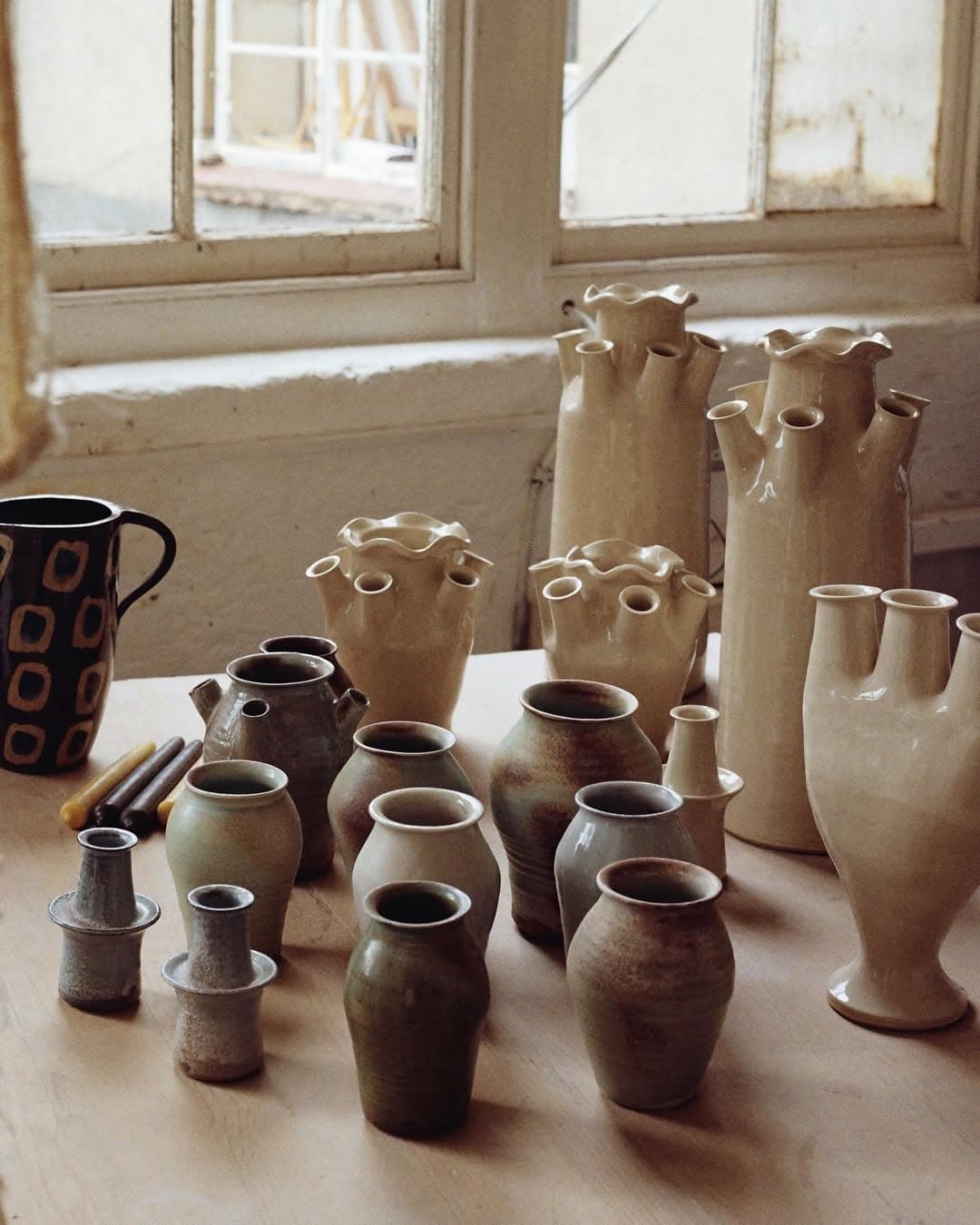
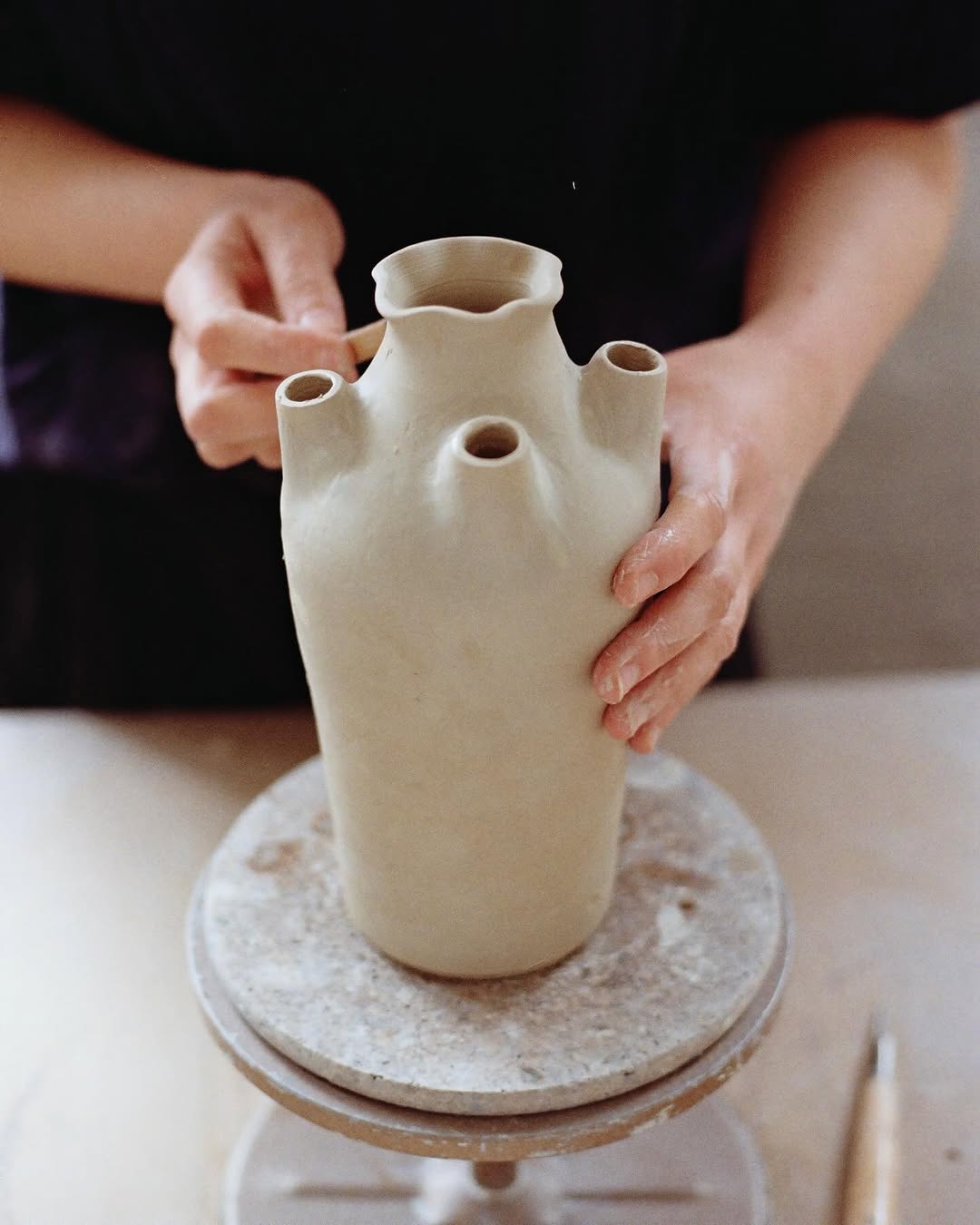
I started making ceramics whilst on my Foundation at Camberwell College of Art, then carried on throughout my degree (in illustration). It was only after moving to Norfolk when I could get a proper studio that I was able to properly see through my ideas in clay, and 11 years later am still in the same studio building! Drawing still plays a huge part in my work, as does research into historical ceramics from all over the world.
2. What inspired you to pursue your craft? Was there a defining moment or influence that sparked your passion?
I just love ceramics and clay, it is endlessly interesting to me.
Your craft
3. How would you describe your work in three words?
Thoughtful… I don’t know any more sorry
4. What materials or techniques do you use, and why are they important to your process?
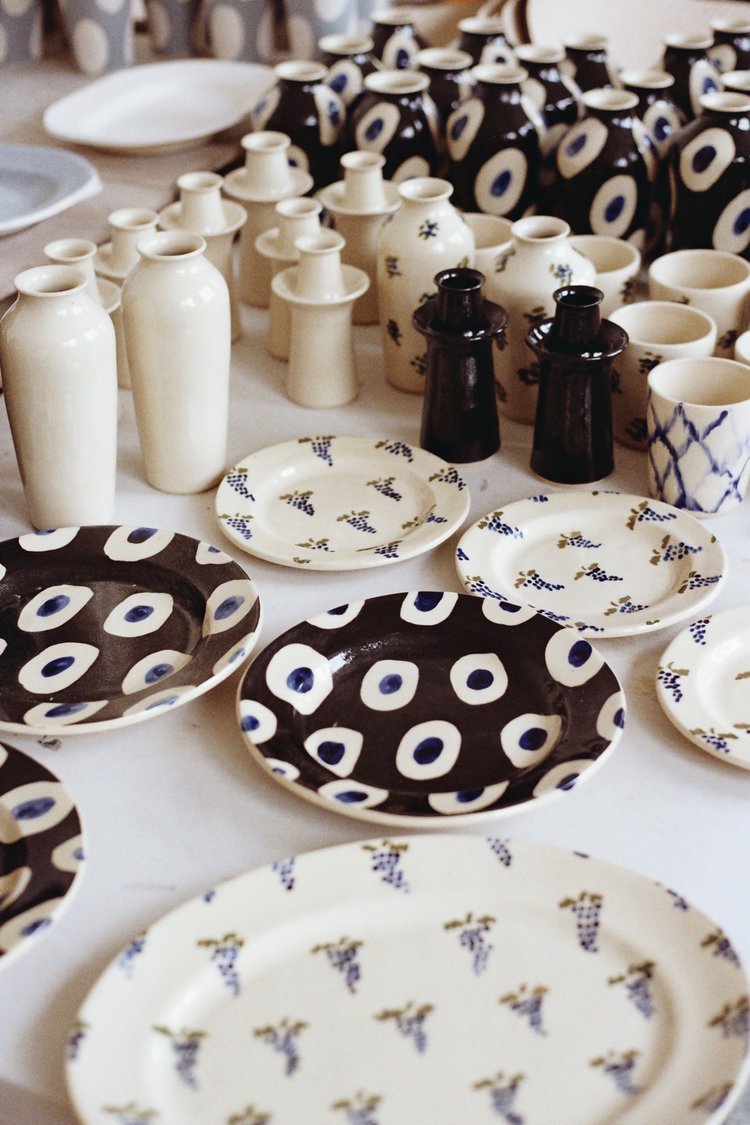
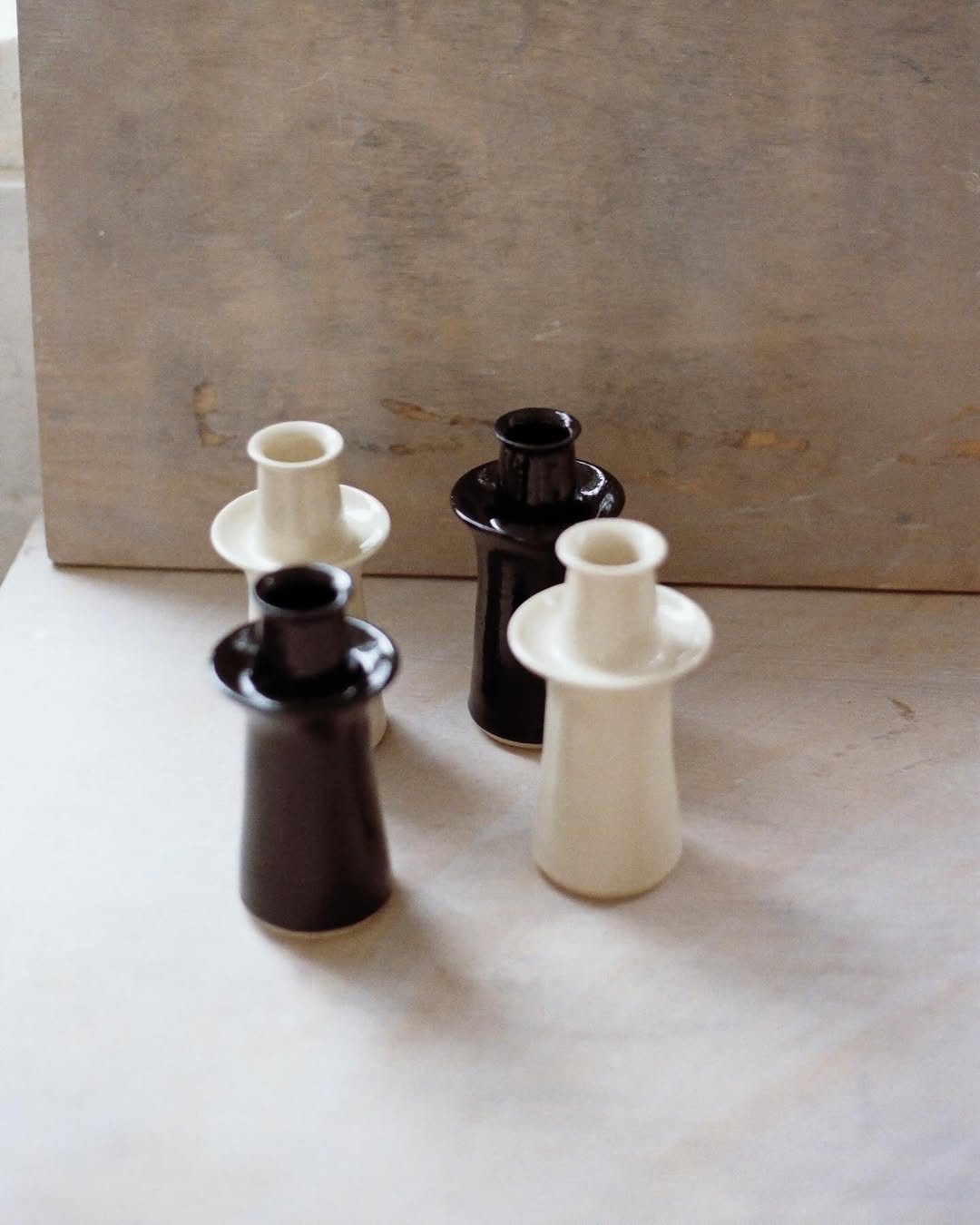
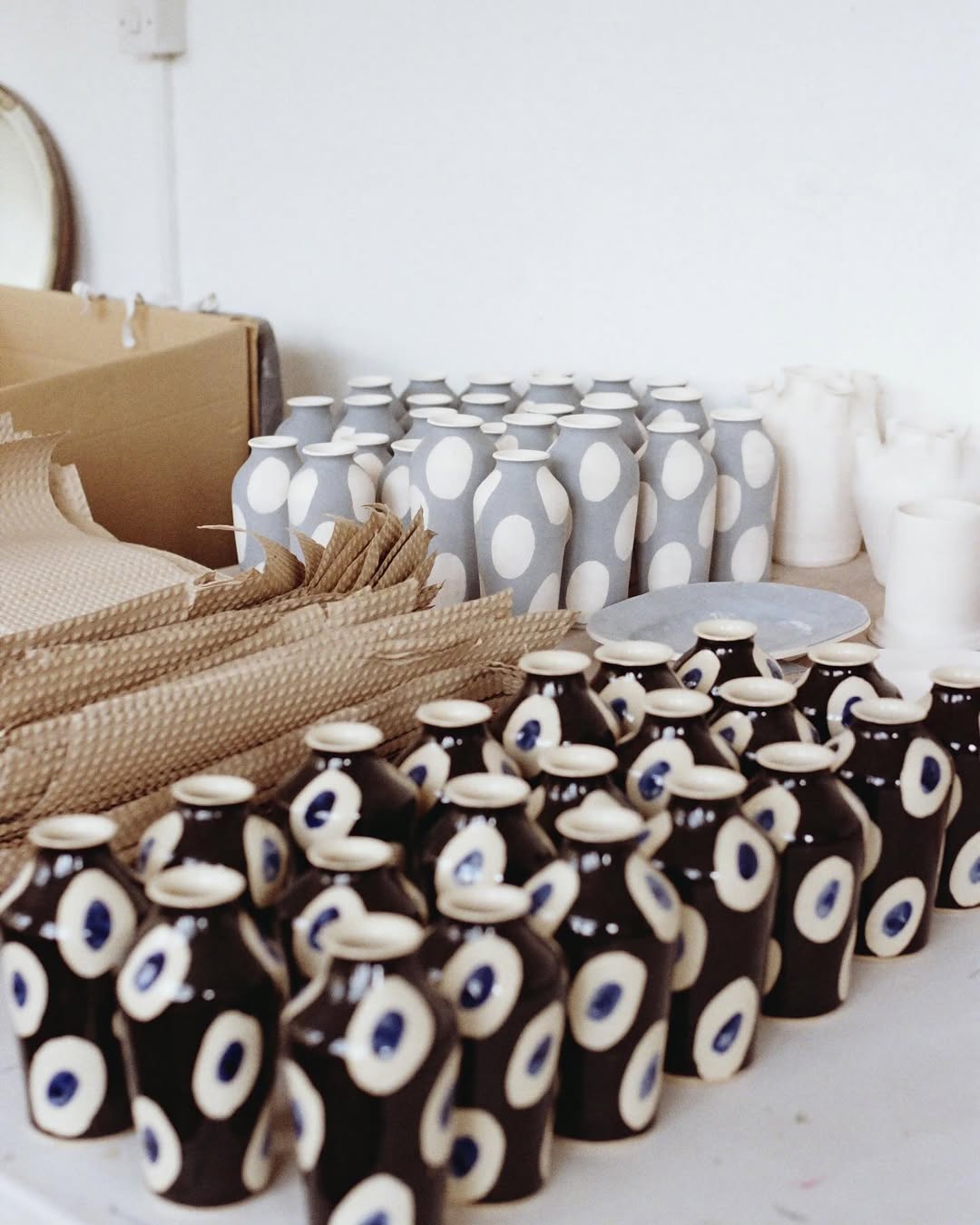
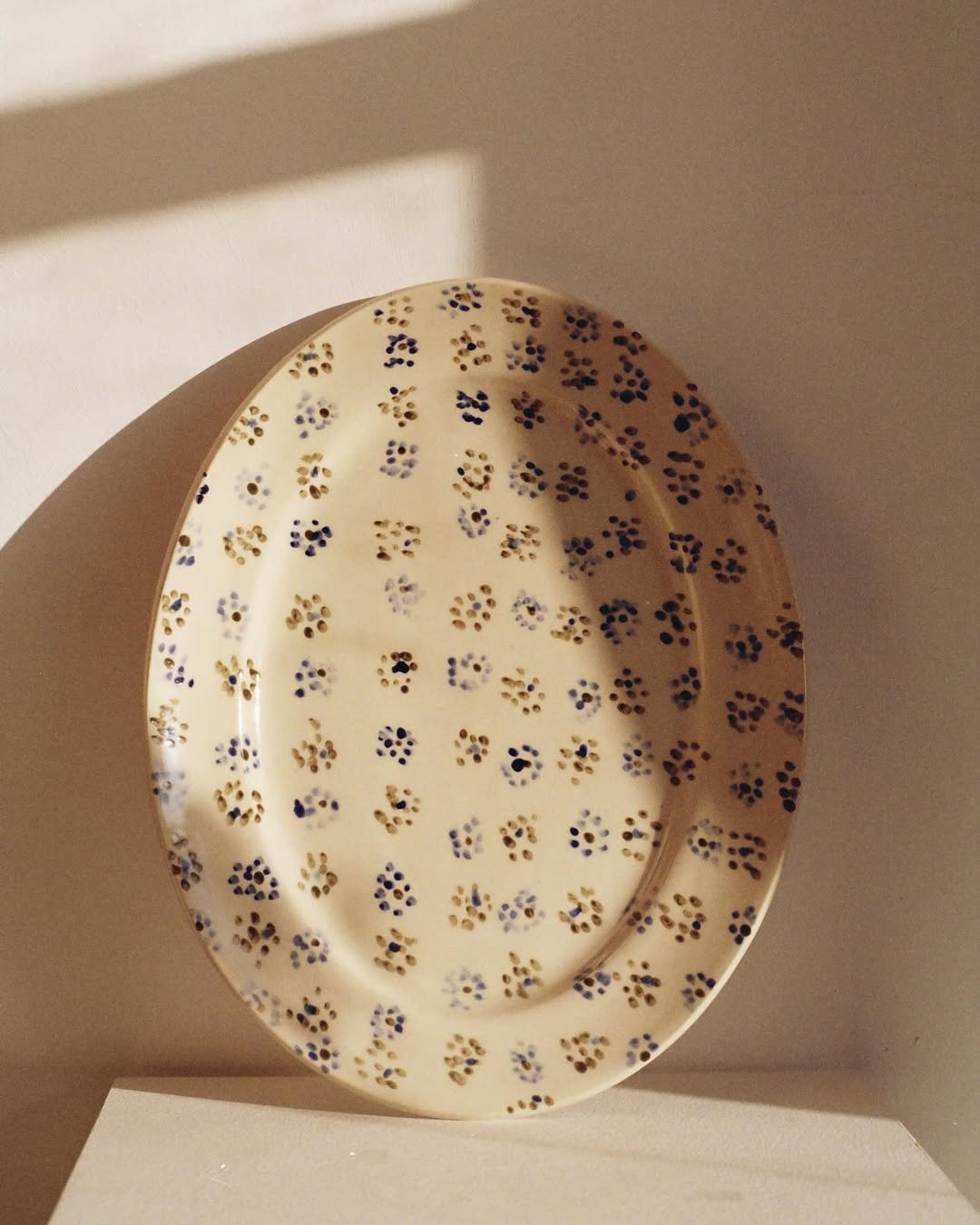
I use a small group of materials- the corner stones being metal oxides and a German white clay. All my slips/ colouring comes from this starting point. I think this helps tie everything together, whilst also ensuring I have minimal waste in the studio and can recycle as much of the materials I use as possible. This is important to me both environmentally, and in terms of giving myself boundaries whilst creating work- otherwise the options for what you can do in clay are limitless!
5. Can you tell us about a favourite piece you’ve created and the story behind it?
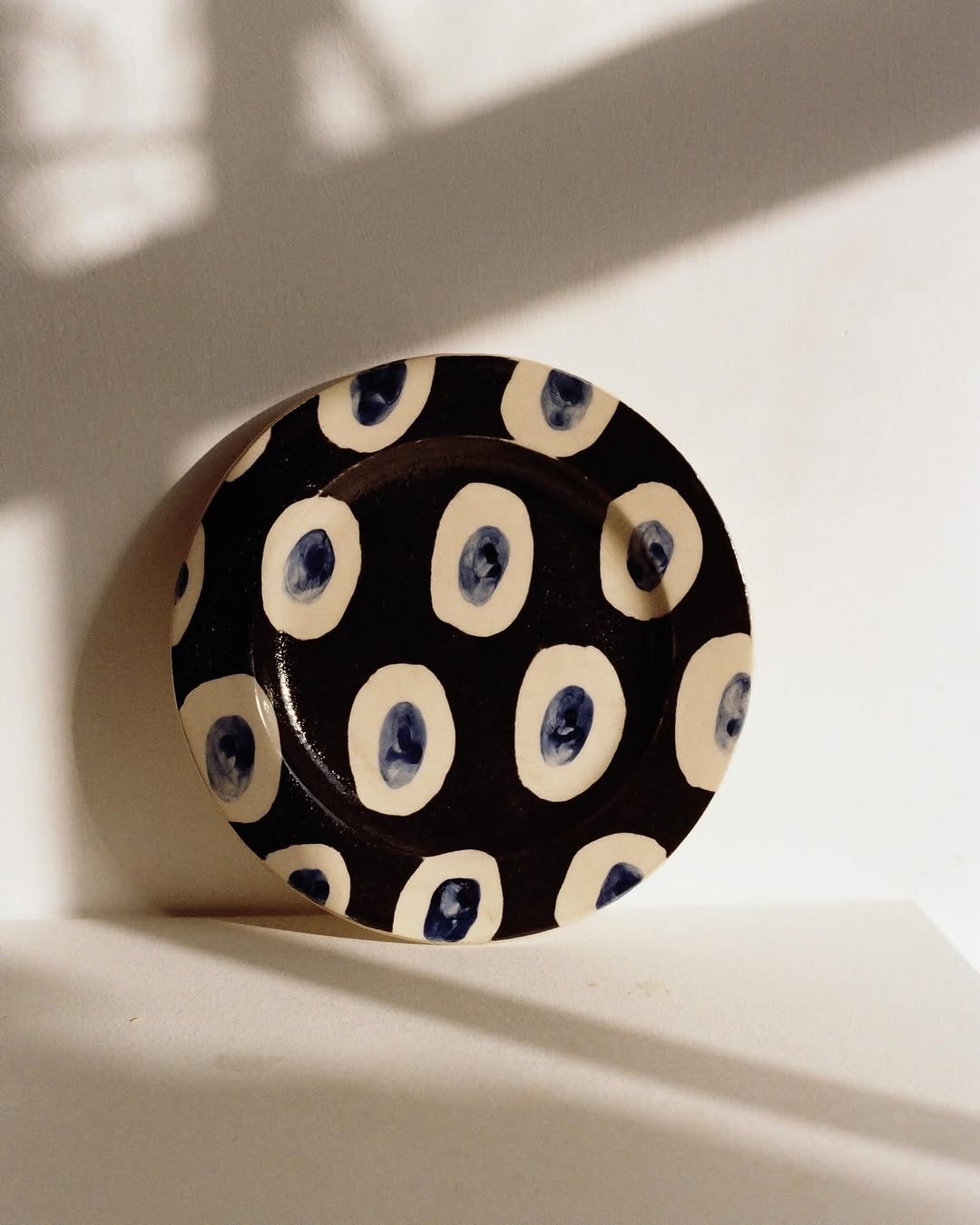
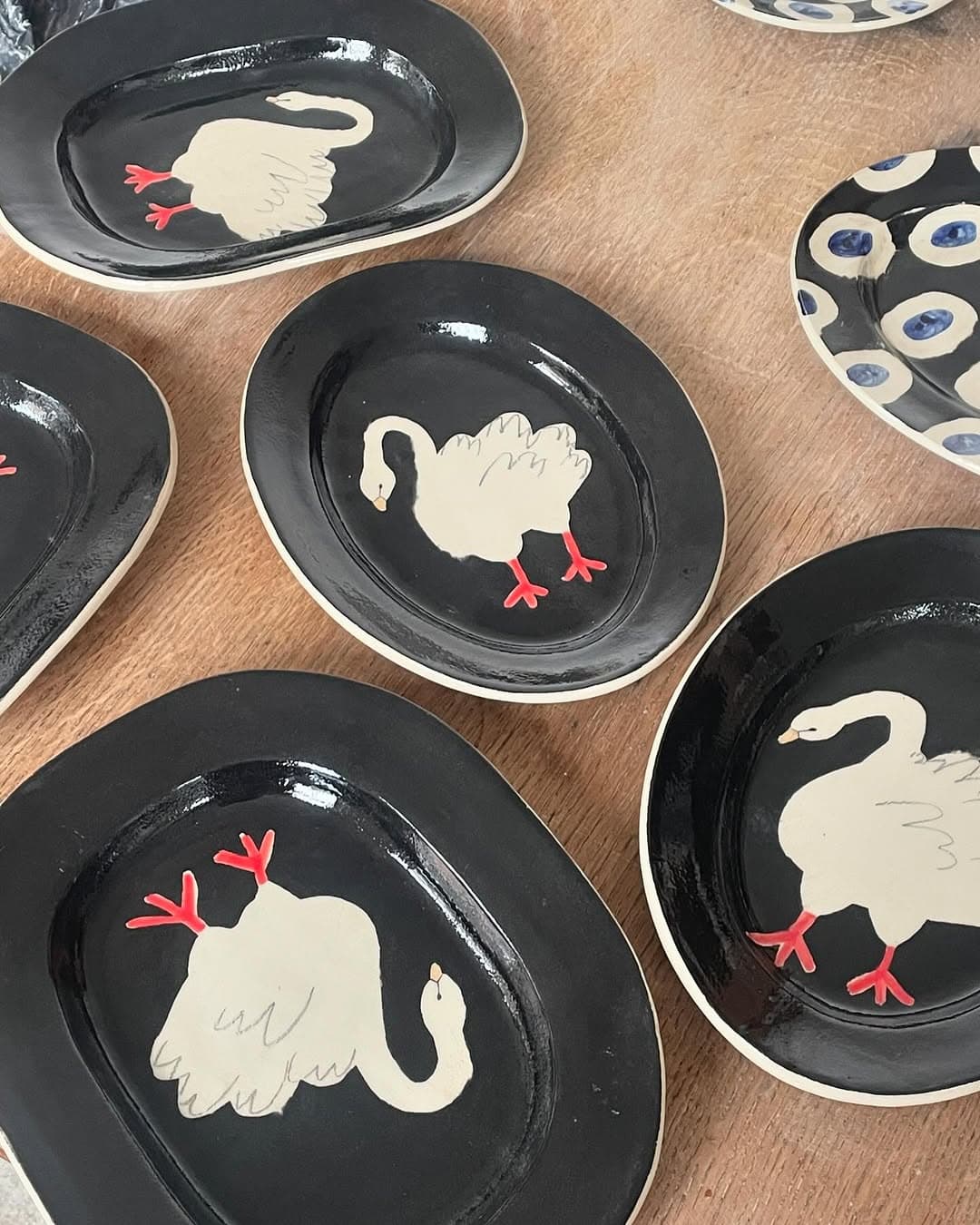
I particularly love working on repeated motifs, swans and grapes come up a lot in my work. There isn’t really a story behind it just comes from looking and processing things around me.
Creative process
6. What does a typical day in your studio or workshop look like?
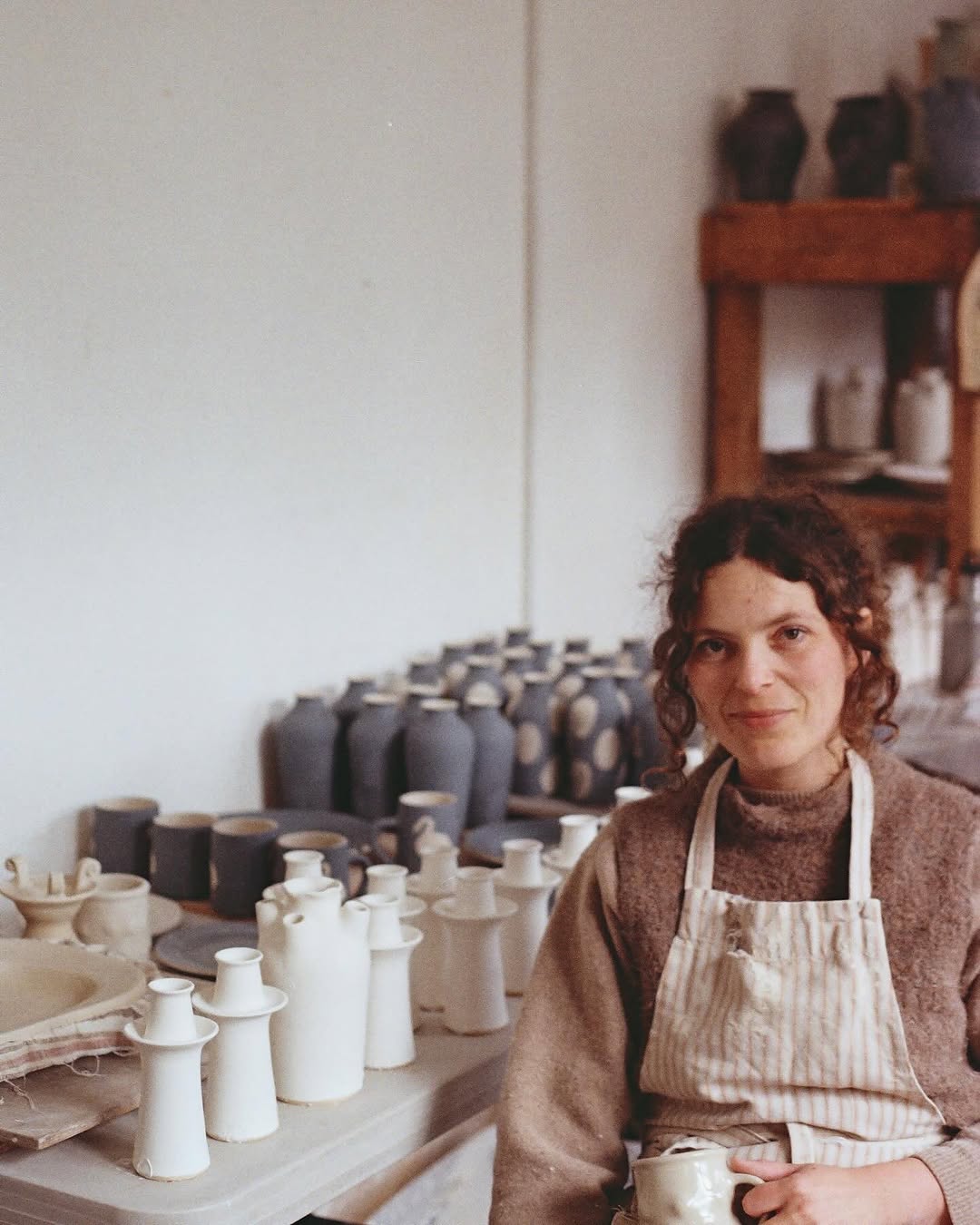
I normally have quite a mixed day as I do everything myself, from packing to admin to making. I start with a swim at the local pool on my way in, then usually make a coffee and a to do list/ check urgent emails. My studio looks over factory rooftops and I’m lucky to see a lot of sky from inside, but I try and get outside either to eat lunch or have a walk to my local Oxfam to get some fresh air! I try and group jobs together but a day can get quite hectic and full of different tasks/processes. In ceramics it’s super important how each day runs into the next in the studio, so it takes a fair bit of planning in regards to what you do on day one then day two etc. I normally end the day with a post office run or a trip to the kiln. I listen to music or podcasts pretty much all day long, if anyone has any recommendations please let me know!
7. Do you have any unique rituals or habits that help you stay creative?
Not unique- just looking at things! I try and spend as much research time as possible in museums, or doing first hand research through mudlarking. Research books are the next best and are endlessly inspiring to me.
8. How do you handle creative blocks? Do you have any strategies or tips for overcoming them?
Probably by doing the above! Seeing my favourite pieces in museum collections always makes me feel inspired again.
Challenges and successes
9. What’s the biggest challenge you’ve faced as a maker, and how did you overcome it?
Balancing my time in the studio and having a life outside of it! Still working on it, but this year I took most of January off and that definitely helped mentally reset me from the mindset of everything will fall apart if I’m not in the studio 24/7. When I have big deadlines I can end up being in the studio until gone midnight, every day of the week- it just leads to burnout.
10. What’s been your proudest moment or achievement so far?
Going full time about 4 years ago, and somehow managing to keep in going, is the thing I’m proudest of.
Inspiration
11. Where do you draw inspiration from for your work? What sparks your imagination and creativity?
Historical ceramics from around the world
12. Do you have a favourite artist, maker, movement, or tradition that has influenced your craft?
Too many, I particularly love 17th century London delftware and slipware though.
13. How does colour influence your practice; is it an important part of your process? Do you have a particular palette or favourites? Any go-to sources for colour inspiration?
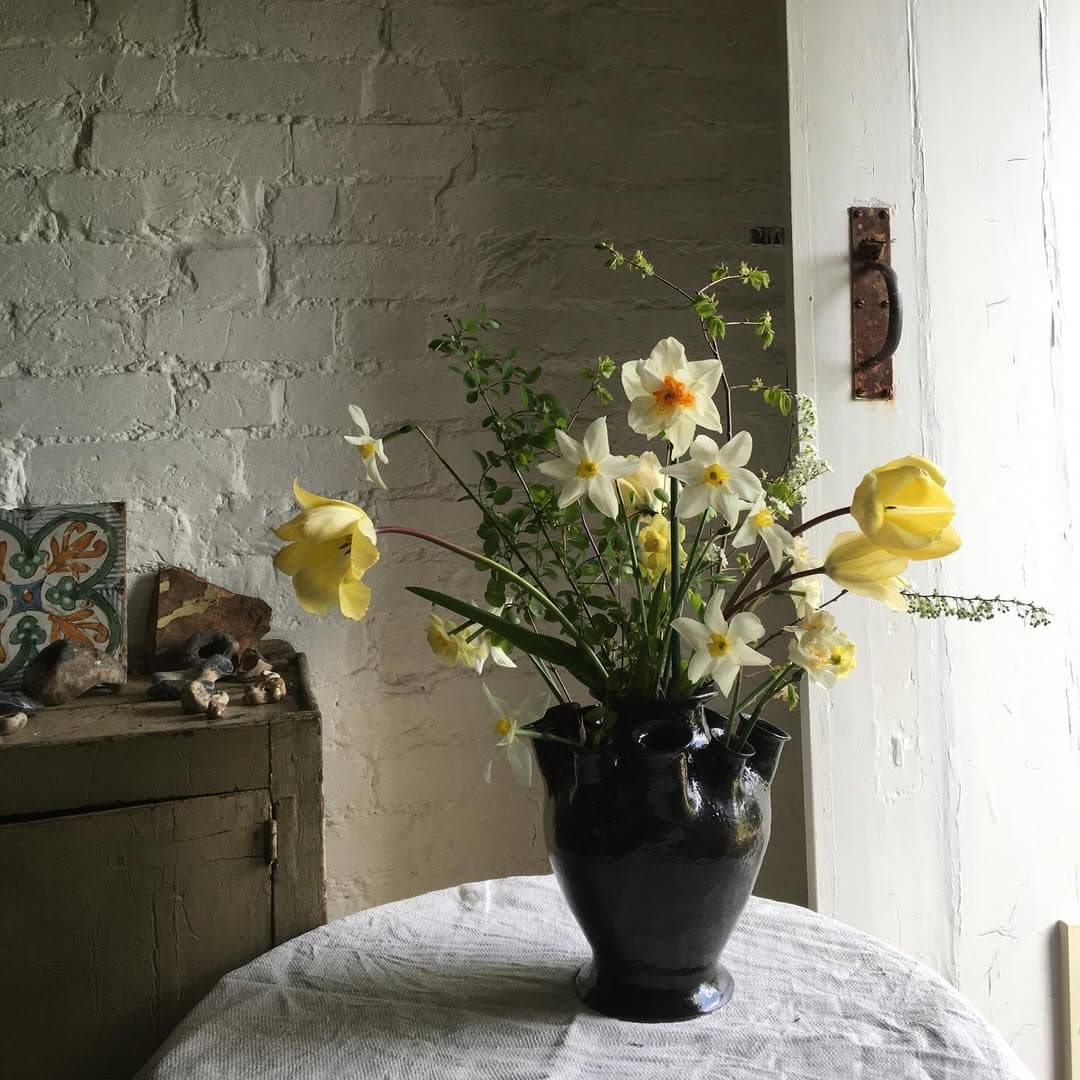
The colour palette I use is drawn directly from my materials- so cobalt blue, iron red/brown, an off-white clay, black slip. They are inherently natural and soft and go together, I somehow end up wearing all the same colours as my work too!
Perspectives and goals
14. What role does your environment play in shaping your creativity?
It informs how I choose materials and how I structure my business- I am very careful about making tests and aware that once ceramics are fired they last for thousands and thousands of years. I normally make pieces to order so I know that everything going in the kiln has a home to go to.
15. What do you want people to feel when they experience your work?
I’d like them to enjoy using, or living with my work
16. What are you currently working on, and what excites you most about it?
I am currently working on some special collaborations which I’m excited to share soon
Advice and reflection
17. What advice would you give to someone starting out as a maker?
Stay true to yourself, be thoughtful and considerate
18. If you could go back to the start of your career, what advice would you give your younger self?
I would try to give myself more confidence, I always have imposter syndrome!
Closing thoughts
19. If you could collaborate with any artist, past or present, who would it be and why?
Maybe Josef and Annie Albers as a duo. I’ve always been interested in art education and I admire how this feeds into their work. Plus they had a great research collection of objects at home, and their work is also great obviously.
20. Where can people find your work, and how can they support you?
They can find my work at alihewson.co.uk
And support my through signing up to my newsletter, or ordering through my shop — thank you!
Ali Hewson’s ceramics embody simplicity, timeless elegance, and thoughtful craftsmanship, creating pieces designed to be cherished for generations. Her commitment to sustainability and careful consideration of materials results in objects that effortlessly blend beauty and function.
Explore Ali’s latest collections and follow her creative journey:
Discover Ali’s Work:
Support Ali by subscribing to her newsletter and exploring her beautifully crafted ceramics online.
Meet the Maker: The Painterly, Joyful Patterns of Sophie Harpley
In this Q&A, we talk with Sophie Harpley about her inspiring journey back to art after a winding path, how working at the V&A Museum ignited her creative passion, and the courageous leap to pursue pattern design professionally.
Sophie shares insights into her distinctive painterly style, the joys of working by hand with gouache, and her belief in the importance of imperfections. We also discuss overcoming creative blocks, the influence of iconic female artists, and the empowering moments that have defined her career.
1. Can you tell us a bit about yourself and your artistic journey?
It has been a winding path! I’d been glued to a sketchbook since childhood but found it difficult to squeeze my creativity into the school-curriculum-shaped-mould and didn’t do very well there. Feeling like I’d ‘failed’ in something I loved at only 18 sent me off on an entirely different path for a while. I barely picked up a paintbrush for several years. But when it came to finding a job I was soon working in the most creative places I could find; an illustrated children’s book publisher, a fabric and homewares shop and a role at the V&A Museum.
Eventually the urge to be a hands-on creative again led me back to university. I think I had something to prove to myself and the education system. I gained an MA in a subject called ‘graphic arts’. I was on cloud nine amongst the facilities at UWE. I tried every kind of printmaking and I was specialising in pattern by the end of it. But I would even stay extra hours to try all the other subjects, like pottery and various textile classes, I couldn’t get enough.
The great thing about coming back to study a bit later is you really appreciate the opportunity and work very hard. I knew a lot more about who I was by that point and how much I believed that art mattered. It was almost therapeutic to be immersed in it all again. I think this experience put a little ‘fire in my belly’ too. It bothers me a lot just how many 18-year-olds are told that art is not a serious subject; or that there are no careers in it; or that you have to do it in a certain way to be ‘good enough’.
Henri Matisse famously said: ‘creativity takes courage’ and I feel it’s very true.
After finishing my MA, I went on to design for interiors brands. But I always kept up my illustration practice in my spare time. Early on I met a Buyer for John Lewis with some patterned kitchen linens I’d made. She said ‘you have about 5 SKUS and you need at least 30 to be stocked here.’ I didn’t have the capital to create all those products so she suggested I keep going with illustration commissions and creating stationery – so I did!
I also went freelance to allow more time for my art practice. When some floral cushions I made were picked up for a Chelsea Flower show styled stand and the cover of Country Living, I felt a little bit braver about growing a fabric range. But it wasn’t until the pandemic coincided with maternity leave, that I really stopped to reflect on what I was doing and decided to take my personal work more seriously.
Once my little one was at nursery I began making wallpapers and then fabrics by the metre. It’s going well and after dreaming for such a long time of painting patterns for a living, it feels pretty ‘pinch me’ to be doing it.
2. What inspired you to pursue your craft? Was there a defining moment or influence that sparked your passion?
Working at the V&A Museum. That was the period when I was really starting to think (to quote Mary Oliver) ‘what am I going to do with my one wild and precious life?’ I found it strangely frustrating to be working in such an awesomely inspiring place, but not a very creative role.
So I went to art school and the rest is history! But I do quite vividly remember a particular moment, looking around the V&A on my lunch break, and literally feeling giddy with the urge to make something. I really wanted to draw and paint and create things hands-on but I’d lost confidence. That’s when the idea to study again began to form.
Your craft
3. How would you describe your work in three words?
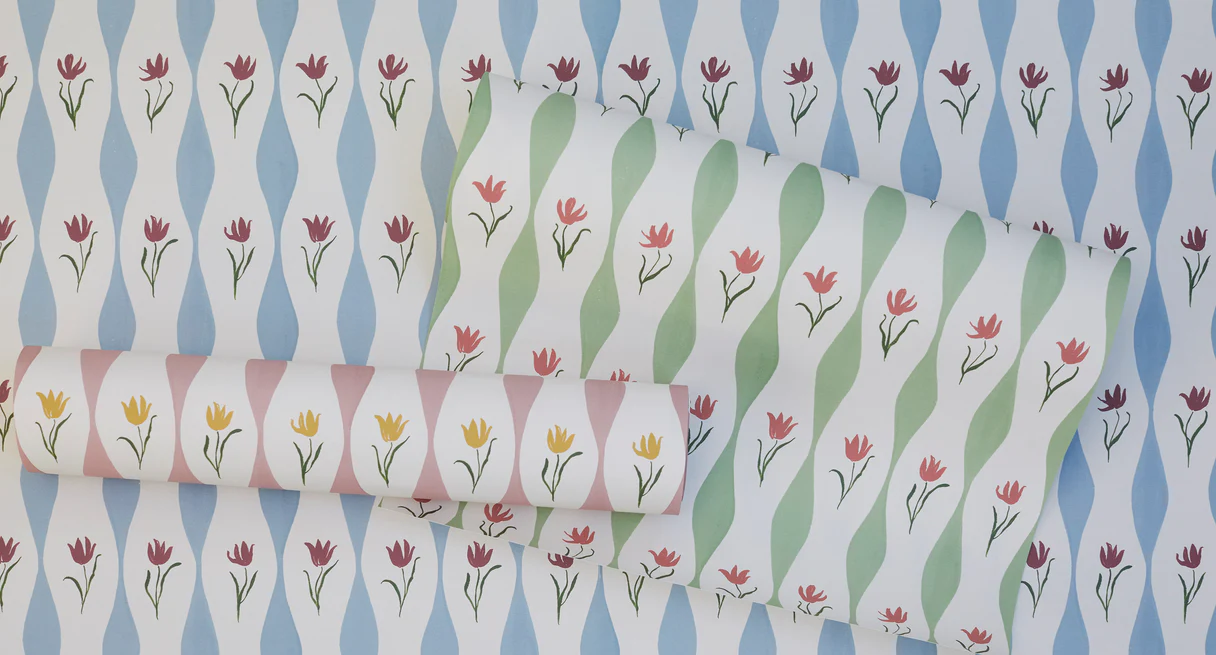
Relaxed, joyful, painterly.
4. What materials or techniques do you use, and why are they important to your process?
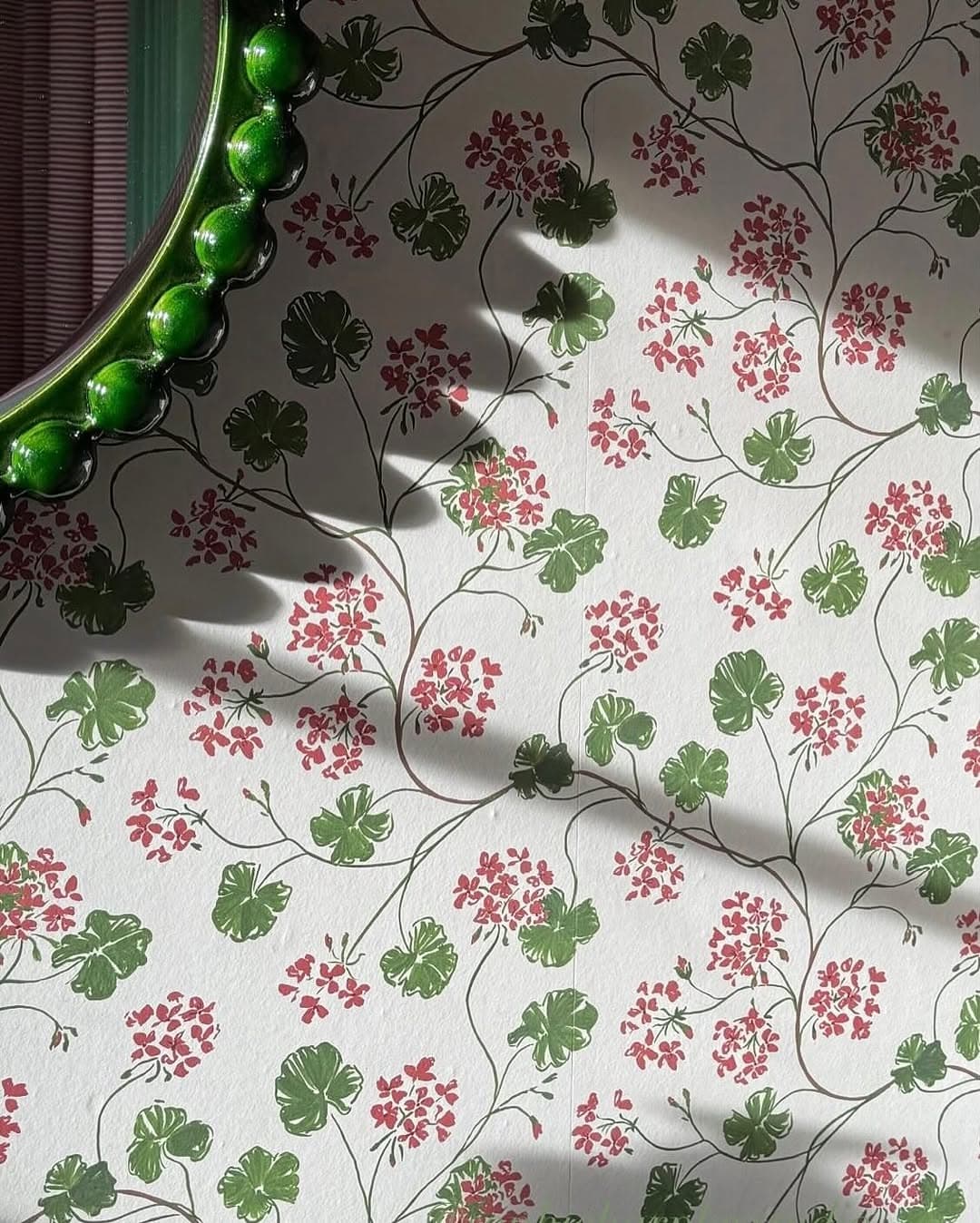
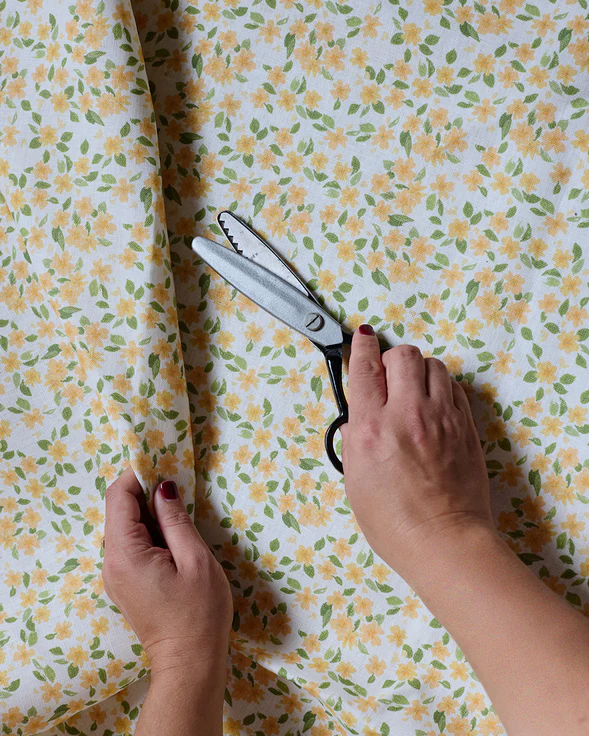
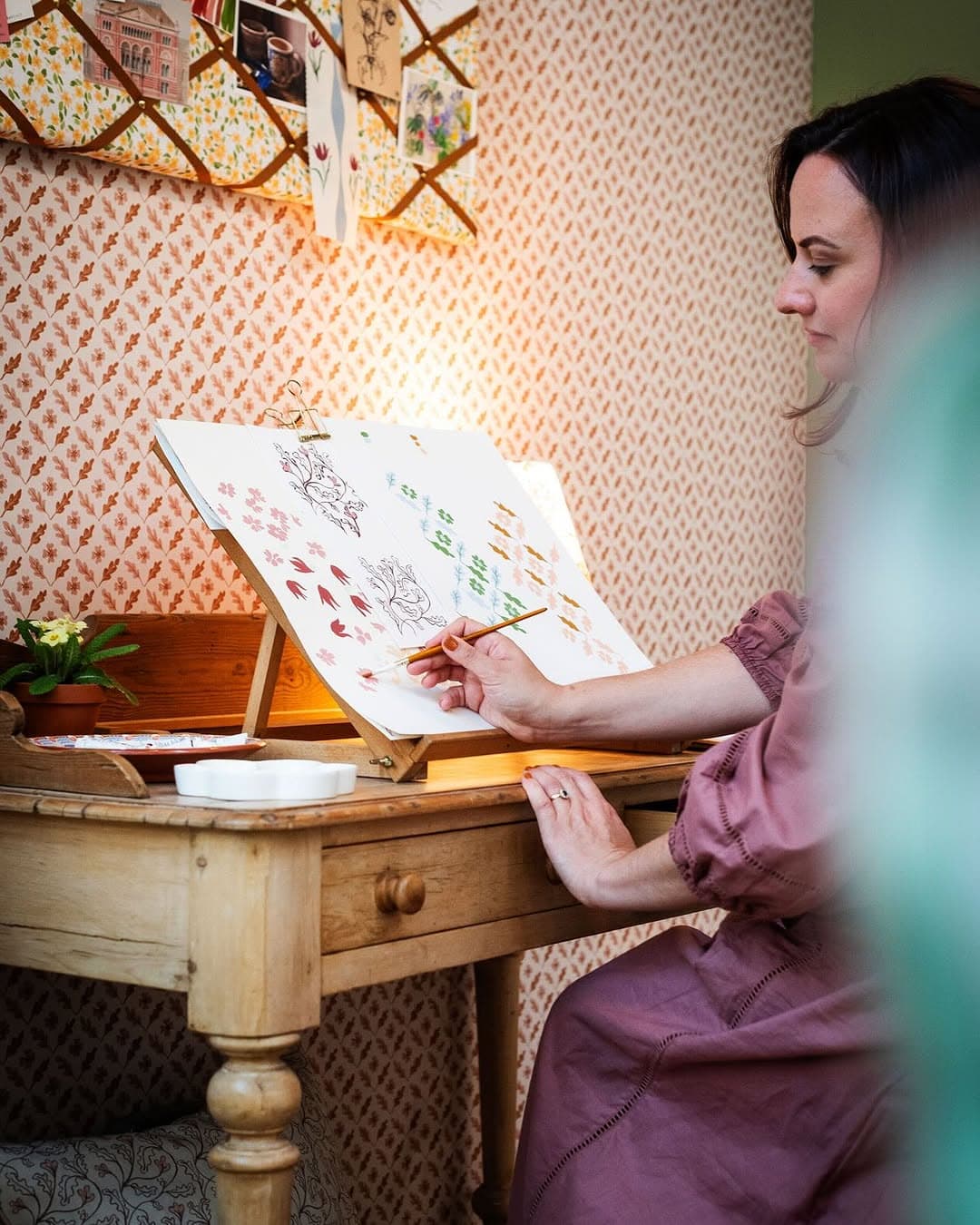
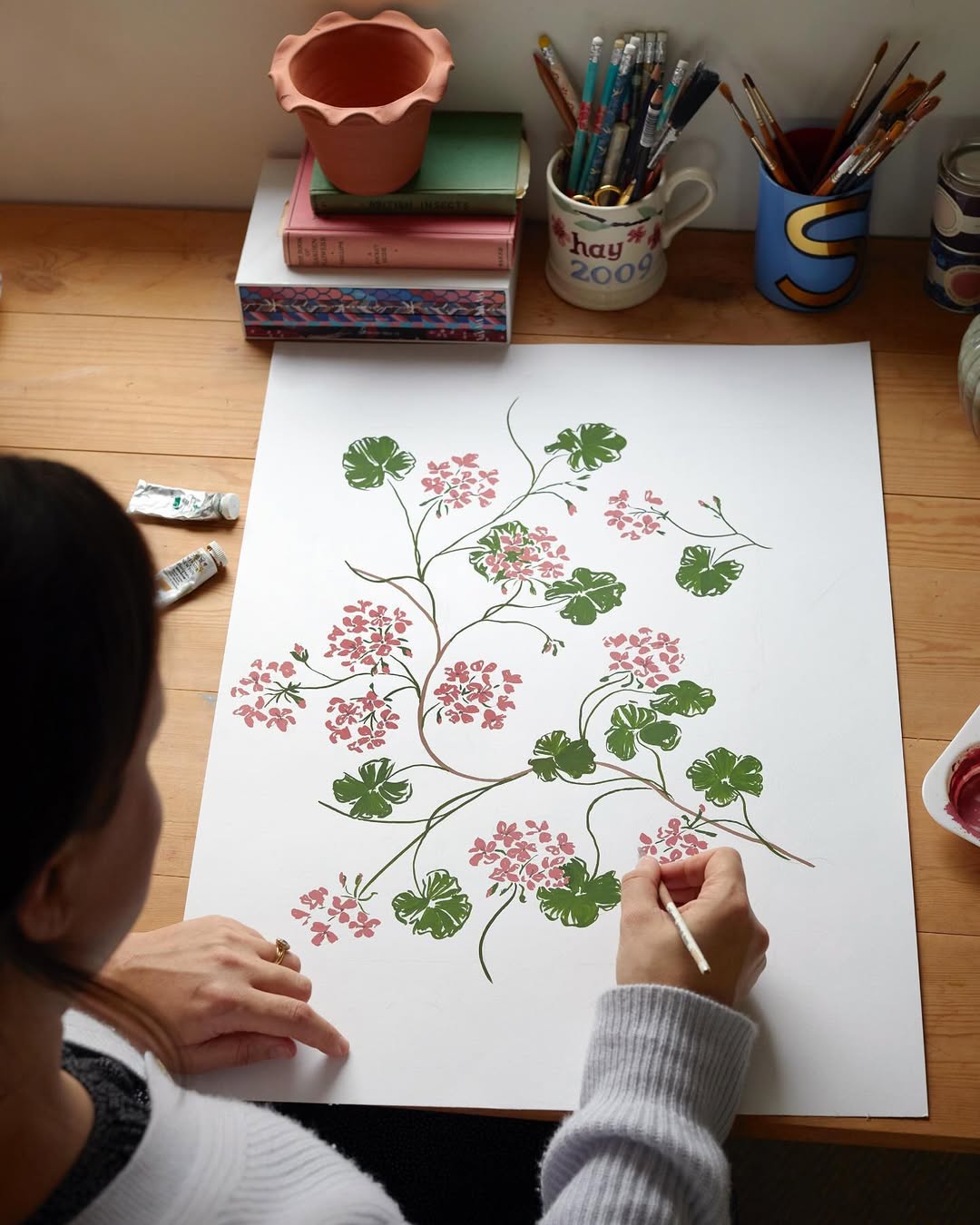
I paint every pattern using gouache and watercolour paper. I have quite an impulsive painting style and I try to let that lose quality come through, even when I have planned a design. I love imperfections and work that shows the human touch. It’s very intentional and important to me that you can tell my wallpapers and fabrics were designed by hand.
5. Can you tell us about a favourite piece you’ve created and the story behind it?
At university I made a huge printed tapestry, the whole thing was illustrated. Sometimes I long to do quite an ambitious one-off piece like that again. It was a bespoke piece inspired by a Georgian house which had so many decorative details.
Creative process
6. What does a typical day in your studio or workshop look like?
No typical day! When you wear all the hats, you just have to keep rotating between them; post-lady, accounts department, web designer, social media assistant – it’s not all glamourous. But of course my favourite days are the ones immersed in painting and design.
Once I’m in the zone, I’m there for months at a time and other things fall to the wayside, but it’s bliss. I lose track of time and just experiment with colours and motifs all day. It’s a very exciting process to be painting on paper and thinking ‘this could end up on someone’s wall’.
7. Do you have any unique rituals or habits that help you stay creative?
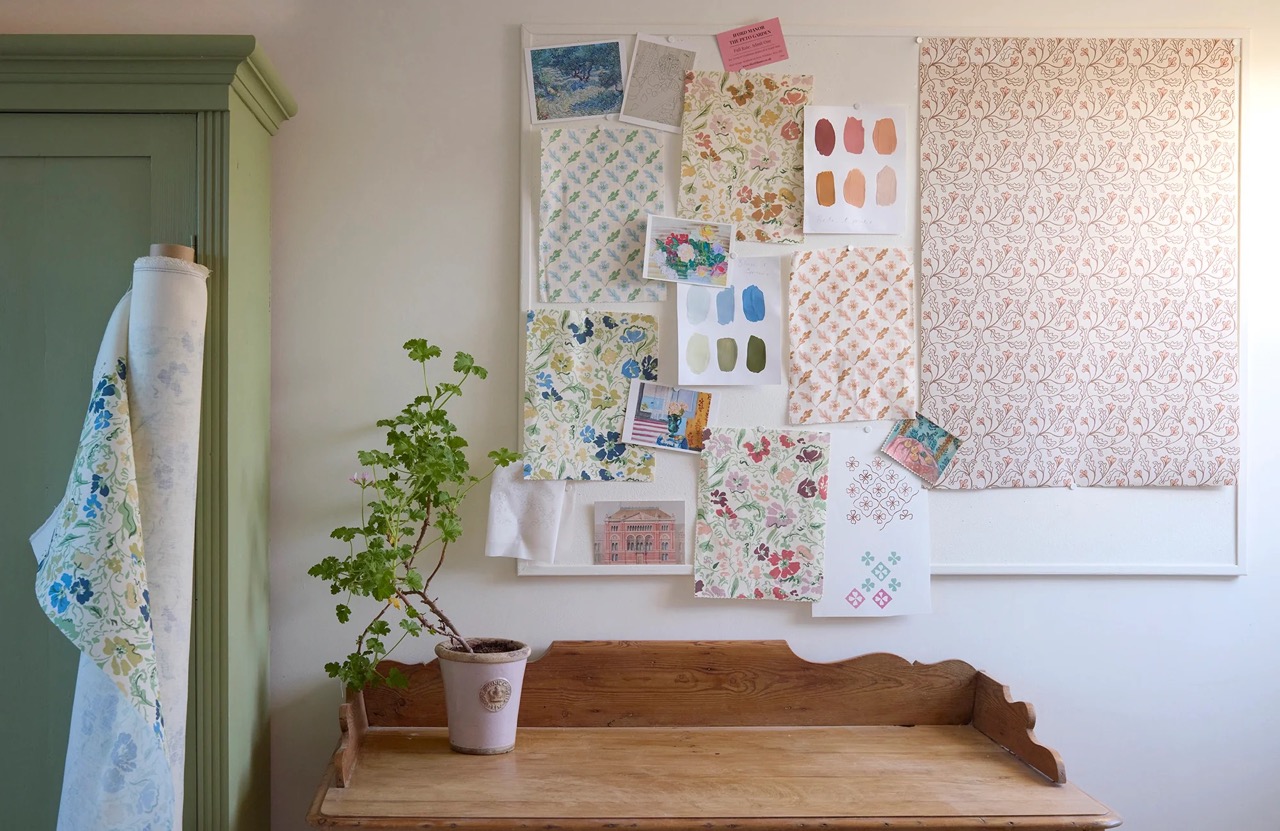
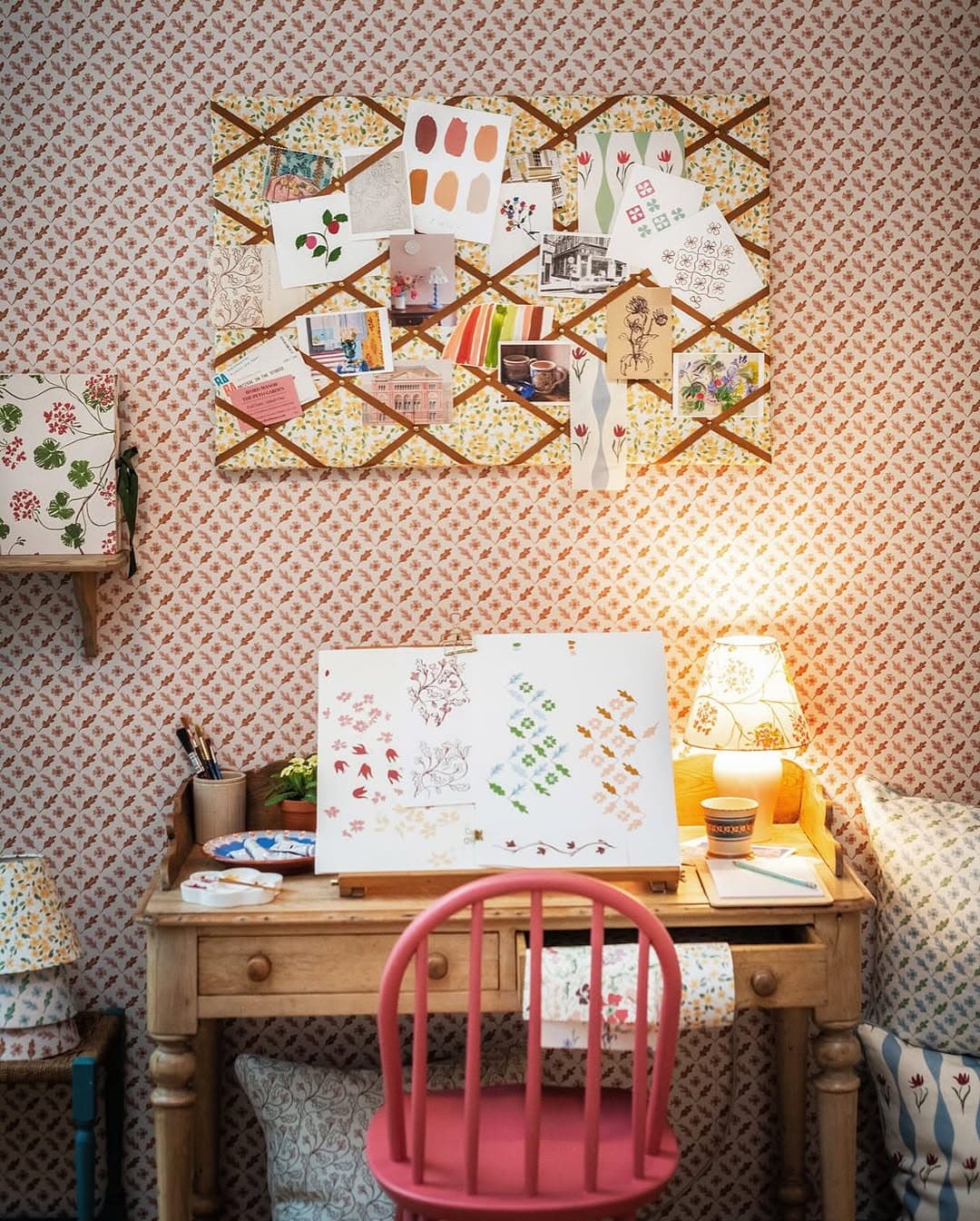
In love mood-boarding and it really helps me begin a project fresh. Just gathering all my recent inspirations and having a good look through; books, clippings, postcards etc.
8. How do you handle creative blocks? Do you have any strategies or tips for overcoming them?
Do something different. Staring at the page will never help. Exercise and a change of scene will. Also be kind to yourself, have a cuppa and a biscuit, call a friend. Then ask yourself some questions; who is this for, what is this about, why isn’t it working etc. Get some sleep and try again.
Challenges and successes
9. What’s the biggest challenge you’ve faced as a maker, and how did you overcome it?
It’s always challenging. The moments of imposter syndrome never go away but you get better at taming the beast. And the highs make it all worth it.
10. What’s been your proudest moment or achievement so far?
Winning a Homes & Gardens Award for my first wallpapers in 2023.
11. What’s your favourite quote you’ve ever heard about your work? Who said it, or what was the name of the publication?
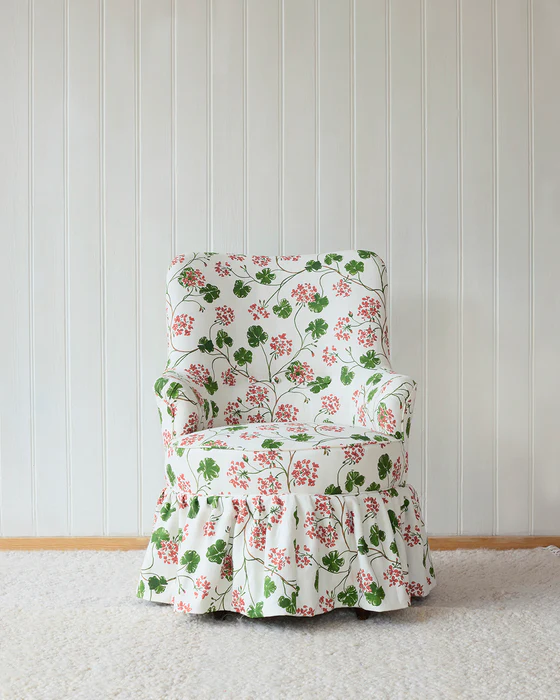
"Sophie's painterly creations are always uplifting and bring a smile."
- BRITISH VOGUE
Inspiration
12. Where do you draw inspiration from for your work? What sparks your imagination and creativity?
I see pattern inspiration everywhere from nature to antique textiles and modernist art. My favourite days are spent either in a gallery, antique market or walking in nature. As a result my work is a melting pot of ideas, bringing a fresh twist to tradition.
13. Do you have a favourite artist, maker, movement, or tradition that has influenced your craft?
I love the post-impressionist painters like Rauol Duffy, Matisse and Vanessa Bell. I love their free and spontaneous approach. I’m always drawn to the histories of women artists especially and of course those who specialised in pattern like Sonia Delaunay or Paule Marrot. But also just the fighting spirit required of people like Barbara Hepworth or Frida Kahlo to make it as female artists in the era they lived.
14. How does colour influence your practice; is it an important part of your process? Do you have a particular palette or favourites? Any go-to sources for colour inspiration?
I do have quite a distinct colour palette and it’s been described by others variously as; muted, tertiary, jewel-tone… I guess it’s anything but primaries for me! I like to mix and make interesting colours and every colour is a bit unusual – off-white, reddish-pink, muddy-yellow. I’m a colour tinkerer.
Perspectives and goals
15. What role does your environment play in shaping your creativity?
I’m a visual sponge, so everything I see influences me. Yes I think surroundings are vital, I think it changes everything actually. I wish I had a bit more space! I always feel like the more space I have I will just fill it – so my work will get bigger and more ambitious.
By default of living in London, space is at a premium. I love my studio and it’s very homely and full of things that inspire me, but you can never give an artist too much of two things; light and space. Oh and peace and time! So that’s four… There was never a truer statement than Virginia Woolfe and ‘a room of one’s own’.
16. What do you want people to feel when they experience your work?
Joy, peace, pleasure, a little nostalgia and positivity.
17. What are you currently working on, and what excites you most about it?
Aside from the thrill of launching makers made with my wonderful co-founding artists?! I’ve also just launched a new little collection of printed papers and linen called Evolve. I’m taking it to show at London Design Week (March 2025) which is exciting if a little nerve wracking. But I hope to do myself proud!
Advice and reflection
18. What advice would you give to someone starting out as a maker?
If you are passionate about something, keep going, keep learning and don’t let anything stop you. There are no wrong moves only experiments.
19. If you could go back to the start of your career, what advice would you give your younger self?
Your mum is right, you should go to Falmouth School of Art.
Closing thoughts
20. If you could collaborate with any artist, past or present, who would it be and why?
It would be fun to step back in time into Charleston Farm House and help Vanessa and Duncan paint the lot from top to bottom.
21. Where can people find your work, and how can they support you?
I would love to work on more bespoke projects and perhaps collaborate with a paint company.
Sophie Harpley’s designs blend relaxed charm with vibrant colours, bringing joy and a sense of timeless nostalgia to everyday spaces. Her painterly approach and distinctive palettes offer fresh takes on tradition, creating textiles and wallpapers that uplift and inspire.
Explore Sophie’s latest collections and follow her creative journey:
Support Sophie by exploring her bespoke collections, and stay tuned as she takes her work to exciting new platforms like London Design Week.
Meet the Maker: Hal Haines' vibrant approach to visual storytelling
In this Q&A, we chat with Hal Haines about his transition from photography into multidisciplinary making and growing his vibrant world of ceramics, lighting and paintings. Hal shares insights into his creative process, the influence of personal experiences on his work, and the joy of combining different materials and techniques.
We discuss the challenges of valuing one’s work, finding inspiration in everyday moments, and the importance of authenticity in a rapidly changing creative landscape.

1. Can you tell us a bit about yourself and your artistic journey?
I have always been creative, and when I got to the age where I had to specialise in a particular area – as a profession – I found it incredibly hard to choose something. I worked as a photographer for 8 years, mostly for travel and lifestyle projects, and I loved the documentary/visual storytelling part of that work, as well as manipulating light and colour. Though I continued to draw and paint, and occasionally work in 3D during this time, it wasn’t until the covid lockdowns that I had an opportunity to really explore this side of my practice.
Picking up a camera begins the artistic journey into photography. As a medium it’s quite accessible, solely down to the individual to make something of it. Pursuing a craft is much more complicated; you need access to facilities and materials and some sort of instruction. You also need a lot of time, and freedom to play, to make mistakes and the grace to learn from them. The first three months of the pandemic gave me time, for the first time in a very long time.
2. What inspired you to pursue your craft? Was there a defining moment or influence that sparked your passion?
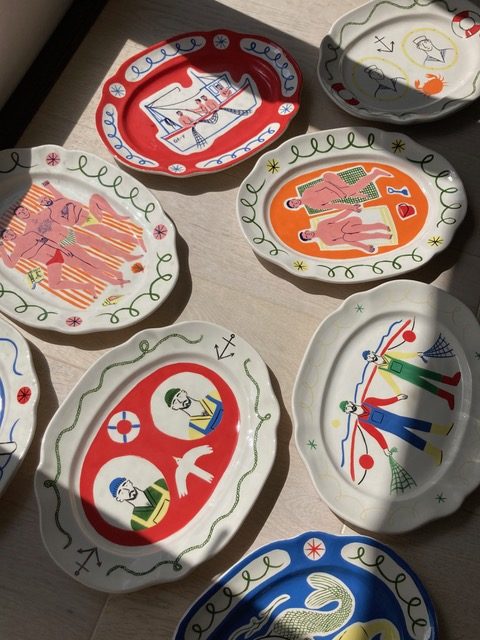
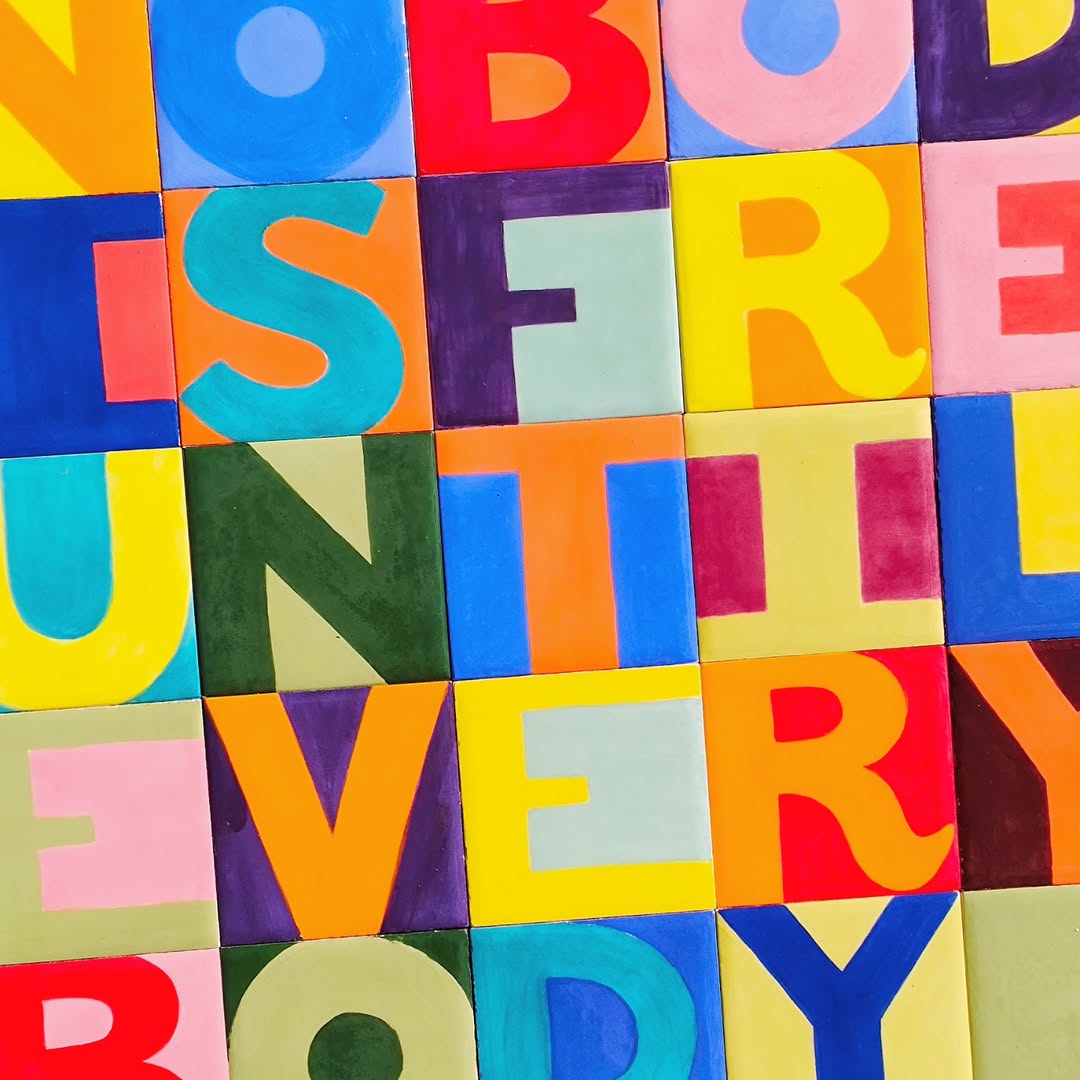
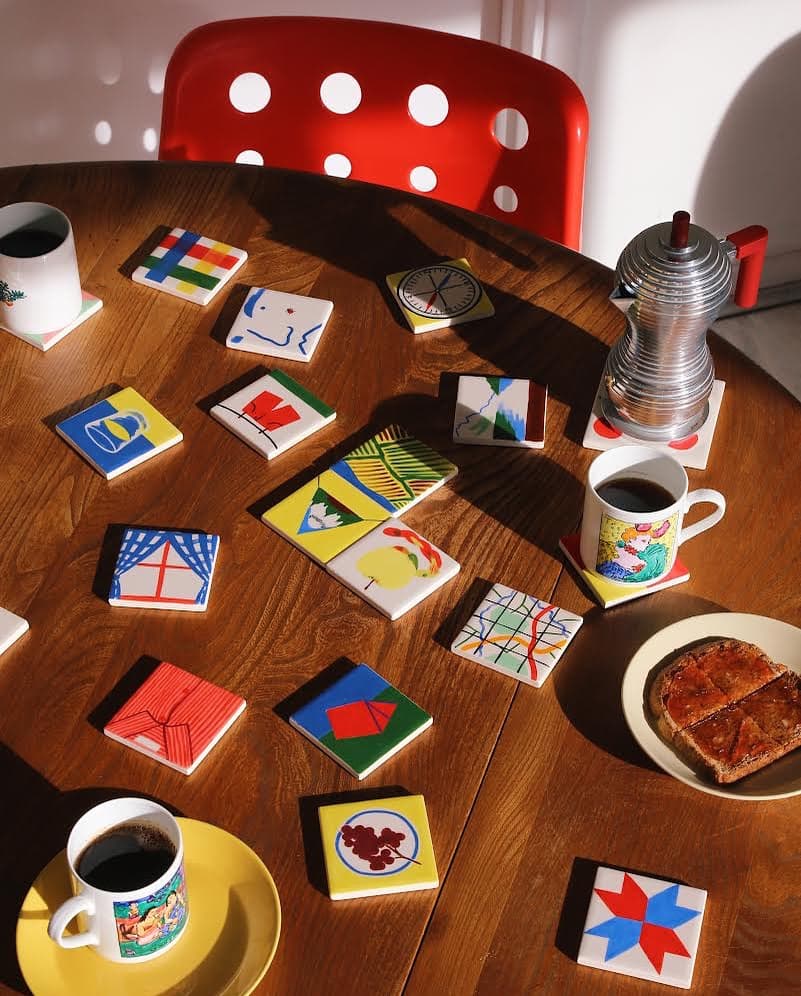
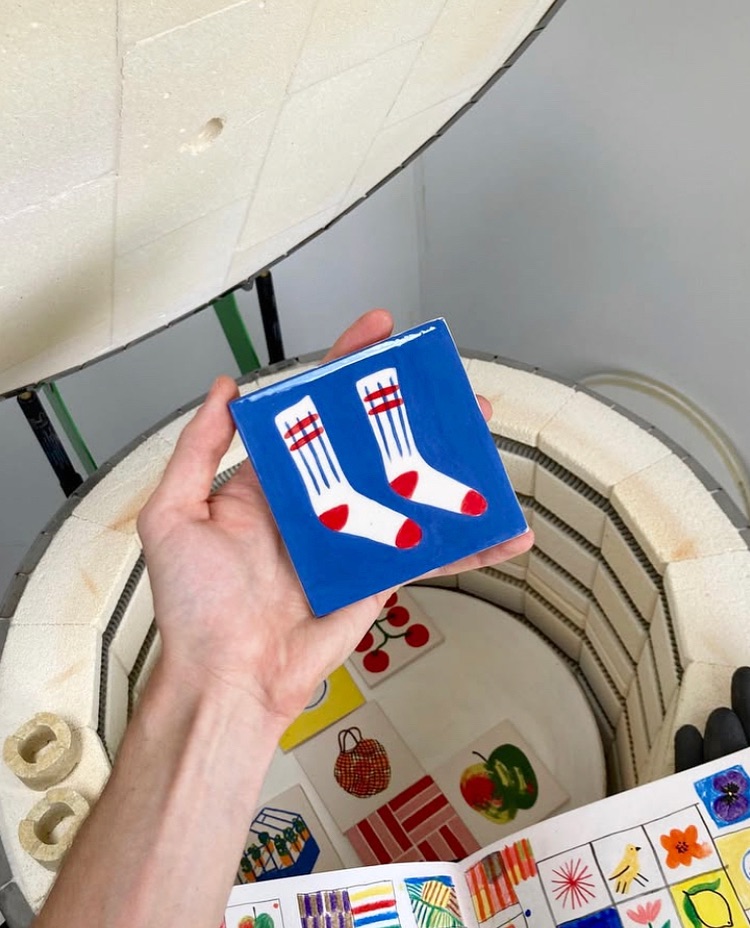
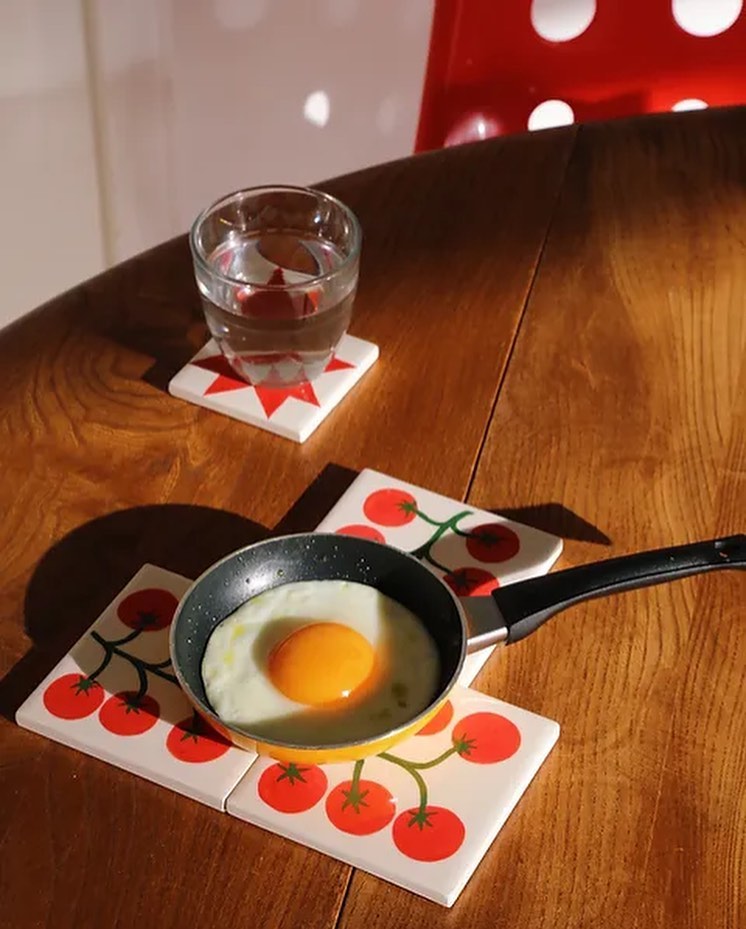
I’m still not sure I would define myself by one particular craft or process. I use different techniques as a way of expressing my ideas or telling stories, usually influenced by my own life experiences. Queerness, nature, pop culture, human connection, food and drink, I like to explore a wealth of topics. The visual language I have developed: vivid, playful imagery and a combination of textures and colours, is woven through all the pieces I make, whether they are ceramic, wood, textile or a painting on paper.
Your craft
3. How would you describe your work in three words?
Charming, Vibrant, Familiar
4. What materials or techniques do you use, and why are they important to your process?
Ceramic, Paint, Wood, Metal, Fabric, Pencil, Crayon, Paper, they are all important, individually and in the context of each other.
5. Can you tell us about a favourite piece you’ve created and the story behind it?
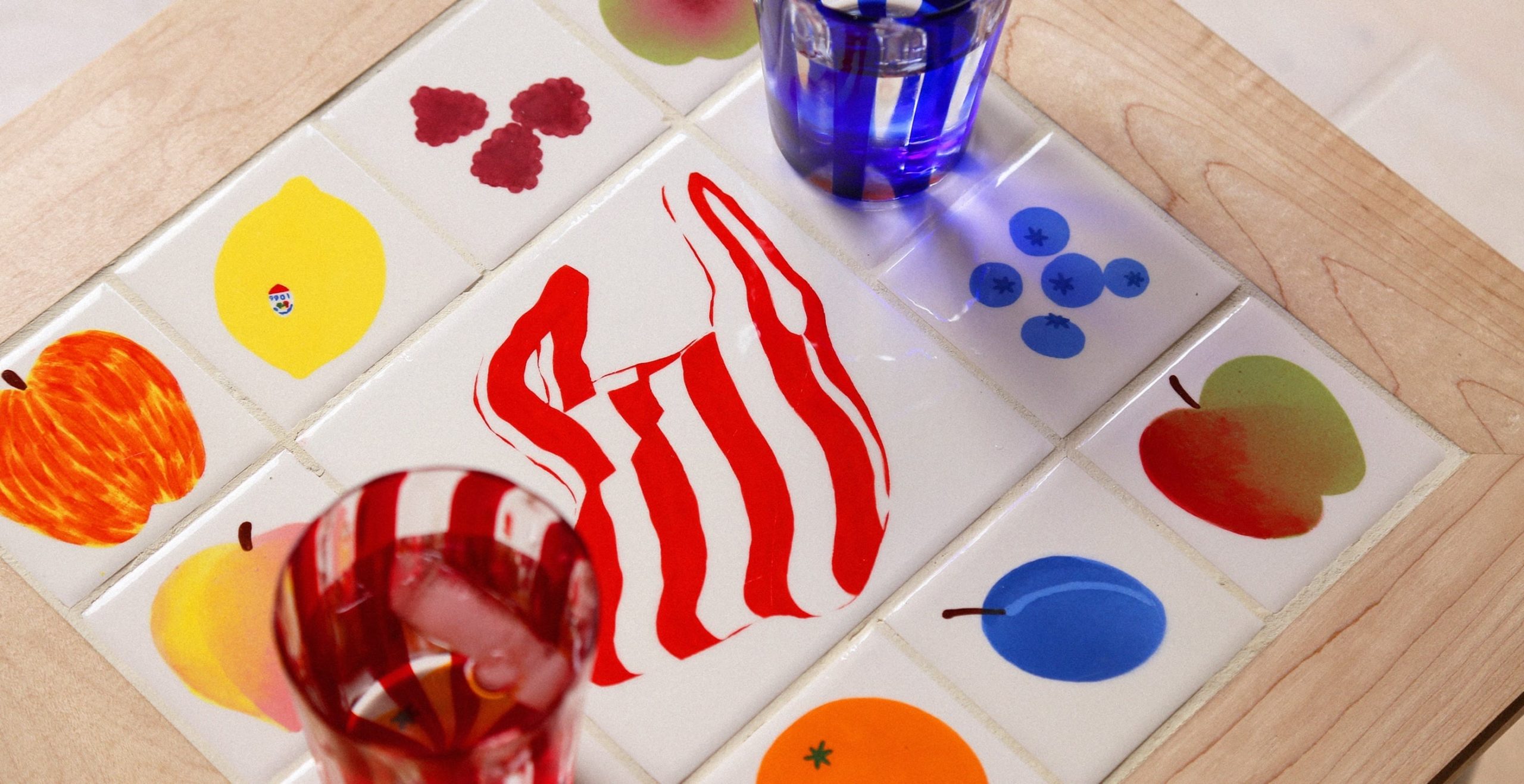
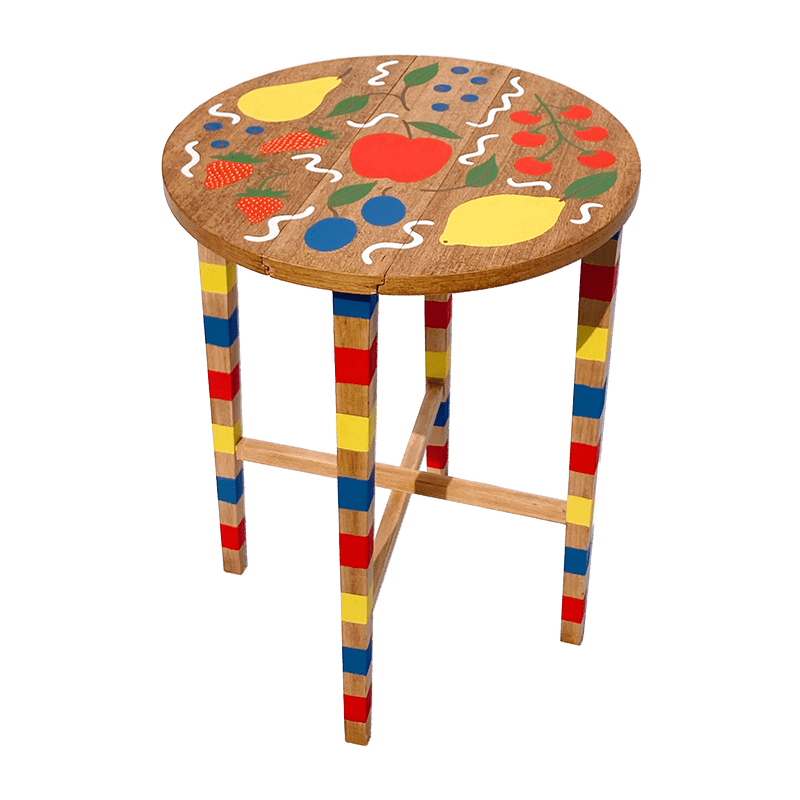
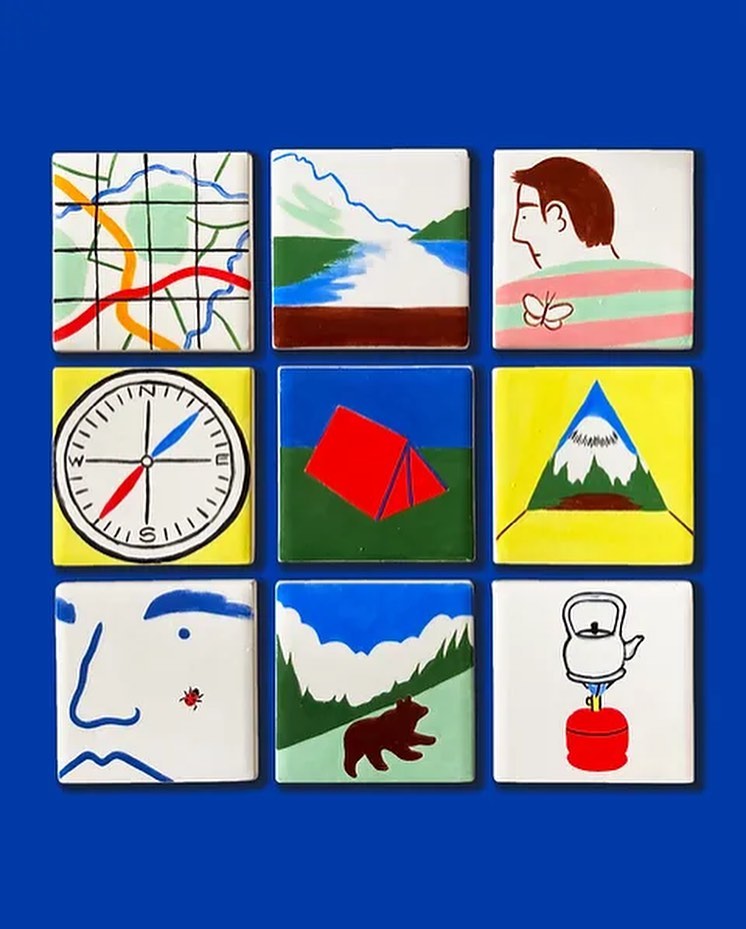
The ‘Fruity’ table I made in 2023, for which I painted and waxed a midcentury end table, was one of two tables I painted for a show of my work at Pentreath and Hall; I wanted to make some larger scale pieces for the window of the pop-up space. It’s still a favourite of mine because it felt like a pivot in my creative process, a marriage of several techniques I had been exploring, and a foray into functional furniture pieces. Since then, combining materials like wood with ceramic, or paint with fabric, has been engrained into how I approach new projects.
Creative process
6. What does a typical day in your studio or workshop look like?
I have decided to try and stick to three studio days a week and reserve the other two (or sometimes four) for the business side of my work. A typical studio day looks something like this:
Sit down, stand up, make a cup of coffee, sit down, scratch head, put on a podcast, paint in hyperfocus for three to four hours while snacking from my lunchbox intermittently, leave the studio for a period of time, return with another coffee, procrastinate for ten to fifteen minutes, work in hyperfocus for the rest of the day.
7. Do you have any unique rituals or habits that help you stay creative?
Audio is essential for me. Music or podcasts, occasionally reality TV, if I forget my earphones it’s all over for me. I find rituals are extremely important, but I often shift from one to another. I will do something habitually for a period of time and then move on. I used to burn a particular scent of St Eval candle in my studio every day, or drink a specific Pukka tea infusion (one with fennel), or binge a full podcast series back to back from beginning to end.
8. How do you handle creative blocks? Do you have any strategies or tips for overcoming them?
Do something else. Instead of sitting at my desk for hours in suspense I just step back, whether it’s to create something different, or work on another project, or in fact just take the rest of the day off and possibly go to the pub. My justification for this is: if I was an athlete and I had a foot injury, I wouldn’t try to keep running, would I?
Challenges and successes
9. What’s the biggest challenge you’ve faced as a maker, and how did you overcome it?
There are lots of challenges to face, it can be pretty gruelling at times, but I think the biggest one for me has been knowing my worth. Making something and putting it out into such a vast, varied market is a challenge indeed. There are so many tiers of maker, from day one hobbyists to established artisans. You have to assert yourself somewhere – and hope that consumers agree! The same goes for working with brands, or galleries, or collaborations: knowing the value of your artistry is essential.
10. What’s been your proudest moment or achievement so far?
I did an exclusive collection of pieces for Paul Smith at the very start of 2021, a couple of months after launching my website, and I’m still so proud of that project. I think because it was such an affirmation at the very beginning, it gave me the confidence to just go for it thereafter.
11. What’s your favourite quote you’ve ever heard about your work? Who said it, or what was the name of the publication?
“Please let me know when you get this in!! Love”
- Amy Sedaris
Inspiration
12. Where do you draw inspiration from for your work? What sparks your imagination and creativity?
Inspiration is truly everywhere. I am always looking, and recording with my camera or in a notebook. It can really be anything, from a conversation I had to an old cushion in a charity shop, to my allotment in springtime or vintage supermarket packaging.
13. Do you have a favourite artist, maker, movement, or tradition that has influenced your craft?
I love colourful, mid century visual communication – illustrators like Dick Bruna and Richard Scarry, or graphic design by Paul Rand – as well as modern 90s interiors; metal, glass, pops of colour, ambient lighting.
14. How does colour influence your practice; is it an important part of your process? Do you have a particular palette or favourites? Any go-to sources for colour inspiration?
I think it’s fair to say that colour is an essential part of my process. Though my work is very vibrant, I definitely have a palette I stick to. I like to keep my colours clean, without a lot of mixing between, and only have one red, one yellow, one orange, a light green and a dark green, sticking to primary, secondary and occasionally tertiary groups. The colours I use in my ceramics are limited because they are caused by chemical reactions, but these tend to be the colours I replicate in my paintings and prints as well.
Perspectives and goals
15. What role does your environment play in shaping your creativity?
I’m neuro divergent, so my relationship with my environment can be rather complex. I’m overly sensitive to light and sound, so I can get very distracted and overwhelmed if the conditions aren’t conducive. Sometimes I feel like I might explode, often just because I can’t find my earphones. Other times I think I must seem ridiculous for how enthusiastic I can be for the right sounds or the right light, or colours, or shapes. A nice beam of sunlight or a song produced by
William Orbit is like drinking a Redbull! I also like to surround myself with things that are visually stimulating – reflective silver surfaces, complimentary colours, my River Cafe Cookbook or Alessi kettle get double points.
16. What do you want people to feel when they experience your work?
I often get told that my work feels nostalgic, which I like. I guess I’m trying to create something timeless, that feels fresh and exciting, but also familiar.
17. What are you currently working on, and what excites you most about it?
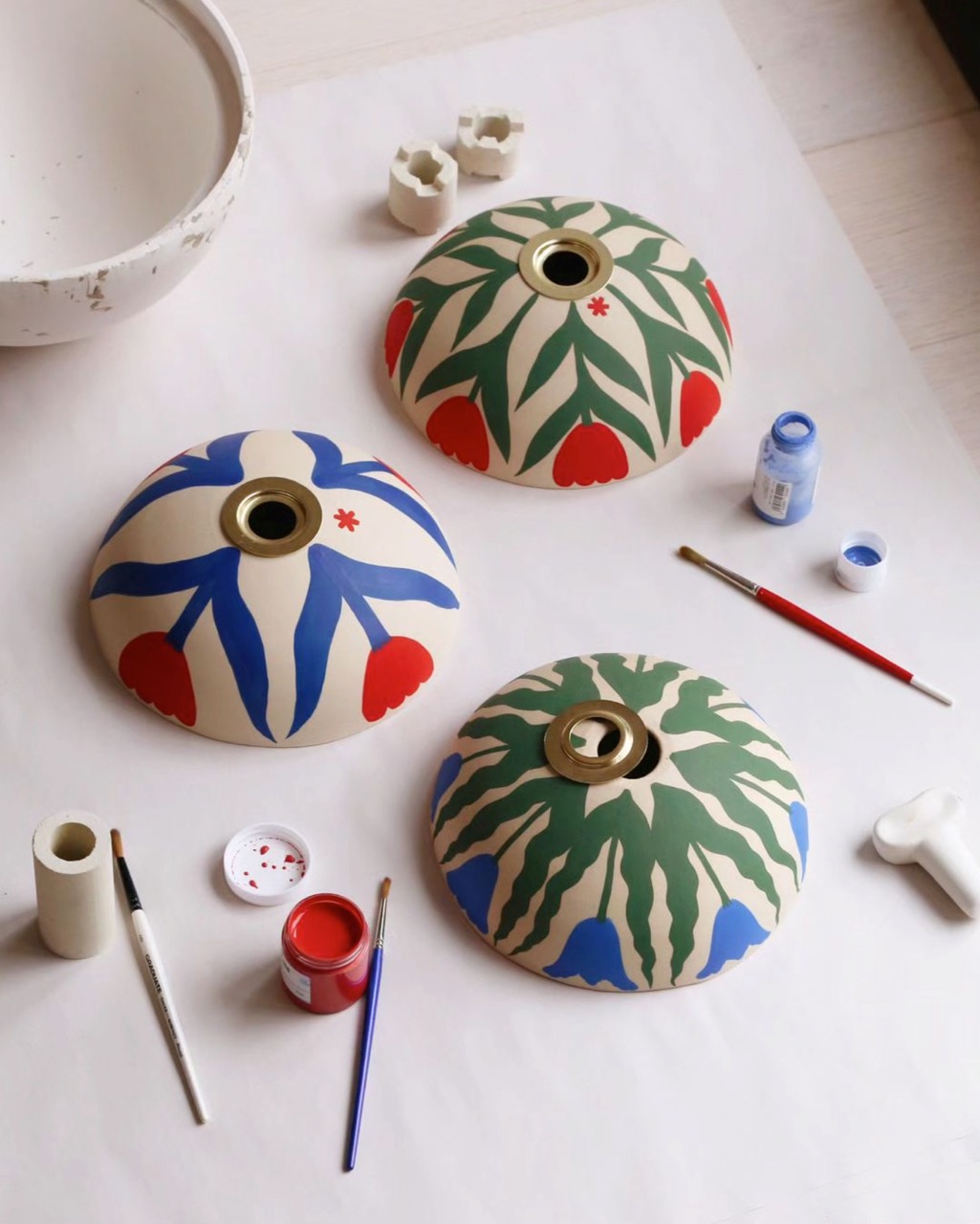
I’m working on a collection of prints and a new series of ceramic lampshades. I also have some secret projects on the way and I’m most excited about sharing those!
Advice and reflection
18. What advice would you give to someone starting out as a maker?
There is definitely a pressure to conform to trends, especially on social media. My advice would be to do your own thing, listen to your instincts, and find your own references. Always strive for substance and longevity over instant gratification!
19. If you could go back to the start of your career, what advice would you give your younger self?
If it feels right, go for it. And always get it in writing!
Closing thoughts
20. If you could collaborate with any artist, past or present, who would it be and why?
I would have loved to work with Sir Terence Conran. I feel an affinity for his outlook and his principles, and I admire his entrepreneurial spirit, as well as his appreciation for details. He once said that the four hallmarks of good design were “simplicity, beauty, functionality and surprise” – qualities I strive for in everything I make.
21. Where can people find your work, and how can they support you?
I sell most of my work exclusively on my website, halhaines.studio, as well as some collaborations with other brands and designers. The best way to keep up to date is through my newsletter, sign up here!
Hal’s pieces sit at the intersection of playfulness, charm and functionality. From ceramics to bespoke furniture pieces, he always strives to create something that is both characterful and useful.
Explore Hal’s latest collections and follow his creative journey:
Support Hal by exploring his website and staying connected through his newsletter for updates on new projects and collaborations.
Meet the Maker: The Bold, Colourful World of Emily Forgot
In this Q&A, we talk with Emily Forgot about her journey from commercial illustration to creating her distinctive artworks and assemblages.
Emily shares her insights on balancing commissioned projects with personal creations, the materials that drive her practice, and how architectural influences shape her bold and colourful aesthetic.
We also delve into her experiences overcoming creative challenges, finding inspiration in history and design movements, and her advice on navigating life as a creative professional.

1. Can you tell us a bit about yourself and your artistic journey?
I started my creative career working as a commercial illustrator. I still do work with clients on collaborative projects but creating my own pieces both commissioned, for galleries and for my online shop has become a larger part of my practice over time.
2. What inspired you to pursue your craft? Was there a defining moment or influence that sparked your passion?
Its been an evolving process, and in many ways I feel the pursuit of my craft is often shifting. I definitely decided to work on more personal projects as I craved the freedom to direct my own output without commercial restraints. I enjoy the balance though of working to a brief set by a client and my own endeavours.
Your craft
3. How would you describe your work in three words?
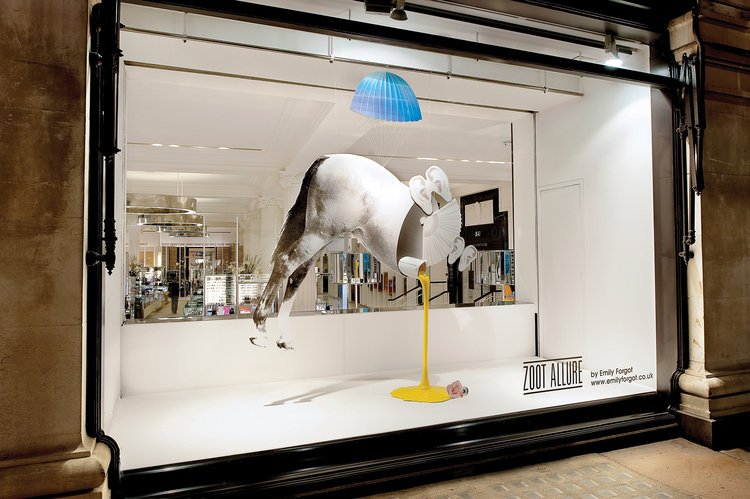
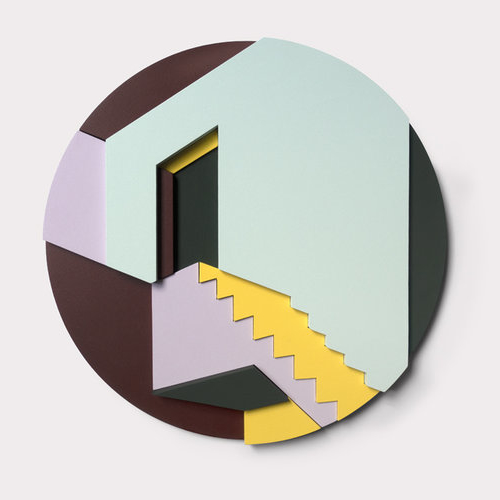
Bold, colourful, architectural
4. What materials or techniques do you use, and why are they important to your process?
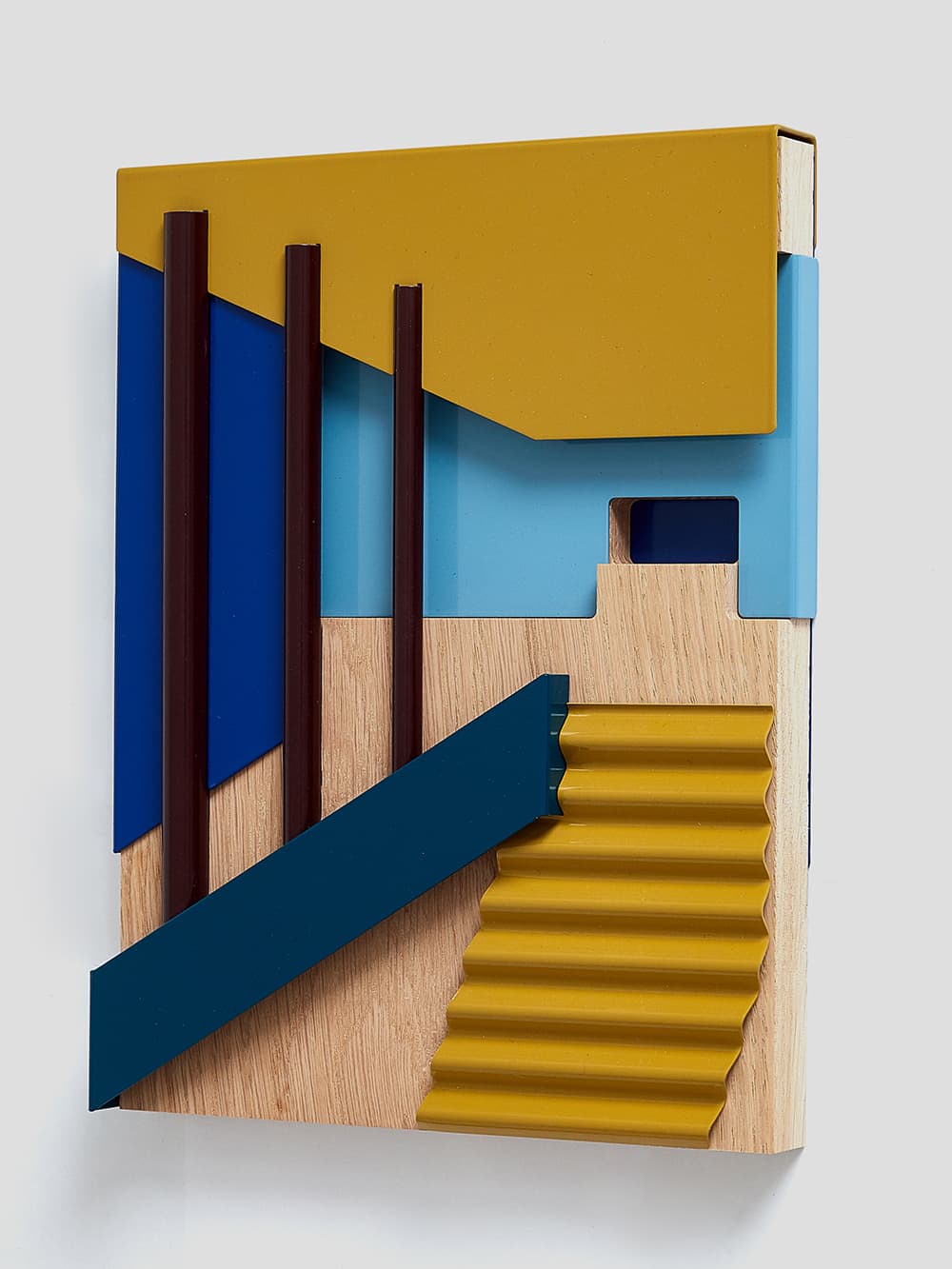
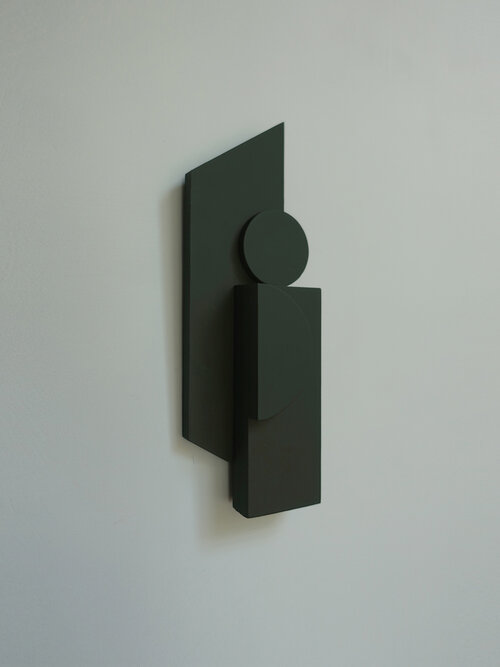
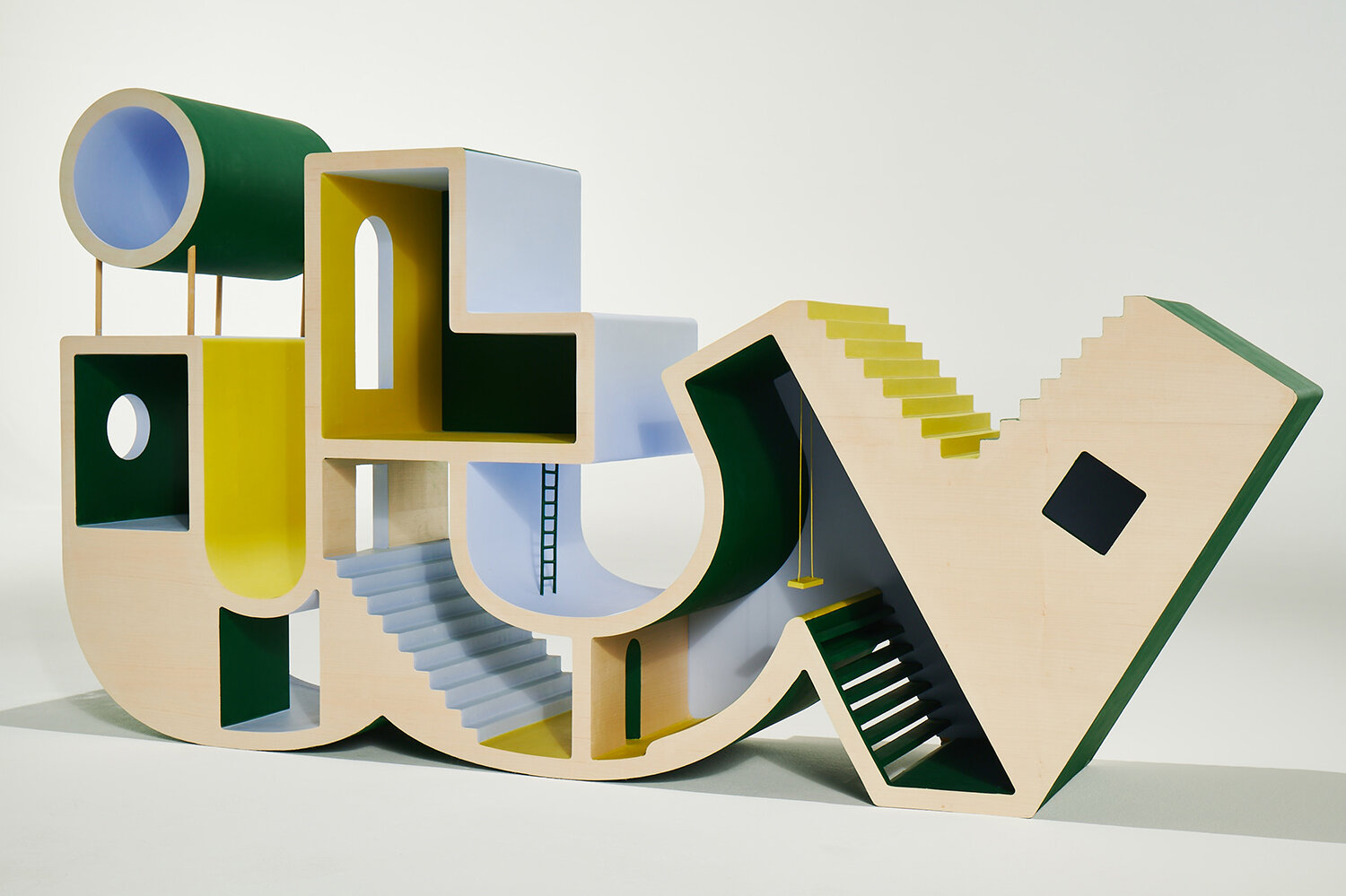
I’ve started using a lot of found papers in my collage work, I like how it adds a neutral tone to my overall colour palette but these found papers also give the pieces a lovely tactile quality. I also use wood in my assemblage pieces, usually poplar or ply when painted but I’m excited to explore more raw wood pieces using oak and cherry in the future. I love the robustness of working with wood.
5. Can you tell us about a favourite piece you’ve created and the story behind it?
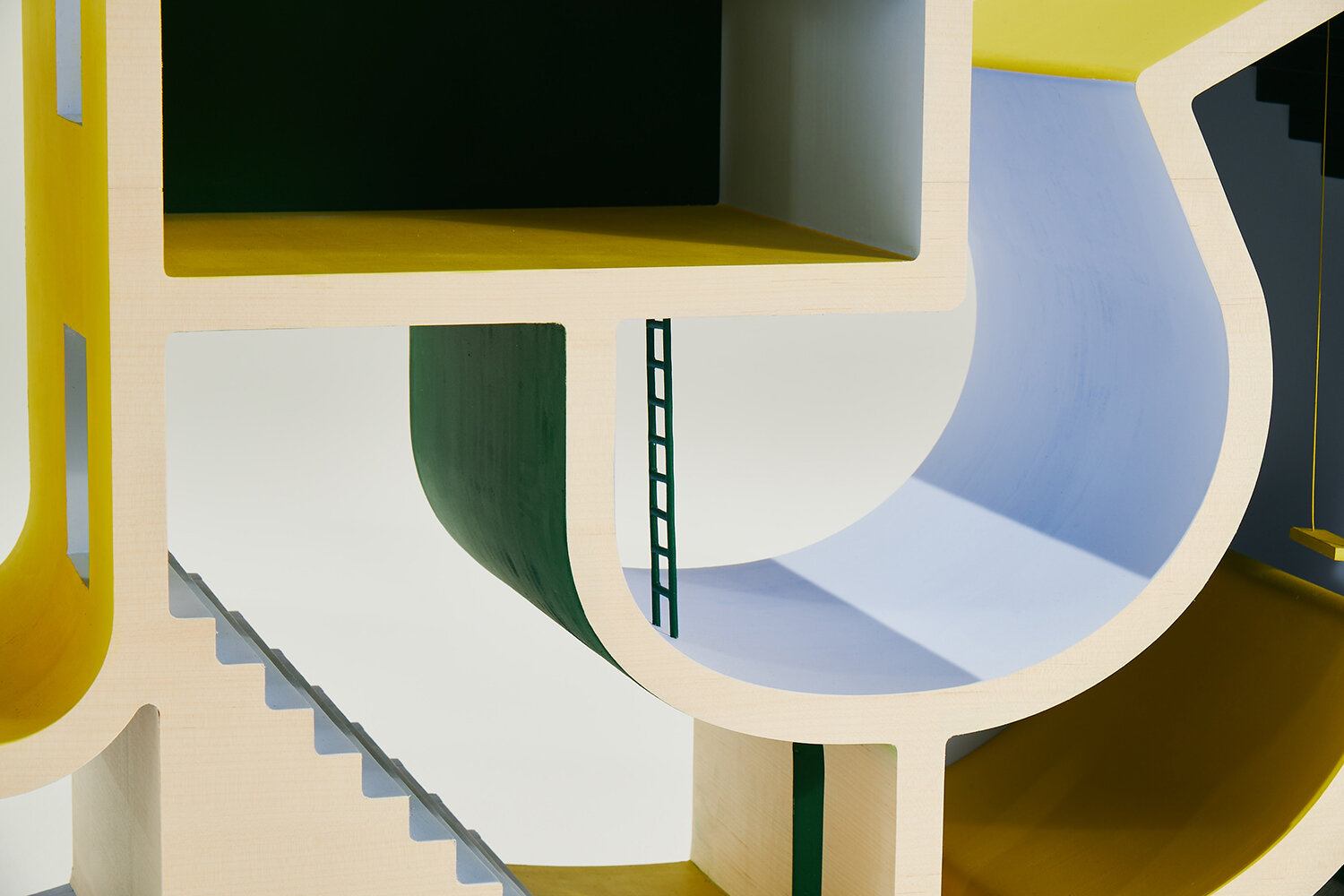
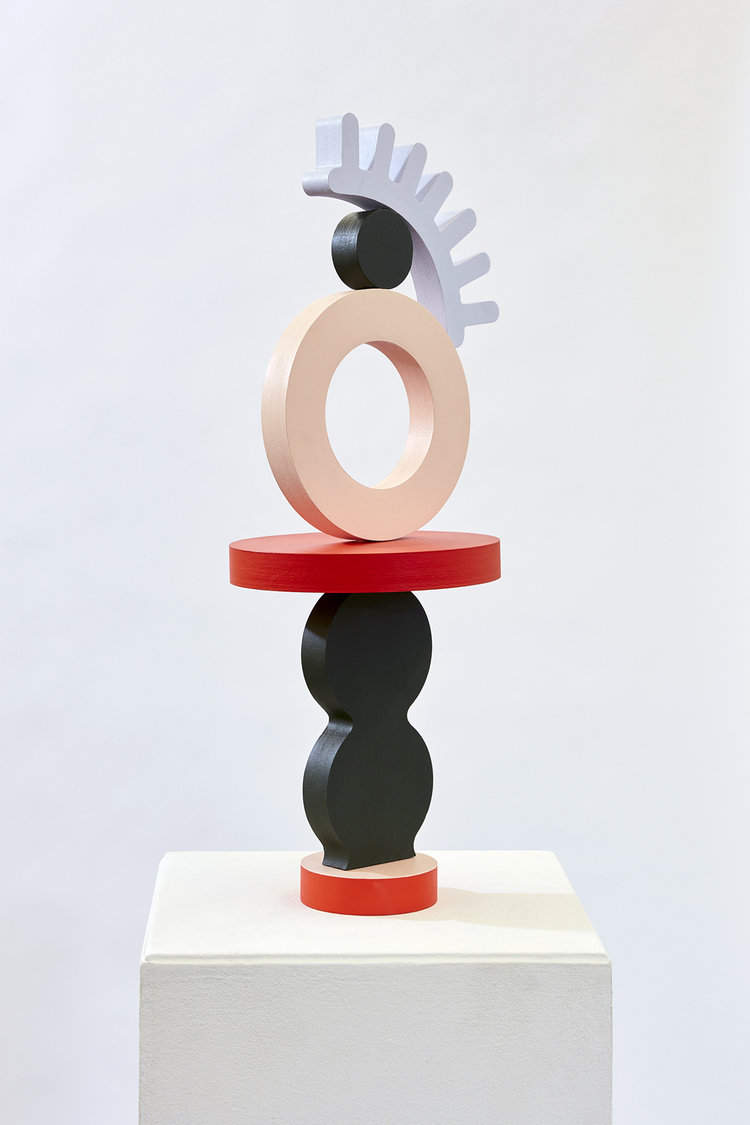
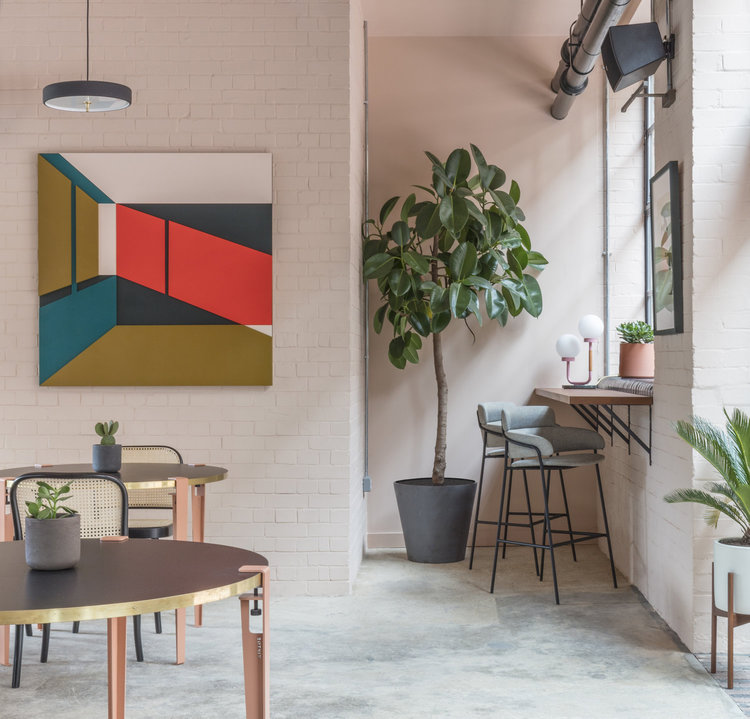
I recently completed a commission in a building that used to be a newspaper head quarters . I was inspired by the negative spaces of letterpress type blocks for the graphic shapes in the piece. I like when there is a hidden link or narrative in the artwork. That the viewer can see what they wish to but I know as the maker how the forms and the shapes developed. I love looking at the history of a building or site to find a cue about how to develop a piece of work.
Creative process
6. What does a typical day in your studio or workshop look like?
I try to get admin tasks done first thing so I can focus on the creative side of my business. Its lovely to have a few projects at different stages all running at the same time so I can be really productive. As one piece might be drying , I can start designing another, or exploring what colour palette I might use for the next piece and making sketches. I tend to use the late afternoon to do any packing or more mindless activities as its when my focus can begin to dwindle.
7. Do you have any unique rituals or habits that help you stay creative?
Forcing myself to take a brisk walk always seems to help with my creativity.
8. How do you handle creative blocks? Do you have any strategies or tips for overcoming them?
I think going to the library can be very helpful or just thumbing through some of my own books. I have a nice collection of vintage books and magazines in the studio. They explore different periods in art and design as well as different creative disciplines from architecture to fashion, fine art, graphic design and interiors. I’m usually guaranteed to find something that might spark an idea or find a new direction to get excited about.
Challenges and successes
9. What’s the biggest challenge you’ve faced as a maker, and how did you overcome it?
I think its often about construction, finding new ways to do something with any limitations that might be presented. and finding collaborators that care as much as you do about the final outcome can sometimes be a little tricky.
10. What’s been your proudest moment or achievement so far?
Many of them happened in a year I got totally burnt out so couldn’t enjoy them fully. Looking back Selling limited edition work in the V&A designed and inspired by the building felt like a great ‘pat on the back’ moment and having my home and work featured in my favourite magazine ‘World of interiors’ was a bit of a pinch me moment. But as i said the burn out has really made me re-assess the meaning of success and how I frame achievement.
11. What’s your favourite quote you’ve ever heard about your work? Who said it, or what was the name of the publication?
“Thats cool” – About one of my rugs I put on the landing at home – my 3 year old son : )
Inspiration
12. Where do you draw inspiration from for your work? What sparks your imagination and creativity?
I know it may sound cheesy but i really do draw inspiration from everywhere. I think it is this combination of multiple influences colliding with your own sensibility that makes your work truly your own and gives it that element of originality that we all crave as creative people.
13. Do you have a favourite artist, maker, movement, or tradition that has influenced your craft?
Its a real cacophony and changes often as I make new discoveries. I’ve loved revisiting the vibrant works of Sonia Delaunay lately, particularly her textiles and I got a great book on the Wiener Werkstätte recently. In terms of movements I love design movements that touched all areas of creativity from weaving to woodwork.
The Bauhaus, of course, being a perfect example of this multi disciplinary approach. I love early modernism but equally love to dip my toe in the less serious and more playful movements like Memphis of the 1980’s. I’m just excited to be a fan of it all and how it influences me often comes secondarily.
14. How does colour influence your practice; is it an important part of your process? Do you have a particular palette or favourites? Any go-to sources for colour inspiration?
Colour is a huge part in what makes my work unique to me. I love how intuitive building colour palettes can be. I don’t have a particular signature palette but the colours are often vibrant but with a little bit of earthiness to ground them. I often limit my palette too so usually no more than 3-4 colours. There is a great Japanese book on colour palettes that are extracted from kimonos that I love www.waterstones.com. Its a great resource if you are feeling like you need some guidance. I also love looking at fashion designers too and my own palettes are often led by the seasons.
"Thats cool"
— About one of my rugs I put on the landing at home. (my 3 year old son)
Perspectives and goals
15. What role does your environment play in shaping your creativity?
I think it plays a big role … just the right amount of mess, too much and its overwhelming.
16. What do you want people to feel when they experience your work?
Happy, energised, inspired …hopefully.
17. What are you currently working on, and what excites you most about it?
I’m working on some large scale commissions, both collage and wooden assemblages. Both are in the research stages and need to be inspired by the site they will be displayed so I’m in my favourite stage, exploring colour, shapes and architecture and making initial sketches.
Advice and reflection
18. What advice would you give to someone starting out as a maker?
Spend some time trying to figure out where your true passion and interest lies and don’t put too much pressure on the objects you make being your sole source of income at the start . I still have a few different ways that I make a living within the creative Industry and a large part of this is commissioned projects with set briefs. This excites me in different way to my more personal work but I think the self initiated creations would suffer if I relied solely on them to make ends meet.
19. If you could go back to the start of your career, what advice would you give your younger self?
I don’t know if i would offer any advice as think all the mistakes and wrong turns led me to where I am today. So perhaps it would just be, “You’re on the right path, keep going!” oh and also to trust my gut more, projects that even have a whiff of a red flag are usually going to be rife with issues.
Closing thoughts
20. If you could collaborate with any artist, past or present, who would it be and why?
I would have loved to have been Eileen Gray’s apprentice. Because she was an innovative genius and what more do you need in a mentor! I’m not sure if many of the designers and artists i admire would have really been up for the idea of collaborating, their focus was very much on their personal vision but to be honest I would be happy to just make tea and observe.
21. Where can people find your work, and how can they support you?
I have a website emilyforgot.co.uk that shares my commissioned projects and also has a shop, emilyforgot.co.uk/shop, I sell pieces through the galleries Partnership Editions and M.A.H and rugs through Floor story. I also run a Substack called Soft fascination, where I share inspirations both past and present, becoming a paid subscriber is a lovely way to support my practice too.
Emily Forgot’s work is a joyful exploration of colour, form, and playful architectural references, blending found materials and bold shapes into striking, contemporary pieces. From collage art to wooden assemblages, her creations offer viewers moments of inspiration and delight.
Explore Emily’s latest collections and follow her creative journey:
Support Emily by subscribing to her Substack and exploring her beautiful pieces online.
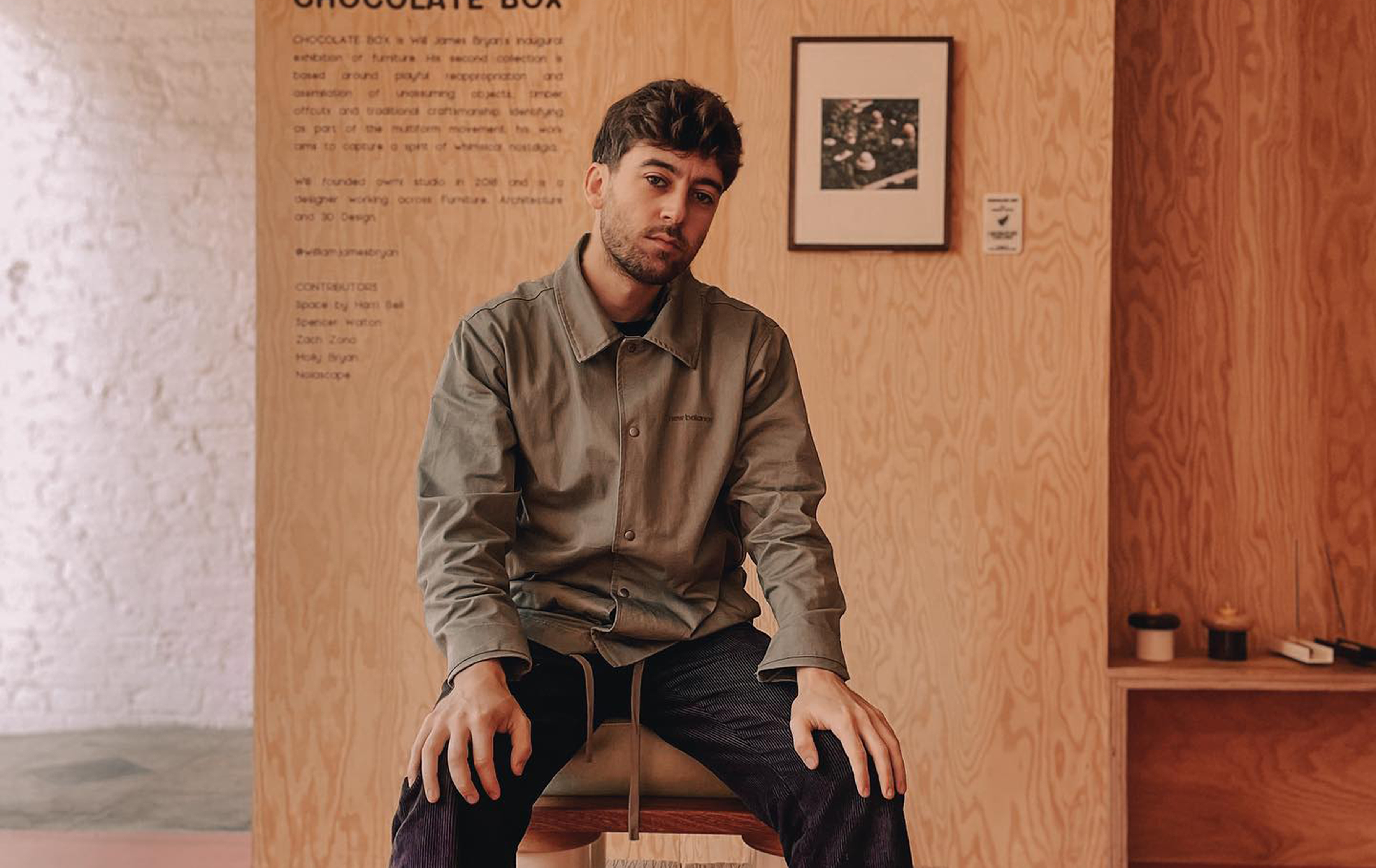
Meet the Maker: Playful Design with Will James Bryan of OWMI studio

1. Can you tell us a bit about yourself and your artistic journey?
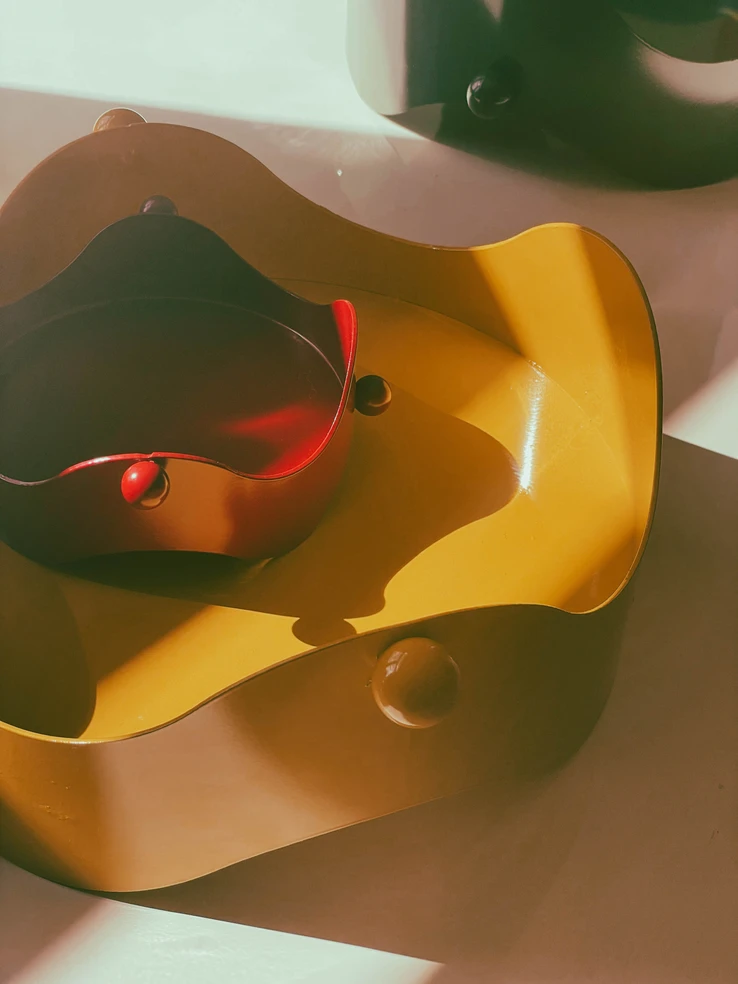
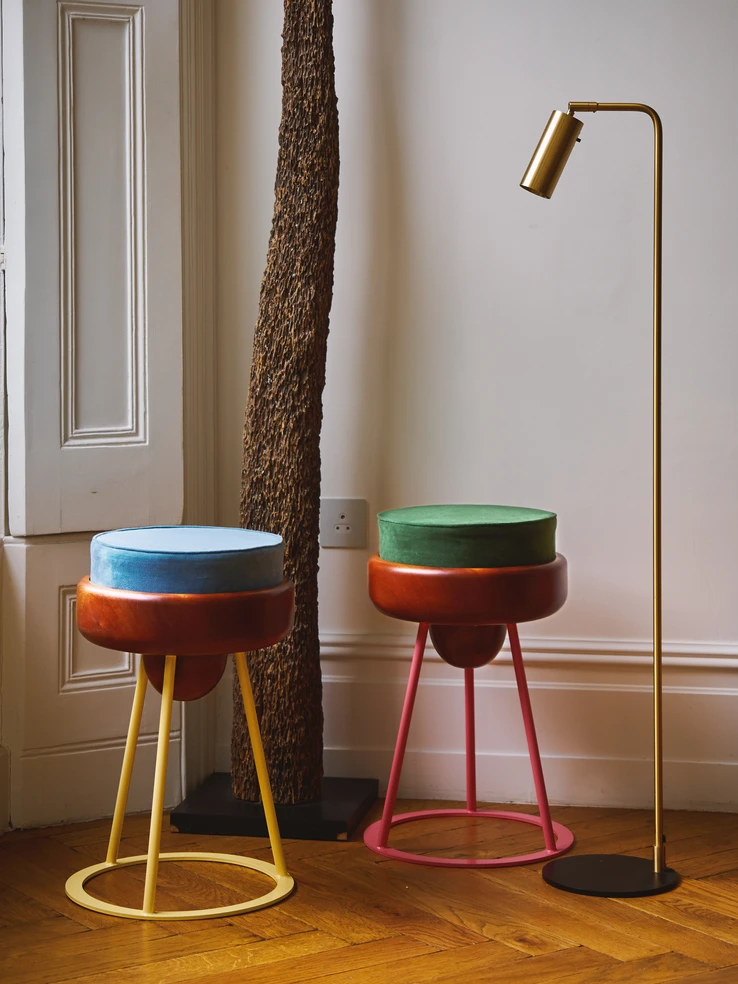
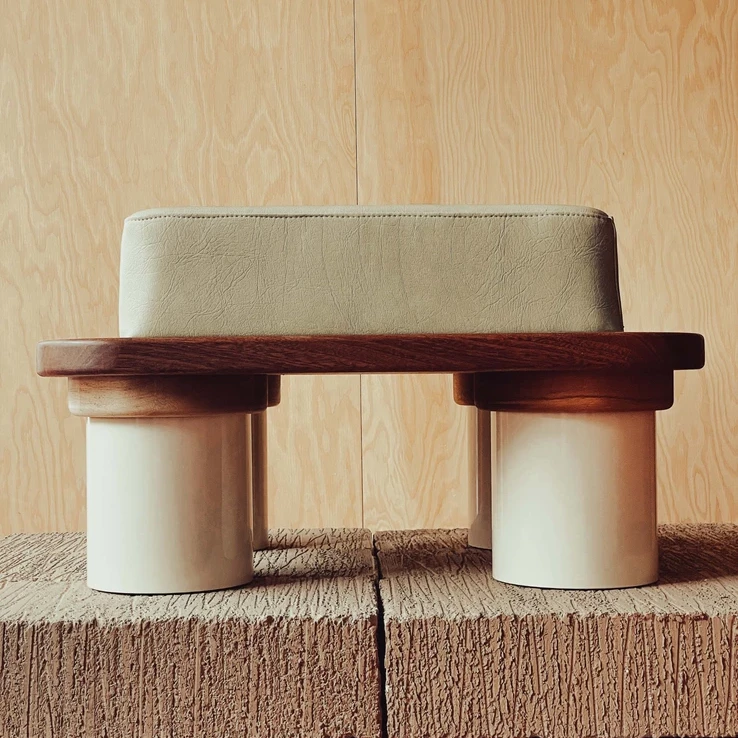
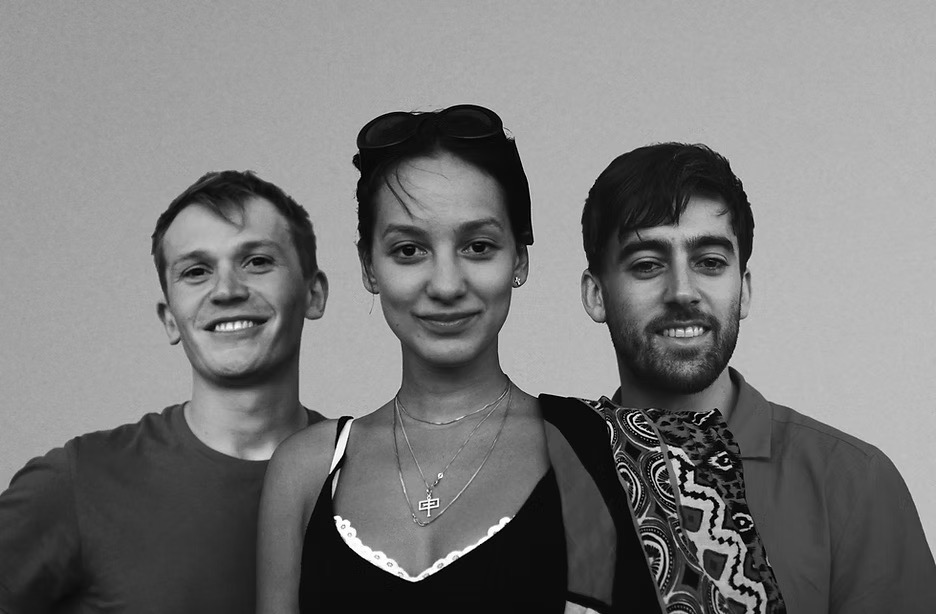
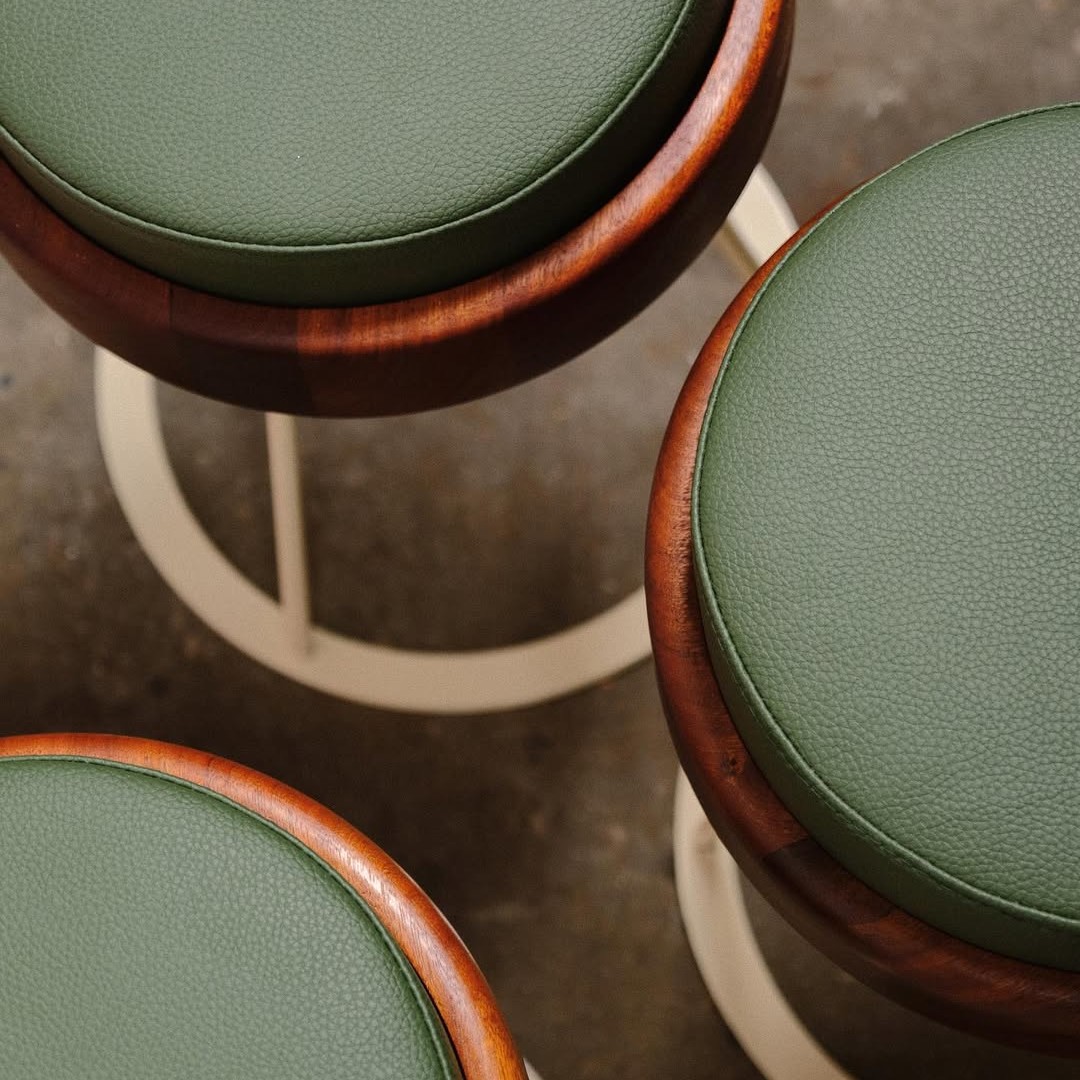
Educated as an architect, I started designing objects and furniture in 2021 and was fortunate enough to have my first piece, the Button Stool, published in a few magazines. I have been designing ever since through a mixture of commissions, exhibition work and self-initiated collections. I publish my work through a design collective I established with friends called owmi studio.
2. What inspired you to pursue your craft? Was there a defining moment or influence that sparked your passion?
The immediacy of it, especially in comparison to the architectural profession – you can go from sketch ideas to finished forms in a matter of months, compared to the years it takes in architecture. I had always enjoyed physical modelmaking through my degree studies; during my Masters I prototyped a chair, and that had always stayed in the back of my mind as a creative strand to explore further down the road.
Your craft
3. How would you describe your work in three words?
Playful, tactile, colourful
4. What materials or techniques do you use, and why are they important to your process?
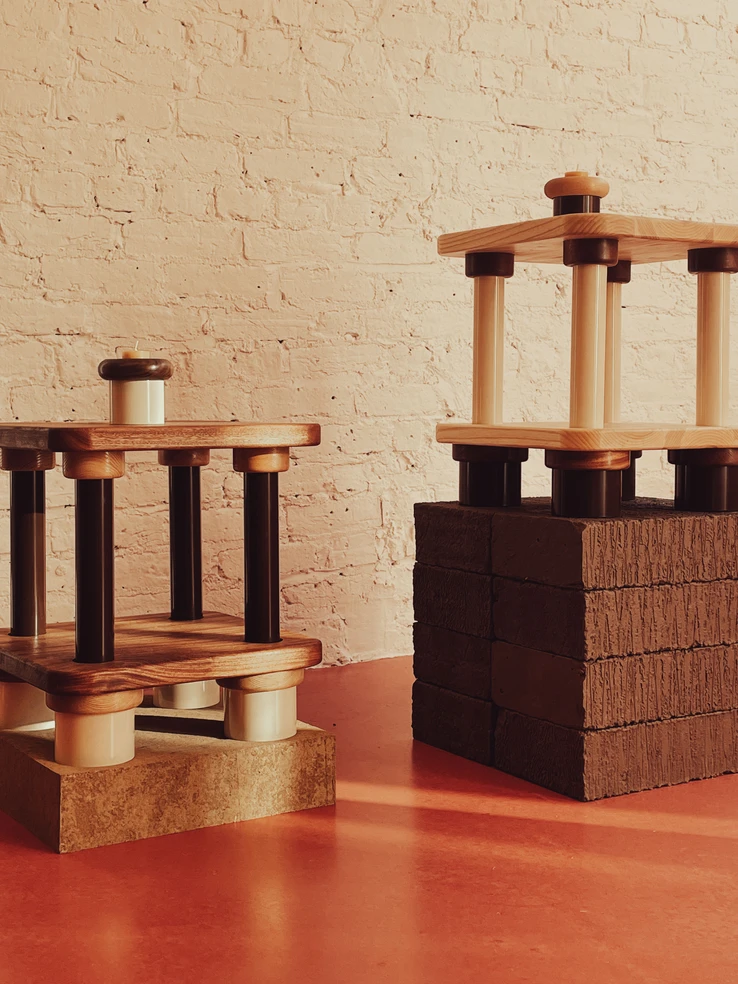
My work spans various materials and techniques, from woodworking, metalwork, upholstery, as well as repurposed objects. I frequently collaborate with various craftspeople across the UK, all of us focusing on handmade, small-batch production. When designing, I model everything digitally first and render it to test materiality and form – this allows me a huge amount of creative control before I start prototyping and allows me to communicate my ideas through imagined digital scenography.
5. Can you tell us about a favourite piece you’ve created and the story behind it?
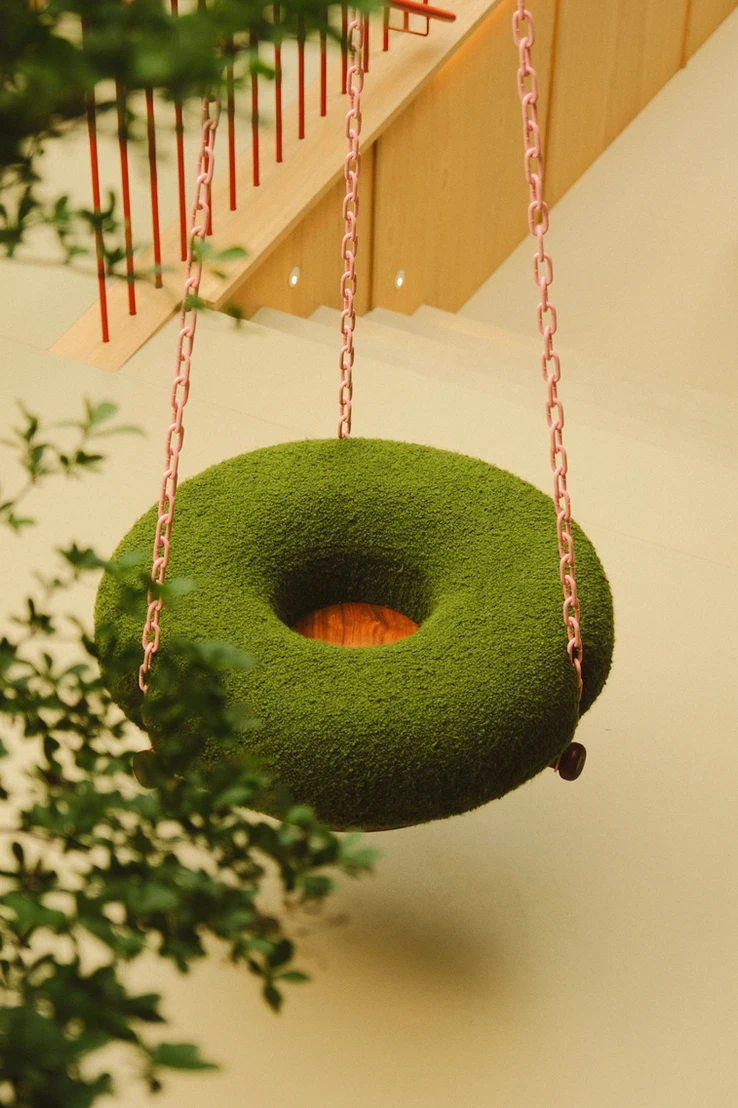
I was commissioned to design and fabricate a Swing for the atrium of a beautiful house in Highgate – it’s always rewarding to work with a client who gives you creative freedom, and with interior designers that align with your design ethos. In this case both boxes were ticked and we were all very pleased with the outcome, the Doughnut Swing.
Creative process
6. What does a typical day in your studio or workshop look like?
Currently there is no typical day! I am in the process of finishing the construction of my workshop, which is super fun but means that my flat is rather chaotic…
7. Do you have any unique rituals or habits that help you stay creative?
No, but I am a night owl, often at my most creative in the evenings!
8. How do you handle creative blocks? Do you have any strategies or tips for overcoming them?
Some days my brain is overflowing with ideas, and on other days the creative juices just don’t flow and that’s ok! I try not to fight it in those less-inspired moments and focus on more prosaic aspects of my work. When I need to work through and refine a concept, I have a trusted network of friends across various disciplines who are always incredibly helpful to bounce ideas off, some whose taste I admire and some who bring a technical focus that I sometimes overlook.
Challenges and successes
9. What’s the biggest challenge you’ve faced as a maker, and how did you overcome it?
Like a lot of designers, I struggle with social media, finding it difficult to post regularly while simultaneously acknowledging that self-promotion is necessary to reach an audience. Once my workshop is finished, I intend to document my process more thoroughly rather than just the finished products. I also struggle with the commercial side of being a small business, remembering to value my own time, alongside the ever-increasing cost of materials.
10. What’s been your proudest moment or achievement so far?
The novelty of complete strangers choosing to spend their hard-earned money on my designs, or commissioning something bespoke, is still a joy and a surprise 3 years in!
11. What’s your favourite quote you’ve ever heard about your work?
Who said it, or what was the name of the publication?
British Vogue described my work as ‘covetable’, which is a lovely, generous word to use!
Inspiration
12. Where do you draw inspiration from for your work? What sparks your imagination and creativity?
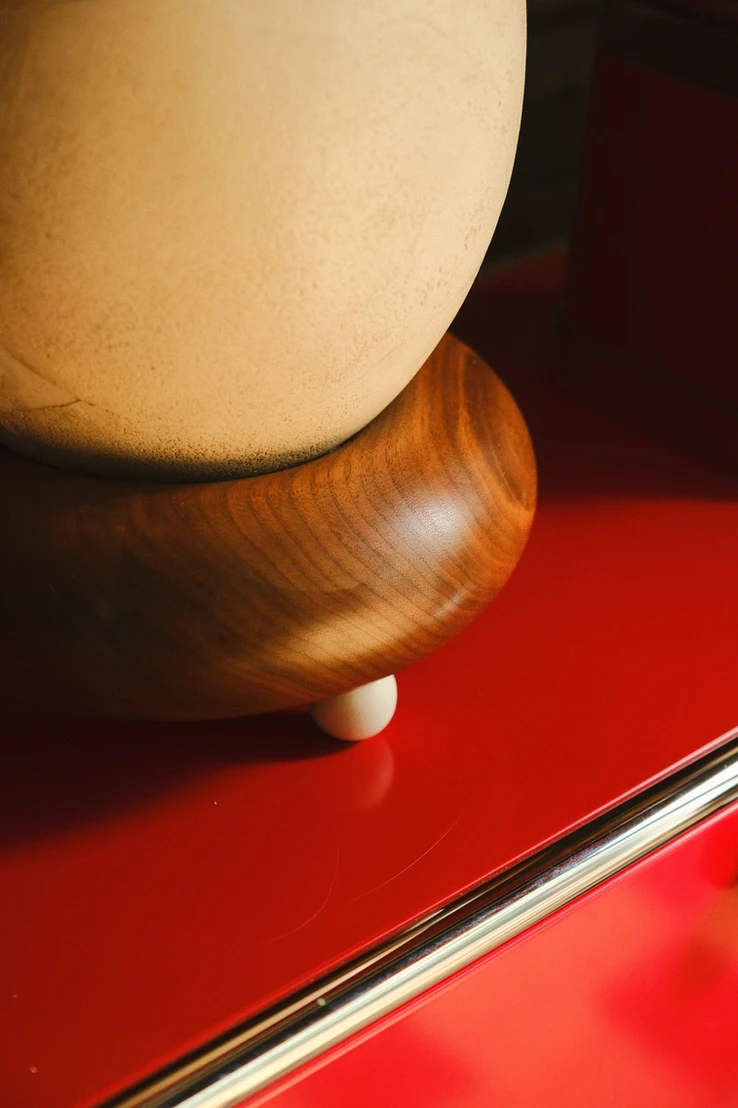
Often ordinary objects – my first solo exhibition ‘Chocolate Box’ was full of furniture inspired by food, pairing natural brown hues with pistachio/caramel coloured fabrics. My ‘Doughnut swing’ I upholstered in a spongey, green boucle that resembled moss.
13. Do you have a favourite artist, maker, movement, or tradition that has influenced your craft?
I love postmodernism, and any artist that doesn’t take themselves too seriously. Contemporary architects whose work I admire includes Office S&M, Nimtim Architects, Studio Mutt amongst others. I also keenly follow EBBA Architects, and appreciate how founder Benni Allan works across various creative disciplines.
14. How does colour influence your practice; is it an important part of your process? Do you have a particular palette or favourites? Any go-to sources for colour inspiration?
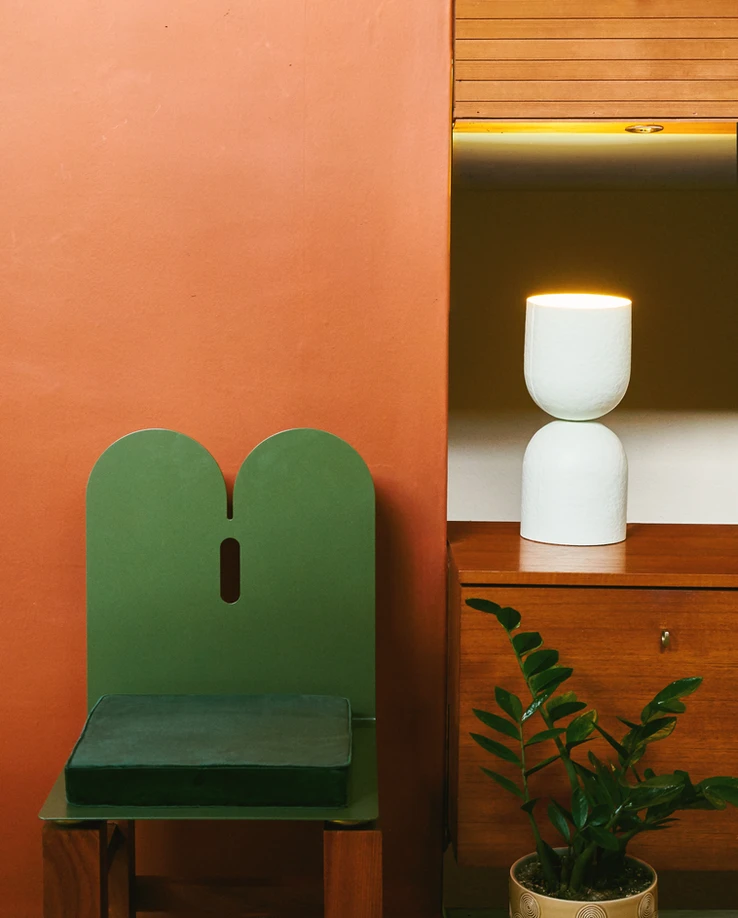
I love working with colour, particularly pairing timbers with either fabrics or metalwork. Once I am happy with a form, I often consider multiple colourways, some more neutral and others way more poppy and vibrant. Inspiration wise, historical Art & Design books always throw up surprising combinations.
Perspectives and goals
15. What role does your environment play in shaping your creativity?
I was very fortunate to grow up in a family of designers and architects – in particular I was inspired by my Grandad’s self-built mid-century home, so have always been motivated by the idea of creating and honing my own environment.
16. What do you want people to feel when they experience your work?
A sense of nostalgic familiarity, and little surprise.
17. What are you currently working on, and what excites you most about it?
Two things in particular – firstly a commission for a huge bookcase in a grade 2 listed property. Although daunting, there is a lot of scope to create something genuinely original and slightly mischievous.
Secondly, an unnamed collection I am currently working on involves casting resin-bound aggregate, a surface treatment usually used for residential driveways, into sculptural and monolithic forms. Think little chunks of the Barbican!
Advice and reflection
18. What advice would you give to someone starting out as a maker?
Document your process, and don’t be afraid to be too earnest. Have a business plan, even if it’s not highly specific you should set yourself targets to aim for.
19. If you could go back to the start of your career, what advice would you give your younger self?
Put yourself out there more – no one really knows what they are doing, it’s all smoke and mirrors!
Closing thoughts
20. If you could collaborate with any artist, past or present, who would it be and why?
I would love to design a chair with Eileen Grey!
21. Where can people find your work, and how can they support you?
I post on my Instagram @williamjamesbryan and upload to my website www.owmi.co.uk! Support me by giving me a follow, or even better commission something! The weirder the better!
Will James Bryan and owmi studio approach design with a playful, tactile, and colourful ethos, often drawing inspiration from everyday objects and postmodern influences. Their pieces, such as the Button Stool and Doughnut Swing, reflect a deep appreciation for form, materiality, and storytelling. Through owmi studio, Will collaborates with UK-based craftspeople, using digital modeling to refine ideas before bringing them to life.
Their creative process thrives on spontaneity, with inspiration drawn from food, nostalgia, and architectural textures—the latest collection even incorporates resin-bound aggregate, reminiscent of Brutalist concrete surfaces. Despite the challenges of self-promotion and rising material costs, Will and owmi remain motivated by the joy of seeing strangers invest in their designs.
Currently, owmi studio is working on a bespoke bookcase for a Grade II listed property and an experimental furniture collection. Whether designing a swing for a private home or pushing the boundaries of material innovation, their work always aims to surprise and delight.
Follow Will’s work and owmi studio on Instagram @williamjamesbryan or explore owmi studio for commissions—the weirder, the better!

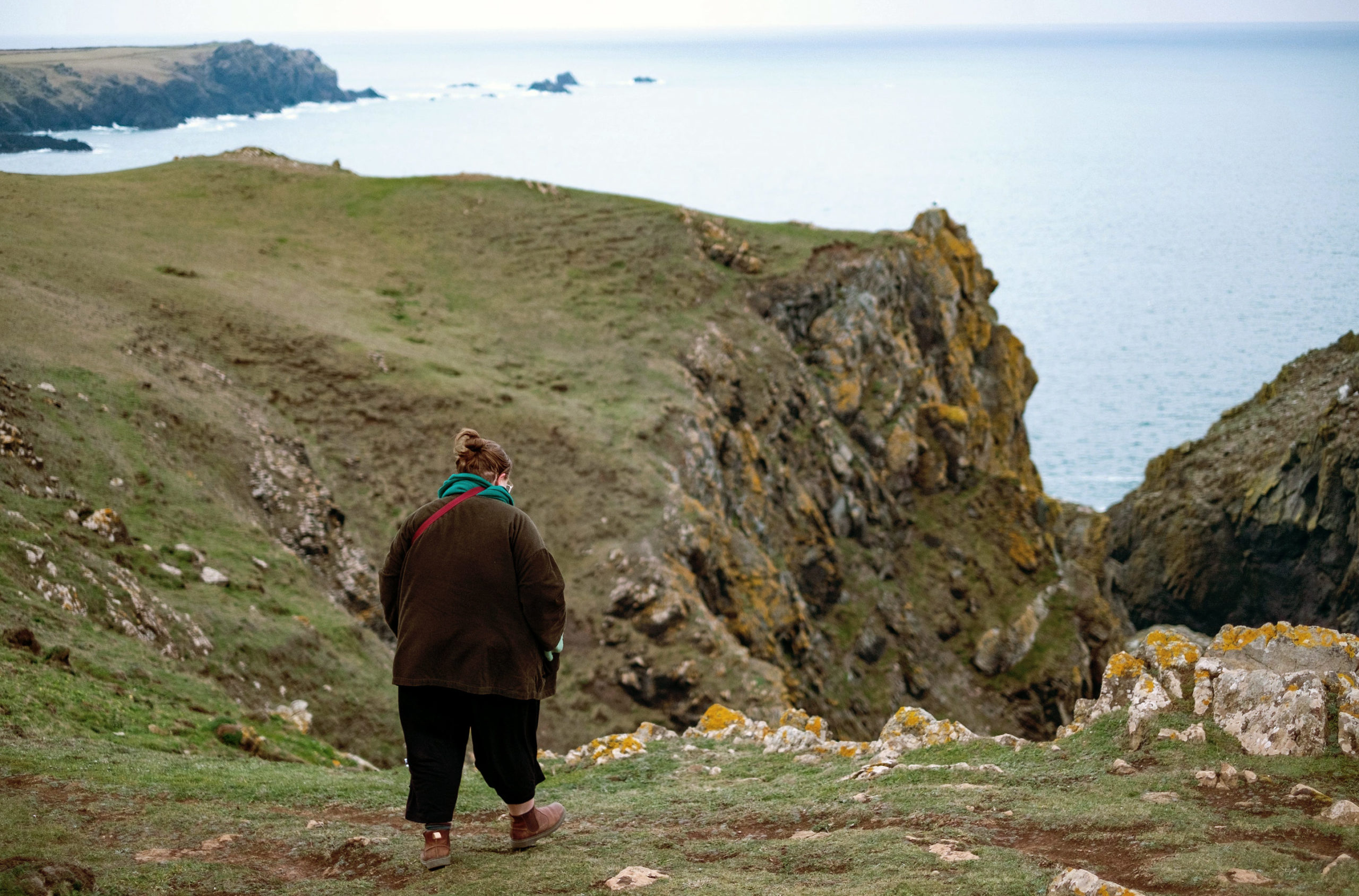
Meet the Maker: The Layered, Tactile World of Megan Fatharly
1. Can you tell us a bit about yourself and your artistic journey?
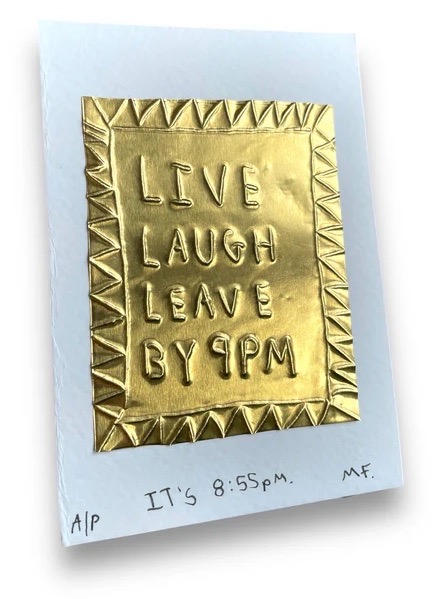
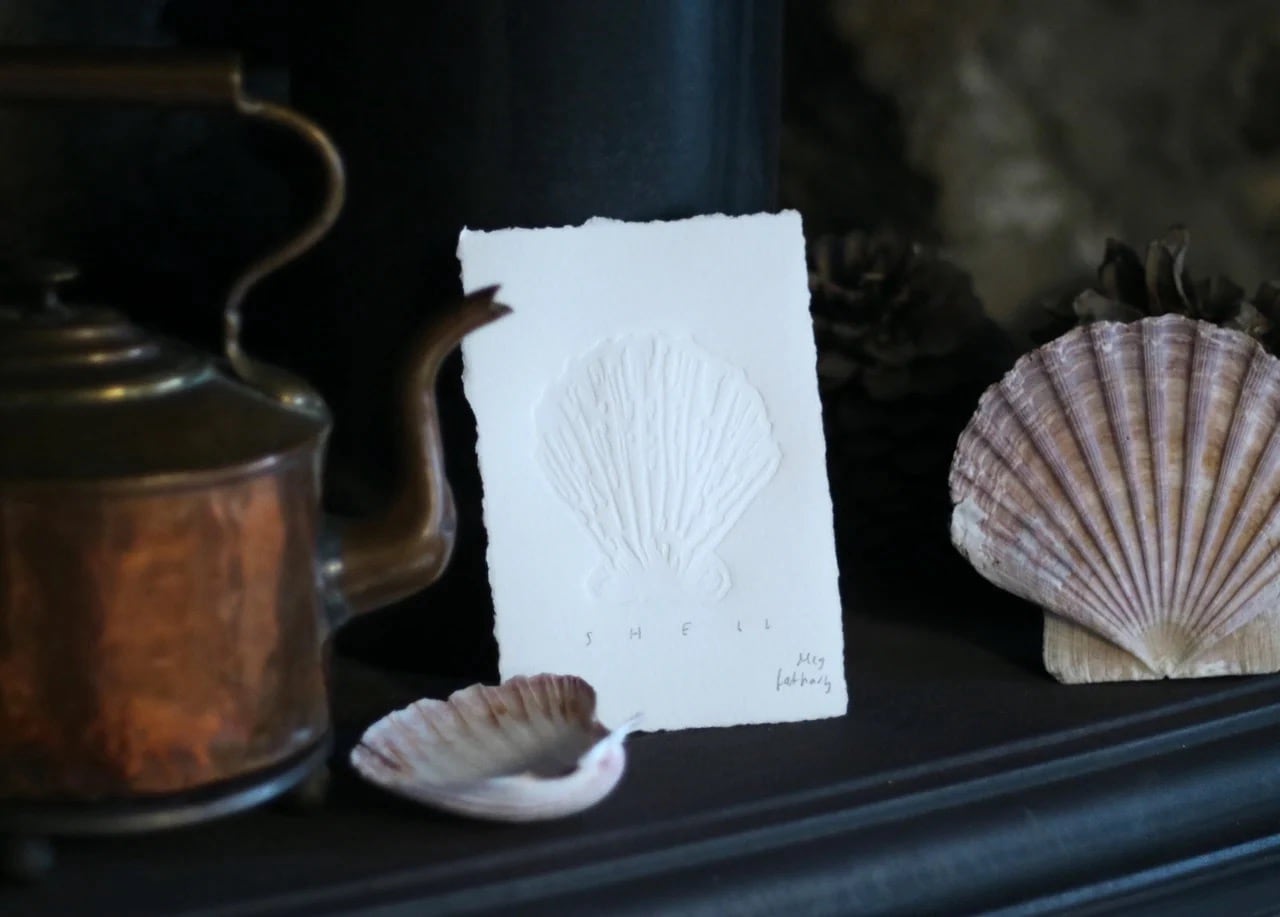
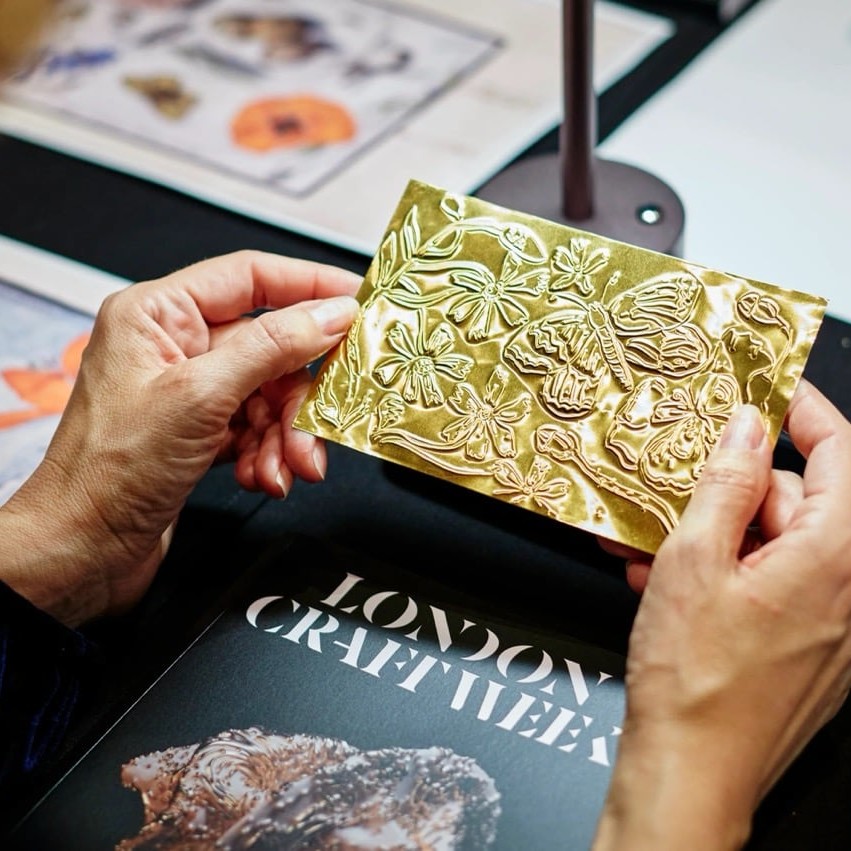
I am a self-employed artist and maker working primarily with tin embossing, printmaking, and collage. My work explores themes of emotion, memory, and resilience, using tactile materials to create pieces that invite touch and reflection.
Over the years, I have had the opportunity to collaborate with institutions such as the V&A, The Body Shop, Net-a-Porter, the Natural History Museum, and Fortnum & Mason. My journey has been shaped by a deep love of making but also by the challenges of ADHD, perfectionism, and balancing creativity with business. I am constantly learning how to embrace experimentation and imperfection, allowing my work to evolve in a way that feels authentic.
2. What inspired you to pursue your craft? Was there a defining moment or influence that sparked your passion?
I’ve always been drawn to making things with my hands, but my love for working with tin and collage developed over time. There wasn’t a single defining moment—more a series of small realisations that creating was how I best processed the world. Seeing how my work resonated with others and how it could bring comfort or reflection reinforced my desire to keep going.
Your craft
3. How would you describe your work in three words?
Tactile, emotive, layered.
4. What materials or techniques do you use, and why are they important to your process?
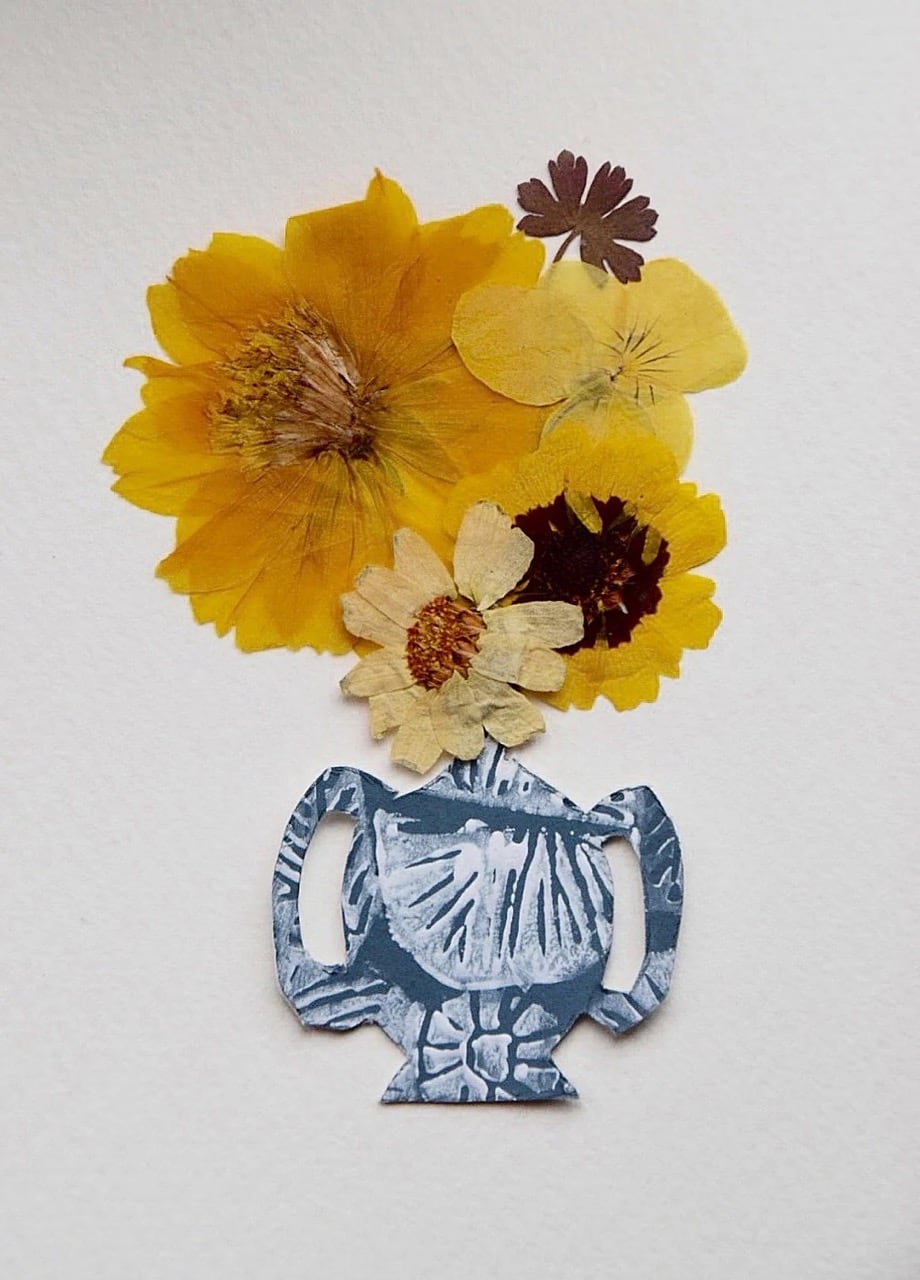
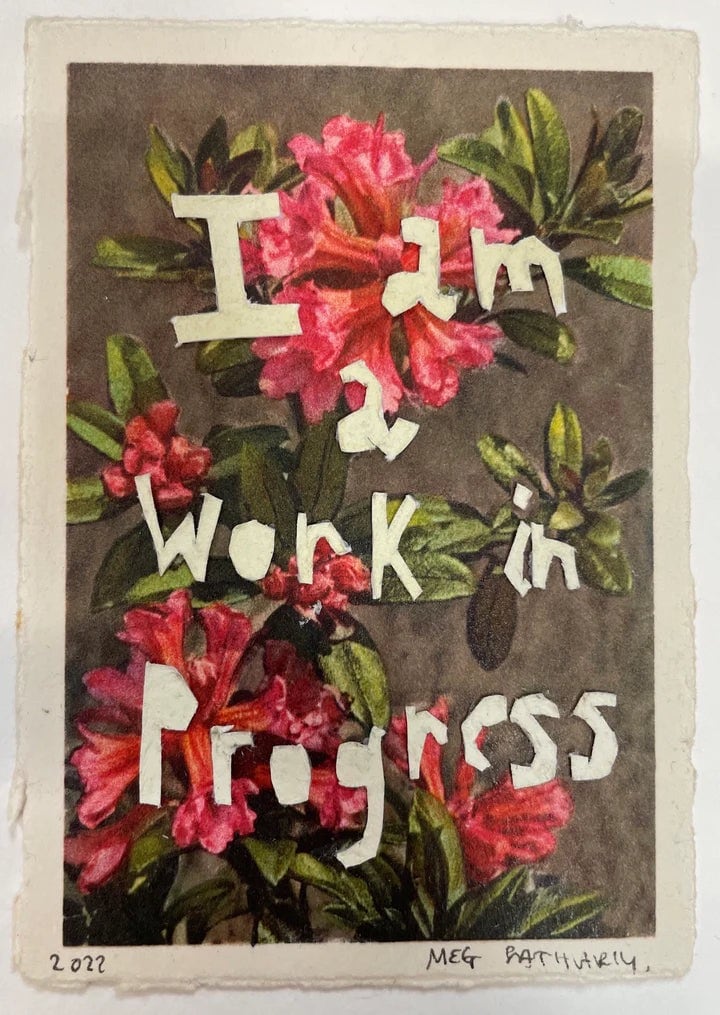
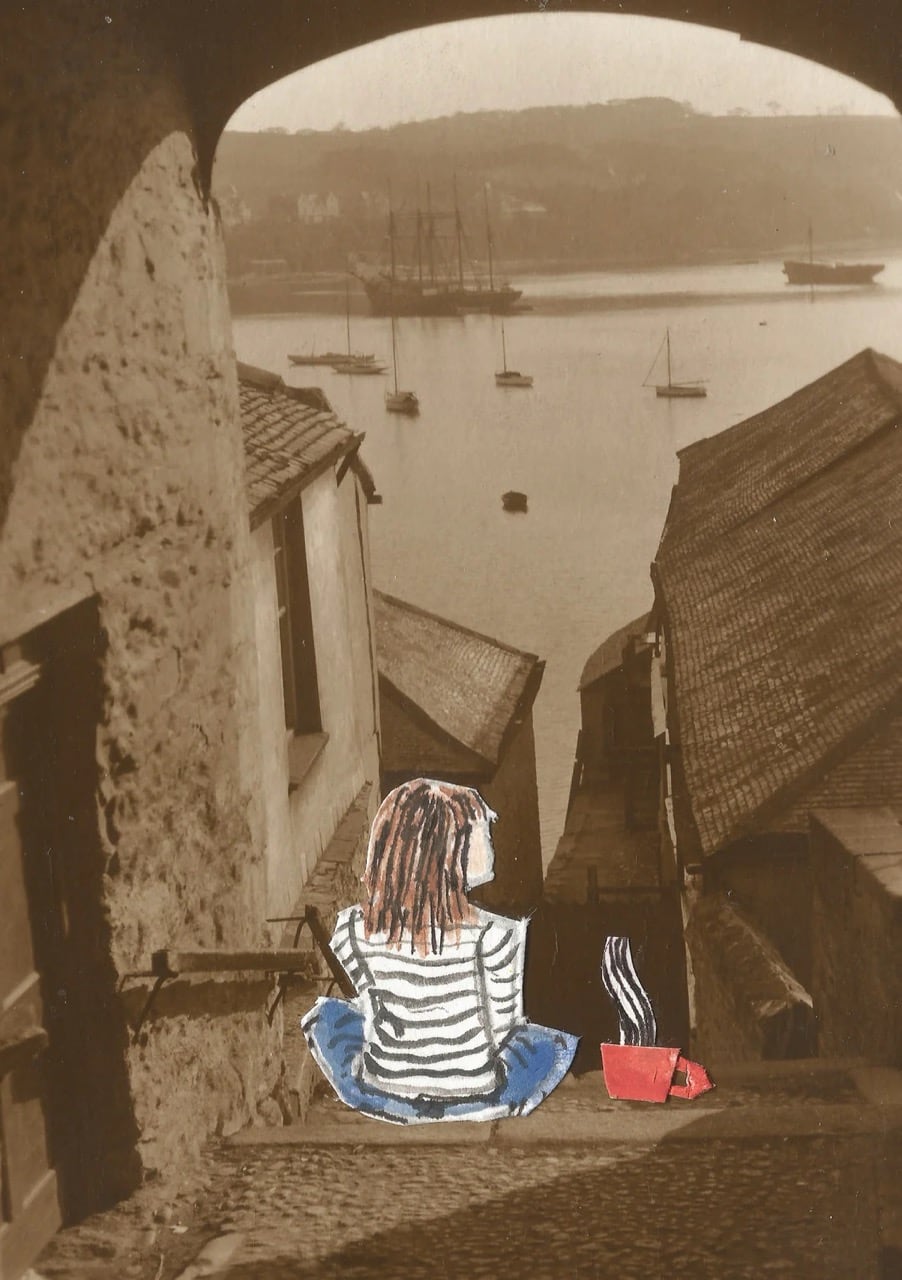
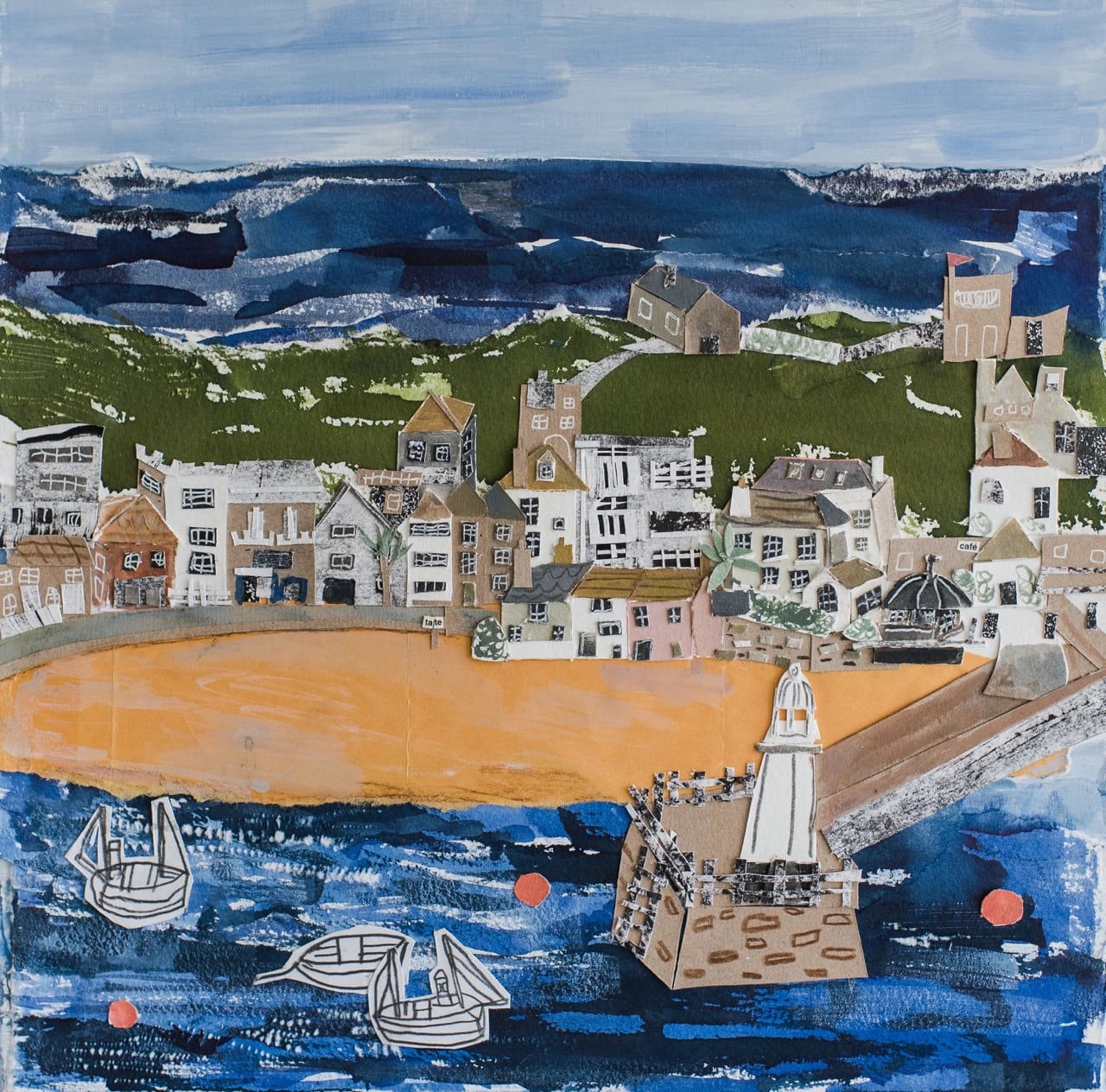
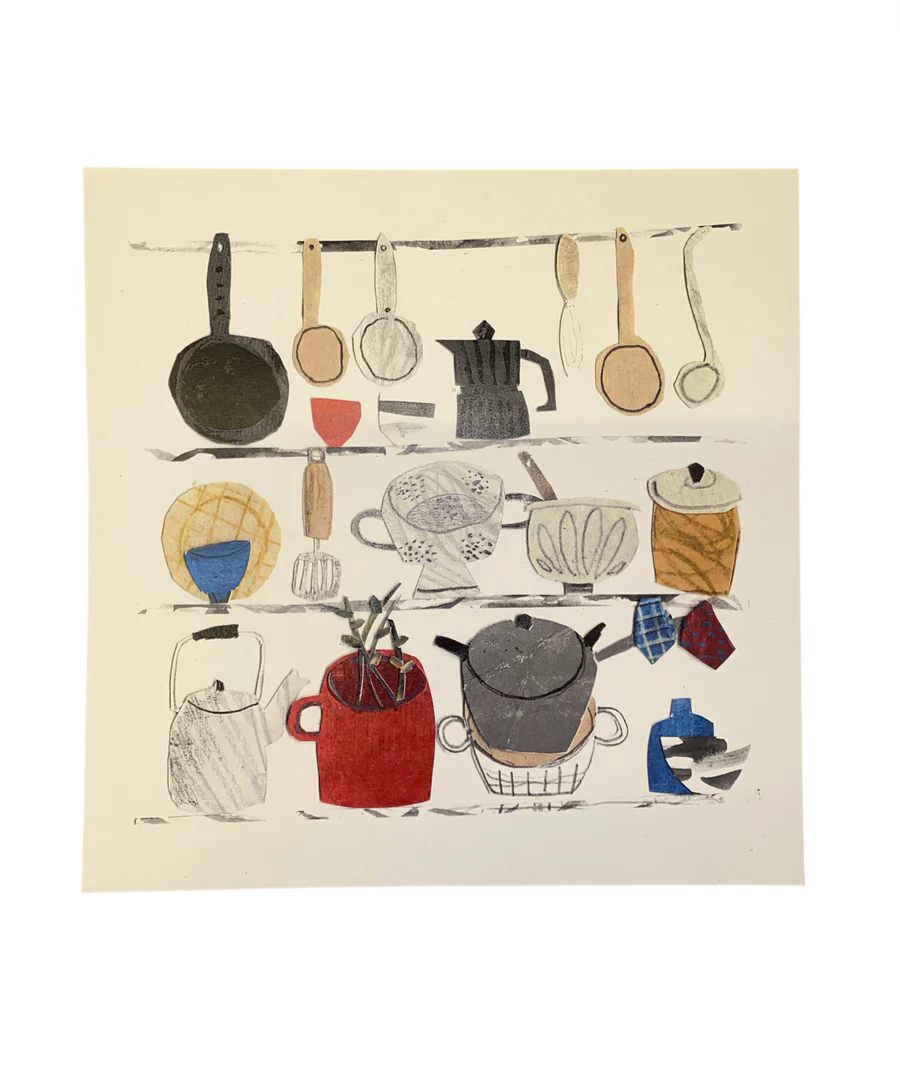
I primarily work with embossed tin, printmaking, and collage. Tin allows me to create intricate, tactile surfaces that catch the light, while printmaking and collage introduce layers of meaning and texture. Collage is especially important to my process—it lets me assemble fragments, creating something new from what already exists. I love the way torn edges, overlapping textures, and unexpected compositions can communicate emotion in a quiet but powerful way.
5. Can you tell us about a favourite piece you’ve created and the story behind it?
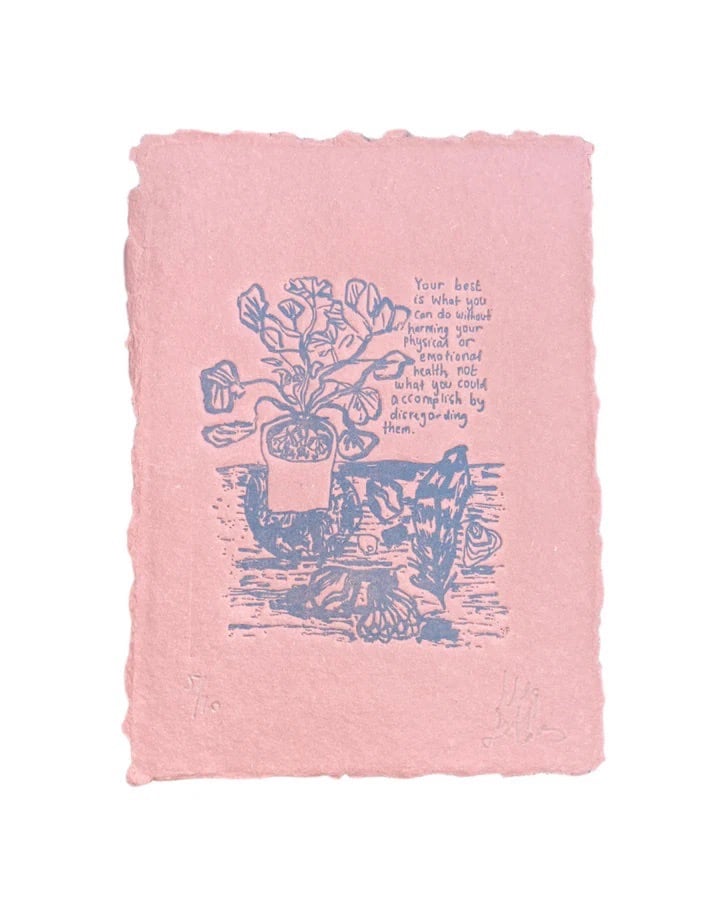
One of my favourite pieces is a small embossed tin work that reads What if it all goes right? It started as a personal mantra, a way of challenging my tendency to catastrophise. When I shared it, I realised how deeply it resonated with others. That phrase has since become a recurring motif in my work, reminding me—and those who collect my pieces—that hope is always an option.
Creative process
6. What does a typical day in your studio or workshop look like?
My studio days are varied, but they usually begin slowly. I struggle with transitions, so I ease into work by tidying my space or flicking through scraps of paper and materials for inspiration. Once I get started, I might spend hours embossing tin, cutting metal, layering collage elements, or working on prints. I often hyperfocus and lose track of time, so I try to build in breaks to reset my perspective.
7. Do you have any unique rituals or habits that help you stay creative?
I often start by playing with materials without a clear goal—moving bits of paper around, embossing a scrap of tin, or printing something imperfectly. This helps me loosen up and get into a creative flow. Listening to music or a podcast can also help shift my mindset.
8. How do you handle creative blocks? Do you have any strategies or tips for overcoming them?
Creative blocks are difficult, especially when I feel pressured to produce work that will sell. When that happens, I return to making for myself—collaging with no intention of sharing, embossing something small just to feel the texture under my hands. Taking a walk, shifting materials, or reminding myself that not everything has to be “good” also helps.
Challenges and successes
9. What’s the biggest challenge you’ve faced as a maker, and how did you overcome it?
Balancing the emotional and financial aspects of creative work. I often tie my self-worth to how well my shop is performing, which leads to burnout. Learning to separate my creative practice from external validation is an ongoing process, but breaking tasks down, giving myself permission to experiment, and allowing myself to rest has helped.
10. What’s been your proudest moment or achievement so far?
Collaborating with institutions and brands such as the V&A, The Body Shop, Net-a-Porter, the Natural History Museum, and Fortnum & Mason has been incredibly rewarding. These projects have allowed me to push my creative boundaries, work on a larger scale, and see my work in unexpected contexts. Beyond that, my proudest moments are often the smaller, more personal ones—seeing my work resonate with people, hearing how a piece has brought someone comfort, or running workshops that spark creativity in others.
11. What’s your favourite quote you’ve ever heard about your work?
Someone once said my work felt like
“a whisper of reassurance, solid yet delicate.”
That stuck with me.
Inspiration
12. Where do you draw inspiration from for your work?
I’m drawn to quiet moments—fragments of conversations, light hitting a surface, the texture of something well-worn. Collage, in particular, allows me to build on these fleeting moments, layering scraps of paper, printed textures, and embossed tin to create new narratives.
13. Do you have a favourite artist, maker, movement, or tradition that has influenced your craft?
I admire artists who work with materials in intuitive, storytelling ways—Louise Bourgeois, Anni Albers, and those who engage in folk traditions. I also love the resourcefulness of collage artists who work with found materials, embracing imperfection.
14. How does colour influence your practice?
Colour plays a subtle but important role. I tend to lean towards muted, natural tones—deep blues, soft greys, warm metallics. In collage, I enjoy layering different textures and shades, letting chance play a role in what colours emerge through the process.
Perspectives and goals
15. What role does your environment play in shaping your creativity?
My surroundings deeply affect my creative energy. My studio, when organised, feels like a safe space, but my home environment (especially with past mould issues) has sometimes been a source of stress. I find inspiration in nature, especially during walks—small details like peeling paint, faded signs, or the texture of stone often find their way into my work.
16. What do you want people to feel when they experience your work?
A sense of quiet reassurance. I hope my work offers small moments of reflection, a pause in the chaos.
17. What are you currently working on, and what excites you most about it?
I’m working on a new series of embossed tin pieces and collages exploring the themes of less and more—what we carry, what we let go of. I’m also experimenting with new ways to layer materials, playing with depth and light. I am also getting back into my collage making which brings me so much joy.
Advice and reflection
18. What advice would you give to someone starting out as a maker?
Let yourself make bad work. Not everything has to be perfect or shareable. Your voice will develop through the act of doing, not just planning.
19. If you could go back to the start of your career, what advice would you give your younger self?
Slow down. You don’t have to prove your worth through constant output. Trust that your work has value beyond sales or social media engagement.
Closing thoughts
20. If you could collaborate with any artist, past or present, who would it be and why?
Anni Albers—her approach to materials and structure fascinates me. I’d love to explore how embossed metal and woven textures could intersect.
I also love to collaborate with people who come to art making from a different angle or path. I think people who think in varying ways are so inspiring.
21. Where can people find your work, and how can they support you?
My work is available through my online shop and at select indie shops and galleries. People can support me by purchasing pieces, sharing my work, or simply reaching out—kind words mean more than they know.
Megan’s work is tactile, emotive, and richly layered, combining embossed tin, collage, and printmaking to create pieces that invite both touch and reflection. Her process is deeply intuitive—whether arranging fragments of paper, embossing tin, or printing textures, she allows the materials to guide her. Inspired by folk traditions, found materials, and the unexpected beauty of imperfection, she finds meaning in the quiet details of everyday life.
Her journey as a maker hasn’t been without challenges, particularly in balancing the emotional and financial demands of creative work. However, through a focus on process over perfection, she continues to create pieces that resonate deeply with collectors. Recent projects explore the themes of what we carry and what we let go of, using layered materials to play with depth and light. Above all, Megan hopes her work provides a moment of quiet reassurance, a gentle pause in the chaos of life.
Discover Megan’s work:
Website: meganfatharly.com
writing: meganfatharly.substack.com
Instagram: @printcessmeg
Meet the Maker: Inside the Studio with Tabby Booth

1. Can you tell us a bit about yourself and your artistic journey?
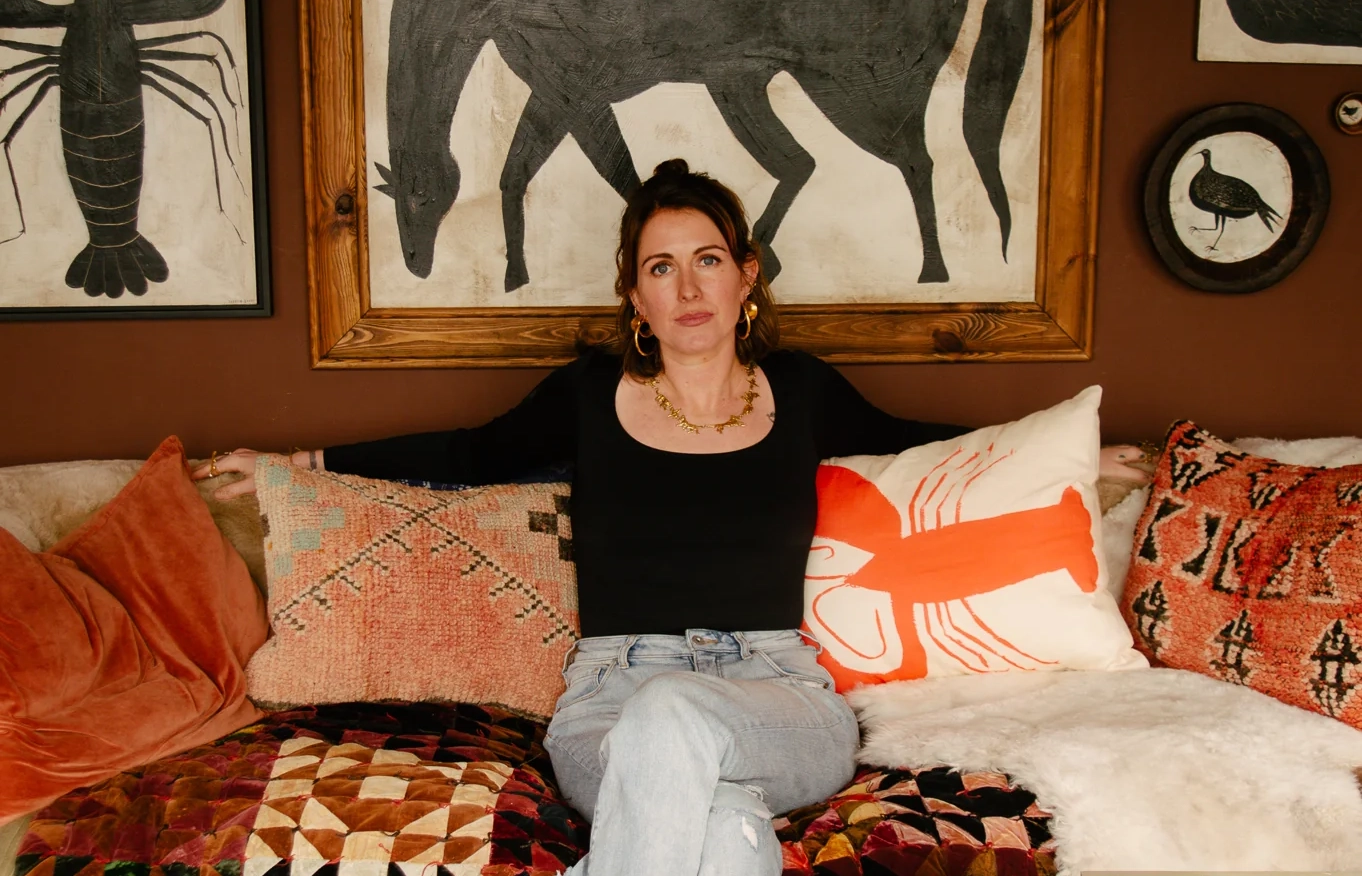
I studied illustration at Central Saint Martins, but after graduating in 2012, I quickly became disillusioned with the idea of becoming an illustrator. My husband Hessy (also an artist) and I ended up starting a children’s art school business. We ran it for ten years and it was hugely successful, growing to over 30 branches across the UK. However, between running a company and having kids, we had no time to create our own work any more, and I very much felt like something was missing.
In 2023 we were looking for a venue for one of our art school branches in Falmouth, and the next day a space came up to rent in town. It was the original sailors’ jail, and as soon as we walked in, we knew it would make an amazing gallery. We decided to go for it. The gallery gave us a reason and a platform to start creating again, and the last 18 months have been a whirlwind. At the end of 2024 we decided to sell the art school and focus full time on our art careers, alongside running Sailors Jail.
2. What inspired you to pursue your craft? Was there a defining moment or influence that sparked your passion?
I can’t remember a time when I didn’t want to be an artist, and I don’t think there was ever any other option in my mind. I always thought my dream job would be to draw or paint whatever I wanted, and for someone to buy it, so I definitely get a little kick every time that happens now!
Your craft
3. How would you describe your work in three words?
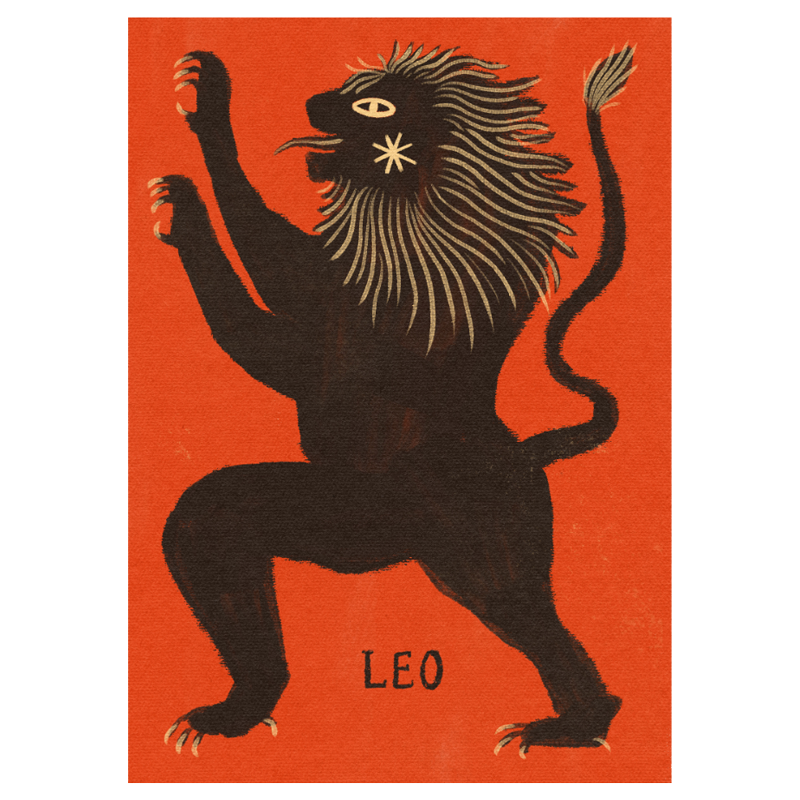
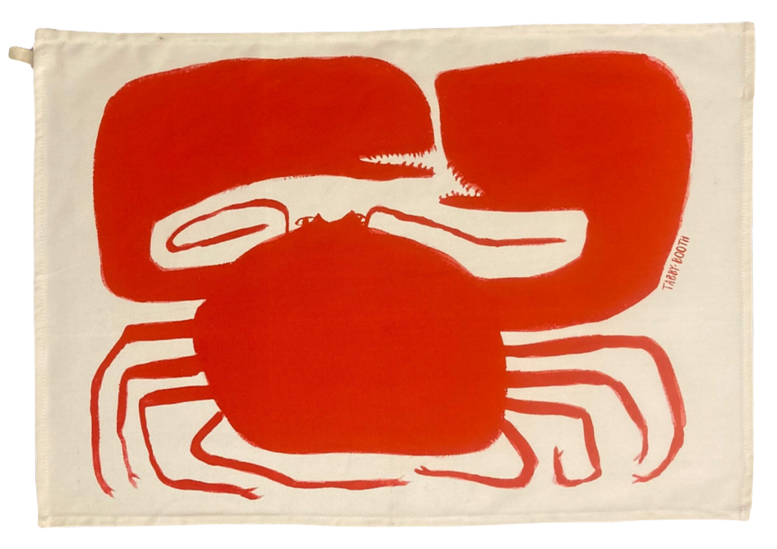
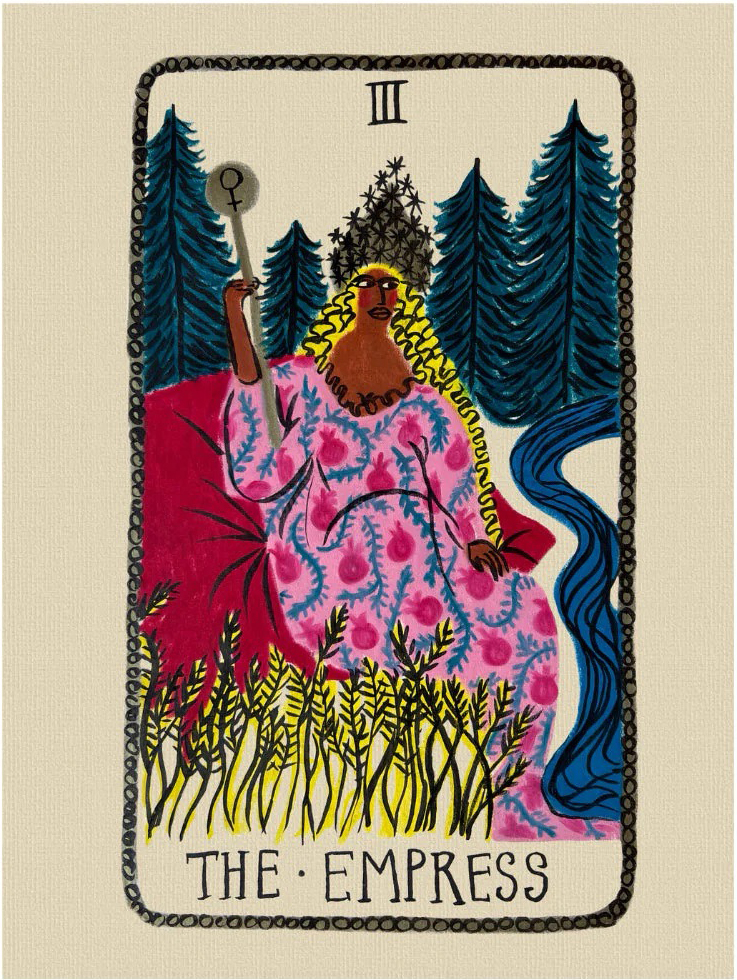
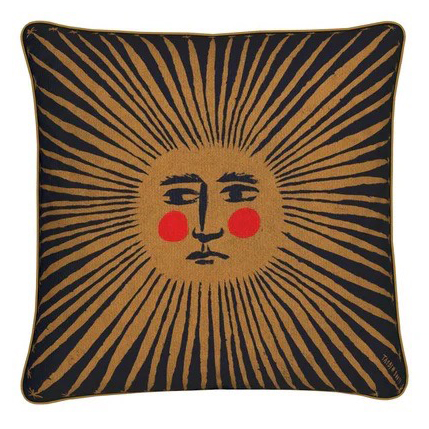
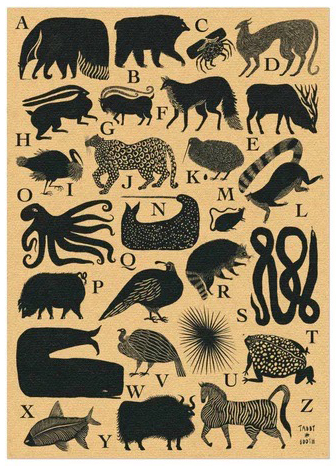
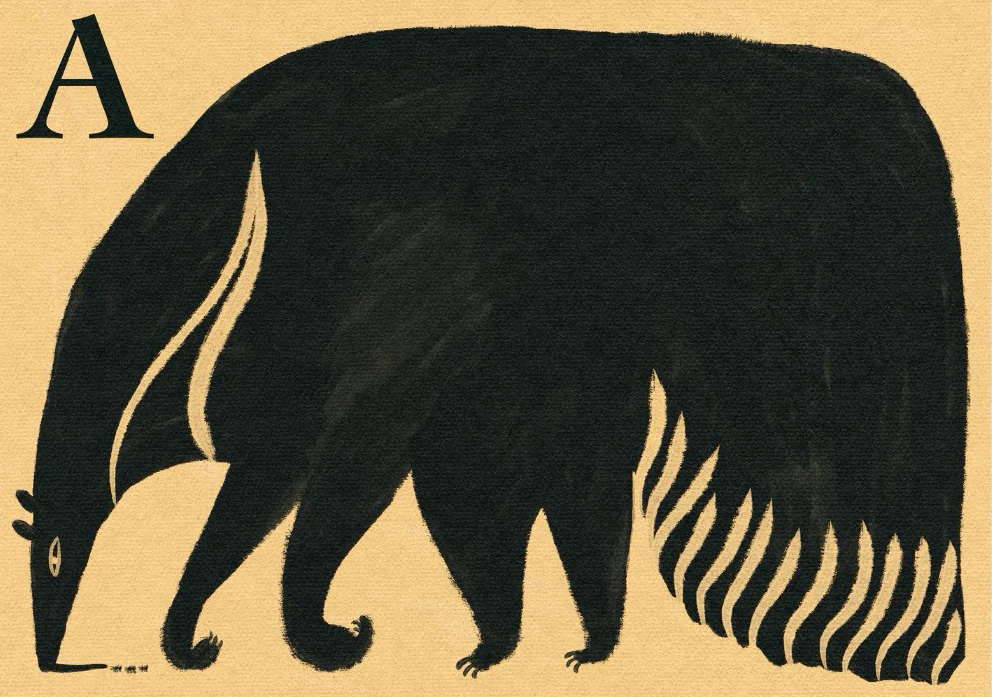
Dark, Folky & Characterful
4. What materials or techniques do you use, and why are they important to your process?
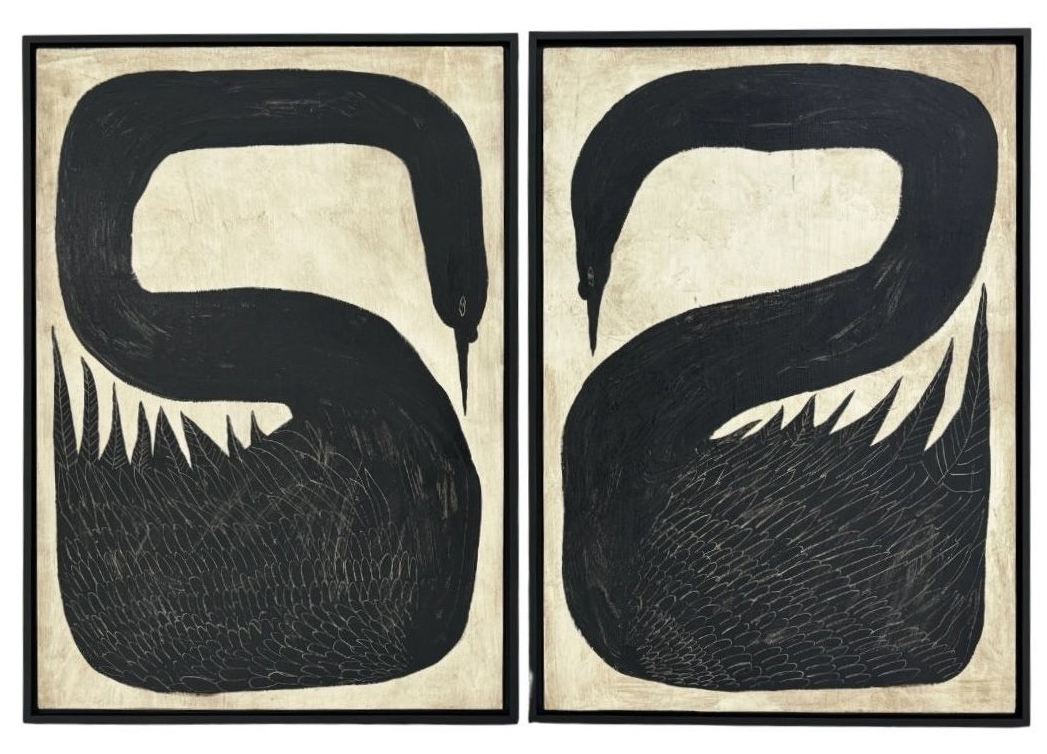
One of my favourite parts of my job now is sourcing the antique frames and bowls for my pieces. I’ve always been a massive treasure hunter, so it’s a great excuse to go car booting or to antique fairs, while calling it work. I learnt a lot from Cornish outsider artist Steve Camps, who I’m artist-agent to. He taught me about creating the artwork for the frame, rather than the other way round, and using wax on paintings to bring out texture.
5. Can you tell us about a favourite piece you’ve created and the story behind it?
I really love all the pieces in SCRIMSHAW: my debut collection with Partnership Editions. They’re a company I always wanted to work with, and I loved designing a series that felt familiar, but also fresh and different. Living by the sea in Cornwall, my work has huge influences from folklore and maritime history, so these are threads that you’ll find throughout my paintings.
Creative process
6. What does a typical day in your studio or workshop look like?
My youngest Ziggy has only just started childcare for two days a week, so the luxury of an (almost!) full day in the studio is something very new, and I love it. I always start by putting on warm lamps and lighting an Astier de Vilatte incense.
If I’m creating a new collection I’ll start by figuring out the frames: laying different sizes and shapes out on the floor and seeing what will work together. I usually write the different subjects out on masking tape (e.g. the animals I’ve decided on), and then put them on the frames so I can visualise them as a whole.
I feed my rescue pigeon Raisin some pine nuts (she’s very bougie and they’re the only thing she’ll eat), then get stuck into painting for as many hours as possible. I tend not to draw things out first, as I like the intuitive naivety of what comes out without thinking. But sometimes if it’s a new image, or for a client where I know it has to look a certain way, then I do a light sketch on the wood before I start.
7. Do you have any unique rituals or habits that help you stay creative?
In October last year I did my first daily drawing prompt challenge on Instagram, and it’s been transformative for me. It led to me to start my own challenge #thepromptpot which I’ve been running since. I think the habit of creating every day is the best thing you can do as an artist. It’s something that’s really hard to find the time to do amongst everyday life, but I’ve found that prompt challenges are fantastic for it, as they give you somewhere to start.
8. How do you handle creative blocks? Do you have any strategies or tips for overcoming them?
It’s funny because some days doing my drawing prompts are so easy: I immediately have a great idea, draw it super quickly, and I’m really pleased with it. Other days I try and draw five different ideas and none of them feel right. But I think what’s great about an online challenge is that I HAVE to post something – so it forces me to keep trying and not give up. And oftentimes the pieces I’m so unsure about are the ones that other people love!
Challenges and successes
9. What’s the biggest challenge you’ve faced as a maker, and how did you overcome it?
I’ve always been torn between digital illustration and traditional hands on painting. For a while I thought these things were in conflict, and I would have to choose between the two. But actually the drawing challenge showed me that there’s room for both in my practice. I can create both original artworks and digital prints, and they’re bound together by my style.
10. What’s been your proudest moment or achievement so far?
World of Interiors contacted me at the end of last year to do a shoot of my home and studio for their website, which really could not be more of a dream for me, and I’m so excited for it to happen very soon!
11. What’s your favourite quote you’ve ever heard about your work? Who said it, or what was the name of the publication?
Not from a publication but I got this message from someone on Instagram recently, which I really loved:
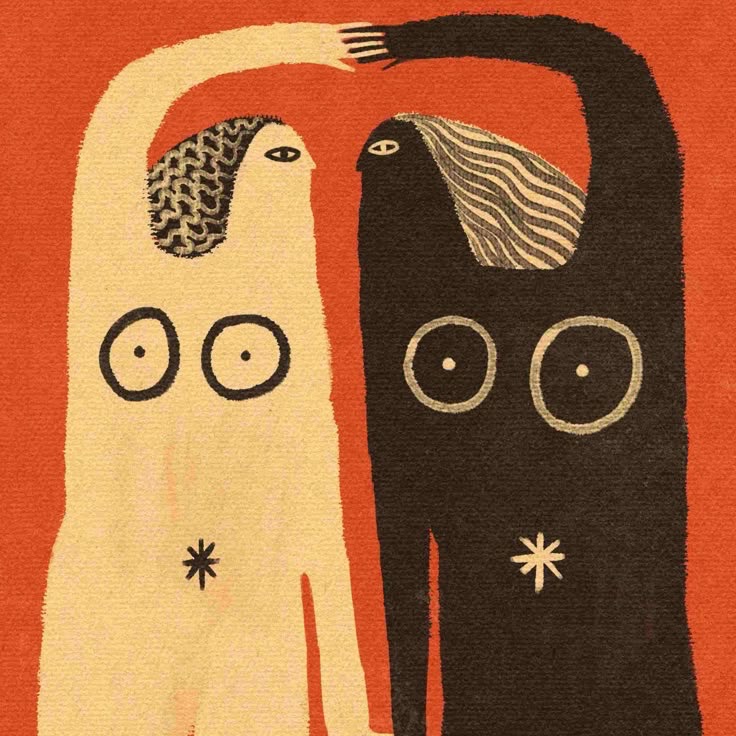
“Your work does something nice to my brain! I can’t explain it (neurodivergent), it literally gives me dopamine. It’s like looking into my shadow self, my primitive nature.”
Inspiration
12. Where do you draw inspiration from for your work? What sparks your imagination and creativity?
I’ve always been obsessed with outsider and folk art: I love things that don’t look like what they’re supposed to, but instead have a character and style to them.
13. Do you have a favourite artist, maker, movement, or tradition that has influenced your craft?
Bill Traylor is my favourite artist and probably the biggest influence on my work.
14. How does colour influence your practice; is it an important part of your process? Do you have a particular palette or favourites? Any go-to sources for colour inspiration?
For someone who’s known for working in black and white, I LOVE colour. Although my paintings are always monochrome, I do bring bits of colour into my digital illustrations, and I’m especially a fan of surprise red. If I want to explore new colour combinations, I often go to Pinterest and save a picture I like, then use Procreate to design a palette from it.
Perspectives and goals
15. What role does your environment play in shaping your creativity?
Other than art, interiors are my biggest passion. Each piece I create is designed with this in mind, and my surroundings are paramount to my creativity. In August 2024 Hessy and I converted our garage into a small studio each, and mine is my absolute happy place. I love our house, but it’s also a family home, so having a space that’s entirely mine to decorate and escape to, has been the most magical thing.
16. What do you want people to feel when they experience your work?
I want to create objects which feel like they might have just been dug up from the ground, like an ancient relic from a lost civilisation, but that also have a whimsical element and don’t take themselves too seriously. Perhaps a hint of nostalgia, childhood and home.. like a character from a fairytale that you’d long forgotten.
17. What are you currently working on, and what excites you most about it?
I’m currently working on my latest online collections with Partnership Editions, Arti-Ones and Farly Finds, as well as preparing for taking Sailors Jail to The Affordable Art Fair in Battersea, and my first group London show at The Gallery at Green & Stone, in April. I also have a jewellery collaboration coming with the amazing Rare Bear, which I can’t wait for!

Advice and reflection
18. What advice would you give to someone starting out as a maker?
Create every day, however small. Find your niche. Just do it.
19. If you could go back to the start of your career, what advice would you give your younger self?
It might not happen how you thought it would, but it will happen.
Closing thoughts
20. If you could collaborate with any artist, past or present, who would it be and why?
It sounds cliched but I think a day with Picasso would teach you more than you could ever learn otherwise in a lifetime.
21. Where can people find your work, and how can they support you?
I sell mostly through my own gallery Sailors Jail, which you can find at: www.sailorsjail.com/tabby-booth
Please do follow me on Instagram @tabby.booth.artist and share my work with all the people you know who have great taste!
Tabby Booth’s work blends folk art, storytelling, and a touch of the unexpected, creating pieces that feel both timeless and deeply personal. From hand-painted treasures in antique frames to bold monochrome illustrations, her art is rooted in history, yet brimming with contemporary character.
Explore her latest collections and follow her creative journey:
Discover Tabby’s Work: